
Berlin is worth visiting—but not for the reasons most people expect.
The first time I came here, I was 17, standing in a divided city during the Cold War a year before the wall fell. Decades later, I returned—not just to visit, but to live here. And what struck me most wasn’t what had changed, but how Berlin still resists being easily understood.
This isn’t a city that wins you over at first glance. It’s not polished or conventionally beautiful like Paris or Rome. Berlin is layered, complex, and at times uncomfortable—yet that’s exactly what makes it unforgettable.
If you’re expecting a checklist of landmarks, Berlin may disappoint you. But if you’re open to experiencing a city through its neighbourhoods, its history, and its contradictions, it offers something far more meaningful.
And that’s where most travellers get it wrong.
This post may contain affiliate links, meaning I get a commission if you decide to purchase something through the links, at no additional cost to you. Read my Affiliate Disclosure.
What Berlin Does Exceptionally Well

If You’re Drawn to History, You Can Actually Feel
Berlin is worth visiting if you’re interested in history that goes beyond museums and into the fabric of a city.
Some of the most powerful moments here aren’t planned. You might be walking down a street and notice a small brass plaque embedded in the sidewalk—one of the Stolpersteine, marking where someone once lived before being taken during the Holocaust. Or find yourself standing along Bernauer Strasse, reading the plaques that trace the former path of the Berlin Wall.
Of course, there are museums—and Berlin has no shortage of them. With over 170 across the city, including those on Museum Island, you could easily spend days moving between them. But what stands out is not just the volume—it’s deciding which ones are actually worth your time, and the best news for travellers, a majority of Berlin’s museums are free.
Traveller, if you are coming to Berlin to take advantage of its museums and cultural attractions, you may want to explore whether a Berlin Welcome Card offers value to you.
If You’re Interested in Art That Extends Beyond Galleries

Berlin is worth visiting if you’re drawn to cities where creativity feels embedded in everyday life.
Yes, there are major institutions and collections, but some of the most interesting spaces are smaller and more independent. In Mitte, along streets like Linienstrasse and Auguststrasse, you’ll find galleries that feel far removed from the traditional museum experience, where you can meet and talk to the artists themselves.
And then there’s the East Side Gallery—an open-air stretch of the Berlin Wall that has been transformed into one of the most recognizable pieces of street art in the world.
Art in Berlin isn’t contained. It spills out into neighbourhoods like Kreuzberg, where murals, tags, and installations feel like part of the city rather than something set apart from it.
If You Prefer Cities That Reward Slowing Down

It’s worth visiting Berlin if you’re comfortable letting the city unfold slowly.
Some of my favourite experiences here have nothing to do with major sights. They happen in between—spending time in Tiergarten, walking through a neighbourhood without a fixed plan, or lingering longer than expected at a weekend market.
On Saturdays, I’ve made a point of visiting places like the Turkish Market in Kreuzberg or Thai Park, where the focus is less on sightseeing and more on simply being there. I learned about these secret spots from going on a food walking tour shortly after arriving in Berlin.
Berliners love to shop on Saturdays, and not just in the KaDeWe department store near the Kurfürstendamm, but more so the unique boutiques in Mitte, found in Rosenhöfe and Hackesche Höfe. I quickly learned by living here that locals enjoyed supporting independent shops. I found many of these on nearby streets like Neue Schönhauser Str., Rosenthaler Str., Hackesche Höfe, and Oranienburger Straße. As well as the district of Prenzlauer Berg on the streets of Schönhauser Allee, Kastanienallee and Oderberger Str.
And on Sundays, when most shops are closed, I like to enjoy a relaxed brunch followed by visiting a flea market like Mauerpark.
This is where Berlin feels most like itself—not in what you check off, but in how you spend your time.
If You’re Curious About Culture That Comes Alive at Night
Berlin is worth visiting if you’re interested in a city that doesn’t quiet down in the evening.
Berlin is famous for its nightlife reputation, but what stood out to me is how varied it is. From places like Berghain to smaller venues, the scene isn’t about one type of experience—it’s about range.
And, if that is not your scene, not to worry, you will never know it even exists, as it is still very much underground.
That same energy carries into its annual events. Whether it’s the Berlinale (Berlin’s Film Festival), the Carnival of Cultures, or smaller festivals like the Cheese Festival in November, Berlin has a way of bringing people together that feels natural, not staged for visitors.
If you were to choose a time to visit Berlin, I recommend planning it around the seasons. Berlin is softened by the pink cherry blossom in the spring and the burst of yellow of the linden trees in the autumn. But perhaps the best time to visit is to experience Germany’s Christmas Markets in December.
It’s a different side of the city—one that you don’t need to fully participate in to notice, but one that shapes its atmosphere.
If You Like Having a Base—With Options Beyond the City

What I loved about living in Berlin is how central it is to explore beyond the city.
What makes it especially appealing to travellers is how affordable it is to stay in Berlin and how easily you can step beyond the city without constantly packing and moving. Places like Potsdam, Leipzig, or even smaller towns like Wittenberg are all within reach by train.
I’ve always seen Berlin less as a place you pass through, and more as somewhere you settle into—even temporarily—while giving yourself the option to explore further with these cities and towns near Berlin.
Where Berlin Can Disappoint Some Travellers

Berlin Isn’t Traditionally Beautiful—and That’s the Point
Berlin doesn’t reveal itself in the way other European cities do.
You won’t find the uniform elegance of Paris or the storybook charm of Vienna. Much of Berlin’s architecture reflects its more recent history—post-war reconstruction, Cold War-era buildings, and stretches of stark, utilitarian design. It can feel fragmented at first glance.
But that contrast is exactly what defines it.
A restored pre-war façade might sit beside a block of concrete modernism. Wide boulevards open into quiet residential streets. It’s not curated or cohesive—and that’s what makes it feel real.
A City Shaped by History, Not Aesthetics

Berlin isn’t trying to be beautiful. It’s a city shaped by what it has lived through.
The divisions of the Cold War, the scars of World War II, and the reunification of East and West are still visible—not just in landmarks, but in the design of the city itself. You feel it walking through different neighbourhoods, where the atmosphere can shift from one district to the next.
That sense of contrast isn’t accidental. It’s layered in. And, I can see how, to a traveller, it might feel disjointed.
Why Berlin Can Feel Confusing at First
Berlin doesn’t have a single, defined city centre in the way most European capitals do. Unlike cities where everything radiates from one main square or old town, Berlin is spread across multiple districts, each with its own identity. In fact, one might easily argue that Berlin has multiple city centres.
Add to that the city’s sheer size, and it can feel disorienting, especially on a first visit or on a short visit. Can you imagine, Berlin is about nine times larger than Paris.
It’s one of the reasons Berlin isn’t a city you can rush. You don’t “see” it all at once—you experience it in parts. That’s why I help clients plan their itineraries when they want to visit Berlin.
The Least “German” City in Germany
Over the years, I’ve heard this again and again while travelling through Germany: Berlin is often considered the least German city in the country.
And I understand why.
It’s more international, more experimental, and far less structured than cities like Frankfurt or Hamburg. There’s a looseness to Berlin, an openness, that sets it apart.
What Hasn’t Changed (And That’s What Stays With Me)
What surprises me most is how much of Berlin still feels the same.
The first time I visited was in the late 1980s, a year before the Berlin Wall fell. I spent time in West Berlin around Kurfürstendamm, and crossed into East Berlin on a student visa. Decades later, after returning and even living here for a period, I found those contrasts still exist.
Kurfürstendamm still carries that familiar West Berlin vibe, and it almost feels like it’s stuck in the 1980s. And in parts of the former East, where I live now, there’s a distinct feeling that it hasn’t been entirely smoothed over either.
Berlin has evolved—but it hasn’t erased itself.
Berlin Is a City of Neighbourhoods, Not Landmarks
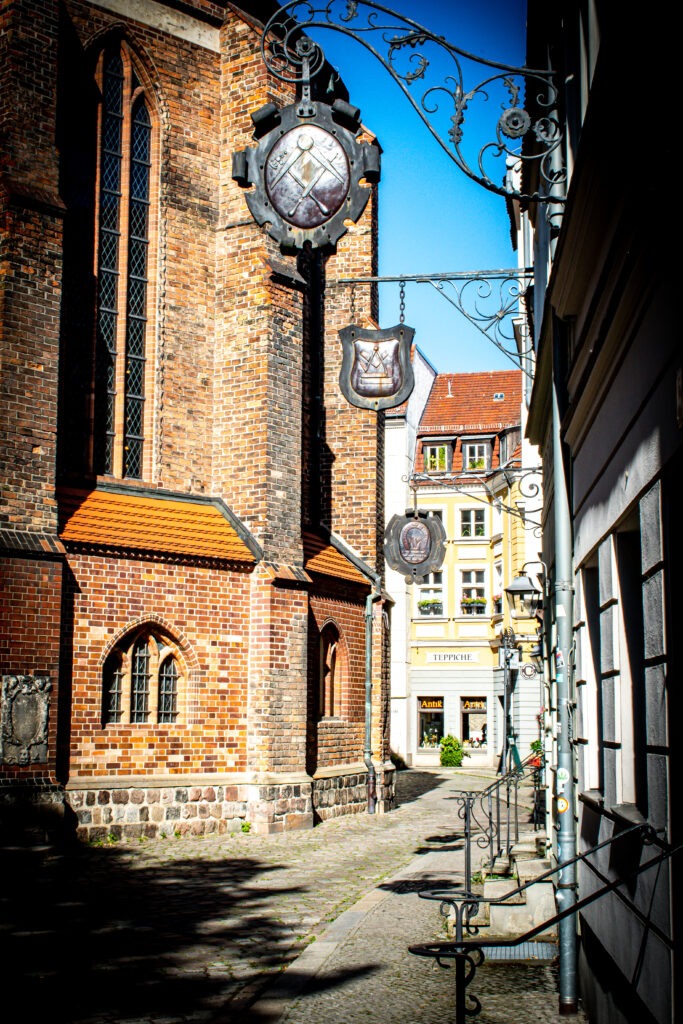
Berlin is made up of 12 distinct boroughs (Bezirke), which are further divided into local neighbourhoods often referred to as Kiez. The differences between them are often more noticeable than in other European capitals.
You don’t simply walk from one area to the next—you move between them using the U-Bahn or S-Bahn, and with each stop, the atmosphere changes.
- Mitte feels layered and central, but also polished in parts, where museums, historic streets, and quieter residential pockets coexist
- Prenzlauer Berg has a more residential feel—tree-lined streets, restored Altbau buildings, independent cafés, and a noticeable shift toward local life
- Friedrichshain-Kreuzberg has an energy that feels creative and unfiltered, where street art, late-night cafés, and a mix of cultures give it a lived-in edge
- Neukölln can feel even more raw and local—less curated, more everyday, with a vibe that’s shaped by the people who live there
- Charlottenburg offers a different pace entirely—more refined, with wide boulevards, classic architecture, and an understated elegance that feels closer to what many expect from a European capital
What stands out isn’t just the contrast—it’s how clearly you feel it. Berlin isn’t one experience. It’s many, layered across distance.
FAQs About Visiting Berlin

Is Berlin worth visiting if I don’t like museums?
Yes—but you’ll experience Berlin differently. Its history isn’t limited to museums; it’s embedded in streets, memorials, and neighbourhoods. Focus on walking routes, markets, and local areas rather than trying to “cover” cultural sites.
Why do some travellers say Berlin feels underwhelming?
Often it comes down to expectations. If you’re expecting a visually beautiful, compact city, Berlin is not that. Its appeal is more subtle and reveals itself over time, especially when you slow down and explore neighbourhoods.
Is Berlin a good destination for solo travellers?
Yes. It’s a city where you can move at your own pace without feeling out of place. The café culture, parks, and neighbourhood layout make it easy to spend time alone comfortably.
Why do people say Berlin is “gritty”?
Berlin hasn’t been overly polished. You’ll notice an abundance of street art, contrasting architecture, and areas that feel unfinished. For some, that’s part of its character. For others, it can feel less refined than expected.
Is it easy to get around Berlin without speaking German?
Yes. English is widely spoken, especially in central neighbourhoods, cafés, and restaurants. You won’t need German to navigate the city comfortably.
My Final Take: Is Berlin Worth Visiting?
This is where many travellers get it wrong.
They try to move across the city too quickly—jumping from one landmark to another without considering how far apart everything actually is, or how different each area feels.
Berlin rewards a slower approach.
For that reason alone, Berlin is a city worth visiting. Instead of trying to see everything, I always recommend choosing one or two neighbourhoods as your anchor for the day. Start there. Walk without a fixed agenda. Let the details reveal themselves—cafés, parks, small streets, everyday life.
That’s where Berlin begins to make sense.
Berlin isn’t a city you structure around a checklist. It’s a city you experience by choosing where to spend your time, and allowing space within that.
It’s the foundation of how I plan trips using my Unrushed Itinerary Method—focusing on fewer areas, building in flexibility, and shaping days around how a place actually feels, not just what there is to see.
Because in Berlin, how you move through the city matters just as much as where you go.