

Everyone has heard of Germany’s most famous road trips. The Romantic Road. The Alpine Road. The Rhine River route. They’re iconic for a reason—but they’re also well-trodden, heavily packaged, and often designed for travellers passing through.
I created this Germany road trip after years of returning to the country—and living in Berlin at two different stages of my life. You won’t find it anywhere else. Curated by me, for you.
It’s not for travellers trying to see Germany in one week. Or those who measure a trip by how many stops they can fit into a day.
Instead, it’s for those who prefer fewer places and more time. You’ll move through a loop of nine UNESCO towns and cities, using well-chosen home bases, shorter distances, and space in between.
Because the goal here isn’t to see more, it’s to experience Germany differently.
This post may contain affiliate links, meaning I get a commission if you decide to purchase something through the links, at no additional cost to you. Read my Affiliate Disclosure.
A Germany Road Trip Designed Around Cultural Depth, Not Distance

This isn’t your typical German road trip.
This route is different—it was created while living in Berlin, with a slow-travel mindset and a focus on places that are often under the radar yet rich in historical and cultural significance.
This route is built around Germany’s UNESCO World Heritage Sites—not to check them off, but because they represent places of cultural and historical significance that are worth your time. Each stop has been chosen not just for what there is to see, but for what it offers when you stay a little longer.
Travelling this way shifts your experience. You’re not moving quickly between highlights—you’re settling into places that hold meaning. You begin to notice patterns in architecture, regional differences, and the rhythm of daily life. The experience becomes less about covering ground and more about understanding where you are.
This Is Not a “See Germany in 7 Days” Itinerary
Ideally, you’ll take two weeks to explore this route. It’s designed for depth over distance, for travellers who want to linger, notice details, and experience towns that most tourists never see.
You’ll appreciate this itinerary if you value:
- History and culture – UNESCO sites and lesser-known towns with fascinating heritage
- Walkable towns – streets and squares best experienced on foot
- Short driving days and train travel – short day trips by train rather than long, stressful drives
- Home bases, not hotel-hopping – stay multiple nights in designated places where you can explore nearby towns and cities
My personal take: When I lived in Germany as a student in my late teens, tourism barely existed. Today, travellers know what Germany offers, and this road trip still uncovers under-the-radar places perfect for a repeat trip to Germany.
This is how I’ve come to travel Germany after decades of returning—and it’s the approach I now use when designing itineraries for clients who want more than a surface-level trip.
Amateur Traveler Podcast
As a guest of the Amateur Traveler Podcast, I walk listeners through each of these nine UNESCO stops.
UNESCO World Heritage Sites You’ll Visit on This Road Trip
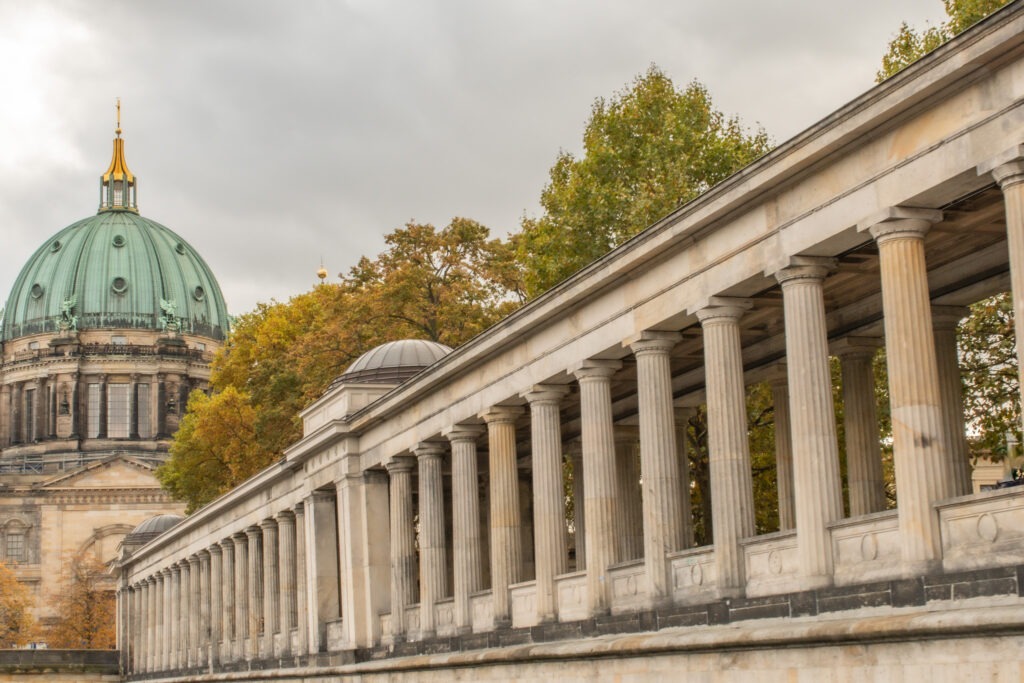
This road trip connects nine UNESCO World Heritage Sites, each offering a unique window into Germany’s history, culture, and architectural achievements.
Here’s the route at a glance:
Berlin → Potsdam → Wittenberg → Quedlinburg → Goslar → Hamburg → Lübeck → Wismar → Stralsund → Berlin
Below, I break down each home base, the UNESCO highlights nearby, and practical tips for exploring them.
Berlin – Home Base #1
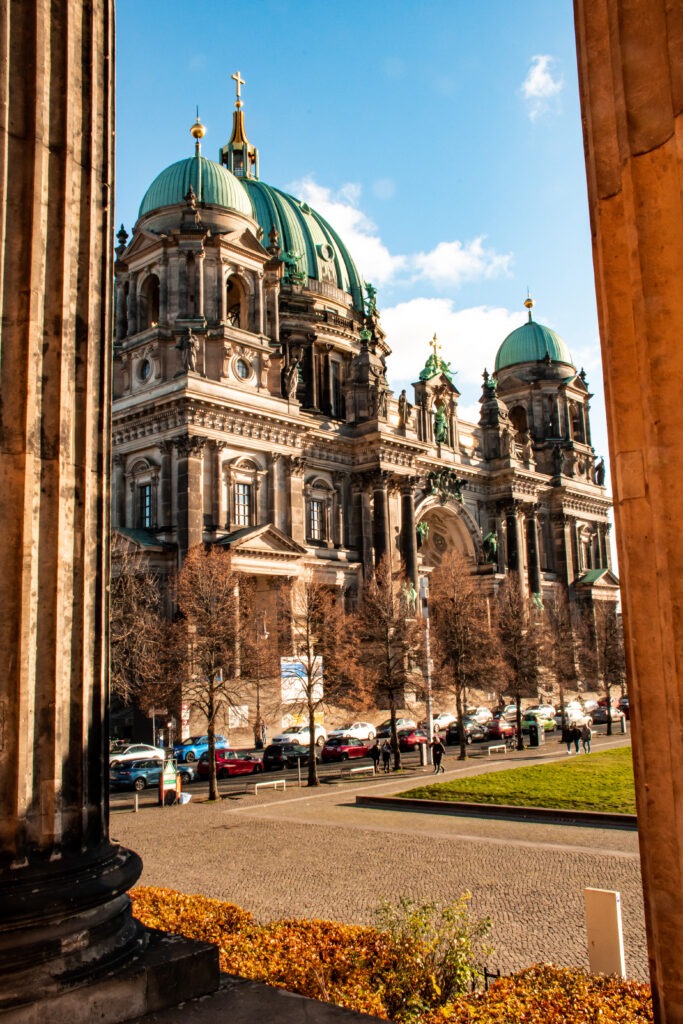
Berlin is the starting point for this UNESCO-focused road trip—and it works well for a few reasons.
First, it’s home to one of Germany’s most important UNESCO sites: Museum Island. This is a group of five museums built over time, all in one place. What makes it special isn’t just the collections, but how everything sits together along the river.
You don’t need to see all five. Instead, choose one museum, maybe two, and give it time. The rest of the experience comes from walking the area—across the bridges, between the buildings, and along the Spree. If all five are of great interest to you, then I recommend you explore getting a Berlin Welcome Card.
Berlin also works because it gives you options. You can spend time in other free museums, but you can also step away from them. Walk through neighbourhoods. Relax in a park. Visit a weekend market. Before moving on to the next stop, slow the pace.
That balance matters at the start of a trip.
How to approach Berlin:
- Stay 5–7 nights
- Visit Museum Island, but don’t try to do everything
- Mix museum time with walking and time outside the main sites
Potsdam – Day Trip from Berlin
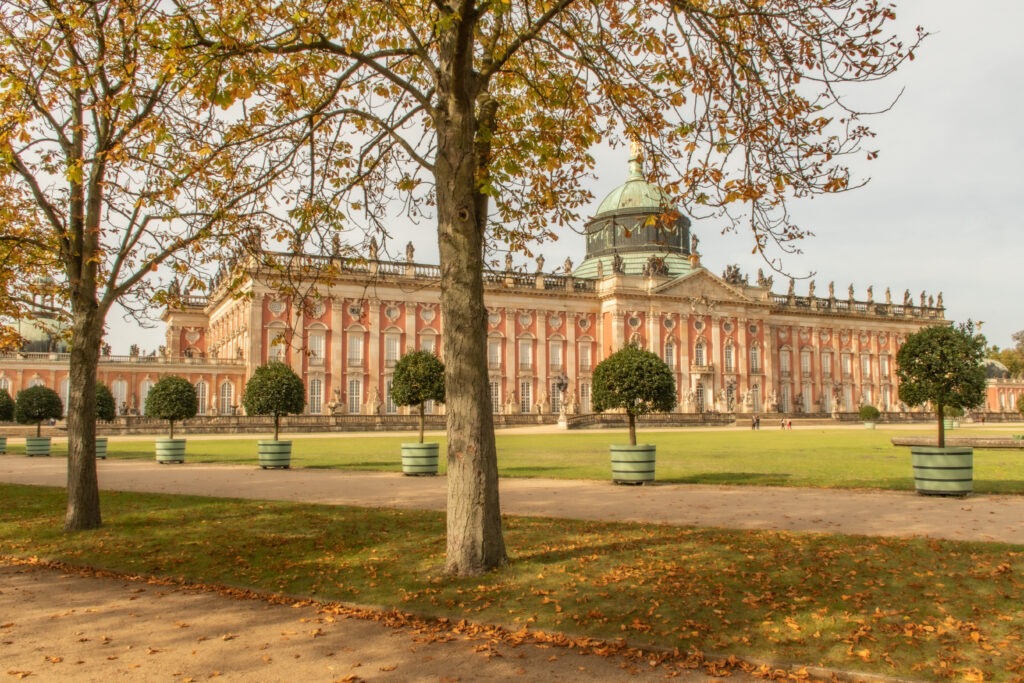
Potsdam is part of this route for a reason. It’s not just a quick add-on from Berlin.
It’s another UNESCO site, and it offers something completely different.
The Palaces and Parks of Potsdam are known for their design, buildings and gardens planned together. Sanssouci Palace is the highlight, but the experience is really in the grounds.
This is where I see people rush and miss what makes it special.
The park is large. The paths are long. The views open up slowly. If you move too quickly, you lose that.
I always plan a full day here.
How to approach Potsdam:
- Take the train from Berlin (about 35 minutes)
- Plan for a full day, not a few hours
- Focus on Sanssouci and the park, not every palace
- Spend time walking—not just going from building to building
Wittenberg – Day Trip from Berlin
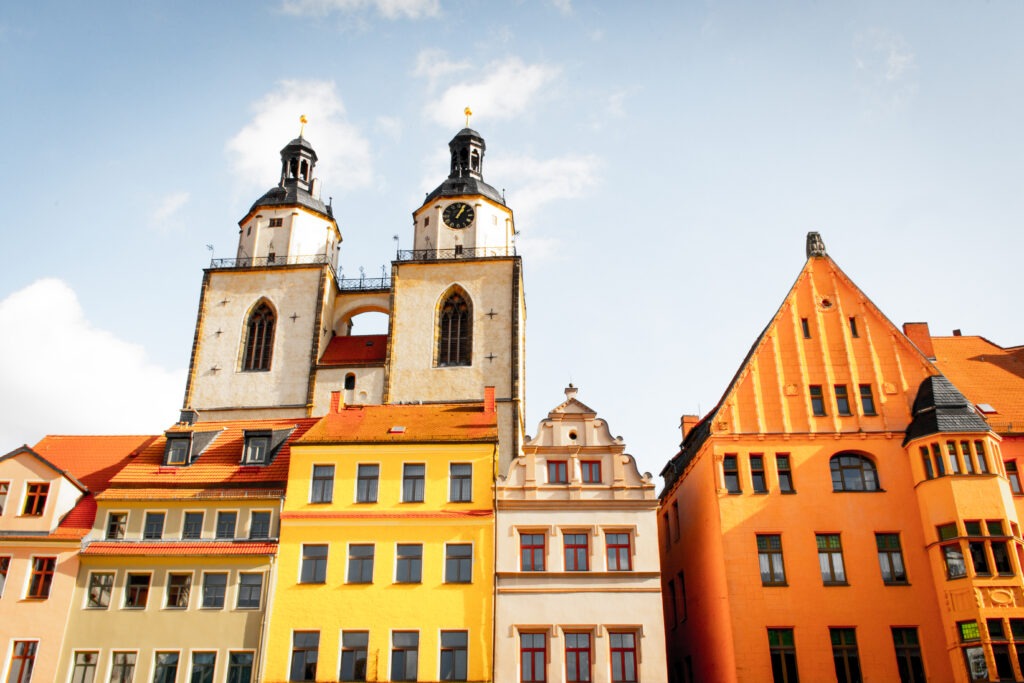
Visiting Wittenberg is one of the most historically important stops on this route.
It’s a UNESCO site because of its connection to Martin Luther and the Protestant Reformation. Many of the original buildings are still here, including the church where Luther posted his 95 Theses.
The town itself is small and easy to walk through. Everything is close together, which makes it an easy day trip from Berlin.
What I like most is how manageable it feels. You can take in the history, walk the main streets, and still have time to sit for a coffee in the square without feeling rushed. I loved the unique feature of a babbling brook that runs the length of the town through the historic centre.
How to approach Wittenberg:
- Take the train from Berlin (under 1 hour)
- Plan for a half-day to a full day
- Walk between the main sites—no need for transport
- Leave time to sit in the town square or a café
Quedlinburg – Home Base #2
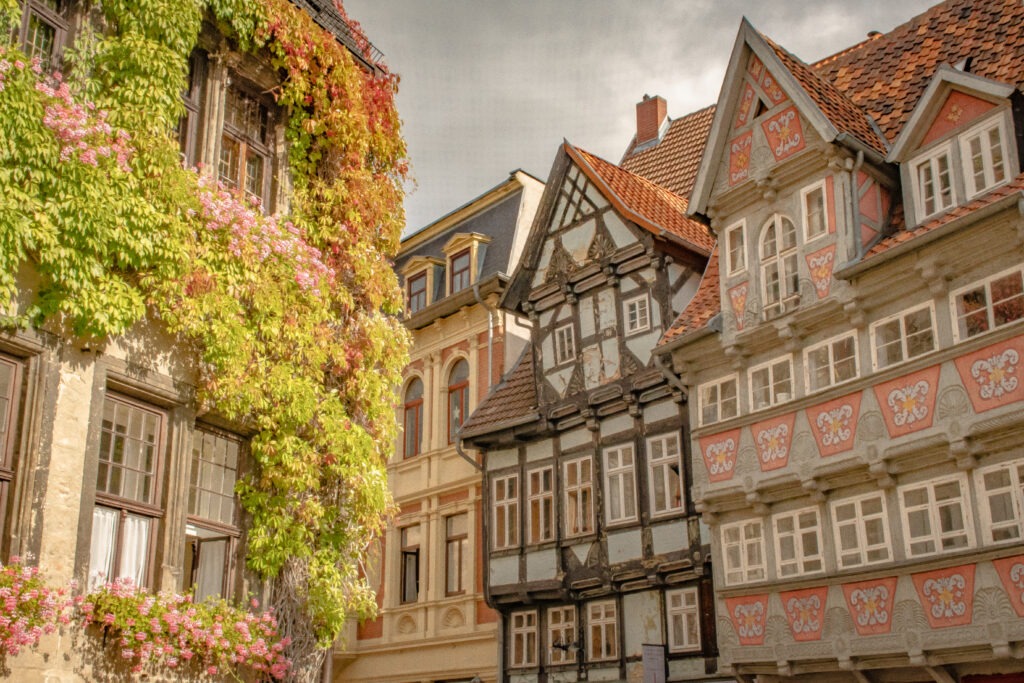
Rent a car in Berlin and drive about 2.5 hours west to Quedlinburg, a medieval gem in Saxony-Anhalt.
Quedlinburg is one of the most memorable stops on this itinerary. It’s a UNESCO site for its Old Town, with over 1,000 half-timbered houses and a layout that has stayed largely unchanged for centuries.
This is not a place to rush through.
The streets are the experience. Walking slowly here makes a difference—especially early in the morning or later in the day when it’s quieter. These cobblestone streets feel like stepping into a storybook. The castle and Collegiate Church rise above the Old Town, while narrow lanes wind past colourful half-timbered houses.
Small cafés, local shops, and quiet squares give you the chance to soak in everyday life alongside the medieval architecture.
How to approach Quedlinburg:
- Stay 2 nights
- Use it as a base to visit Goslar
Goslar – Day Trip from Quedlinburg
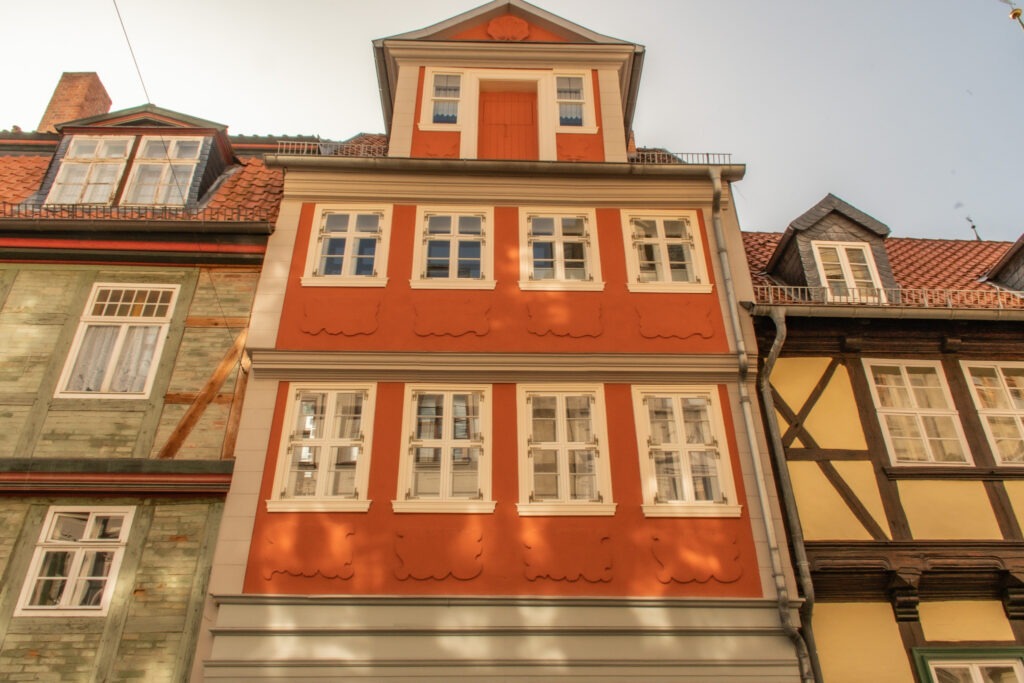
Goslar is another UNESCO site, known for its historic town and the nearby Rammelsberg Mine.
It’s interesting, especially if you want to understand Germany’s mining history. The town itself is also well preserved, with the same half-timbered style you’ll see in Quedlinburg.
That said, this is where I would adjust if needed.
If your time is limited, I would prioritize Quedlinburg. I found it more enjoyable to spend time in, especially for walking and the overall atmosphere.
How to approach Goslar:
- Drive about 40 minutes from Quedlinburg
- Visit as a half-day or day trip
- Consider the mine if you’re interested in industrial history
Hamburg – Home Base #3
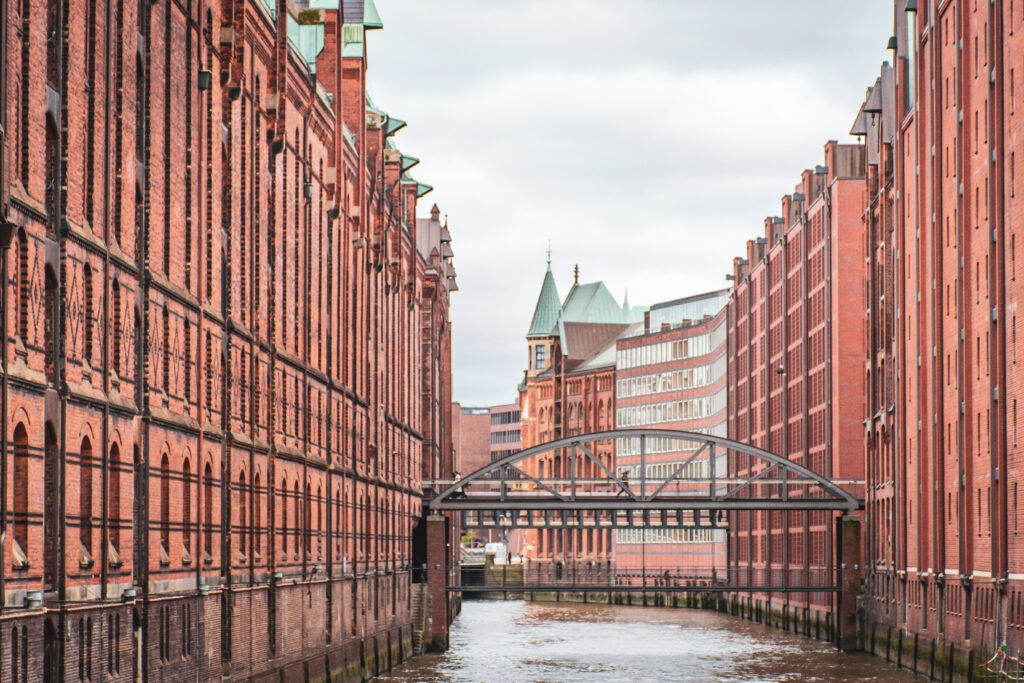
From Quedlinburg, drive about 3 hours north to Hamburg. Hamburg brings a different side of Germany into the itinerary.
It’s a UNESCO site because of the Speicherstadt and Kontorhaus District—historic warehouse areas that reflect the city’s role in global trade. They are a well-known representation of what early 20th-century warehouse architecture and urban planning looked like.
When I walked through the canals of the Speicherstadt, it almost felt cinematic—red-brick warehouses reflected in narrow waterways, intersected by bridges and cobblestone streets. The nearby Kontorhaus District, including the iconic Chilehaus, combines incredible expressionist architecture alongside busy streets full of cafés and shops.
Hamburg itself is larger and more modern than other stops on this route. There’s much more to do than spending a day here, and this is where being selective matters.
How to approach Hamburg:
- Stay 2–3 nights
- Walk through the Speicherstadt area
- Balance sightseeing with time in different neighbourhoods
- Don’t try to cover everything—pick what interests you most
Lübeck – Day Trip from Hamburg
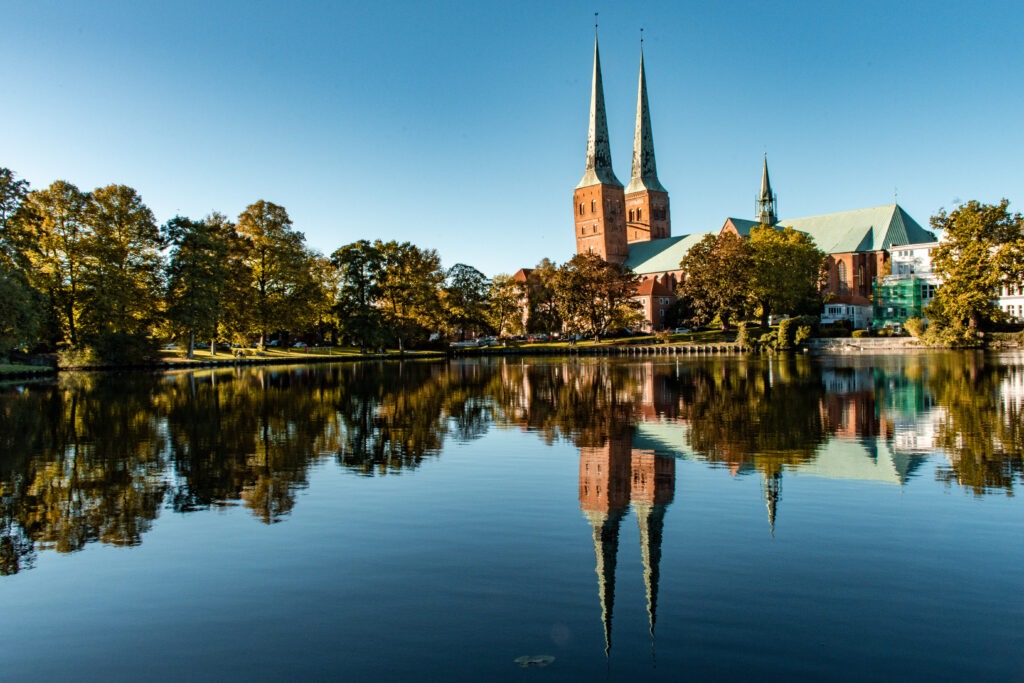
Lübeck is one of the best-preserved medieval towns in northern Germany.
It’s a UNESCO site for its Old Town, which was once a major center of the Hanseatic League. The architecture here is distinct—brick Gothic churches, narrow streets, and historic merchant houses.
Walking through Lübeck feels like stepping back several centuries. The cobblestone streets, narrow alleys, and towering church spires make this a scenic, historic city. Colourful merchant houses line the canals, while the Holstentor gate serves as the striking visual emblem of the city’s past.
This is a good place to walk without a plan. Cross the canals, move through the streets, and take your time in the main squares.
How to approach Lübeck:
- Reach by train or car (about 45 minutes from Hamburg)
- Plan for a full day
- Focus on walking the Old Town
- Stop for marzipan—it’s what the city is known for
Wismar – Home Base #4
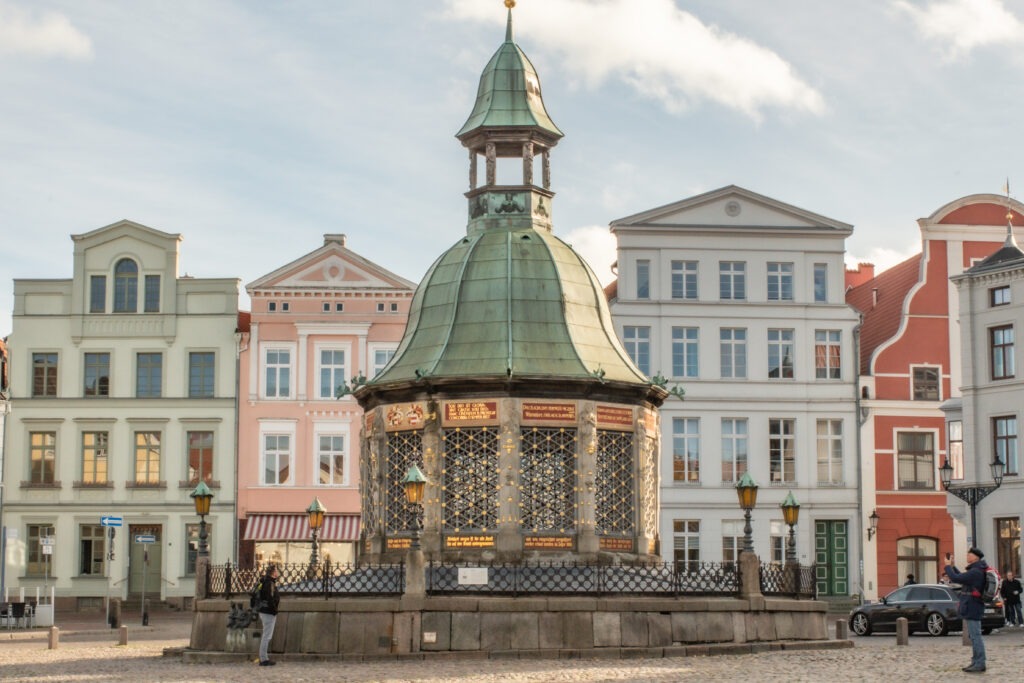
From Hamburg, drive about 1.5 hours northeast to reach Wismar, a small Hanseatic town on the Baltic Sea. Wismar makes an ideal home base for exploring northern Germany’s coastal region, including nearby Stralsund, while offering a slower, more intimate pace than what you would experience in Hamburg.
It’s a UNESCO site for its well-preserved Old Town and its role as a Hanseatic trading port, along with Stralsund. The buildings, churches, and market square all reflect that history.
Wismar is a town that rewards slowing down. The coastal setting makes it easy to wander without feeling rushed. Beyond the UNESCO buildings, the town offers a sense of everyday life in a northern German port, with local markets, cafés, and quiet streets to discover. You can walk the entire center, stop along the harbour, and not feel like you need a plan.
This is a good place to pause and relax as you wind down your road trip.
How to approach Wismar:
- Stay 2 nights
- Use this as your final base to explore the Old Town and harbour area, and a day trip to Stralsund
- Plan at least one relaxed meal by the water
Stralsund – Day Trip from Wismar
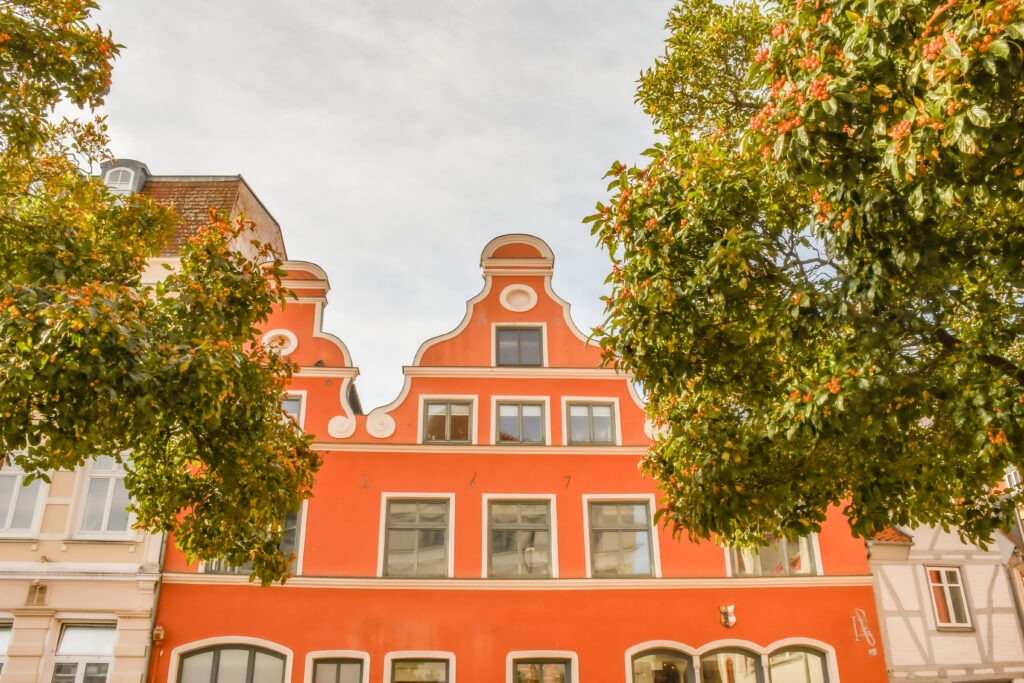
Stralsund is another UNESCO-listed Hanseatic town along the Baltic coast.
It shares similarities with Wismar—brick Gothic architecture, historic squares, and a waterfront setting. Walking through Stralsund feels like stepping into northern Europe’s Hanseatic past. Narrow cobbled streets wind past red-brick churches, merchant houses, and the waterfront, where boats bob gently in the harbour, much the same as Wismar.
Because of that, this is where I would simplify if needed.
Stralsund and Wismar share a similar Hanseatic character, with brick Gothic architecture, historic market squares, and a coastal atmosphere. If you’re adjusting the itinerary or prefer to travel more slowly, Stralsund is the stop I would remove—I personally found Wismar’s quieter Old Town and overall vibe more resonant and rewarding to linger in.
How to approach Stralsund:
- Travel about 50 minutes from Wismar
- Plan for about a half-day
- Walk the Old Town and along the harbour
- Visit if you want a second Hanseatic perspective
A Road Trip Designed With Intention
This road trip wasn’t stitched together from a list of must-sees. It was designed deliberately, shaped by years of returning to Germany, living here at different stages of life, and understanding how place, pace, and contrast affect the travel experience.
One of the guiding principles behind this route is alternation: moving between larger, energy-filled cities like Berlin and Hamburg, and smaller, deeply charming towns such as Quedlinburg and Wismar.
That rhythm matters.
Big cities offer museums, layers of history, and cultural density. Smaller towns invite stillness, and the kind of moments you only notice when you slow down.
The theme is equally intentional.
As a slow traveller, I follow my passions—history, architecture, and places with a strong sense of identity.
UNESCO World Heritage Sites became the natural framework because they signal cultural significance while still allowing for discovery. They are places where depth is guaranteed, even if crowds are not.
If you’re planning a road trip in Germany and want help designing something equally thoughtful—whether adapting this route or creating your own around what you love—I offer personalized trip planning services focused on slow, immersive travel. Together, we can design a journey that feels cohesive, meaningful, and unmistakably yours.


