
Is Hamburg worth visiting? Yes—but not in the way most travellers expect.
When I was living in Berlin, Hamburg never felt like a priority. I already had the culture, the history, the energy. Another major German city didn’t seem necessary.
But after nearly four decades of travelling through Europe—and returning to Germany again and again—I’ve learned to pay attention to those under-the-radar second cities.
Hamburg is one of them.
It’s not immediately charming. You don’t see the full picture in a single walk through the old town. In fact, it can feel a little grey and a little reserved at first.
But give it time, and the city grows on you. But for me, I knew immediately.
This post may contain affiliate links, meaning I get a commission if you decide to purchase something through the links, at no additional cost to you. Read my Affiliate Disclosure.
Why Hamburg Is Worth Visiting? What Makes It Different

Hamburg isn’t a city I would recommend to everyone—and that’s exactly why I think it’s worth visiting.
I’ve spent decades travelling through Germany, visiting many large and small cities. Some places are easy to understand right away. Hamburg isn’t one of them. It took me some time to adjust to it.
Hamburg is a port city through and through. You feel it in the salty air, in the sight of massive cargo ships gliding along the Elbe, and in the way the city’s identity is tied to the water.
This isn’t a city that has been reshaped for visitors. It still runs on trade, shipping, and daily life. That changes how it feels to spend time here.
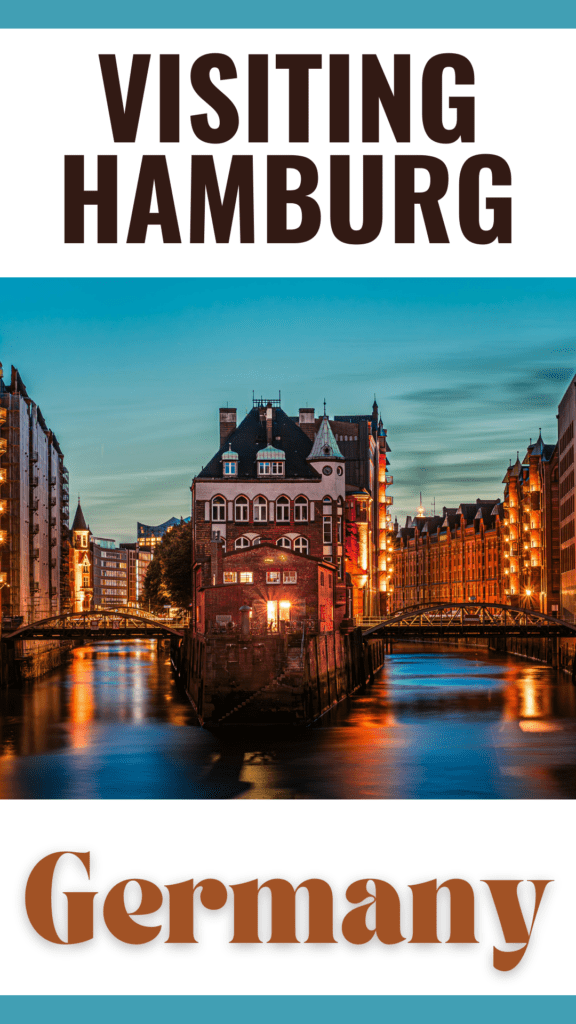
My favourite waterfront areas were Landungsbrücken and HafenCity. Walking along the canals, especially at dusk, when the lights reflect off the water, the area has a quiet, moody beauty.
Taking a harbour cruise is one of the best ways to experience it.

Hamburg has its own take on canal-side charm, often considered a “Doppelgänger Destination”.
People compare Hamburg to Amsterdam or even Venice because of the canals. I understand why, after visiting all three of these cities. There are moments along the water, especially near Speicherstadt and the Alster, where you get that same interplay of bridges, reflections, and architecture.
The elegant Alsterarkaden, near Hamburg’s Rathaus, has a touch of old-world flair. At the same time, the Bleichensteg bridges over the waterways, more than any other city in Europe, reminded me of Venice’s and Amsterdam’s canals. Even St. Pauli, with its gritty energy, is reminiscent of the red-light district of the Netherlands.
But swap out those famous cities for Hamburg, and you get a more laid-back, less touristy experience—without missing out on what makes them so loved.
It doesn’t have the same visual cohesion, and it’s not trying to charm you. The canals feel like part of a working system, not a backdrop. I found that made the experience feel more grounded—and, in some ways, more interesting.

What stood out to me most was the architecture.
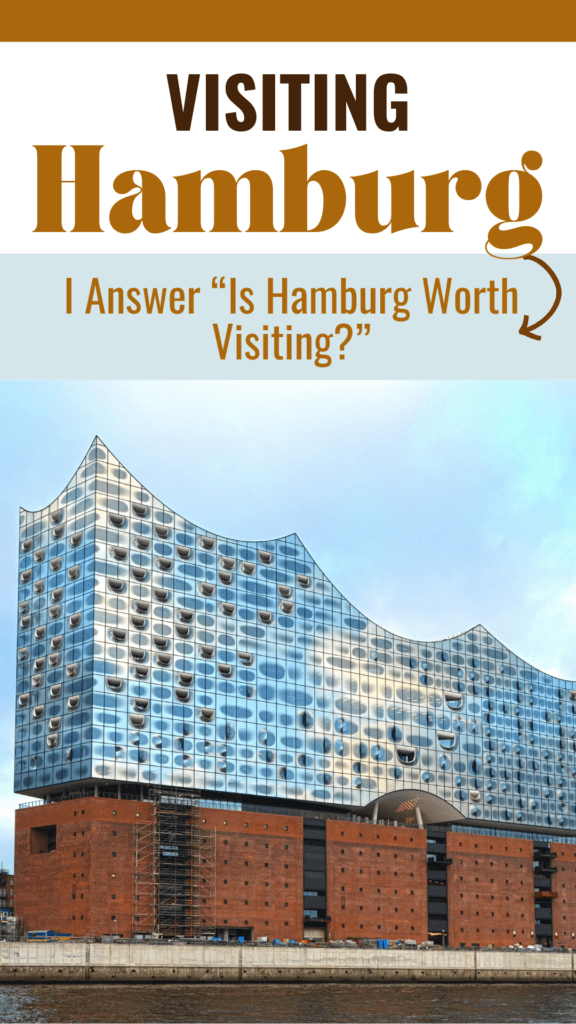
The Rathaus has a scale that surprised me. It doesn’t just sit in the square—it defines it, with a wide façade and detailed structure that holds the space. Then you have Speicherstadt, with its long rows of red-brick warehouses stretching along the canals, and HafenCity, where newer buildings push the city forward again.
Speicherstadt isn’t just visually striking—it’s also a UNESCO World Heritage Site. What makes it significant isn’t only the scale, but its role in Hamburg’s history as a trading city. These warehouses were built to store goods like coffee, tea, and spices, and walking through the area, you still feel that connection to how the city functioned. It’s one of the few places where Hamburg’s past and present sit so closely together.
You also feel the city’s wealth.
Hamburg is one of the wealthiest cities in Germany, and that shows up in a more understated way—along streets like Jungfernstieg, in the arcades, and in the mix of luxury brands and smaller independent boutiques. It feels established rather than showy.
At the same time, Hamburg is a large city, and it doesn’t come together in one place.
Most visitors stay close to the Altstadt, but that’s only a small part of it. The city is spread out, and the experience is shaped by moving between different areas rather than staying in a single centre.
Once I adjusted to that, it started to click.
This is my kind of city.
I remember walking along the raised walkways in Speicherstadt, being surrounded by the tall red brick buildings that have been repurposed for modern loft living and saying to myself… “I could live here”.
Hamburg is unlike any other city in Germany that I’ve visited before.
The Downsides of Visiting Hamburg

Hamburg isn’t a city that works for everyone—and I felt that fairly quickly. I fear that it doesn’t offer the kind of experience people visiting Germany expect.
The weather is part of it.
I had stretches where it was grey, windy, and colder than I expected, especially near the water. I quickly learned that rain can appear out of nowhere, albeit it doesn’t last for long. Even when I was out walking for hours, it affected how the city felt. Hamburg can come across as flat or muted in that kind of weather, and you have to push through it a bit.
The bigger challenge, though, is how the city is experienced.
Most visitors stay around the Altstadt, near the Rathaus and main sights. If that’s all you see, Hamburg can feel limited—and a bit disjointed. The city doesn’t unfold in one continuous, walkable centre the way other European cities do.
You have to move between areas to understand it. And that means taking public transport to reach it in some cases. If you don’t, it’s easy to leave feeling like you’ve missed something, without being able to pinpoint exactly what.
If you’re looking for medieval squares, half-timbered houses, or that classic “storybook” feel, you won’t find it here. You have to adjust your expectations—especially if you’re used to more “obvious” European beauty. The city feels industrial or modern. If you’re looking for a quintessentially “cute” German town, this isn’t it.
It’s also not a city I would choose primarily for museums.
And while there are good ones, I wouldn’t choose Hamburg for that alone. If museums are a priority, there are stronger cities in Germany, like Berlin’s Museum Island.
It’s also not a city that offers immediate payoff.
Some places draw you in right away. Hamburg didn’t do that for me. It took time before it started to make sense, and if I had only stayed a day or two with a packed itinerary, I don’t think I would have appreciated it.
There’s a practicality to Hamburg that I didn’t expect. Unlike cities that revolve around tourism, Hamburg does not. It’s a living, working city first, a travel destination second. While that makes it feel more authentic, it also means it doesn’t always cater to visitors in the way that, say, Quedlinburg might.
Who Hamburg Is Right For

Hamburg makes the most sense for a certain type of traveller—and I include myself in that.
I tend to enjoy cities where I can settle into their pace fairly quickly. Not rushing between sights, but walking, observing, and letting different parts of the city come together over a couple of days.
Hamburg fits that style well.
It works if you like a design-forward city—places where the architecture, the layout, and the way the city functions are part of the experience. I found myself paying attention to buildings, materials, and how the city has been put back together over time, rather than looking for a single focal point.
It’s also a good fit if you enjoy what I think of as a “weekend city” experience.
Not in a rushed sense—but in the way you might plan a few days around where you stay, where you eat, and how you move through the city. Hamburg has that winning combination of modern hotels, a good dining scene, shops and walkable areas that make that kind of trip feel easy.
I found myself at Neuer Wall, and its side streets, often wandering through its shops.
And if you’ve already spent time in Germany, Hamburg adds something different.
It gives you a view of the country that isn’t centred around tradition or preservation, as you might find in Bavaria.
Hamburg doesn’t hide its past behind restoration. You see the breaks, the rebuilds, the shifts. Fires, wars, and floods have reshaped it over the centuries, but the city always rebuilds. Walking through its streets, you’ll see remnants of medieval trade routes, the scars of WWII bombings, and the modern skyline that keeps evolving.
I think that’s why I love this city so much, its architecture is layered with the old, the new and the futuristic.
Where Hamburg Fits in a Germany Itinerary

Hamburg’s location in northern Germany also shapes where it fits in a trip. It sits between Berlin and the North Sea, making it a natural gateway to a part of the country that many travellers overlook. Trains are efficient and direct, which makes it easy to move beyond the city without needing to change your base.
Hamburg isn’t the city I would choose first on a trip to Germany—but it’s often the one I appreciate more on a return.
When I think about where it fits, I don’t compare it to smaller towns. I compare it to other major German cities I’ve spent time in—Berlin, Düsseldorf, Frankfurt, Munich, Cologne, Stuttgart—and how each of them feels to move through.
How Hamburg Compares to Other Major German Cities
| City | How Hamburg Differs |
|---|---|
| Berlin | Feels more contained and structured. Easier to settle into without the constant intensity and scale shifts. |
| Munich | Less cohesive and less traditionally picturesque, but more varied and less predictable as you move through it. |
| Düsseldorf | Shares a polished, upscale feel, but Hamburg has more depth and presence—especially along the water. |
| Frankfurt / Stuttgart | Less purely functional. Hamburg feels more complete as a destination, not just a business or transit city. |
| Cologne | Less centred around a single landmark of the Cologne Dom. You experience Hamburg across different areas rather than one focal point. |
When Hamburg Makes Sense in Your Trip
I would consider Hamburg:
- after you’ve already been to Germany once, when you’re looking for a different perspective
- as part of a northern Germany trip, rather than trying to fit it into a south-focused itinerary
- when you want a city experience, not a checklist of major sights
It also works well as a base.
From Hamburg, you can easily reach Lübeck, Lüneburg, Bremen, Wismar and Schwerin by train—most within one to two hours. Lübeck, in particular, stands out for its preserved medieval centre and strong sense of history, while Lüneburg offers a smaller, quieter atmosphere with well-kept architecture. Even the Baltic coast is accessible for a day, which adds a completely different landscape to your trip.
Hamburg isn’t competing with other German cities—it’s offering something slightly different.
For the right trip, and at the right time, it fits very well.
FAQ About Visiting Hamburg
Is Hamburg worth visiting for first-time visitors to Germany?
It can be, but I wouldn’t make it your only stop. Hamburg offers a different perspective on Germany and is better paired with a more traditional destination or saved for a second trip.
What is Hamburg best known for?
Hamburg is best known for its port, one of the largest in Europe, as well as its canals, red-brick warehouse district (Speicherstadt), and modern waterfront development. It’s a city shaped by trade, water, and a strong sense of independence.
How many days do you need in Hamburg?
I recommend at least two full days in Hamburg, with three being ideal. The city is spread out, and it takes time to move between areas and understand how it fits together beyond the main sights.
What are the best day trips from Hamburg?
Lübeck, Lüneburg, Bremen, Wismar and Schwerin are all easy to reach by train. Each offers a different contrast—historic towns, smaller scale, and a slower pace than Hamburg itself.
A Different Kind of City
Hamburg isn’t a city I would have appreciated earlier in my travels. It took me time to understand what it offers—and just as importantly, what it doesn’t.
But once I adjusted to it, it became the kind of place I look for now. A city where you’re not moving from one highlight to the next, but paying attention to how it feels to spend time there.
If you’re deciding whether Hamburg belongs in your itinerary, I would start there.
Not with a list of things to do—but with how you want your trip to feel.
That’s something I explore more deeply in my newsletter, where I share a slower, more considered approach to travelling through Europe.