

Tiergarten isn’t the kind of place most people plan their Berlin itinerary around, but it’s one I’ve returned to again and again.
When I lived in Berlin, this was where I went to step out of the city without ever leaving it. Early mornings on paths, long walks with my dog, witnessing the seasons change—Tiergarten became part of my daily life here, not just something to see.
So, is it worth visiting? Yes—but not in the way most people suggest.
This isn’t a manicured garden or a place you rush through to tick off landmarks. It’s where Berlin lives. I’ll show you what to see, but more importantly, how to move through Tiergarten in a way that actually feels worth your time.
This post may contain affiliate links, meaning I get a commission if you decide to purchase something through the links, at no additional cost to you. Read my Affiliate Disclosure.
Is Berlin’s Tiergarten Park Worth Visiting?
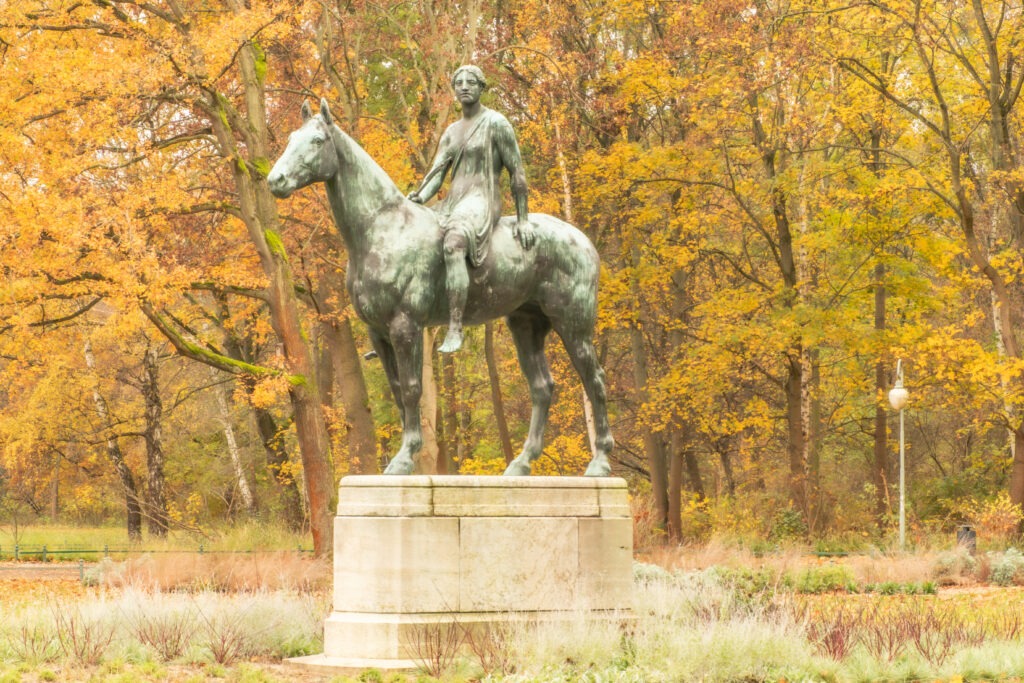
For me, Tiergarten has always been less about what there is to see and more about how it changes the pace of Berlin.
If you’re moving quickly between landmarks, it can feel like just another large park on the map. But when you slow down, even briefly, it becomes something else entirely. A place to reset between the Reichstag and the Brandenburg Gate. A stretch of path after the intensity of the Holocaust Memorial. Duck in after visiting the nearby weekend flea market called Kunstmarktstraße des 17. Juni.
So yes, it’s worth visiting—but only if you approach it the right way.
It’s not a destination you “cover” in one go. In fact, as a visitor, it’s nearly impossible to see the entire park, and you don’t need to. What works best is weaving it into your day. Walking through sections of it as you move between places, like from the Reichstag to the Memorial to the Murdered Jews of Europe, or from Brandenburg Gate toward Potsdamer Platz. That’s when it starts to feel natural, not forced.
And while Tiergarten is central, it rarely feels crowded in a way that takes away from the experience. You’ll notice more people around key spots—the Victory Column, the Soviet War Memorial, Café am Neuen See, the Teehaus, and the Biergarten—especially on weekends. But step just a few minutes away, and it quiets quickly. That’s part of its charm.
Skip it if…
- You’re in Berlin for a short visit and focused on major landmarks
- You’re not a fan of visiting gardens and green spaces when you travel
- You tend to move quickly from one sight to the next without lingering
Prioritize it if…
- You want a break from Berlin’s intensity without leaving the city
- You enjoy walking as part of how you experience a place
- You’re following a slower, more flexible itinerary
- You’re looking for spaces that feel local, not just visited
- You want to visit the historical monuments that the park offers
A Brief History—And Why It Makes the Park Feel the Way It Does
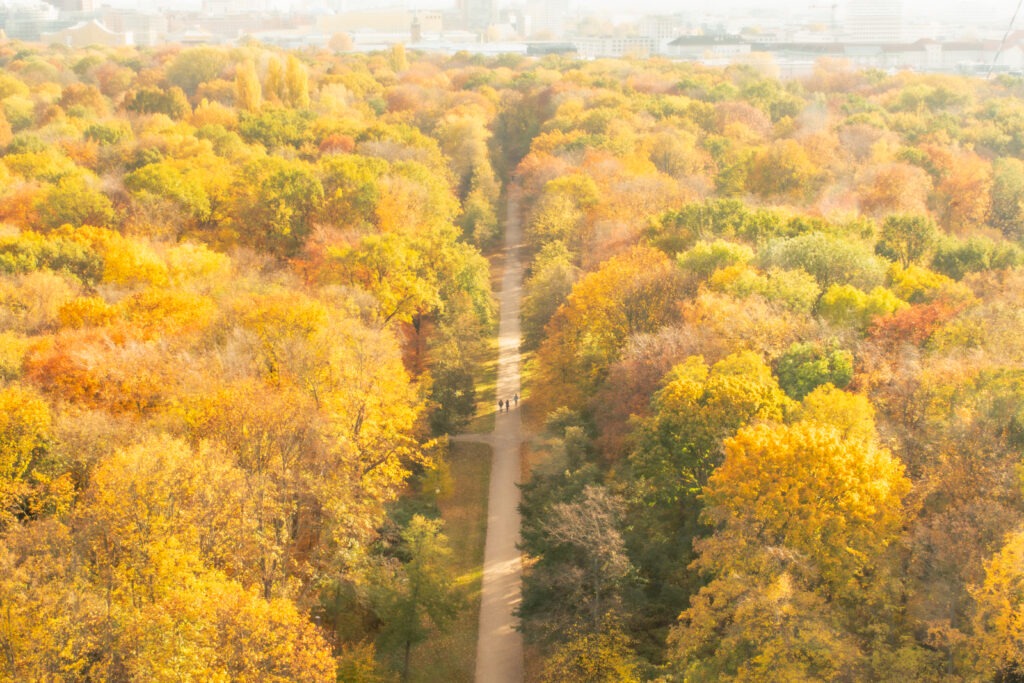
Tiergarten didn’t begin as a park at all. In the 16th century, it was a royal hunting ground for the Brandenburg electors—closed off, controlled, and designed for a very different kind of use.
By the 18th century, it was opened and reshaped into a public space under Frederick the Great. Later, landscape architect Peter Joseph Lenné transformed it into the flowing, natural park you see today, a less formal garden, more open landscape meant to be wandered.
But the part most people don’t realize is what happened after.
During World War II, Tiergarten was almost entirely destroyed. Trees were cut down for firewood. Large sections were left barren. What you’re walking through today is the result of thousands of trees being replanted in the years that followed—slowly, deliberately, over time.
And somehow, you can feel that. It doesn’t feel overly designed. It feels lived in. Restored. A little uneven in places.
When you know that unique history, it shifts how you move through it. It’s no longer just a green space between sights; it becomes part of Berlin’s story of loss, rebuilding, and everyday life continuing on.
A Slow Walk Through Tiergarten Park (How I’d Experience It)
Amongst the towering trees and sprawling lawns, you will find some of Berlin’s best landmarks, statues and memorials. Here’s how I think you should approach it: take one of these walking routes that group some of the things to see together.
From Brandenburg Gate into the Heart of Tiergarten
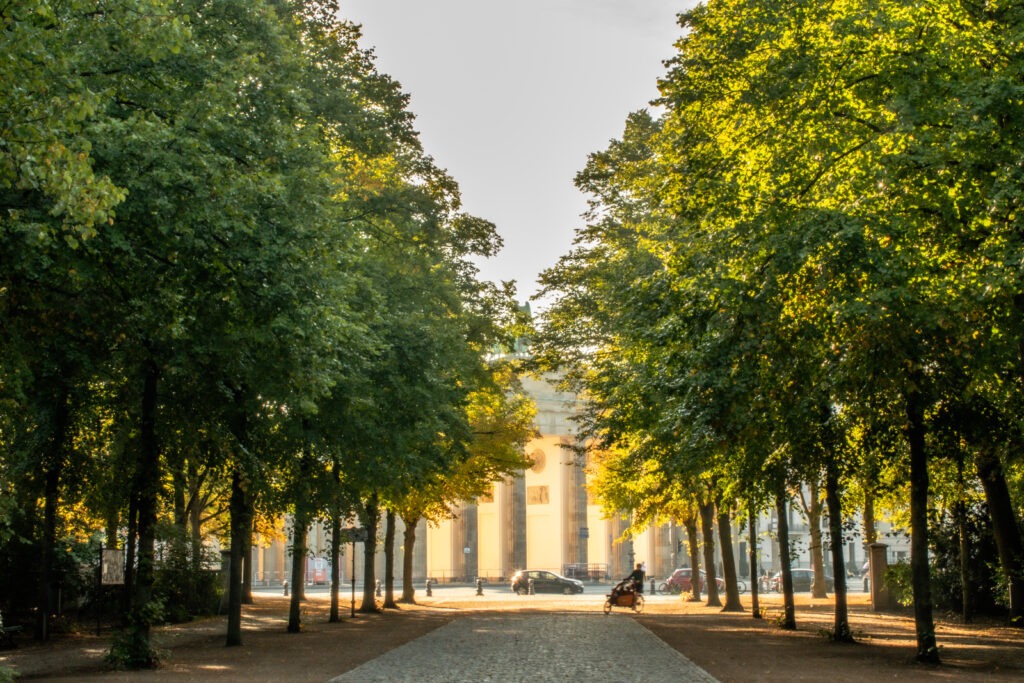
This is one of the most common ways to enter Tiergarten, at the tip of Berlin’s Unter den Linden boulevard, and one of the most meaningful.
Coming from Brandenburg Gate, the shift is immediate. The city softens. The crowds thin just enough. And within a few minutes, you forget you’re in Berlin’s city centre.
This stretch holds some of the park’s most reflective spaces. Here’s what you will see.
Memorial to the Sinti and Roma Victims of National Socialism
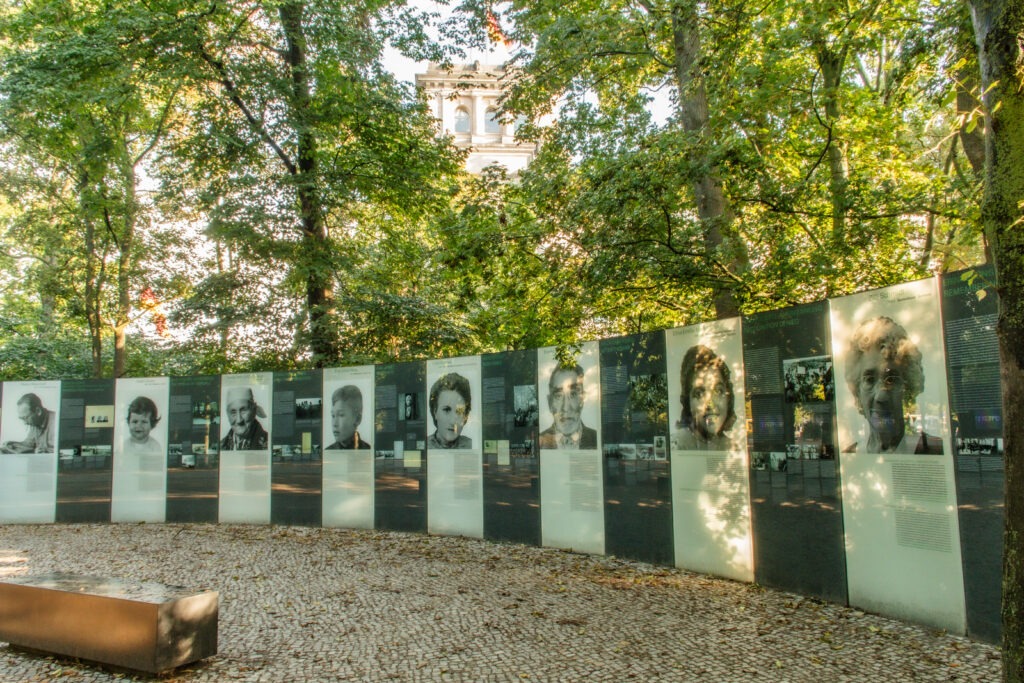
This memorial honours the Sinti and Roma victims of the Nazi regime and sheds light on the persecution they faced. It’s an important and often overlooked part of history.
Begin with the nine glass plaques, each sharing the story of a persecuted individual from across Europe. Short films nearby offer deeper insight into their lives and struggles.
Then, step into the quiet clearing where artist Dani Karavan’s memorial stands. A fountain at its center holds a stone that disappears each day, replaced by a fresh flower. The soft sound of a violin plays in the background, creating a space for reflection. This is one of those places that deserves your time.
Memorial to the Homosexuals Persecuted Under Nazism
This understated monument recognizes the persecution of homosexuals during the Nazi era. A concrete block, engraved with the names of concentration camps, holds a pink granite triangle—the same symbol used to mark homosexual prisoners.
It’s easy to walk past without noticing, as it’s more discreet than other memorials. But it’s worth stopping to reflect.
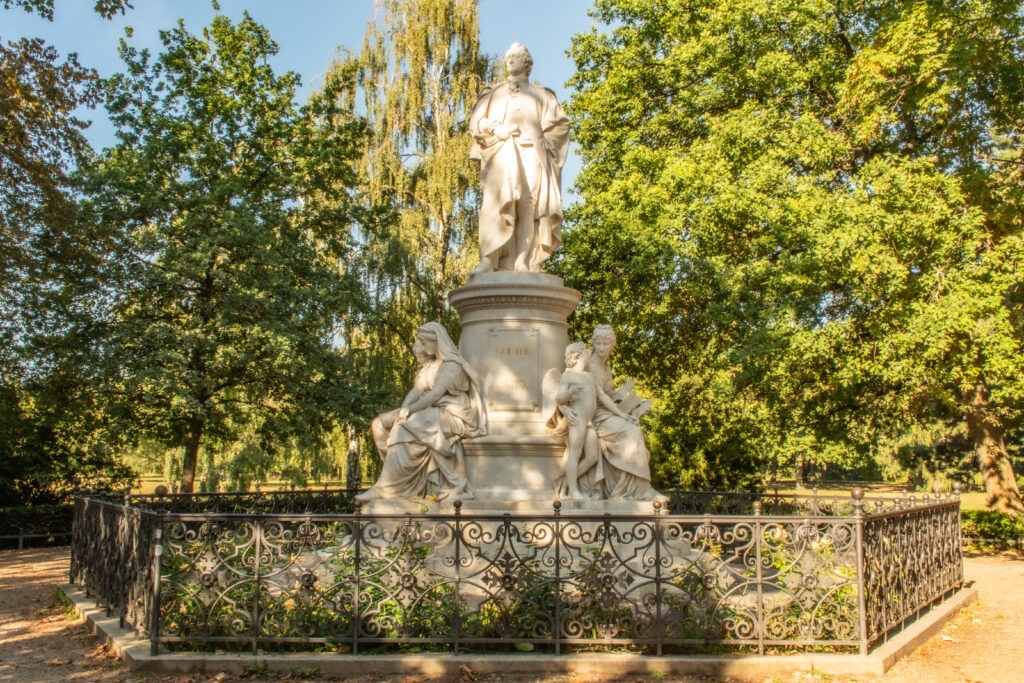
Nearby, you’ll find the Lessing Statue, a monument of white and red marble honouring German philosopher and writer Gotthold Ephraim Lessing. Benches surround it, making it a nice spot to sit. As well as near the Goethe monument, paying tribute to the renowned German writer and poet Johann Wolfgang von Goethe.
Soviet War Memorial (Sowjetisches Kriegerdenkmal)
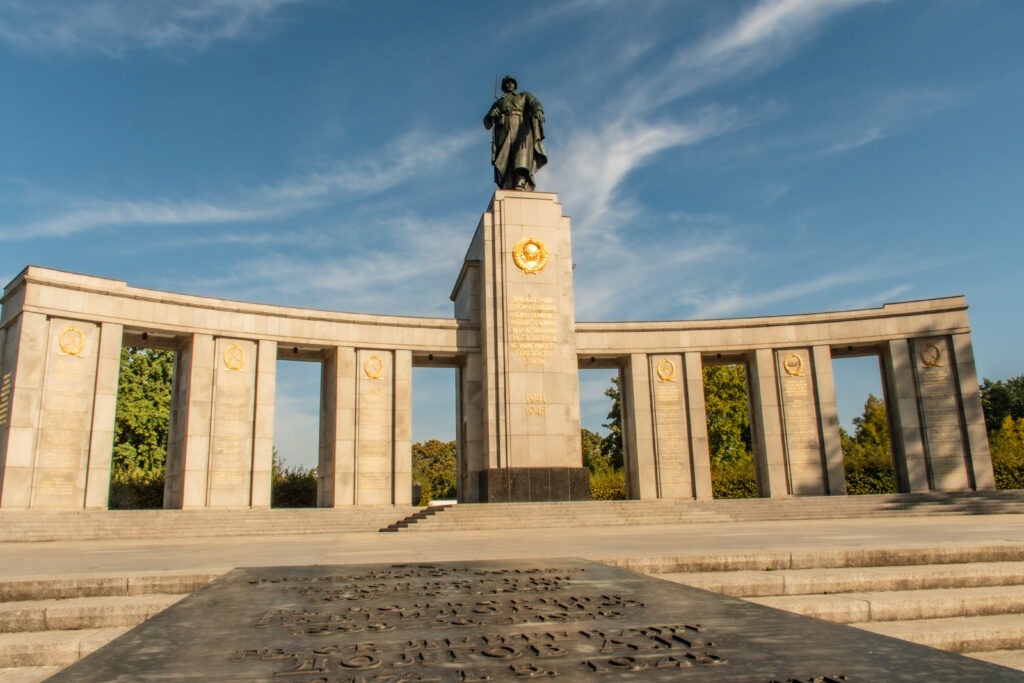
Take a moment at this significant memorial dedicated to the Soviet soldiers who died in World War II. Over 80,000 Soviet troops lost their lives in the Battle of Berlin, and this monument stands in their honour.
Two towering red granite sculptures frame the soldier’s grave, making it a striking sight. Behind it, a free outdoor museum shares the history through photos and exhibits. I spent time reading the displays, and it quickly became my favourite part—yet many visitors passed by too quickly. If you’re here, it’s worth reading about.
Through the Center: Victory Column & Surroundings
As you move further in, the energy shifts again.
The paths widen, and eventually, everything seems to lead toward the Victory Column (Siegessäule) at Großer Stern. This is the most recognizable and busiest part of Tiergarten.
Amazon on Horseback (Amazone zu Pferde)
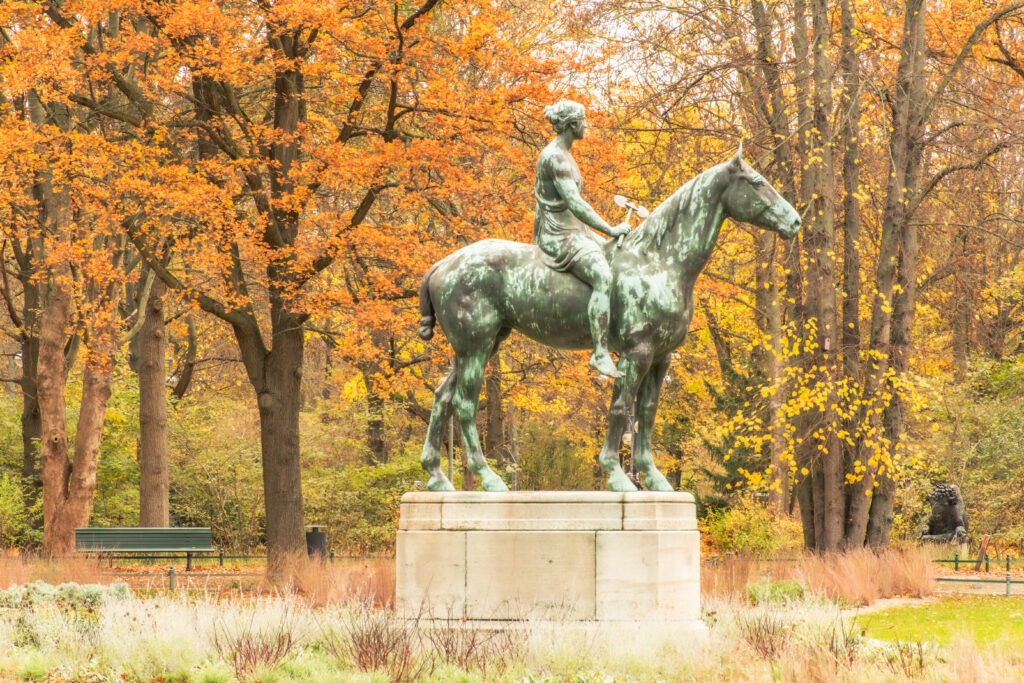
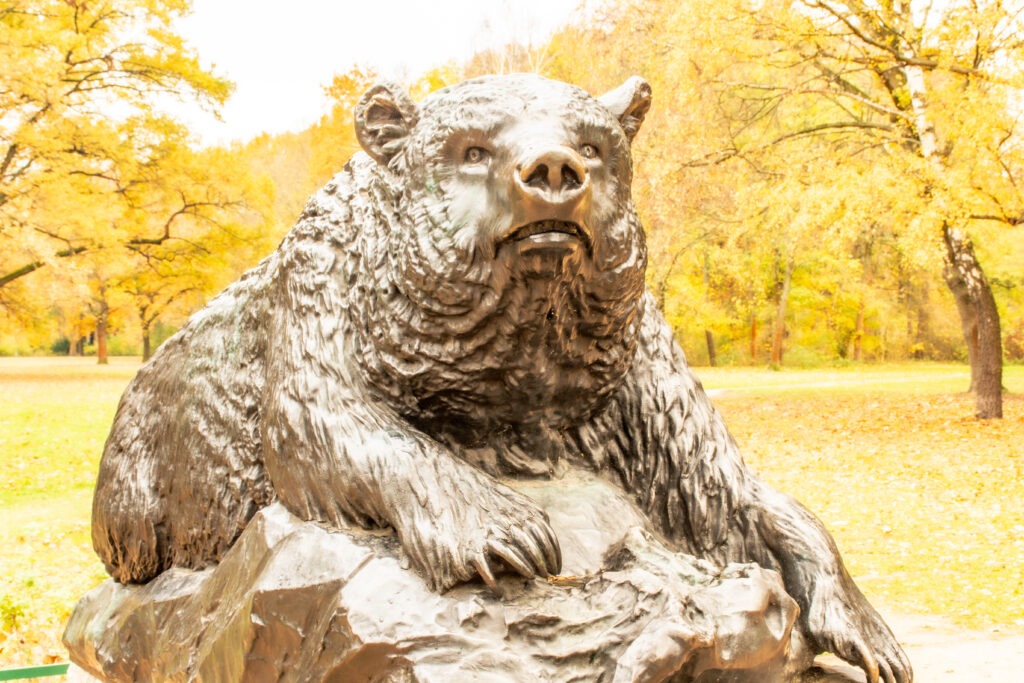
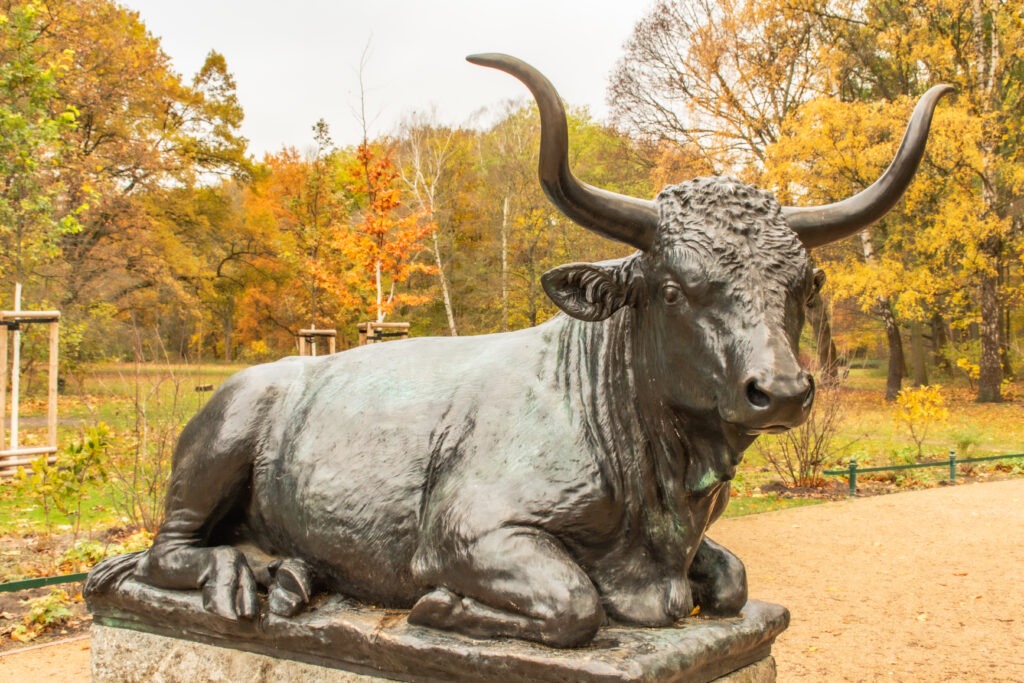
Before you arrive at the Victory Column, there is a worthwhile detour.
Standing tall in the centre is a bronze statue of an Amazon on horseback, surrounded by a group of life-size animals such as moose, bear, and bison.
Composers’ Memorial (Komponistendenkmal)
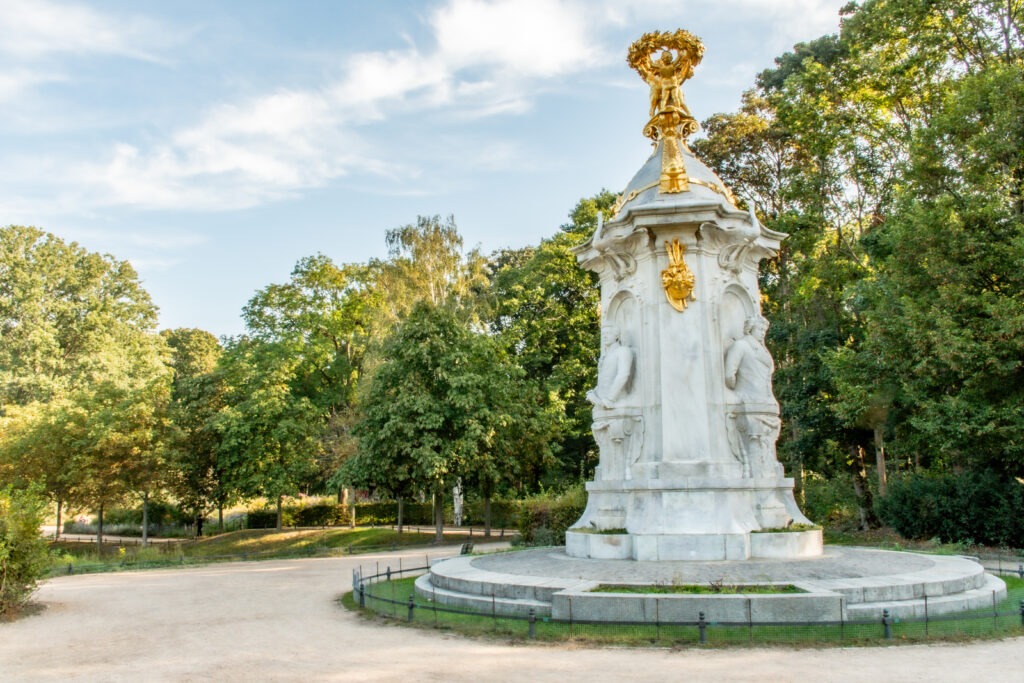
This monument, added in 1895, celebrates the works of three musical giants: Ludwig van Beethoven, Wolfgang Amadeus Mozart, and Joseph Haydn.
Victory Column (Siegessäule)
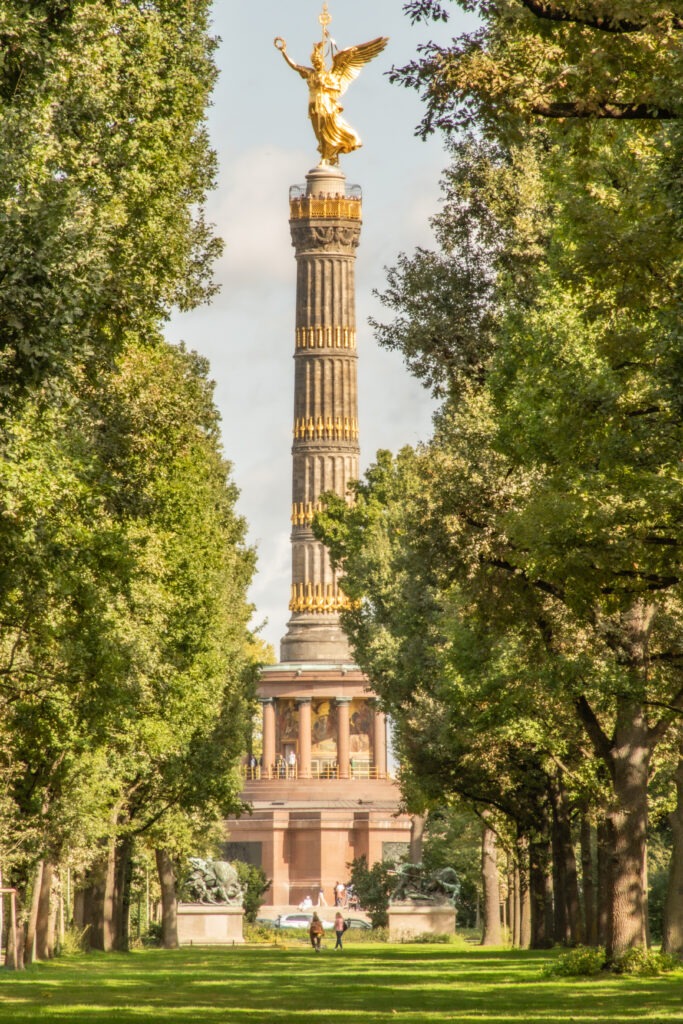
Towering over the park at 67 meters, this iconic column commemorates Prussian victories in the 19th century. This is a must-see monument in Tiergarten. Not to mention, it offers one of the best vantage points in the city. Climb the 285 steps to see what I mean.
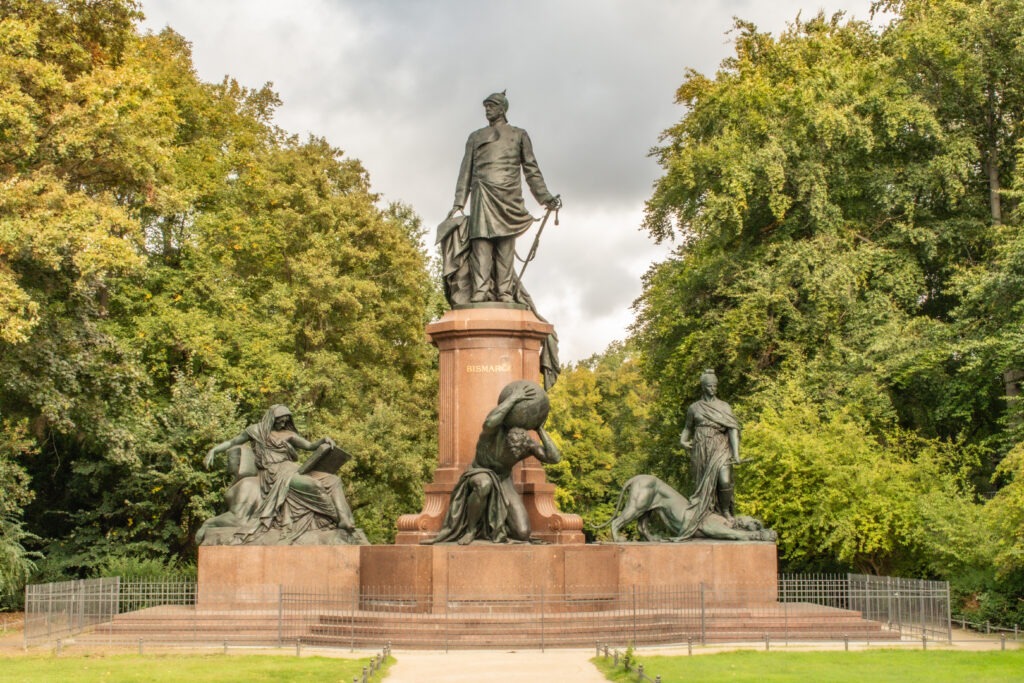
On the roundabout surrounding the Victory Column are these two statues:
- Moltke Monument: a life-size marble statue, created in 1891, honouring Helmuth von Moltke the Elder, a Prussian military strategist.
- Bismarck Monument: is a large monument of Otto von Bismarck, the influential Prussian statesman and a tribute to his role in the unification of Germany.
A Romantic Walk: Roses, Bridges & Statues
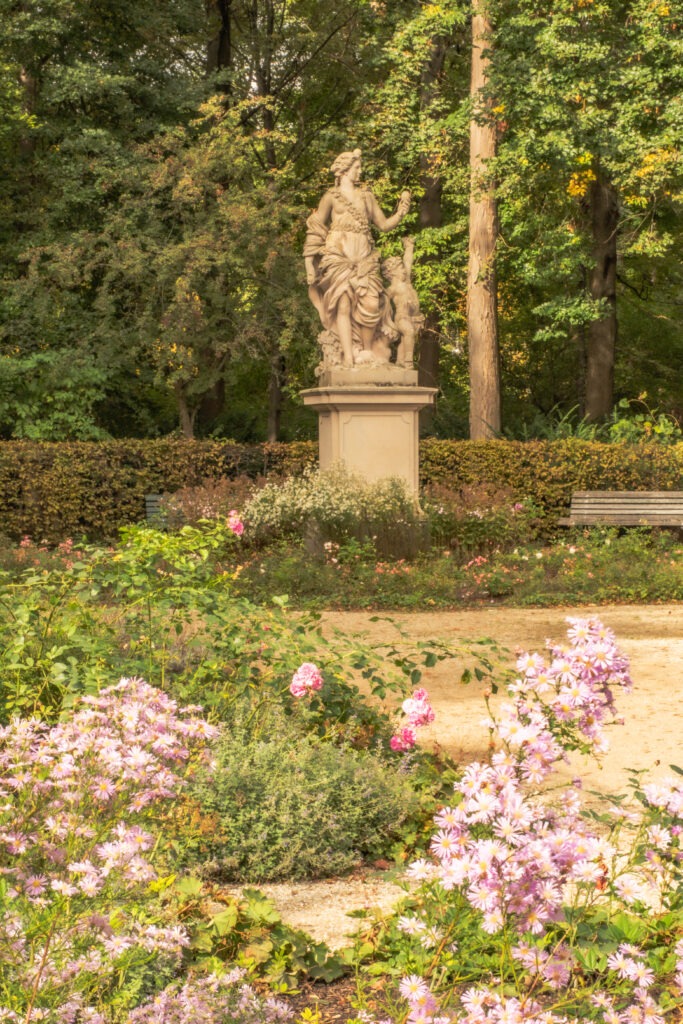
If you’re looking for a softer, more intimate side of Tiergarten, this is where I’d slow down. It’s one of my favourite areas of the park, and it sits in the middle and winds down to the south.
This stretch feels different from the rest of the park, more tucked away, almost like it’s meant for wandering without a plan.
Rose Garden (Rosengarten Tiergarten)
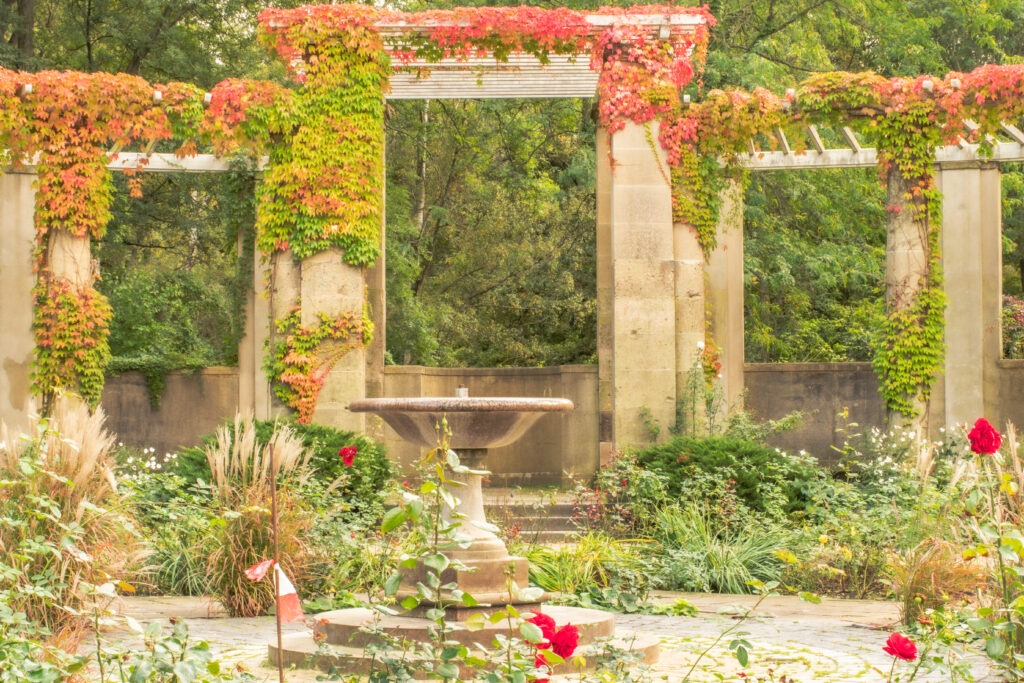
With over 2,000 rose bushes in 70+ varieties, the Rosengarten was where I would visit most often, especially in summer when the roses are in full bloom or in autumn when the colours change.
When you first discover it, you feel like it’s a secret place, framed by a curved column archway. It can be tricky to find your way in. But when you do, you’ll want to stay here for a while.
If you love flowers as much as I do, continue on, over the pretty iron bridge, Stufenbrücke, to Rhododendronhain, another beautiful spot in the park when they are blooming in late spring to early summer.
Queen Louise Monument (Luisen-Denkmal)
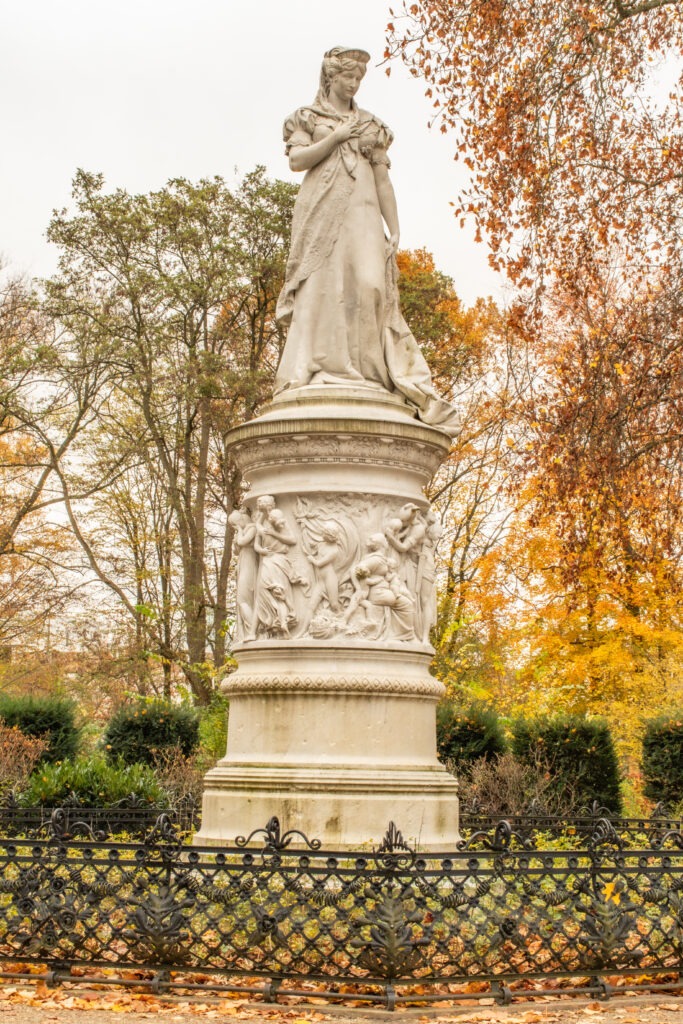
A neoclassical monument to honour Queen Louise of Prussia, who was admired for her grace and patriotism.
The area around it is peaceful, with ponds and nearby statues of Prince Wilhelm von Preußen and Friedrich Wilhelm III.
A little further along, you’ll find the Richard Wagner Monument, a tribute to the legendary composer. It’s hard to miss with its larger-than-life presence in the park.
How to Spend Time in Tiergarten
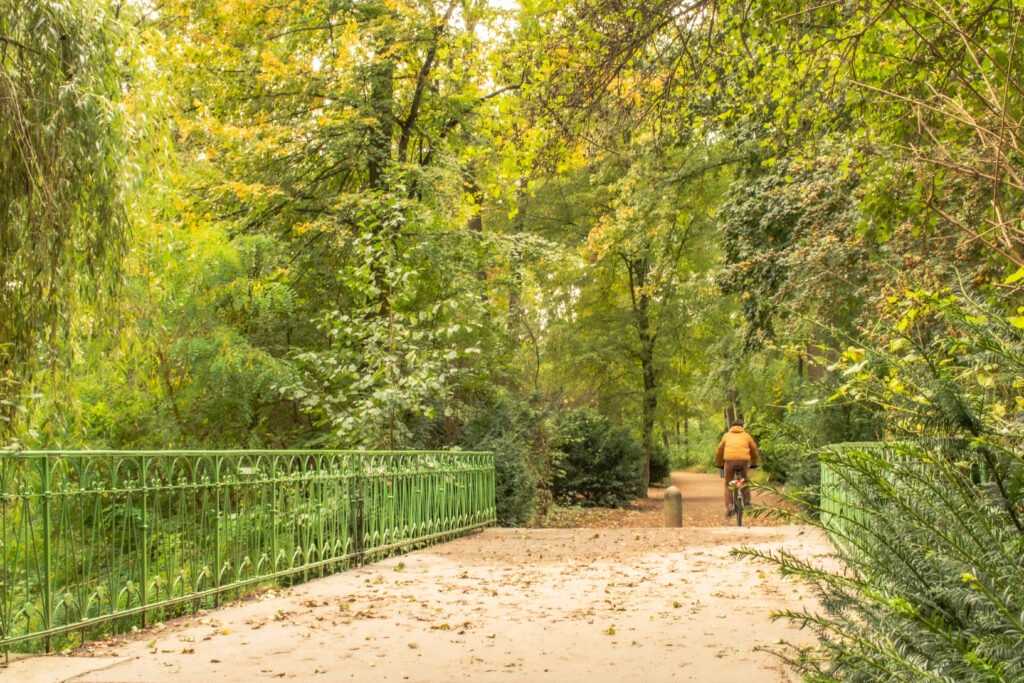
Sundays in Berlin are a time to relax and spend time with family or friends, so without a doubt, this is the most popular time to visit this park.
Tiergarten isn’t just a place you walk through; it’s a place where you stop. These are the best places I recommend you choose.
If You’re Visiting with Family: Visit the Tiergarten Zoo
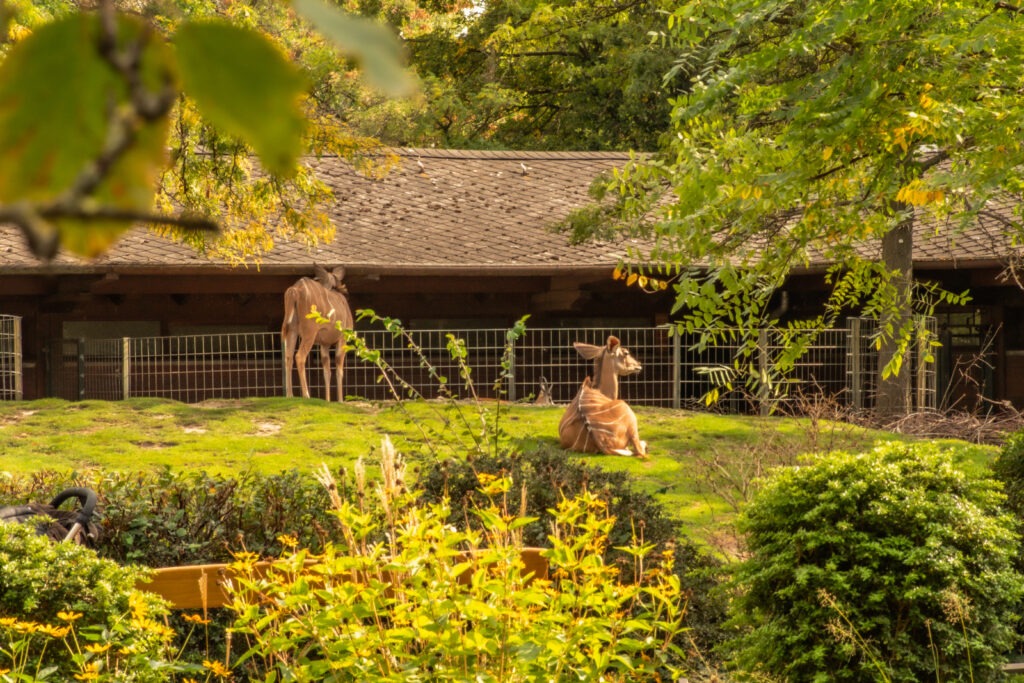
On the edge of Tiergarten, the Berlin Zoo is one of the easiest ways to turn a walk through the park into a longer, more structured visit.
It’s well-known, expansive, and especially appealing if you’re travelling with children. Even if you’re not planning a full visit, it’s helpful to know it’s here.
If You Want a Relaxed Café or Biergarten Stop
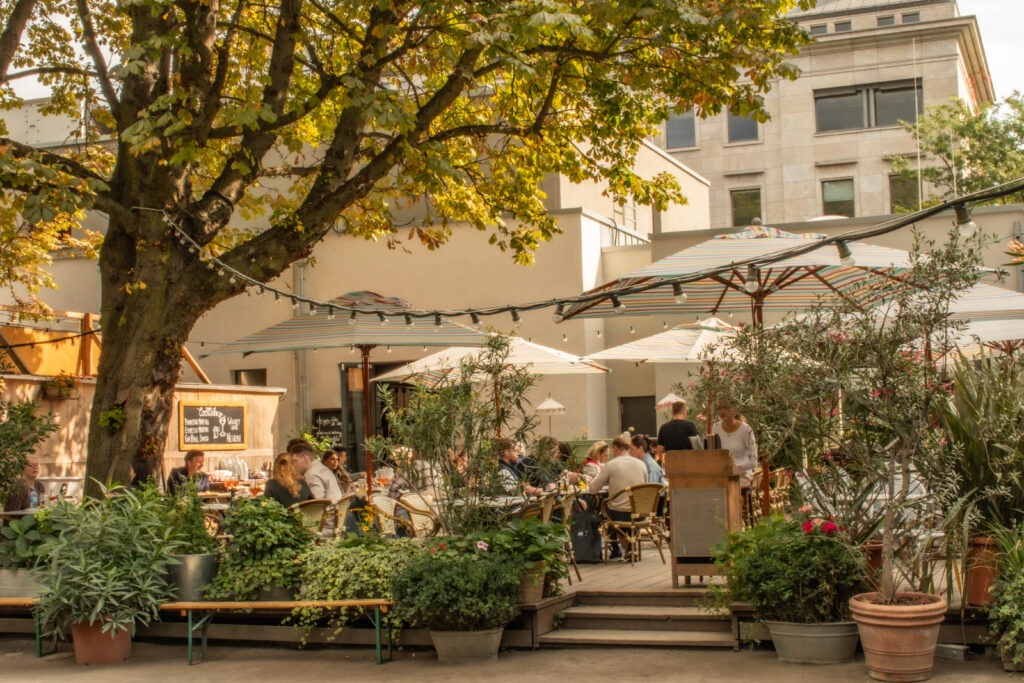
Café am Neuen See is the most well-known, and for good reason. Set beside the water and shaded by trees, it’s one of the few places in the park where you can settle into a proper break, coffee, lunch, or weekend brunch. It leans social, especially on weekends, but never feels rushed.
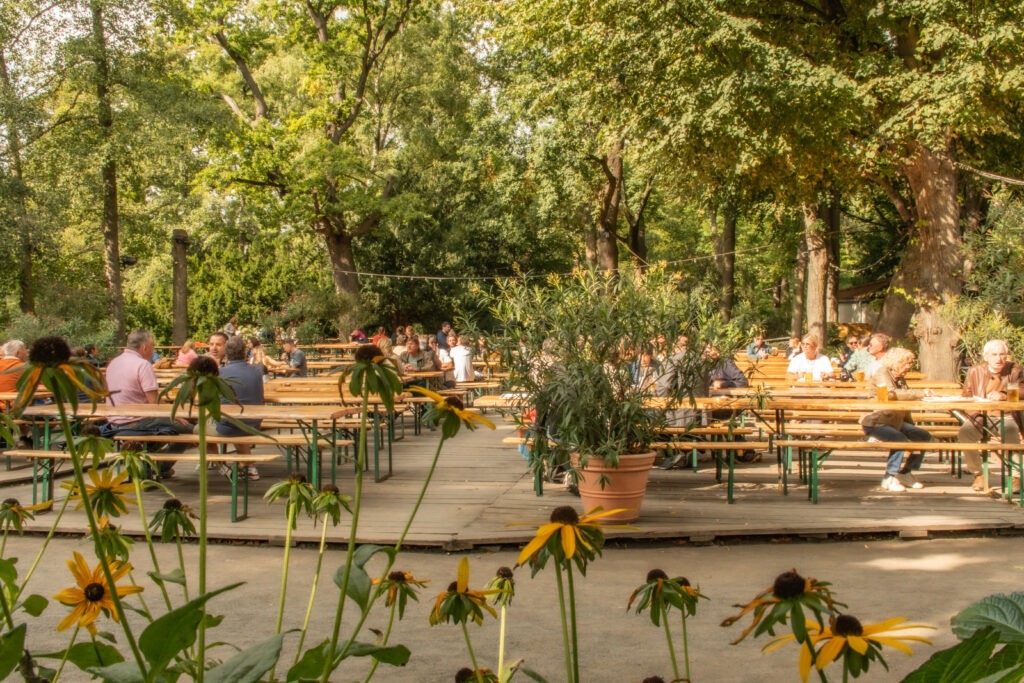
If you’re in the mood for something more casual, the neighbouring beer garden is a great spot for lunch with a beer.
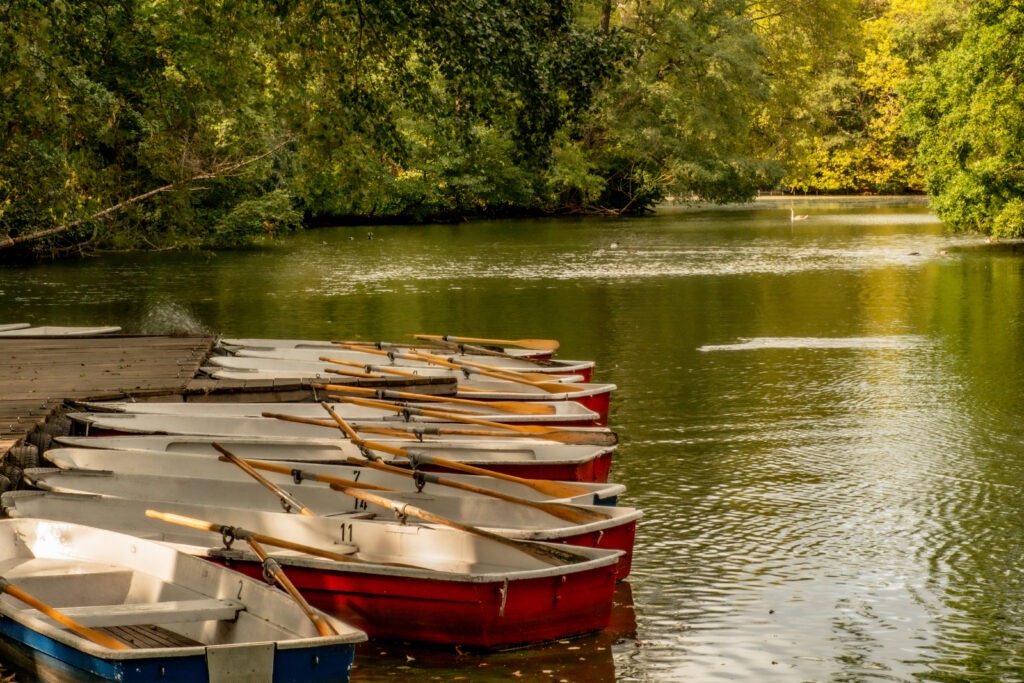
This is also part of the park, where you can rent a rowboat on Neuer See (New Lake) and spend a relaxing afternoon paddling on the water.
If You Want Afternoon Tea at the Teahouse in the English Garden
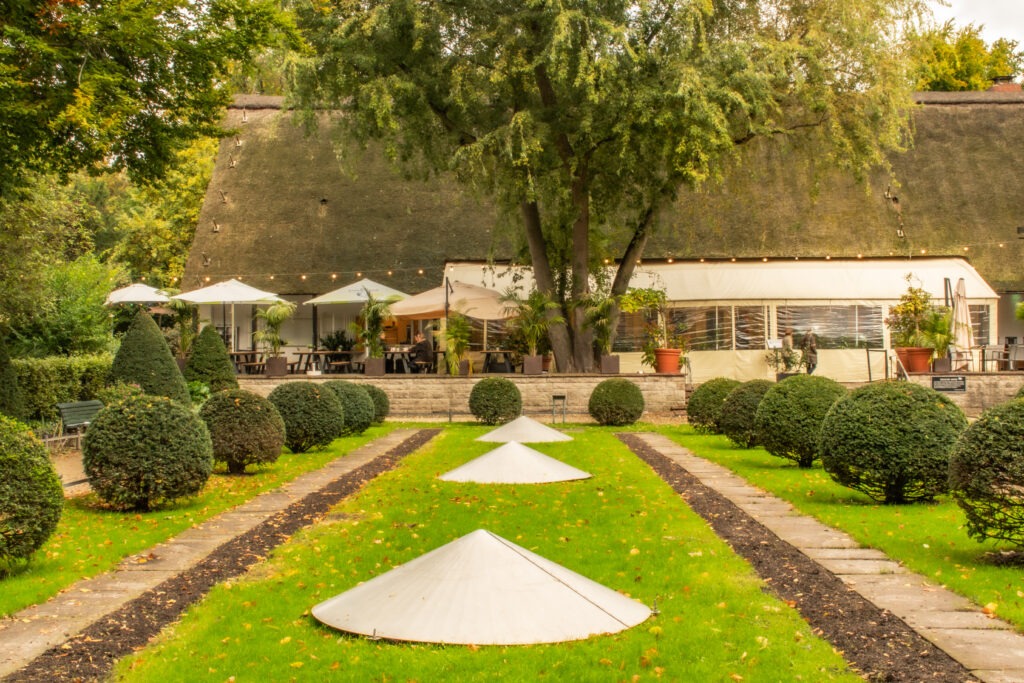
When I discovered there was a teahouse, Teehaus im Englischen Garten, I immediately wanted to go.
On a rainy autumn afternoon, I decided to treat myself to afternoon tea. I’ll admit, I should have chosen a sunnier day to enjoy the pretty terrace, but the experience was still wonderful.
The finger sandwiches and fluffy scones were the perfect pairing with my warm, fragrant Green Jasmine tea, all while enjoying the peaceful park views.
It gets quite busy on weekends, so be sure to make a reservation. They also have a seasonal beer garden.
If You Want to Visit a Museum
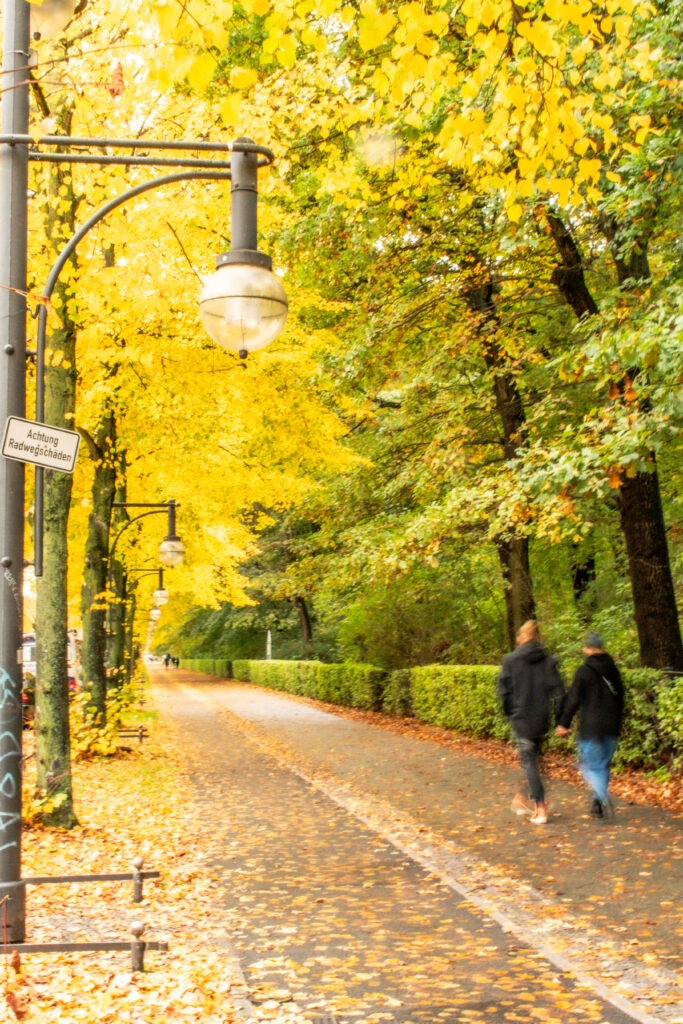
One of the free museums in Berlin is the Gaslaternen-Freilichtmuseum, an open-air museum dedicated to the history of gas lighting. See the nearly 100 gas lanterns from different eras and learn the role in developing Berlin into a city of lights leader.
FAQ About Visiting Tiergarten
Is Tiergarten easy to walk through without getting lost?
Yes, but it’s not intuitive. Paths branch often, and signage is limited. Use major landmarks like the Victory Column or Straße des 17. Juni to reorient yourself, or keep Google Maps open if you’re trying to reach a specific exit.
How much time do you realistically need?
It depends on how you want to experience it.
1 hour: walk through a section between major sights
2–3 hours: explore deeper with a few stops
Half-day: include a café, biergarten, or visiting the zoo
You don’t need to see it all—just let it fit naturally into your day.
Is there anything special to see or hear in Tiergarten on Sundays?
Yes—if you’re in the park around 3 pm on a Sunday, you may hear the Carillon, a large musical tower nearby. Locals often pause to listen, and it’s one of those small, easily missed moments that make being in the park feel more connected to the city.
What are the best nearby attractions to combine with Tiergarten?
Tiergarten is easy to pair with Berlin’s major sights. The Reichstag, Brandenburg Gate, and the Memorial to the Murdered Jews of Europe all sit along its edges. You can also walk toward Potsdamer Platz or Bellevue Palace, using the park as a quieter route between them.
Let Tiergarten Be Part of Your Day, Not the Plan
Tiergarten isn’t something you need to schedule or see all at once.
It’s the space in between, add it to your itinerary when nearby or perhaps if it’s close to where you are staying in Berlin.
That’s how it’s always felt to me. Not a checklist stop, but somewhere I return to, again and again, without needing a reason.
If you let it fit naturally into your day, Tiergarten does what it does best: it shifts the pace of your time in Berlin.
And often, that’s exactly what makes the rest of the city feel more meaningful.
If you’re planning your time in Berlin and want help shaping days that feel well-paced and intentional, you can explore my trip planning services.


