

The Berlin city centre might not be as easy to find as one might think. As someone who lived here, I can tell you it’s a bit complicated. Unlike cities with a single, clearly defined Old Town, Berlin is a city where the concept of a “centre” is fluid, shaped by its complex history and ever-evolving culture.
Depending on whom you ask, you’ll hear different answers—some might point you to Ku’Damm in the west, Alexanderplatz in the east, or Potsdamer Platz, the heart of a unified Berlin.
Others may argue that each neighbourhood, or “Kiez,” has its own unique centre. And then there’s the geographical centre point, which shifts as the city grows.
Keep reading, as I explore all these perspectives, helping you understand this unique characteristic of Berlin.
This post may contain affiliate links, meaning I get a commission if you decide to purchase something through the links, at no additional cost to you. Read my Affiliate Disclosure.
Where is the Berlin City Centre? A Traveller’s Perspective
When you visit Germany’s capital city, you will find not one, not two, but three distinct city centers, each offering a unique vibe to its urban life.
1. Ku’Damm (Kurfürstendamm)
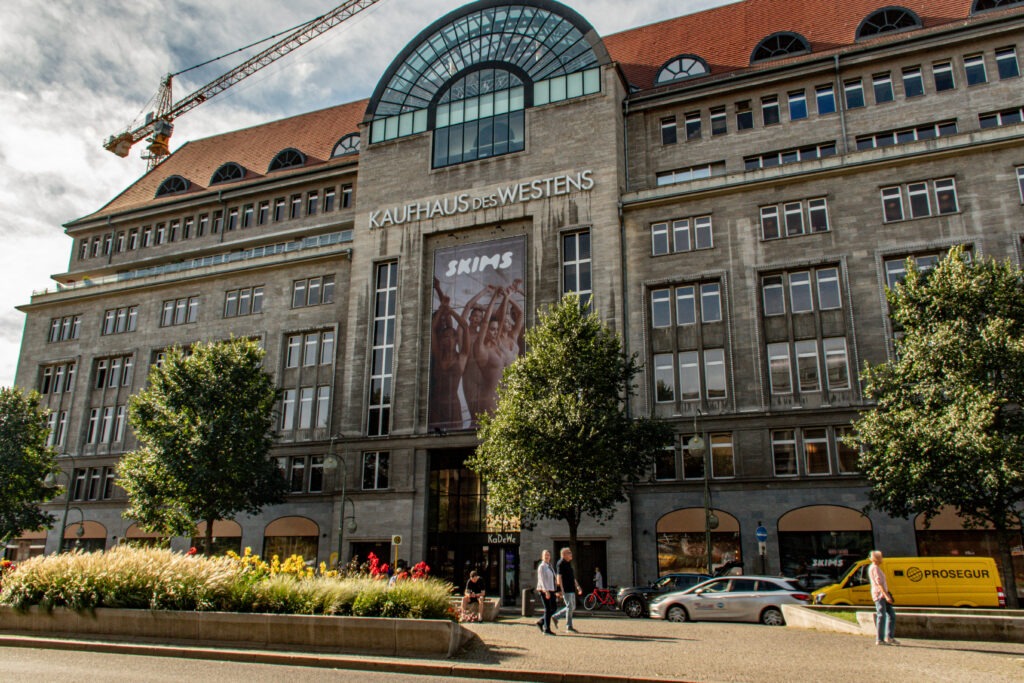
Let’s start in the West with the glamorous Ku’Damm, short for Kurfürstendamm. This wide, busy boulevard is the epitome of sophistication, lined with chic boutiques, a high-end department store called KaDeWe, and elegant cafes like you might find in Paris.
This area of the Berlin city center makes up Kurfürstendamm and Tauentzienstrasse, two prominent shopping streets converging at Breitscheidplatz. Here, the iconic Kaiser Wilhelm Memorial Church is one of the must-see places in Berlin.
Visit this area on a Saturday and take part in a Berliner’s favourite activity – shopping, more specifically, shopping at flea markets. The nearby antique weekend market can be found on Straße des 17. I recommend you power up first and enjoy a classic English breakfast in Berlin at Benedicts, a trendy all-day brunch spot.
2. Alex (Alexanderplatz)

Jumping over to the East, we find the ever-so-famous Alexanderplatz, affectionately known as “Alex” to the locals.
Alex is a hub for shopping, entertainment, and transportation. Many tourists make this a stop on their Berlin itinerary to see the top landmarks like the TV Tower, the Red Town Hall, towering communist-era buildings and the World Time Clock, to name a few.
3. Potsdamer Platz
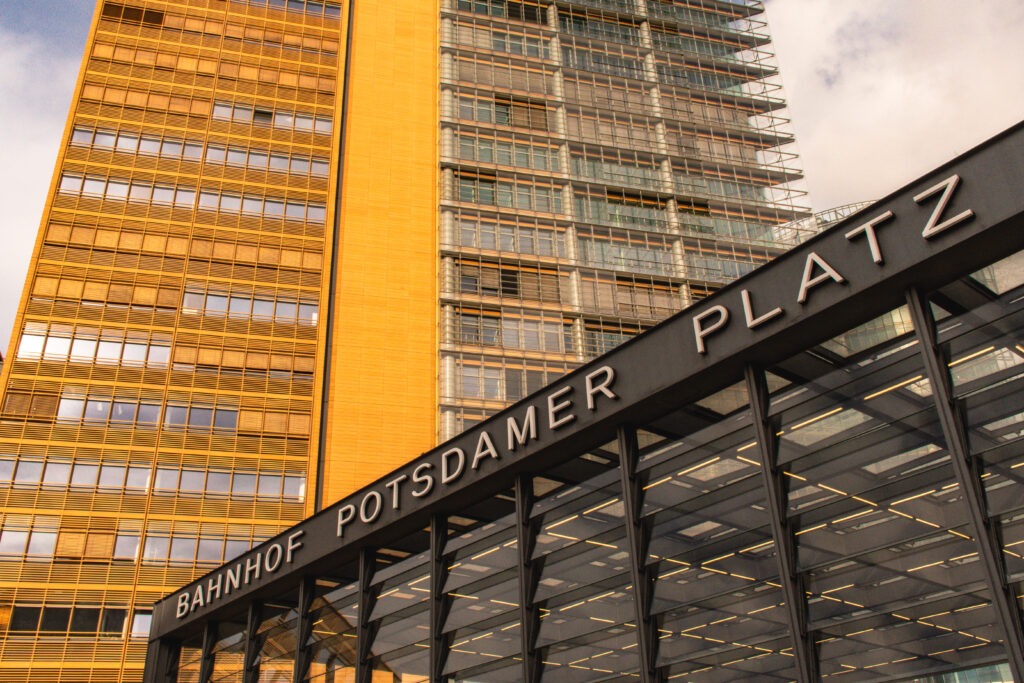
Last but not least, Potsdamer Platz is the symbol of Berlin’s reunification. Once a desolate no-man’s-land during the Cold War, it has now risen from the ashes to become a symbol of unity. I love the cutting-edge architecture, sleek skyscrapers, and the many cinemas and shops nearby.
The Postdamer Platz is known as the Times Square of Deutschland, and is where you can see a preserved piece of the Berlin Wall.
Tip on getting around the city centre of Berlin: It’s well-connected by public transportation, including the U-Bahn (subway) and S-Bahn (urban railway) networks. The Berlin S-Bahn ring is a circular railway that encircles the central parts of the city, making it easy to get around.
Where Is the City Center of Berlin? A Neighbourhood Perspective
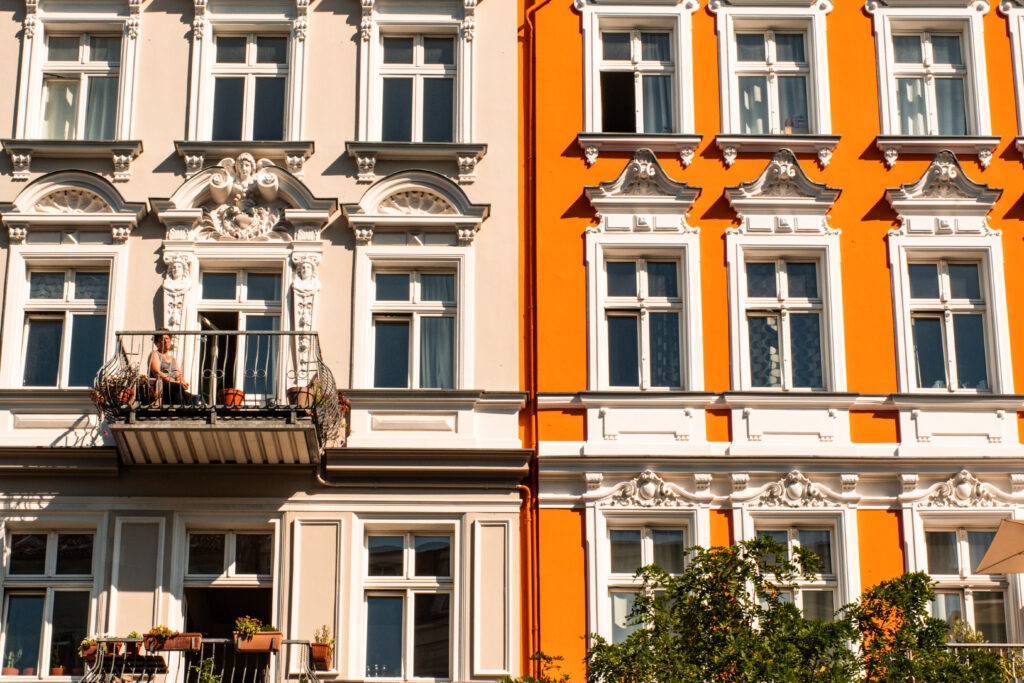
Most people might think that the Berlin centre can be found in the lively neighbourhood of Mitte, which literally translates to “middle” in German, but it’s technically not.
The Mitte neighbourhood, where I lived in Berlin, is often seen as the city’s historic and cultural heart, where you’ll find such landmarks as the Brandenburg Gate on Unter den Linden, the Reichstag, and Museum Island.
As for the other Berlin districts, they also have their own centers.
Kreuzberg, known for its alternative vibes, feels like the creative epicentre of Berlin. It’s filled with street art, quirky cafes, and vibrant nightlife around Görlitzer Park and Oranienstraße.
Prenzlauer Berg, a former East Berlin neighbourhood, has a village-like charm, centred around Kollwitzplatz and Helmholtzplatz. Known for its leafy streets, trendy boutiques, and cozy cafes, it feels like a quieter yet hip urban centre.
Friedrichshain is centred around Boxhagener Platz, and it has a youthful, energetic feel known for its nightlife, art, and music scenes.
Charlottenburg is home to Kurfürstendamm, the KaDeWe shopping mall and the grand Charlottenburg Palace; this area is the center for luxury shopping, fine dining, and classic Berlin elegance of the former West Berlin.
Neukölln is the multicultural district and would name the busy area near Hermannplatz its city centre with nearby street markets, eclectic bars, and a growing art scene.
Schöneberg, which is focused around Nollendorfplatz, is a diverse neighbourhood with a relaxed vibe and a mix of chic boutiques and cafes.
Wedding is centred around Leopoldplatz. Wedding is a working-class neighbourhood on the rise, known for its multicultural community and affordable dining options.
Where is the Centre of Berlin on a Map? A Geographic Perspective
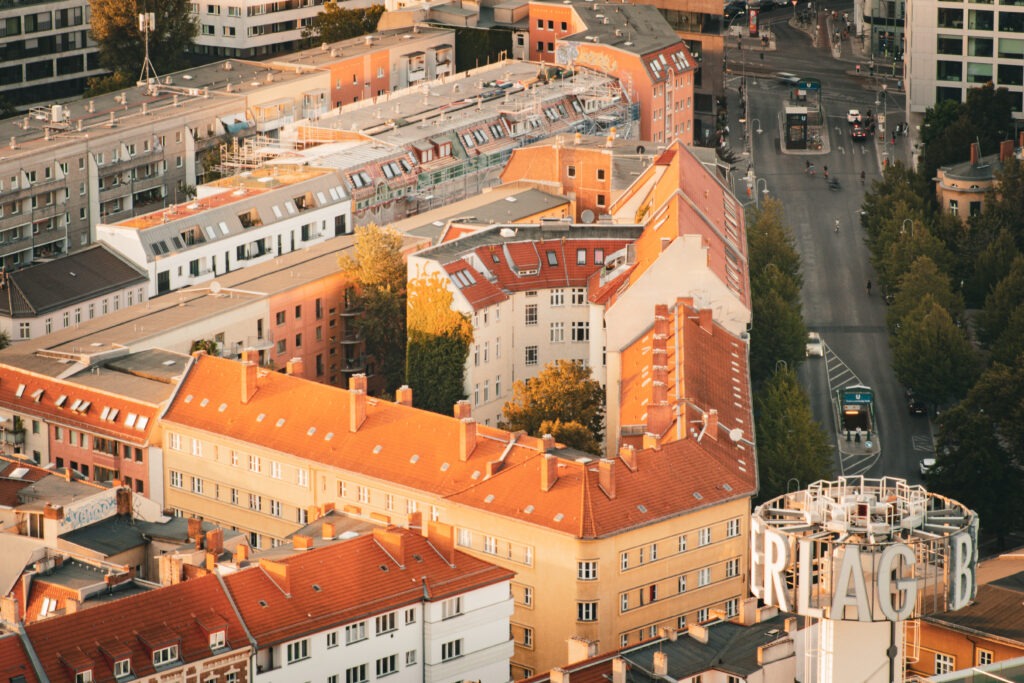
Over the years, the geographical center of Berlin has shifted from one location to another as the city has evolved. In the early days, the center was situated around Rathaus, the historical city hall in Alt-Berlin (Old Berlin). This charming area served as a focal point for trade and governance during the medieval period.
This historic area, known as Nikolaiviertel, is the city’s prettiest area. Strolling through Berlin’s oldest district is like stepping back in time. Its charm and medieval atmosphere keep me coming back over and over again.
However, as Berlin expanded and modernized, its center gradually moved westward. Today, the city’s current geographical center (52°30’10″N 13°24’15″E) is found in the neighbourhood of Kreuzberg, near the Möckernbrücke station on Alexandrinenstrasse.
You can find a plaque commemorating the geographical center in 1997 on the left corner of the football (soccer) pitch.
FAQ About Berlin City Centre
What is considered the Berlin city centre?
Berlin doesn’t have a single defined “city centre” like many European cities. Most travellers refer to Mitte as Berlin’s city centre, especially around Alexanderplatz, Museum Island, and Brandenburg Gate.
Where should I stay if I want to be in Berlin city centre?
Stay in Mitte if you want walkable access to major sights. For a more local feel just outside the core, consider Prenzlauer Berg or Kreuzberg with easy transit into the centre.
What is the difference between the Berlin city centre and downtown Berlin?
“Downtown Berlin” isn’t a term locals use. Travellers sometimes use it interchangeably with Berlin city centre, but it usually refers broadly to Mitte and the surrounding central districts.
How many days do I need to explore the Berlin centre?
Plan for at least 2–3 days to explore the Berlin city centre comfortably. This allows time for major landmarks, museums, and wandering between neighbourhoods without rushing.
Berlin Isn’t a City You Finish—It’s One You Return To
Berlin doesn’t wrap itself up neatly. There isn’t one clear centre, one perfect route, or one version of the city you’re meant to see.
That’s what makes it different.
You move between pockets, Mitte, Kreuzberg, Prenzlauer Berg, and somewhere in between, the city starts to make sense in your own way. Not all at once, and not all on one trip.
If you’re trying to plan Berlin in a way that feels intentional (without overpacking your days or second-guessing every choice), this is exactly where most itineraries fall apart.
I write about a slower, more grounded way to experience Europe—one that leaves space for the in-between moments, not just the landmarks.
If that’s the kind of travel you’re craving, you can join my newsletter.


