

I crossed Checkpoint Charlie before I understood what it meant.
I was a teenager living in Germany, returning from East Berlin on a special permit. I remember the shift more than the structure. The questions were sharper. The atmosphere tightened. Even standing still felt different.
Why is Checkpoint Charlie so famous? It’s because it was the main crossing point between East and West Berlin during the Cold War, but more than that, it represented a world divided. This was where diplomats passed, where escape attempts unfolded, and where global tension was felt in a single street.
What stays with me isn’t the guardhouse you see today. It’s the feeling of being watched, of moving between two systems that didn’t trust each other.
If you’re visiting now, it’s easy to see a replica. It’s harder, but more meaningful, to understand what happened here.
This post may contain affiliate links, meaning I get a commission if you decide to purchase something through the links, at no additional cost to you. Read my Affiliate Disclosure.
What was Checkpoint Charlie?

Checkpoint Charlie was the most famous crossing point between East and West Berlin during the Cold War, symbolizing the division between communist and capitalist ideologies.
Established in 1961, this checkpoint was a guarded gateway where only diplomats, foreign visitors, and military personnel passed through under watchful eyes. It was going from Soviet-controlled East to the Allied-occupied West.
The name “Charlie” comes from the NATO phonetic alphabet, with “C” standing for Charlie, following Checkpoint Alpha and Bravo at different border crossings.
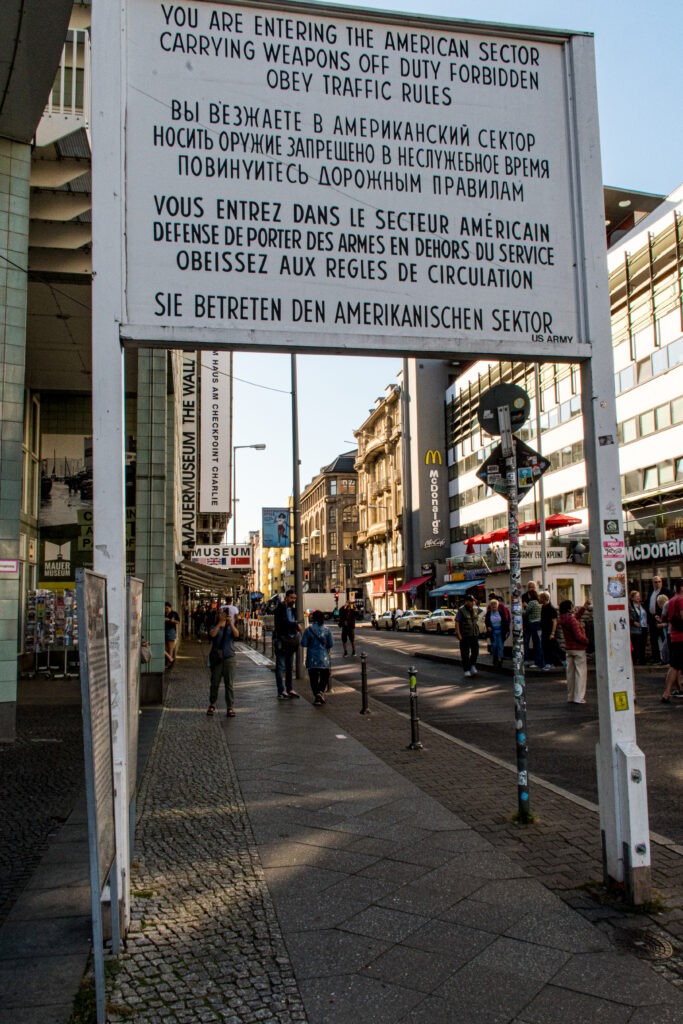
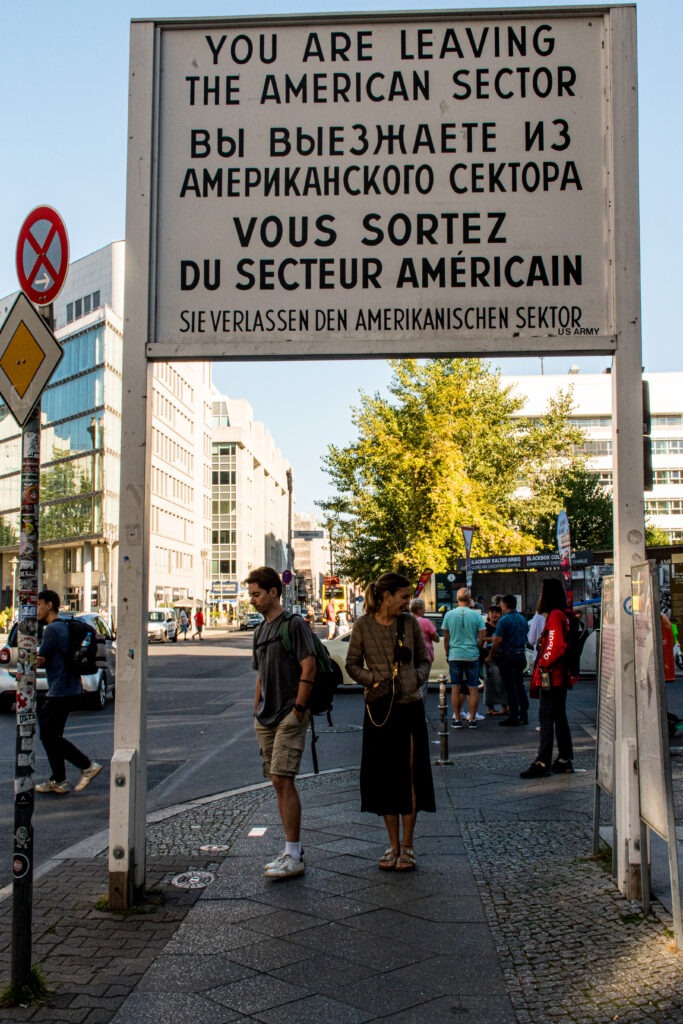
Today, the checkpoint no longer functions as a border crossing, but its guardhouse, complete with sandbags and a replica sign, still stands as a vivid reminder of the divided city’s tense history, making Berlin an interesting city to visit.
Why Checkpoint Charlie Became World-Famous
Checkpoint Charlie became famous because this small corner of Berlin held global tension on its shoulders. It was the site of daring escape attempts—hidden compartments, forged papers, tunnels carved in desperation and hope.
It was also the stage for the 1961 tank standoff, where U.S. and Soviet forces faced each other with engines running, the world watching, breath held.
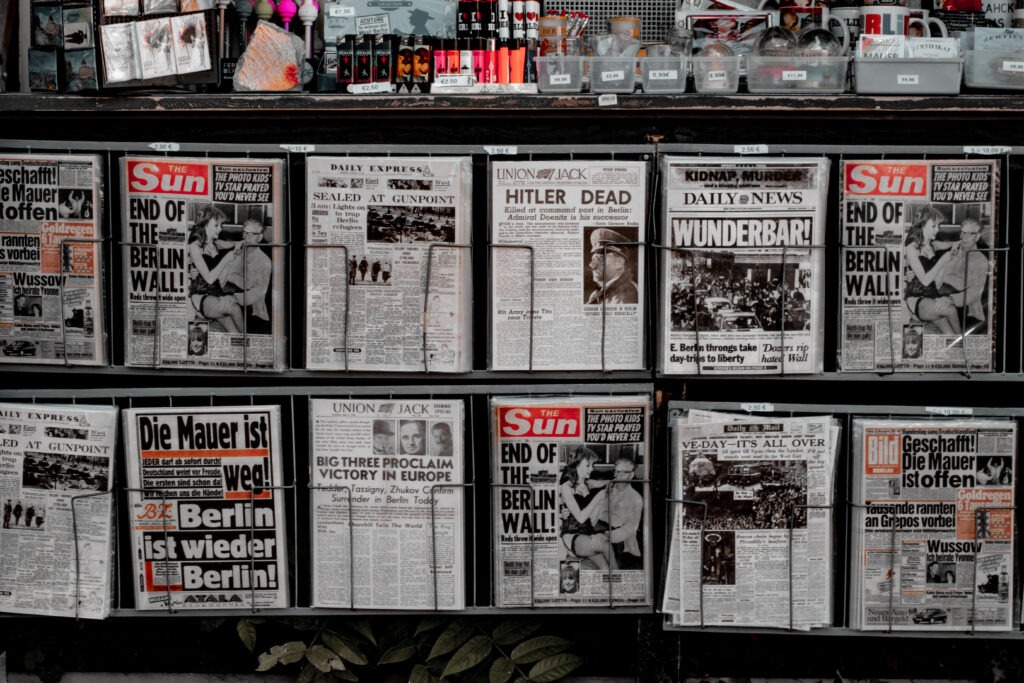
Newspapers, cameras, and foreign correspondents made the checkpoint a symbol. East versus West. Control versus freedom. A clash of ideologies condensed into a single spot on the map.
Checkpoint Charlie History
To understand Checkpoint Charlie, you don’t need every date. You need to understand how a city became divided, and what that division looked like in practice.
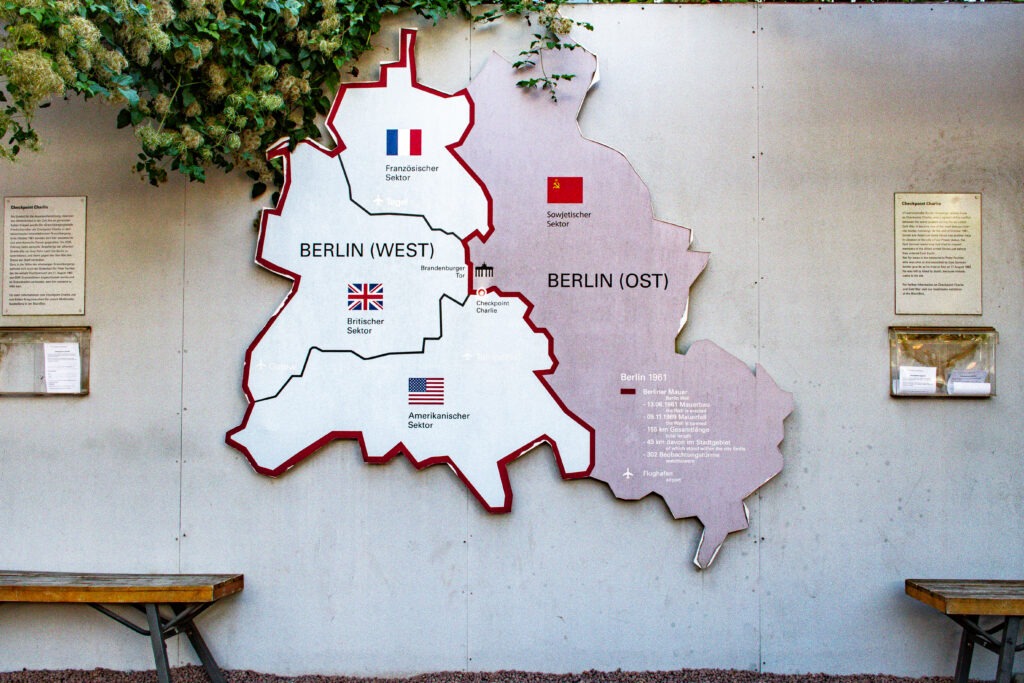
After World War II, Berlin was split into four sectors controlled by the Allied powers. What began as an administrative division quickly became something else. By 1949, Germany was formally separated into East and West, and Berlin followed. The city was no longer just occupied. It was ideologically divided.
By the early 1960s, the pressure had built. Thousands of East Germans were leaving for the West, and the border tightened in response. In August 1961, construction of the Berlin Wall began. Almost overnight, movement between the two sides became controlled, restricted, and, for many, impossible.
Checkpoint Charlie emerged as the most visible crossing point between the American and Soviet sectors. This wasn’t a place for everyday movement. It was tightly managed. Diplomats, foreign visitors, and military personnel passed through under scrutiny, while East German citizens were largely prevented from crossing at all.
Tensions here were not abstract. In October 1961, American and Soviet tanks faced each other just meters apart at this checkpoint. Engines running. Weapons ready. A standoff that lasted hours, with the world watching closely.
For nearly three decades, this crossing stood as a controlled gateway between two systems that did not trust each other. Then, in November 1989, the Berlin Wall fell. Less than a year later, Checkpoint Charlie closed, no longer needed in a reunified Germany.
My Experience Crossing Checkpoint Charlie
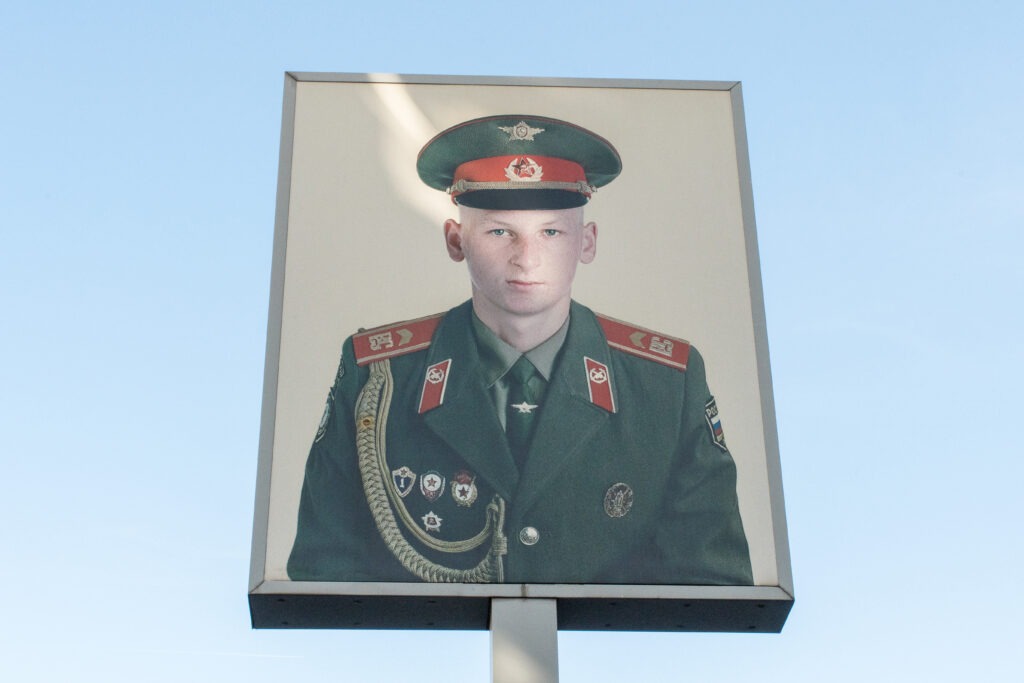
In 1988, while I was living in Berlin as a student, I crossed back from East Berlin to West Berlin through Checkpoint Charlie. I didn’t know it then, but that day would stay with me for decades.
I remember how different the two sides felt. On the West, the guard was almost casual—polite questions, a quick glance at papers, nothing more. On the East, everything tightened. The guard was curious, watchful, precise. Even with a pre-approved student visa and official permission to visit, the atmosphere shifted the moment we stepped over the border.
Before entering, we were handed strict rules: no wandering, no questioning, and absolutely no photography. Cameras could be confiscated without hesitation. It felt foreign, controlled, unfamiliar to my young eyes.
When I reached the East side of the checkpoint, my photograph was taken—a standard procedure there, but startling to me then. Today, in a post-9/11 world, this kind of documentation feels ordinary. Back then, it felt like surveillance.
Crossing back into the West, the scrutiny was just as intense. The East German border officers logged everything—where we ate, who we spoke with, even how long we stayed. They wanted a record of our movements, as if the city and its people were something to monitor rather than experience.
That crossing taught me more than books ever could. The tension, the caution, the two Berlins separated not just by walls, but by ideology and suspicion. It was a lesson I never forgot.
What You Can See at Checkpoint Charlie Today
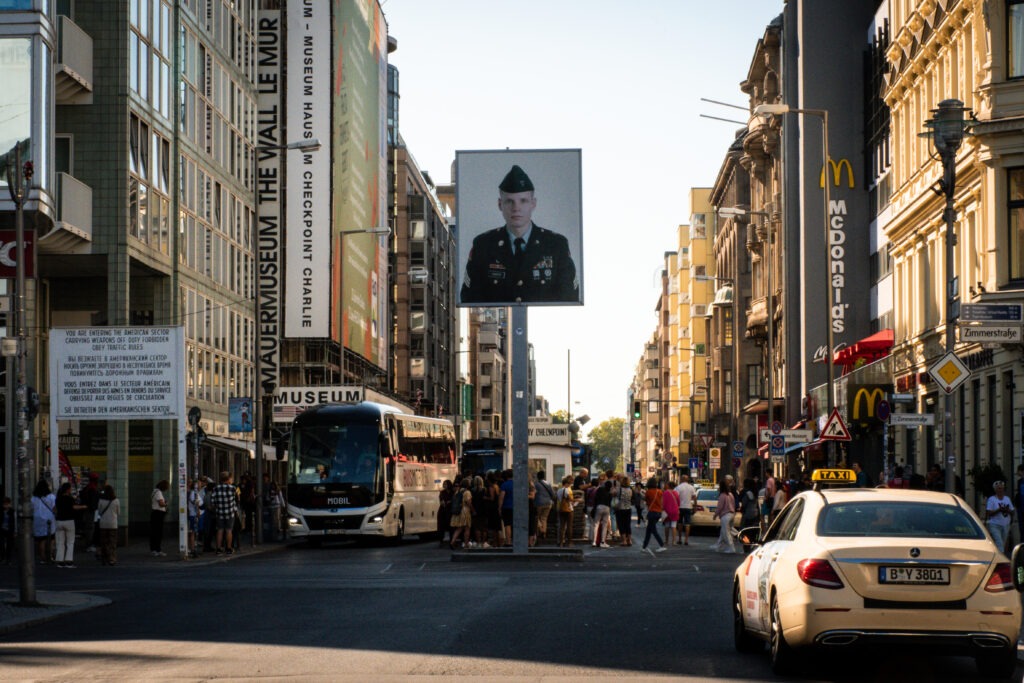
Checkpoint Charlie sits on Friedrichstraße, right at the historical border between East and West Berlin. This street looks ordinary now—cars, fast food restaurants, hotels and a constant stream of people. What remains isn’t the original checkpoint, yet there is enough here to help you imagine what once was.
The downside of visiting Checkpoint Charlie is that it is busy, commercial, and sometimes chaotic. Souvenir shops and touristy restaurants line the street. Tourists wait in line snapping a selfie in front of the replica guard post. I recommend you visit early in the morning, which is best, ideally before 9:00 am. Midday is consistently busy with tour groups and doesn’t allow much space to engage with the site.
But if I let myself look past the crowds, the power of this place returns.
Here, I see a reconstruction of the original border post, complete with a white hut and sandbags. It’s simple, almost understated, but that simplicity is what makes it powerful. I stand in front of it, trying to remember what it once looked like—soldiers, paperwork, and the sharp line between freedom and restriction. Street markers indicate where the Wall once stood, tracing a boundary now invisible yet unforgettable.
Panels along the sidewalk show black-and-white photographs of faces from the past—guards, escapees, families divided and reunited. I read slowly, taking in personal accounts and events. This is a free outdoor museum.
But the Checkpoint Charlie Museum itself is different. Inside, I find walls of documents, photos, artifacts and vivid escape stories. This museum tells personal tales of people who risked everything—hidden compartments, daring flights, forged papers and tense border crossings. Unlike the free outdoor site, this one dives deep and is worth the entry fee, but if you purchase Berlin’s Welcome Card, you will receive a discount.
For those visiting Berlin for the first time, I always recommend you add a visit here to your daily itinerary. Even if you keep it brief and pair it with nearby sites. It works best as part of a walk that includes Topography of Terror or the Holocaust Memorial, rather than as a standalone destination.
FAQs About Visiting Checkpoint Charlie
Is Checkpoint Charlie worth visiting if it feels touristy?
Yes, but only if you approach it with context. The site itself is quick to see. The value comes from understanding what happened here, not from the reconstruction. Go early, read the panels, and don’t expect a preserved historic site.
How much time do you actually need at Checkpoint Charlie?
Plan for 15–25 minutes at the outdoor site. Add 60–90 minutes if you visit the museum. Most people overestimate how long to stay at the checkpoint itself and underestimate the time needed to understand its history.
Is the Checkpoint Charlie Museum worth it?
It depends on your interest in personal stories. The museum focuses heavily on escape attempts, with detailed exhibits. If you prefer broader historical context, you may find the nearby Topography of Terror more impactful.
What’s the biggest mistake people make when visiting?
Treating it as a photo stop. Many visitors take a picture at the replica and leave. The more meaningful experience is reading the outdoor panels and pausing long enough to understand what this crossing represented.
How does Checkpoint Charlie compare to other Berlin Wall sites?
It’s the most symbolic, but not the most immersive. For a deeper sense of the Wall itself, the Berlin Wall Memorial offers a more intact and less commercialized experience.
How Should I Experience Checkpoint Charlie Differently?
Checkpoint Charlie is a place that stays with you. After taking your time at the site, you can deepen your understanding of Berlin’s layered past by exploring a few nearby places on foot, including enjoying a meal at a traditional German restaurant.
Just a short walk away is the Memorial to the Murdered Jews of Europe, a powerful and emotional experience to pair with this chapter of history. The Brandenburg Gate sits close by as well — a symbol that once stood divided, now representing unity and freedom. You’re also within easy reach of the Topography of Terror Museum, where the chilling remains of the Gestapo headquarters are preserved, and Potsdamer Platz, a former desolate no-man’s-land now reimagined as a lively urban hub thought to be Berlin’s city centre.
If you have the time (and I always hope you do), wander slowly, pause often, and let the city reveal its history one layer at a time. Slow travel in Berlin isn’t about seeing everything — it’s about feeling it.
If you’re planning your time in Berlin and want help shaping days that feel well-paced and intentional, you can explore my trip planning services.


