

Berlin is one of the easiest cities in Europe to travel slowly, but only if you approach it differently.
I say that as someone who has lived here, not just visited. Berlin doesn’t work well as a checklist city. There isn’t a clear set of sights that define it in the way other European capitals do. What shapes the experience is how you spend your time once you’re here.
The cafés you return to. The parks you walk. The neighbourhoods that begin to feel familiar.
This is how I move through Berlin. And, even as a visitor, you can see the city through the eyes of a local.
This post may contain affiliate links, meaning I get a commission if you decide to purchase something through the links, at no additional cost to you. Read my Affiliate Disclosure.
Why Berlin Is One of the Easiest Cities in Europe for Slow Travel
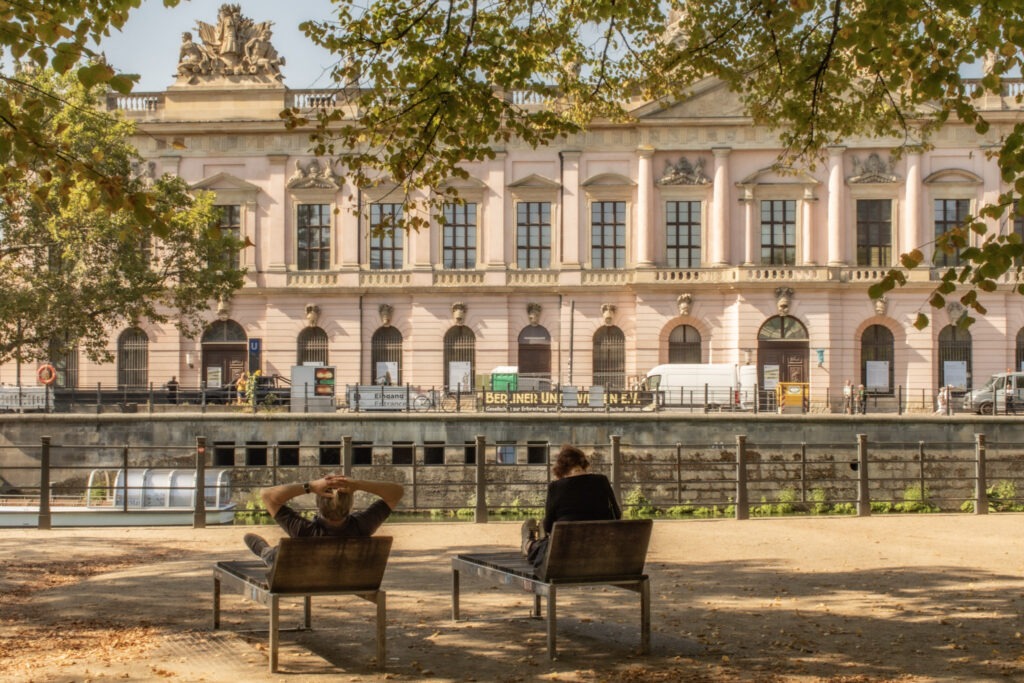
Berlin is an easy city to visit and live in. That’s what makes it easy to slow down.
In cities like Rome, the structure is already set. You move from one landmark to the next because they sit close together and carry ancient historical weight. The Colosseum, the Vatican, the Trevi Fountain. You feel the need to see them, and once you start, the pace builds on its own. Berlin doesn’t work like that. There are important sites, but they don’t define your days in the same way.
What shapes Berlin is its neighbourhoods. They are not subtle shifts. They change completely. Moving from Prenzlauer Berg to Kreuzberg feels like entering a different city. In Paris, you can walk from the 3rd to the 4th arrondissement and barely register the transition. The architecture holds it together. Berlin doesn’t have that consistency. It gives you contrast instead. That contrast slows you down because you stop paying attention to what’s next and start noticing where you are.
The pace of daily life supports this. Cafés are not built for turnover. You sit, you stay, you return. In the afternoon, it turns into kaffee und kuchen, the German tradition of coffee and cake. On Sundays, much of the city closes. People shift into parks, flea markets, and long brunches. There is no pressure to fill the day.
The space helps. Berlin is wide, not compact. Its parks are not designed in the same way as Madrid or Paris, where everything feels arranged, maintained and elegantly beautiful. Here, Berlin parks are open, uneven, and used. You walk here with your dog. Families come to play here. You find a biergarten and time stretches without little effort.
And then there’s the absence of pressure. Berlin doesn’t carry the same expectation as cities like Lisbon, where the capital becomes the centre of a trip. Many travellers visit Germany, and have never visited Berlin.
That changes how you move through it.
How to Approach Slow Travel in Berlin

Approach Berlin as if you are living here, even if you’re only staying a few days. Here’s what I recommend you do.
Base yourself in one neighbourhood and spend your time there. Don’t move across the city just to see more. Berlin is too spread out for that to feel realistic, and the experience comes from staying in one area long enough to understand it.
Don’t build your days around landmarks. There are important places to visit, sure, but they don’t need to structure your entire time. Decide where you want to spend your day first, then let anything else fit around that.
Leave space between plans. Avoid scheduling things back-to-back-to-back. The time in between is part of the day, not something to fill.
Allow for a sense of familiarity. Walk the same streets more than once. Choose places you would naturally return to. Stay long enough in one area that it starts to feel known.
The shift is simple. Move through Berlin as if you have more time than you do.
What Berlin’s Slow Travel Experience Looks Like in Practice
In Berlin, slow travel is shaped by how you spend time, not how much you see.
The city doesn’t unfold through landmarks alone. It happens in the spaces between them and in the places you choose to spend your time.
Let Your Interests Set the Structure

Most people come to Berlin for its recent history. They want a deeper dive into WWII or Cold War events. I spent three months in Berlin, and I still wasn’t able to see it all. That tells you, there’s a lot. Not only will it be a mistake to try to cover all of it, but it’s impossible on one single visit.
It’s better to choose one or two places and give them time.
The history in Berlin is around every corner. Instead of rushing through the major touristy sites like Checkpoint Charlie and the DDR Museum, which I feel are more suited for children, I recommend even better places, like some of these recommended free museums.
The Berlin Wall Memorial offers more context than the East Side Gallery if you want to understand how the city was divided into East and West Berlin. The Stasi Museum and Hohenschönhausen go deeper into how people lived during that time. Choose one, not both. I recommend the Stasi museum first, as it is in central Berlin, and gives a broader overview of how they controlled life during the Cold War era.
These are not quick visits. They shape how you see the city afterwards. Plan less around them, not more.
Another reason why people choose to visit Berlin is for its art scene.

Sure, you can see the historical classics found at the UNESCO-listed museums located on Museum Island, but I also enjoyed lingering in places like the Boros, a private collection housed in a WWII bunker. The urban art in areas like RAW-Gelände in Friedrichshain is worth visiting, too.
I lost track of the number of hours I spent over many afternoons exploring the countless contemporary galleries of the Auguststraße, just steps from my Berlin apartment. If you’re an art lover, plan your visit around the annual Art Week held every September, where local artists showcase their work in their home studios.
Use Parks as Part of the Day

Berlin’s parks are not stops. They are places to spend time without an agenda. And this city is one of Europe’s greenest capitals, so your options are endless.
Tiergarten works for long walks under the century-old trees. You can naturally visit portions of it as you set out to see some of the city. Instead of taking to Berlin’s streets, cross through the park. The quieter sounds and light naturally slow your pace.
Tempelhof is different. Open, exposed, with people using the space in their own way. Volkspark Friedrichshain became part of my routine, with long walks with my dog.
You don’t go for a specific reason. You go because the day allows for it.
Let the City Shape Your Time

Embrace Berlin’s laid-back culture; it’s easier to follow it than work against it.
Part of that is its unique café culture. Berlin’s coffee shops are hangout spots, casual, where if you open up your laptop, you won’t get an evil stare from your server like you might in Paris.
I discovered some great small, tucked-away spots like Distrikt Coffee, Father Carpenter or The Barn, where I would spend long, lazy mornings over brunch watching other Berliners ever so casually hang out or go about their day.
Berlin has its own unique vibe.
Cafés are not quick stops where you stand at a bar and drink your espresso like you might in Rome. You sit longer. You watch the day move around you.
In the afternoon, it shifts into kaffe und kuchen. Coffee and cake, Germany’s long-standing tradition. And it’s never rushed.

Sundays change everything. Shops close. Flea markets take over. The day becomes less structured. Mauerpark is the most well-known, but smaller markets like Arkonaplatz feel more local. I spend hours at the Straße des 17. Juni, where I could browse through the endless selection of antiques.
The pace is already there. You just need to step into it.
Stay Within One Neighbourhood

Choose one neighbourhood and build your day around it.
One of the unique things about Berlin is how different each neighbourhood feels. What you see, how people move, and even how you spend your time changes from one neighbourhood to the next.
Most visitors will naturally spend time in Mitte because that’s where many of the major sites are. That works in your favour. Even though this is a neighbourhood that many tourists visit, locals still outnumber you.
Around Rosenthaler Platz, Linienstraße, and Auguststraße, you can move between galleries, smaller boutiques, cafés, and quiet streets where locals live and spend time. The courtyards behind Hackesche Höfe and Rosenhöfe are easy to miss if you’re moving too quickly. If you slow down, you start to notice how much is tucked just out of view.
Kreuzberg feels different the moment you arrive. It’s a bit more raw, creative and has a unique edge to it. It’s also a very food-focused neighbourhood, leaning heavily on international flavours. Places like Markthalle Neun, a large indoor market, offers Street Food Thursday. The streets around it carry that same energy.
Prenzlauer Berg shifts again. Wider streets, residential blocks, weekend markets. It’s where the day slows without effort. Lots of independent shops and restaurants.
Charlottenburg stands apart. You feel the difference immediately. It holds onto a more traditional side of Berlin, shaped by its West Berlin history. The streets are more structured. Lots of pockets of elegant architecture, especially around Viktoria-Luise-Platz.
Each neighbourhood can hold a full day on its own, and even then, you only scratch the surface. The point is not to move between them, but to stay long enough to understand how one works.
FAQs About Slow Travel in Berlin

Is Berlin a good city for slow travel?
Yes. Berlin isn’t driven by a checklist of major sights. Its scale, neighbourhood structure, and daily pace make it easier to slow down compared to cities built around landmarks.
Can you travel slowly in Berlin on a short trip?
Yes, but you need to narrow your focus. Choose one area and limit what you plan each day. Trying to cover too much will make the city feel disconnected.
What should I prioritize when visiting Berlin slowly?
Choose one main interest per day. For most travellers, that’s history, art, or neighbourhood exploration. Build your day around that instead of trying to see everything.
Why does Berlin feel harder to understand on a first visit?
Because it doesn’t present itself all at once. The city is spread out, and its character comes from the contrast between neighbourhoods. It takes time and repetition to make sense of it.
How do I avoid turning this into a checklist trip?
Limit what you plan in advance. Choose one priority for the day and let the rest unfold. If you feel pressure to “fit more in,” it’s a sign to slow down.
Berlin Stays With You Differently
Berlin doesn’t stay with you because of what you see. It stays with you because of how you moved through it.
When you slow down here, the experience shifts. It’s not built around highlights or a list of places checked off. It comes from spending time in one area, noticing how it changes from street to street, and letting the day unfold without forcing it.
That’s what makes Berlin different. You don’t need to see more to understand it. You need to stay longer in what you’ve already chosen.
If your trip feels rushed before you arrive, or you’re not sure how to structure your time, this is exactly what I help clients with.


