

I’ve visited Paris more than a dozen times over the past decade, and no matter where I stay or what I’ve planned, I always return to Les Jardin du Luxembourg.
Of all the parks and gardens in Paris, Luxembourg Gardens is the one I recommend most often. Located between Saint-Germain-des-Prés and the Latin Quarter, it offers something many visitors don’t realize they need: a chance to experience everyday Paris rather than simply sightseeing.
I’ve visited Luxembourg Gardens in Paris in every season, from winter mornings to busy summer afternoons. Each visit reminds me why this garden remains one of my favourite places in the city. It’s where locals read, meet friends, sail toy boats, and spend time outdoors.
I’ll share what to see, when to visit, and the small details that make Luxembourg Gardens worth returning to on every trip to Paris.
This post may contain affiliate links, meaning I get a commission if you decide to purchase something through the links, at no additional cost to you. Read my Affiliate Disclosure.
Why Luxembourg Gardens Is Worth Visiting

On a first trip to Paris, it’s easy to focus on the big names. The Eiffel Tower. The Louvre. Notre-Dame. Luxembourg Gardens rarely top anyone’s must-see list.
I think that’s a mistake.
What makes Paris’s Jardin du Luxembourg so special is the experience of being there.
Located between Saint-Germain-des-Prés and the Latin Quarter, the garden sits in one of the most enjoyable parts of Paris to explore on foot. You can spend the morning wandering the neighbourhood, stop in the garden for an hour or two, then continue toward the Panthéon, Shakespeare and Company, or the Seine.
It’s also one of the easiest places in Paris to experience everyday life. Children sail wooden boats across the Grand Basin. Parisians read. Friends meet up for conversation. Couples walk the same gravel paths they’ve walked for decades. And, on fair weather days, everyone settles into one of the green metal chairs for time in the sun. No one is in a hurry here.
Many Paris attractions ask you to keep moving. The Luxembourg Gardens invite you to slow down and hit the pause button.
That’s the magic.
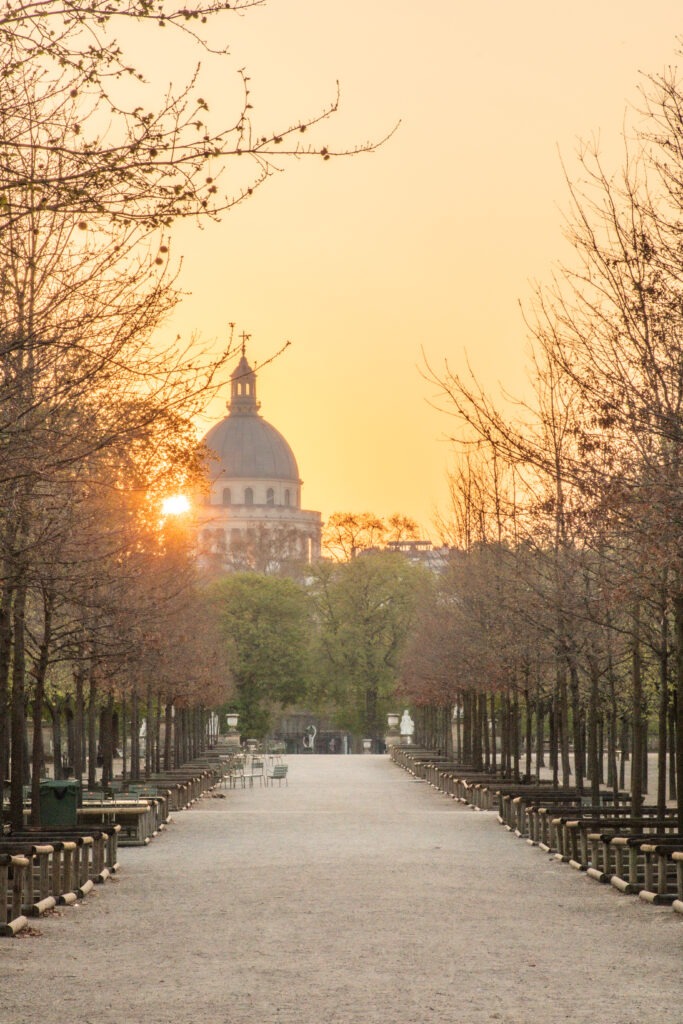
For first-time visitors, that’s part of its appeal. It offers a break from museum queues, crowded landmarks, and the pressure to see everything. For an hour, you can simply enjoy being in Paris.
That’s why I recommend it so often. Not because it’s one of the city’s most famous attractions, but because it helps travellers experience a side of Paris that many overlook.
Now, of course, Paris has no shortage of beautiful gardens. The Tuileries are more central. The Jardin des Plantes has a stronger botanical focus. Parc Monceau feels more local and residential.
Yet if someone asked me to recommend just one Paris garden, I would choose Luxembourg Gardens.
It strikes a balance that the others don’t. It’s large enough to wander, but not overwhelming like the Tuileries sometimes feels. The Tuileries often feels like an extension of the sightseeing circuit between the Louvre and Place de la Concorde, and because of that, it’s incredibly busy.
If you’re looking for a garden that helps you understand everyday Paris rather than simply admire it, this is the one I would choose.
Note for travellers: Unlike other gardens in Paris, this one does have opening and closing hours. Part of its charm is that it is based on sunrise and sunset. It follows the sun, which means throughout the seasons, the time changes.
More on Paris? Head to my Substack, where I share the Paris that most visitors miss.
How This Jardin du Luxembourg Became One of My Paris Traditions
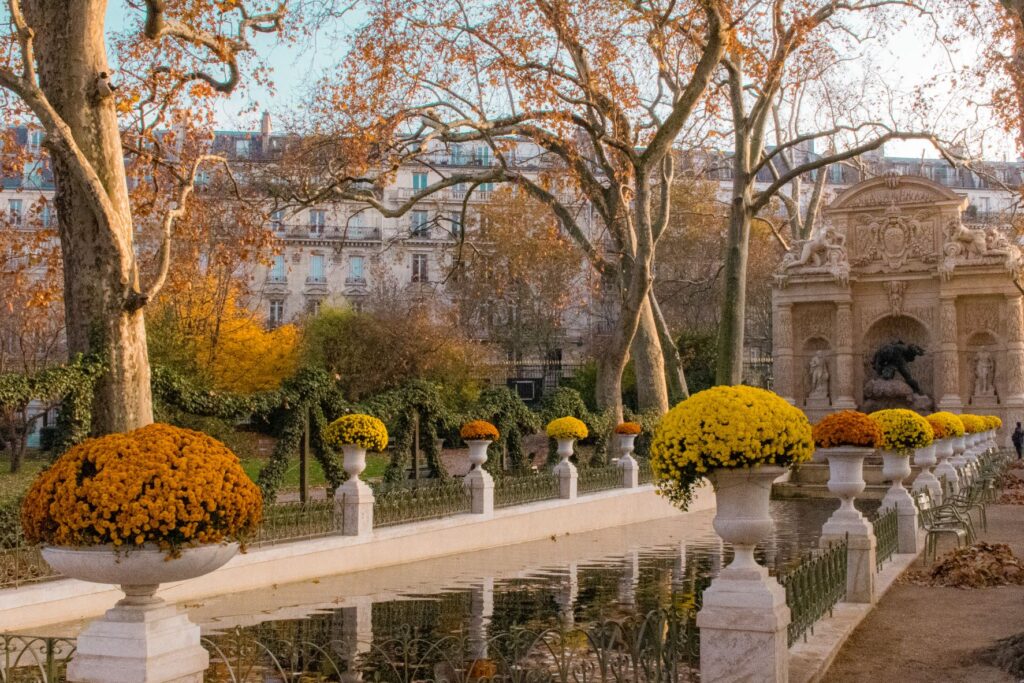
The first time I visited Luxembourg Gardens, I didn’t plan to stay long. I sat down for what I thought would be a few minutes and ended up staying nearly an hour.
That still happens.
Over more than a decade of visiting Paris, I’ve returned to Luxembourg Gardens on every trip. I’ve seen it in spring when the flower beds begin to bloom with its yellow daffodils, during hot summer evenings when every green chair seems occupied, on crisp autumn afternoons beneath the changing leaves and the yellow mums, and in winter when the paths feel almost empty.
What I’ve come to appreciate is that this isn’t a garden you visit once and never return. To me, I’ve grown to love it with every repeat visit.
For first-time visitors, I usually recommend allowing at least an hour. You can walk the main paths, visit the Medici Fountain, watch children sailing boats on the Grand Basin, and still have time to sit for a while. If your itinerary allows, two hours is even better. Luxembourg Gardens rewards lingering far more than rushing.
The best time to visit depends on what you’re looking for. Early morning offers the quietest experience and the softest light. Late afternoon is my second choice, when Parisians gather after work, and the garden feels most alive. Midday is busier, but because the garden is so large, it rarely feels crowded.
I think repeat visitors often appreciate the Luxembourg Gardens differently from first-time visitors. The first visit is usually about seeing the fountain, the statues, and the famous green chairs. Later visits become less about what there is to see and more about how the garden makes you feel. For me, it’s become a comforting ritual each time I’m in Paris alone.
That’s what happened to me. Somewhere along the way, Luxembourg Gardens stopped being a place I visited and became a place I returned to.
The History Behind Jardin du Luxembourg

Paris’s Jardin du Luxembourg was created in the early 1600s for Marie de’ Medici, who missed the gardens of Florence after moving to France.
She commissioned the Luxembourg Palace, inspired by her Italian roots, and surrounded it with formal gardens that reflected her longing for home.
It then became a public park, one of the first in Paris.
Post the French Revolution, the Palace shifted from belonging to royalty to belonging to Parisians. Today, it’s where the Senate sits and governs.
Important Tip: Visiting hours are limited to days when the Senate is not in session. Group tours are only available with advance permission to visit.
Unlike many royal spaces in Europe that remain primarily tourist attractions, Luxembourg Gardens became woven into everyday Parisian life. That transition from royal garden to public gathering place is one reason the atmosphere feels so authentic today.
What to See in Luxembourg Gardens
The Green Chairs

The French Fermob metal chairs, designed in the 1920s, are everywhere, and they’re never arranged quite the same way twice.
These chairs are the soul of the garden. People move them. Angle them. Pull them into the sun or tuck them into the shade. It’s a small act of choice.
Choose one. Sit. Stay longer than planned.
The Medici Fountain
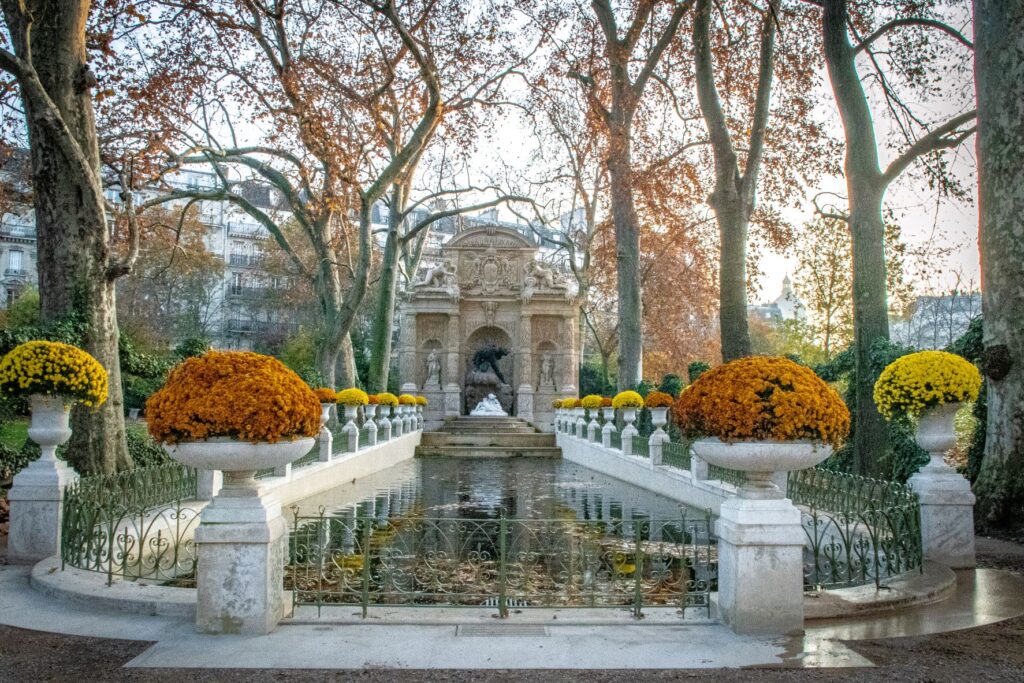
Tucked into a shaded corner, the Medici Fountain feels like a secret, even though everyone knows about it. The long pool, the worn stone, the filtered light—it’s romantic without trying.
This is one of my favourite places to sit early in the morning, when the garden is still waking up.
The Statue-Lined Walkways

Statues of French queens line the paths. They’re elegant but understated, easy to miss if you’re rushing. I like that they’re part of the landscape rather than the focus.
They remind you that this place has seen centuries of passing lives.
Then there’s the Liberty Enlightening the World, commonly known as the Statue of Liberty, tucked away in the gardens.
The Central Pond
Children sail small wooden boats here in the Grand Basin, just as they’ve done for generations. Watching them is oddly grounding. It pulls you into the present moment without effort.
The Gardens

The balance of Italian symmetry, French structure, and softer English garden design makes Luxembourg Gardens unique.
The gardens shift with the seasons, tulips in spring, geraniums in summer, and chrysanthemums in autumn, which is why this is a place worth revisiting. I’ve seen it in all four seasons.
Despite Paris’s reputation for cherry blossoms, you won’t find them here. Instead, the southern end reveals an ancient orchard of thousands of apple and pear trees, alongside L’Orangerie du Jardin du Luxembourg, built in the early 1900s to protect citrus trees and palms through the winter.
The Musée du Luxembourg
Built in 1630, the Musée du Luxembourg holds a quiet distinction as the first public museum in France, opening its doors in 1750. Today, it hosts only a few temporary exhibitions each year, which keeps visits focused rather than overwhelming.
Long lines often form for the adjacent Angelina tea room—the hot chocolate is as indulgent as promised, though I still prefer the glamorous setting of the original on Rue de Rivoli.
How I Combine Luxembourg Gardens With Nearby Paris Neighbourhoods

From the garden, there are many favourites of mine.
Just beyond the garden, two small museums offer a quiet cultural pause, and both are free. The Musée Zadkine, set in the former studio of sculptor Ossip Zadkine, features works in a peaceful garden setting. Nearby, the Musée Curie tells the story of Marie Curie’s life and scientific legacy in the very place where she lived and worked.
For shops, I’m drawn to places with personality, and very Parisian. Astier de Villatte is a Paris institution for handmade ceramics and fragrances—every trip, I buy a new object to take home with me. A few streets away, Marin Montagut feels like stepping into a modern cabinet of curiosities, filled with illustrated objects and thoughtful souvenirs you won’t see elsewhere.
When it’s time to eat, I keep it simple. L’Avant Comptoir de la Mer is perfect for standing at the counter with a plate of seafood and a glass of wine, while Bouillon Racine offers a more refined setting with Art Nouveau interiors and classic French dishes.
This neighbourhood is best explored slowly, without a fixed route. It’s also why I created my self-guided Saint-Germain walking tour to help you experience these streets and their details that go unnoticed by most visitors.
If this way of travelling resonates with you, my e-book Experience Paris: Finding the Joy of Slow Travel was created for travellers who want more than an itinerary.
The Planner’s Ending
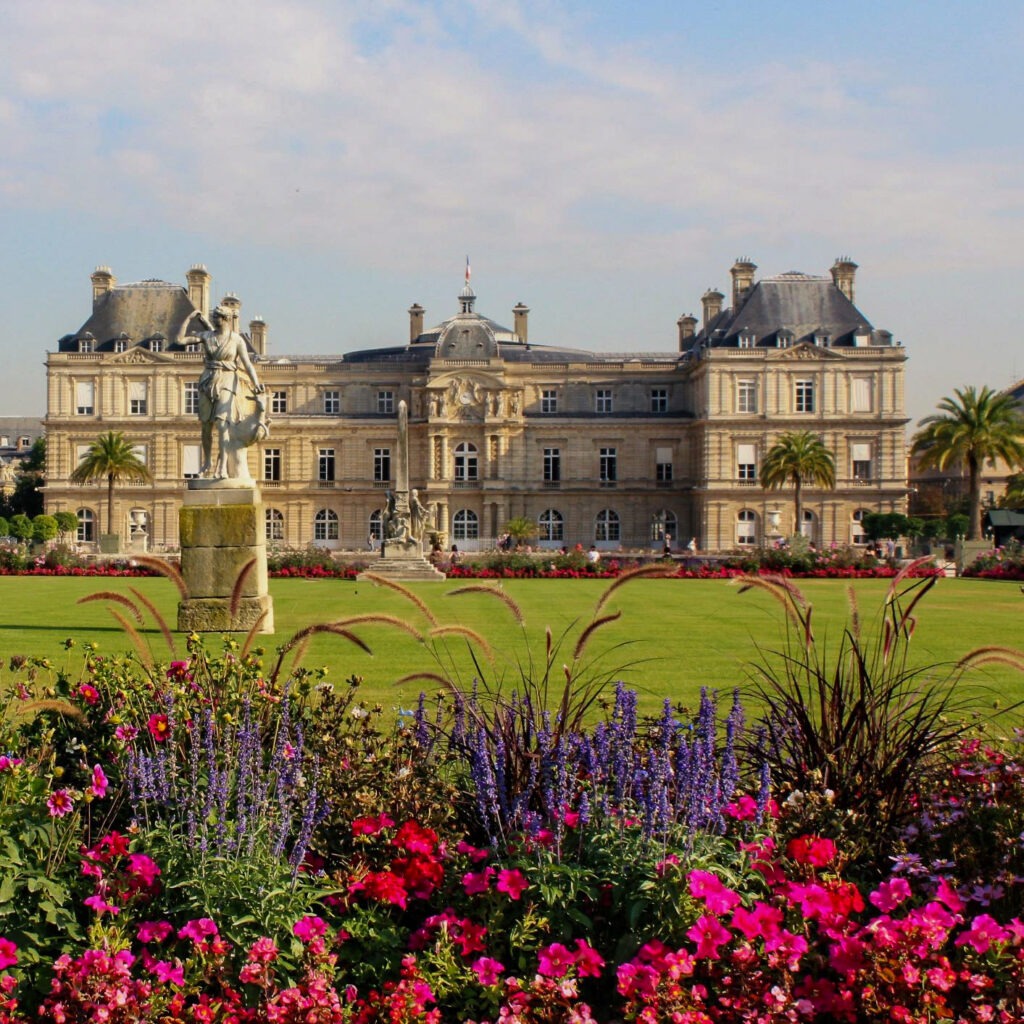
What I appreciate most about Luxembourg Gardens is its location. It’s one of those rare places in Paris that works equally well as a destination and as part of a day spent wandering. Stay nearby, and you’ll have Saint-Germain-des-Prés, the Latin Quarter, the Panthéon, and some of my favourite Paris streets within walking distance.
Choosing the right neighbourhood can completely change how your trip feels. If you’re deciding where to stay in Paris or struggling to fit everything into a realistic itinerary, I can help. Through my Paris trip planning services, I’ll help you create a trip that makes sense geographically, moves at a comfortable pace, and leaves room for places like Luxembourg Gardens that are worth lingering in.


