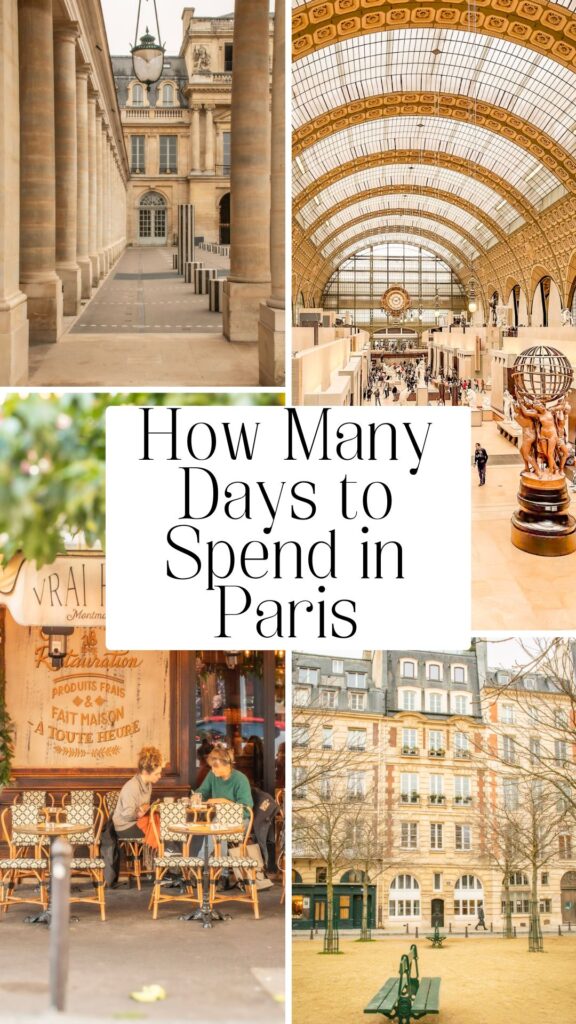

If you are wondering how many days in Paris is enough, my answer is this: for most first-time visitors, 5 days in Paris gives the best balance between sightseeing and actually enjoying the city. Three days in Paris works for a highlights trip, while a week in Paris allows for a much slower, more immersive experience.
I say this after more than a dozen return trips to Paris, writing my e-book Experience Paris: Finding the Joy of Slow Travel, and planning custom Paris itineraries for clients over the years.
The biggest mistake I consistently see is travellers trying to fit too much into too little time. Paris is not a city that rewards rushing. Your experience changes completely depending on your pace, neighbourhood choices, and expectations.
I’ll break down exactly how many days to spend in Paris based on your travel style, whether it is your first trip, and what you realistically want your Paris itinerary to feel like.
This post may contain affiliate links, meaning I get a commission if you decide to purchase something through the links, at no additional cost to you. Read my Affiliate Disclosure.
The Better Question: What Kind of Paris Experience Do You Want?
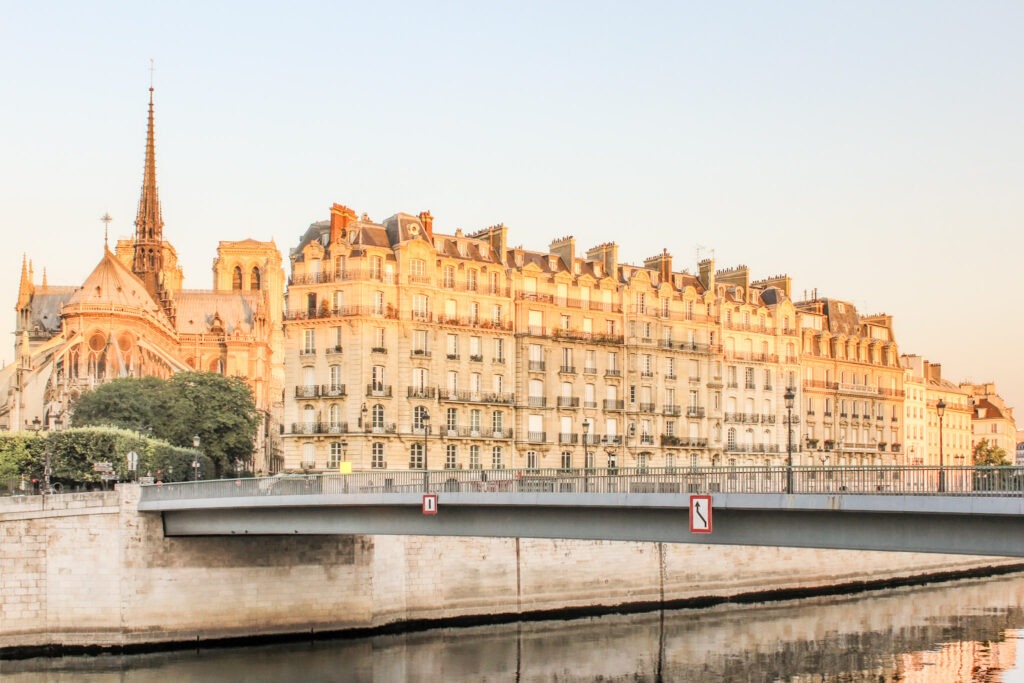
Most people ask how many days they need in Paris, and I think the better question is what kind of Paris experience they actually want.
This is where I start when helping clients plan their trip to Paris, and I have a few personal Paris rules. The biggest one is this: Paris is not a city that rewards aggressive sightseeing.
Travellers consistently overestimate how much they can realistically do in a day. Visiting the Louvre, the Eiffel Tower, Montmartre, and a Seine cruise may seem manageable, but in reality, Paris takes energy. Metro transfers add up. Museum fatigue is real. Walking all day sounds romantic until it is your fifth hour on cobblestones in the heat or rain, and with other tourists.
I also think many travellers underestimate how much advance planning Paris now requires. Some of the city’s most popular attractions need reservations weeks ahead, especially during spring, summer and early autumn. But even then, I would never build a Paris itinerary around constant timed entries. One major reservation per day is enough. More than that, the trip starts feeling like logistics management instead of travel.
This is also why I would always choose neighbourhood depth over landmark quantity. I do not think Paris is meant to be “completed” in one trip. The travellers who enjoy Paris most are usually the ones who leave space to linger in Saint-Germain, spend unplanned hours in Le Marais, or return to the same café twice instead of racing across the city checking off attractions.
Paris rewards return visits more than marathon itineraries. Every time I go back, I care less about seeing more and more and more about experiencing the city differently. I would also rather wake up early than stay out late in Paris. Some of my favourite moments have been walking quiet streets at 7 am before the crowds and traffic take over the city.
Before deciding how many days to spend in Paris, it helps to decide what pace of travel you actually enjoy once you arrive.
What Actually Determines How Many Days You Need in Paris?

There is no perfect number of days in Paris that works for everyone. The right amount of time depends far more on your travel style, energy level, priorities, and pace than on a checklist of attractions.
I have seen travellers spend 7 days in Paris and leave exhausted because every hour was scheduled. I have also seen people spend 4 days in Paris and come home completely satisfied because they planned realistically and stayed in one area long enough to settle into the city a little.
These are the factors I think matter most when deciding how long to stay in Paris.
Your Pace Tolerance Matters More Than Your Bucket List
Some travellers genuinely enjoy moving quickly. They like full sightseeing days, packed schedules, and seeing as much as possible. Others think they are that kind of traveller until they arrive in Paris and realize they are overwhelmed by day three.
Paris can be incredibly stimulating. The noise, crowds, museums, architecture, restaurants, metro system, and constant decision-making take more energy than people expect. This is especially true for first-time visitors trying to fit every major landmark into a short trip.
This is one reason I talk so much about pace in my Unrushed Itinerary Method. I do not think the best Paris trips are measured by how many attractions you cover. I think they are measured by how the trip actually felt while you were living it.
If you enjoy slower mornings, long lunches, wandering neighbourhood streets, photography, bookstores, markets, or sitting in cafés without constantly checking the time, you probably need more days in Paris than you initially think.
First-Time Visitors Need More Buffer Time
I almost always recommend longer stays for first-time visitors to Paris.
Even though Paris has an excellent public transportation system, there is still a learning curve. The first few days are spent figuring out the metro, understanding neighbourhood geography, adjusting to crowds, and learning how long things actually take.
Many North American travellers also lose most of their first day to overnight flights and jet lag. This is something people consistently underestimate when building a Paris itinerary. I never schedule aggressive arrival days for clients because they almost always backfire. The reality is that after an overnight flight, many people are functioning on very little sleep while trying to navigate one of the busiest cities in Europe.
A slower arrival day creates a much better start to the trip. I would rather spend the first afternoon walking locally, sitting at a café, and adjusting naturally than forcing major sightseeing immediately.
The more comfortable you become in Paris, the easier the city feels. But that confidence takes a little time.
Museum Travellers Need to Plan Differently

If museums are a major priority for you, I think you need more time in Paris than most generic guides suggest.
Museum fatigue is real, especially in Paris. The Louvre alone can take hours, both physically and mentally. The Musée d’Orsay, Centre Pompidou, Musée de l’Orangerie, Rodin Museum, and smaller museums all require energy and attention if you actually want to enjoy them.
One of my strongest Paris planning opinions is this: one major museum or major reservation per day is enough.
I know many itineraries suggest combining multiple museums and landmarks into a single day, but I rarely think that creates a better experience. By the afternoon, many travellers are tired, overstimulated, and rushing through places they were excited to visit.
I would rather fully enjoy one museum and have time for a relaxed dinner afterward than spend the day sprinting between timed entries.
Day Trips Change the Equation Completely
If you want to include Versailles, you need to factor that into your timeline immediately.
Versailles is not a quick half-day excursion for most travellers. Between transit, security lines, crowds, and the size of the grounds themselves, it usually becomes a full-day commitment. The same applies to other popular day trips from Paris, like Giverny or Champagne tours.
This is where many travellers accidentally overload their Paris itinerary. They plan 3 or 4 days in Paris, then remove one of those days for a side day trip, without realizing how little time remains in the city itself.
If day trips are important to you, I generally think adding at least one extra Paris day creates a much more balanced trip.
Season Changes the Experience More Than People Realize
The time of year you visit Paris can also affect how many days feel comfortable.
Summer in Paris often means longer lines, crowded museums, packed metro cars, and higher energy output overall. You may accomplish less each day simply because the city is busier and hotter.
Winter is quieter and more atmospheric, especially during the Christmas season in some ways, but shorter daylight hours can make sightseeing days feel compressed. Rainy weather also slows people down more than expected.
Personally, I think spring and fall offer the best balance for most travellers. Shoulder season usually means more manageable crowds, comfortable walking weather, and a slightly calmer pace throughout the city.
The season will not necessarily determine whether you need 3 days or 7 days in Paris, but it absolutely affects how much you can realistically enjoy doing each day.
At the end of the day, deciding how many days to spend in Paris is really about deciding how you want the trip to feel. Some people want a fast-paced highlights trip. Others want enough time to settle into the rhythm of the city. Neither is wrong, but they are very different experiences.
Is 3 Days in Paris Enough?

Yes, a long weekend in Paris is enough if you go into the trip understanding what kind of experience you are actually building.
I think this is where many travellers set themselves up for disappointment. They plan a short Paris trip while expecting a long-stay experience. Those are two completely different things.
Three days in Paris works best when you treat the city as a concentrated experience rather than something to cover thoroughly. You can absolutely see major landmarks, enjoy excellent meals, walk beautiful neighbourhoods, and come home feeling like the trip was worth it. But you will need to make peace with the fact that some things will not fit.
Who 3 Days in Paris Works Best For
I think 3 days in Paris works particularly well for:
- Travellers combining multiple cities in Europe
- First-time visitors wanting an introduction to Paris
- People with limited vacation time
- Travellers who naturally prefer a faster pace
It can also work very well if Paris is not your only goal. For example, many of my clients combine Paris with Provence or another part of France. In those cases, 3 days often feels reasonable because the trip has a broader focus.
Where I think people struggle is when Paris is their dream destination, and they only allow themselves a long weekend. Paris simply has too much depth for that to feel relaxed.
What 3 Days in Paris Actually Feels Like
A 3-day Paris itinerary usually feels active from morning until evening.
You will likely spend most of your time moving between major areas of the city, orienting yourself quickly, and making decisions about what matters most to you. There is less room for spontaneity because the margin for wasted time is smaller.
That does not mean the trip cannot feel meaningful.
Three days is enough time to:
- see several iconic Paris landmarks
- spend time along the Seine
- explore a few neighbourhoods properly
- enjoy Paris cafés and restaurants
- visit one major museum
- experience the city at different times of day
I actually think shorter Paris trips often work best when travellers focus less on “how much” they saw and more on choosing a few experiences they genuinely care about.
For some people, that means art and museums. For others, it is architecture, food, photography, bookstores, or simply walking the streets of Paris.
The Smartest Way to Approach a Short Paris Trip
If I only had 3 days in Paris, I would think geographically instead of attraction-by-attraction.
One of the easiest ways to waste time in Paris is crossing the city repeatedly because your itinerary was built around isolated landmarks instead of neighbourhoods.
I would also simplify expectations significantly. You do not need: every famous museum, every “must-see” café from social media and every viewpoint as an example.
Trying to fit all of that into 3 days usually creates a trip that feels fragmented instead of memorable.
Personally, I think shorter Paris trips benefit from stronger editing. Choosing fewer priorities often creates a better overall experience than trying to maximize every hour.
My Honest Opinion on 3 Days in Paris
Would I personally choose longer if possible? Absolutely.
I think Paris becomes much more enjoyable once you stop treating time there like a countdown clock. Around day four or five, many travellers finally begin relaxing in the city instead of managing it constantly.
But that does not mean 3 days in Paris is not worth doing.
I would still take 3 days in Paris over skipping Paris entirely. You just need to approach the trip with realistic expectations and enough flexibility to actually enjoy where you are instead of thinking about everything you missed.
Stay connected in Italy with Holafly eSIM. Enjoy unlimited mobile data while you travel with no extra fees. Use code DREAMPLANEXPERIENCE for an exclusive 5% discount.
Why 5 Days in Paris Is the Sweet Spot

If you ask me how long to spend in Paris, I would recommend that most first-time visitors, my answer is almost always 5 days.
This is where Paris starts to feel less rushed and more enjoyable. You still have enough structure to see the major sights, but there is finally room for flexibility, slower mornings, and the kind of moments that make people fall in love with the city in the first place.
I think 5 days in Paris gives you the best balance between sightseeing and immersion.
This Is the Length I Recommend Most Often
I have found that 5 days consistently creates the least stressful experience for most travellers.
At this length, people stop feeling pressured to optimize every hour. There is enough time to separate major sightseeing days naturally, instead of stacking everything together out of urgency.
You can spend a morning at the Louvre without feeling like you sacrificed the rest of the trip. You can linger over dinner without calculating how early you need to wake up to fit three more attractions into the next day.
Five days also creates breathing room for real-life travel variables:
- weather changes
- transit delays
- jet lag
- reservation timing
- physical exhaustion
- spontaneous discoveries
What changes between day 3 and day 5 is that a shift starts to happen around the fourth day in Paris, which is subtle, but I notice it constantly.
People stop checking maps every few minutes. Neighbourhoods become familiar instead of confusing.
Travellers become more confident moving through the city without constantly worrying whether they are “doing Paris correctly.”
What a 5-Day Paris Trip Actually Feels Like
A well-paced 5-day Paris trip usually has rhythm instead of intensity.
There is time for starting your day a bit more slowly, plan for one major anchor each day, and your afternoons become less about the pressure to be somewhere.
This is very much how I approach Paris myself now.
This approach became the foundation for my Unrushed Itinerary Method.
One thing I have become increasingly opinionated about is how much modern travel culture encourages people to overbuild their Paris itineraries.
Social media has convinced many travellers that a successful Paris trip means fitting in every famous café, every viewpoint, every museum, every bakery, and every reservation-worthy restaurant in a single visit.
I think this creates more stress than enjoyment. None of those experiences fit neatly into hyper-optimized itineraries.
And for many travellers, that is when the city becomes memorable for reasons that have very little to do with landmarks.
Is 7 Days in Paris Too Long?

No. In fact, I think 7 days in Paris often makes the most sense for international travellers, especially if Paris is your primary destination and you do not want to spend the trip constantly packing, unpacking, and changing hotels.
This is where I think many travellers underestimate the value of having a base.
A week in Paris gives you options. You can use the city for a slower, more immersive Paris experience, or you can use it strategically as a home base for day trips while still returning to the same hotel, neighbourhood, and routine every evening.
Around day six, Paris starts feeling temporarily livable instead of heavily scheduled.
Personally, I think this style of travel is far less exhausting than trying to squeeze multiple overnight destinations into a short European trip.
The Power of Using Paris as a Base
This is also why I think 7 days in Paris works extremely well for international travellers who want depth without excessive logistics.
Paris is one of the best transportation hubs in Europe. You can stay in one hotel for the entire trip while still taking advantage of easy day trips when you want variety.
You could spend:
- several days fully immersed in Paris itself
- one day in Versailles
- another in Giverny
- a day trip to Reims
- even a high-speed train day trip to Brussels if that interests you
Then at the end of the day, you return to the same room, same neighbourhood, and same routine instead of dragging luggage through train stations every two days.
I think people underestimate how much energy constant movement consumes during European travel. Every hotel change takes time, planning, physical effort, and mental bandwidth.
Keeping Paris as your base simplifies the trip dramatically while still allowing flexibility.
A Week in Paris Creates Space for Balance
One reason I like recommending 7 days in Paris is that it allows different types of days to coexist naturally.
Not every day needs to be a major sightseeing day.
You can have: a museum day, a slower neighbourhood day, a shopping day, and a market morning, followed by an unplanned afternoon.
With a week in Paris, there is finally room for recovery and spontaneity without feeling like you are wasting valuable time.
Who I Think Should Spend a Week in Paris
I especially recommend 7 days in Paris for:
- first-time international visitors
- slow travelers
- food-focused travelers
- photographers
- art and history lovers
- travellers who dislike constantly changing hotels
- people who want both city time and day trip flexibility
I also think Paris rewards repeat experiences more than nonstop novelty. Some cities are about checking off attractions. Paris, in my experience, becomes more enjoyable the more familiar it starts to feel.
That is why I do not think a week in Paris is too long at all.
If anything, it is often the first point where travellers finally stop trying to consume the city and begin experiencing it more naturally.
So, How Many Days in Paris Is Enough?
In the end, how long you stay in Paris depends less on how much you want to see and more on how you want the trip to feel while you are there.
For some travellers, 3 days in Paris is enough for a fast-paced introduction. For most first-time visitors, I still believe 5 days in Paris offers the best balance between sightseeing and actually enjoying the city. And if you have the time, a week in Paris can completely change the experience, especially when you stop treating the city like a checklist and start using it as a place to settle into more slowly.
After decades of returning to Paris, I have become less interested in fitting more into each trip and more interested in structuring time well. The Paris trips I remember most are rarely the ones where I saw the most. They are the ones where I had enough space to notice the city properly.
If you want help building a Paris itinerary that feels realistic, well-paced, and tailored to your travel style, I offer custom trip planning services built around my Unrushed Itinerary Method. I help travellers create trips that feel less rushed, more personal, and far more enjoyable once they arrive.