

Arriving in Reims from Paris for a weekend, I stepped off the train into streets still hushed in the early morning.
The air carried the faint scent of fresh bread from nearby boulangeries, and the sound of my carry-on bumping over the cobblestone sidewalks echoed on the quiet streets.
Then, there it was—the cathedral spires rising above the rooftops, catching the first golden rays of the sun. In that quiet moment, I felt a surge of anticipation to get lost in its streets, squares, and hidden corners.
For travellers seeking an unhurried experience, Reims offers so much more than Champagne tastings. From historic cathedrals to secret gardens, I’m ready to share all the Reims places to visit that I think are worth it.
This post may contain affiliate links, meaning I get a commission if you decide to purchase something through the links, at no additional cost to you. Read my Affiliate Disclosure.
What Reims Is Best Known For: Cathedral and Champagne Houses
When I first arrived, Reims reminded me of Paris in miniature—elegant, historic, and effortlessly walkable, yet without the crowds, an unexpected under-the-radar place to visit.
Its proximity to Paris makes it a perfect, underrated weekend getaway, especially in autumn when the Champagne harvest adds a quiet energy to the city.
Reims Cathedral – History and Architecture

No visit to Reims is complete without standing beneath the towering spires of Reims Cathedral, a UNESCO World Heritage site and the place where French kings, including Charles VII, were crowned.
Its gothic grandeur is immediate: delicate flying buttresses reach skyward, façades are adorned with hundreds of intricately carved figures, and the sun filtering through Chagall’s stained-glass windows bathes the stone in jewel-toned light.
The smiling angel, the dozens of sculpted saints, the echo of centuries of royal pageantry—it’s history you can feel beneath your feet.
For slow travellers like me, the cathedral is not just a photo opportunity; it’s a place to pause and observe the details that most visitors miss in their rush.
My Tips for a Slow Visit: Arrive at sunrise when the streets are empty, the city still wrapped in quiet, and the cathedral bells toll throughout the city.
Wander through the nave at your own pace, letting your gaze linger on carvings and windows, then perhaps revisit later with a guided tour to gain historical context. I often do just that—my first walk is quiet and solo, allowing me to absorb the cathedral’s scale, then I return for the context that makes each statue and archway meaningful.
Must-Visit Champagne Houses

Just a few blocks from the cathedral, Reims transforms from history to indulgence.
It’s the beating heart of Champagne, home to iconic houses like Veuve Clicquot and Taittinger, alongside smaller family-run producers that offer intimate, personal experiences. Each house has its own interesting stories, from centuries-old cellars carved into chalk to the precise methods perfected over generations.
My Personal Experience: At Taittinger, I joined a tasting tour (purchased on site) that began in the quiet elegance of their historic cellars. Walking through tunnels once traversed by monks, I learned how these early pioneers refined the art of sparkling wine.
The guide compared Taittinger’s techniques with other famous houses like Veuve Clicquot and Moët & Chandon, highlighting subtle differences in aging, flavour, and style. The tasting itself, sipping a delicate Brut while hearing these stories, brought the region’s history vividly to life.
With a glass in hand, I wandered slowly through the gardens, where, unfortunately, there is no view of their grapevines.
For that, you need to get to the outskirts of Reims. For slow travellers, pairing a tasting with a leisurely walk in the surrounding vineyards is the perfect way to connect with Reims beyond the city center.
Architecture and History – Tracing Reims Through Time

Reims is a city built layer upon layer, where centuries of history are carved into stone, archways, and public squares. Walking through the city feels like stepping backward in time—from Roman settlements to Gothic grandeur and Baroque elegance.
Porte de Mars – Reims’ Roman Gateway
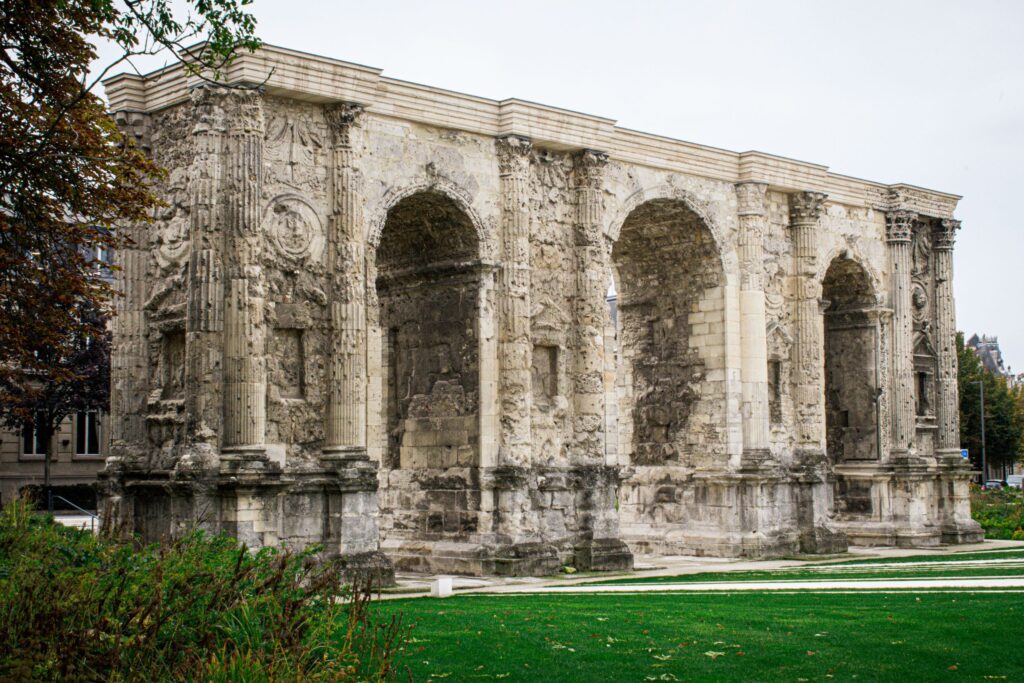
The journey begins nearly two thousand years ago at the Porte de Mars, one of the largest surviving Roman arches in France. Built in the 3rd century, it once marked the entrance to the busy Roman settlement of Durocortorum, today’s Reims.
A Detour I Took: If you are fascinated by visiting old cemeteries, I recommend visiting Cimetière du Nord à Reims, across the street. It’s not as large as Paris’ famous Pere Lachaise, but it’s equally peaceful to walk through it.
Cryptoportique – Subterranean Roman Ruins
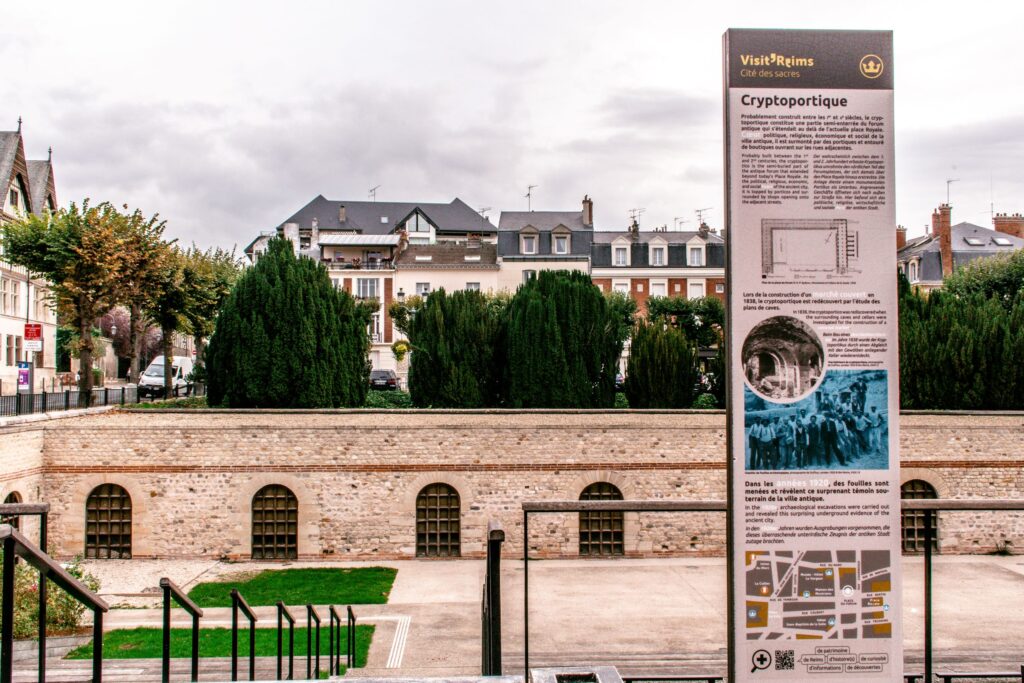
Beneath the Place du Forum lies the Cryptoportique ruins. These Roman cellars and arches formed part of the city’s forum, an underground heartbeat of ancient civic life. Walking through the dimly lit corridors, I imagined merchants, city officials, and citizens moving above me while life thrived below.
My Personal Take: I recommend enjoying a lunch or dinner at Le Crypto, a Michelin-recommended restaurant opposite the underground gallery.
Palais du Tau – Medieval Greatness

From Roman foundations, we leap to the Middle Ages at the Palais du Tau, the former residence of Reims’ archbishops and the coronation palace for French kings. Connected directly to the cathedral, the palace is a masterclass in Gothic architecture: high vaulted ceilings, intricately carved doorways, and tapestries depicting centuries of coronations.
Place Royale – Baroque Symmetry
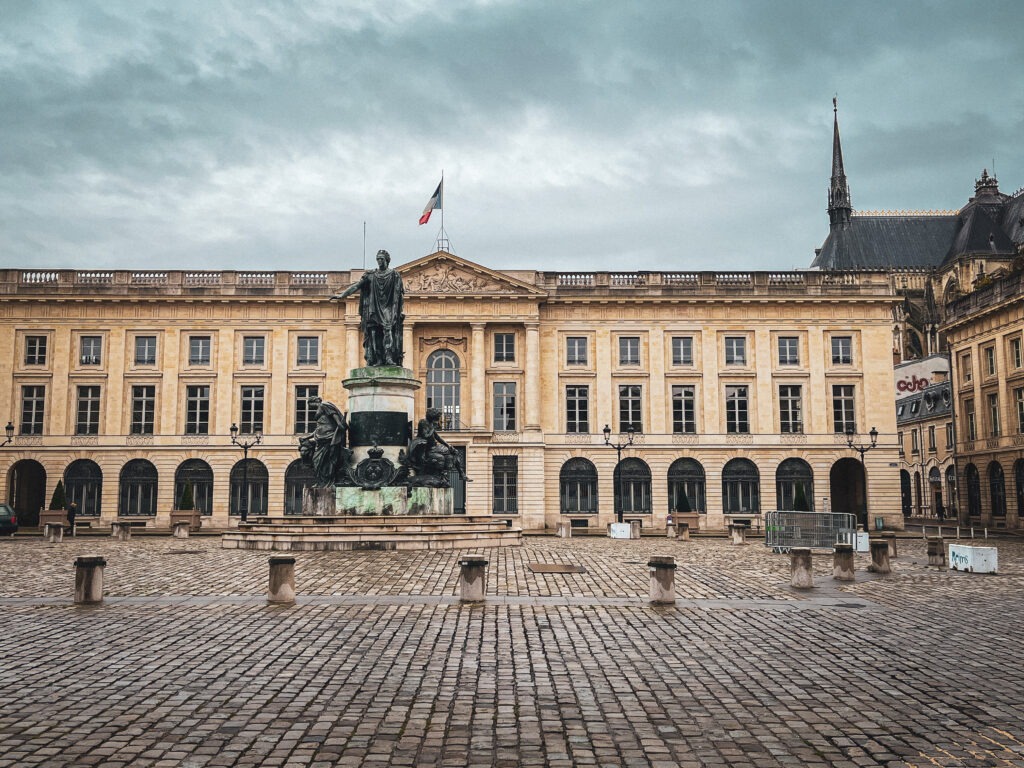
Arrive at the Place Royale, an 18th-century Baroque square built to honour King Louis XV. Its symmetrical façades, wrought-iron balconies, and central statue speak to elegance and urban planning long before the city embraced modern streetscapes.
Carnegie Library – Reims Rebuilt in Art Deco

After centuries of stone and royal ceremony, Reims faced modern challenges. The Carnegie Library, funded by Andrew Carnegie after World War I, is a perfect example of Art Deco design. Its lofty reading rooms, geometric elegance, and luminous stained-glass windows offer a different kind of history—one of resilience and civic pride.
An Update from My Experience: You can enter the Carnegie Library without a card to access the main lobby. Visiting in the off-season and asking politely en français, I was allowed a brief look inside the Salle de Lecture—and it was absolutely worth it. For book lovers and architecture enthusiasts, this is one of the most rewarding places to visit in Reims.
Art, Museums, and Unexpected Discoveries

Reims isn’t just about cathedrals and Champagne; its quieter streets hide art, history, and little surprises that reward slow travellers willing to look beyond the obvious.
Musée des Beaux-Arts – A Pause with Paintings and Sculptures
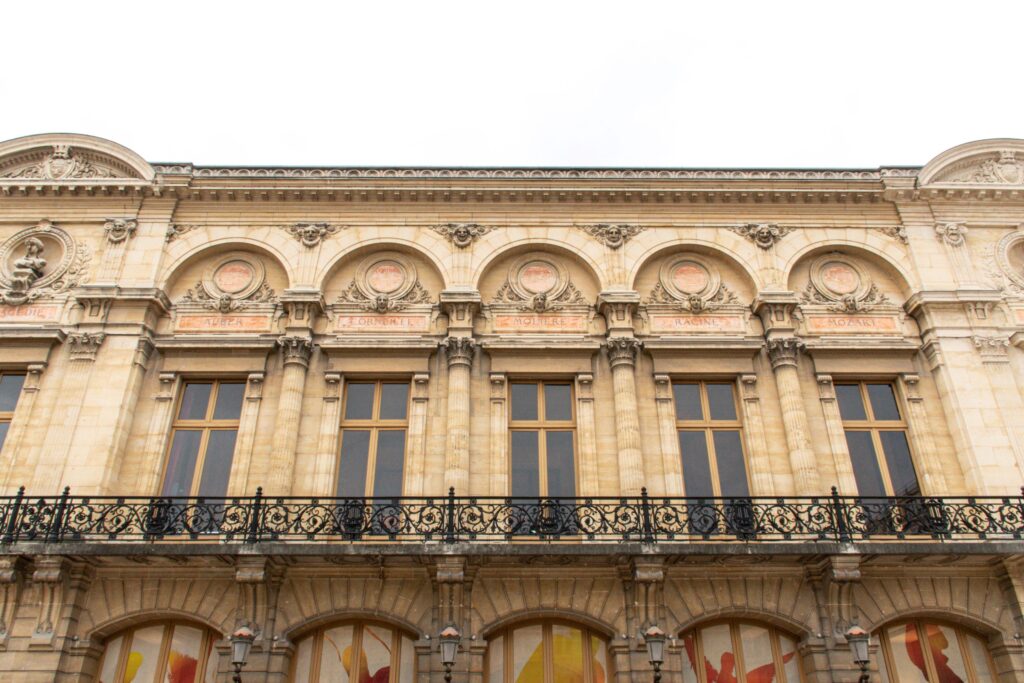
The Musée des Beaux-Arts is the kind of museum that invites slow wandering.
Its collection spans centuries—from 16th-century French paintings to 19th-century impressionist works and finely carved sculptures.
I remember pausing in front of a Delacroix piece, noticing details I would have missed in a rushed tour. For travellers exploring Reims, even spending an hour here feels richer than a full morning packed with sightseeing.
My Personal Take: For those who love smaller curated museums, I quite enjoyed Le Vergeur Hotel & Museum. Once owned by the Veuve Clicquot Champagne House, it houses a collection of decorative arts and furnishings. So typically French. An unexpected find was the quaint Vergeur Garden.
Saint-Remi Basilica – Quiet Grandeur

Often overshadowed by the cathedral, the Saint-Remi Basilica is a serene gem.
Romanesque and Gothic architecture mingle here, and its centuries-old stained glass casts a softer, subtler light than the cathedral’s grand windows.
Walking the empty nave, I felt time slow, imagining monks and pilgrims centuries ago. For slow travellers, this basilica is the perfect contrast to the much grander and busier cathedral experience.
Hidden Gems – Streets, Gardens, and Artisan Shops
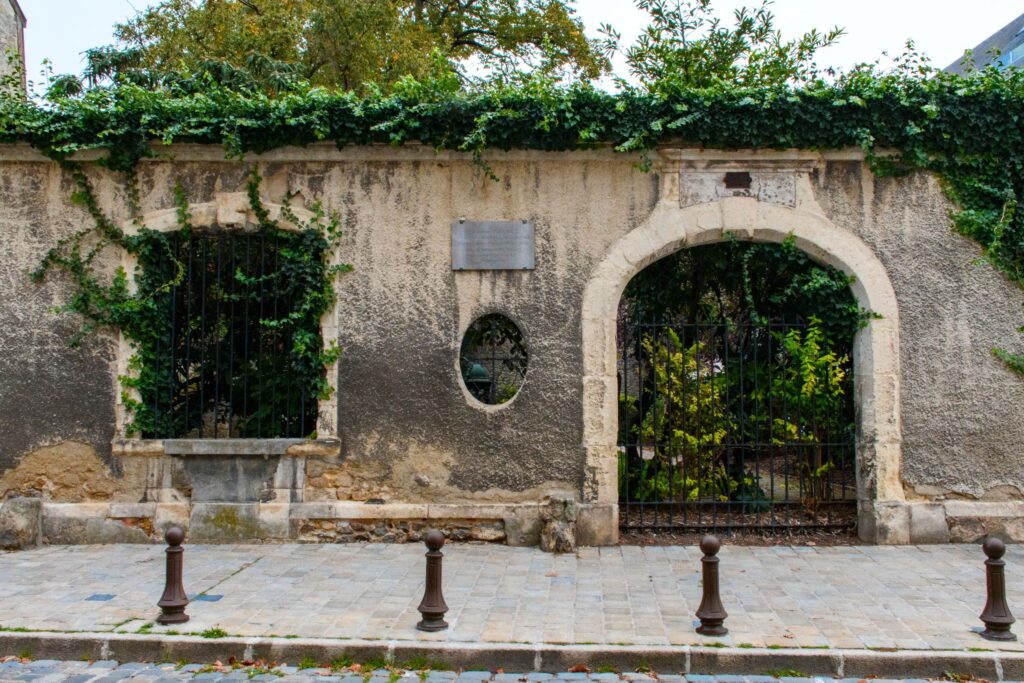
Sometimes the best discoveries happen by accident. Tucked between streets, I found a tiny garden called Charles Sarazin Square. It’s built on the remains of an old house with a beautiful Wallace fountain in the center, which adds a touch of Parisian charm.
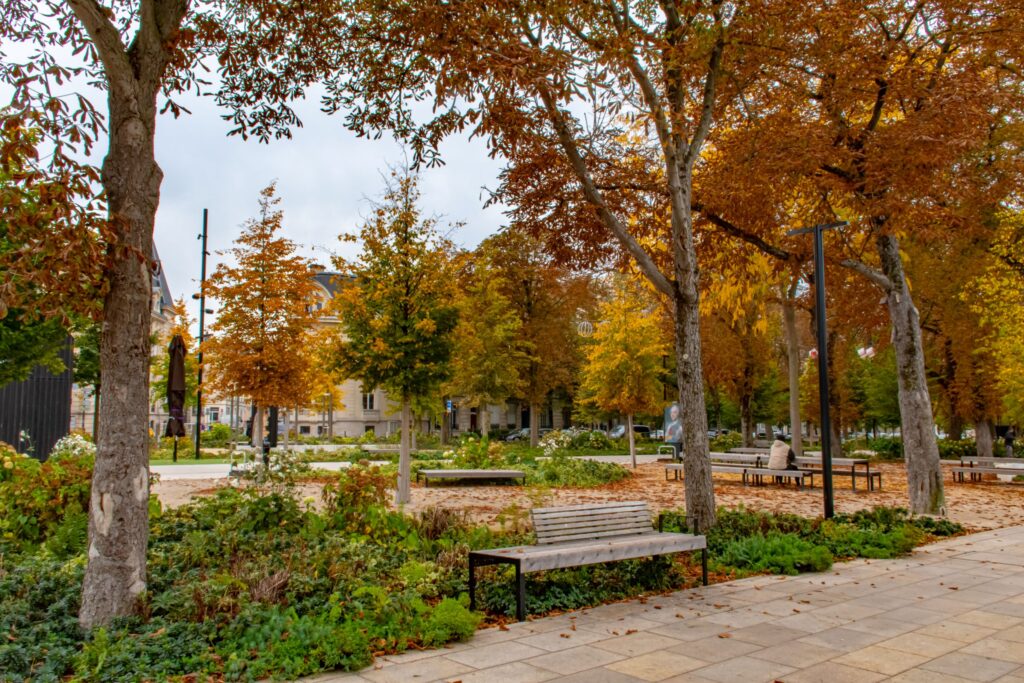
Just outside Reims’ train station, a long, beautifully designed green corridor stretches in both directions, quietly separating arrival from the city itself. While most travellers rush to cross it, I walked its full length—passing leafy promenades, playful parks with swings and hammocks, and small cedar huts perfect for an impromptu picnic—before reaching the elegant Porte de Paris and the historic Square de la Patte d’Oie. It’s one of those places that reveals Reims’ best when you slow down and resist the urge to move on too quickly.
I stumbled upon Rue de Tambour, with its rainbow-colour painted cobblestones. Artisans in small shops—jewellery makers, antiques, a bakery, and a flower shop line both sides. I spent hours in the vintage shops (Boutique Décoration and Le Gardien du Temps), where I purchased a vintage silk scarf by the French designer Céline.
Inspired by the 19th-century covered passages in Paris, Reims’ shopping arcade is Passage Sube. Not as historic or elegant as Paris, I did purchase a new blouse from one of its independent shops.
My Slow-travel tip: Take a few unplanned hours to wander the collection of streets around Rue de Tambour. I especially loved Rue Linguet and Rue du Marc, and as far as Rue du Temple and the covered market called Halles Boulingrin (open Friday and Saturday mornings only).
Before You Leave Reims
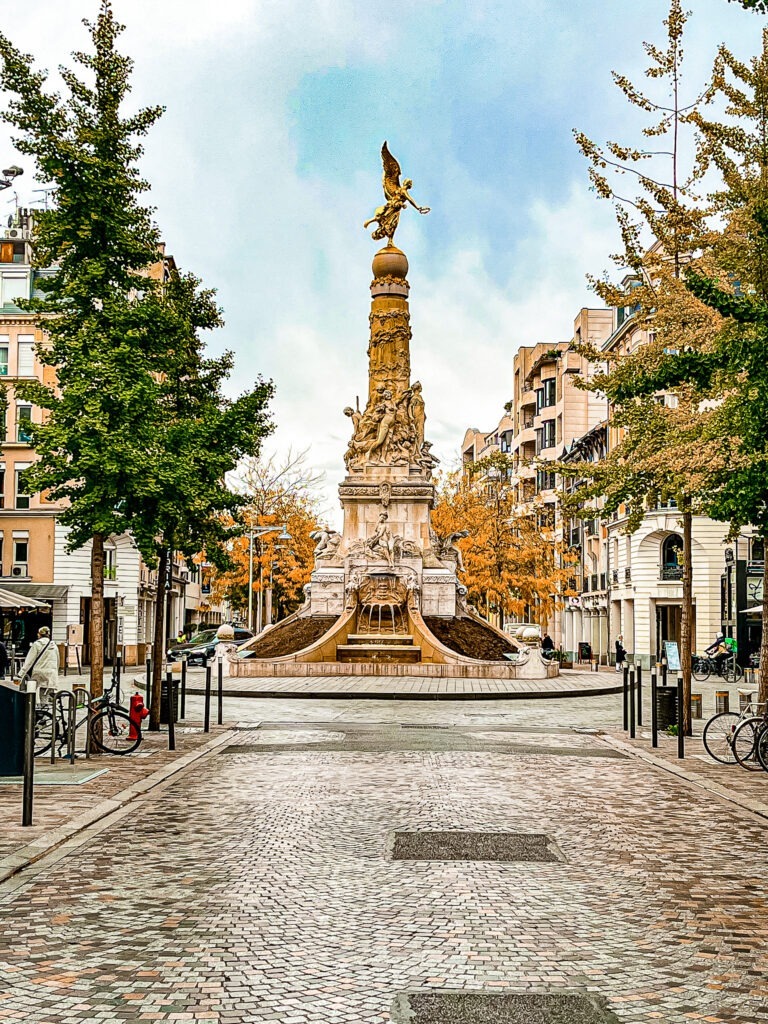
As evening settles in, I recommend you visit Place Drouet-d’Erlon, where the Sube Fountain begins to glow in soft pink light. Locals linger over apéritifs, conversations spill onto the square, and the city shifts from sightseeing to simply being lived in.
It’s a fitting place to pause—one last moment that reminds you Reims is not just a collection of places to visit, but a city best experienced slowly, at different hours of the day.
If you enjoy discovering Europe this way—thoughtfully, unhurried, and with intention—I share stories, slow itineraries, and lesser-known places like this each week in my newsletter. It’s where I go deeper, beyond the guidebook, and into the experience.
Join me there, and let’s keep exploring Europe—one meaningful place at a time.


