

I’ve been travelling to France for more than 15 years, returning more than a dozen times, and the trips I remember best are rarely the ones when I saw the most. They’re the ones when I stayed put long enough to have a favourite boulangerie, recognize the market day, or take a train somewhere simply because I had the time.
That is what slow travel in France looks like to me. Fewer bases. More ordinary days. Enough time to stop treating every place as something to complete.
France makes this particularly easy, but not everywhere in the same way. Some regions are better without a car, some villages are lovely to visit but impractical as a base, and staying longer only works if you choose well.
Here’s how I decide where to stay, how long to stay, and which parts of France lend themselves best to a slower trip.
This post may contain affiliate links, meaning I get a commission if you decide to purchase something through the links, at no additional cost to you. Read my Affiliate Disclosure.
What Slow Travel in France Means to Me
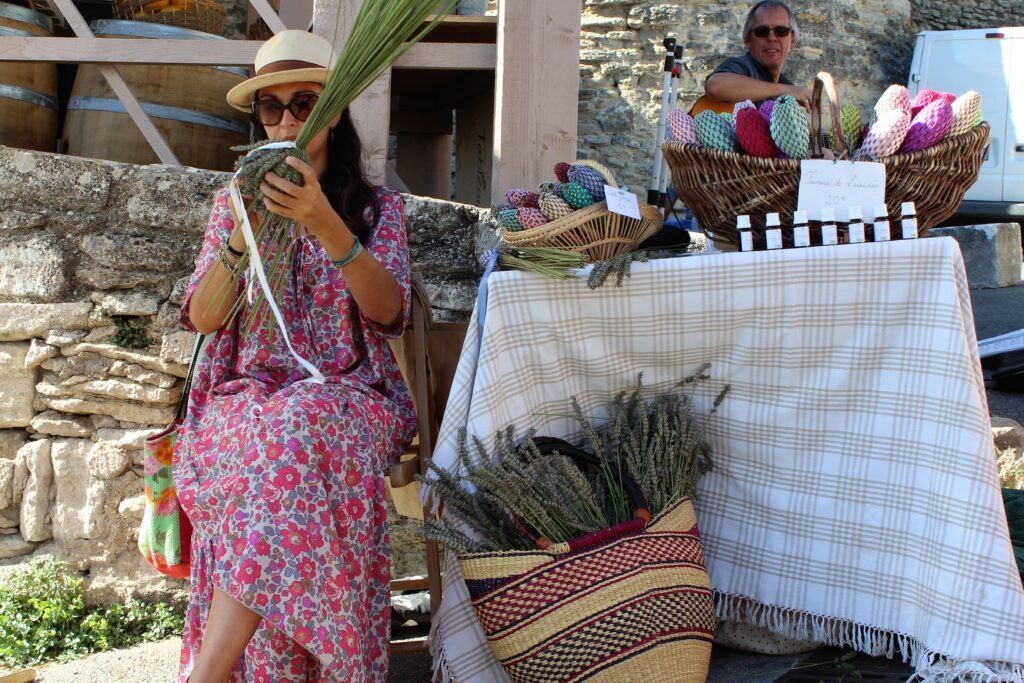
Since I’ve been travelling to Europe, now going on nearly 40 years, I’ve always travelled slowly, although I didn’t always have a name for it. And I don’t think you need three weeks in one village to do it well. You can take a four-day trip and still travel slowly. For me, it has much more to do with intention than the number of days on the calendar.
It starts with deciding what matters to you. Maybe you want to understand the food of a region, spend time in small museums, photograph architecture, browse markets, or simply see what everyday life looks like beyond the main sights. Those interests should shape the trip, rather than trying to fit yourself into someone else’s list of what you’re supposed to see.
This is also why I plan around one anchor each day. It might be a historical landmark or a museum reservation. In my Unrushed Itinerary Method, the anchor gives the day some structure without taking it over. I plan that one thing, then leave the rest of my time unplanned. That’s usually when I find the street I want to follow, the shop I hadn’t heard of, or the café where I enjoyed the best lunch I ever had.
The same thinking affects almost every other decision I make. I would rather choose fewer bases and get to know them than spend half the trip checking in and out of hotels. I look for accommodations with some character, something that feels connected to the architecture or style of the region rather than something I could find anywhere. Once I’m there, I walk as much as possible and use the train to extend how far I can explore without constantly moving my base.
Food is part of it too. I want to know what that particular place is known for and try it there. In Brittany, that might mean crêpes and cider. In Alsace, tarte flambée and local wine. In Provence, I’m looking at what’s in season at the market rather than searching for the same dishes I might order elsewhere in France.
Slow travel, to me, is really a series of intentional choices. What do I care about? What deserves a place in the day? What can I leave open? And what will help me understand this particular part of France a little better before I move on?
Why France Works So Well for Slow Travel

One of the things I love about France is that it doesn’t completely rearrange itself for visitors. You are expected, to some degree, to meet France where it is.
That might mean discovering that the shop you wanted to visit closes for two hours in the middle of the day, dinner is later than you are used to, or Sunday in a smaller town looks very different from Saturday. Walk into an independent shop and a bonjour comes before anything else. Sit down for a meal, and there is rarely the sense that someone is waiting for you to finish so they can have the table back.
I think this is where slow travel and French culture fit together so naturally. You have to pay attention to how life is actually lived rather than arriving with the expectation that everything should operate according to your habits at home. Slow travel isn’t about arriving somewhere and recreating your normal life with a prettier backdrop. That, for me, is part of being a respectful traveller too.
I notice it most around time. There is still an acceptance in France that not every part of the day needs to be productive; “work to live” (not live to work). An apéritif can take an hour. A meal can take two. Dining in France is about the food, yes, but it’s very social as well. Ever notice how street terraces have the chairs facing outwards? A shop can close because the owner has gone for lunch. Depending on where you are, an entire town can feel different between noon and two, or on a Sunday afternoon.
For a traveller, that can either be frustrating or freeing. Freeing means leaning into a slow travel mindset.
Another part of French culture that fits naturally with slow travel is the idea of the flâneur, someone who wanders simply to observe. There doesn’t have to be a destination or a reason for the walk. You follow a street because it looks interesting, stop to look through a shop window, sit on a bench for a while, or turn down a passage you hadn’t planned to explore. I’ve always loved this about travelling in France because it gives purpose to what might otherwise look like “doing nothing.” You are paying attention to the place around you, and very often, that is when you begin to notice the details that make it feel distinct.
Best Regions for Slow Travel in France

I wouldn’t choose a region of France because someone has declared it the “best” place for slow travel. I would start with what you are most interested in and let that guide the decision.
France is so regional that this matters. A trip built around wine in Burgundy will feel completely different from one centred on art in Paris or coastal walking in Brittany. The goal isn’t to find the slowest place. It is to choose somewhere that gives you plenty of reasons to stay.
Here is how I would narrow it down.
| If this interests you most… | Consider this part of France |
|---|---|
| Art, museums, architecture and neighbourhood life | Paris |
| Markets, village life and Provençal food | Provence |
| Wine and gastronomy | Burgundy |
| Châteaux, gardens and cycling | Loire Valley |
| History, Impressionism and the coast | Normandy |
| Wine villages and distinctive architecture | Alsace |
| Art, gardens and Mediterranean coastal towns | French Riviera |
| Medieval villages, prehistory and countryside | Dordogne |
| Coastal walks, seafood and Breton culture | Brittany |
| Historic towns, wine and a less obvious side of southern France | Occitanie |
Every one of these regions can work for a slower trip, but they don’t all work in the same way. Some make it easy to rely on trains and your own two feet. Others are much better with a car. In some, I would choose a city as my base. In others, I would stay in one small part of the region and resist the urge to cover the whole thing.
These five show just how different slow travel in France can look.
Paris: For Art, Neighbourhood Life and Walking
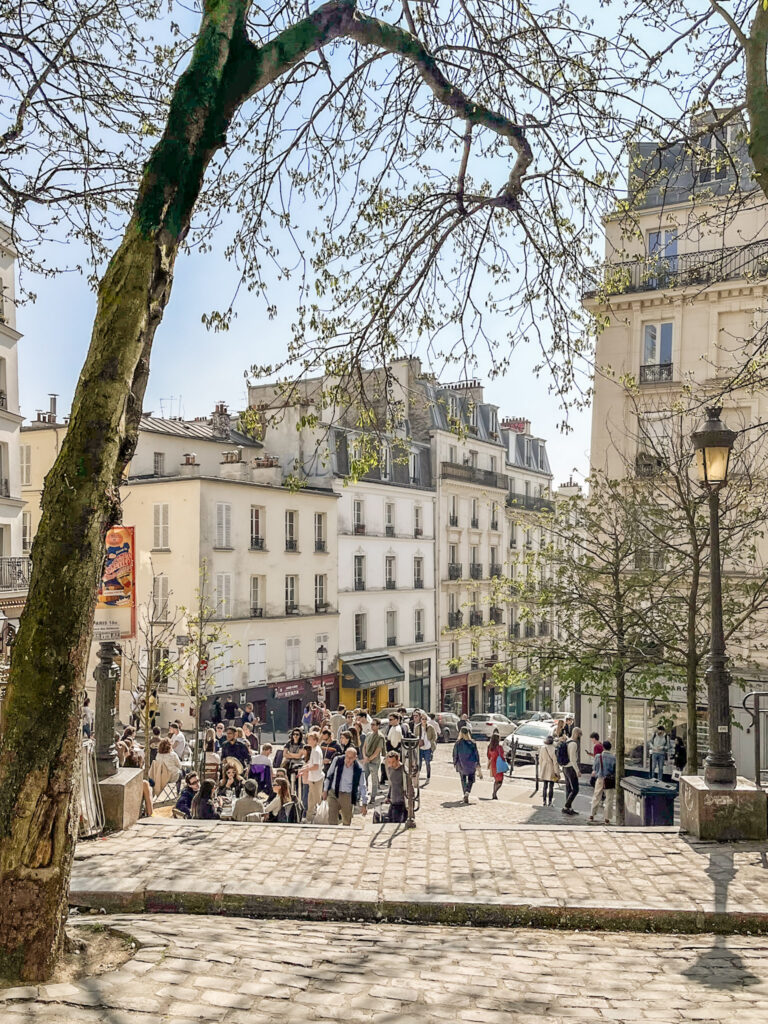
Paris is one of the best examples I know of why slow travel has very little to do with being somewhere rural.
I’ve returned to Paris many times, and I still find places I haven’t seen. More importantly, I keep returning to places I have. That’s part of the appeal.
You can build a day around one museum or exhibition, then spend the rest of it walking through the surrounding streets. You might start in the Marais and never leave it, or spend an afternoon around Saint-Germain without feeling that you should also cross the city to fit in another major sight.
Paris rewards repetition too. Going back to the same bakery in the morning, recognizing the waiter at a café, taking the same route through a garden. Those small points of familiarity change the way a city feels.
For a slower stay, I would choose your neighbourhood carefully rather than focusing only on being close to the major attractions. Ask yourself where you would enjoy beginning and ending the day. Once you have that, the Métro can take care of everything farther away.
Provence: For Markets, Food and Village Life

Provence is where I would go if food, local markets and village life are high on your list.
The mistake I see travellers make is treating Provence like one destination. It is a large region, and trying to cover too much usually means spending more time in the car than enjoying where you are.
I would choose one area and stay there. The Luberon, for example, gives you a cluster of beautiful villages that are close enough for short outings without having to change hotels every couple of nights.
This is also one of the places where I think having a car actually helps you travel more slowly. You are not tied to a tour schedule, and you can leave when you want, stop when something catches your attention, or decide that one village is enough for the day.
Market days can give the week a natural shape. Instead of drawing up a list of villages to collect, choose one because its market interests you, stay for lunch and see where the afternoon goes.
Burgundy: For Wine and Gastronomy

Burgundy is a very good example of choosing a destination because of a specific interest.
If wine and food matter to you, this is a region where staying longer gives you context. You start to understand that the villages, vineyards and appellations aren’t interchangeable. The differences are part of the point.
I would resist trying to see Burgundy as one big region and instead choose a base such as Beaune, then explore a smaller area from there. Beaune gives you restaurants, wine bars and a town you can enjoy on foot, while the surrounding vineyards are close enough for day trips.
The temptation, of course, is to book tasting after tasting. I wouldn’t.
One winery visit, a good lunch and some time walking through a village is enough for a day. Burgundy is not a place where more reservations necessarily lead to a better experience.
This is where travelling by interest becomes especially useful. If wine is what brought you here, give yourself time to understand it rather than simply sampling as much as possible.
Loire Valley: For Châteaux, Gardens and Cycling
The Loire Valley can easily turn into a checklist.
There are so many châteaux that once you start researching, it is tempting to see how many you can fit into a trip. I would take the opposite approach.
Choose the ones that genuinely interest you.
Maybe it is the architecture of Chambord, the gardens at Villandry, or the setting of Chenonceau. Once you know what is drawing you there, you don’t need to visit six more simply because they are nearby.
This is also a region where I would think carefully about the base. Towns such as Amboise or Tours give you places to eat and walk in the evening, and they put you within reach of several major sites without continually moving.
The Loire also lends itself well to cycling, which changes the scale of the trip completely. You begin noticing the landscape between the châteaux rather than treating the countryside as something you drive through to reach the next attraction.
For me, the Loire works best when the château is the anchor of the day, not the entire day.
French Riviera: For Art, the Coast and Easy Train Travel

The French Riviera probably isn’t the first place people associate with slow travel. It can be crowded, glamorous and very busy.
But it’s also one of the easiest places in France to choose one base and explore from it.
The coastal train connects places such as Nice, Villefranche-sur-Mer, Monaco, Menton and Antibes, which means you can go somewhere for the day and still return to the same home base that evening. No packing, checking out and losing half a day to changing hotels.
That is one of the reasons I think the Riviera works particularly well for travellers who don’t want to rent a car.
It also gives you a surprising amount of choice. You can spend one day at an art museum, another walking beside the Mediterranean, and another exploring a coastal or hilltop town. There is enough variety that staying longer doesn’t mean repeating the same experience.
I would choose the base based on how you want your evenings to feel. Nice gives you more restaurants and transportation. A smaller place such as Villefranche-sur-Mer gives you a different atmosphere once the day visitors leave.
That decision matters more to me than trying to stay in every famous town along the coast.
More Slow Travel on Substack
I write about the side of European travel that doesn’t always fit into a destination guide: returning to favourite places, travelling with more intention, and the small details that make a trip memorable.
How to Plan a Slow Travel Itinerary in France
One thing I’ve learned from travelling this way is that an unrushed trip usually requires more thought before you leave, not less.
The work is in making the right decisions early. Which region actually suits you? Which town makes the most useful base? Is the place you have fallen in love with on Instagram somewhere you want to sleep for five nights, or somewhere better visited for an afternoon? Which experiences matter enough to reserve, and which days are better left alone?
Once those decisions are made, you can stop managing the trip quite so much while you’re in it. That is the part I value most. I don’t want to spend my time in France reorganizing trains, researching restaurants at the last minute, or wondering whether I have chosen the wrong town. I want enough structure that I can forget about the itinerary for a while.
If that is the kind of trip you want but you’re struggling to turn all your ideas into something realistic, I can help. Through my France trip planning services, I’ll help you choose the right bases, work out how long to stay, build a sensible route and create a well-paced itinerary around the things you actually care about.


