

Spending a week in Nice gave me the opportunity to explore some of the beautiful hilltop villages along the French Riviera. With a rented Fiat convertible, I ventured into the surrounding hills to visit five villages, each with its own history, character and reasons to visit.
Of the five hilltop villages near Nice that I explored, Èze and Saint-Paul-de-Vence are the best known, and understandably so. But I equally loved lesser-visited Peille and Peillon, where medieval stone houses, narrow passageways and everyday village life were the main attractions. Roquebrune-Cap-Martin offered something different again, combining a historic hilltop village with beautiful Mediterranean coastal scenery.
If you’re staying in Nice and considering a day trip, these are the five villages you should consider. I’ll share more about each of them and how they add to a French Riviera itinerary.
This post may contain affiliate links, meaning I get a commission if you decide to purchase something through the links, at no additional cost to you. Read my Affiliate Disclosure.
Which Hilltop Village Near Nice Should You Visit?
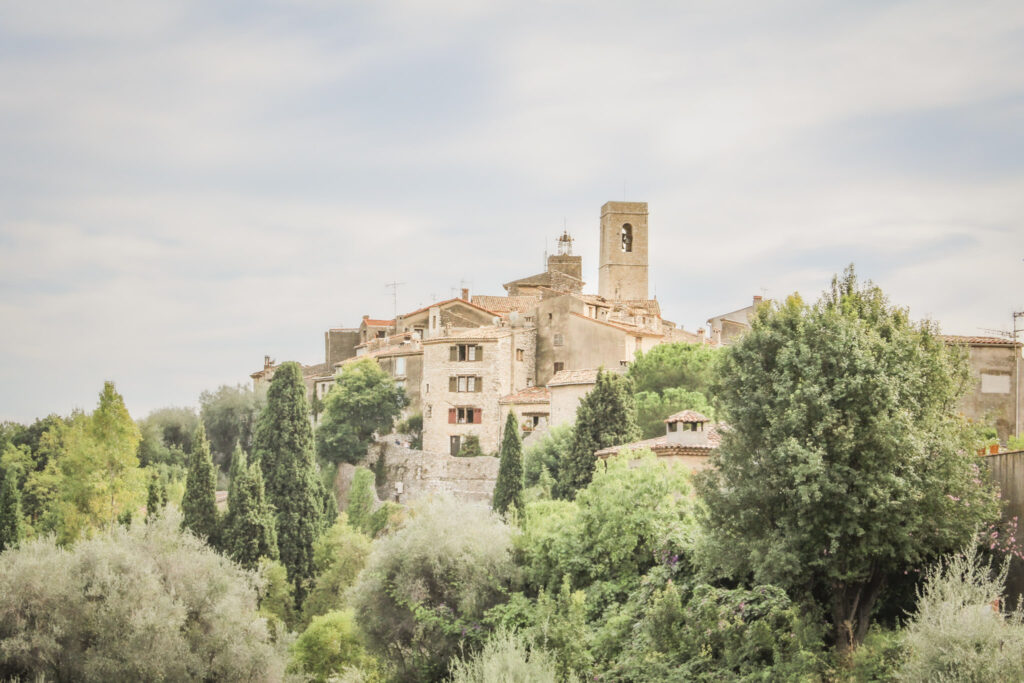
Not all hilltop villages near Nice offer the same experience, and some are considerably easier to reach than others. If you’re staying in Nice and have time for only one or two day trips, I’d choose based on what interests you most and whether you’re travelling by car or public transport.
Here’s how I’d compare the five villages I visited.
| Village | Why Visit & How to Get There |
|---|---|
| Èze | Best for: Spectacular Mediterranean views, medieval streets and the Jardin Exotique. One of the easiest choices without a car, with direct buses from Nice. Also one of the busiest villages. |
| Saint-Paul-de-Vence | Best for: Art galleries, historic architecture and its connections to famous artists. Accessible by public transport via Cagnes-sur-Mer, although a car is far easier and offers better flexibility. |
| Roquebrune-Cap-Martin | Best for: Combining a medieval hilltop village with coastal scenery. Trains from Nice serve the seaside area, but reaching the historic village far above requires an additional uphill trip and can only be reached by car. |
| Peillon | Best for: Remarkable stone architecture and a tiny medieval village with few tourists. A car is the most practical choice; the nearest train station is below the hilltop village and would require a car to reach it. |
| Peille | Best for: A traditional village experience with medieval streets, mountain views and little tourist activity. Reachable by bus from Nice, although a car makes exploring this inland area easier. |
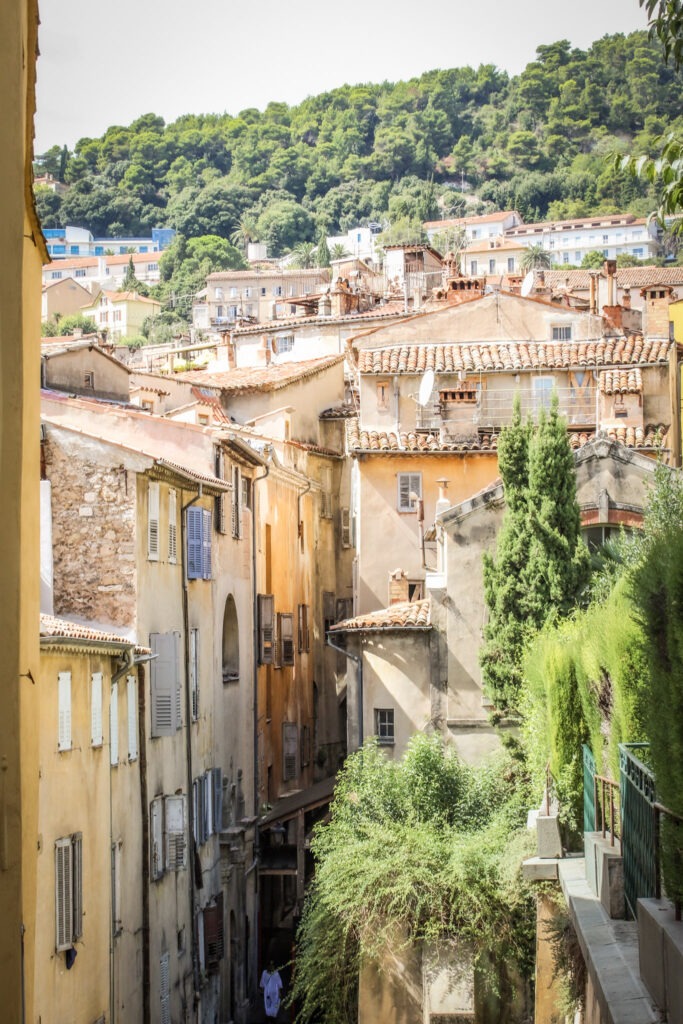
My recommendation: If this is your first visit to the French Riviera, I’d start with Èze for its extraordinary coastal setting or Saint-Paul-de-Vence if art and history appeal to you. If you’re comfortable renting a car and prefer smaller villages with fewer visitors, Peillon and Peille are particularly rewarding.
I wouldn’t attempt to visit all five in one day. They’re spread across different parts of the Riviera, and each deserves some time to explore. Remember, this part of the south of France is all about slowing down.
5 Hilltop Villages Near Nice Worth Exploring
Each of these five villages left a different impression on me, and some were well worth the extra effort it took to reach them. If you’re done exploring Nice and want to escape for a few hours, here’s where I would send you.
Èze — For Its Spectacular Mediterranean Views

Eze felt like stepping into another time. Perched high above the Mediterranean, like an Eagel’s nest, this medieval village winds up steep stone paths, past weathered doorways and art galleries tucked into old stone houses. I arrived early in the morning, before the day-trippers, when the streets were still quiet except for the occasional shopkeeper setting up for the day.
The village itself dates back to the Middle Ages, though its history goes even further. The Moors, the Romans, and even the Phoenicians once passed through here. Walking through its maze-like streets, it’s easy to see why people settled here—the views stretch endlessly over the coast, and the walls, once built for protection, now make it one of the most scenic spots along the Riviera.
I took the path called “Nietzsche Way” paying tribute to the philosopher writing some of his most famous works while walking up and down these winding pathways. I climbed to the Jardin Exotique at the very top, where sculpted cacti and plants from around the world frame one of the best panoramic views in the region.
Below, the Château de la Chèvre d’Or, a luxury hotel, has terraces that seem to float over the sea. I didn’t stay there, but I did stop for a tea and pastry with a view. Even a simple thing feels like an experience in Èze.
Shaded squares, ancient fountains and pretty doorways filled with colourful window boxes are abundant. But this village isn’t just about the scenery. There’s a perfume workshop at Fragonard, where I learned about the art of fragrance-making, and the little church in the center, with its warm ochre façade, felt like a quiet escape from the heat.
Eze is small, but it lingers. It’s the kind of place where you lose track of time, wandering, stopping, and just taking it all in.


My Travel Take
- Eze is one of the prettiest villages, but also the hilliest. Be prepared to climb a lot.
- This village receives the highest number of visitors; try and visit early in the morning or late in the afternoon to avoid the crowds.
- Sunday morning is market day, and it has a lovely buzz throughout the village, but it is also one of the busiest days to visit.
- Eze is close to Nice and about 12 km east, and nearby places worth visiting include Monaco and Beaulieu-sur-Mer.
Saint-Paul-de-Vence — For Art and History

St Paul de Vence was exactly how I imagined a hilltop village in the South of France—stone walls, winding streets, and a certain stillness that made me want to stay longer than planned. It’s one of the oldest medieval villages in the region, with a history that stretches back to the 9th century. Walking through its fortified gates felt like stepping into a living museum.
What stood out most was the village’s deep connection to art. In the early 20th century, artists like Matisse, Chagall, and Picasso spent time here, drawn by the light and the landscape. Their influence is everywhere, from the small galleries lining the streets to the Fondation Maeght, a modern art museum just outside the village filled with sculptures and paintings.
I spent hours wandering through the narrow lanes, climbing the narrow ramparts, stopping to admire hidden courtyards, weathered doors and stone fountains. At the very top, the cemetery held a simple but meaningful piece of history—Marc Chagall’s grave, overlooking the valley he once painted.
Before leaving, I couldn’t resist a stop at La Colombe d’Or, a legendary inn where artists once traded paintings for meals. I didn’t have time for a full meal, but even a quick glass of wine and some olives in the courtyard felt like experiencing a small piece of history.


My Travel Take:
- St Paul de Vence is considered one of the most beautiful villages in France.
- This village is about 15 km west of Nice, the opposite direction of the other ones.
- Market day is Wednesday and Friday mornings
Roquebrune-Cap-Martin — For Medieval History and Coastal Scenery

Roquebrune-Cap-Martin had a different feel from the other hilltop villages I visited. It wasn’t just perched in the mountains—it stretched all the way down to the sea.
You see, Roquebrune-Cap-Martin has two distinct parts. A seaside resort closest to the coastline is where you’ll find luxury villas where former guests of Coco Chanel, Winston Churchill and royalty would stay. And the ancient hilltop village perched high above.
The mix of medieval streets, Belle Époque villas, and quiet coves made it one of the most interesting places I explored near Nice.
The medieval village sits high above the coast, built in the 10th century by the Counts of Ventimiglia. Its narrow stone alleys twist around old houses, leading up to the Château de Roquebrune. Climbing to the top of this 10th-century fortress gave me some of the best views of Monaco, which felt surprisingly close.

After exploring the old town, I made my way down to the coastal path, the Promenade Le Corbusier. Named after the famous architect who lived (and tragically died) here, the trail hugged the coastline, passing rocky beaches and hidden swimming spots. It was the perfect place to slow down, listen to the waves, and watch the sea shift colours as the sun moved across the sky.
Roquebrune-Cap-Martin felt like the best of both worlds—history in the hills, the Mediterranean at my feet, and just enough space to find a quiet corner all to myself.

My Travel Take
- The hilltop village of Roquebrune-Cap-Martin is known as the gem of the French Riviera as it lies very close to the Mediterranean Sea and has views of nearby Monaco.
- It is about 25 km east of Nice, and nearby visits to Monaco, Menton and Beausoleil are possible
Peillon — For a Village That Feels Almost Undiscovered

Peillon wasn’t on my radar at first, but after hearing a local mention it, I decided to make the trip. Perched high on a rocky outcrop, it looked almost like it had been carved straight from the cliffside. Getting there meant driving up a winding road with sharp turns and steep drops—it was a dream drive for my husband, but a bit nerve-wracking for me, but worth it the moment I stepped into this off-the-beaten-path French village.
This medieval village dates back to at least the 12th century and was built as a defensive stronghold. Today, it’s a maze of stone passageways, hidden staircases, lovely weathered doorways, and quiet courtyards. There are no cars, no big tourist shops, and not much noise beyond the occasional footsteps on the cobblestones.
I spent the late afternoon wandering through the village, following paths that led to unexpected viewpoints over the valley below. The Church of Saint-Savior stood out with its faded frescoes, and just outside the village, the Chapelle des Pénitents Blancs had murals from the 15th century that felt almost untouched by time.
Unlike some of the more famous villages near Nice, Peillon isn’t filled with cafés and boutiques. Instead, it’s a place to explore slowly, soaking in the atmosphere and just enjoying the moment.


My Travel Take
- This tiny, tightly packed village won’t take you long to explore, but it is spectacular as the tall stone houses appear to be carved out of rock.
- Peillon is a hidden gem with very few tourists who visit here. It is quiet and undeniably charming.
- It is about 20 km northeast of Nice, with nearby villages of La Turbie, Menton and Peille.
Peille — For a Less-Touristed Village Experience

Peille felt like a secret. Tucked high in the hills behind Nice, it wasn’t the easiest village to reach, but that only made it more rewarding. The drive up in my rented convertible Fiat wound through forests and cliffs, with each turn making the city feel further away. By the time I arrived, it was just me, the sound of church bells, and a handful of locals going about their day.
This medieval village has been around since at least the 12th century, built into the rock with steep alleyways, stone archways, and houses that seem to grow out of the hillside. It’s quieter than more famous spots like Saint-Paul-de-Vence or Eze, but that’s part of its charm. I wandered through its narrow lanes, past worn wooden doors and faded shutters, feeling like I had the place to myself.
One of the highlights was the Place Carnot, the village’s main square, where I sat with a glass of wine under the shade of old plane trees. From there, I wandered and found four religious monuments. A 13th-century village church called Sainte Marie, the Chapel of the Misericords (now an oil mill), Chapel Saint-Sebastien (now the town hall) and the Chapel Saint-Joseph.
The views from Peille stretch all the way to the sea on one side and the rugged peaks of the Alps on the other—a perfect mix of mountain and Mediterranean.
Peille isn’t polished or full of shops, but that’s exactly why I liked it. It felt untouched, a quiet escape where the only agenda was to slow down and enjoy the stillness.


My Travel Take
- Peille may be a bit remote and off the beaten path for most visitors, which is all the more reason to go here.
- Peille is about 25 km northeast of Nice, and you can add a visit to La Turbie, Peillon or maybe even Menton to your day.
Planning Your South of France Itinerary
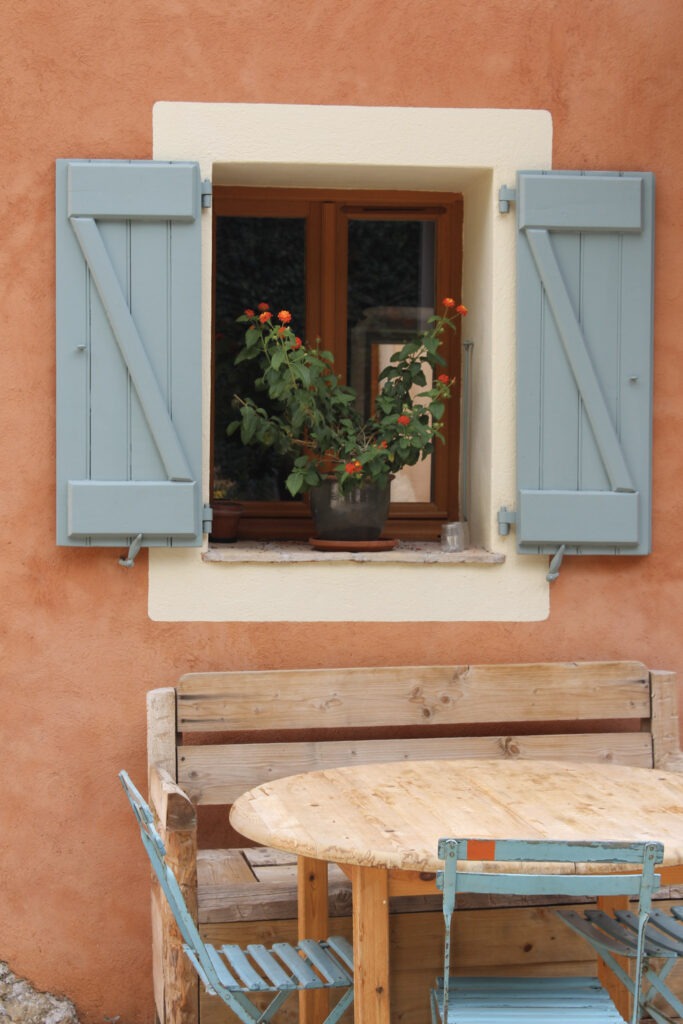
One of the things I love about the South of France is how much variety you can experience within a relatively small region. You can spend a morning in a medieval hilltop village, an afternoon along the Mediterranean coast, and the next day exploring somewhere entirely different.
For a French Riviera itinerary, I’d recommend using Nice as your base, allowing time to enjoy the city itself, visit one or two of these hilltop villages, and perhaps include a day trip to Monaco. If you have more time, consider extending your journey west into Provence, where you’ll discover a different side of southern France through its markets, historic towns, countryside and beautiful Luberon villages.
The challenge is deciding how much to include, which places work well together, and when it makes sense to change bases rather than spend hours travelling between destinations.
That’s where I can help. Through my custom European trip-planning services, I help you build a South of France itinerary around your interests, with thoughtful recommendations on where to stay, which places are worth visiting, and how to make the most of your time without feeling rushed.


