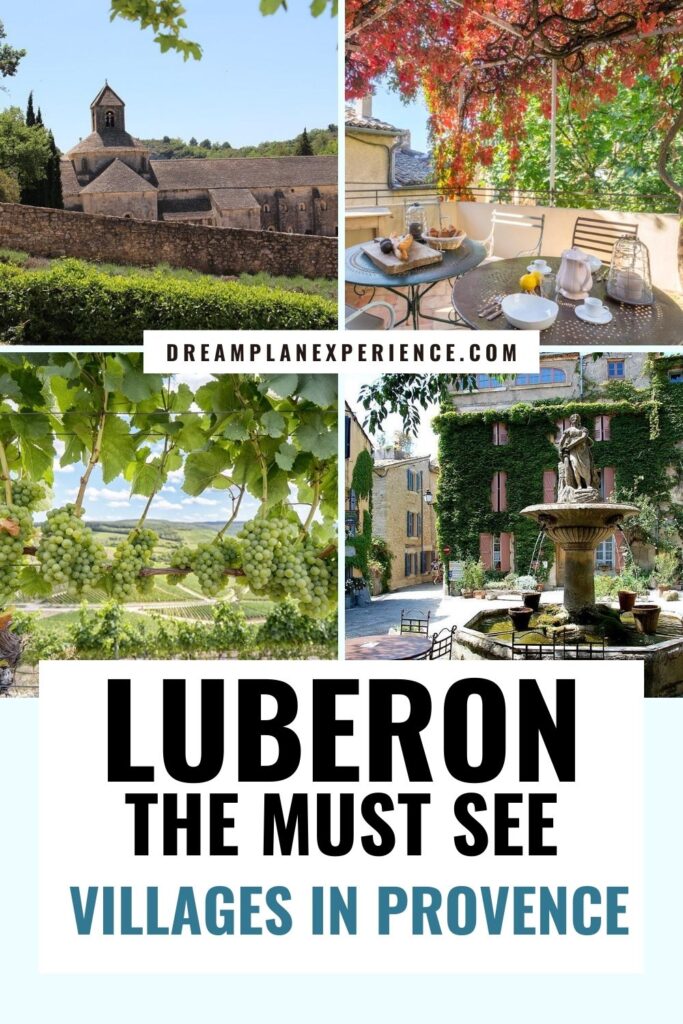

I spent a lovely week in the Luberon. It was a dream.
When people ask me which ones to visit, I always pause. The choice can feel overwhelming. That’s why I created this guide to the best Luberon villages. I want to help you see the difference between the award-winning hilltops, the must-see classics, and the underrated places most travellers miss.
My goal is simple. To make your planning easier. To give you clarity. And to help you choose the villages that will align with your pace, your interests, and the kind of memories you want to bring home.
This is the Luberon as I experienced it—warm, unhurried, and deeply unforgettable.
This post may contain affiliate links, meaning I get a commission if you decide to purchase something through the links, at no additional cost to you. Read my Affiliate Disclosure.
Why the Luberon Defines the South of France
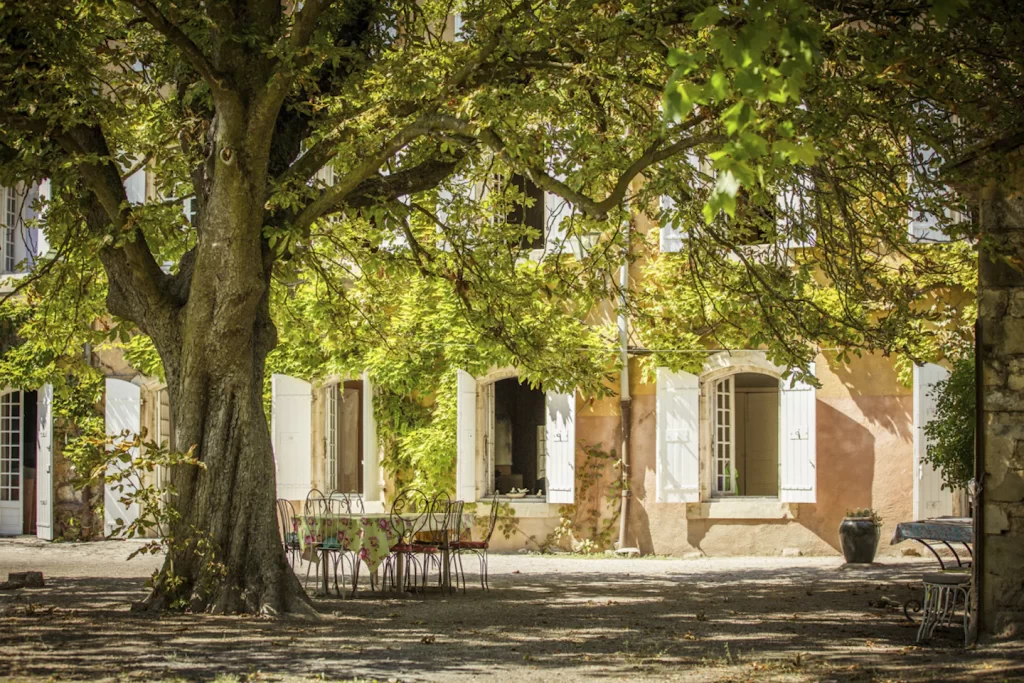
When people picture the “South of France”—the stone villages, lavender fields, sun-washed shutters, and long, quiet afternoons—they’re often picturing the Luberon without realizing it.
This small region is the true heart of Provence.
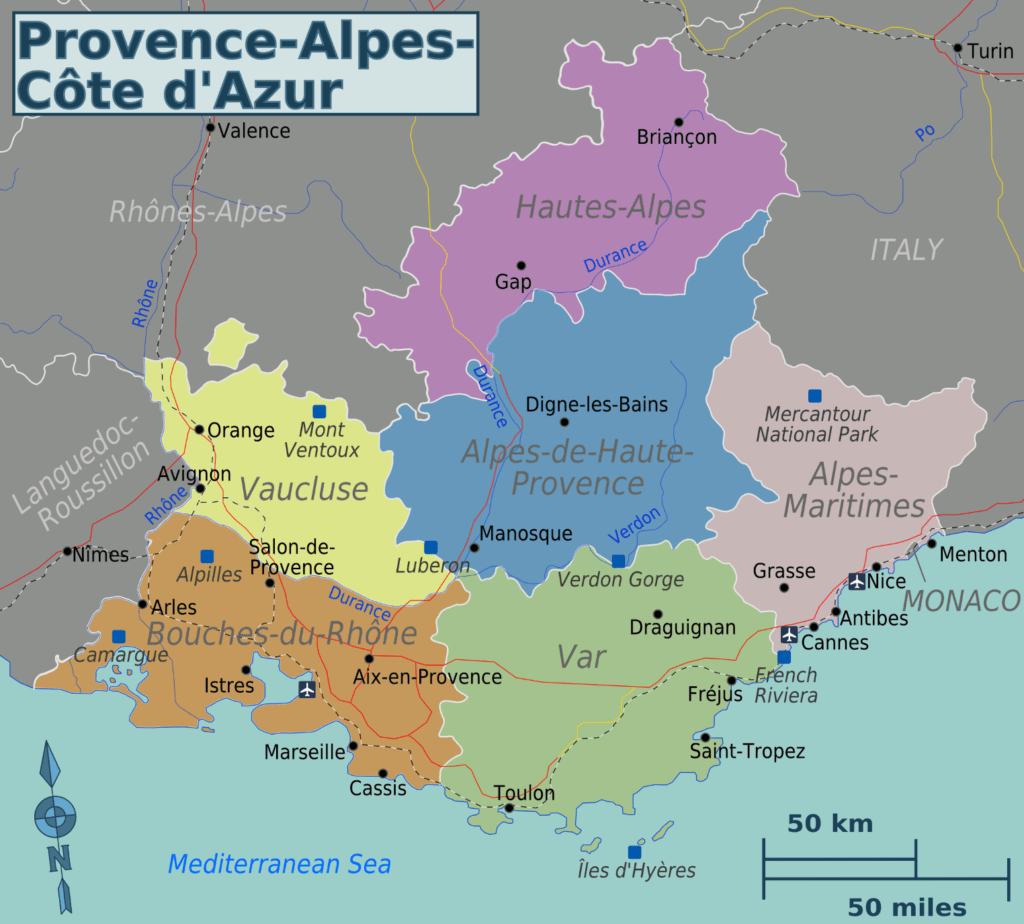
It sits within the broader Provence-Alpes-Côte d’Azur (PACA) region and crosses two departments: Vaucluse (where you’ll find most of the famous hilltop villages) and Alpes-de-Haute-Provence (quieter, wilder, and less visited).
The Luberon itself is organized around three mountain ranges—the Petit Luberon, the Grand Luberon, and the Luberon Oriental—and the villages cluster naturally around them. Each area has its own character. The western and central Luberon are ideal for first-timers. The eastern side is better if you’ve been before and want more solitude.
When I help people choose where to spend their time, I use a simple, practical framework:
1. Proximity matters more than you think.
Villages look close on a map, but roads are narrow and winding. If it’s your first visit, choose a base in the “golden triangle”—Gordes, Bonnieux, Ménerbes, Goult, or Roussillon. From here, nothing feels far.
2. Know what you want your days to feel like.
For cafés, boutiques, and lively markets, look to Lourmarin or Bonnieux.
For photography and dramatic landscapes, Gordes, Roussillon, and Saignon.
For quiet, lived-in charm, Goult, Oppède-le-Vieux, and Caseneuve are ideal.
3. Prioritize no more than three villages a day.
Each village rewards lingering. Rushing ruins the point. I prefer one in the morning, one after lunch, and one for golden hour and a late dinner.
4. Choose your home base with intention.
I look for easy parking (yes, you will need a car in this area), a good bakery, a couple of restaurants within walking distance, and a central position between the main roads (D900, D2, D3). It makes the entire week smoother.
What makes each village special is never the same—some win you with views, some with atmosphere, some with their silence. The beauty of the Luberon is that every stop feels distinct, and every detour feels worth it.
Award-Winning Luberon Villages (Designated Les Plus Beaux Villages de France)
These five carry the official stamp—and for good reason.
In France, they created a prestigious title of Les Plus Beaux Villages de France or The Most Beautiful Villages of France to distinguish the most beautiful.
The entire region of Provence-Alpes-Côte d’Azur has the highest concentration of these designated villages, with a total of seven. Five of the seven most beautiful villages in Luberon can be found here.
Ansouis

I come here for the calm and the castle that anchors the village. Ansouis feels lived-in rather than staged.
- Why it’s special: the hilltop Château d’Ansouis (visible from the main square) gives the village a compact, medieval silhouette.
- What to notice: small producers nearby—olive oil and local wines—so plan a tasting or a short vineyard detour.
Gordes
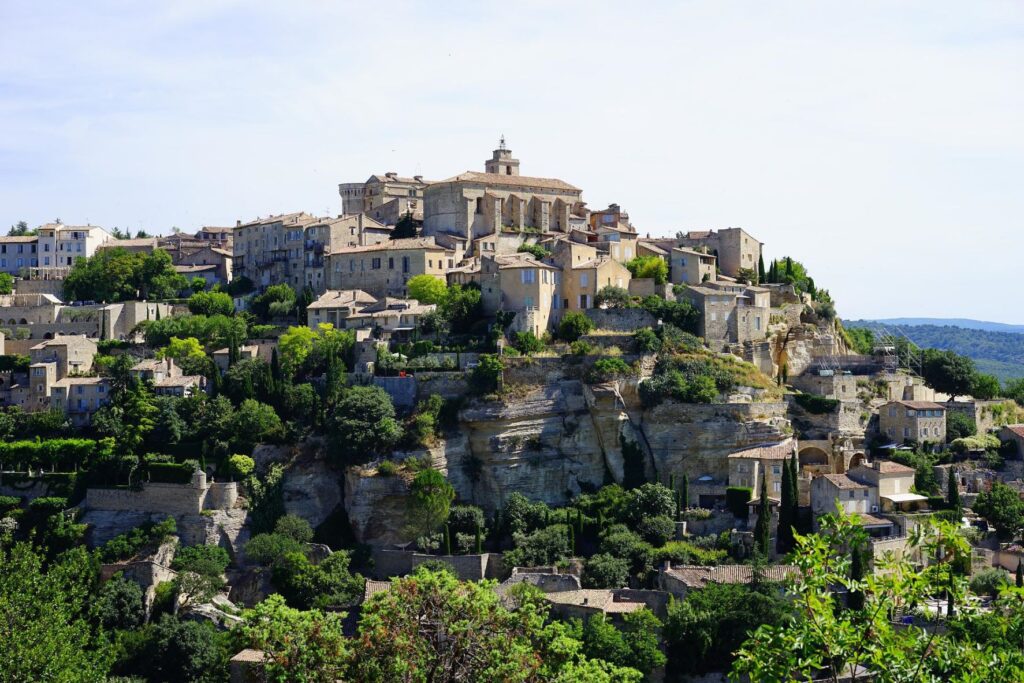
Gordes is the one photo everyone recognizes, but seeing it at dawn still stops me. The houses cling to the slope in ordered terraces.
- Why it’s special: dramatic perch and wide views over the Sénanque valley—perfect for golden-hour photography.
- What to notice: descend to the stone streets early for light and empty terraces; the village’s daytime crowds thin at first light.
Lourmarin
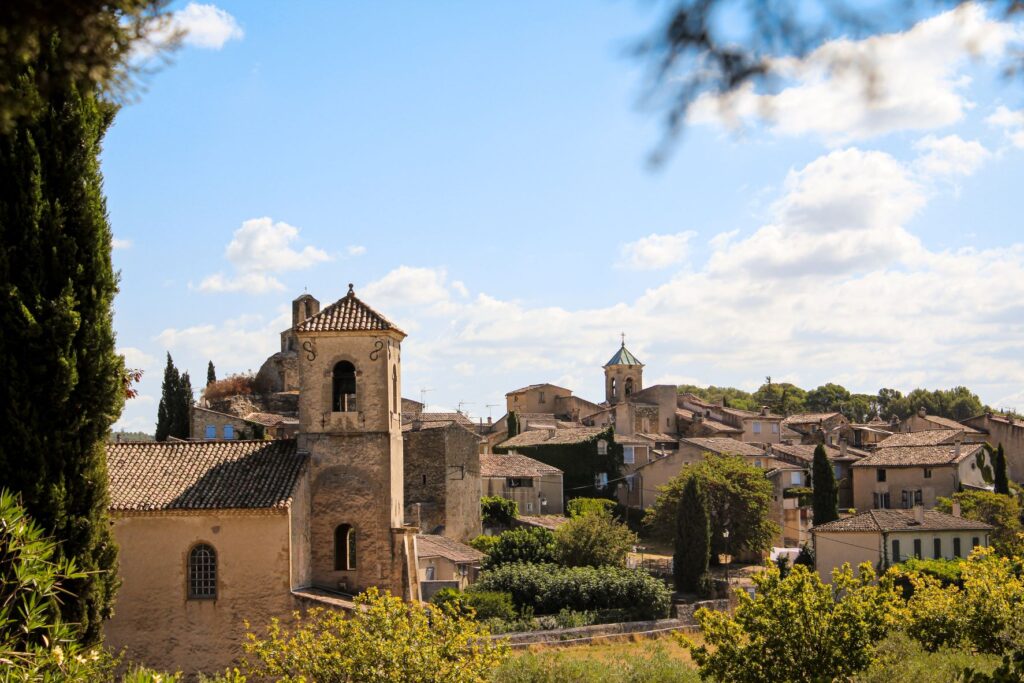
Lourmarin feels more cosmopolitan than its neighbours. I stay for the castle and the easy rhythm of cafés and bookshops.
- Why it’s special: a genuine Renaissance château at its heart and a long, lively main street with craft shops.
- What to notice: market days transform the village—arrive hungry and plan to linger over a café.
Ménerbes
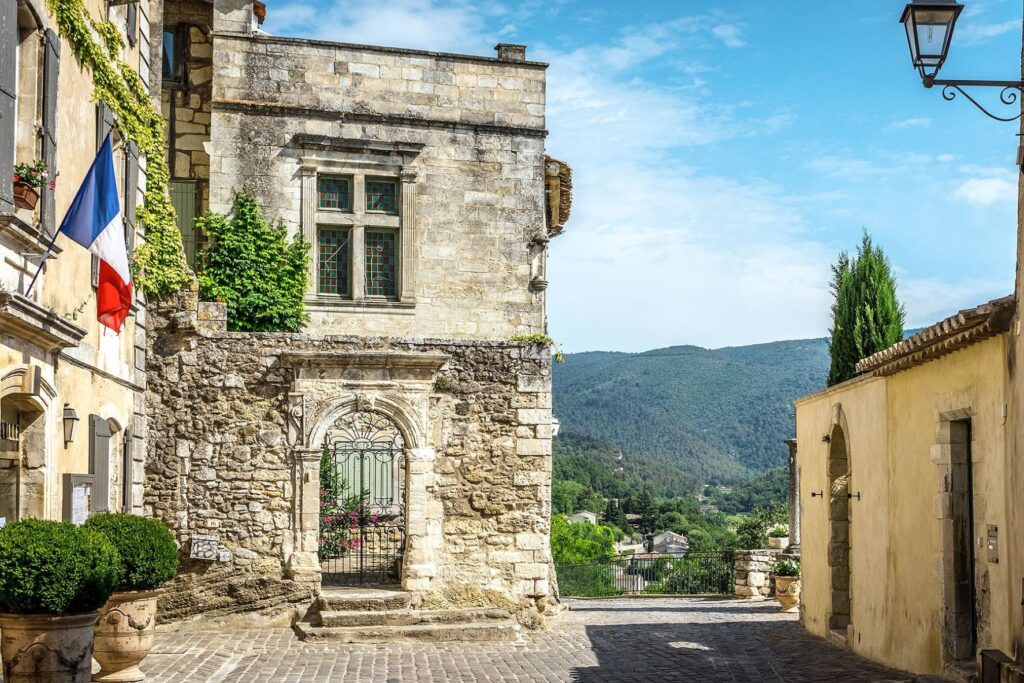
Ménerbes rewards slow walking. It opens in layers: a quiet square, a defensive wall, then views that spill into the valley.
- Why it’s special: a quieter hilltop presence and a strong artistic history—you’ll find small galleries and tucked-away ateliers.
- What to notice: take the ridge-side path for uninterrupted views; the village is quieter in the late afternoon.
Roussillon
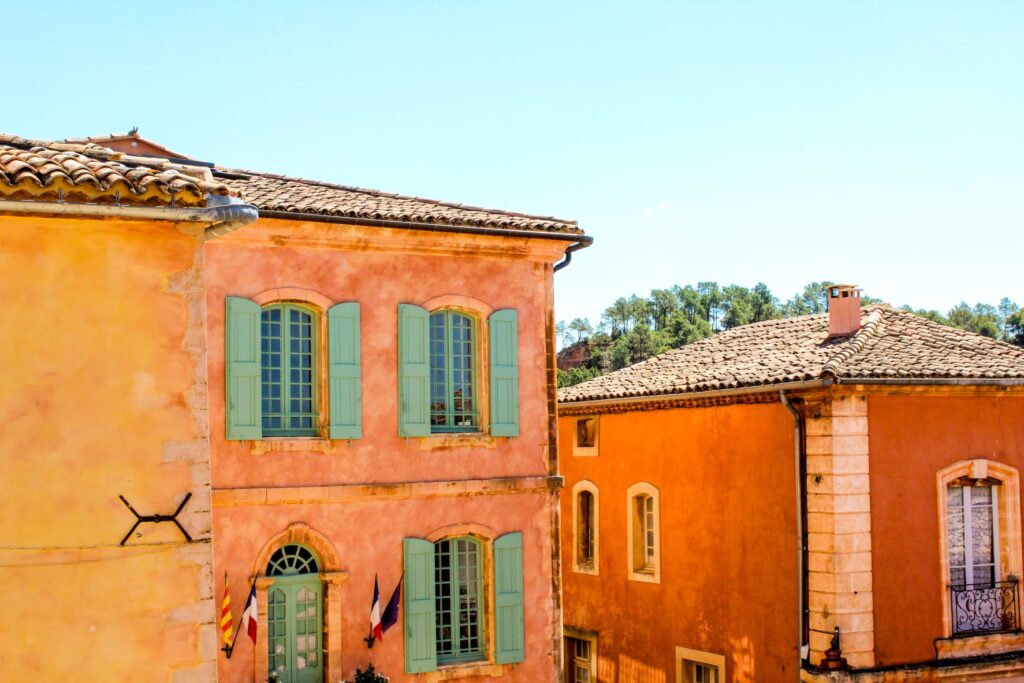
Roussillon is colour-made architecture. I still find the ochre cliffs startling the first time I walk the Sentier des Ocres.
What to notice: wear shoes you don’t mind dusting with pigment, and visit the artisan shops that still use ochre in pigments and décor.
Why it’s special: the ochre quarries and the Ochre Trail give the village a palette you won’t see elsewhere.
Must-See Classic Villages in Luberon (Perfect for First-Time Visitors)
These villages give first-time travellers a true sense of the Luberon’s slow pace—scenic, welcoming, and easy to explore without feeling rushed.
Bonnieux
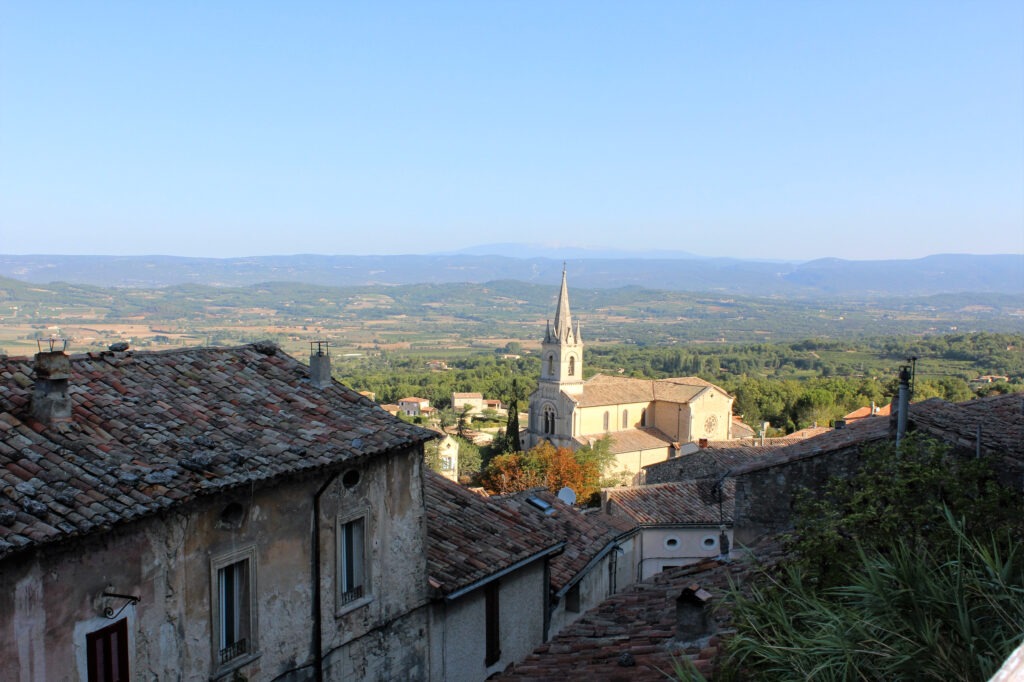
Bonnieux rises in elegant tiers, with stone houses stacked along a steep ridge. I come for the climb to the upper church and the wide valley views that open at the top.
- Why it’s special: its two historic churches, one medieval and one more recent, mark the village’s long past.
- What to notice: the lower streets are full of small cafés and bakeries—perfect for slow mornings before the day heats up.
Cucuron
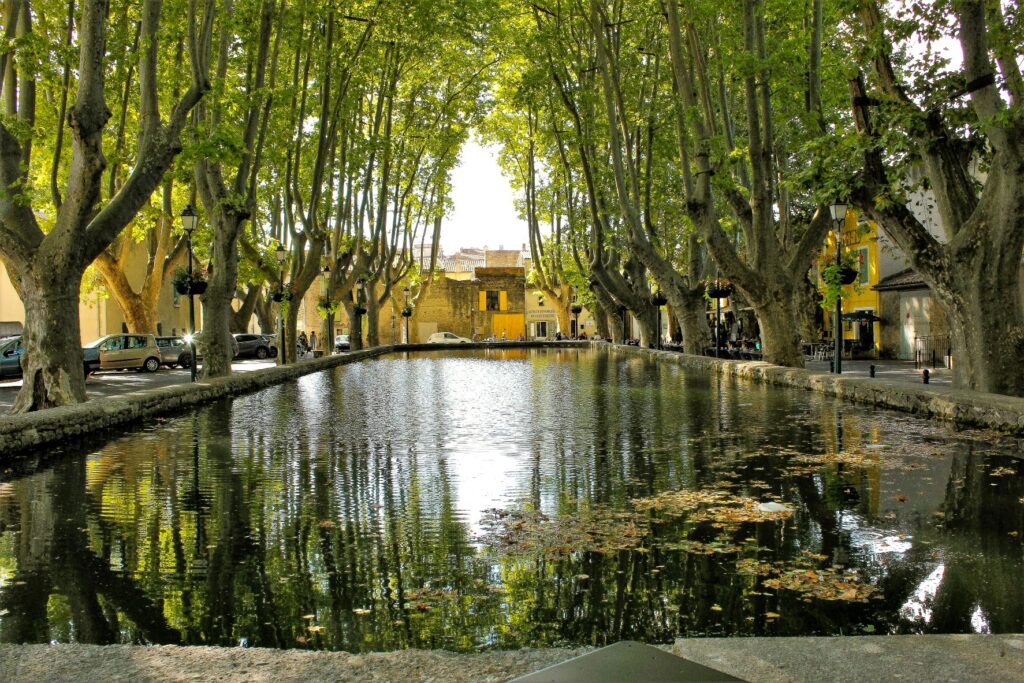
Cucuron has a different energy from the hilltop villages. Life gathers around the large, tree-lined basin in the center of town—a place that feels cinematic for good reason.
- Why it’s special: the Étang de l’Étang, an enormous stone pool under centuries-old plane trees, shapes the entire village atmosphere.
- What to notice: come early on market days when stalls line the water; the reflections are beautiful when the basin is still.
Lacoste
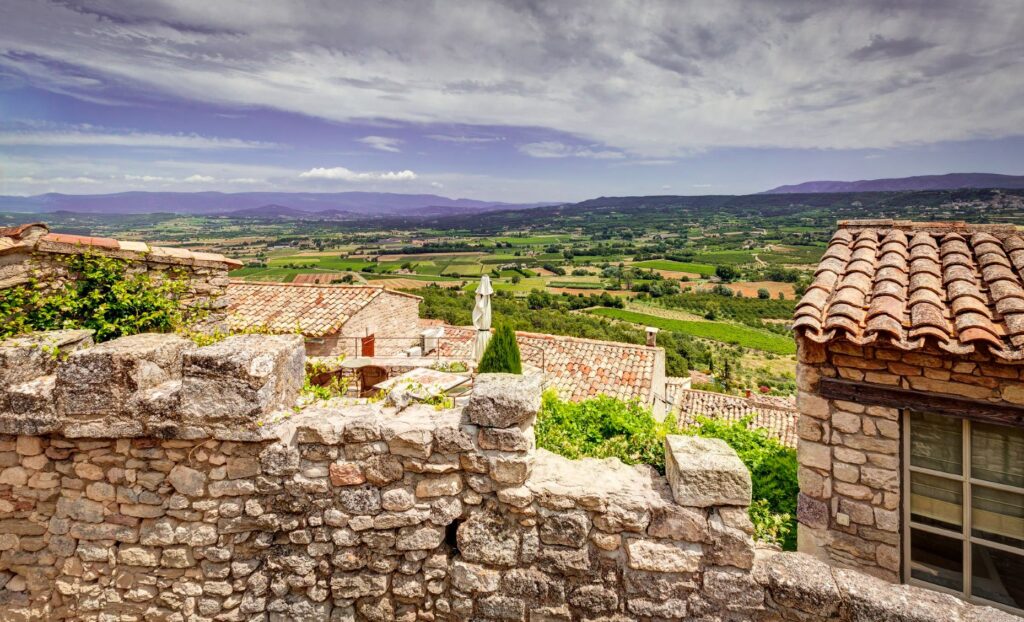
Lacoste is quiet and raw, with steep lanes that lead you up toward the ruins of the Marquis de Sade’s castle. I always pause at the top—it’s one of the best viewpoints in the area.
- Why it’s special: the castle ruins dominating the hillside give Lacoste a bold, sculptural silhouette.
- What to notice: as you climb, look back often; each turn frames a new view of the Luberon valley.
Saignon
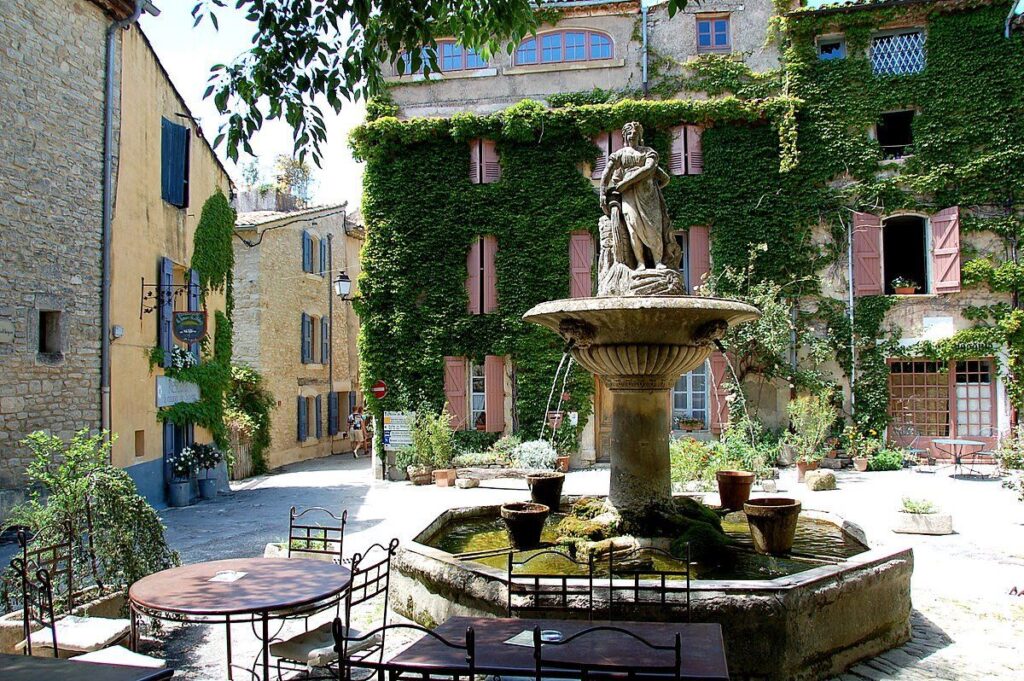
Saignon feels suspended in time. Its high perch gives it an airy stillness, and the central square is one of my favourites for a slow lunch.
What to notice: wander the quieter back lanes—many still show medieval stonework and lead to hidden gardens.
Why it’s special: the Rocher de Bellevue, a natural rock outcrop, offers one of the most panoramic viewpoints in the Luberon.
Best Luberon Villages Worth the Detour
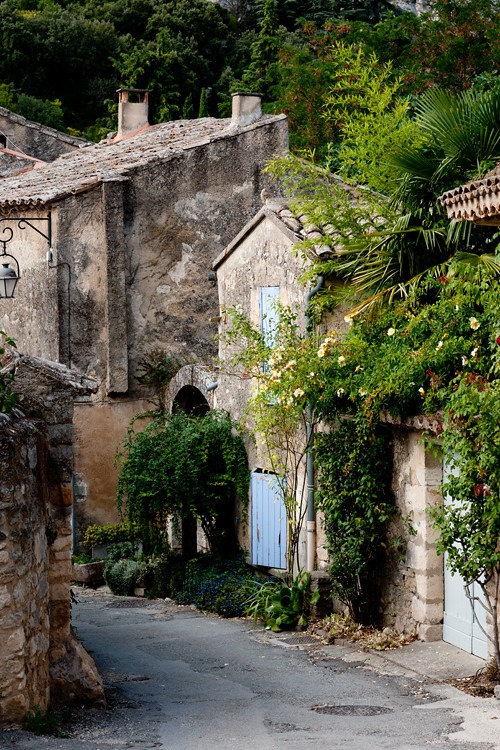
These villages don’t make every list, but they should. Each one offers a quieter, more intimate look at the Luberon—ideal if you want space, authenticity, and moments that feel entirely your own.
Goult
Goult is the village I return to when I want calm without isolation. It’s beautifully preserved, lived-in, and quietly confident.
- Why it’s special: the restored Jerusalem Mill and the terraced path around it reveal how the village once worked with the landscape.
- What to notice: the central square fills gently at lunch, and the village lights up softly in the evening—a perfect base for slow travel.
Oppède-le-Vieux
Oppède-le-Vieux feels ancient in a way the more polished villages don’t. Its crumbling lanes and dramatic ruins sit on a shaded slope that keeps the village cool and still.
- Why it’s special: the walk up to the Notre-Dame-d’Alydon church and the castle ruins gives you sweeping views and a sense of deep history.
- What to notice: park below and walk in; the approach alone sets the tone.
Saint-Saturnin-lès-Apt
This village mixes history with local life. It’s large enough to feel lived in, yet quiet enough to explore without crowds.
- Why it’s special: the medieval ramparts and the old dam and reservoir above the village make for an unusual, scenic loop.
- What to notice: mornings are lovely here; the streets warm slowly and lead naturally toward the castle ruins.
Joucas
Joucas is small, tidy, and filled with soft colour. It sits between Gordes and Roussillon, yet stays remarkably peaceful.
What to notice: walk the upper lanes for views toward the ochre hills; sunset here is surprisingly striking for such a quiet place.
Why it’s special: artists have shaped the village, and you’ll find sculptures tucked into courtyards and corners, giving it a creative pulse.
Where to Stay in Luberon, France
I based myself in Maison Léontine, a beautifully restored two-bedroom, two-bath home in the quiet village of Cabrières-d’Avignon. The house has everything I look for in a Luberon stay—stone walls, an inviting pool, and a peaceful outdoor dining space for long evenings.
Cabrières-d’Avignon dates back to the 1100s, and its calm rhythm makes it an ideal home base for exploring the best villages in the Luberon. I still think about this villa often. I’d return in a heartbeat.
Final Thoughts
The Luberon rewards anyone willing to slow down. I find my best moments here in the early hours—when the light is low, the shutters are still closed, and the villages feel like they’re waking gently.
Markets pull me in next. I wander without a list, tasting, watching, letting the pace set itself.
And I end most days lingering somewhere—on a terrace, along a ridge path, or in a quiet square.
If you want help planning your own trip—choosing the right villages, setting the pace, and creating an itinerary that feels effortless—I’d love to guide you. My trip-planning services are designed to bring the Luberon to life for you, one slow, beautiful moment at a time.