

When people search for things to do in Garmisch Partenkirchen, they usually expect a quick list of alpine attractions. But after nearly four decades of travelling throughout Germany, I’ve learned that this Bavarian mountain town rewards travellers who slow down and stay a little longer.
I spent four nights in Garmisch-Partenkirchen while driving Germany’s scenic Alpine Road from Berchtesgaden to Lake Constance, and it quickly became one of my favourite stops in the Bavarian Alps.
What makes Garmisch special isn’t just the famous sights like the Zugspitze or Lake Eibsee. It’s the rhythm of the place—wandering between the historic streets of Garmisch and Partenkirchen, biking through the quiet alpine trails, lingering in cafés, and waking early to see the mountains before the day-trippers arrive.
I’m sharing what I enjoyed the most, based on what I experienced personally and what I’d prioritize if visiting again.
This post may contain affiliate links, meaning I get a commission if you decide to purchase something through the links, at no additional cost to you. Read my Affiliate Disclosure.
Best Things to Do in Garmisch-Partenkirchen

Before diving into the highlights that stood out most during my stay, here’s a quick overview of the main things to do in Garmisch-Partenkirchen. Some are iconic alpine experiences, while others are quieter corners of the region that reward slower exploration.
| Experience | Why It’s Worth It |
|---|---|
| Zugspitze Cable Car | Ride to Germany’s highest peak for panoramic views across the Alps and even into Austria on a clear day. |
| Lake Eibsee | A stunning emerald lake at the foot of the Zugspitze with a scenic 7.5 km walking trail. |
| Wander Partenkirchen | Historic streets with Lüftlmalerei murals, woodcarvers, and traditional Bavarian shops. |
| Partnach Gorge | A dramatic gorge walk through towering rock walls and rushing alpine water. |
| Easy Alpine Hiking | Accessible trails with sweeping views even for casual hikers. |
| E-Bike the Valley | Cycle quiet paths through alpine meadows and Bavarian hamlets. |
| Werdenfels Castle Ruins | A short forest walk leads to medieval ruins overlooking the Loisach Valley. |
| Riessersee Lake | A peaceful alpine lake with a gentle walking loop and mountain reflections. |
| AlpspiX Platform | A dramatic viewing platform suspended over a deep alpine valley. |
The Experiences That Truly Stood Out to Me

Whenever I arrive somewhere new, I follow a simple planning philosophy I call The Unrushed Itinerary Method. Instead of trying to see everything in a destination, I choose one meaningful “anchor” experience for the day—something I would truly hate to miss. That might be a mountain summit, a lakeside walk, or simply wandering a historic neighbourhood.
Once that anchor is set, the rest of the day unfolds naturally. There’s space for cafés, quiet discoveries, and the small moments that often become the most memorable.
During my four nights in Garmisch-Partenkirchen, these were the experiences that stood out most.
Wandering the Old Town of Partenkirchen
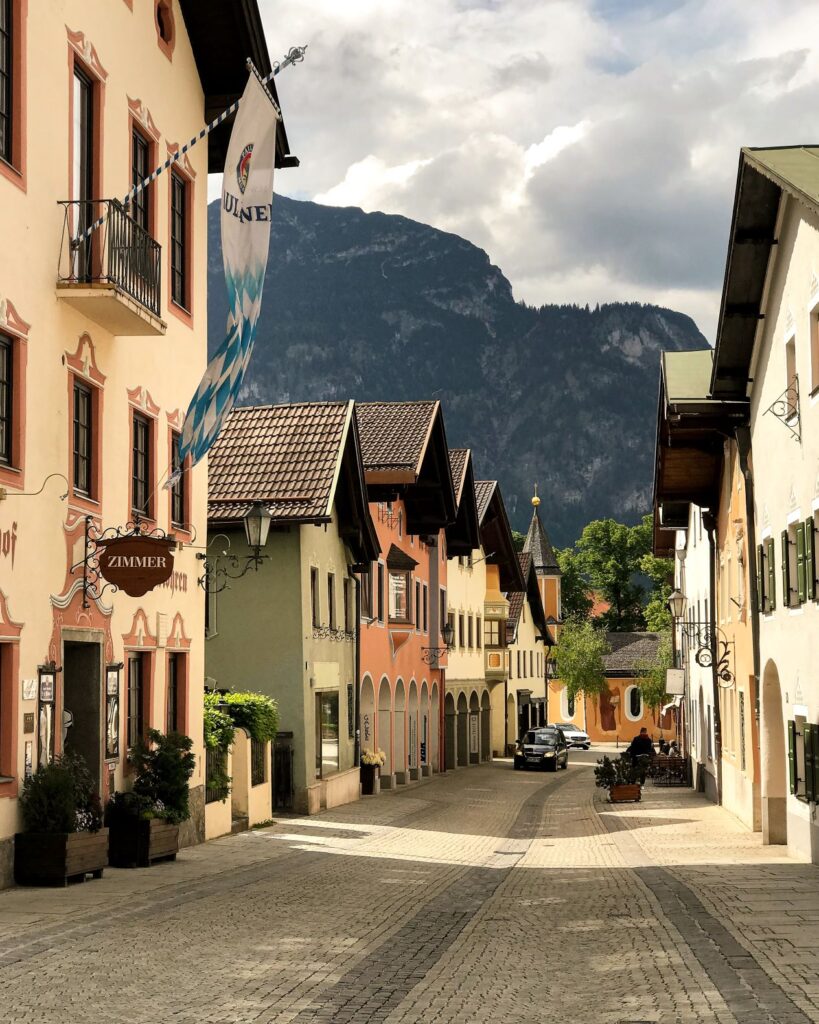
One of the most enjoyable parts of my time in Garmisch Partenkirchen was simply wandering through the town itself—or rather, towns. What many travellers don’t realize at first is that Garmisch and Partenkirchen were once two separate places. They were officially merged in 1935 by order of Adolf Hitler to host the 1936 Winter Olympics. But even now, if you pay attention as you explore, you’ll notice distinct differences between the two sides.
One of the anchor experiences I chose during my stay was simply spending a slow morning wandering the Old Town of Partenkirchen.
Partenkirchen feels noticeably different from the Garmisch side of town. It’s older, quieter, and more traditional, with streets that feel like they belong to another era. The heart of it is Ludwigstraße, a long historic street lined with pastel buildings decorated with Lüftlmalerei—the elaborate painted murals that are a distinctive tradition throughout southern Bavaria.
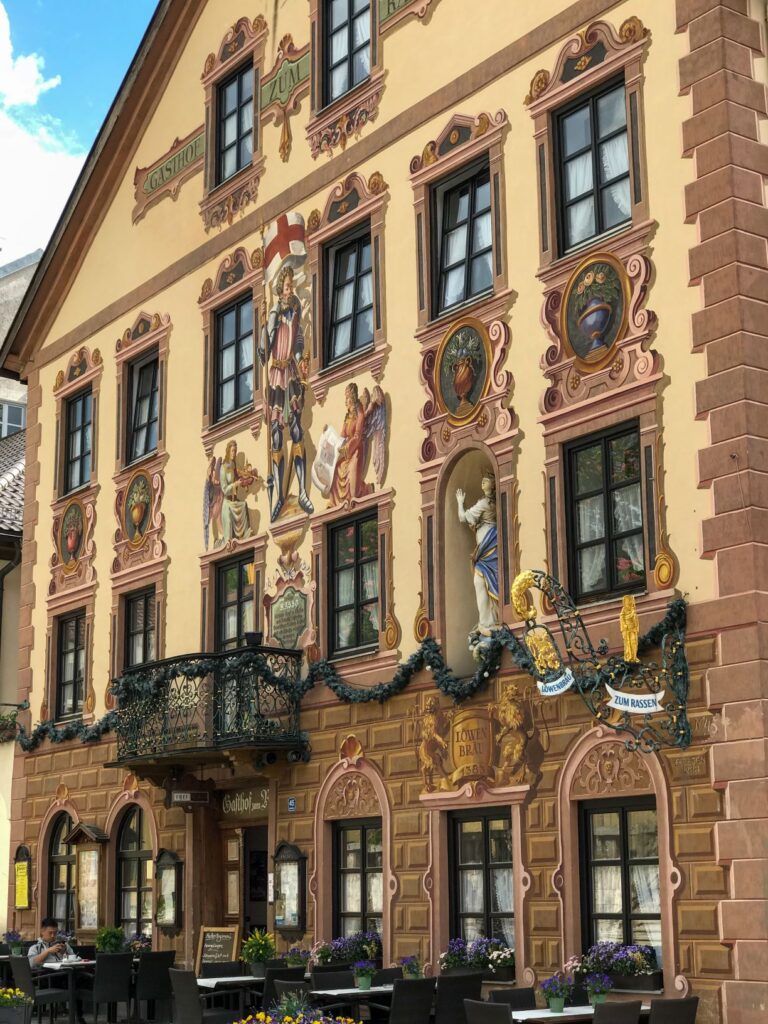
I found one of the best murals on Frühlingstrasse. Stopped in my tracks was the Gasthof Husar, with its elaborate Biedermeier-style frescoes. Just across from it is the Polznkasparhaus, which is also painted in the same detailed style. These murals tell stories—biblical scenes, daily alpine life, local legends—and they give the town its character. It’s like walking through a living art gallery.
What I enjoyed most was how easy it was to slow down here. I spent nearly the entire morning wandering in and out of small shops, studying the painted façades, and noticing details you’d easily miss if you rushed through.
At one point, I stepped into a year-round Christmas shop filled with delicate glass ornaments and handcrafted wooden figurines. I ended up bringing several home, and every December when I decorate my tree in Canada, they remind me of that quiet morning in the Bavarian Alps.
A little farther along the street, I wandered into a small woodcarver’s workshop where the scent of fresh sawdust filled the room. I practiced my German while speaking with the craftsman about his work, and before I left, he carved a small wooden flower for me to take home.
Eventually, I did what I often do when travelling in Germany—I found a quiet café, ordered Kaffee und Kuchen, and let time stretch a little. A slice of apple strudel and a warm cup of tea on a patio in the sunshine—simple pleasures like this are what slow travel is all about.
There’s a German word that perfectly captures the feeling of moments like this: Gemütlichkeit—a sense of warmth, comfort, and quiet contentment.
And in many ways, that feeling defined my time in Garmisch-Partenkirchen.
Between the two towns, there’s something that ties them all together beautifully: the murals. Known as Lüftlmalerei, these wall paintings are a distinct tradition in southern Bavaria. You’ll find them everywhere if you take the time to look, but one of the most charming areas for this is.
Riding the Zugspitze Cable Car
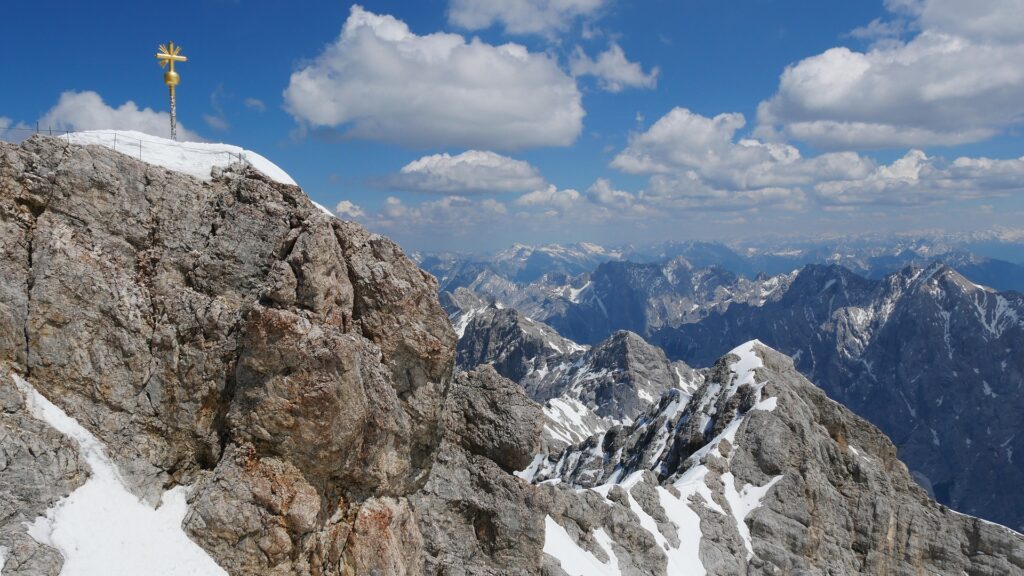
For another day’s anchor experience, I decided to ride to the top of Germany’s highest mountain: the Zugspitze.
Normally, I tend to avoid the biggest “must-see” attractions when I travel. But the Zugspitze is one of those places that genuinely lives up to the hype.
At 2,962 metres (9,718 feet), the summit offers panoramic views across the Alps that stretch into Germany, Austria, Switzerland, and Italy on a clear day.
I chose the Zugspitze Round Trip, which combines the historic Bayerische Zugspitzbahn cogwheel train with the Gletscherbahn cable car for the final ascent. The train ride slowly climbs through forests and alpine meadows, giving you time to watch the landscape change as the mountains grow steeper around you.
When I stepped onto the viewing platform at the summit, I immediately felt the altitude. I became slightly lightheaded and needed a few minutes to adjust—something worth keeping in mind if you’re not used to high elevations.
But once I settled in, the views were extraordinary. Jagged mountain ridges stretched endlessly in every direction.
Despite the cold wind at the top, I found an outdoor table, ordered a beer and a small snack, and sat quietly taking in the scenery. It’s the kind of moment where you realize just how vast and beautiful the Alps really are.
If you plan to visit, I’d suggest checking the weather webcams before going. Visibility can change quickly in the mountains, and the experience is very different on a clear day.

Cycling the Alpine Valley by E-Bike

One experience I hadn’t originally planned—but that quickly became one of my favourites—was exploring the hills and valleys around Garmisch-Partenkirchen by e-bike.
On a whim, I rented an e-bike from a small shop in town. After a quick explanation of the controls and a few route suggestions from the owner, I set off with Google Maps and a general sense of direction.
It turned out to be one of the most enjoyable ways to experience the landscape.
The landscape around Garmisch is threaded with wide cycling paths that wind through alpine meadows, steep hills, valleys and quiet Bavarian hamlets, all with dramatic mountain peaks rising right in front of you.
The electric assist made it easy to cover more ground and tackle those impossibly steep hills without feeling rushed or exhausted. I could glide along the valley floor, stop whenever something caught my eye, and linger as long as I liked.
At times, I rode past tiny wooden barns sitting alone in flower-filled fields. Other stretches led through cool pine forests, where the air felt noticeably fresher.
What I loved most was the sense of freedom. Unlike driving or following a fixed itinerary, cycling allowed me to explore the region at a slower pace while still seeing far more of the countryside.
It’s an experience I’d absolutely recommend if you’re spending a few days in Garmisch-Partenkirchen.
How Many Days Do You Need in Garmisch-Partenkirchen?

If you’re wondering how many days to spend in Garmisch-Partenkirchen, my short answer is at least three days, though I personally stayed four nights and found it to be an ideal pace.
Many travellers visit Garmisch as a quick stop between Munich and southern Bavaria, often just long enough to ride the Zugspitze or see Lake Eibsee. But once you arrive, you quickly realize the region rewards a slower rhythm.
Between the alpine scenery, the historic streets of Partenkirchen, and the network of walking and cycling trails that stretch across the valley, there’s more here than a single sightseeing checklist.
Spending several days allows you to follow a slower travel approach—choosing one meaningful experience each day, whether that’s riding to the top of the Zugspitze, hiking through a dramatic gorge, cycling through alpine meadows, or simply wandering the old town and lingering in a café.
It also gives you the flexibility to explore some of the beautiful towns and landscapes nearby.
Easy Day Trips from Garmisch-Partenkirchen
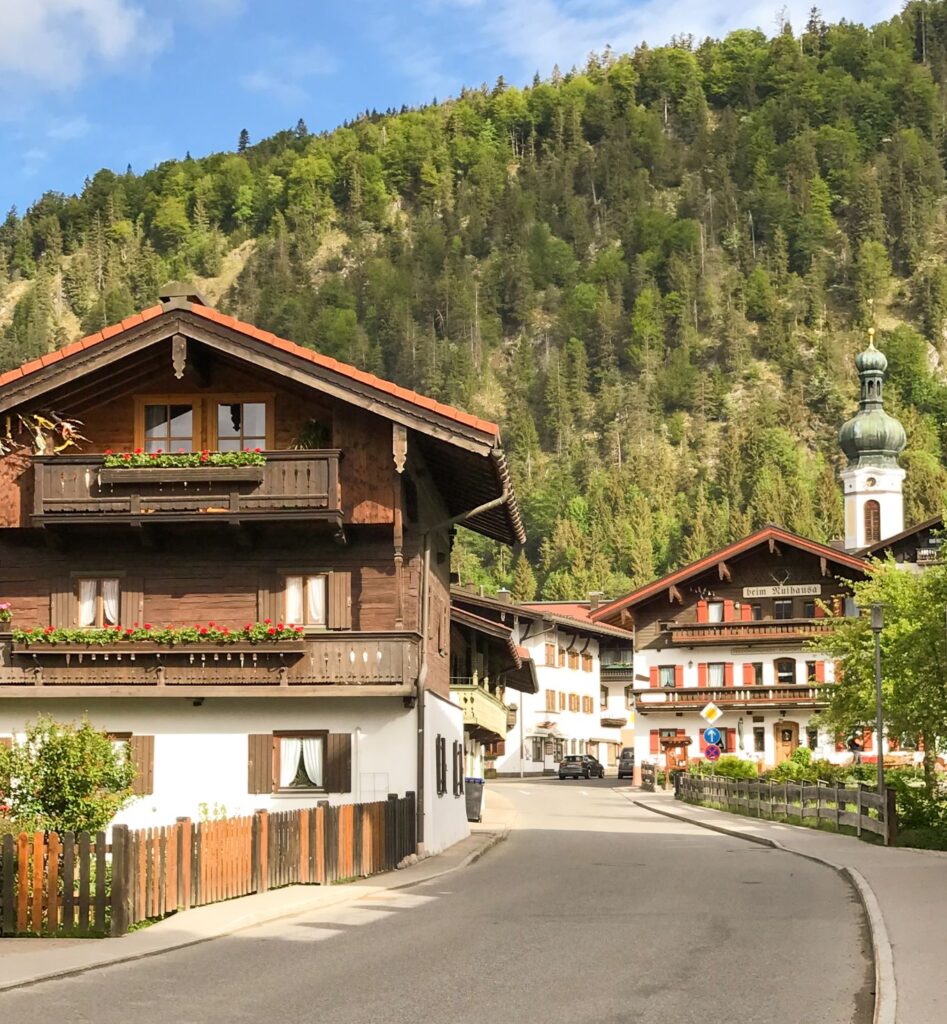
If you’re staying four days or longer, Garmisch-Partenkirchen makes an excellent base for exploring this part of the Bavarian Alps.
Here are a few nearby places worth considering:
Mittenwald
Just 20 minutes away, Mittenwald is one of the most charming Alpine towns in Bavaria. Like Partenkirchen, its buildings are decorated with colourful Lüftlmalerei murals, but the setting here feels even more dramatic, with the Karwendel mountains rising sharply behind the village.
Oberammergau
About 30 minutes away, Oberammergau is known for its once-a-decade Passion Play, as well as its long tradition of woodcarving. It’s a lovely place for a slow afternoon of wandering, browsing artisan shops, and admiring painted houses.
Linderhof Palace
Built by King Ludwig II, this ornate palace sits tucked deep within the Ammergau Alps. It’s smaller and far less crowded than Neuschwanstein, making it one of the more peaceful royal sites to visit in Bavaria.
Innsbruck, Austria
Just over an hour away by car or train, Innsbruck offers a completely different alpine atmosphere. Its colourful Old Town, framed by dramatic mountain scenery, makes it an easy and rewarding cross-border day trip.
FAQ About Garmisch-Partnerkirchen, Germany
Is Garmisch-Partenkirchen worth visiting?
Yes. Garmisch-Partenkirchen is one of the best destinations in the Bavarian Alps, combining dramatic mountain scenery with traditional Bavarian culture. Beyond famous sights like the Zugspitze and Lake Eibsee, the region offers scenic hiking trails, cycling routes, historic streets in Partenkirchen, and easy access to nearby alpine villages.
What makes Garmisch-Partenkirchen unique?
Garmisch-Partenkirchen is unique because it combines dramatic alpine scenery with traditional Bavarian culture. Historic streets in Partenkirchen feature painted Lüftlmalerei murals, while the surrounding region offers access to Germany’s highest mountain, scenic alpine lakes, and an extensive network of hiking and cycling trails.
Can you visit Garmisch-Partenkirchen as a day trip from Munich?
Yes, Garmisch-Partenkirchen is about 1.5 hours from Munich by train or car, making it a popular day trip. However, staying overnight allows you to experience the mountains early in the morning or late in the evening when the scenery feels quieter and more atmospheric.
Is Garmisch-Partenkirchen good for slow travel?
Yes. The region is ideal for slow travel thanks to its scenic walking paths, alpine lakes, traditional villages, and relaxed mountain atmosphere. Spending several days allows time to explore beyond the main attractions and experience the quieter rhythm of life in the Bavarian Alps.
Is Garmisch-Partenkirchen a good base for exploring the Bavarian Alps?
Yes. Garmisch-Partenkirchen is one of the best bases for exploring the Bavarian Alps. From here, you can reach alpine lakes, hiking trails, castles like Linderhof, and charming villages such as Mittenwald and Oberammergau within an hour.
My Final Perspective of the Quiet Rhythm of the Bavarian Alps
What stayed with me most about Garmisch-Partenkirchen wasn’t just the dramatic mountain scenery or the famous sights. It was the rhythm of the place.
Mornings waking up to the sight and sound of cow bells as they are shepherded to a new grazing spot, and the long views to the Alps.
This part of Bavaria rewards travellers who slow down. Give yourself a few days, choose one meaningful experience each day, and allow the rest of the time to unfold naturally.
Those unplanned moments often become the ones you remember most.
If you enjoy travelling this way, you might enjoy my newsletter, where I share thoughtful travel insights and ideas for exploring Europe more slowly. You can also explore my trip planning services if you’d like help designing your own unrushed journey through Europe.


