

If you love fairytale towns, Quedlinburg may be one of the most beautiful places to visit in Germany.
This small town in the Harz Mountains is famous for its UNESCO-listed historic centre, Quedlinburg Altstadt, where more than 2,000 half-timbered houses span eight centuries of architectural history. Wandering its cobblestone streets feels like stepping into a living medieval storybook.
During my time living in Berlin, I visited Quedlinburg on a day trip and immediately understood why travellers fall in love with it. The town is remarkably preserved, wonderfully walkable, and filled with quiet discoveries — hidden courtyards, historic churches, cozy cafés, and panoramic viewpoints over the red-roofed Old Town.
I’ll share the best things to do in Quedlinburg, from exploring the Altstadt and Marktplatz to climbing the castle hill and discovering some of the town’s lesser-known museums.
This post may contain affiliate links, meaning I get a commission if you decide to purchase something through the links, at no additional cost to you. Read my Affiliate Disclosure.
Quedlinburg Altstadt: One of Germany’s Best-Preserved Medieval Old Towns

Before diving into the specific Quedlinburg things to do, it helps to understand what makes this small town so remarkable.
The historic centre, known as Quedlinburg Altstadt, is a UNESCO World Heritage Site and one of the best-preserved medieval towns in all of Germany. More than 2,000 half-timbered houses still stand here, representing over eight centuries of architectural history. Some date back to the 1300s, while others were added during the Renaissance and Baroque periods.
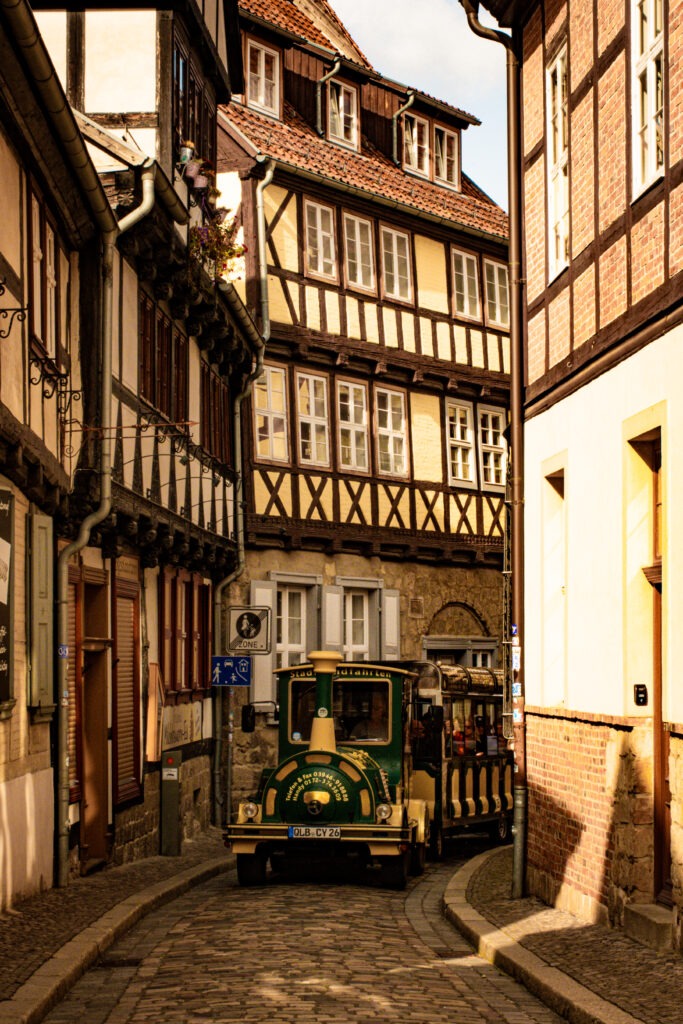
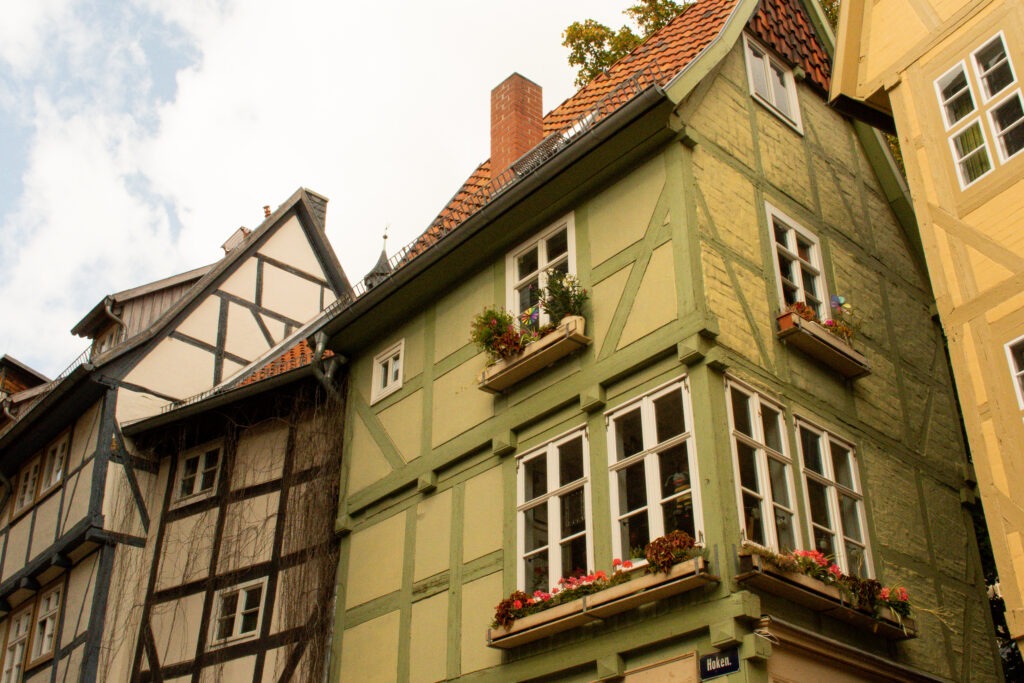
Walking through the Altstadt feels less like sightseeing and more like stepping quietly through layers of history. The streets curve gently between leaning timber-frame houses, flower boxes spill over colourful facades, and church towers rise unexpectedly above the rooftops.

What surprised me most when I first visited was just how compact and walkable the Old Town is. Nearly everything is within easy walking distance — the Marktplatz, the castle hill, museums, cafés, and small hidden lanes that reward anyone willing to wander a little without a plan.
This is exactly the kind of place where slowing down makes all the difference. There is no need to race between landmarks; it’s not that kind of town. Instead, allow time to explore the side streets, admire the craftsmanship in the timber framing, and pause for coffee in one of the squares.
In my experience, the real joy of Quedlinburg isn’t checking off sights — it’s wandering the Altstadt itself.
Start Here: A Slow Walk Through Quedlinburg Altstadt
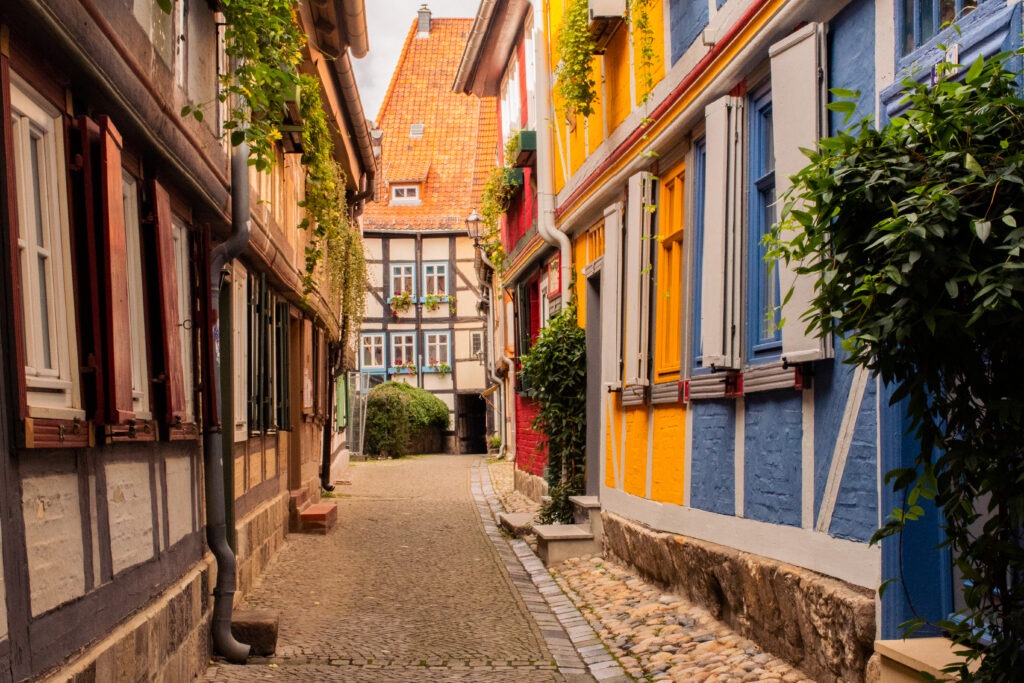
If you only have a few hours in Quedlinburg — or even a full day — the best way to begin is with a slow walk through the Altstadt.
Nearly all of the town’s most beautiful sights are within this compact historic centre, and wandering its cobblestone streets naturally leads you past many of Quedlinburg’s highlights.
When I first visited while living in Germany, I followed this exact approach. I simply let the streets guide me through the Old Town, discovering many of its most memorable places along the way.
Start in the Marktplatz
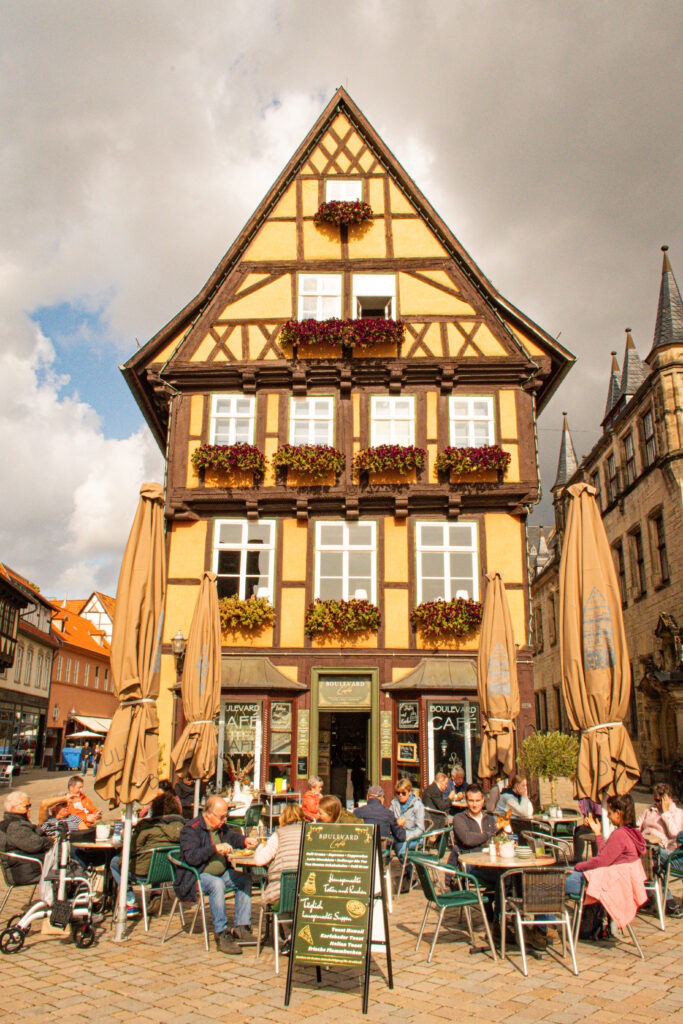
Begin your walk in Marktplatz Quedlinburg, the lively heart of the Old Town. Surrounded by colourful half-timbered buildings, this square has been the town’s centre of trade and daily life for centuries.
Spend a few minutes here simply looking around. The details reveal themselves slowly — ornate façades, decorative beams, and the statue of the Quedlinburger Roland, a medieval symbol of the town’s independence, standing proudly beside the Quedlinburg City Hall (Rathaus Quedlinburg).
The Rathaus itself is worth admiring up close. Its Renaissance façade is one of the architectural highlights of the square and a reminder of Quedlinburg’s prosperity during the late Middle Ages.
Wander Toward the Churches
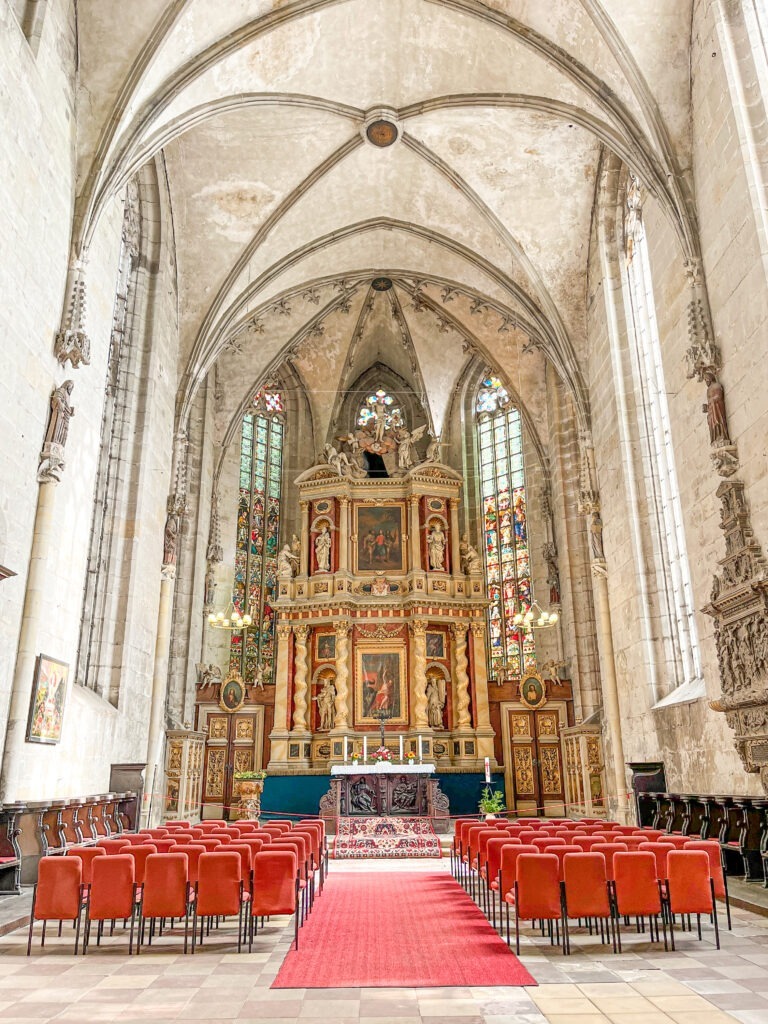
From the Marktplatz, begin wandering the small streets that branch outward into the Altstadt. One of the pleasures of Quedlinburg is how walkable and compact the historic centre is — almost every turn reveals another perfectly preserved timber-framed house.
Not far away, the twin towers of Quedlinburg Cathedral (Dom Quedlinburg, known locally as Marktkirche) rise above the rooftops. Built over centuries, the church reflects layers of architectural history, from Romanesque foundations to later Gothic additions. Even if you simply admire it from outside, it’s one of the landmarks that shape the skyline of the Old Town.
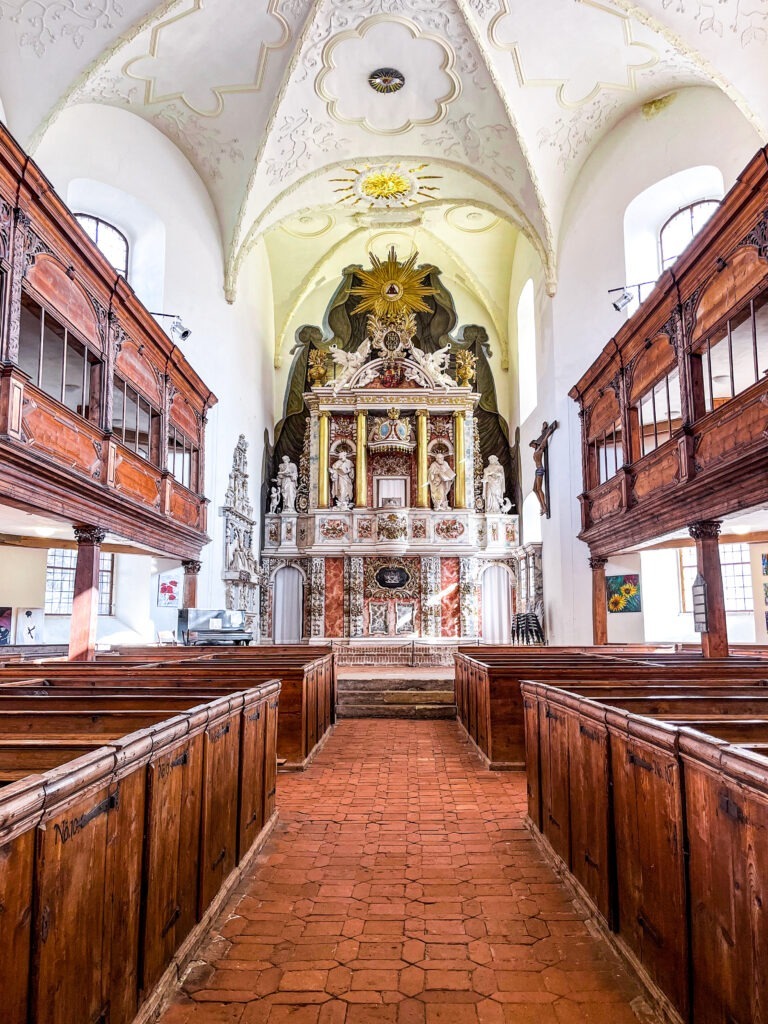
Continue wandering toward Kulturkirche St. Blasii, one of the most beautiful interiors I encountered during my visit. After restoration, this former church was transformed into a cultural space where concerts and exhibitions are sometimes held. Step inside if it’s open — the interior is surprisingly elegant and peaceful compared to the busy square nearby.
Just outside the church, you’ll notice a charming bronze fountain depicting a boy and his dog — a small detail many visitors pass without noticing.
Keep an Eye Out for Hidden Corners

One of my favourite discoveries in Quedlinburg happened entirely by chance.
As I wandered north of the cathedral area, a small Baroque building caught my attention among the timber-framed houses. Curious, I stopped to photograph it, thinking it was simply another beautiful structure. Only later did I learn it was Goetzsche’s Mausoleum, built in 1726 to honour the merchant Christoph Gebhardt.
Moments like this are what make Quedlinburg such a joy to explore. The town rewards curiosity and slow wandering, revealing stories in places you might otherwise walk past.
Pause for Coffee (or Cake)

No slow walk through Quedlinburg would be complete without stopping at one of its cozy cafés.
I tried a few during my visit and can happily recommend:
- Käsekuchenbäckerei Vincent, where the cheesecake lives up to the name
- Samocca, an excellent stop for coffee lovers
- Kornmarkt 3, a wonderfully unusual café set within the ruins of an old building — roofless, atmospheric, and especially lovely in the morning
Taking a break at one of these cafés is the perfect way to absorb the atmosphere of the Altstadt before continuing your wander.
The Real Pleasure of Quedlinburg

By the time you’ve followed this gentle loop through the Old Town, you will have seen many of Quedlinburg’s most important sights.
But what tends to stay with visitors — at least it did for me — is not a single landmark.
It’s enjoying lunch in a traditional establishment like Brauhaus Lüdde, a brewery located in the former gatehouse and stables of a large house (now hotel), and not rushing.
It’s the experience of wandering slowly through a town where centuries of history remain quietly intact.
Beyond the Altstadt: Choose What Interests You Most
Once you’ve wandered through Quedlinburg Altstadt, you’ve already experienced the heart of the town.
From here, what you do next really depends on your interests and how much time you have. Some visitors focus on the castle complex and museums, while others prefer to explore the surrounding hills or simply linger in the Old Town.
This is exactly where I encourage travellers to follow what I call The Unrushed Itinerary Method. Rather than trying to see everything, choose one meaningful experience and allow the rest of the day to unfold naturally around it.
If museums aren’t your thing, skip them. If you love viewpoints and historic churches, spend more time exploring those. Quedlinburg is the kind of place where depth always rewards more than speed. That is my version of what slow travel is.
Here are a few options to consider.
The Castle Complex: Quedlinburg’s Most Important Historic Site
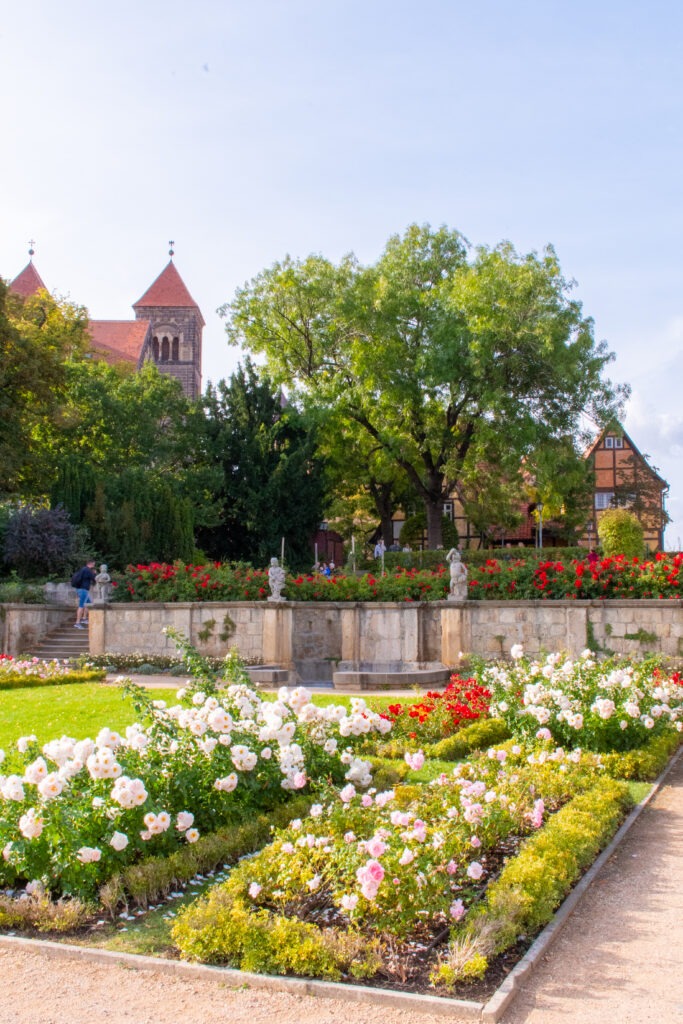
If there is one place most visitors come to Quedlinburg to see, it’s the castle complex on Schlossberg hill.
This historic area includes the Castle Museum (Schloss Museum Quedlinburg) and the Collegiate Church of St. Servatius (Stiftskirche St. Servatii), one of the most significant Romanesque churches in Germany.
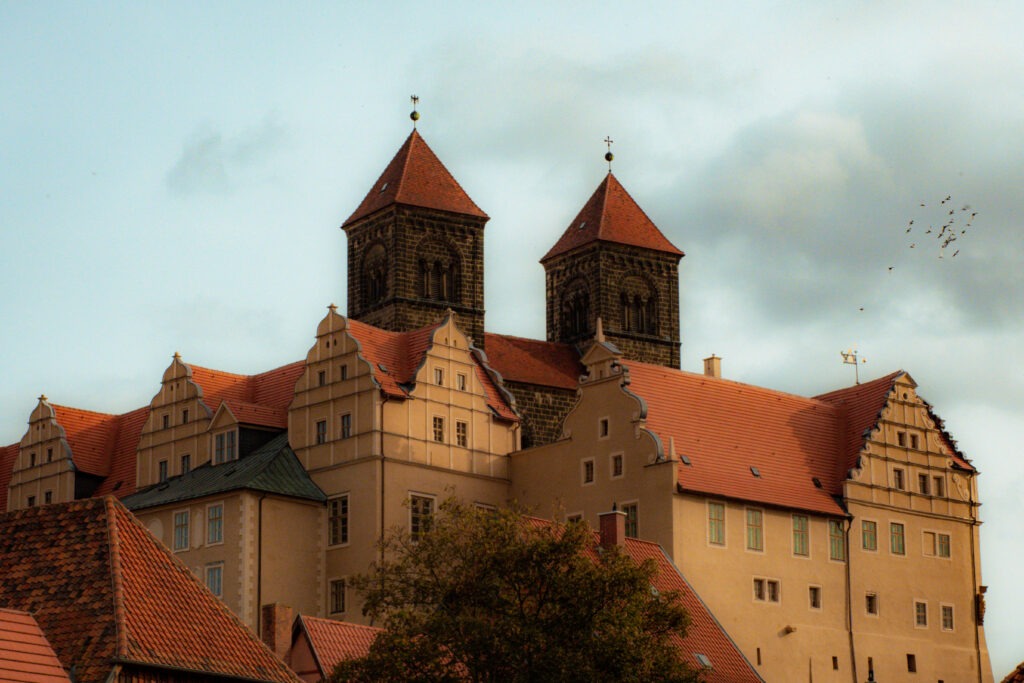
The church dates back to the 10th century and was founded by King Henry I, an early ruler of what would later become Germany. His tomb is located here, and the church treasury holds remarkable medieval artefacts including manuscripts, sculptures, goldsmith works, and even one of Europe’s oldest surviving knotted carpets from around the year 1200.
The castle museum and surrounding monastery grounds help bring this early chapter of German history to life. Even if you don’t visit every exhibition space, the walk up to Schlossberg is worth it for the views across the red rooftops of Quedlinburg Altstadt.
Museums in Quedlinburg
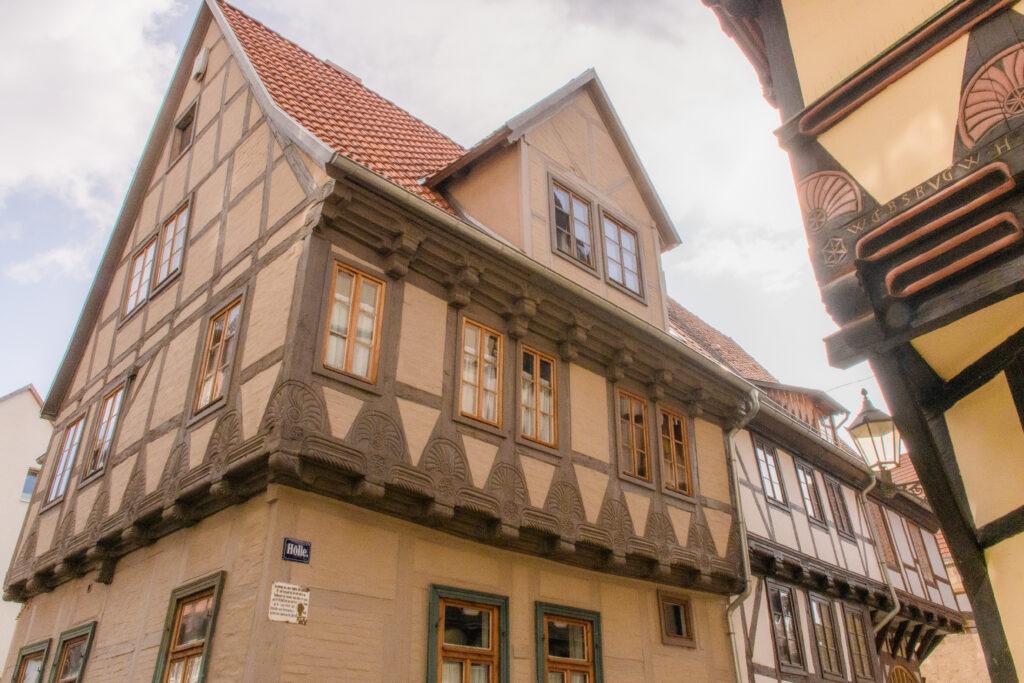
If you enjoy museums, Quedlinburg has several small but interesting options that add context to the town’s long history.
The Fachwerk Museum im Ständerbau (Timber-Frame Museum) is particularly fascinating, as it explains the evolution of the town’s famous half-timbered houses and the techniques used to construct them.
Art lovers may enjoy the Lyonel-Feininger Museum, which focuses on the works of the influential modernist painter associated with the Bauhaus movement.
Another cultural stop is the Klopstockhaus Museum, the birthplace of poet Friedrich Gottlieb Klopstock. This historic house museum explores his life and literary influence.
And for something a little different, the Harz Time Museum (Harzer Uhrenmuseum) displays hundreds of clocks, including traditional cuckoo clocks and intricate antique timepieces.
Sternkiekerturm (Sternkieker Tower)
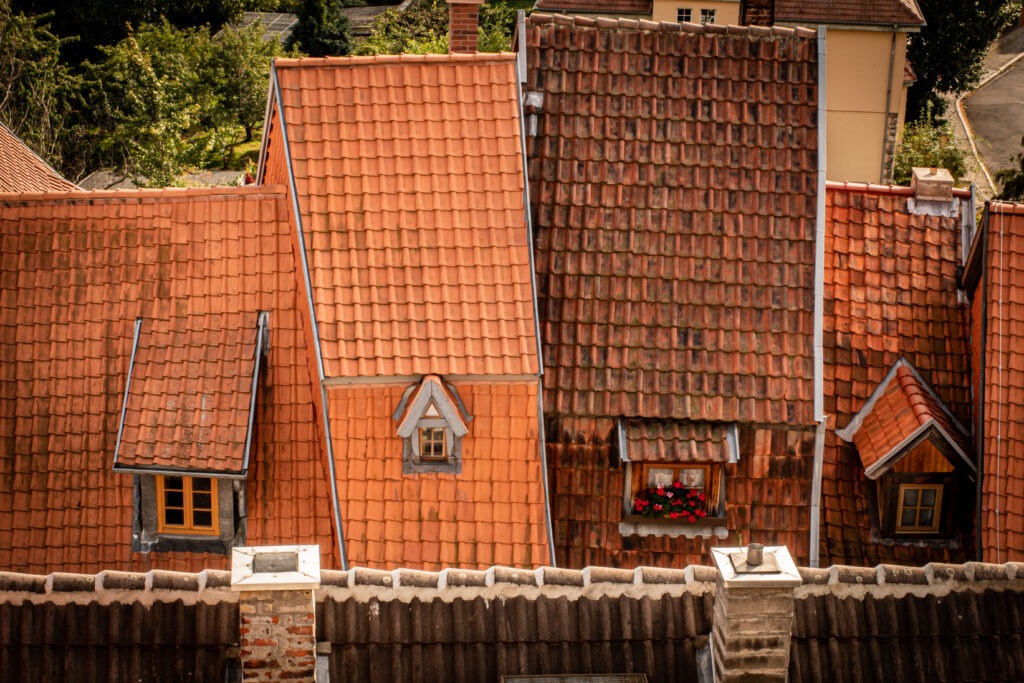
If you enjoy panoramic views, the Sternkiekerturm, also known as the Lindenbein Tower, is a small watchtower visitors can climb for a view across the town’s rooftops and toward the Harz Mountains.
That said, if you’ve already visited the castle complex on Schlossberg, you’ll notice the perspective from there is quite similar. Personally, I found the views from the castle hill just as rewarding.
Münzenberg
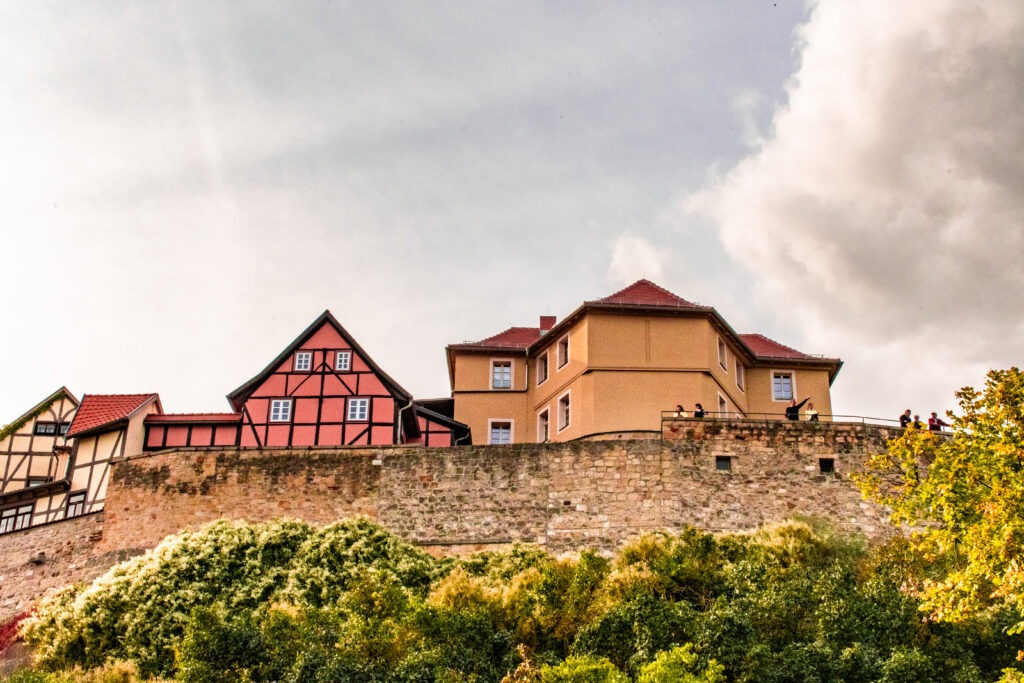
For a quieter experience away from the busiest parts of the Altstadt, wander up to Münzenberg.
This historic hill once held a medieval settlement connected to the abbey. Today, small timber-framed houses, remnants of ancient walls, and peaceful views across the town make it a lovely place for a slow wander.
It’s one of those corners of Quedlinburg where the atmosphere feels especially timeless.
If You’re Staying Longer in Quedlinburg
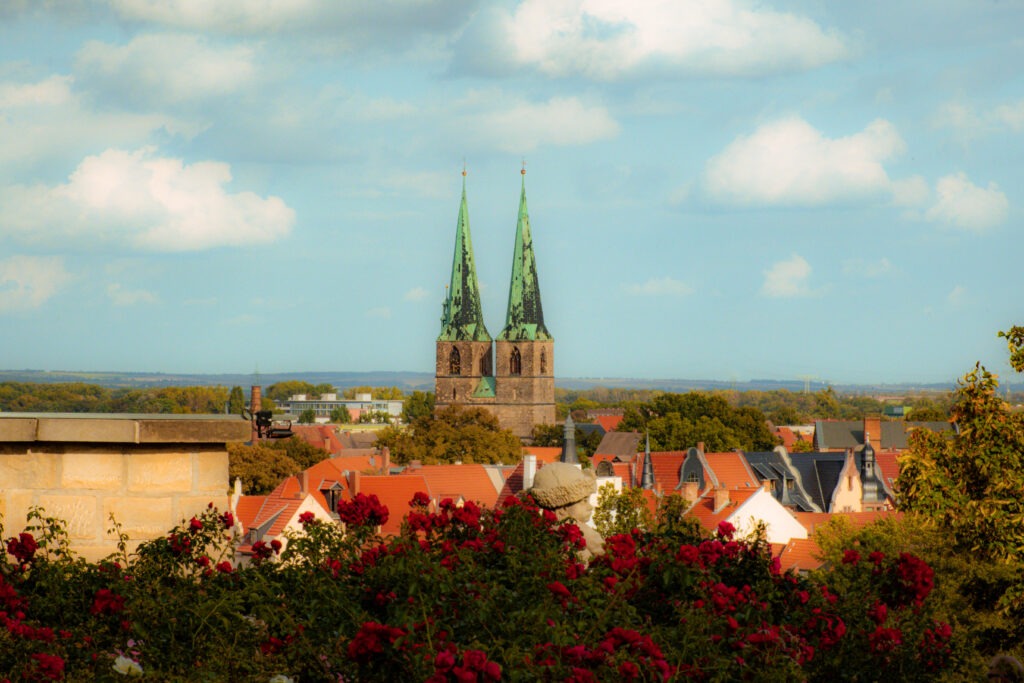
If you’re spending a couple of days in Quedlinburg — which is actually a lovely idea — there are a few additional experiences worth considering.
The St. Nikolai Church (Nikolaikirche) is another impressive historic church whose towers help define the town’s skyline.
Beyond the Old Town, the surrounding Harz Mountains offer excellent hiking opportunities, with trails leading through forests and small villages.
One unique experience is riding the Harz Narrow Gauge Railway, a historic steam railway that winds through the mountains and connects several towns in the region.
Another nearby destination is Bad Suderode, a spa town known for its mineral springs and relaxing thermal baths.
I didn’t personally experience these activities during my visit. These were recommendations shared with me during a conversation with the Quedlinburg Tourist Office, who highlighted them as popular options for travellers spending more time in the region.
How Quedlinburg Compares to Other German Fairytale Towns
Germany is filled with beautiful historic towns, and over the years, I’ve had the pleasure of visiting quite a few of them.
Places like Rothenburg ob der Tauber are perhaps the most famous, while smaller towns such as Monschau feel tucked into dramatic landscapes along winding rivers.
Another town that reminds me of Quedlinburg in some ways is Marburg, with its steep cobblestone streets climbing toward a castle and rows of timber-framed houses stacked along the hillside.
What makes Quedlinburg stand out, however, is the sheer scale of its historic centre. With more than 2,000 half-timbered houses spread across the Altstadt, the town feels less like a single postcard view and more like an entire medieval world that has somehow remained intact.
It also tends to feel much quieter and less crowded than some of Germany’s most famous historic towns, which makes wandering its streets especially enjoyable.
FAQ About Quedlinburg, Germany
Is Quedlinburg worth visiting?
Yes. Quedlinburg is one of Germany’s best-preserved medieval towns and a UNESCO World Heritage Site. Its Altstadt contains more than 2,000 half-timbered houses spanning eight centuries. If you enjoy historic towns, architecture, and slower travel experiences, it’s easily one of the most charming destinations in Germany.
How much time do you need in Quedlinburg?
Most travellers visit Quedlinburg as a day trip, which allows enough time to explore the Altstadt, visit the castle complex, and enjoy a relaxed meal or café stop. If you enjoy historic towns, staying overnight is even better—the atmosphere becomes wonderfully quiet after day visitors leave.
What is the most beautiful street in Quedlinburg?
The lanes around Schlossberg and the upper Altstadt are among the most picturesque areas of Quedlinburg. The narrow streets, leaning half-timbered houses, and views toward the castle create the fairytale atmosphere the town is famous for.
What makes Quedlinburg Altstadt a UNESCO World Heritage Site?
Quedlinburg Altstadt received UNESCO status because it contains one of the largest and best-preserved collections of half-timbered buildings in Europe. More than 2,000 historic houses remain, representing architectural styles from the 14th through 19th centuries and illustrating the development of medieval German towns.
Is Quedlinburg a good base for exploring the Harz Mountains?
Yes. Quedlinburg sits on the northern edge of the Harz Mountains, making it a convenient base for hiking, scenic railway journeys, and exploring nearby towns like Goslar. Many travellers combine a visit with the Harz Narrow Gauge Railway or short trips to spa towns such as Bad Suderode.
The Kind of Town That Rewards Slowing Down
Quedlinburg is one of those rare places where the experience isn’t defined by a single attraction.
It’s the feeling of wandering through streets where centuries of history remain quietly intact. Timber-framed houses lean gently toward one another, church bells echo across the rooftops, and small discoveries seem to appear around every corner.
In a town like this, the most memorable moments rarely come from rushing between sights. They come from slowing down — lingering over coffee in the Marktplatz, noticing the craftsmanship in the half-timbered houses, or simply letting the Altstadt guide your steps.
If historic towns, architecture, and quieter corners of Europe appeal to you, Quedlinburg is absolutely worth adding to your Germany itinerary.
And if you’re planning a trip through Germany or elsewhere in Europe, you’ll find more thoughtful travel inspiration — and slow travel insights — by joining the Dream Plan Experience newsletter.


