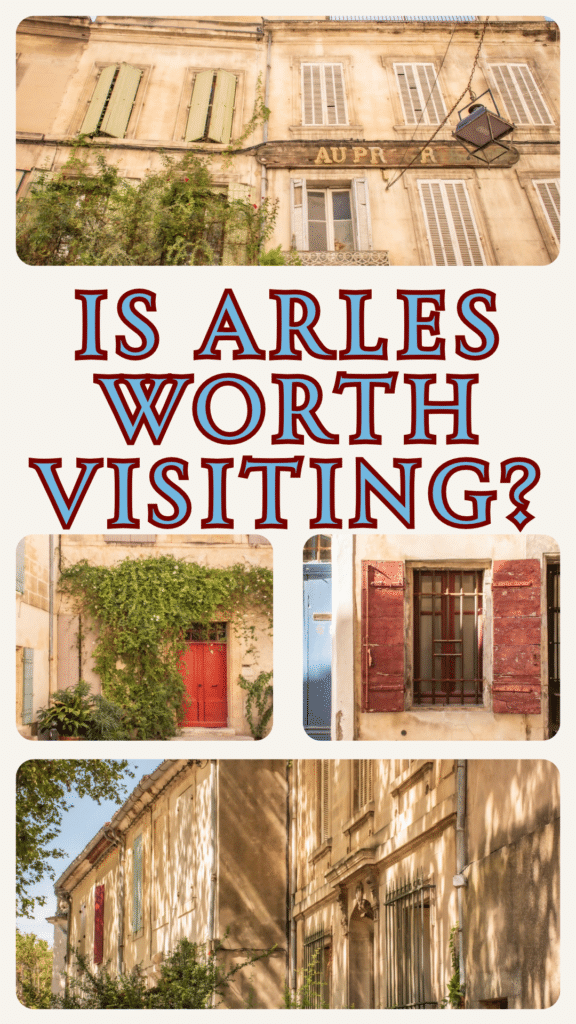

By my third trip to Provence, I had visited enough towns and villages throughout the region to appreciate just how different some can be. This time, I ditched the car rental and travelled by train from my base in L’Isle-sur-la-Sorgue to spend a day exploring Arles.
So, is Arles worth visiting? I think so, particularly if you enjoy Roman history, art, local markets and exploring a place that feels quite different from Provence’s smaller villages.
Arles has an impressive Roman amphitheatre, a strong connection to Van Gogh and a thriving contemporary arts scene. But there’s also plenty to discover simply by walking its streets.
Here’s what makes Arles worthwhile, what I would prioritise and who I think will enjoy it most.
This post may contain affiliate links, meaning I get a commission if you decide to purchase something through the links, at no additional cost to you. Read my Affiliate Disclosure.
What I Loved Most About Arles
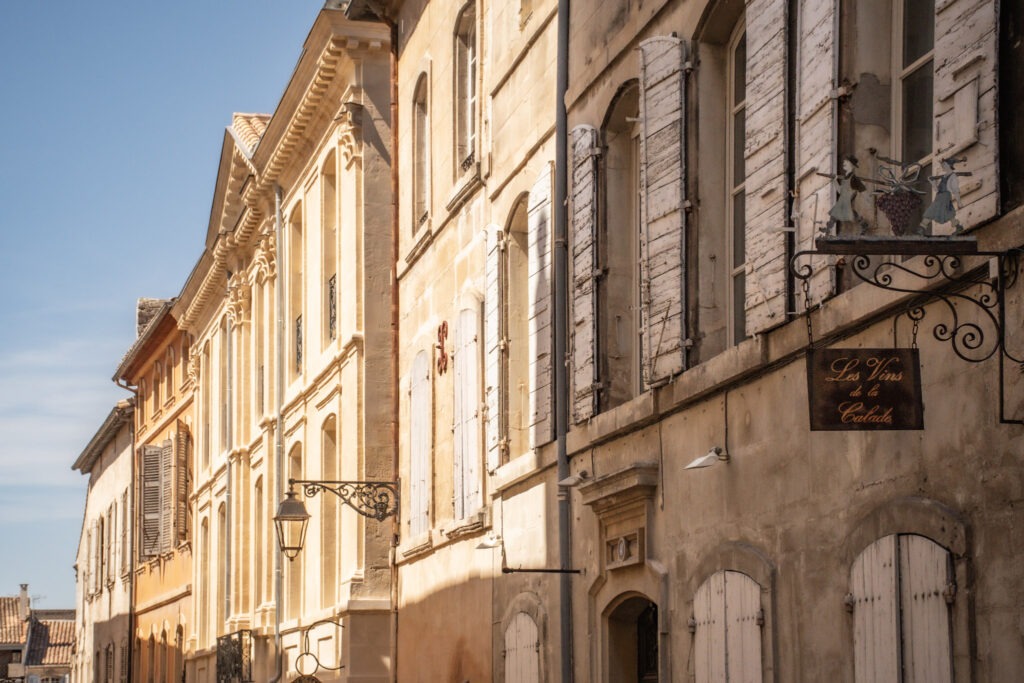
What stayed with me most about Arles was not one major sight. It was the streets themselves.
I loved walking through the older parts of the city and never quite knowing what would appear around the next corner. One lane opened into another. A plain stretch of pale stone would suddenly give way to a faded blue shutter, a soft green door, a red entrance half-covered in climbing leaves, or a small patch of plants spilling out from pots set against the wall. I kept stopping because of those small details.
That is what impressed me most about Arles. It has atmosphere. The streets feel lived in, layered and full of small visual moments. The stone is soft in colour, almost washed by the sun, and that pale backdrop makes everything else stand out more. The shutters, the greenery, the worn doorways, the lanterns, the narrow passages, the curves in the street. Even the simplest facades had something to hold your eye. I found myself looking up, then across, then back again, noticing how much character could be packed into one short stretch of street.
I liked how much less crowded Arles felt compared with some of the more popular towns and villages I’ve visited in Provence. Even on a busy market day, the crowds were fewer than what I experienced in L’Isle-sur-la-Sorgue. I never seemed to have to wait for people to pass when I wanted to take a photo, as I did when I spent the day in Avignon.
I also liked that these streets felt endless. Arles did not give me the sense that I had seen it in one quick sweep. It kept drawing me onward. One of the pleasures of being there was simply walking without any real plan or sense of urgency. For someone like me, who notices eye-catching doors, especially ones with flowers framing the weathered details, Arles was exceptionally delightful.
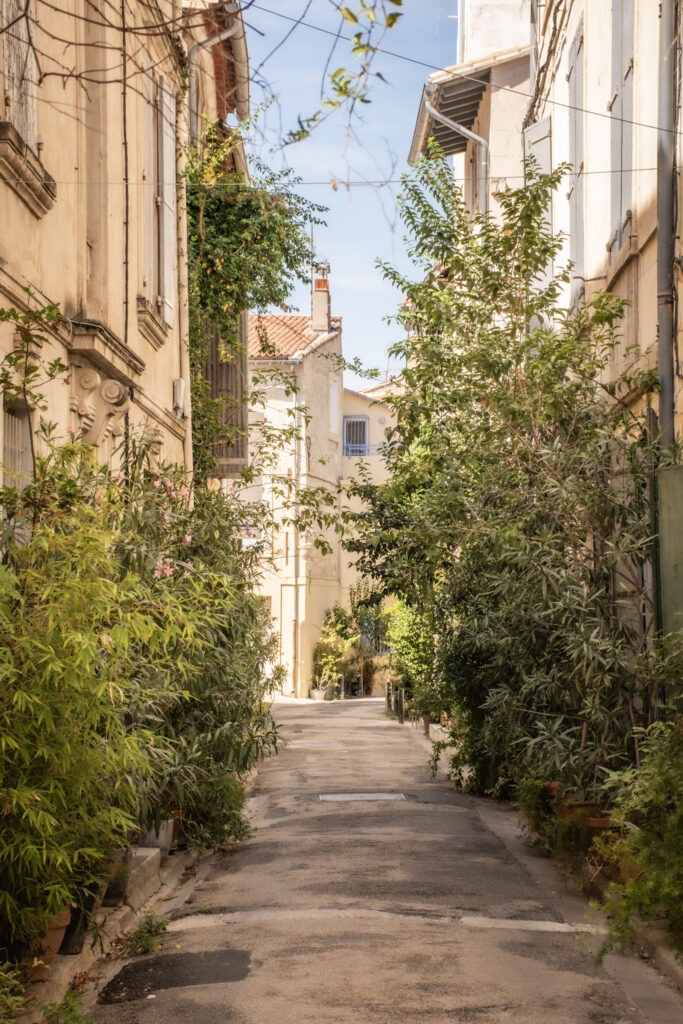
And that, to me, is part of what makes Arles different from other towns and villages in Provence. Yes, there are Roman sites, a market and the Van Gogh connection, and those all matter. But what I remember most is the look and feel of the city. Arles rewarded slow walking, close looking and a willingness to pay attention to what was right in front of me.
What You’ll Miss If You Skip Arles
Beyond the pleasure of wandering its streets, there are three experiences that make Arles stand out. Depending on what draws you to Provence, they may be reason enough to include the city in your itinerary.
Roman History and Ancient Arles
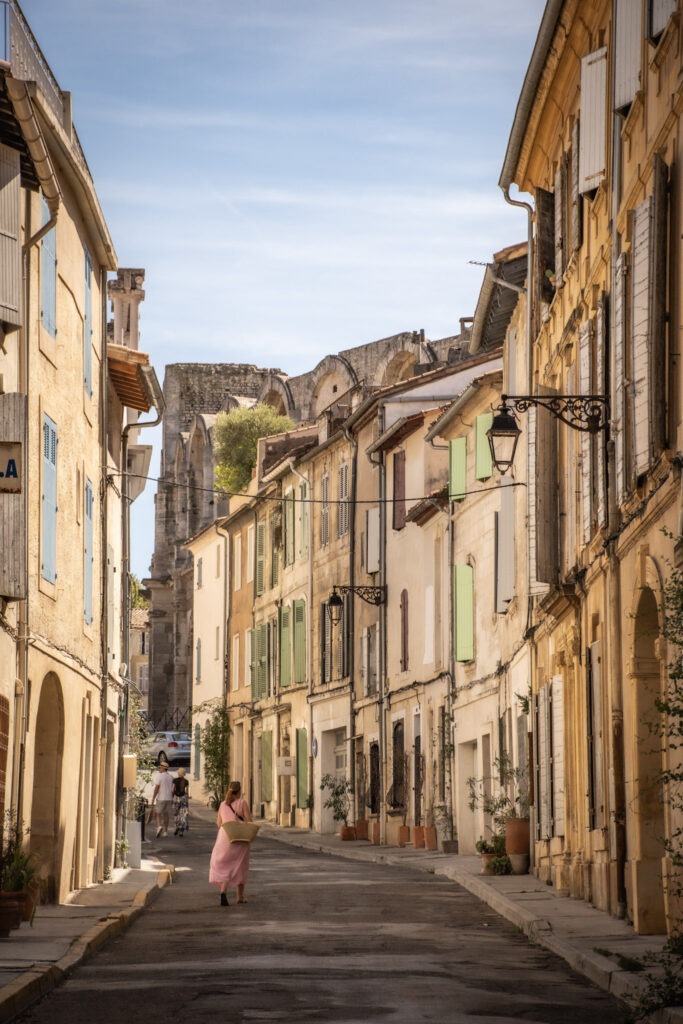
What fascinated me about Arles was how the entire city seemed to have developed around its Roman monuments. You can appreciate the scale of its ancient history simply by walking through the historic centre.
The Roman Amphitheatre, built towards the end of the first century AD, is enormous. It once accommodated approximately 20,000 spectators, but what impressed me was its position within the city. As you walk around its towering stone arches, you become aware of the elevation. Streets slope away from it, buildings crowd around its perimeter, and narrow passages lead you towards other parts of the historic centre.
A short walk brings you to the remains of the Roman Theatre, built more than a century earlier, and then towards Place de la République and the former Cathedral of Saint-Trophime. The cathedral belongs to a later, medieval chapter of the city’s history, but that’s precisely what makes this part of Arles so intriguing. You can see how successive generations built upon the ancient city.
During the Middle Ages, the Amphitheatre itself became a fortified neighbourhood containing more than 200 homes, streets and even churches. It wasn’t until the 19th century that these buildings were removed to reveal the monument again.
Knowing this changed the way I looked at Arles. The maze of streets surrounding the monuments suddenly made more sense. What you see today is a city that has been adapted and rebuilt over centuries, while retaining much of its ancient structure.
Even if you have little interest in touring archaeological sites, I think this is one of the most compelling reasons to visit Arles. The architecture tells much of the story of how Arles began without requiring you to enter every monument.
The Wednesday Market in Arles
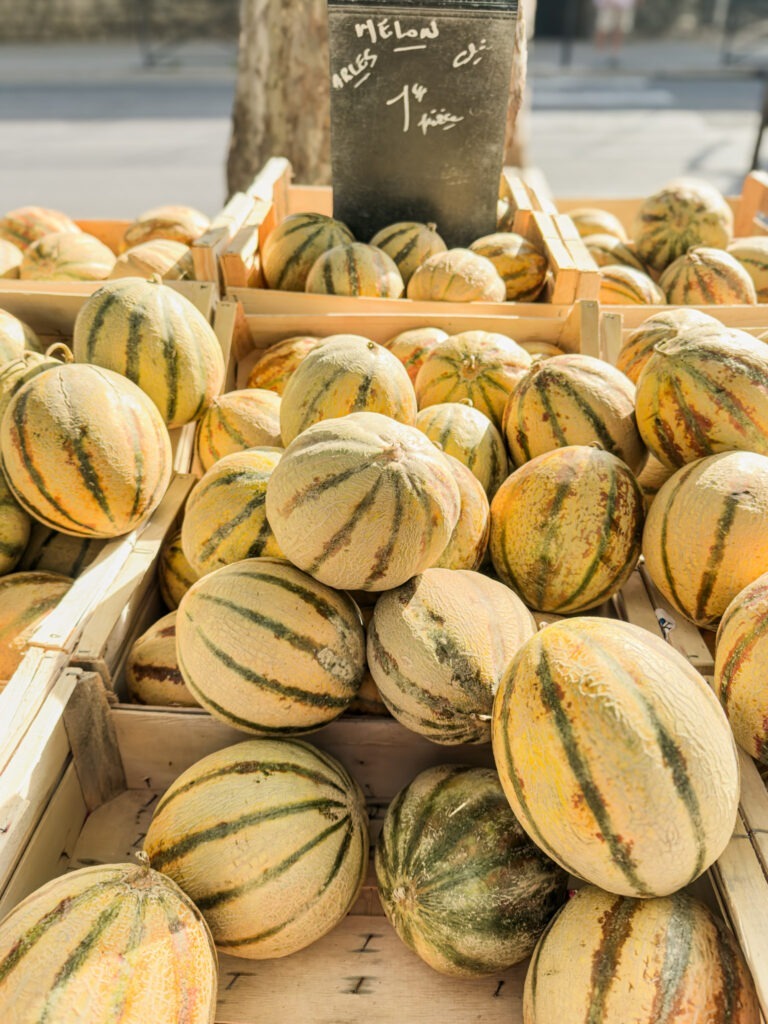
I’ve visited many Provençal markets over my three trips to the region, and Arles’ Wednesday market was right up there in being one of the most extensive I’ve experienced.
Held along Boulevard Émile-Combes, the market stretches from Place Lamartine to the Carrefour de la Croisière, with approximately 300 vendors. To put that into perspective, the better-known Saturday market has around 450 vendors and extends across several boulevards.
One thing to note about the Arles market is how it changes as I walked through it.
There was a large selection of fresh produce, with vendors selling seasonal fruits and vegetables, alongside other local foods which bleed into long stretches of clothing, shoes, and household goods, giving it a flea-market feel. This was where I walked first as it was closest to the train station, and I wasn’t all that impressed. This is not the part I would recommend spending the most time exploring.
The area I especially enjoyed was closer to the Fontaine Amédée Pichot. Here, I came across more attractive displays of produce. I loved how the tables were draped with colourful linens. There were beautiful wicker baskets, linens and homemade savoury pies. The selection was much more carefully presented, and I found myself taking more time to look at what individual vendors were selling.
This distinction is worth knowing. If you arrive at the market and find yourself among rows of clothing and household goods, keep exploring. The experience can be quite different from one section to another.
I would happily arrange another visit around the Wednesday market. Despite being smaller than Saturday’s, and with hardly any crowds, I think it offered more than enough variety, and I could easily have spent much of the morning there before exploring the rest of Arles.
Art, Van Gogh and the Creative Side of Arles
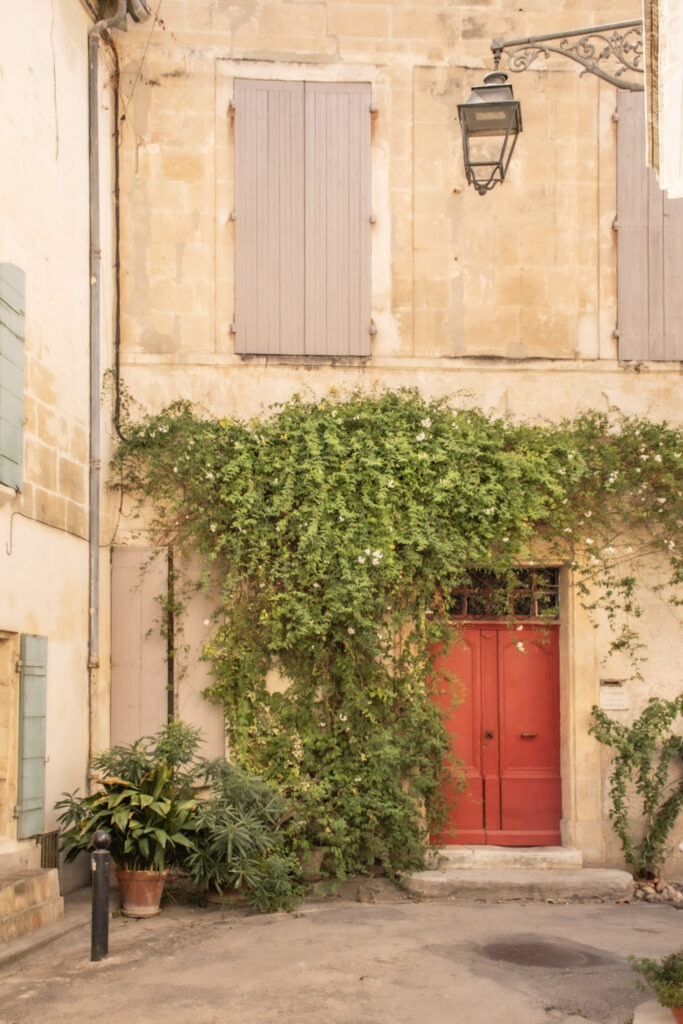
Walking through Arles with my camera, I began to understand why the city might appeal so strongly to an artist.
The pale stone buildings catch the sunlight, while the narrow streets create areas of deep shade. Against these neutral facades, the coloured shutters, painted doors and greenery become even more noticeable. It’s fun to photograph because the appearance of a street changes depending on where the sun falls.
It made me think about Vincent van Gogh and what brought him to Arles in February 1888.
After two years in Paris, he travelled south in search of stronger light, warmer weather, and the colours he believed would transform his painting. He was also fascinated by Japanese prints, particularly their use of colour and simplified forms, and hoped to find something similar in southern France.
Arles gave him what he was looking for.
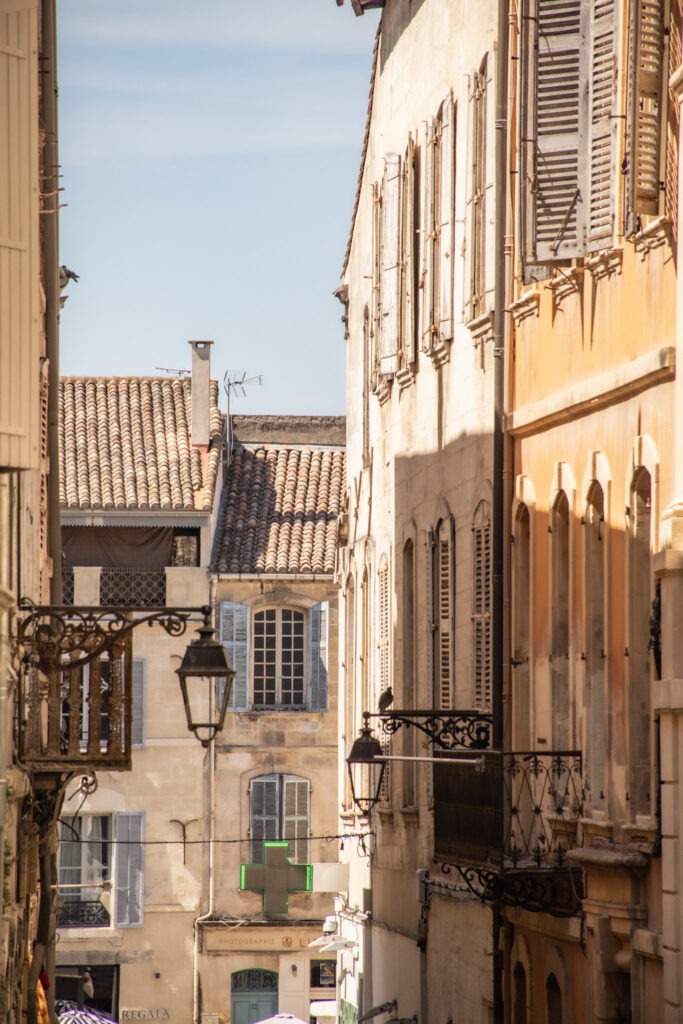
During his fourteen months in the area, he produced some of his best-known works, including The Yellow House, Café Terrace at Night and Starry Night Over the Rhône. His subjects included ordinary streets, cafés and the surrounding countryside.
I find that connection interesting. The details that kept catching my attention as a photographer, especially the contrast between sunlight and shadow, the colours against the pale buildings and the abundance of greenery, are part of the visual character that makes Arles so appealing.
Of course, the city has changed considerably since Van Gogh lived here, but the southern light remains. I now see why many artists like to live here and in the nearby Avignon for that light.
Arles has also established an international reputation for photography. Since 1970, the annual Rencontres d’Arles photography festival has brought exhibitions and photographers from around the world to the city. It’s another reason that Arles appeals to people interested in visual arts.
For me, this is what connects the city’s artistic history with the experience of visiting today. You don’t have to follow every location associated with Van Gogh or attend an exhibition to appreciate Arles through a creative lens. Sometimes, simply looking carefully at the streets is enough to stir those creative juices in you.
Would I Return to Arles?
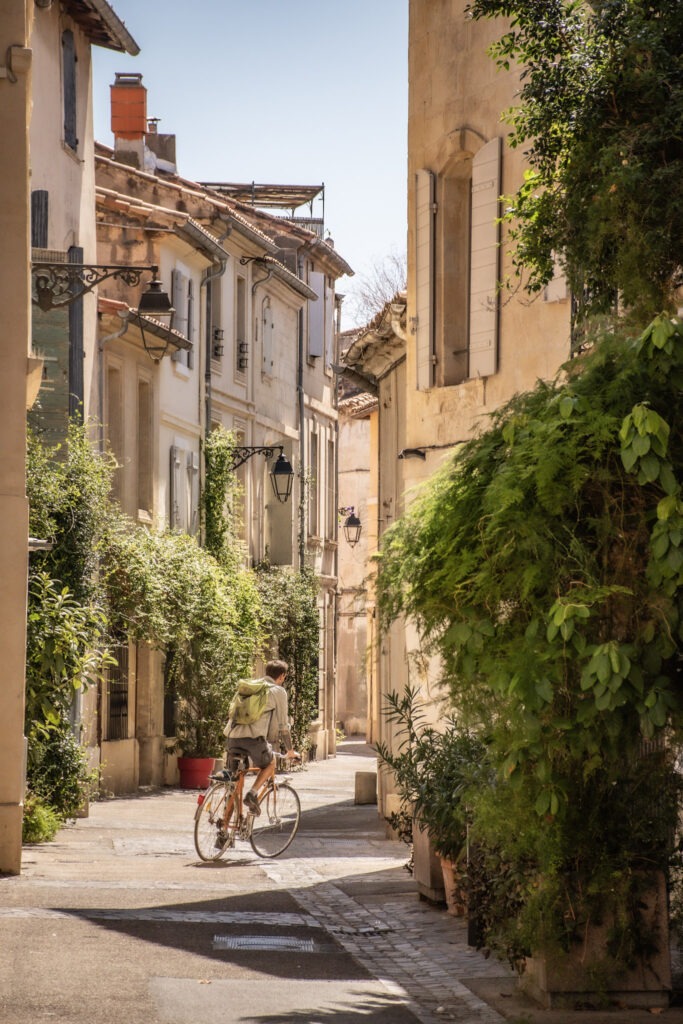
Absolutely. After three trips to Provence and visits to many of its towns and villages, Arles stands out as somewhere I’d happily return to. What makes it different is how the city has grown around its Roman past, with ancient monuments, medieval streets and everyday life all occupying the same historic centre. Yet what I remember most is wandering those pale stone streets, with their colourful doors, shutters and greenery. I could easily spend another day exploring and taking photographs.
Would I recommend making room for Arles on a Provence itinerary? Yes, and I wouldn’t limit a visit to market days. Wednesday’s market was a highlight for sure, and I always think it’s worth planning around if you enjoy Provençal markets. But Arles has enough character to make it worthwhile on any day of the week. Don’t forget, visiting without the market gives you more time to appreciate the city itself.
If you’re planning a trip to Provence and aren’t sure which destinations deserve your time, I can help you make those choices. Explore my custom trip-planning services for an itinerary built around your interests and travel style.