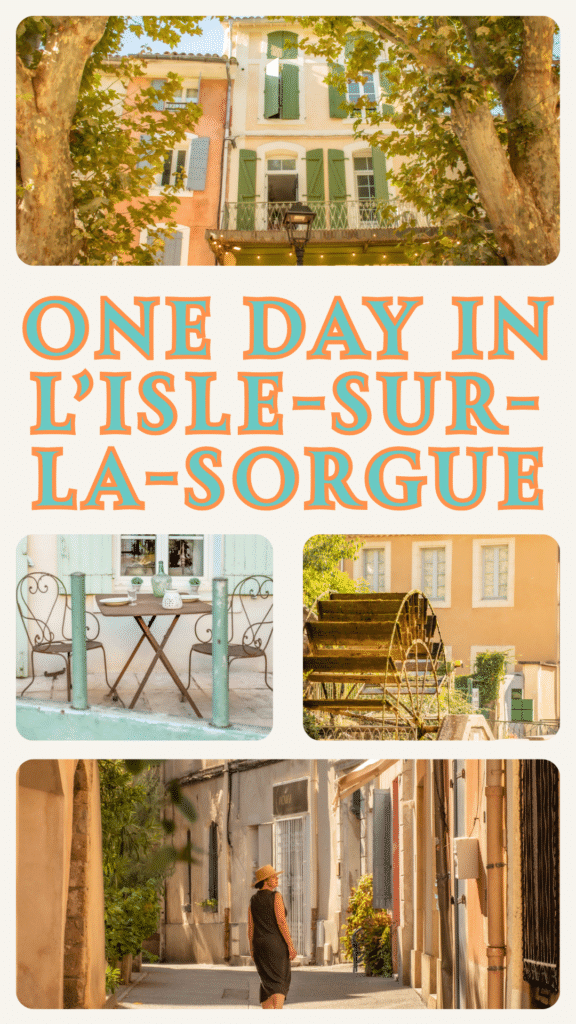

The first time I visited L’Isle-sur-la-Sorgue was on a Sunday, when the markets were in full swing. I loved it so much that on my next trip to Provence, I decided to stay for an entire week. It gave me a chance to get to know the town beyond its famous markets and experience what it’s like on non-market days.
And having experienced both, I can tell you that the day you visit makes a difference.
If you have one day in L’Isle-sur-la-Sorgue, there’s plenty to see and do, from exploring the canals and historic waterwheels to browsing antique shops and enjoying a leisurely lunch. I’ll share my favourite things to do in L’Isle-sur-la-Sorgue and how I’d recommend spending your day, depending on when you visit.
This post may contain affiliate links, meaning I get a commission if you decide to purchase something through the links, at no additional cost to you. Read my Affiliate Disclosure.
The Best Day to Visit L’Isle-sur-la-Sorgue
The day you choose to visit L’Isle-sur-la-Sorgue can make a big difference, especially if you’re interested in its famous markets and antique shops.
Here’s what to expect throughout the week.
| Day | What to Expect |
|---|---|
| Sunday | Provençal market, outdoor antiques market (brocante), and antique shops. The liveliest and busiest day of the week. |
| Tuesday & Wednesday | No market and most antique dealers are closed. Best for enjoying the canals and historic centre without the crowds. |
| Thursday | Traditional outdoor Provençal weekly market focused on food and some local artisan stalls. A handful of antique shops are open, but not all. |
| Friday, Saturday & Monday | No weekly market, but the antique quarters are open. Good for browsing antiques without the Sunday crowds. |
Having experienced L’Isle-sur-la-Sorgue on both market and non-market days, I think each has its appeal. I’d choose Sunday for the full market experience, but Friday or Saturday if antique shopping and exploring the town are your priorities.
One thing worth knowing: the market takes place on Thursday and Sunday mornings, while the outdoor brocante is only held on Sundays. They are two different markets, and it’s easy to confuse them when planning your visit.
Good to know: L’Isle-sur-la-Sorgue also hosts special antiques fairs throughout the year, including Easter, Pentecost, mid-August and early September. Some run across an entire weekend, so you may find an outdoor antiques market on a Saturday. Check the local tourism calendar before choosing your dates.
One Day in L’Isle-sur-la-Sorgue
How you spend your morning will depend on which day you visit. On Thursday and Sunday, the markets are worth prioritizing before they close. On other days, I’d start with the canals and historic centre, saving the shops for later when they open.
Morning on a Non-Market Day
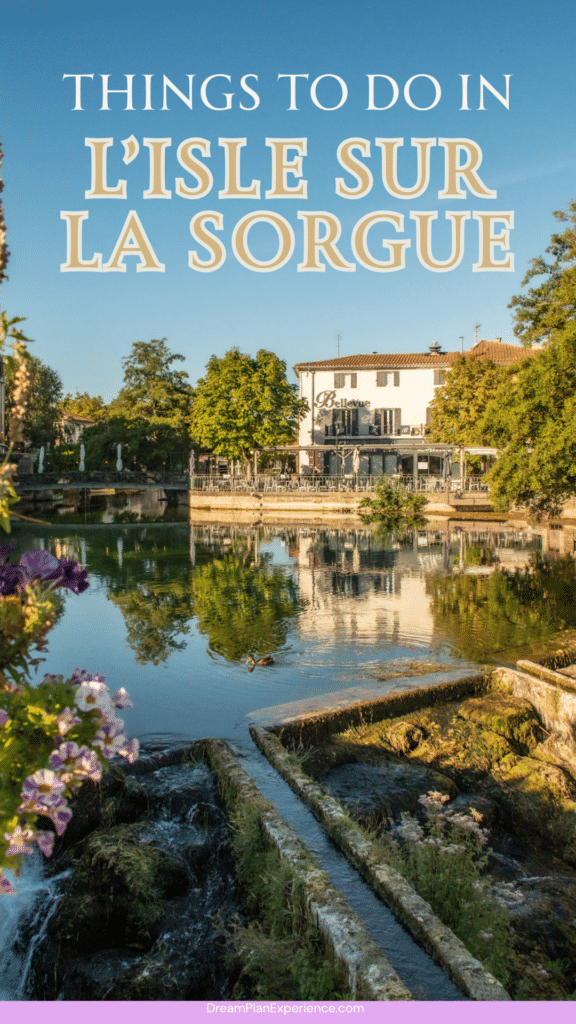
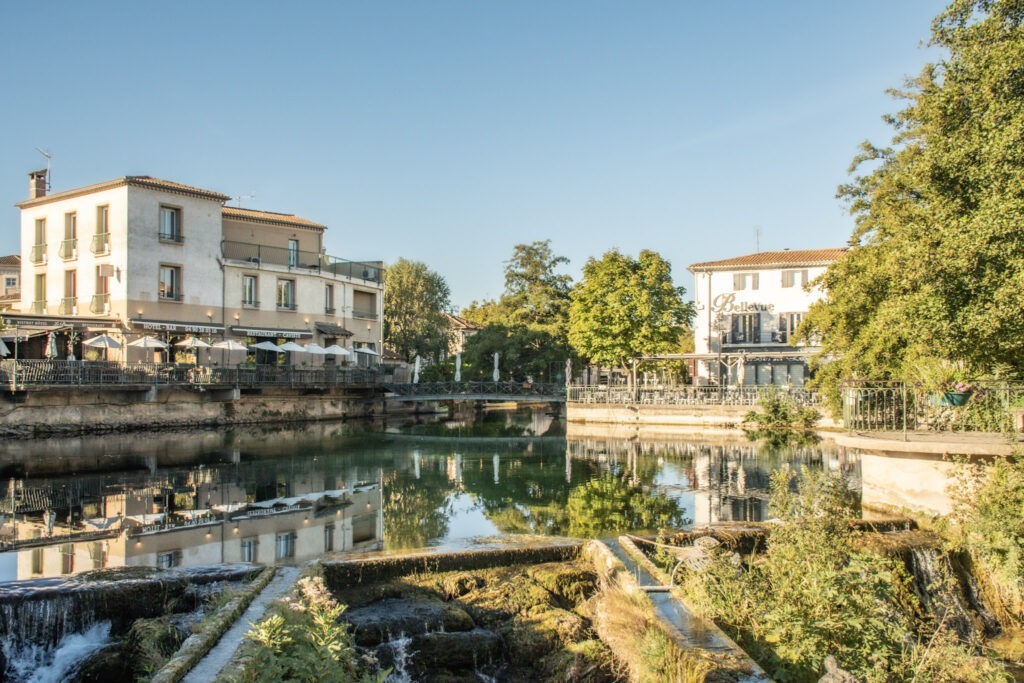
Depending on where you enter town, one of the first things you’ll likely notice is the Sorgue River and the old waterwheel along Avenue des Quatre Otages.
My recommendation is to stay on this side of the canal rather than heading straight into the historic centre. It’s one of my favourite stretches of L’Isle-sur-la-Sorgue, especially in the morning when the buildings and trees are reflected in the water.
Take your time walking along the canal, stopping at the footbridges for views in both directions. Near the roundabout, there’s a small gazebo overlooking the water that’s a great spot to stop as well.
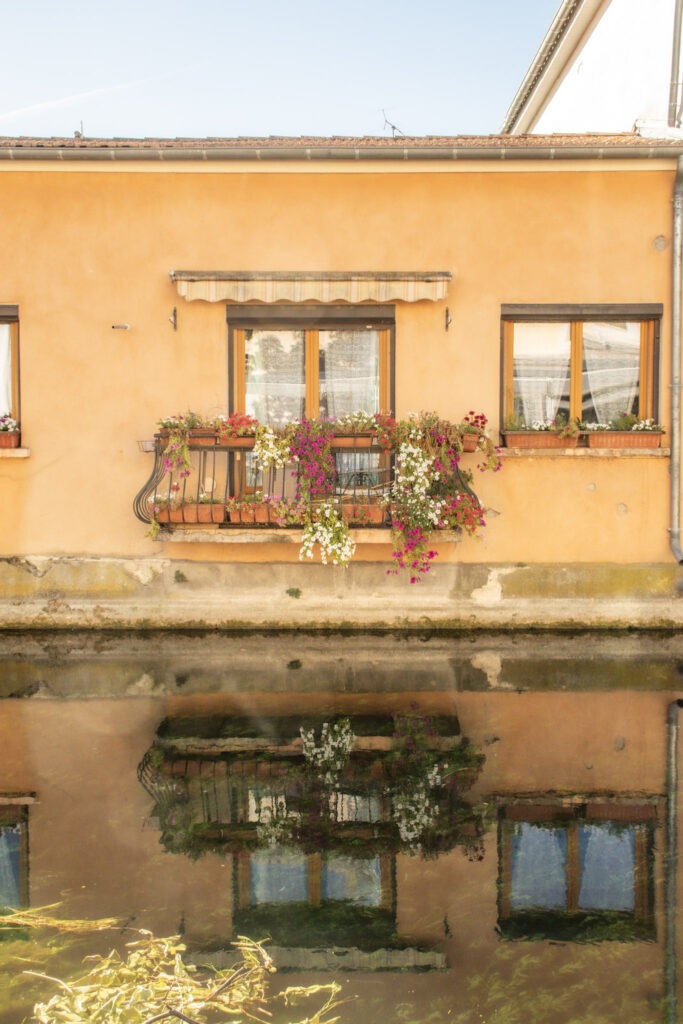
When you’re ready, cross towards the historic centre using the bridge near Allée du 18 Juin or Esplanade Robert Vasse. Now walk along Quai Jean Jaurès, where you’ll see the same stretch of canal from the opposite side. I enjoyed looking back at the buildings I’d just passed and seeing the town from a completely different perspective.
There are some lovely shops along this quay that you’ll probably want to return to later. Many don’t open until around 11 am, so for now, enjoy the walk.
From Quai Jean Jaurès, turn onto Rue de la République and follow it into Place de la Liberté, the town’s main square.
This is the heart of L’Isle-sur-la-Sorgue, with café terraces that sit out front of beautiful old buildings and the impressive Collégiale Notre-Dame-des-Anges in the centre. Inside is an elaborate Baroque interior filled with gilded details, but I found the church kept irregular hours, so cross your fingers that it’s open the day you are visiting.
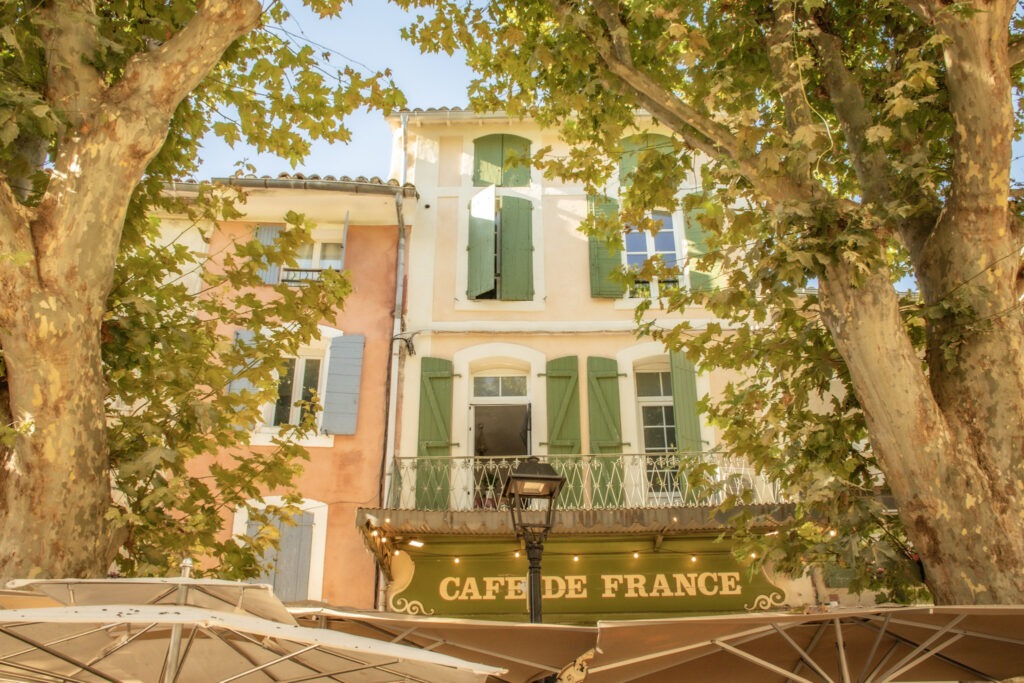
I recommend you pause in this beautiful square; maybe you’re ready for a coffee/tea or something to eat.
For a lovely setting, find a terrace table at Café de France, one of the prettiest cafés on the square. It’s a wonderful spot to sit and enjoy the surroundings.
But if you’re after a really good pastry, my recommendation is Boulangerie Cattoën, just a couple of buildings over from Café de France. I went here almost every morning during my stay, and my favourite was the almond croissant. The chairs outside aren’t nearly as pretty as those at Café de France, but once you taste the pastries, I doubt you’ll care.
After breakfast, spend some time exploring the streets around the square. Look out for the smaller canals and historic waterwheels, particularly around Rue des Roues (Rue Théophile Jean). These old wheels are from the era when the Sorgue powered the town’s mills and textile industries.
I prefer doing this part of town in the morning, leaving the afternoon for browsing the shops, art galleries and antique villages.
Thursday Morning: The Provençal Market
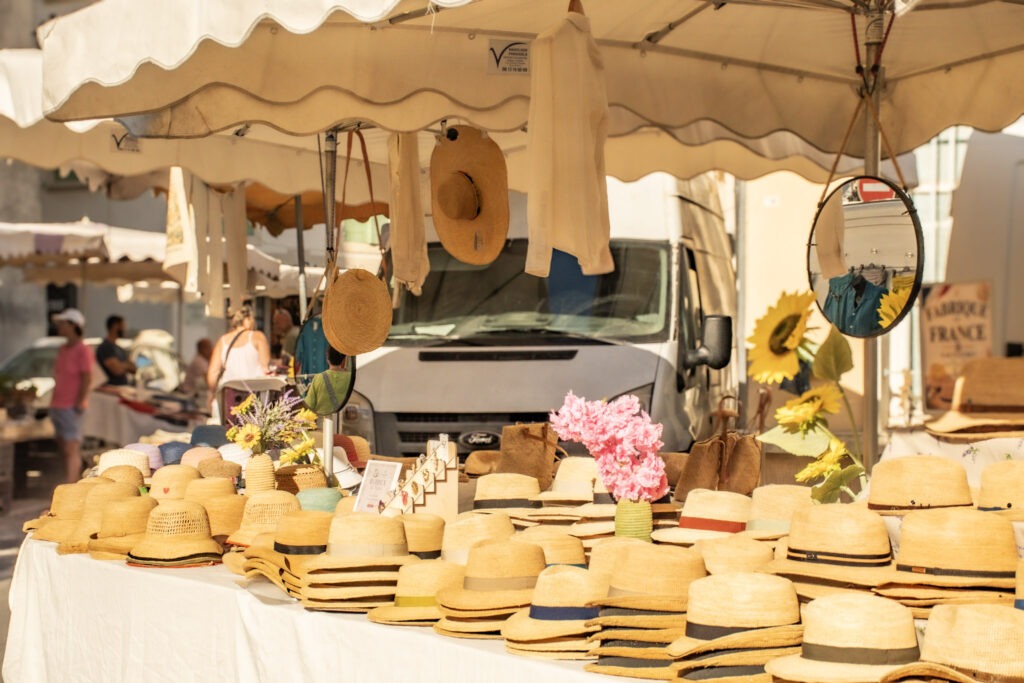
Thursday is a good day to experience L’Isle-sur-la-Sorgue’s traditional outdoor weekly market. There are crowds, but nothing like what you’ll experience on Sundays.
You can’t miss it. When you arrive, you’ll notice the white market tents popped up along Quai Jean Jaurès, and then they will snake through the side streets leading you to Place de la Liberté. If you’ve happened to visit other villages in Provence, you’ll find the same stalls that sell seasonal produce, olives, cheeses, bread, and flowers. The market here is large, and you’ll find multiple vendors selling the same type of products.
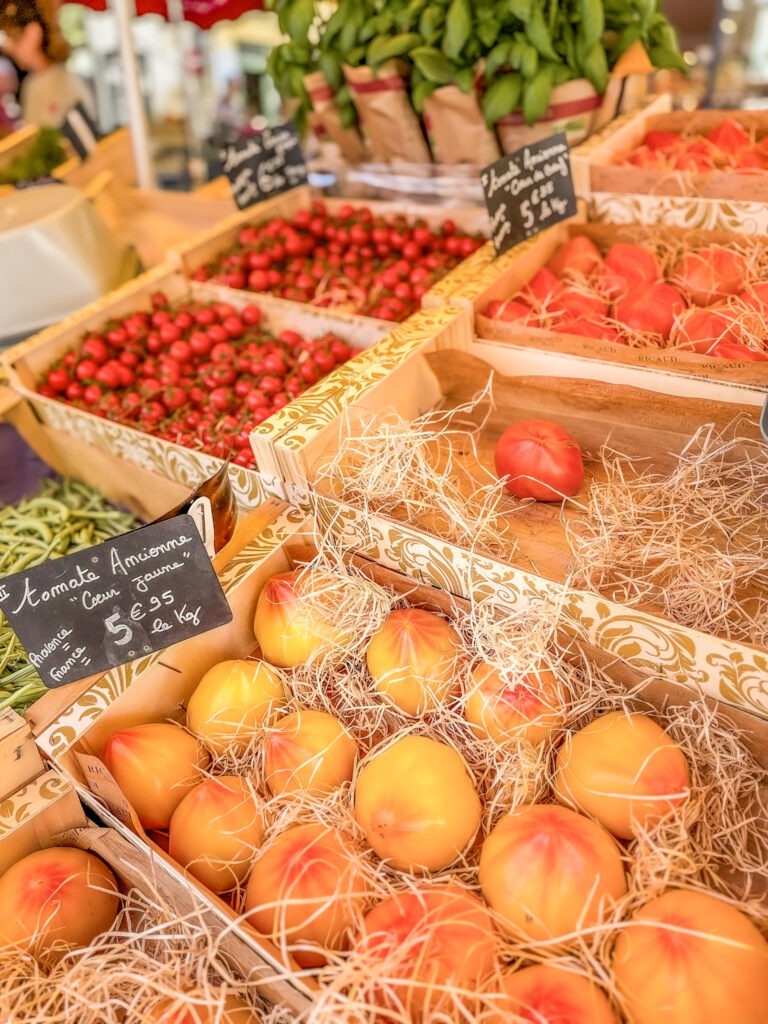
I always enjoy visiting food markets in Provence, especially seeing what’s in season and watching what locals are buying. If you’re staying somewhere with a kitchen, it’s a great opportunity to pick up ingredients for dinner. That’s what we did. Otherwise, look for something you can snack on or enjoy later in the day.
The Thursday market is smaller than Sunday’s, so you won’t need the entire morning to explore it, even though I did. I bought quite a few items: lavender hand cream, a wooden ladle, local honey and even a dress. We made the mistake of buying nougat, which they cut and weighed, which turned out to be very expensive, but it’s too late to say no at that point.
When you visit on market day, you’re likely to graze over the different food vendors. Keep your eye out for the vendor who makes deep fried zucchini pancakes. They are delicious and the perfect thing to snack on while you’re browsing the market.
Once you’ve finished browsing, visit Notre-Dame-des-Anges if it’s open, then follow the same streets I recommended above to get away from the crowds and see those watermills.
Sunday Morning: The Provençal Market and Brocante
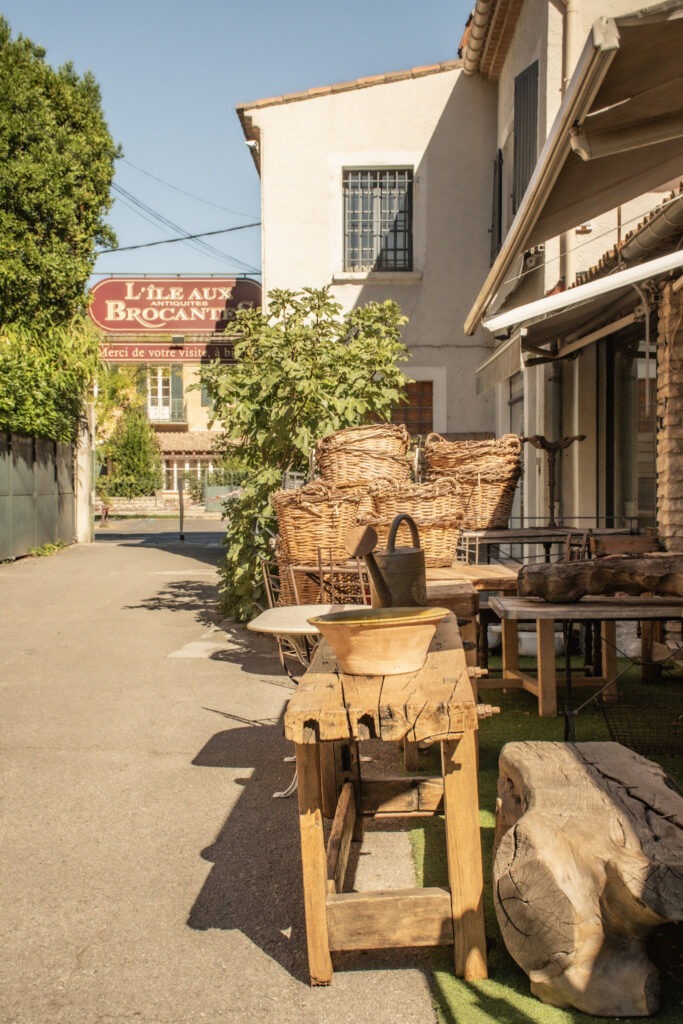
Sunday is when L’Isle-sur-la-Sorgue really comes alive. This was how I first experienced the town, and I can understand why so many people plan their visit around this day.
There are two separate markets to explore, and I’d recommend visiting the food market first, followed by the antiques market (brocante).
Start as early as you can, 9am, before the largest crowds arrive. The weekly market, as described above, is much like what you’ll find on Thursdays, except with bigger crowds.
Once you’ve explored the market, or if you want to cut it short, make your way towards Avenue des Quatre Otages for the Sunday brocante.
Here, professional dealers set up stalls selling vintage furniture, old paintings, silverware, jewellery and all manner of collectibles. Even if you’re not planning to buy anything, it’s fun to browse.
Unlike the morning produce market, the brocante generally continues into the late afternoon, so there’s no need to rush through it.
You’ll also be beside one of the prettiest stretches of the Sorgue, with footbridges, waterwheels and views towards the historic centre where you just enjoyed the weekly market.
Where to Have Lunch in L’Isle-sur-la-Sorgue
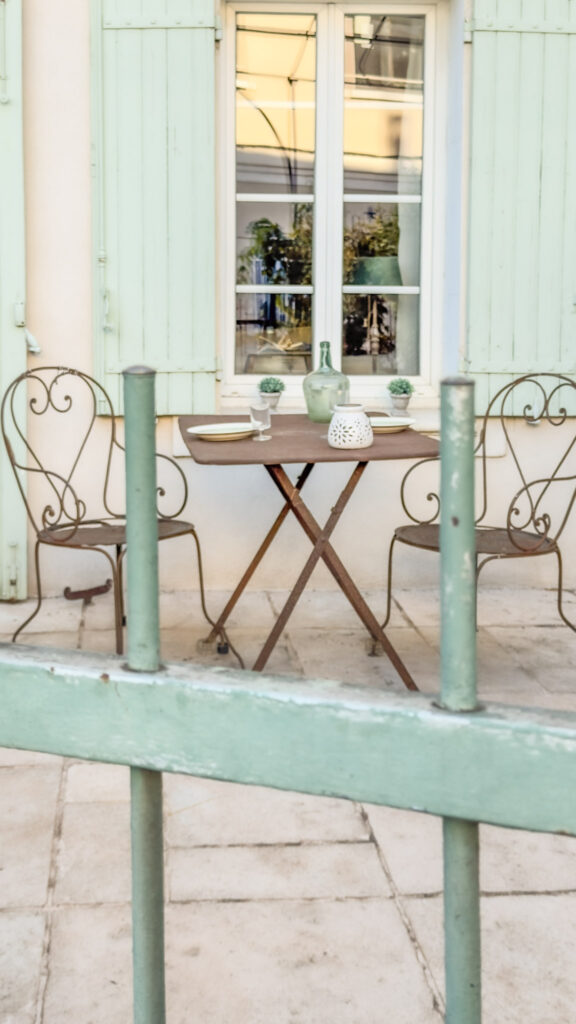
During my week in L’Isle-sur-la-Sorgue, I tried several places for lunch, and these three I think are worth recommending the most for your day in L’Isle-sur-la-Sorgue. All have a relaxed atmosphere, really good food and the kind of setting where you’ll want to linger a little longer.
Restaurant Agastache
Tucked into the small Place Xavier Battini, Agastache was one of my favourite lunch discoveries. It’s a lovely spot if you’re not in a hurry and if you can, try to get a table on the terrace.
This Michelin-recognized restaurant is only open for lunch Monday to Friday, from noon to 2 pm, so I’d recommend making a reservation if you want to dine here.
La Maison Jouvaud
If you’re looking for something lighter, La Maison Jouvaud on Avenue des Quatre Otages is a wonderful choice. It’s a family-run Provençal pâtisserie with a lovely selection of sweet and savoury treats, with either indoor or terrace dining.
It’s a good choice when you want a casual lunch without spending too much of your afternoon at a restaurant, and it’s right near the antique quarter. Their quiches were divine, but also make time to browse the shop, too.
Maison Moga, Fromager & Caviste
Maison Moga on Cours Anatole France is another place I really enjoyed. Part cheese shop, part wine merchant and gourmet food shop, it’s a great place to stop for a light lunch, especially if you’re like me and can make wine and cheese a meal.
It’s also worth browsing the shop afterwards, especially if you enjoy discovering local cheeses and Provençal wines, along with locally made chutneys.
Afternoon on Tuesday, Wednesday or Thursday: Explore the Old Town
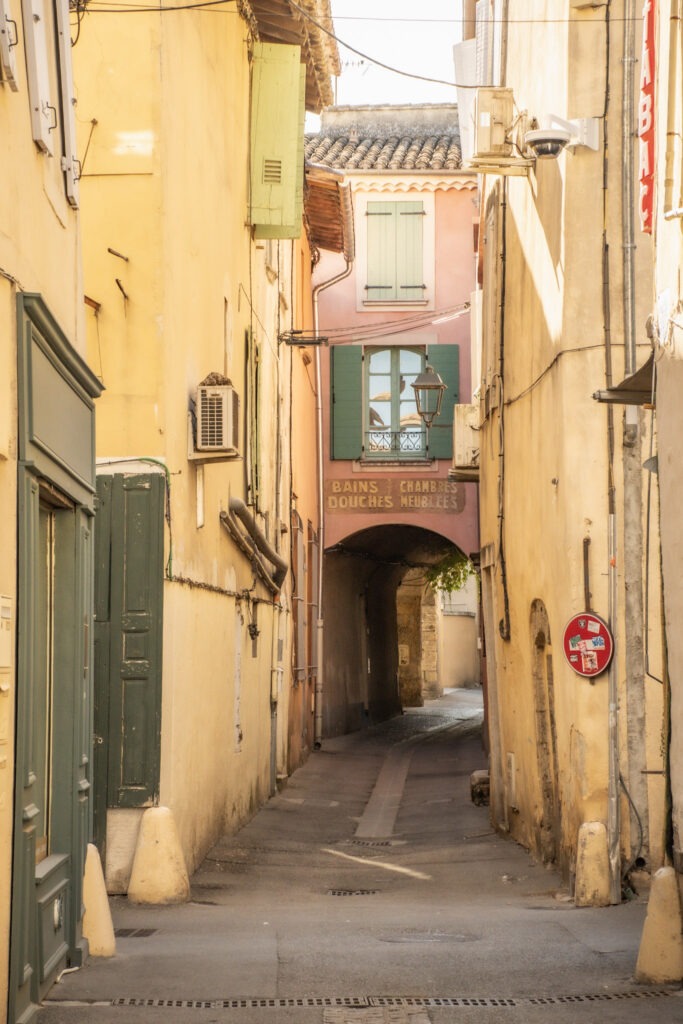
After lunch, I’d spend the afternoon exploring the smaller streets of L’Isle-sur-la-Sorgue. During my week here, I particularly enjoyed this part of town, discovering its history and browsing the independent shops.
Start with Rue Louis Lopez, which leads towards Place de la Juiverie, the centre of the town’s former Jewish quarter. From 1624 until the French Revolution, Jewish residents were required to live within this enclosed neighbourhood, known locally as the carrière. Two gates, located at what are now Rue Louis Lopez and Rue Alfred de Musset, were closed at night.
Continue along Rue Alfred de Musset towards Rue Théophile Jean, formerly known as Rue des Roues, for all of its watermills slowly turning in the small canal running alongside the street. Only several remain, making this a particularly interesting street to explore.
Another street I’d recommend is Rue Jean-Jacques Rousseau. Look for the old archway and the faded lettering on the wall reading Bains, Chambres, Douches, Meublées. I love finding these little reminders of how buildings were once used.
A Few of My Favourite Shops
L’Isle-sur-la-Sorgue also has some wonderful independent boutiques, especially if you enjoy homewares, textiles and interior design.
Four that I particularly enjoyed browsing were:
- Ovio Home, on Place Ferdinand Buisson, for its collection of furniture and home accessories.
- Boutique Un Jour… La Suite, sits right beside Ovio Home and specializes in beautiful household linens.
- Blanc Kara, at 17 Quai Jean Jaurès, for its mix of clothing, artisanal pottery, tableware and home décor.
- Maison Farigoulette, almost next door at 18 bis Quai Jean Jaurès, where you’ll find everything from useful household objects and natural soaps to ceramics, clothing and gifts.
Remember those shops along Quai Jean Jaurès that you passed earlier in the morning? This is a good time to return and explore them properly.
Afternoon from Friday to Monday: Browse the Antique Quarters
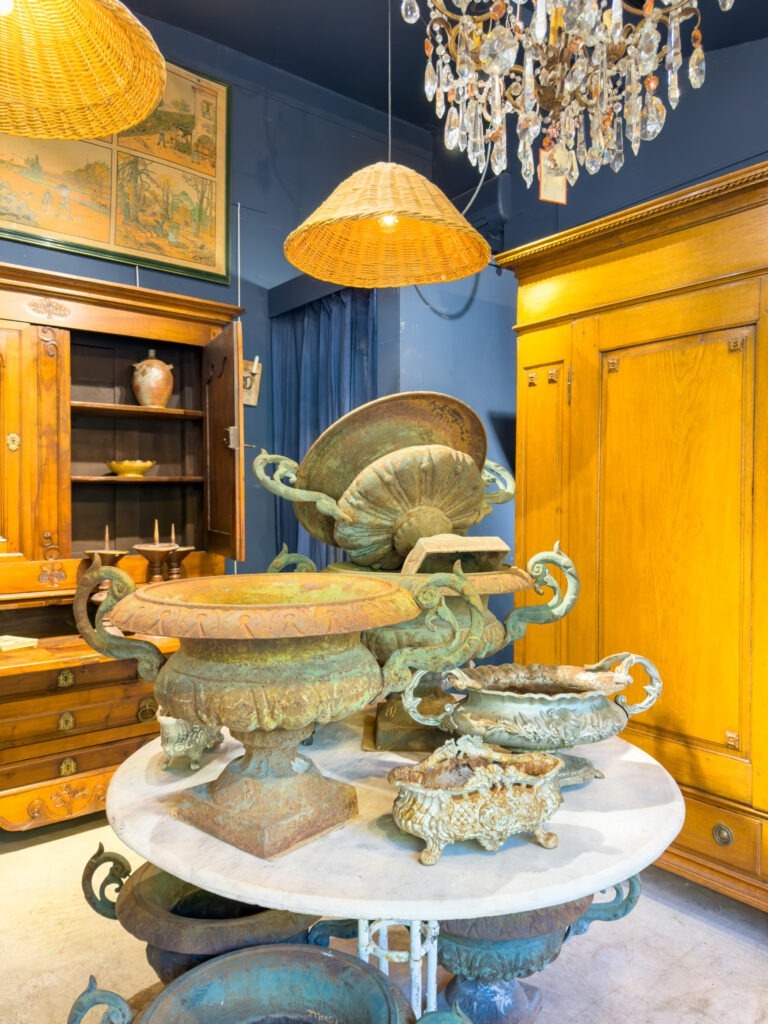
I’d spend the afternoon focusing on its antique quarters. This is when the town’s antiques scene is at its best, and I think that’s what most people will want to prioritize.
You do not need to try to see everything. There are too many dealers for that, and after a while it all starts to blur. I’d choose two or three of the best-known quarters and give yourself time to browse properly.
A good place to start is L’Isle aux Brocantes, one of the town’s most popular antique quarters. It brings together a large number of dealers in one place where you’ll find furniture, decorative objects, paintings, ceramics, silver and lots of smaller vintage pieces that are easier to take home. The highlight for me here was a vintage china and silverware shop. It has absolutely the most beautifully curated pieces, and I wanted to bring it all home with me.
Another well-known stop is Le Village des Antiquaires de la Gare. This is one of the names visitors come across most often, and for good reason. There are many dealers here, with a broad mix of styles and price points. When you first enter, it’s mostly large urns that one might find at a grand French chateau. Keep going, as this spot does have a good mix of everything.
I’d also consider Le Quai de la Gare, especially if you still have the energy to keep browsing after the first two. Like the others, it brings together multiple professional dealers, and they curate their collections by era from mid-century modern to French Renaissance. It’s less about shopping and more about admiring unless you’ve come with an unlimited budget.
If you’re visiting on Sunday, you may have already spent the morning at the outdoor brocante along Avenue des Quatre Otages. In that case, use the afternoon to visit one or two of the permanent antique quarters rather than trying to continue with everything. The permanent villages give you a different experience from the Sunday market, with more curated displays.
My advice is to approach the antiques here the same way I recommend approaching the town itself: be selective, take your time and stop when something genuinely catches your eye.
Choosing the Best Things to Do in L’Isle-sur-la-Sorgue
L’Isle-sur-la-Sorgue is widely associated with its Sunday market, but after spending a week here, this town has enough to offer on the other non-market days. It was easy to fill my days. And, compared to other nearby towns and villages in Provence, there’s a lot to do here.
If you’re only visiting for the day, I’ve given you a taste of what you’ll find. Choose what interests you most from this itinerary, but don’t feel you need to fit everything in. Some of my favourite discoveries when I travel are exploring on my own and seeing what surprises I uncover on my own.
If you’re planning a longer trip through Provence or elsewhere in Europe and want help deciding where to go, how much time to spend in each place and what deserves a place on your itinerary, I offer personalized European trip-planning services to help you make those decisions. Learn more about working with me.