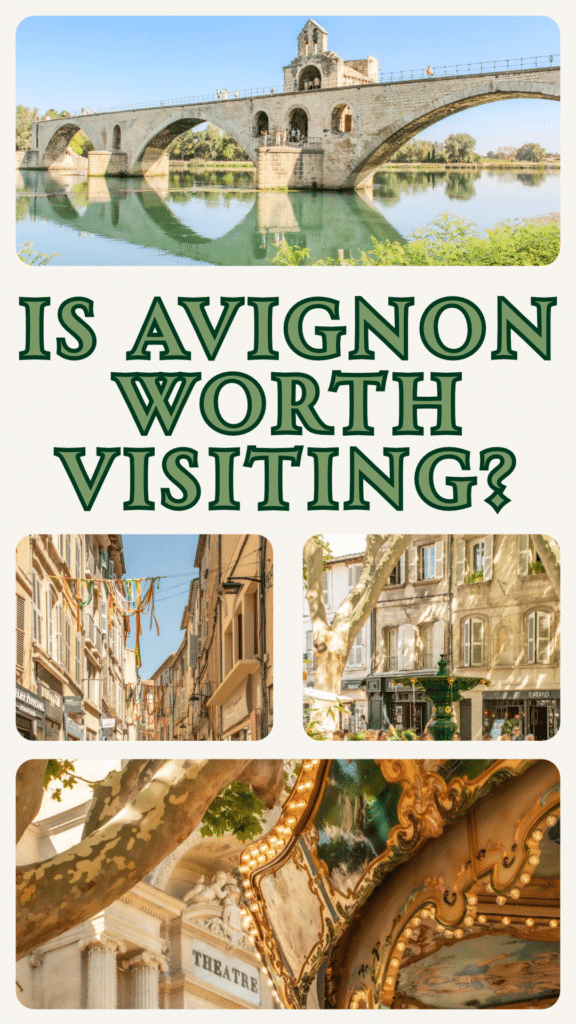

Is Avignon worth visiting? Yes, especially if you enjoy exploring historic cities. Having visited Avignon twice, I think it deserves a place on a Provence itinerary, particularly for first-time visitors.
The impressive Palais des Papes might be its biggest draw, but there’s more to appreciate beyond that most famous landmark. I enjoyed wandering its historic streets and lively squares.
But Avignon isn’t the quiet, picture-perfect Provence that some travellers imagine. It’s a busy city, and for me, that does take away some of its charm.
I first visited Avignon about 15 years ago and was impressed enough to want to return. But seeing it a second time most recently, after exploring much more of Provence, gave me a slightly different perspective.
Here’s what makes Avignon worth visiting, what might disappoint you, and who I think will enjoy it most.
This post may contain affiliate links, meaning I get a commission if you decide to purchase something through the links, at no additional cost to you. Read my Affiliate Disclosure.
What Makes Avignon Worth Visiting?
Its Remarkable Papal History
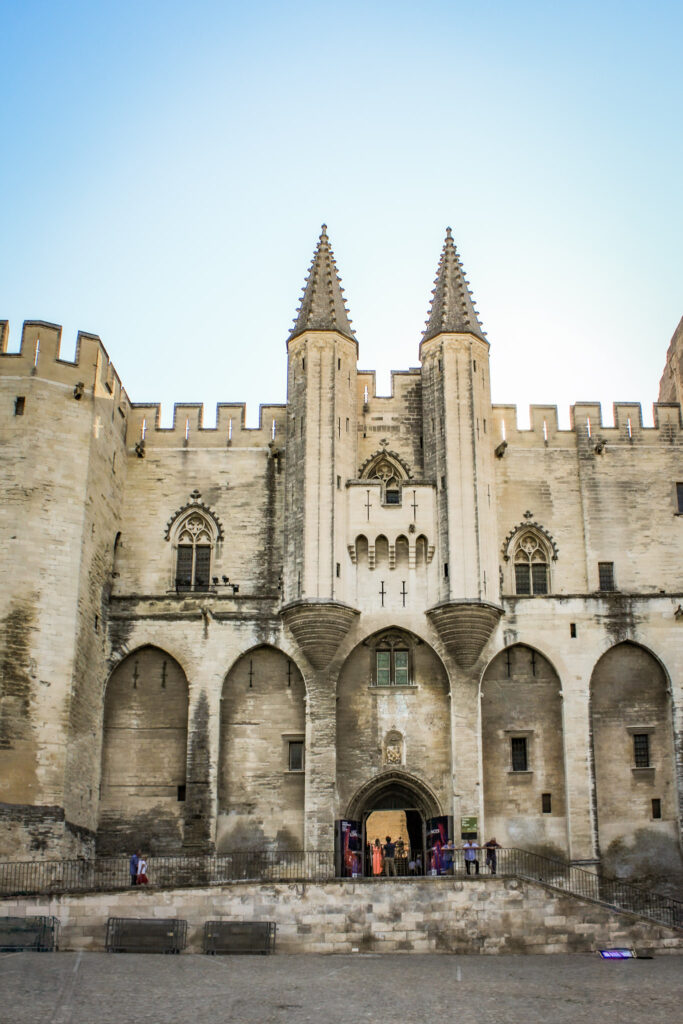
Avignon has a history unlike anywhere else in Provence. During the 14th century, it was the seat of the Catholic papacy, and for nearly 70 years, popes ruled from here rather than Rome. That extraordinary chapter left the city with some of Europe’s finest medieval architecture.
The Palais des Papes is the most impressive example and what brings many visitors to Avignon. It’s the largest Gothic palace from the Middle Ages, with enormous stone walls, courtyards and grand halls that give you a sense of the Church’s wealth and power. What surprised me the most was that much of the palace is quite bare, and it’s the scale and the history that make it worth visiting.
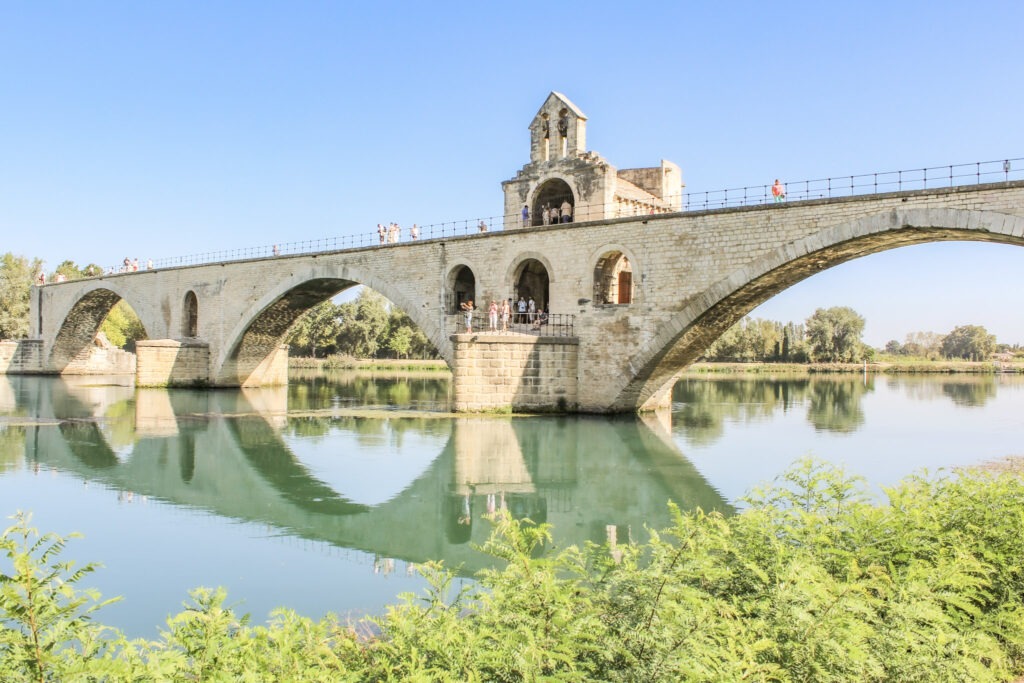
Avignon’s UNESCO World Heritage designation also includes the neighbouring Notre-Dame des Doms Cathedral, the former episcopal palace that now houses the Musée du Petit Palais, and the famous Pont Saint-Bénézet.
And who doesn’t remember Sur le Pont d’Avignon? It’s one of the songs we learned in French class in Canada and is forever locked in my memory. Seeing the remains of that famous bridge stretching partway across the Rhône brings that familiar childhood song back into my mind as I walk across it.
The Character of Its Historic Walled Centre
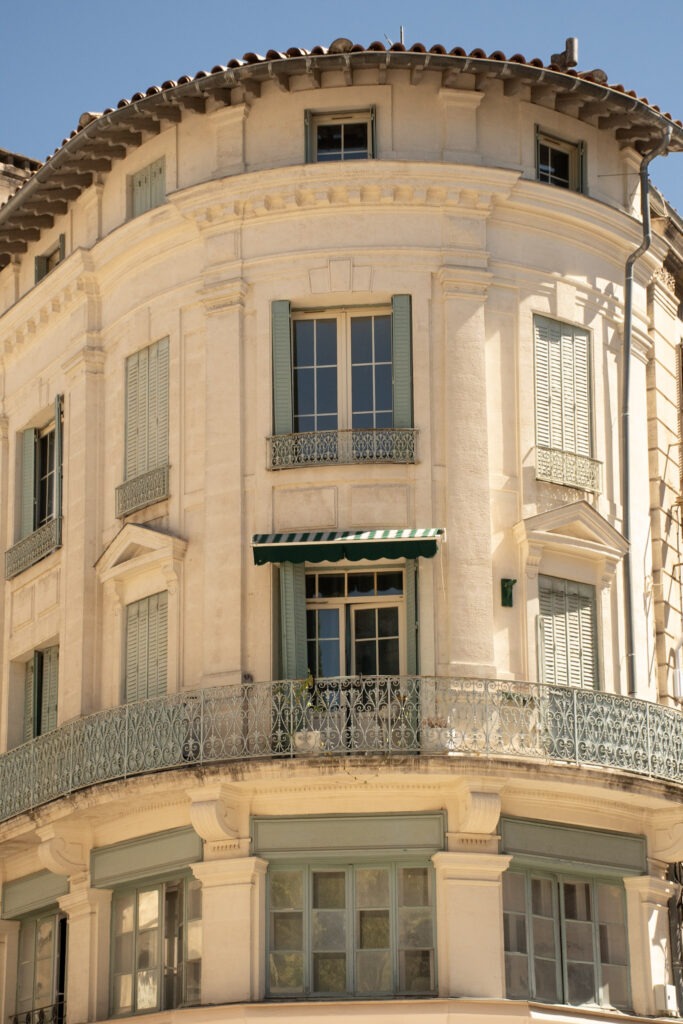
One thing that sets Avignon apart from other places you visit in Provence is its well-preserved medieval fortifications. Stretching for about 4 kilometres, 14th-century ramparts still surround the historic centre, giving you an immediate sense of the city’s importance.
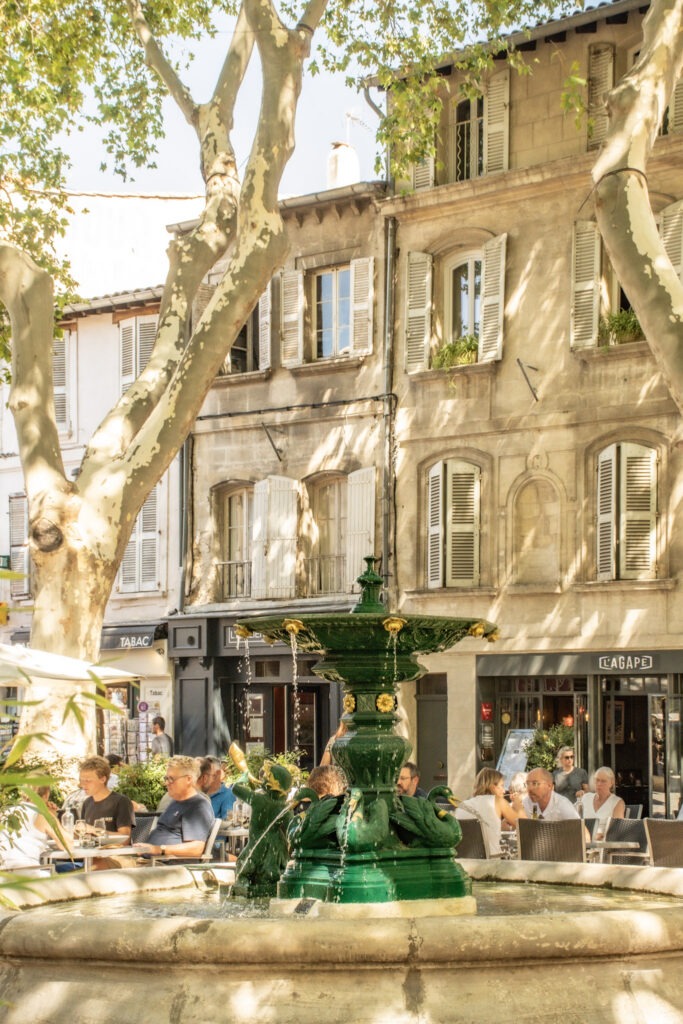
Inside the walls, Avignon has much of the architectural character people come to Provence hoping to find. The famous soft Provençal sunlight catches the buttery limestone façades, olive-hued shutters frame tall windows, and narrow streets lead into squares lined with cafés and restaurants.
But there’s more to the historic centre than the grand monuments. Rue des Teinturiers, with its canal and historic waterwheels, is often described as one of Avignon’s most charming streets. I enjoyed walking along it, but I have to admit it didn’t impress me quite as much as I’d expected.
At the time, I was staying in L’Isle-sur-la-Sorgue, where canals and old waterwheels are found throughout the town rather than concentrated along one street. Having experienced that, Rue des Teinturiers felt a little less distinctive to me.
I’d still recommend walking along it while exploring Avignon, but I wouldn’t consider it a reason to visit the city on its own.
Its Food and Market Culture
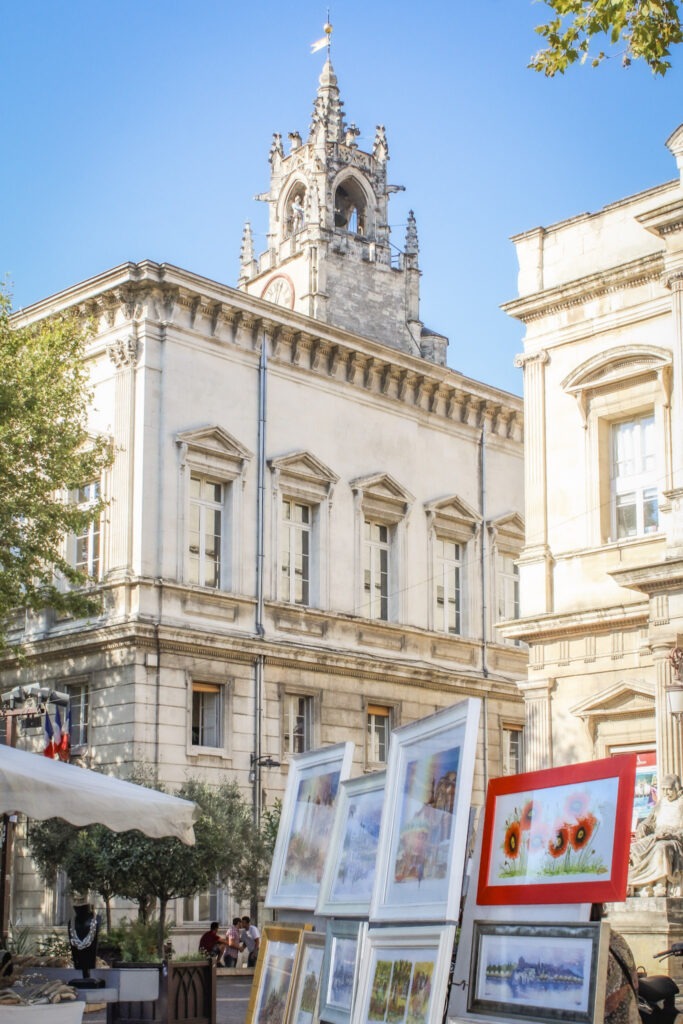
Avignon is also a worthwhile destination for travellers who plan their days around good food.
There’s a strong restaurant scene, from casual neighbourhood bistros and cafés with outdoor terraces to Michelin-recognized dining. Pollen holds a Michelin star, while restaurants such as L’Agape have earned Bib Gourmand recognition for good food at a more accessible price.
But you don’t need a fine-dining reservation to appreciate Avignon’s food culture.
Les Halles, the city’s covered market, brings together local produce, cheeses, charcuterie and regional specialties. It’s also a place to stop for something to eat rather than simply browse the stalls.
But Avignon’s market culture extends beyond Les Halles, with smaller outdoor markets taking place throughout the week. On my first visit, I happened upon an art and flower market while wandering through the city. It’s those unexpected finds that remind me why I always like to leave some room in my itinerary to simply explore.
What I like about this side of Avignon is the choice. You can have a simple market lunch, take your time over a glass of local rosé on a terrace in the late afternoon sun and enjoy a late-night dinner.
Its Reputation as a Cultural City
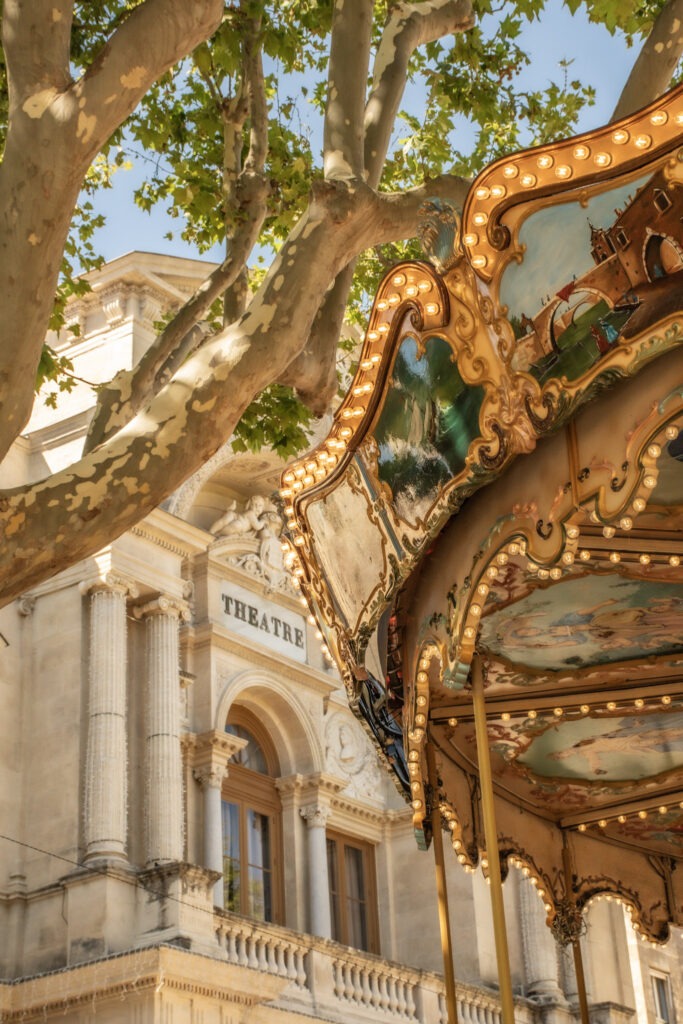
Avignon’s cultural importance didn’t end with the departure of the popes. Every July, the city hosts the Festival d’Avignon, one of the world’s major performing arts festivals.
Founded in the late 1940s, the festival brings theatre, dance and contemporary performances into historic venues, including the courtyard of the Palais des Papes. The accompanying Festival Off fills the theatres throughout the city.
For travellers interested in theatre and the arts, visiting during the festival can be a reason to choose Avignon over other destinations in Provence.
But it also changes the experience considerably. The streets are busier, accommodation is in greater demand, and the city takes on a very different pace. Whether that’s an advantage depends entirely on the kind of visit you’re looking for.
What Might Disappoint You About Avignon?
If you’re picturing a sleepy Provençal village with a couple of pretty streets, a handful of cafés and an unhurried pace, Avignon might not be what you expect. It’s a sizeable city, and although its historic centre is beautiful, it’s also busy and noticeably touristy. The crowds aren’t limited to the major attractions; you’ll encounter them in the streets and squares as well.
Another consideration is just how much there is to see and do. Avignon can feel overwhelming, especially if you’re visiting for the first time. While you can certainly enjoy the highlights in a day, I don’t think that’s enough time to fully appreciate the city. You’ll need to make decisions about what matters most to you rather than try to fit everything in.
It’s also somewhere I’d recommend doing a little research before you arrive. You can happily wander its streets without a plan, but if there are particular sights or restaurants you don’t want to miss, it’s worth making arrangements. I learned this when I tried to have lunch at L’Atelier de Belinda without a reservation. They were fully booked, and this was on a Tuesday!
And if you’re hoping to combine Avignon with a visit to the Pont du Gard, keep in mind that it’s not quite as close as you might think. Travelling between the two, exploring the Roman aqueduct and returning to Avignon takes a considerable part of your day.
None of these are reasons to skip Avignon, but they are reasons to be selective. The city has more to offer than you can comfortably experience in a single visit, and knowing that ahead of time will help you make better choices about how to spend your time.
Who Would Enjoy Visiting Avignon?
Avignon is a city I chose to return to, which I think says something, especially when there are so many wonderful places to explore in Provence.
I would particularly recommend it to travellers who appreciate a city with a good balance of history, culture, architecture and food. Think: urban side of Provence. There’s a certain elegance to Avignon that sets it apart from many other Provençal towns. Its grand buildings, impressive squares and refined architecture are reminders of how wealthy and influential this city once was.
History and architecture enthusiasts will appreciate the medieval heritage, while travellers who enjoy art, museums and performing arts will find plenty to interest them. Food-focused travellers will also find it a good choice for those who enjoy a more sophisticated city experience, with wine bars and refined dining alongside the traditional daily markets and neighbourhood cafés.
I also think Avignon appeals to first-time visitors to this area of Provence who want some variety in their itinerary. If you’re spending several days exploring small villages and the countryside, Avignon offers something quite different. And for couples who enjoy a city break with plenty of cultural experiences, good restaurants and interesting streets to explore, you can’t go wrong.
If you have limited time in Provence, I would prioritize Avignon if history, architecture and cultural experiences are high on your list. But if you’re more interested in smaller towns, local markets and the Provençal countryside, I wouldn’t feel obligated to include it simply because it’s one of the region’s best-known destinations. There are plenty of other worthwhile places to spend your time.
Is Avignon Worth the Trip?
For me, what makes Avignon memorable is its history. Few places in Provence have such an extraordinary past.
When I first visited Avignon about 15 years ago, I remember being quite impressed. Returning for a second time, I found that some of that initial excitement had faded. Perhaps my expectations had changed after spending so much more time exploring Provence, but the city didn’t leave quite the same impression.
Would I recommend visiting Avignon? Absolutely, especially if you’ve never been. But would I return a third time? Probably not. There are other places in Provence, including Aix-en-Provence, Arles and L’Isle-sur-la-Sorgue, that I enjoy just as much, if not more.
And that’s something worth considering when planning a trip to Provence. You don’t have to visit every famous destination to have a wonderful experience. It’s about choosing the places that best match your interests and how you like to travel.
Planning a trip to Provence? If you’re unsure which towns and cities deserve a place on your itinerary, my personalized trip planning services can help you make those decisions. I’ll help you put together a thoughtful itinerary based on your interests, travel style and the time you have available, so you can experience the Provence that’s right for you.