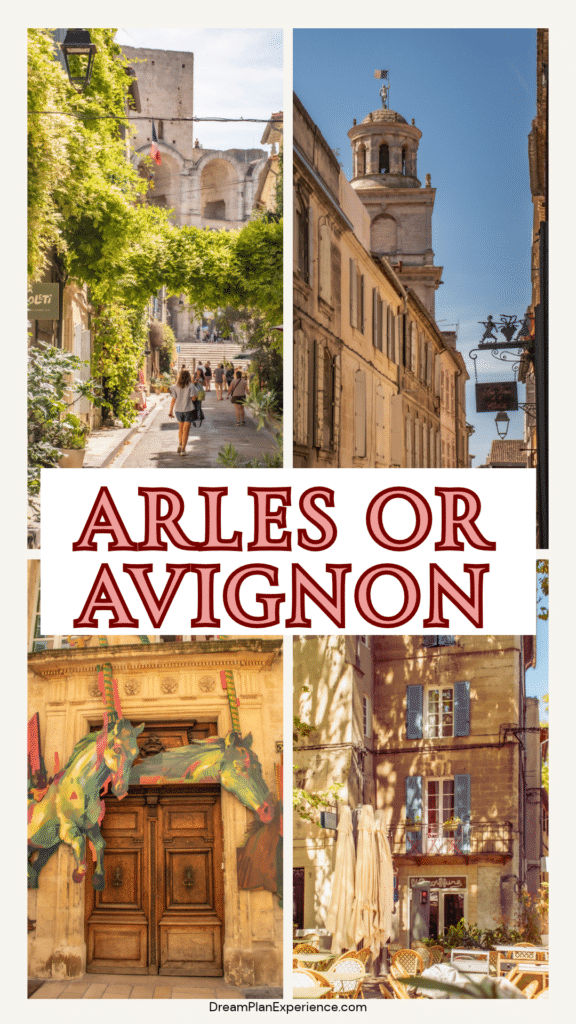

The city I’d choose for a day trip isn’t necessarily the one I’d choose as a base for exploring Provence. And that’s where the decision between Arles or Avignon gets interesting.
I’ve visited both on my trips to Provence, and while they’re less than 40 km apart, I wouldn’t choose them for the same reasons.
For a day trip, Arles would be my pick for Roman history and getting lost in its old neighbourhoods. Avignon, on the other hand, has grander architecture, impressive monuments and more of a busy city atmosphere.
But if you’re planning to stay for several days, I’d look beyond the cities themselves. Where else do you want to go? Will you have a car or rely on trains?
Those answers might change which city I’d recommend. Let’s compare what each has to offer and where I’d choose to spend my time.
This post may contain affiliate links, meaning I get a commission if you decide to purchase something through the links, at no additional cost to you. Read my Affiliate Disclosure.
Arles or Avignon? The Quick Answer
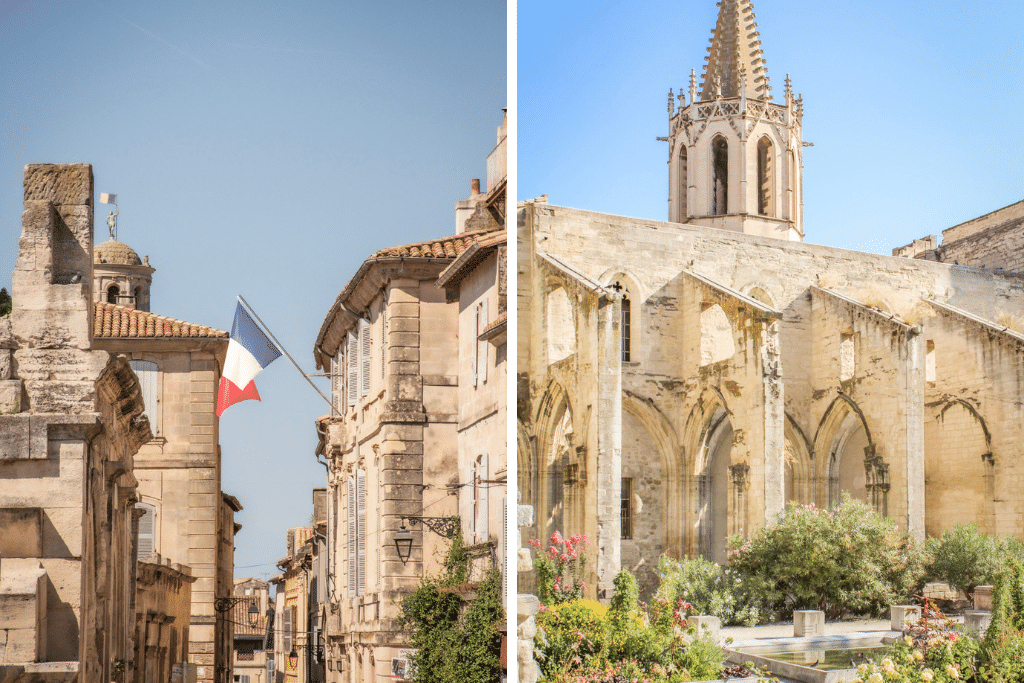
Both cities are worth visiting, but I’d choose between them based on what you most enjoy doing and how you plan to explore Provence.
| Your Travel Preference | My Recommendation |
|---|---|
| As a day trip | Arles for Roman history and wandering historic streets. Avignon for medieval buildings and a more urban experience. |
| A base with or without a car | Avignon has the advantage, with more convenient rail connections for exploring Provence. |
| Markets | Arles for its large Wednesday and Saturday outdoor markets. Avignon for Les Halles, a covered food market with more flexibility throughout the week. |
| Art and museums | Arles for contemporary art, photography and Van Gogh. Avignon for fine art, historic collections and museums. |
| Wandering without a plan | Arles gets my vote for its smaller streets and residential neighbourhoods. Avignon offers a different experience with more shopping streets. |
What Are Arles and Avignon Actually Like?
Arles and Avignon have quite a bit in common. Both sit along the Rhône River, have UNESCO World Heritage Sites, centuries of history, Provençal markets and historic centres you can easily explore on foot. Neither is a small village like what you’ll find in the Luberon, like Gordes or Roussillon. These are proper cities, with plenty happening beyond their tourist attractions.
Avignon is the larger of the two, almost double in size, and you can feel it when you visit it. Geographically, Avignon sits farther north, in the Vaucluse department, while Arles is to the south, closer to the Camargue.
But what I think matters most to a traveller is how different they look and feel once you start exploring.
Arles: Roman History Woven Into Everyday Streets
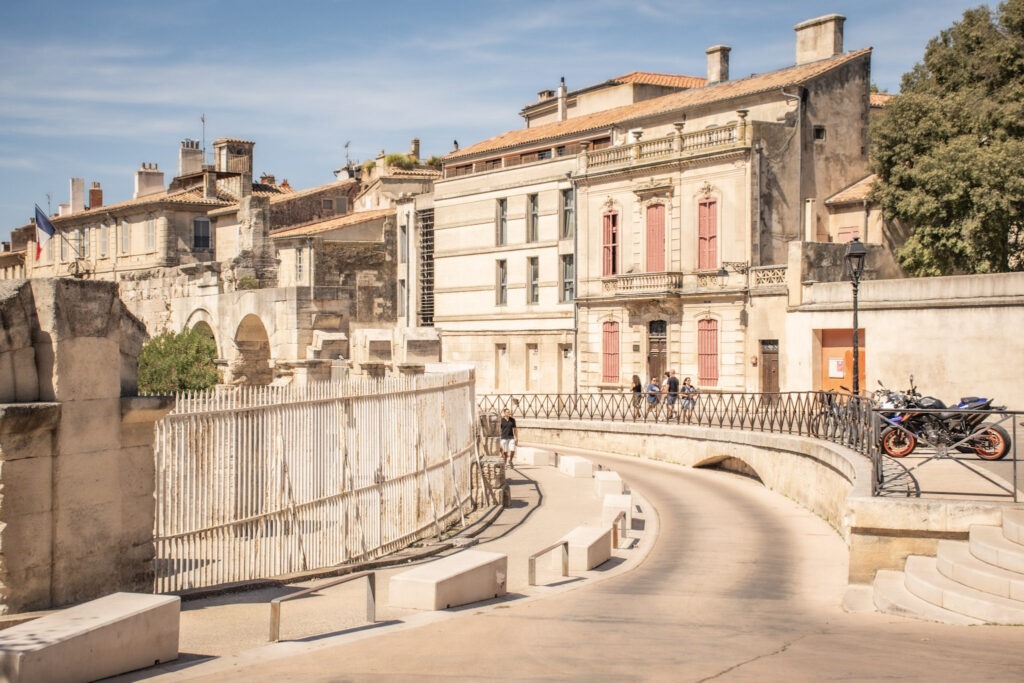
Arles doesn’t have one grand historic centre built around a single landmark. Its Roman monuments are scattered throughout the city, surrounded by houses, restaurants and exceptionally pretty streets.
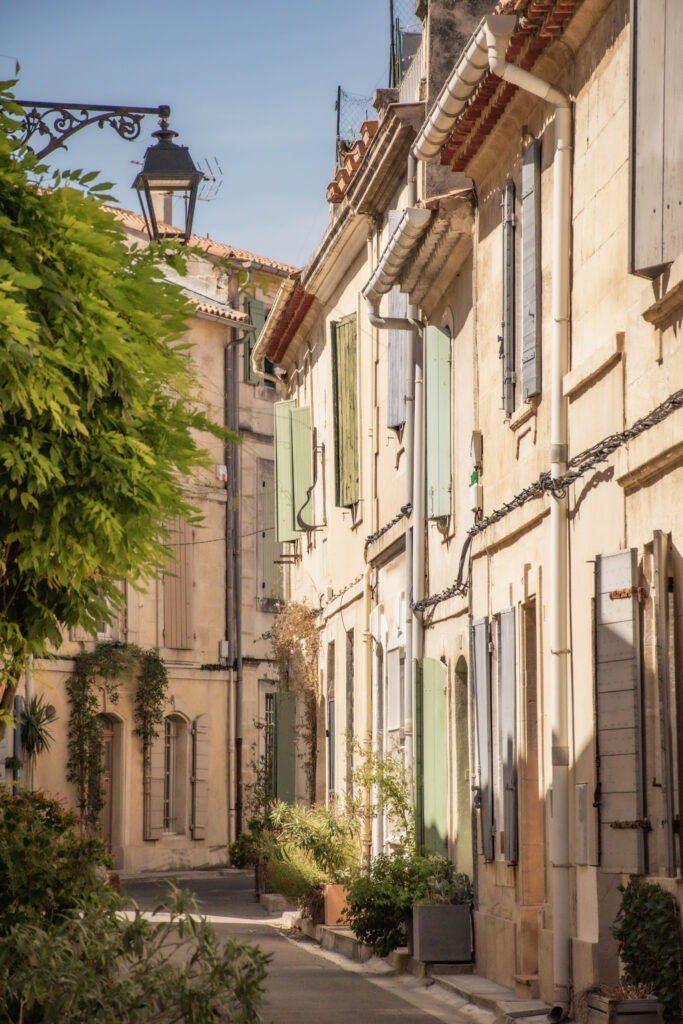
The Amphitheatre is a perfect example. It rises above the surrounding neighbourhood, with restaurant terraces and souvenir shops at its base. Walk a couple of streets away, into Hauture, and you’re surrounded by old stone houses, coloured shutters, narrow passageways and streets that rise and fall with the terrain.
Then there’s La Roquette, a former river workers’ neighbourhood. Here, the houses are narrower, the streets more residential, with plants growing around doorways and quite a variety of architectural details.
What I liked about Arles was seeing how these different parts of the city fit together. You can go from a 2,000-year-old Roman monument to a residential street in minutes, and then find contemporary art and architecture around the corner.
There’s quite a contrast between old and new, but Arles doesn’t feel as though it has been designed around its monuments. It has this wonderfully lived-in feel to it.
Avignon: Bigger Impression and a More Urban Feel
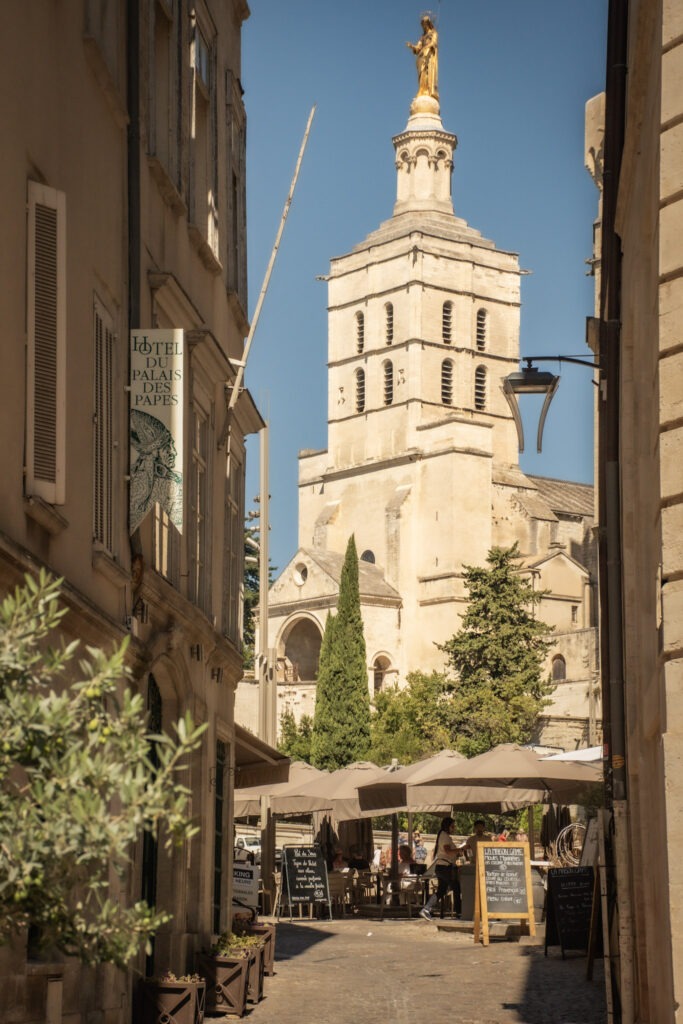
Avignon makes a very different first impression, starting with the medieval walls that still surround its historic centre. Built in the 14th century, the ramparts stretch for more than four kilometres, with imposing stone towers and gateways leading into the old city. There’s a real sense of entering a city within a city.
And then there’s the Palais des Papes, an enormous Gothic palace overlooking a vast square. It’s hard to imagine the power and wealth that once existed here when Avignon was the seat of the Catholic popes during the 14th century.
The architecture feels grander and more formal than Arles. There are imposing stone buildings, elegant façades, broad shopping streets and squares surrounded by cafés and restaurants.
Avignon also has more of a busy city atmosphere, particularly around Place de l’Horloge and the main shopping streets. Rue Joseph Vernet is known for its boutiques, while Rue des Teinturiers is entirely different, with its cobbled street, canal, old waterwheels and plane trees.
Having visited Avignon more than once, I think it’s important to venture beyond its highlights. The smaller squares and residential streets give you a much better idea of the city than its famous monuments alone.
If I had to describe the biggest difference, I’d say Arles has more of the architectural variety I enjoy discovering as I walk, while Avignon makes a stronger impression with its monumental buildings.
Both are beautiful in different ways. It really comes down to which kind of city you enjoy spending time in. For me, it’s Arles.
Which Has More to See and Do?
I wouldn’t say one city has considerably more to offer than the other. I’ve spent time in both, and you could easily fill a couple of days in either. The real difference is how you choose to spend that time.
History and Historic Monuments
One thing worth considering is how much of your day you want to spend visiting monuments versus seeing them as you explore.
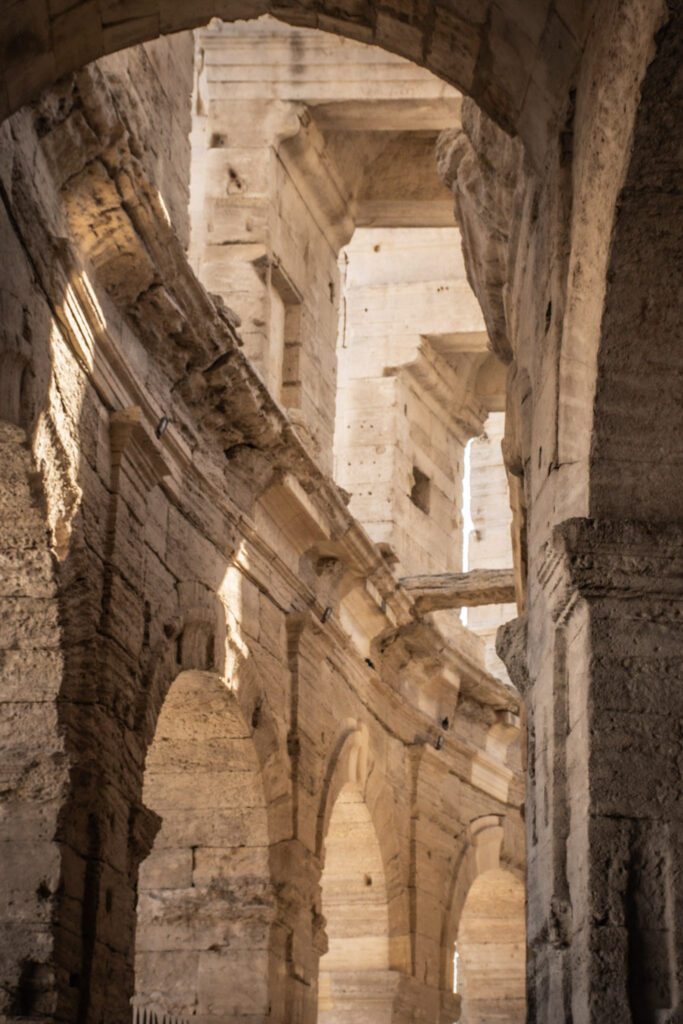
In Arles, you can walk around the Amphitheatre, see the remains of the Ancient Theatre, visit Saint-Trophime Church and pass several other Roman sites without purchasing a single ticket.
That’s how I approached my visit. Having already seen the amphitheatres in Rome and Verona, I didn’t feel the need to enter another. But if Roman archaeology is a particular interest, Arles has plenty more to explore, including the Alyscamps and the Musée départemental Arles antique, which houses an impressive collection of Roman artifacts.
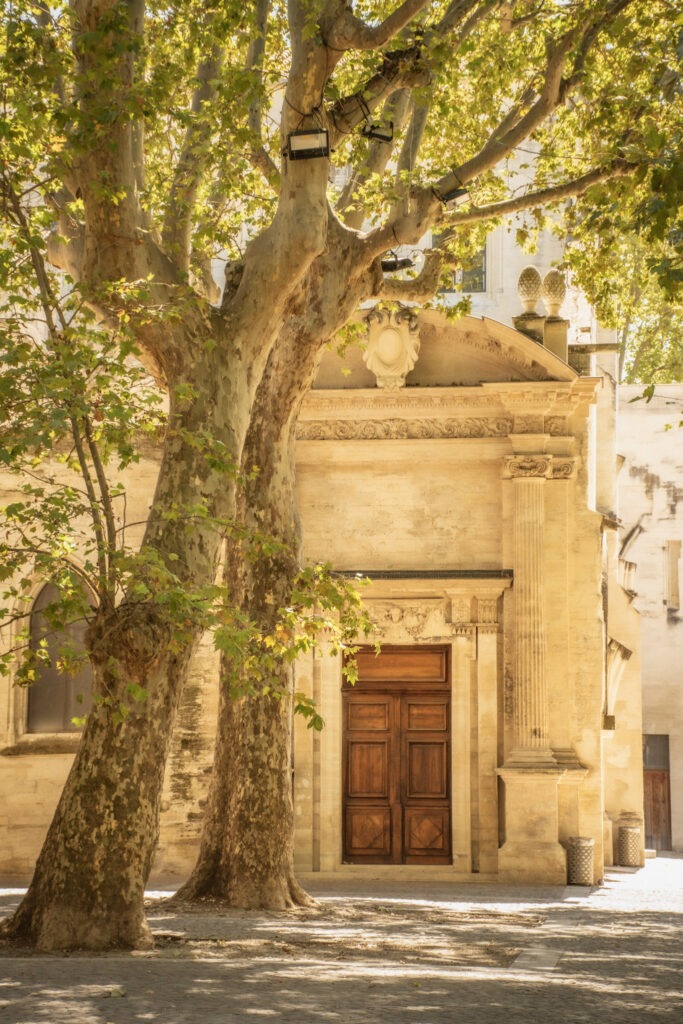
Avignon is a different experience as there’s more to see in a day. I’d consider the Palais des Papes the main attraction, and if you’re interested in the history of the city, going inside is worthwhile. There are more than 20 rooms open to visitors, including ceremonial halls, private papal chambers and rooms with original frescoes. Allow around two hours for the visit alone.
And, of course, there’s Pont Saint-Bénézet, better known as the Pont d’Avignon. Only four of its original 22 arches remain, but you can walk out onto the surviving section for views across the Rhône and back towards the city walls and Palais des Papes.
My preference: If you love exploring Roman ruins, choose Arles. If you enjoy visiting grand historic buildings and learning about the people who lived in them, Avignon would get my vote.
Art, Museums and Photography

This is where Arles might surprise you. Beyond its Roman history and connection to Van Gogh, it has become an important destination for contemporary art and photography.
LUMA Arles is the obvious example, with Frank Gehry’s striking tower, exhibitions and installations spread across a former industrial site. There’s also Musée Réattu, the Fondation Vincent van Gogh and the annual Rencontres d’Arles photography festival.
One thing to know about the Van Gogh Foundation is that it doesn’t have a permanent collection of his paintings. Exhibitions change, with works sometimes borrowed from other museums. I’d check what’s showing before making a special visit.
Avignon has a different mix of museums. The Collection Lambert is one I’d look into for contemporary art, while Musée Calvet and the Petit Palais are better suited to those who enjoy fine art and historic collections.
Here’s something particularly useful: several of Avignon’s municipal museums are free to visit. That makes it easy to pop into one without committing a large part of your day or purchasing another admission ticket.
My preference: I’d lean towards Arles for photography and contemporary art, particularly if visiting during Les Rencontres. Avignon would appeal more to someone who enjoys traditional art collections and visiting several museums.
Exploring the Streets
This is an important distinction for me because I often enjoy the walk between attractions just as much as the attractions themselves.
In Arles, I found myself spending more time than expected in the neighbourhoods surrounding the Amphitheatre and eventually La Roquette. The streets don’t follow a neat grid, and the changes in elevation give you different views as you walk.
Avignon has more variety in its commercial streets. You can go from the busy shops along Rue de la République to the more elegant Rue Joseph Vernet, then find yourself in a small square with a neighbourhood restaurant or café.
One area I’d encourage visitors to explore is around Place des Corps Saints and Rue des Teinturiers, rather than spending the entire day around the Palais des Papes.
My preference: Arles gets my vote if you enjoy wandering residential streets, photographing architectural details and exploring without a specific destination. Avignon is better if you want to combine wandering with shopping, browsing galleries and stopping at cafés.
Which Is Better for Fast-Paced or Slow Travellers?
I don’t think this is as simple as saying Arles is for slow travellers and Avignon is for those who prefer a busier itinerary.
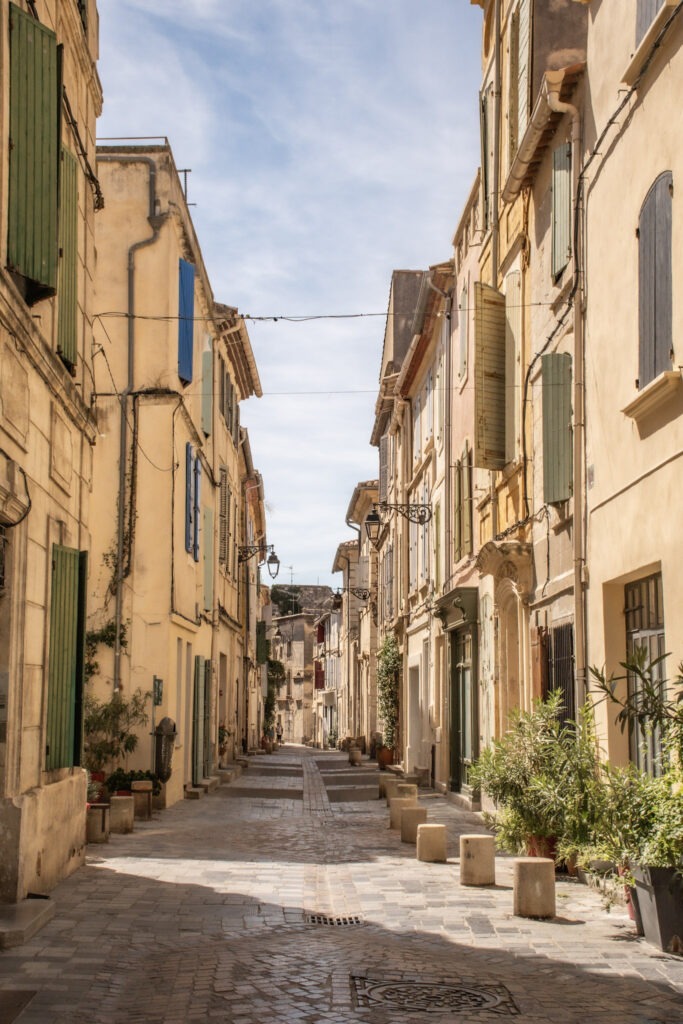
If you like a full day of sightseeing, Avignon gives you plenty of attractions to move between, but going inside the Palais des Papes will take a significant amount of time. In Arles, many of the main monuments can be appreciated from outside, allowing you to cover more ground without spending hours indoors.
For slower travellers, both cities work well, but in different ways.
I’d choose Arles for a day built around walking, a long lunch and exploring neighbourhoods. In Avignon, I’d be more inclined to mix a major cultural visit with browsing shops, finding a good wine bar or spending time in one of its squares.
It comes down to what you want from your day. And I certainly wouldn’t try to see every attraction in either city just because they’re relatively easy to reach on foot.
Arles vs Avignon for Markets, Food and Wine?
Markets and good food are a big part of why I love travelling through Provence. And while you’ll eat well in either city, there are a few differences worth considering, especially if you’re choosing somewhere to stay for several days.
Which Has the Better Market?
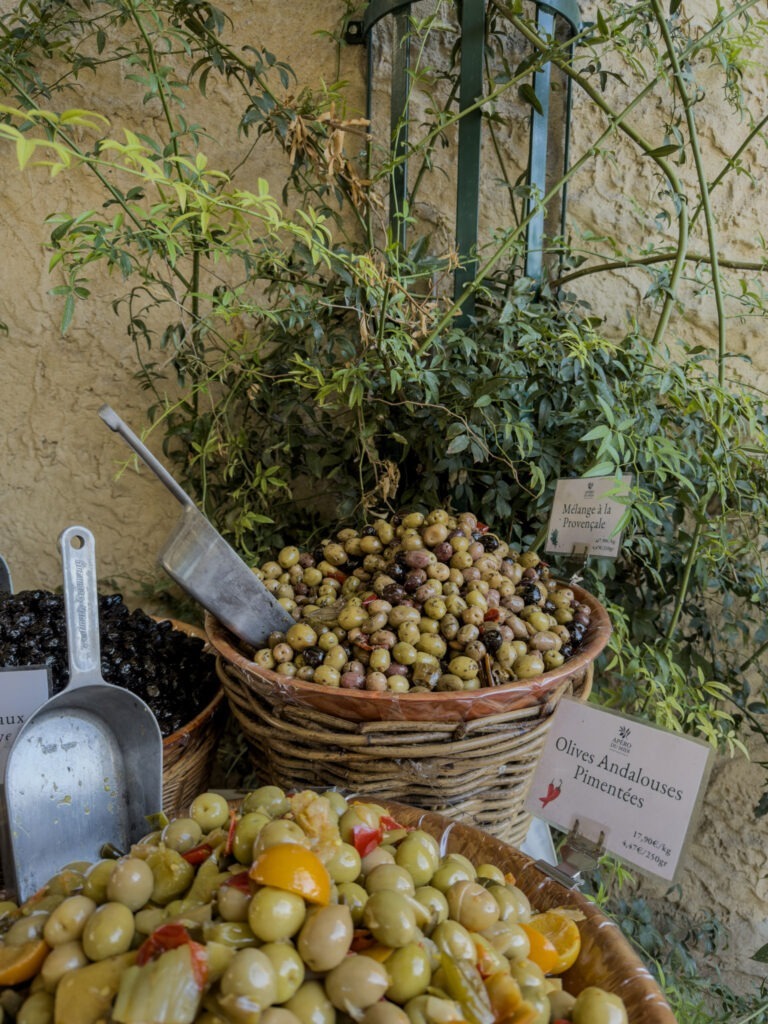
For a traditional outdoor Provençal market, I’d choose Arles. Its Wednesday and Saturday markets are among the largest in the region, with everything from fresh produce and regional cheeses to spices, linens, baskets and household goods.
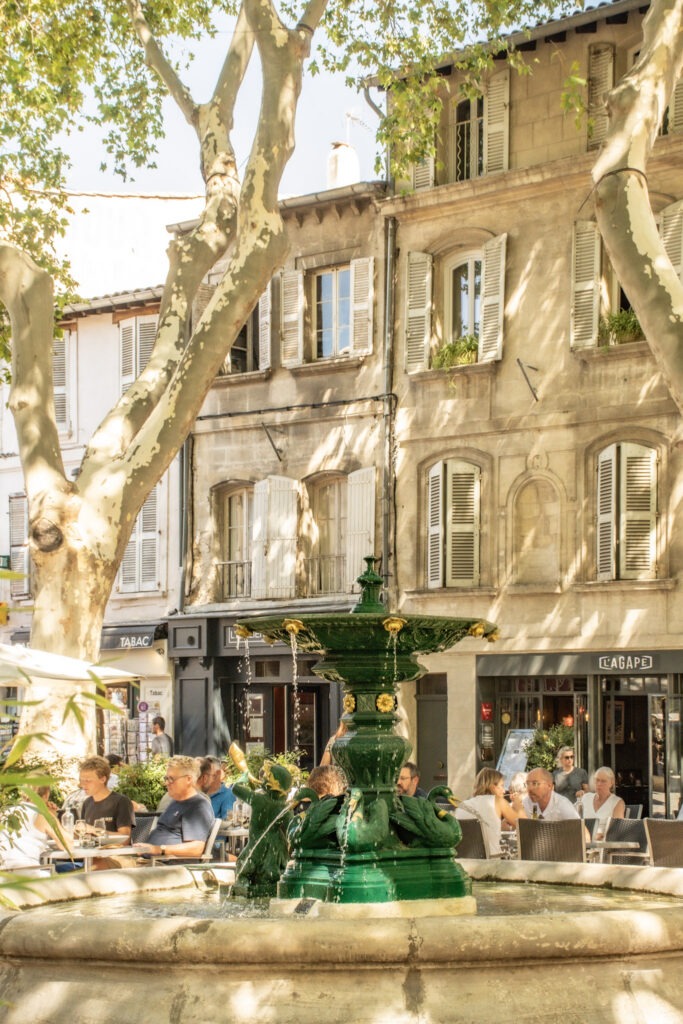
I purposely visited on a Wednesday because I find weekend markets too busy. What surprised me was how different the stalls were depending on where you walked. The first stretch along Boulevard Émile Combes was disappointing, with a lot of inexpensive clothing and household goods. But the smaller stalls around the Amédée Pichot fountain were much better, particularly for food and artisan products.
Avignon offers something quite different with Les Halles, its covered food market on Place Pie. Around 40 merchants sell everything from fresh seafood, meats and cheeses to pastries, prepared foods and wine.
The advantage is that Les Halles is open Tuesday through Sunday, so you don’t have to arrange your entire visit around a particular market day. It’s especially practical if you’re staying in Avignon and want to pick up something for lunch or shop for food throughout the week.
Avignon also has outdoor neighbourhood markets, but I wouldn’t choose it over Arles specifically for that experience.
My preference: Arles for the experience of browsing a large outdoor Provençal market, especially if you’re shopping for things to bring home. Avignon for food shopping and the flexibility of visiting a market almost any morning.
Where Would I Rather Eat and Drink?
Both cities have a good range of restaurants, from traditional bistros and neighbourhood cafés to contemporary dining and Michelin-recognized restaurants.
Arles is where I’d look for dishes connected to the Camargue, such as gardiane de taureau (slow-cooked bull stew), Camargue rice and tellines, the tiny shellfish found along the coast.
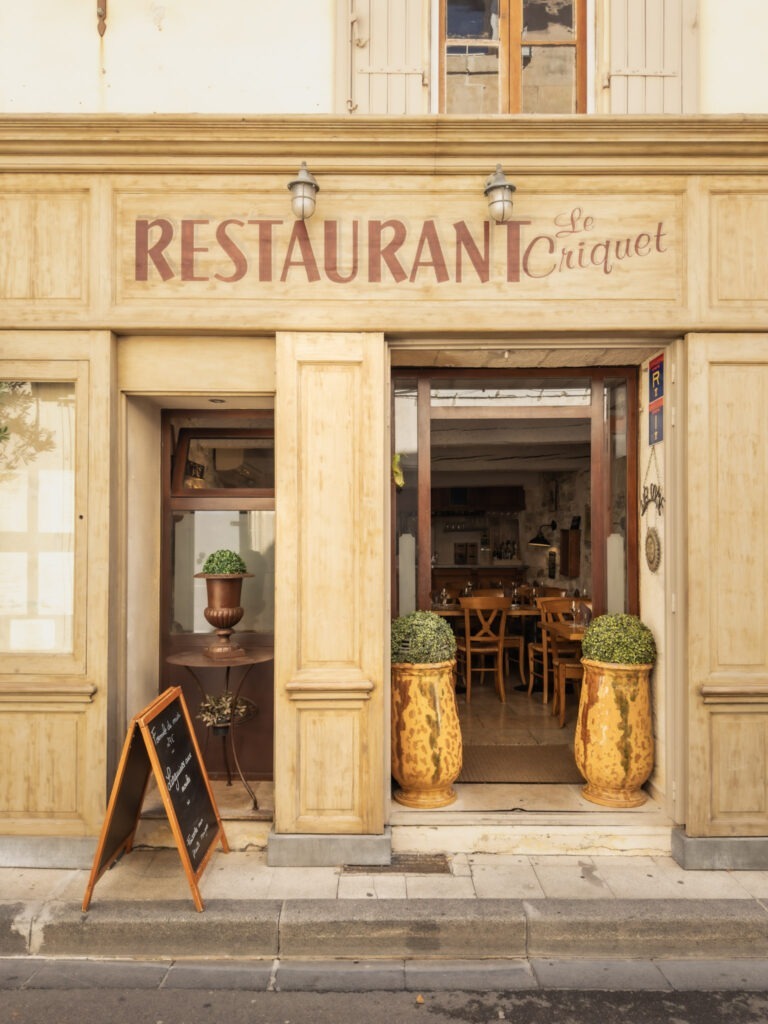
I had a lovely long lunch at Le Criquet, a traditional Provençal restaurant tucked along a side street near the Roman Theatre. Or there’s a wonderfully tiny bistro called Le Gibolin I spotted too. A newer dining scene that is supposed to be good is the Restaurant du Grand Hôtel Nord-Pinus in the renovated historic hotel.
Avignon has a wider choice of restaurants within its historic centre, particularly if you’re looking for a special dinner. Pollen holds a Michelin star for its modern, seasonal cooking, but I would steer you to Numéro 75, a cozier dining experience in a historic mansion just behind the Palais des Papes.
I’d also give Avignon the advantage for wine lovers. You’re close to some of the Rhône Valley’s best-known wine regions, including Châteauneuf-du-Pape, Gigondas and Tavel. Even without visiting a vineyard, you can sample regional wines at places like Le Vin devant Soi, a wine shop offering tastings, or Le 17 Place aux Vins on Place des Corps Saints, where you can enjoy a glass with tapas.
Arles has wine bars too, including Le Buste et l’Oreille, which specializes in organic, biodynamic and natural wines.
My preference: For a memorable Provençal lunch, I would happily return to Arles. But if I were choosing a base for several nights and wanted plenty of options for dining out, wine bars and special-occasion restaurants, I’d lean towards Avignon.
Which City Gets More Tourists?
Avignon attracts considerably more visitors than Arles. I could certainly feel the difference when visiting both cities.
In Avignon, I regularly came across guided tour groups making their way through the historic centre. At times, it felt like a city filled with day-trippers. In Arles, I didn’t encounter a single tour group during my visit.
Something else worth considering is the festival calendar. Avignon hosts its famous theatre festivals, including Festival d’Avignon and Festival Off, throughout July. In Arles, Les Rencontres d’Arles photography festival runs from early July into October, with exhibitions held throughout the city.
I wouldn’t necessarily avoid either city during these events. If theatre or photography interests you, it might be the very reason to visit.
Is Arles or Avignon a Better Base for Provence?
If you’re choosing between Arles and Avignon as a base, I’d look at where you want to take day trips. Both are well positioned, but they open up different parts of Provence.
Where Can You Go by Car?
These are approximate one-way driving times from each city, grouped by direction. It’s not meant to be an exhaustive list, but to help inspire your trip planning.
Within 30 minutes
| From Avignon | From Arles |
|---|---|
| North: Orange (Roman theatre) | Northeast: Fontvieille (windmills) |
| Northeast: Châteauneuf-du-Pape (wine tasting) | Northeast: Maussane-les-Alpilles (olive oil) |
| East: L’Isle-sur-la-Sorgue (antiques and canals) | Northeast: Les Baux-de-Provence (hilltop village) |
| West: Villeneuve-lès-Avignon (fort and historic centre) | Northeast: Saint-Rémy-de-Provence (shops and historic centre) |
Within approximately 30–60 minutes
| From Avignon | From Arles |
|---|---|
| East: Fontaine-de-Vaucluse, Oppède-le-Vieux, Ménerbes, Lacoste and Roussillon (Luberon villages) | Northeast: Eygalières (Alpilles village) |
| Northeast: Séguret (hilltop wine village) | Northwest: Nîmes (Roman monuments) |
| West: Pont du Gard and Uzès (Roman aqueduct and market town) | South: Saintes-Maries-de-la-Mer and Salin-de-Giraud (Camargue) |
| Southwest: Aigues-Mortes (medieval walled town) |
Where Can You Go by Train?
If you won’t have a car, the comparison changes. These are useful direct rail connections, with approximate one-way train times.
| From Avignon Centre | From Arles |
|---|---|
| Orange — 15–25 min | Avignon — 15–25 min |
| Arles — 15–25 min | Nîmes — 25–35 min* |
| L’Isle-sur-la-Sorgue — 20–30 min | Marseille — 50–60 min* |
| Carpentras — 30–35 min | |
| Nîmes — 35–40 min |
Some departures take longer or require connections. This is an estimate based on one train time.
My recommendation: With a car, I’d lean towards Avignon for the Luberon, Rhône Valley wine villages and northern Provence. Arles is better positioned for the Alpilles and Camargue.
Without a car, Avignon would be my choice for a wider variety of easy train-based day trips. Just remember that many of Provence’s smaller villages don’t have railway stations, so you’ll still need a bus, organized excursion or occasional car rental to reach them.
Which Would I Choose: Avignon or Arles?
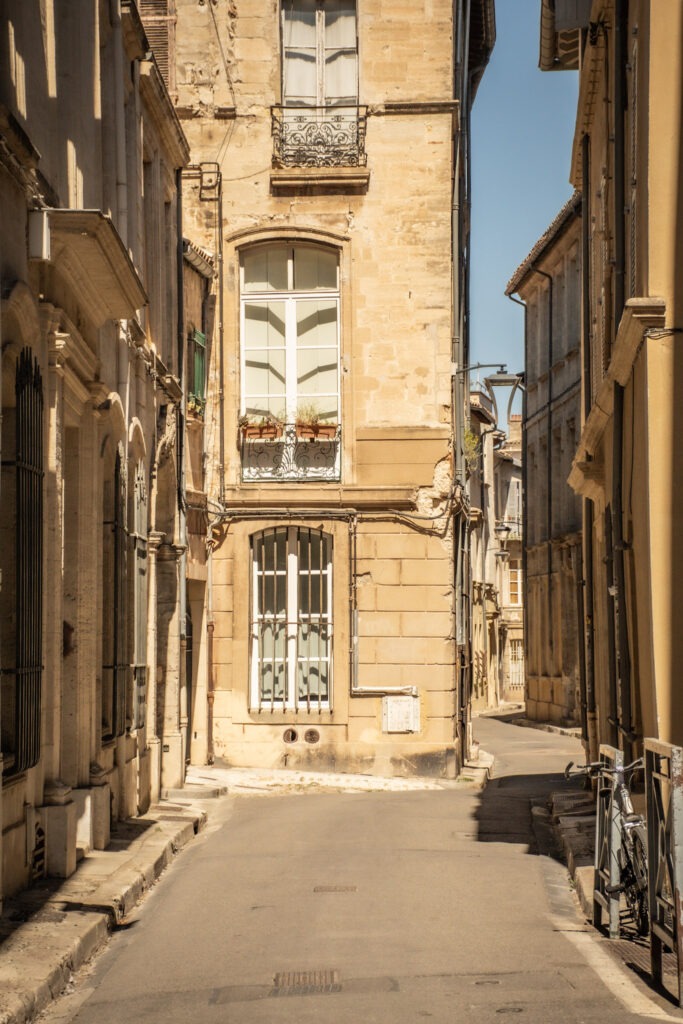
Having visited both cities, I can say that I enjoyed Arles more than Avignon. I loved exploring its older neighbourhood streets, and I found myself wanting to see what was around the next corner. It’s a city I’d happily return to, especially since there was more I wanted to see than I could fit into one day.
But that doesn’t necessarily mean I’d choose Arles as my base for a longer stay in Provence.
If my plans included several day trips, particularly to the Luberon villages, wine regions and towns farther north, Avignon would make more sense. It has better train connections and puts you within easier reach of a wider variety of destinations.
The good news is that you don’t necessarily have to choose between visiting the two. They’re only about 20 minutes apart by direct train, so you could easily stay in one and spend a full day exploring the other. And that’s what I’d recommend rather than trying to squeeze both into the same day.
For me, Arles wins as a place to visit, while Avignon has the advantage as a base for exploring more of Provence. Of course, that could change depending on where else you want to go.
If you’re planning a trip to Provence and struggling to decide where to stay, which towns to visit or how to make the most of your time, I can help. Through my custom travel planning services, I’ll help you put together an itinerary based on your interests, travel style and the places you most want to experience.