I didn’t expect Lübeck to stay with me as it did.
After decades of travelling through Germany and returning again and again, I thought I understood the pulse of this country. But Lübeck felt different almost immediately.
It’s smaller and more contained. The old town, wrapped in water, invites you to slow down without warning. You notice the distinct brick and architecture, unlike elsewhere in Germany.
If you’re wondering whether to visit Lübeck, the answer is yes—but not if you’re looking for energy or a checklist of sights.
This is a place you experience at a different pace.
I’ve only been once, but that felt like enough to understand something important: some cities you instantly like, and Lübeck was that for me.
This post may contain affiliate links, meaning I get a commission if you decide to purchase something through the links, at no additional cost to you. Read my Affiliate Disclosure.
Is Lübeck Worth Visiting?
Yes, I think Lübeck is worth visiting.
If you’re building a fast-paced itinerary through Germany, it can feel easy to skip. It doesn’t compete with Berlin’s scale or Hamburg’s energy. In Lübeck, there’s no urgency to it, no sense that you need to see everything before moving on.
But that’s precisely where its value lies.
The historic centre shapes how you spend your time. It’s everything. That means you get to walk more slowly. You notice details you might otherwise overlook. You have time to stop where your interest lies.
I wouldn’t recommend it to everyone.
If your trip is focused on major landmarks, it may not hold your interest for a full day. But if you’re drawn to architecture, history, and places that feel intact rather than curated simply for visitors, Lübeck is one of those cities that lets you settle in quickly.
For me, it wasn’t about how much there was to do. It was about how it felt to be there—and how easily I adjusted to that pace.
Lübeck or Hamburg: Which Should You Choose?
I am often asked by clients which one they should visit, Hamburg or Lübeck. If you only have time to visit one, the decision comes down to what you want your days to feel like.
Hamburg is a major port city. It’s expansive, layered, and constantly in motion. You move between neighbourhoods, across water, into museums, cafés, shopping and cultural spaces that feel distinctly modern. There’s variety and energy, and you can easily fill several full days without repeating yourself.
Lübeck is the opposite in scale and experience. The historic centre is contained on an island, and most of what you’ll see and feel happens within that space. You don’t plan your days in the same way—you settle into them. It’s less about choosing what to do and more about how you spend your time while you’re there.
If you’re deciding between the two, I would think less about “which has more to see” and more about how you want to experience Germany on this trip.
If your trip is short and you want range, Hamburg is the better choice.
But if you’re looking for a place that feels complete in itself, where you don’t need to plan much to have a meaningful experience, and are looking to spend only a day, Lübeck is the one I would choose.
How to Visit Lübeck, More Slowly
Even on a day trip, the approach matters more than the number of sights.
This is exactly the kind of place where I apply what I call the Unrushed Itinerary Method—thinking about how you want to spend your time before deciding what to include.
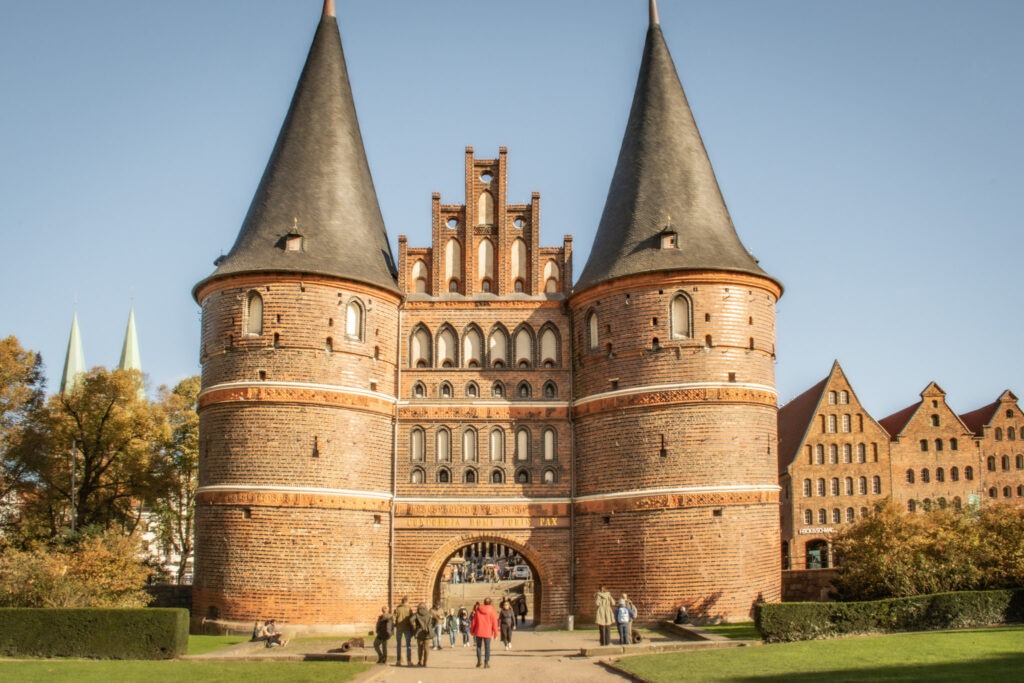
I would resist the urge to map out every stop. You can walk from the Holstentor to St. Mary’s Church (Marienkirche) to the Lübeck Rathaus in a relatively short time—but simply “seeing” them isn’t the point.
If I were to return, I would go to the Holstentor first, then walk through the old town from there. I did it in reverse and regretted that I didn’t start first, and early at the gate. Or, I would deliberately leave it for later in the day—timing it to avoid bright, direct light if I wanted a better photo.
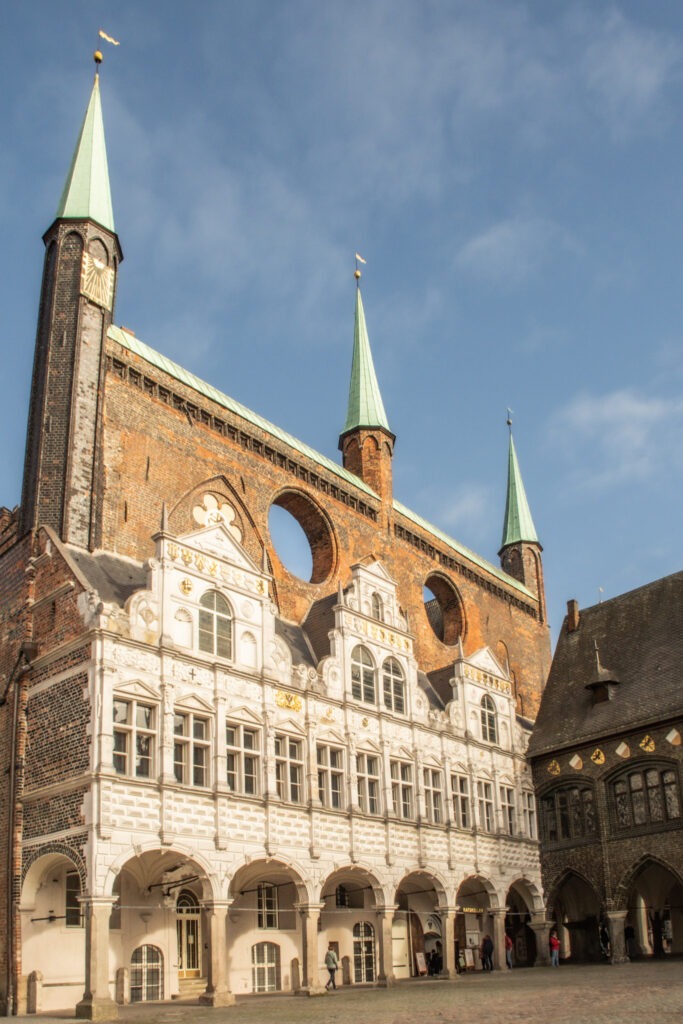
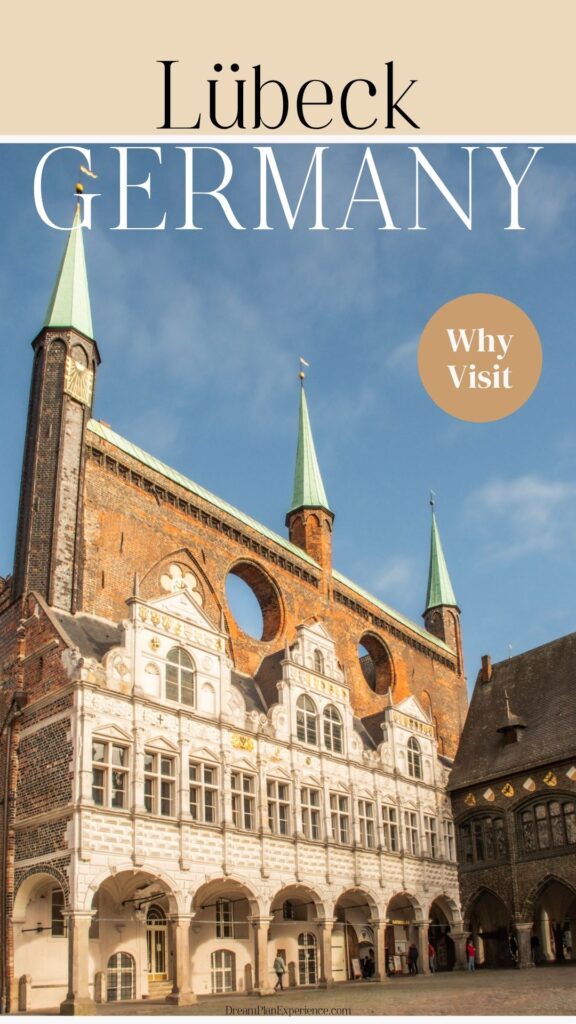
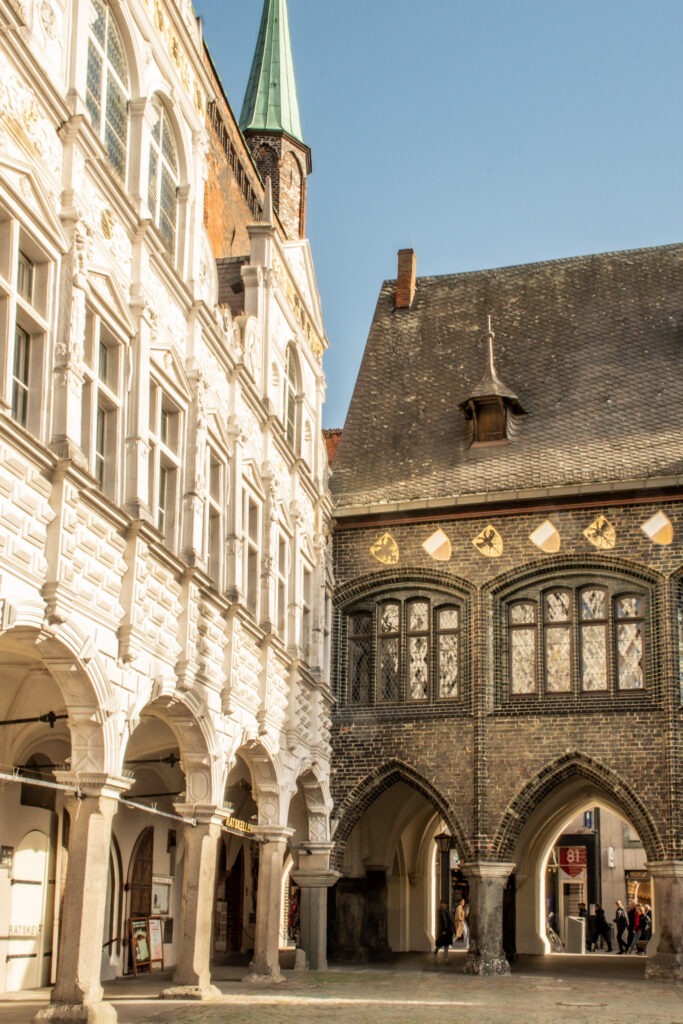
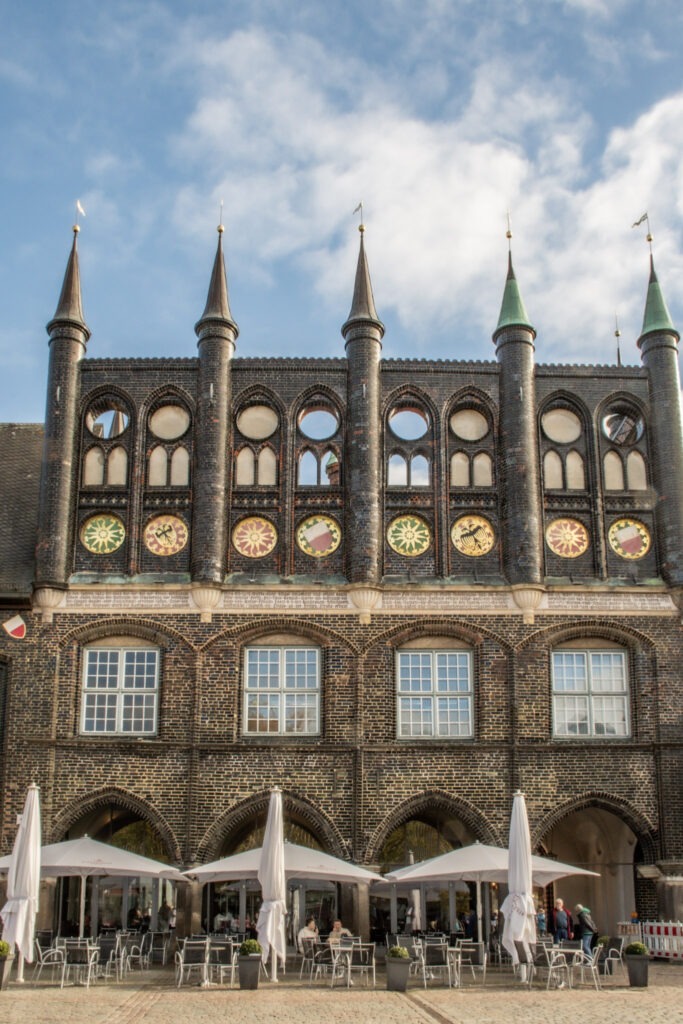
What stood out to me most about the Rathaus wasn’t just its age, but its scale. It anchors the entire market square with a long, detailed façade, small decorative balconies, and three distinct towers. Compared to other town halls I’ve seen across Germany, this one feels more prominent and one that you can imagine how it was used during Medieval times for markets.
One of my favourite parts of Lübeck was walking along the river.
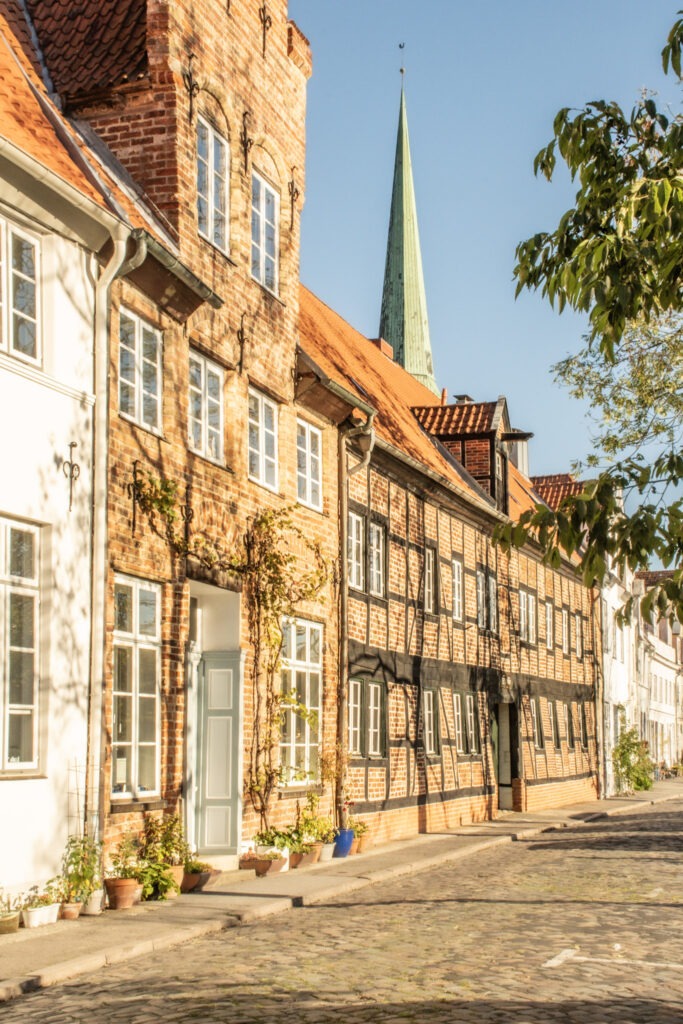
Some of the most beautiful buildings aren’t directly on the main streets. Lübeck’s patrician houses, built for wealthy merchant families during its Hanseatic period, were distinctly different from houses elsewhere in Germany, as they were homes that reflected status and trade wealth.
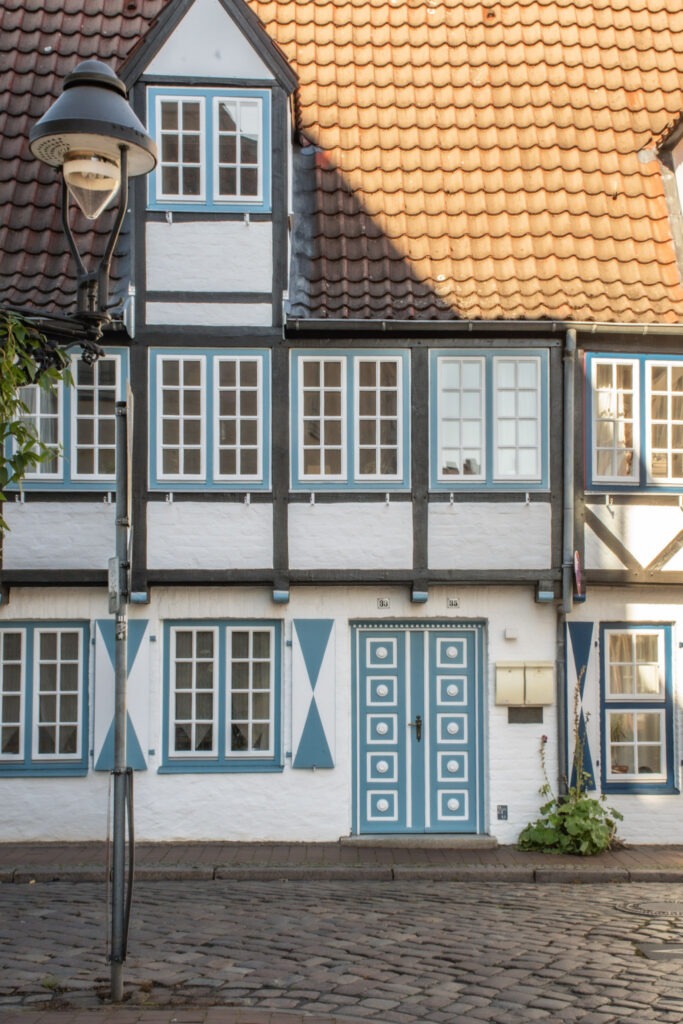
What I hadn’t expected were the alleyways and courtyards. They’re easy to miss at first, narrow openings cut through the front buildings, almost like they are private, hidden places. These passages were created out of necessity as Lübeck grew wealthy during the Hanseatic period, and space within the old town became limited. Behind them, small one- or two-storey “Buden” were built—simple dwellings that once housed workers and traders.
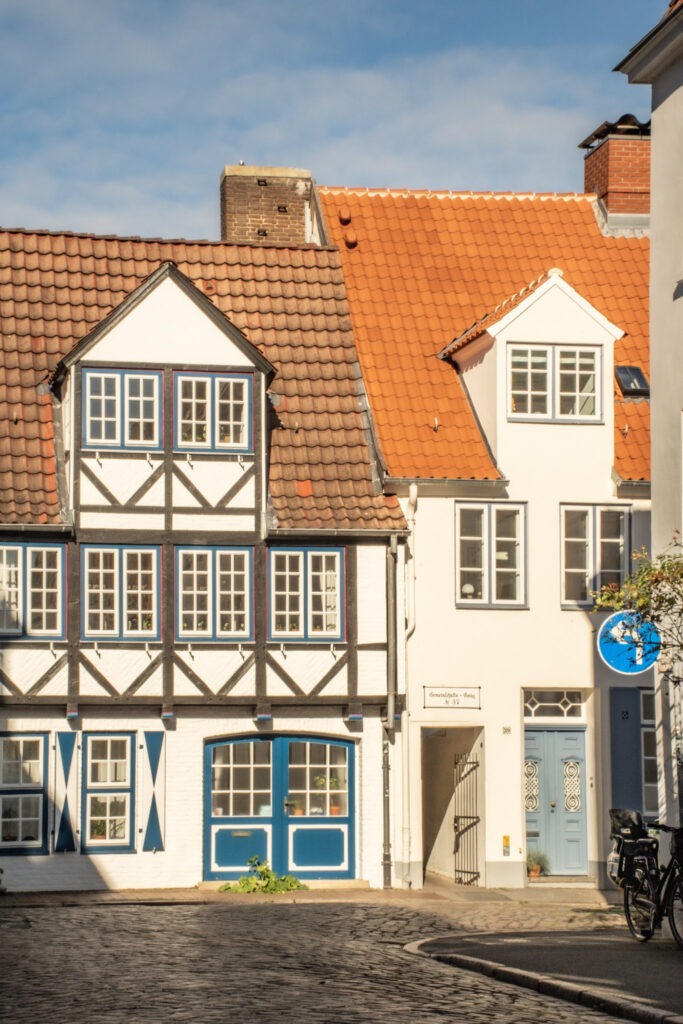
Today, many have been restored into small, colourful houses, almost like a series of hidden streets within the city. You don’t come across this in the same way elsewhere in Germany. You have to look for it, and sometimes quite literally duck to enter.
If you enjoy architecture as I do, this will be a highlight.
What Lübeck Is Famous For
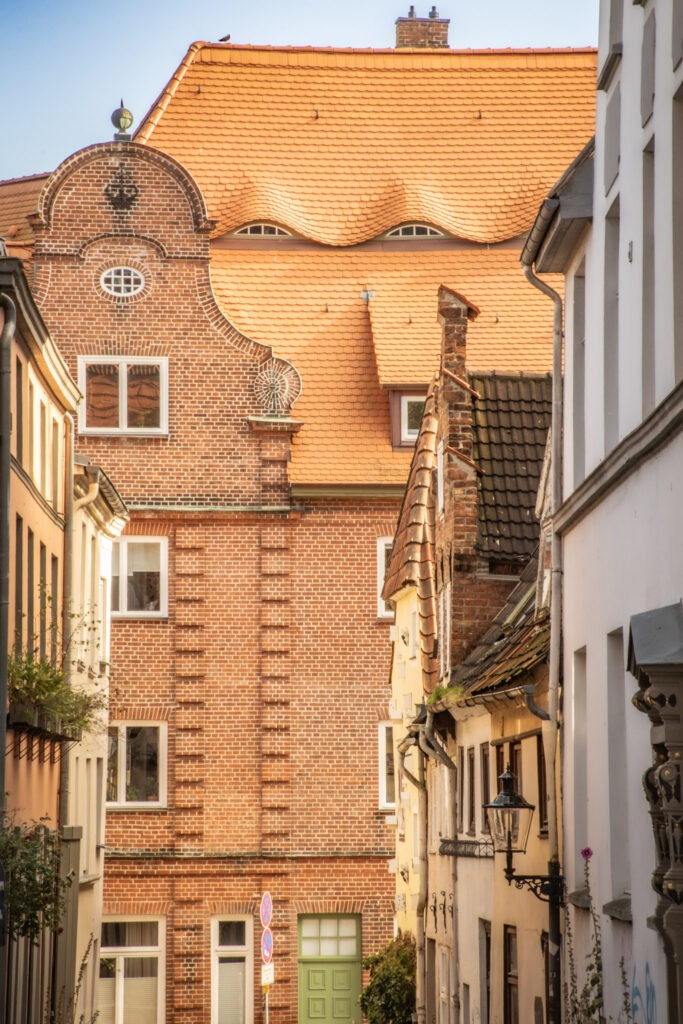
When people ask what Lübeck is famous for, I think it comes down to marzipan, a medieval old town, and a famous gate.
Lübeck’s visual identity is unmistakable. The deep red brick, the stepped gables, the scale of its churches—there’s a weight to it that feels distinctly northern.
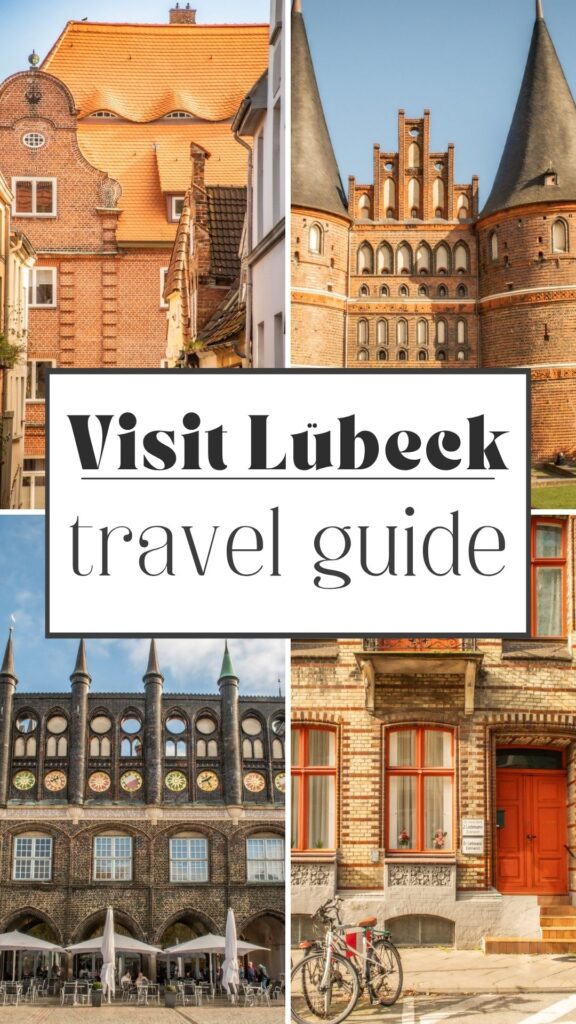
The Holstentor Gate is the image most people recognize, but it’s only the beginning. Walk a few streets further, and you start to notice the repetition of form—warehouses, merchant houses, church towers—built during its time as a leading city of the Hanseatic League.
What stands out is how little this has been diluted. The architecture hasn’t been softened or overly restored.
The name most associated with marzipan is Niederegger, and yes, you’ll see it everywhere. But knowing that it originated in Lübeck makes the experience of visiting its flagship store and café worth visiting.
Lübeck carries an interesting history. It was once one of the most powerful trading cities in northern Europe, central to the Hanseatic League, shaping commerce across the Baltic, earning it UNESCO status in Germany.
But it was only by visiting Lübeck that I learned it’s also the birthplace of Thomas Mann, born in 1875, who won the Nobel Prize in Literature and used the city as the backdrop for Buddenbrooks, a novel that traces the rise and decline of a merchant family modelled on Lübeck’s own.
FAQs About Visiting Lübeck, Germany
How far is Lübeck from Hamburg, and how do you get there?
Lübeck is about 65 km (40 miles) from Hamburg. The train takes 40–50 minutes and runs frequently. Driving takes about an hour.
Can you visit Lübeck in one day?
Yes, Lübeck works well as a day trip if you arrive early and stay until the late afternoon to visit the Altstadt, Holstentor gate, and St. Mary’s Church.
When is the best time to visit Lübeck?
Late spring and early autumn offer the best balance of light and fewer crowds. December is popular for Christmas markets.
Where does Lübeck fit into a Germany itinerary?
Lübeck pairs easily with Hamburg and northern Germany routes. It works best as a one-night stay or a well-paced day trip.
Your Lübeck Visit: Why It Makes More Sense the Longer You Stay in Northern Germany
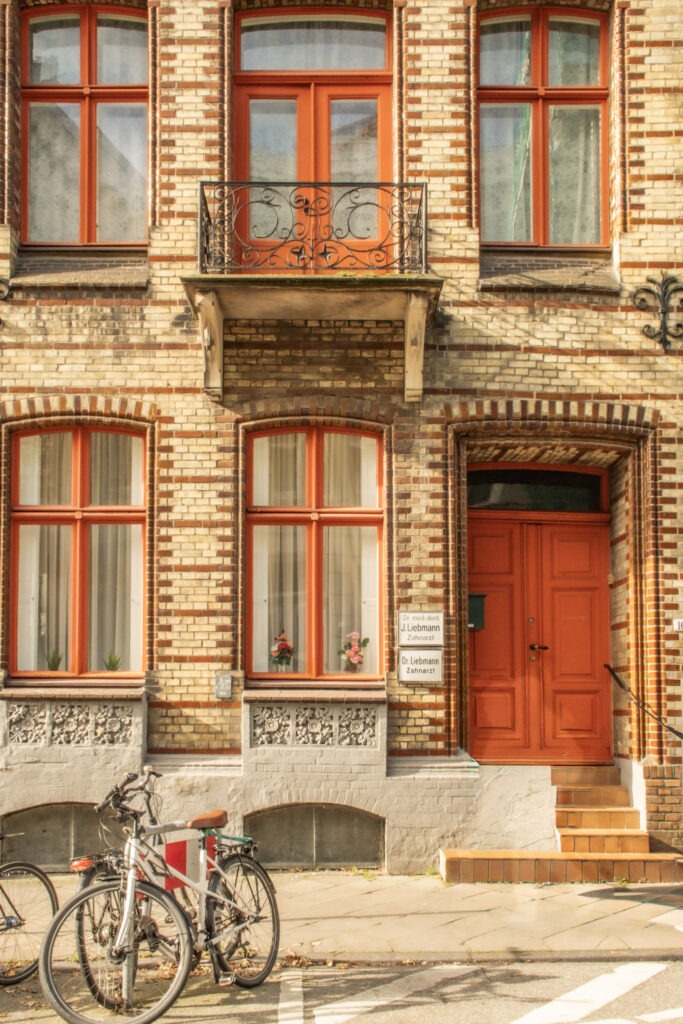
Lübeck is a place I appreciated more once I saw it as part of something larger.
On its own, it’s easy to admire—the architecture, the history, the setting. But when you begin to move through northern Germany more slowly, pairing it with cities like Hamburg or smaller Hanseatic towns like Wismar, you start to notice the details. The similarities and the differences.
The way the brick changes. The scale of the streets. How one city feels open and expansive, while another feels contained. How trade, wealth, and geography shaped each place differently—even within the same region.
Lübeck becomes more than a single stop. It becomes part of a pattern.
And that’s often how I think about travel now. Not as isolated destinations, but as places in conversation with each other—revealing more when you give them time and context.
If this is how you like to travel, too, I share more reflections like this in my newsletter, along with thoughtful ways to approach your time in Europe.