

Italy has more UNESCO Sites in Italy than any other country in the world, protecting places that reflect centuries of art, architecture, religion, and cultural life. But these sites are more than famous landmarks — many are entire historic centres, landscapes, and towns best experienced slowly.
UNESCO recognition often protects these places, but it also draws attention to them — which means knowing how to visit thoughtfully matters just as much as knowing which ones to see.
After decades of travelling throughout Italy, I’ve found that understanding these places adds a deeper layer to any trip.
I’ll walk you through some of the most meaningful UNESCO sites across Italy, along with practical insight on how to visit them thoughtfully and include them naturally in your travel plans.
This post may contain affiliate links, meaning I get a commission if you decide to purchase something through the links, at no additional cost to you. Read my Affiliate Disclosure.
How I Approach UNESCO Sites When Travelling in Italy
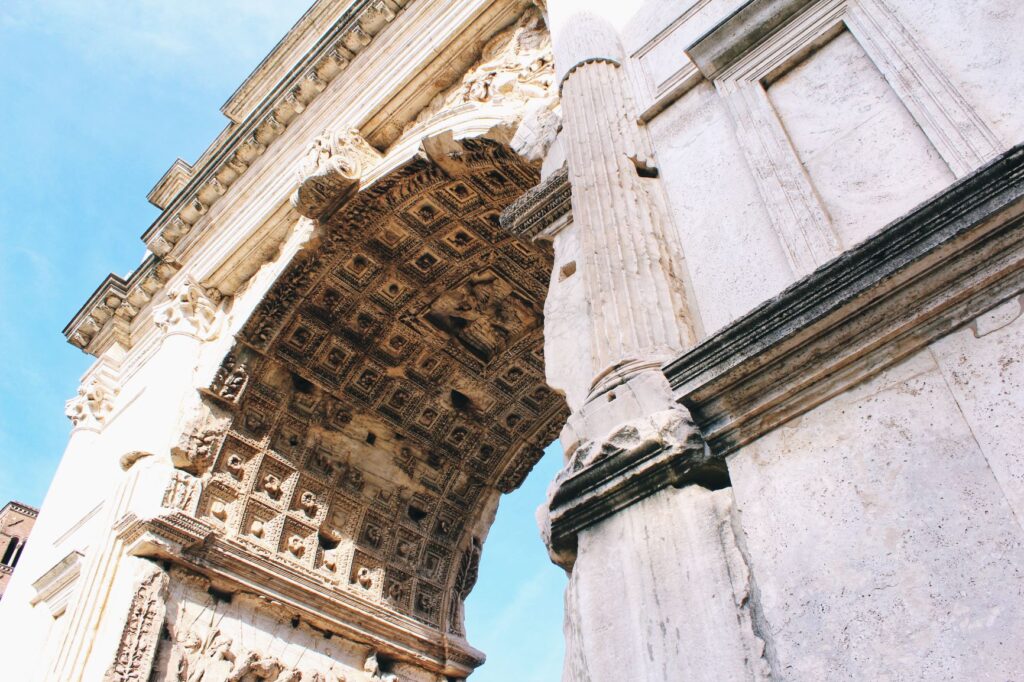
A UNESCO World Heritage Site is a place recognized for its cultural or natural significance to humanity. In Italy, that includes everything from historic city centres and archaeological sites to landscapes shaped by centuries of farming and settlement.
With more than 60 UNESCO sites, Italy can easily tempt travellers into trying to see too many of them in a single trip.
Over the years, I’ve learned that the most rewarding way to experience them is the opposite: choose a region and explore it slowly.
Many of Italy’s UNESCO sites are entire towns or landscapes rather than single monuments. They reveal themselves best when you spend time walking through neighbourhood streets, lingering in piazzas, or returning to the same places at different times of day.
UNESCO recognition helps protect these places, but experiencing them well comes down to something simpler: giving yourself the time to notice them.
UNESCO Sites You Can Visit on One Regional Trip
Italy’s UNESCO sites are spread across the country, but many of them cluster naturally within the same region. If you’re planning a slower trip, it often makes sense to base yourself in one area and explore several UNESCO sites nearby.
Here are a few regional combinations that work particularly well together.
| Regional Trip Idea | Why This Combination Works |
|---|---|
| Venice + Verona | These two historic cities are less than 90 minutes apart by train. Venice offers one of the world’s most distinctive urban landscapes, while Verona’s Roman arena, medieval streets, and elegant piazzas create a beautifully preserved historic centre. |
| Florence + Siena + Val d’Orcia | This part of Tuscany contains several UNESCO sites within a compact region. Florence represents the artistic heart of the Renaissance, Siena preserves its medieval civic traditions, and the rolling countryside of Val d’Orcia reflects the landscape that inspired Renaissance painting. |
| Bologna + Modena + Ravenna | Emilia-Romagna offers a fascinating mix of architecture, food culture, and early Christian art. Bologna’s historic porticoes shape the city, Modena’s cathedral and piazza form a unified medieval centre, and Ravenna’s mosaics reveal the extraordinary legacy of the Byzantine era. |
| Naples + Pompeii + Amalfi Coast | Southern Italy combines archaeology, vibrant urban life, and dramatic coastal landscapes. Naples’ historic centre reflects layers of Greek, Roman, and Baroque history, Pompeii preserves a Roman city frozen in time, and the Amalfi Coast offers one of the Mediterranean’s most striking cultural landscapes. |
UNESCO Sites in Northern Italy to Explore
Venice and its Lagoon (Veneto)

Venice is one of the most iconic Italian UNESCO World Heritage Sites, recognized for its architectural harmony, history, and unique setting on a lagoon.
- Preservation concerns: Overtourism, rising sea levels, and cruise ship traffic have placed Venice on UNESCO’s watch list.
- My travel insight:
- Venice feels completely different early in the morning or in the evening — the quiet hours before and after the day-trippers arrive reveal a calmer, more atmospheric side of the city.
- Explore beyond the main island:
- Murano (glassmaking)
- Burano (colourful houses and lace)
- Torcello (quiet, early settlement with a Byzantine church)
City of Verona (Veneto)

Verona is a beautifully preserved historic city known for its Roman architecture, medieval streets, and elegant piazzas.
- My travel insight:
- I find Verona especially enjoyable early in the morning before day-trippers arrive, when the historic centre feels calm. Cross the bridge for the best views of the city.
- Explore further:
- Follow my 1-day Verona itinerary to see the historic centre highlights.
- If you have more time, this 2-day Verona itinerary offers day trip options, such as Lake Garda.
Genoa: Le Strade Nuove and the system of the Palazzi dei Rolli (Liguria)

This lesser-known Heritage Site highlights Genoa’s Renaissance-era urban planning and aristocratic palaces.
- What makes it unique:
- Strade Nuove (“New Streets”) were 16th-century boulevards designed to display power and wealth
- The Palazzi dei Rolli were listed mansions selected to host visiting dignitaries
- My travel insight: don’t miss visiting Via Garibaldi, home to several accessible palaces that have been transformed into museums.
Portovenere, Cinque Terre, and the Islands (Palmaria, Tino and Tinetto) (Liguria)

This UNESCO cultural landscape includes five towns, a rugged coastline, and three nearby islands.
- What’s included:
- Cinque Terre villages: Monterosso, Vernazza, Corniglia, Manarola, Riomaggiore
- Portovenere – a scenic alternative with fewer crowds
- Islands of Palmaria, Tino, and Tinetto – accessible by ferry in summer
- My travel insights:
- Arriving early in the morning makes a big difference here, and while each village has its charm, I find Manarola the most photogenic.
- Explore further:
- Follow my 3-day Cinque Terre itinerary to experience all five towns at a relaxed pace, including hiking the Sentiero Azzurro (Blue Trail) for coastal views.
UNESCO Sites in Emilia-Romagna
Cathedral, Torre Civica and Piazza Grande, Modena

Modena’s UNESCO site includes the Romanesque cathedral, Ghirlandina bell tower, and Piazza Grande, recognized for their architectural unity and historical significance.
- My travel insights:
- Modena’s historic centre is wonderfully compact, making it easy to slow down, wander its elegant piazzas, and experience a lesser-visited Italian town with remarkable history.
- Explore further:
- Use my 1-day Modena itinerary, giving you enough time to visit Modena’s food markets and the Enzo Ferrari Museum, along with the UNESCO sites.
The Porticoes of Bologna

Recognized as a UNESCO World Heritage Site are Bologna’s porticoes cover over 60 km and are an integral part of the city’s identity.
- What makes them special:
- Originating in the Middle Ages to expand living space, they now shape the city’s urban form as they provide shelter from the sun and rain, connecting churches, universities, and homes.
- My travel insights:
- I love exploring Bologna beneath its endless porticoes, especially when they lead naturally from historic streets into the lively food markets around the Quadrilatero.
- Explore further:
- Follow this 1-day Bologna itinerary to see the highlights, including historic porticoes, local food spots, and key landmarks all on foot.
- Use this 2-day Bologna itinerary to explore deeper, including hidden corners, portico walks to San Luca, and authentic places to eat beyond the tourist trail.
Early Christian Monuments of Ravenna

Ravenna houses eight UNESCO monuments that showcase early Christian art, particularly mosaics from the 5th and 6th centuries.
- My travel insights:
- Ravenna’s mosaics are extraordinary, but seeing them in the soft morning light — especially inside the Basilica di San Vitale and the bright blue of the Mausoleum of Galla Placidia — makes the experience even more memorable.
- Explore further:
- My one-day Ravenna guide to exploring these UNESCO sites
UNESCO Sites in Tuscany
Historic Centre of Florence

Florence is one of the most visited Italian UNESCO World Heritage Sites, representing the heart of the Renaissance in art, architecture, and urban planning.
- My travel insights:
- One of my favourite moments in Florence is sunset along the Arno, when the bridges glow in warm light and wandering into neighbourhoods like Oltrarno reveals a quieter side of the city.
- Explore further:
- Use this 1-day Florence itinerary as your guide to seeing the city’s highlights
- What to do in Florence for two days
- How to spend 3 days in Florence
Historic Centre of Siena

Siena’s medieval center is recognized for its well-preserved Gothic architecture, distinct layout, and civic traditions like the Palio di Siena.
- My travel insight:
- Visit Piazza del Campo early in the morning when it’s quiet, then return later in the day to watch how the square fills with energy and conversation.
- Explore further:
- Allocate at least one full day; Siena’s walkable center is best explored on foot
Historic Centre of Pienza

Pienza was transformed in the 15th century into an ideal Renaissance town under Pope Pius II and is a model of humanist urban planning.
- My travel insight:
- Walk along the panoramic path behind the cathedral walls for sweeping Val d’Orcia views, then take time to wander Pienza’s small streets where every corner feels quietly beautiful.
- Explore further:
- How to spend a day in Pienza with these things to do
- Combine your visit here with other nearby hilltop towns
Val d’Orcia

This UNESCO cultural landscape represents the iconic Tuscan countryside, shaped by farming and wine production.
- My travel insight:
- Driving through Val d’Orcia is part of the experience — I often pull over along the quiet roads near San Quirico d’Orcia just to admire the changing views of vineyards, cypress trees, and rolling hills.
- Explore further:
- Decide on the ideal amount of time to spend in this area
- Best explored by car, so that you can explore the worthy Tuscan towns like Montepulciano
UNESCO Sites in Central Italy
Historic Centre of Rome
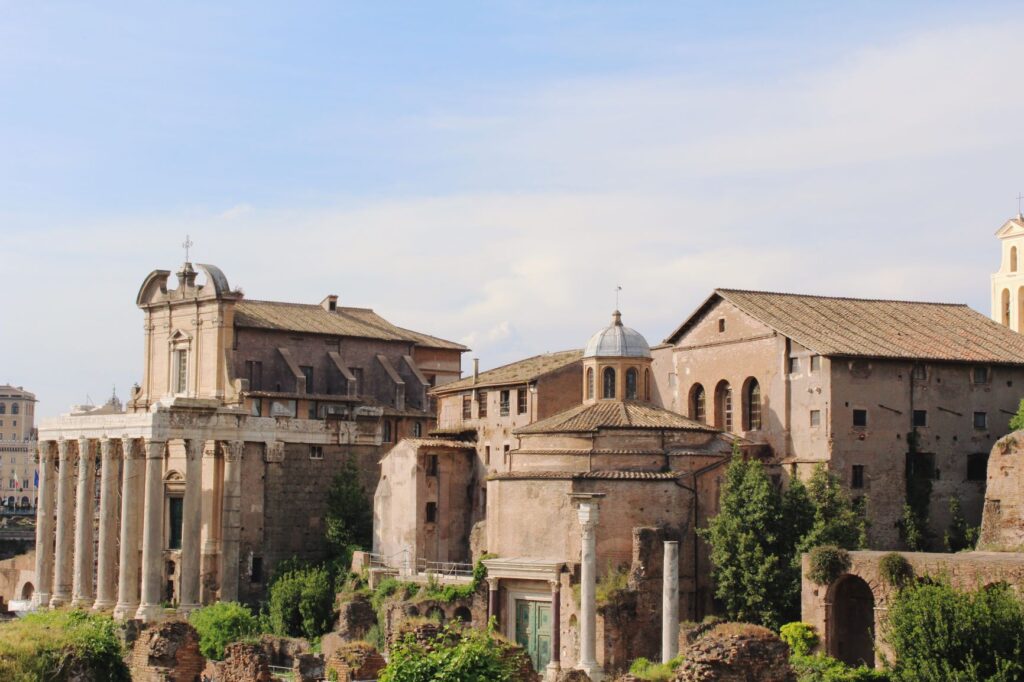
Rome’s UNESCO designation includes the historic centre and the ancient Colosseum, Roman Forum, Palatine Hill, Pantheon, as well as Vatican City.
- My travel insight:
- Some of Rome’s best moments happen away from the monuments, simply wandering its historic streets or pausing in peaceful gardens like Villa Borghese.
- Explore further:
- Allow at least 2 full days to explore the major UNESCO sites in Rome
- What to see and do in Trastevere
- Explore some of the under-the-radar sites in Rome
Archaeological Areas of Pompeii, Herculaneum, and Torre Annunziata (Campania)
These sites were buried by the eruption of Mount Vesuvius in 79 AD and provide rare insight into Roman life.
- Differences between sites:
- Pompeii – expansive and partially restored, ideal for a half- or full-day visit
- Herculaneum – smaller, better preserved, with intact upper floors and wooden structures
- Villa Oplontis (Torre Annunziata) – a luxurious Roman villa, often overlooked and quiet
- Travel tips:
- Base yourself in Rome, Naples, or Sorrento for access by train
- Hire a guide or use an audio app to understand the site context
Historic Centre of Naples

Naples is one of Europe’s oldest cities, with layers of history reflected in its urban layout, catacombs, churches, and palaces.
- Travel insight:
- Walking along Spaccanapoli is one of the best ways to feel the pulse of Naples, especially when you stop at the tiny food stalls tucked into the narrow streets.
- Travel tip:
- Spend at least 2 days to experience both above and below ground
The Amalfi Coast (Campania)

Recognized as a UNESCO cultural landscape, the Amalfi Coast offers dramatic geography, which is why so many travellers flock to it every year.
- Top towns to visit:
- Amalfi – a former maritime republic with a cathedral and a paper museum
- Positano – known for steep staircases and pastel buildings
- Ravello – inland with gardens and music festivals
- Praiano or Minori – quieter alternatives for overnight stays
- My travel insight:
- While Positano and Amalfi attract the crowds, I personally love Ravello for its gardens and views, and the quieter coastal towns of Praiano and Minori for a more relaxed stay.
UNESCO Sites in Southern Italy and Sicily
The Trulli of Alberobello (Puglia)

Alberobello is known for its unique trulli—circular, dry-stone dwellings with conical roofs, listed as a UNESCO World Heritage Site for their architectural and cultural significance.
- What makes it special:
- Trulli date back to the 14th century and were originally built without mortar to allow easy dismantling (a historical tax avoidance strategy)
- The town is divided into two main trulli districts: Rione Monti and Aia Piccola
- Travel tips:
- A half-day is sufficient to explore; base in Locorotondo or Martina Franca for a quieter experience
- Visit early morning or evening to avoid day-tripper crowds
- Consider staying overnight in a converted trullo for a unique experience
Aeolian Islands (Sicily)

This volcanic archipelago north of Sicily is a natural UNESCO World Heritage Site, valued for its active geological processes and long human history.
- Key islands to visit:
- Lipari – the largest and most developed, a good base for exploring
- Stromboli – home to one of the world’s most active volcanoes; night hikes to the summit (with a guide) are popular
- Vulcano – known for its sulfuric mud baths and crater hikes
- Visiting tips:
- Reach the islands by ferry from Milazzo, Messina, or Naples
- Island-hopping is easy by hydrofoil, but the weather can affect schedules
Mount Etna (Sicily)

Mount Etna is Europe’s most active volcano and a UNESCO natural heritage site, recognized for its influence on volcanology, ecology, and local culture.
- Why it’s important:
- Ongoing eruptions and lava flows have shaped the surrounding landscapes for millennia
- Its slopes support vineyards, forests, and historic villages
- Visiting tips:
- Access from Catania or Taormina via guided tours or a rental car
- The South (Etna Sud) side offers cable cars and jeep access to higher altitudes
Final Perspective on UNESCO Sites in Italy
Italy’s UNESCO sites aren’t just famous landmarks. Many are entire towns, landscapes, and historic centres that reward slow exploration.
Over the years, I’ve found that the most memorable moments often happen away from the headline sites — wandering through quiet streets in Siena, watching evening light fall across the Val d’Orcia, or stepping into a small church in Ravenna filled with shimmering mosaics.
UNESCO recognition helps preserve these places, but experiencing them well comes down to something simpler: allowing enough time to absorb them.
If you enjoy travelling this way — slowly, thoughtfully, and with curiosity — you may enjoy my newsletter where I share travel insights, guides, and ideas for exploring Europe more deeply.
FAQ
How many UNESCO World Heritage Sites are in Italy?
Italy has the most UNESCO World Heritage Sites in the world. As of 2025, there are 60 sites across the country, including historic city centres, archaeological sites, cultural landscapes, and natural areas such as Mount Etna and the Dolomites.
Which region in Italy has the most UNESCO sites?
Several Italian regions have multiple UNESCO sites, but Tuscany, Lombardy, and Veneto are among the most concentrated. Tuscany alone includes famous UNESCO locations such as Florence, Siena, Pienza, and the Val d’Orcia cultural landscape.
Are all UNESCO sites in Italy historical monuments?
No. While many UNESCO sites in Italy include historic cities, churches, and archaeological ruins, some are cultural landscapes or natural areas. Examples include the Val d’Orcia countryside and Mount Etna, which are recognized for their environmental and geological significance.
What is the most famous UNESCO site in Italy?
Some of the most famous UNESCO sites in Italy include the Historic Centre of Rome, the Historic Centre of Florence, Venice and its Lagoon, and the Archaeological Areas of Pompeii and Herculaneum. These sites attract millions of visitors each year because of their extraordinary art, architecture, and historical significance.


