
Two days in Rome is not enough to “see” the city. Let’s start there.
If you’re searching for the perfect way to spend a couple of days in Rome, you’re likely wondering what to prioritize, what to skip, and whether 48 hours can possibly be enough.
After decades of returning to Rome — walking it at 6 a.m., getting lost on purpose, revisiting the same piazza just to see how the light changes — I can tell you this: Rome does not reward speed. It rewards intention.
You will not cover everything in two days. But you can experience something real.
This isn’t a checklist itinerary. It’s a focused, thoughtful approach to spending a short, meaningful time in Rome in a way that feels immersive, grounded, and surprisingly calm — even in one of the most visited cities in the world.
This post may contain affiliate links, meaning I get a commission if you decide to purchase something through the links, at no additional cost to you. Read my Affiliate Disclosure.
Before You Plan Your Two Days in Rome, Decide This First
Before you open Google Maps.
Before you reserve timed entries.
Before you screenshot someone else’s colour-coded itinerary.
Ask yourself who you are in Rome.
Most articles jump straight into attractions. But planning 2 days in Rome isn’t about squeezing landmarks into a grid. It’s about deciding what kind of experience you want to have — and being honest about it.
Are you here for the icons?
For the art?
For the atmosphere?
Or for the quiet rhythm of daily life unfolding on cobblestones?
Your identity shapes your itinerary far more than any list ever will.
- First time in Rome? Anchor your days around the essentials. Choose a few major sites and let the time in between be flexible.
- Returning visitor? Add one new major site — or skip them entirely and go deeper into a neighbourhood you’ve only brushed past.
- Introvert? Claim the early morning. Rome before 9 AM belongs to you.
- Food-focused? Build your walking route around where you want to eat, not what you want to photograph.
- Slow traveller? Are you an observer? A wanderer? Someone curious about how Romans actually live? Then protect time for unstructured walking through some of Rome’s most beautiful streets.
When I work with clients to help them plan their trips, I always start with: how do you want the trip to feel?
Decide that first.
Everything else becomes simpler.
Day One: Choose One Anchor — Then Let Rome Unfold
Do not try to do everything on Day One. Instead, choose one thing that you really want to experience.
For most travellers, that is a decision between:
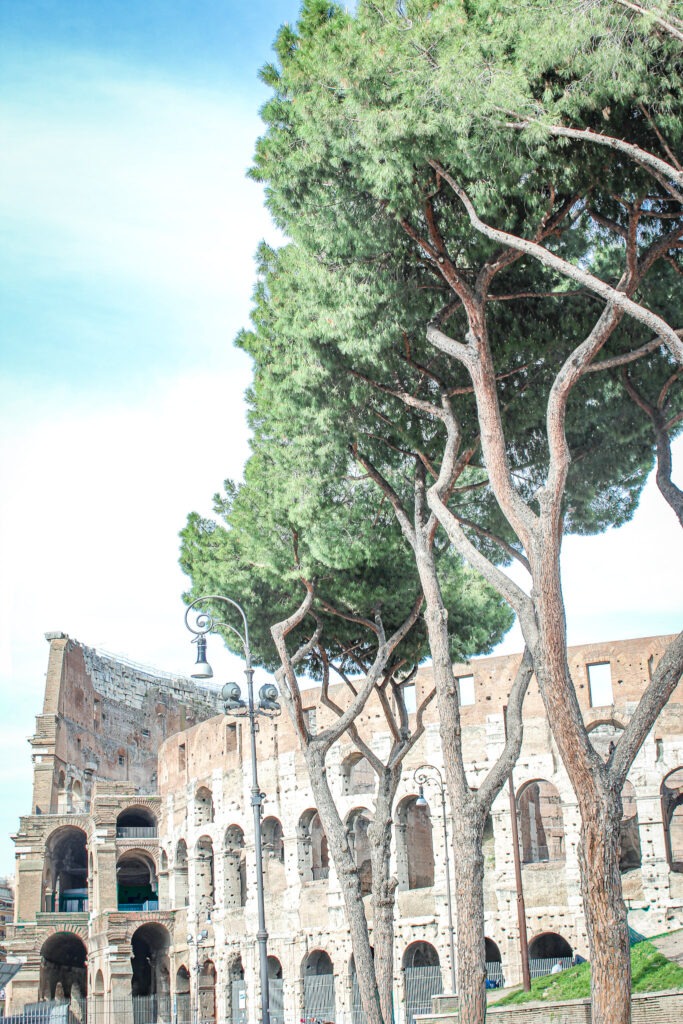
- Colosseum, Roman Forum and Palatine Hill (half day)
- Vatican City — the Vatican Museums and St. Peter’s Basilica (use my full day guide)
That’s it. Not both.
Whichever you do choose, go early. Book a timed entry and arrive before the tour groups swell.
And here’s my slightly contrarian advice: don’t over-educate yourself beforehand. Know the basics, yes. But leave room for awe. The scale of the Colosseum. The quiet vastness of the Forum. The weight of Michelangelo’s dome overhead. You don’t need to memorize every emperor or papal timeline to be moved.
When you’re finished with the Colosseum, begin walking.
Make your way toward the historic centre, start with the Spanish Steps, spilling theatrically into Piazza di Spagna with the fountain below and the Trinità dei Monti church above.
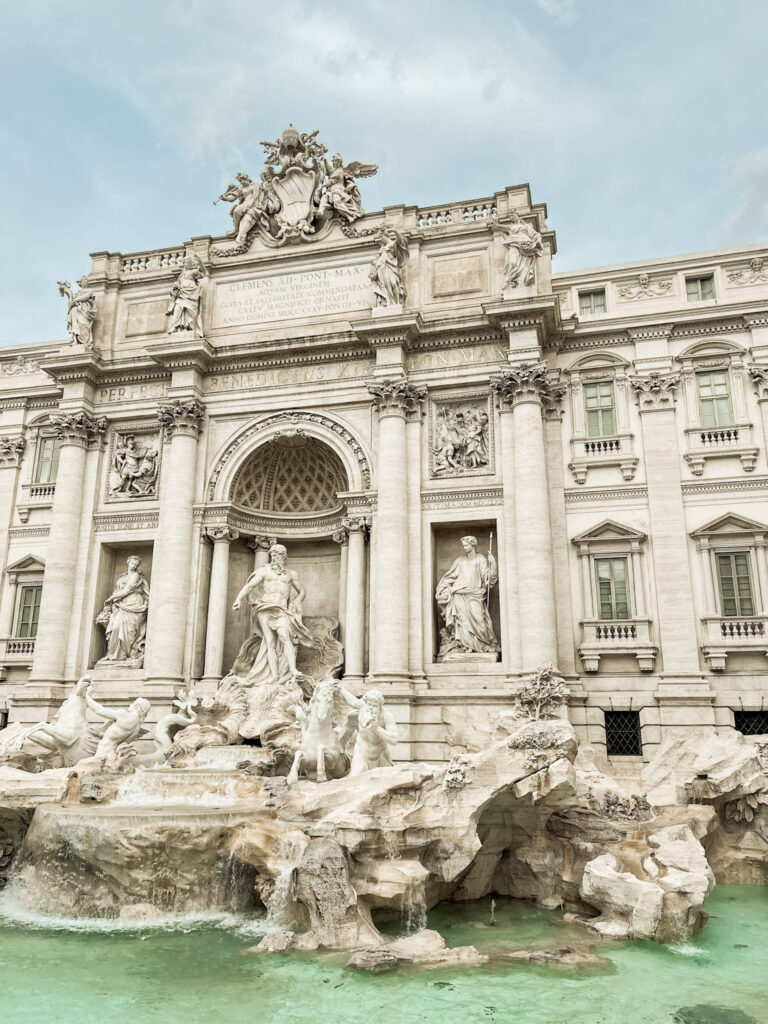
From there, wander toward the Trevi Fountain. Yes, it’s crowded. Yes, it now requires queuing to access the lower fountain area and a 2-euro entry fee. But look beyond the ritual coin toss. This fountain marks the end of an ancient aqueduct that still functions today.
Continue on to the Pantheon. You will queue here now, too. Once inside, stand directly under the oculus. Notice how the light moves like a sundial across the coffered dome. Nearly 2,000 years old — and still structurally perfect.
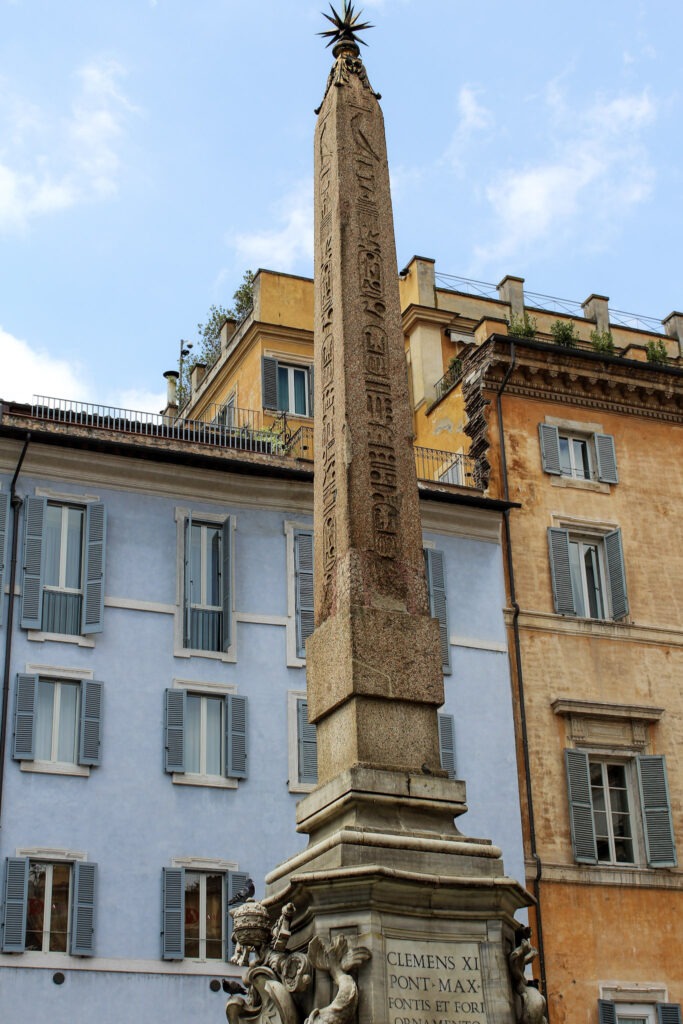
Then drift to Piazza Navona, which follows the exact footprint of an ancient stadium. The long oval shape isn’t an accident; it’s athletic history. Bernini’s Fountain of the Four Rivers sits at its centre.
But here is where most itineraries go wrong.
They connect these sites with the most efficient route.
Don’t.
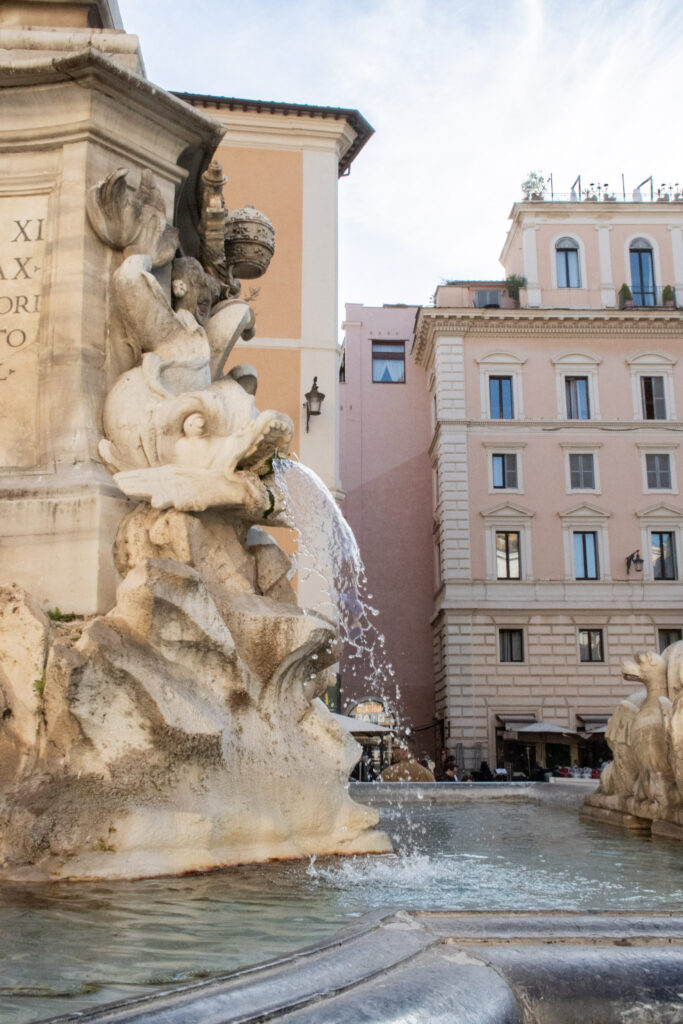
Lose your sense of direction. Take side streets. If a shop window draws you in, step inside. If a church door is open, enter quietly. Look up at the corner of buildings — you’ll often find a small Madonna shrine carved into stone, a remnant of neighbourhood devotion.
Some of my favourite streets lie from Piazza Navona to the Tiber River. Zigzag through them slowly — along Via dei Coronari, Via dei Banchi Vecchi, and Via Giulia, to name a few.
Stop for an espresso standing at the bar. Order a gelato and eat it slowly while leaning against a wall. Sit in a piazza and watch Roman life unfold without photographing it. Parkake in the Italian ritual of appertivo.
Where to Enjoy Lunch on Your First Day in Rome
I have several recommendations for where to dine in Rome’s historic centre. Depending on where you are, I’ve selected a handful for you choose from.
- Near the Spanish Steps: Alla Rampa
- Near Trevi Fountain: Trattoria al Moro
- Near the Pantheon: Armando al Pantheon
- Near Piazza Navona: Il Bacaro
Day Two: Explore Rome’s Neighbourhoods
Your second day in Rome depends entirely on what you chose yesterday.
If Day One was the Colosseum and ancient Rome, then today could be the Vatican Museums and St. Peter’s Basilica.
Go early. Pre-book. Arrive before opening. The museums are dense — visually and physically. Choose a few sections to focus on instead of attempting all 7 kilometres of galleries. Inside St. Peter’s, don’t just look up at the dome. Walk slowly along the perimeter. Notice the scale of the marble, the quiet pockets of prayer behind the spectacle.
But here is the question most people don’t ask themselves:
If you only have two days, dislike crowds, aren’t particularly religious, and don’t love museums — why do you feel compelled to visit the Vatican?
If the honest answer is social media pressure, that’s not a good enough reason.
Rome, in my opinion, offers better ways to spend your final day.
Option Two: The Jewish Quarter + Trastevere
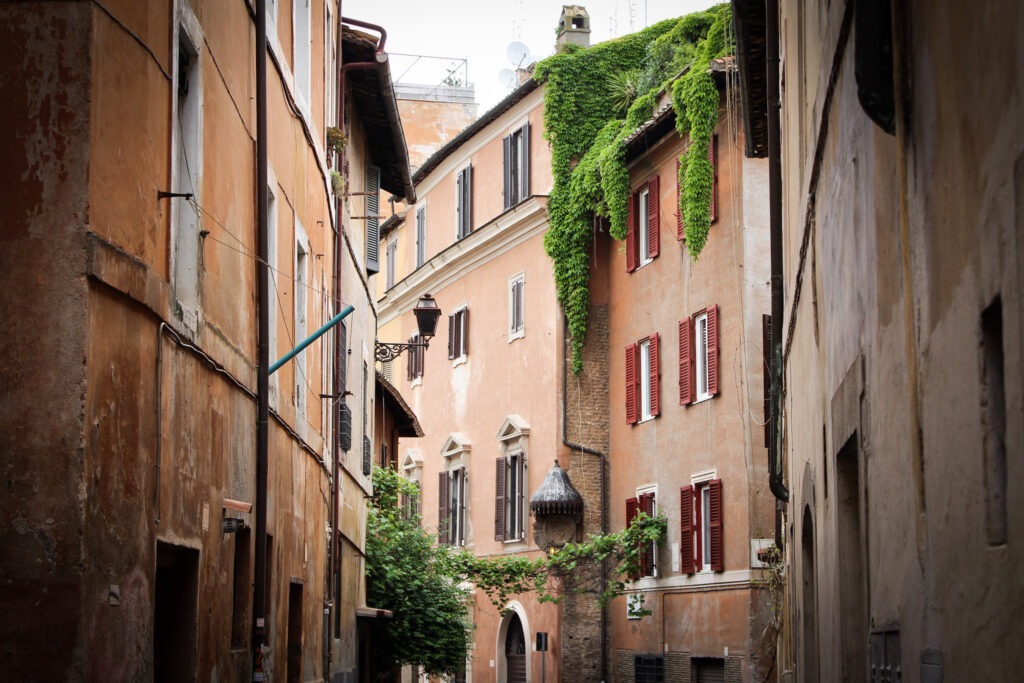
Begin in Rome’s Jewish Quarter, near the Portico of Octavia and the Great Synagogue of Rome. This area feels different from the rest of the historic centre — more residential, more contained, layered with centuries of resilience and complexity.
Walk slowly through the narrow lanes around Via del Portico d’Ottavia. You’ll see plaques marking homes affected during World War II. Small trattorias specializing in carciofi alla giudia — Jewish-style fried artichokes, crisp and golden.
Stop at a Jewish bakery like L’arte Del Pane for one of its delicious pastries.
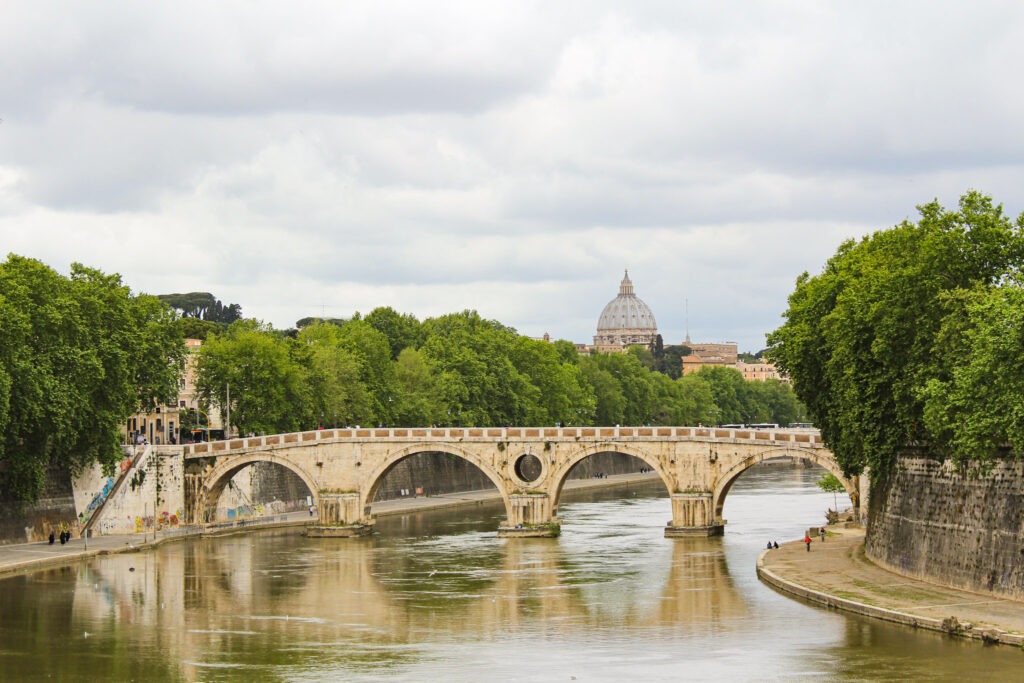
From here, cross the river via Ponte Sisto. It’s one of my favourite crossings — no traffic, just pedestrians, sometimes the odd buskers, and the soft curve of the Tiber below.
On the other side lies Trastevere.
Yes, it’s popular. But it’s one of those places that you somehow still don’t mind. Ivy climbing warm-toned buildings. Laundry overhead. Motorbikes are squeezing through impossibly narrow lanes. The worn marble floors inside the basilica of Santa Maria in Trastevere.
People come here because it feels romantic. Lived-in. A little gritty and chaotic, but it’s a place where you gladly want to stay.
Stay into the evening. Trastevere shifts at night. Lights soften. Conversations spill into the street. Order dinner late, as Romans do. Take your time. This is not the night for rushing back to your hotel to pack.
My Travel Take: Your Two-Day Rome Itinerary Is Not About Coverage
Rome is not a city you complete. It’s a city you begin.
If you approach your days in Rome like a checklist, you’ll leave tired — with photos, yes, but very little memory of how it actually felt to be there. If you approach it with intention, you’ll leave with something far more lasting.
Take a page out of the Italian handbook, and that is to enjoy the sweetness of doing nothing, Il dolce far niente.
And if this slower, more thoughtful way of experiencing Italy resonates with you, I share more reflections, practical tips, and lived moments from Rome and beyond in my newsletter.
Join me there. Let’s travel Europe differently.