

At first glance, the 5 towns of Cinque Terre can look almost interchangeable.
Five colourful villages clinging to the same stretch of rugged coastline. Five train stops only minutes apart.
But after spending time here, the differences become unmistakable.
One feels like a beach town with space to breathe.
Another draws you into a tiny harbour that looks almost too perfect to be real.
A third sits quietly above the sea, almost untouched by the rush of day-trippers.
Understanding how each village feels is what transforms a rushed visit into a meaningful one.
After exploring the Cinque Terre villages slowly — wandering their lanes, returning at different times of day, and even staying several nights — I realized something important:
Cinque Terre isn’t about collecting all five towns. It’s about choosing the ones that resonate with you.
This post may contain affiliate links, meaning I get a commission if you decide to purchase something through the links, at no additional cost to you. Read my Affiliate Disclosure.
The Three Personalities of the Five Towns of Cinque Terre

Although the five towns of Cinque Terre sit only a few minutes apart by train, they don’t feel interchangeable once you spend time in them.
Each village has its own character.
Some are built for lingering. Others are designed for dramatic first impressions. And a few feel surprisingly livable once the day-trippers leave.
Thinking about the villages in terms of their “personalities” can make it much easier to decide where to spend your time.
| Village Personality | Towns |
|---|---|
| The Photogenic Villages | Vernazza and Manarola |
| The Livable Villages | Monterosso al Mare and Corniglia |
| The Dramatic Entrance | Riomaggiore |
The Photogenic Villages
Vernazza and Manarola are the villages most often seen in postcards and travel photography. With tiny harbours, stacked pastel houses, and dramatic viewpoints, they are visually unforgettable — but they also attract the largest daytime crowds.
The Livable Villages
Monterosso al Mare and Corniglia tend to feel easier to settle into. Monterosso offers beaches, flatter streets, and more restaurants, while Corniglia’s hilltop position naturally filters out tour groups, giving it a quieter, more residential atmosphere.
The Dramatic Entrance
For many travellers arriving from La Spezia, Riomaggiore is their first glimpse of Cinque Terre. Tall pastel buildings climb steeply above a narrow harbour, creating an energetic and almost theatrical first impression.
Seeing the villages through this lens reveals something important:
Cinque Terre isn’t about rushing through all five towns.
It’s about choosing the ones that match how you like to travel.
What Most First-Time Visitors Misunderstand About the 5 Towns of Cinque Terre
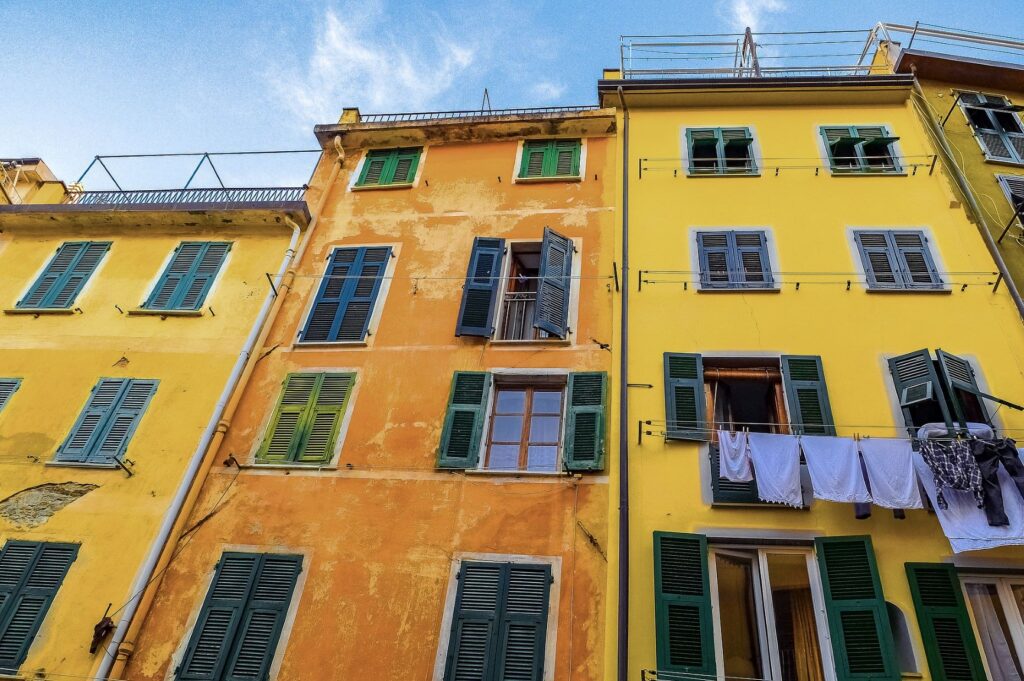
At first glance, the five villages of Cinque Terre look simple to visit. They’re close together. Trains run constantly. And most travel guides make it sound easy to see them all in a single day.
But after spending time here — walking the paths, returning at different hours, and staying several nights — a few patterns become clear.
These are the things many first-time visitors misunderstand.
They misunderstand how the five villages actually connect
Looking at a map, the five towns of Cinque Terre appear almost stacked beside each other. In practice, the geography is more complex than many visitors expect.
The easiest way to move between the villages is by train, with journeys usually taking only two to five minutes. Boat tours offer a different perspective from the sea, revealing the dramatic cliffs and colourful buildings that make Cinque Terre so distinctive — but they operate seasonally and don’t stop at Corniglia.
Walking the coastal trails can be the most rewarding way to experience the landscape, yet these paths involve steep climbs and uneven terrain. Even the shorter sections can feel demanding in the heat of summer.
They assume each village takes the same amount of time
Some villages reveal themselves quickly, while others invite you to linger longer. Vernazza and Manarola tend to hold visitors for views and photos, while Corniglia rewards a slower wander through quiet lanes and viewpoints.
Planning equal time for every village rarely reflects how people actually experience them.
They underestimate how vertical the villages are
Cinque Terre isn’t just coastal — it’s vertical.
Staircases, steep lanes, and hillside paths are part of everyday life here. Even short distances can involve a surprising amount of climbing, especially in villages like Corniglia and Riomaggiore.
It’s one of the reasons the villages feel so dramatic — and why pacing yourself matters more than distance.
They expect the villages to feel similar
From photos alone, the towns can seem interchangeable.
But once you arrive, their personalities become clear. Monterosso feels spacious and beach-oriented. Vernazza revolves around its tiny harbour. Corniglia sits quietly above the sea, almost separate from the coastline.
The differences are subtle at first, but they become noticeable the longer you stay.
They try to see all five towns too quickly
Because the train makes the villages so accessible, many travellers feel pressure to visit all five in one day.
Technically, it’s possible.
But moving quickly from station to station rarely allows you to experience what makes Cinque Terre memorable — quiet mornings, sunset light over the water, or the calm that returns after day-trippers leave.
In many cases, two or three villages experienced slowly create a far richer visit than rushing through all five.
If your schedule allows, two to three days in Cinque Terre gives you the space to experience the villages at different times of day and explore sections of the coastal trails.
They assume the best place to stay is inside the five villages
Many first-time visitors assume that staying inside one of the five towns is the obvious choice. But accommodation in Cinque Terre is surprisingly limited.
The villages are small and protected within a national park, which means there are no large hotels or luxury properties. Most accommodations are small guesthouses, apartments, or simple rooms above local businesses. While many are charming, availability can be tight, and quality varies.
For travellers who value design, comfort, space, or a wider range of hotel options, nearby towns like La Spezia or Levanto can sometimes offer a better overall base.
I help travellers choose accommodations that match the kind of experience they want.
How Each of the 5 Cinque Terre Towns Feels

Although the five towns sit only minutes apart by train, each village reveals itself differently depending on the time of day, the terrain, and the pace you bring to it.
Some villages are best experienced early, before the trains arrive. Others come alive in the golden light of late afternoon, when day-trippers begin to leave, and the coastline softens into evening.
Understanding when each village feels at its best can transform a quick stop into a memorable experience.
| Village | When It Feels Best |
|---|---|
| Monterosso al Mare | Early morning or late afternoon, when the beach and promenade feel calm |
| Vernazza | Early morning or evening, when the harbour regains its quiet charm |
| Corniglia | Midday or afternoon, when its slower pace contrasts with the busier villages |
| Manarola | Late afternoon and sunset, when the light illuminates the colourful houses |
| Riomaggiore | Late afternoon and evening, when the marina and harbour become lively |
Monterosso al Mare: The Beach Town of Cinque Terre

Monterosso al Mare is the largest of the five villages and the one that feels the most open. It’s also the only town with a true sandy beach, which immediately sets it apart from its cliff-hugging neighbours.
The village is divided into two areas: the historic old town and the newer beachfront district of Fegina, connected by a short tunnel carved through the rock. Compared to the other villages, Monterosso offers wider streets, more restaurants, places to stay and a noticeably easier terrain for walking.
This is where I chose to stay for three nights during my visit. After spending time in the tighter, steeper villages nearby, returning to Monterosso each evening felt like a small relief — space to breathe, a longer dinner, and the gentle pace of a town that settles comfortably after the crowds leave.
Monterosso is often overlooked by travellers chasing postcard views, yet it quietly offers one of the most livable experiences in Cinque Terre.
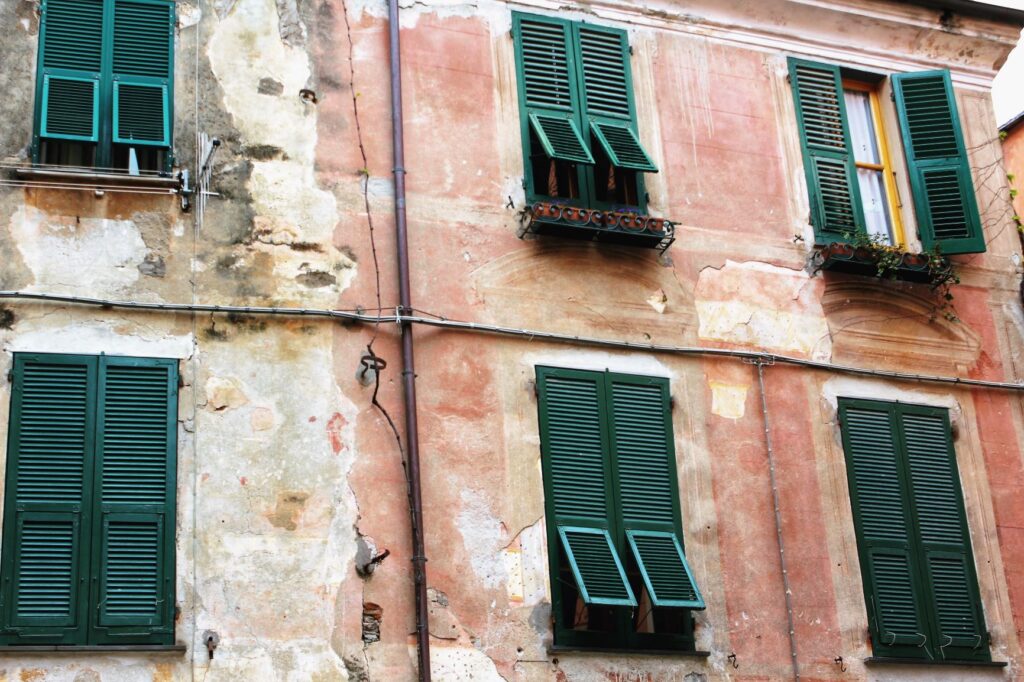
My travel take:
Early in the morning, before beach umbrellas open and day-trippers arrive, Monterosso feels almost local. Residents walk the promenade, cafés begin setting out chairs, and the coastline has a calmness that disappears later in the day. I enjoyed dining at Ciak, a long-standing restaurant in the historic centre serving some delicious gnocchi and risotto after a long day exploring the other villages.
Vernazza: The Iconic Harbour Village
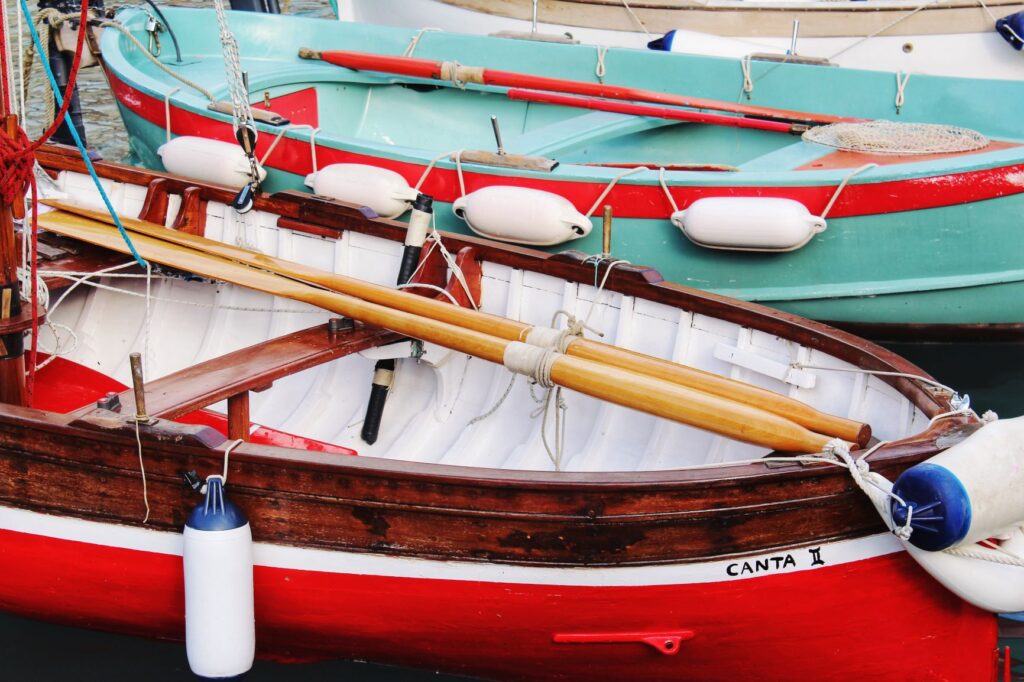
Vernazza is the image many travellers picture when they think of the Cinque Terre villages — a tiny harbour framed by pastel buildings, fishing boats bobbing in the water, and a medieval tower rising above it all.
Unlike Monterosso, there’s no sandy beach here. The village revolves almost entirely around its small harbour, where cafés, restaurants, and narrow lanes spill toward the sea.
From the train station, one main street leads directly down to the water, with a maze of narrow side lanes — the caruggi — branching off in every direction. It’s easy to lose your sense of direction here in the best possible way.
Because of its postcard beauty, Vernazza attracts some of the largest crowds in Cinque Terre, especially from late morning through mid-afternoon. But arrive early, or stay into the evening, and the village softens noticeably.
My travel take:
One of the best ways to experience Vernazza isn’t from the harbour at all, but from above it. A short climb toward the trail to Monterosso reveals the classic panoramic view of the harbour and tower — the perspective that shows why this village became the symbol of Cinque Terre in the first place.
I have a great memory of dining at Gianni Franzi, a hotel restaurant offering an incredible view from its terrace. It was a late afternoon as the light and crowds began to soften.
Corniglia: The Quiet Hilltop Village Most Visitors Skip

Corniglia feels different the moment you arrive.
Unlike the other Cinque Terre villages, it doesn’t sit directly on the sea. Instead, it’s perched high on a cliff above the coastline, surrounded by terraced vineyards and open views of the Ligurian Sea.
Reaching the village requires either climbing the Lardarina staircase — more than 300 steps from the train station — or taking the small shuttle bus that winds up the hill. That simple barrier naturally filters out many of the quick-moving tour groups that pass through the other villages.
The result is a village that feels noticeably calmer.
Corniglia is also the smallest of the five towns. Narrow lanes weave quietly between pastel houses, opening onto small squares and viewpoints where the horizon suddenly stretches wide in front of you.
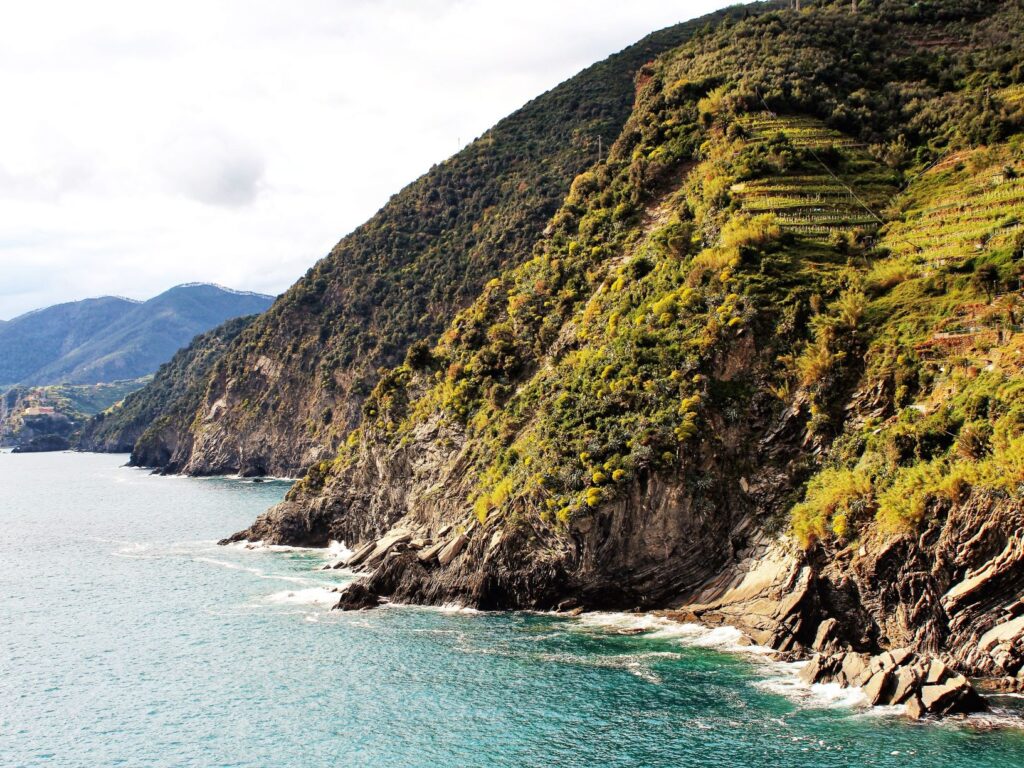
My travel take:
Because Corniglia sits above the sea without a harbour, boat tours cannot stop here. That one geographic detail quietly changes the pace of the village — fewer tour groups, fewer crowds, and a pace that feels more residential than the other towns.
For that reason, come here midday, and you will be able to escape the crowds from the other villages. This village is less about sightseeing and more about lingering over the views. There were two spots I enjoyed the most. The first is Belvedere di Santa Maria. To find it, follow Via Fieschi through the village until you eventually reach the clifftop balcony. The second is La Torre. To find it, look for a staircase that leads you to Piazza Taragio.
For slow travellers, this will be the village that resonates with you the most. I spent my time sipping wine at a tiny enoteca called Terra Rossa, wandering through the sleepy alleys, and enjoying the relaxed and authentic atmosphere.
Manarola: Vineyards, Wine, and Sunset Views

Manarola feels vertical and agricultural in a way the other villages do not.
Behind the village, steep terraced vineyards climb the hillsides — a reminder that Cinque Terre has long been as much about farming as it is about fishing. Wine has been produced here for centuries, including the region’s distinctive dessert wine, Sciacchetrà.
The village itself spills downward toward the sea in layers of colourful houses, narrow staircases, and small piazzas that eventually lead to a rocky waterfront rather than a beach.
During the middle of the day, Manarola can feel busy and tightly packed. But something shifts in the late afternoon. As day-trippers begin leaving and the sunlight softens, the village slows into a calmer feel.
This is when Manarola feels most rewarding — a place to pause, watch the light change over the water, and linger longer than you planned.

My travel take:
One of the most memorable viewpoints in Cinque Terre sits just beyond the village at Punta Bonfiglio, where the walking path curves around the cliffs. From here, you see the full cascade of colourful houses above the sea — the view that has made Manarola one of the most photographed villages along the Ligurian coast.
One of my favourite memories is hearing the bell chimes ring from the 12th-century Chiesa di San Lorenzo while sitting in the busy Piazzale Papa Innocenzo with a gelato.
I recommend you arrive late afternoon and into the evening. Day-trippers have left, the light warms, and the village slows down noticeably. This is one of the most rewarding times to simply sit, observe, and linger. And one of the best places to do that is from the terrace at Nessun Dorma, which offers one of the best views possible.
Riomaggiore: The Dramatic First Impression

Riomaggiore often becomes the first village travellers encounter when arriving from La Spezia, and it makes a striking introduction to the Cinque Terre coastline.
Tall pastel buildings rise steeply above a narrow harbour, stacked closely together as if climbing the cliffs. The village unfolds vertically from the train station upward through steep lanes and staircases, eventually reaching small viewpoints overlooking the sea.
Compared with some of the other villages, Riomaggiore feels energetic and slightly raw. Boats rest in the small marina, waves crash against the rocks, and the narrow streets hum with movement as visitors explore the village.
But like the other towns, its rhythm changes throughout the day. By late afternoon and evening, the marina becomes a gathering place where travellers and locals linger along the rocks to watch the sun drop toward the horizon.
My travel take:
Most visitors stay along the main street that runs between the train station and the harbour. But some of Riomaggiore’s most interesting corners appear when you climb into the upper lanes, where everyday village life unfolds more quietly above the crowds below.
The best views from this town were at the castle ruins and when walking along the coastal path toward Manarola. Stay for the evening and grab a spot by the marina—the sunset over the water is the perfect way to end the day.
Which Cinque Terre Village Is Right for You?
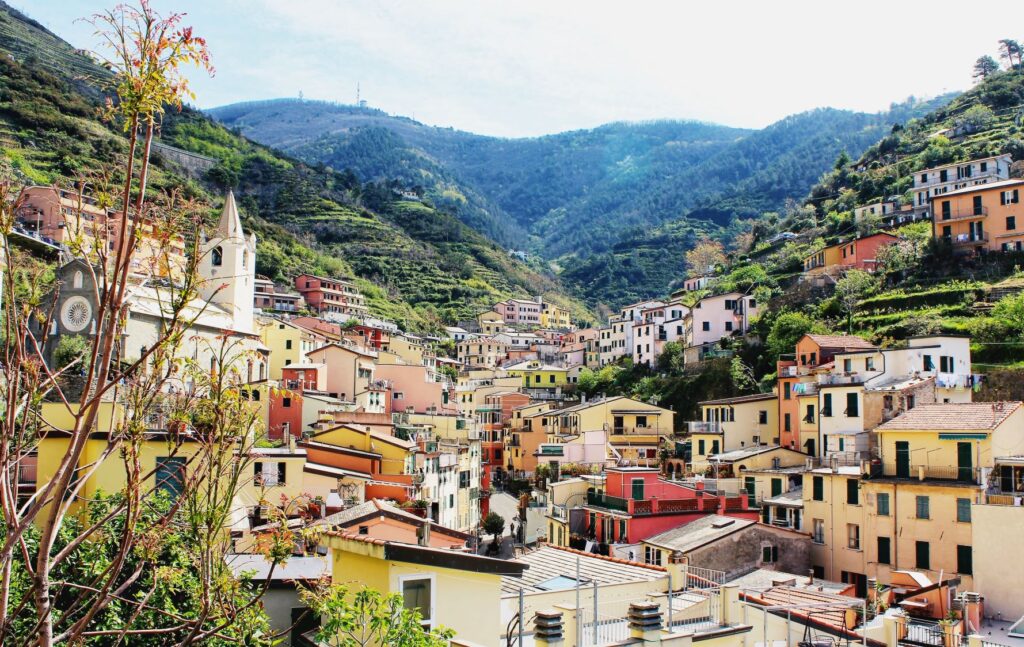
Although the five villages sit only minutes apart by train, they appeal to very different types of travellers.
Some people fall in love with the iconic harbour views. Others prefer a quieter village where everyday life unfolds more slowly. And some travellers simply want a comfortable base with space to breathe between hikes and train rides.
If you’re trying to decide which Cinque Terre village to prioritize, it often comes down to how you like to travel.
| If this sounds like you… | The Village That May Suit You Best |
|---|---|
| You want the classic Cinque Terre postcard views | Vernazza |
| You love sunset viewpoints, wine, and romantic scenery | Manarola |
| You prefer beaches, space, and an easier walking pace | Monterosso al Mare |
| You enjoy quiet villages and slower, local pace | Corniglia |
| You like energy, dramatic scenery, and lively evenings | Riomaggiore |
The good news is that you don’t need to choose just one.
Because the villages are so close together, it’s easy to experience a few of them at different times of day. What matters most is avoiding the urge to rush through all five and instead giving yourself the time to notice how each village reveals its own character.
Many travellers discover that the villages they expected to love are not always the ones that stay with them the longest.
My Final Take: The 5 Towns Aren’t Meant to Be Rushed
Please don’t treat it like a checklist—five stops to collect, photograph, and move on from. That approach misses what makes this stretch of coastline so compelling in the first place.
Cinque Terre isn’t about how many villages you see. It’s about how you move through them.
Each town asks something slightly different of you. One invites you to sit longer. Another rewards arriving early. A third feels best once the crowds fade and everyday life quietly returns.
When you slow down—even just a little—you begin to notice those subtleties.
If you take anything from this article, let it be this: you don’t need to see all five towns to experience Cinque Terre well. You need to choose with intention—and leave room for unplanned moments.
If you’re planning a trip to Italy and want to experience places like Cinque Terre without rushing, overcrowding, or guesswork, I offer personalized Italy travel planning rooted in slow, thoughtful travel.


