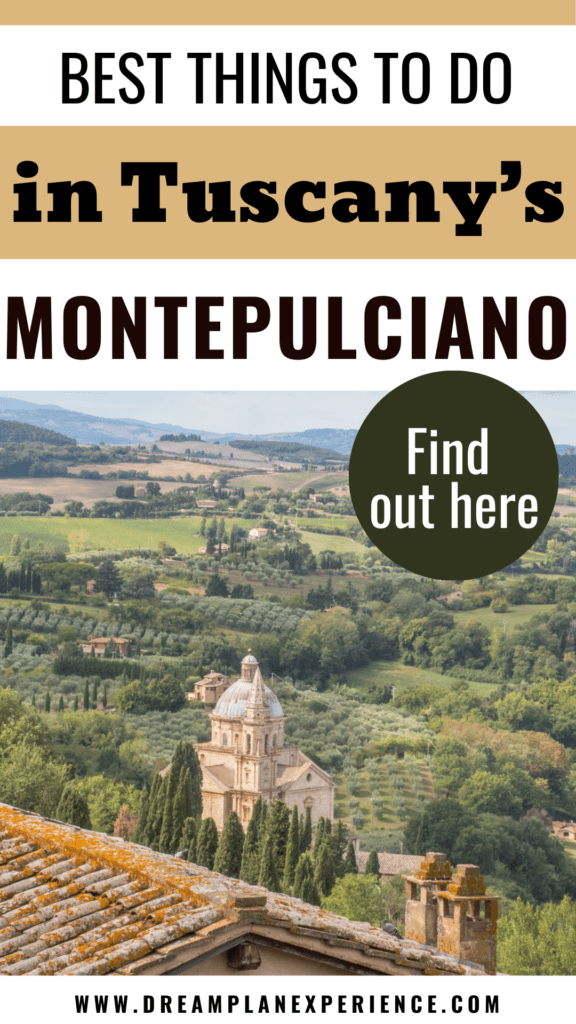
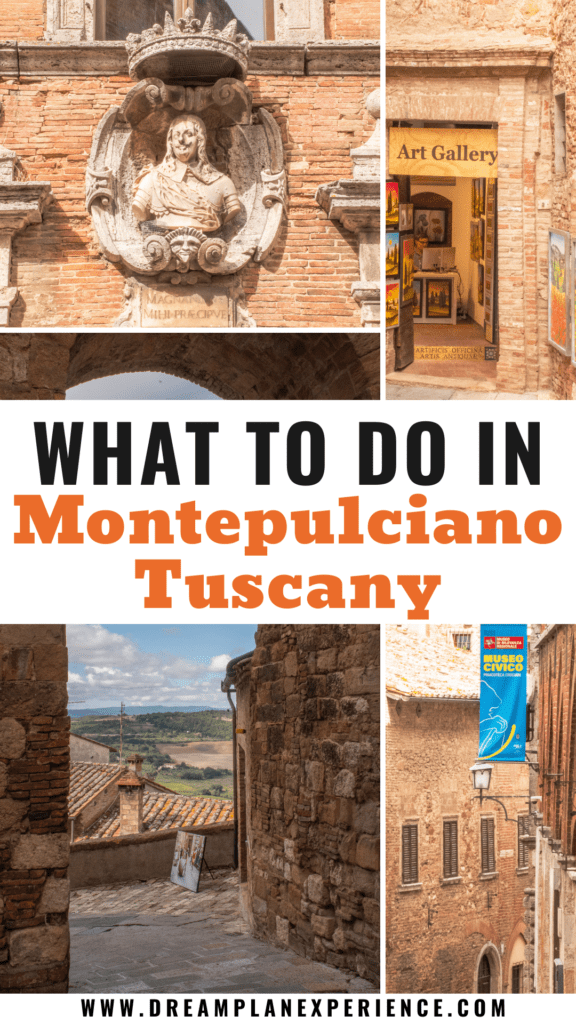
Visiting Montepulciano feels like a postcard coming to life with its charming streets and sweeping countryside views.
If you’re wondering what to do in Montepulciano, Italy, focus on three things: exploring Piazza Grande, visiting underground wine cellars, and walking the historic Corso from top to bottom.
The best things to see in Montepulciano include Renaissance palazzi, the Duomo, San Biagio church, and sweeping Val d’Orcia views.
Montepulciano is best experienced slowly. I’ve visited Montepulciano twice, and both times I wish I stayed longer than planned. I recommend staying over one or two nights, rather than as a rushed day trip.
Not because there’s a long checklist of sights, but because the town invites a different pace. One built on walking. Pausing. Looking twice.
This post may contain affiliate links, meaning I get a commission if you decide to purchase something through the links, at no additional cost to you. Read my Affiliate Disclosure.
What to Do in Montepulciano (Complete List)
Montepulciano is a compact Tuscan gem that doesn’t require much pre-planning, making it perfect for spontaneous travellers.
This quick reference on what to see and do is handy—whether you’re looking ahead or already on the ground.
What to See in Montepulciano
- Piazza Grande
- Pulcinella Clock Tower
- Tempio di San Biagio
- The city gates, or portas
- Cathedral Saint Mary
- Renaissance Palazzi
What to Do in Montepulciano
- Wine tasting in the historic wine cellars
- Stroll the historic town
- Climb the Palazzo Communale Tower
- Visit Museo Civico Pinacoteca Crociani
- Admire the Val d’Orcia Views
- Walk Via di Voltaia nel Corso

What to Do in Montepulciano
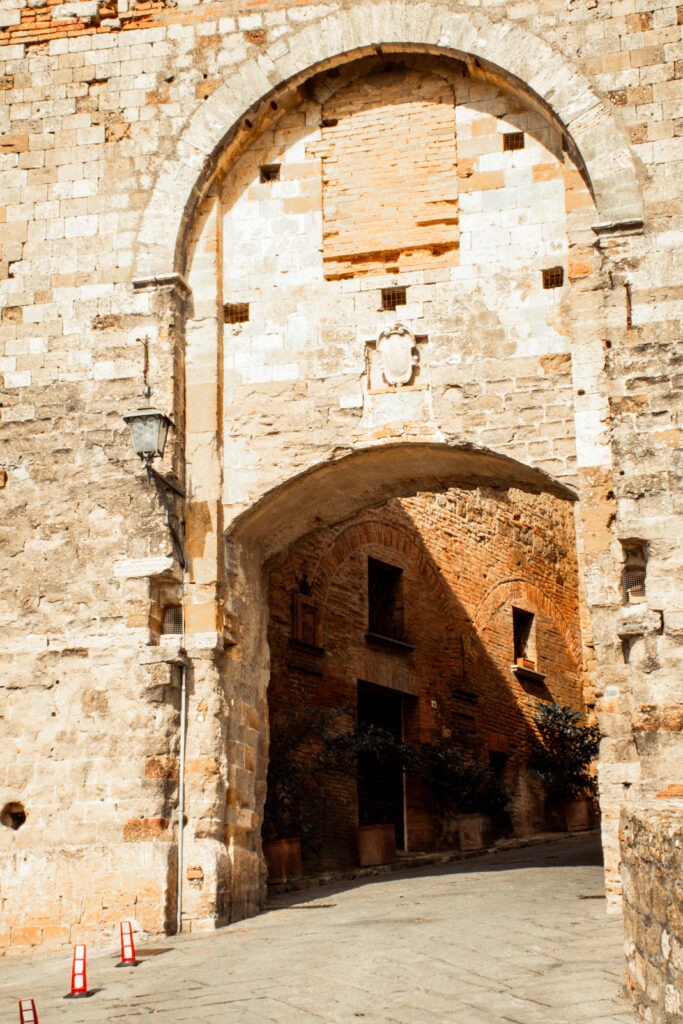
To start your visit to Montepulciano, you’ll likely arrive by car and will need to park at one of the parking lots available outside the city’s historic walls since Montepulciano is a hilltop town with limited vehicle access.
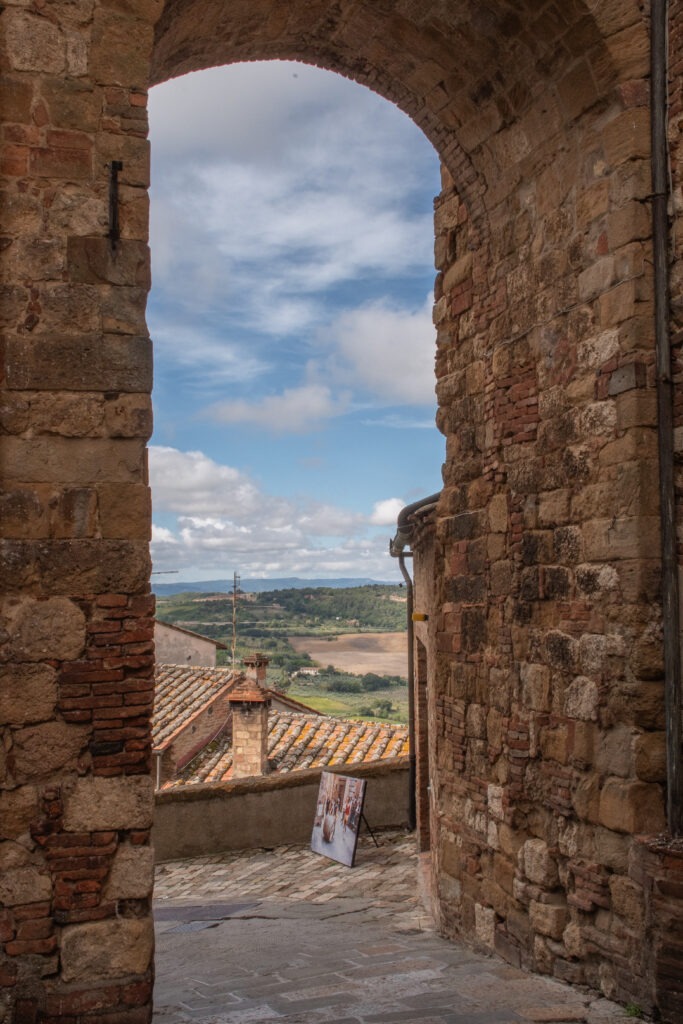
From each of the parking areas (which are approximately located north, east, south and west), you will enter the old town through one of its ancient gates, or porta.
Each gate speaks to Montepulciano’s history, dating back to Etruscan and Roman times before its golden Renaissance era. The fortified walls and gates, constructed and modified over centuries, helped secure the town during periods of regional conflict.
This history makes them interesting to seek out. Here are six that are worth seeing.
- Porta delle Farine: likely named for its connection to grain (farine) trade, reflecting the town’s agricultural roots.
- Porta dei Grassi: historically, this gate saw heavy traffic from local farmers bringing livestock and produce into the market.
- Porta San Donato: located near a historic church, this gate’s namesake is Saint Donatus, and I think one of the prettiest ones to see.
- Porta del Paolino: a smaller gate, and overshadowed by the nearby Porta dei Grassi.
- Porta di Gozzano: named for an ancient noble family and near a residential area.
- Porta al Prato: as the main entrance, this one opens onto Montepulciano’s main street, Corso.
Spend Time in Piazza Grande—the Main Public Square
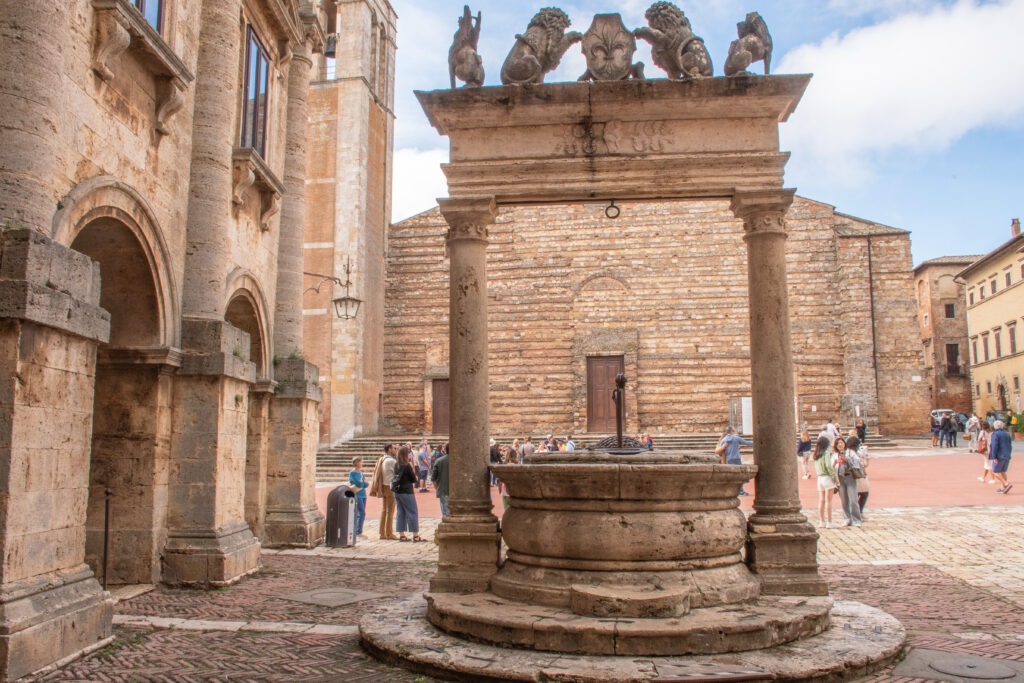
No matter which Porta you enter, start your visit in Montepulciano’s main square, Piazza Grande. Located at the highest point of Montepulciano, this square is surrounded by beautiful Renaissance buildings.
Here is what you will find:
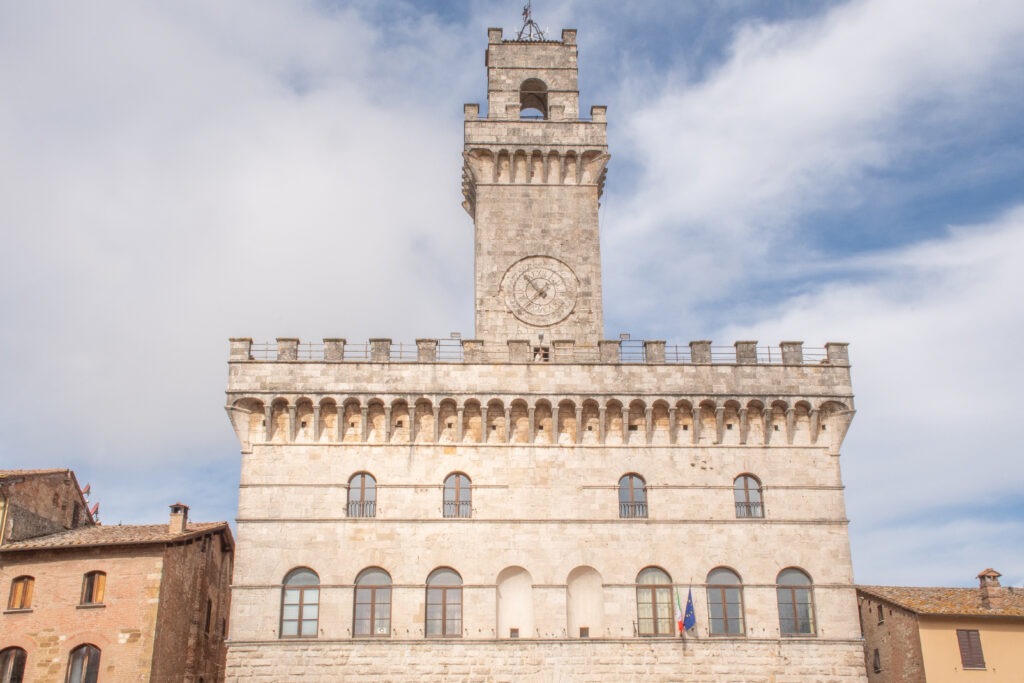
- Palazzo Comunale: inspired by Florence’s Palazzo Vecchio, this town hall is a mix of Gothic and Renaissance styles. Climb its tower for panoramic views over the Tuscan countryside.
- Duomo (Cathedral of Santa Mary): this understated yet striking cathedral houses important artworks, including a 15th-century triptych by Taddeo di Bartolo.
- Palazzo Contucci: this palace is a fine example of Renaissance architecture, with its elaborate facades and interiors. The Contucci family, renowned winemakers, still occupies part of the building and offers wine tastings of their Vino Nobile here. This is the one I visited.
- Palazzo Tarugi: this is one of the square’s most impressive buildings, made entirely of travertine stone, a signature material in Italian Renaissance architecture.
Walk the Historic Centre From Top to Bottom
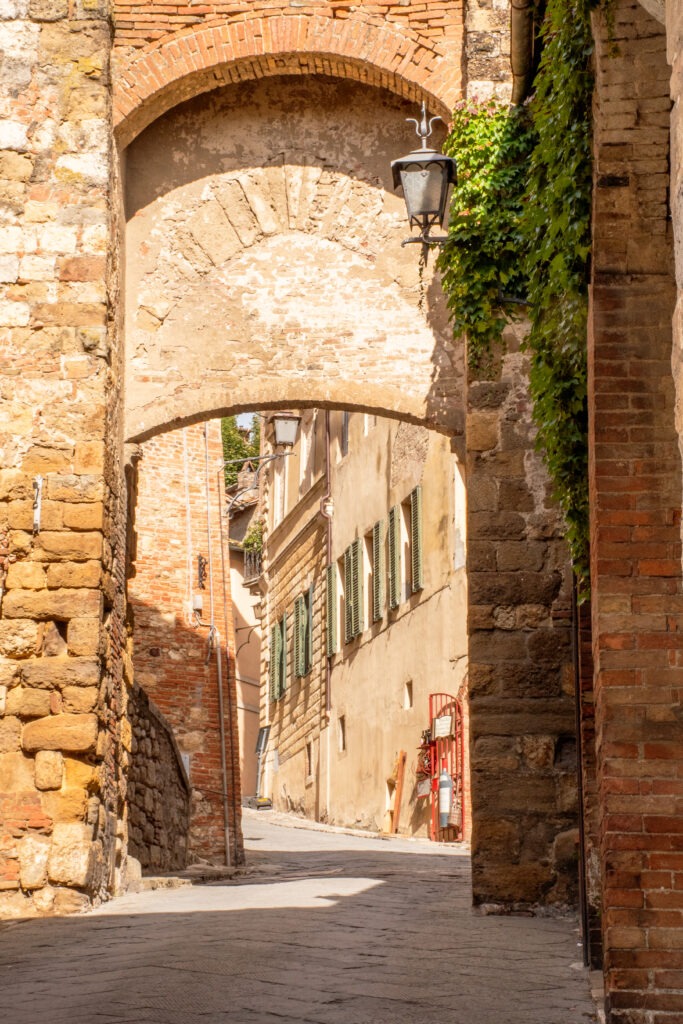
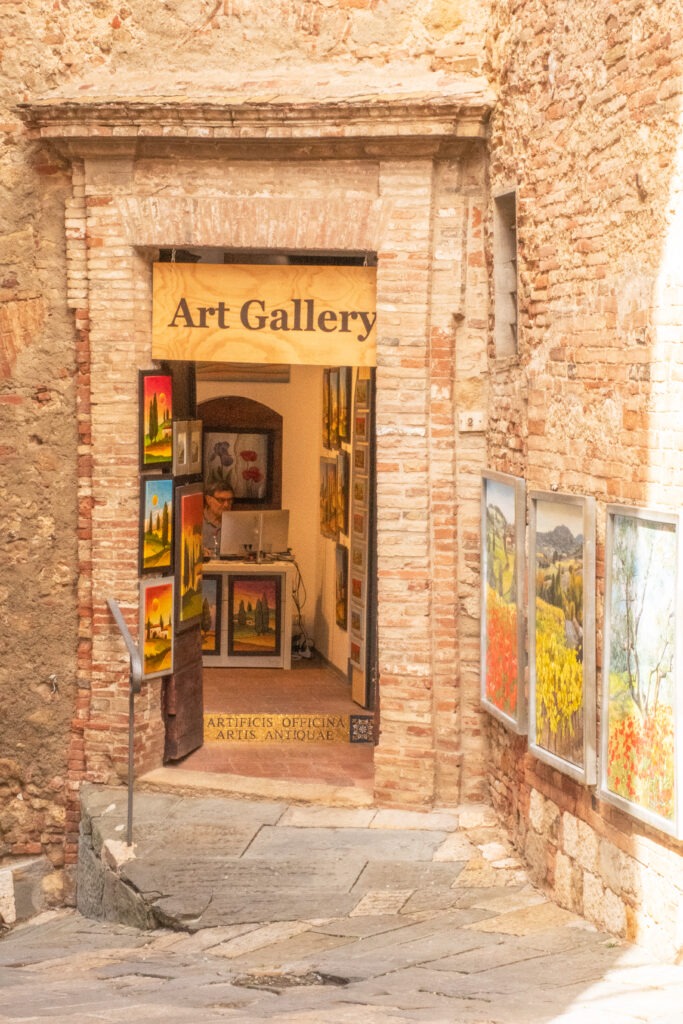
After taking in the sights at Piazza Grande, a walk along Via di Voltaia nel Corso—often called simply “Corso”—is a must. This main street of Montepulciano is not only the town’s primary street but also its historical heartbeat, connecting the main gates to the heart of the town.
The name Corso, meaning “course” or “path,” reflects its role as the central route for foot traffic, trade, and community gatherings since the Renaissance. Almost every sought-after Tuscan town, like visiting Arezzo, has a street named Corso.
The Corso is lined with charming shops, wine cellars, and artisan boutiques, making it a great spot to browse local crafts, ceramics, and clothing. This is one of the better towns in Tuscany, in my opinion, for shopping. I especially loved the Del Santo Cashmere shop (Via di Gracciano nel Corso, 75) for their locally made cashmere.
I loved walking slowly along Corso. Take your time here, don’t rush. Watch as locals pop into their favourite shops and call out to their favourite shopkeepers a “Buongiorno“. Yes, this is the slow living life of Montepulciano, and I love it!
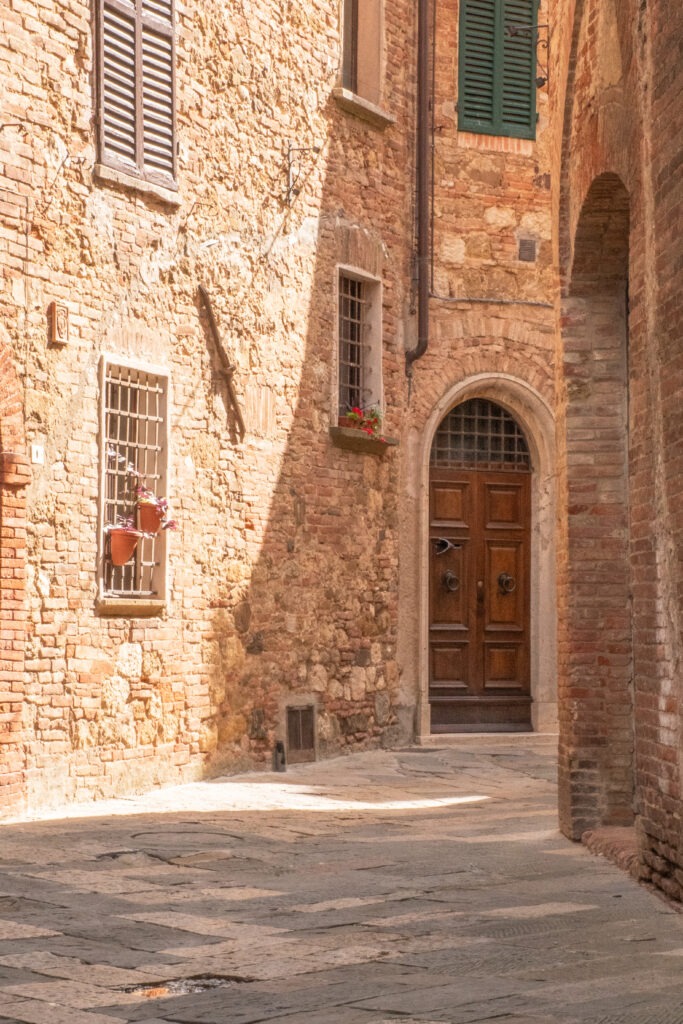
When it’s time to stop for a coffee and light meal, I highly recommend Caffè Poliziano, a gorgeous Art Nouveau cafe with beautiful views (Via di Voltaia Nel Corso, 27/29).
Otherwise, turn off the main street without checking a map. Always. The side streets are narrower. Quieter. More lived-in. Laundry hangs between buildings. Doors are left ajar. Conversations drift out, unguarded.
Nothing here is labelled as a sight. That’s the point.
I’ve found my favourite moments this way—an unexpected view over the valley, a tiny shrine tucked into a wall, the feeling that I’m passing through someone else’s everyday life, unnoticed.
A quirky landmark in Montepulciano featuring a traditional Neapolitan Pulcinella figure that rings the bell hourly. You can find this clock tower at Piazza Michelozzo (near Via di Gracciano nel Corso, 30).
If you do one thing here beyond the obvious, let it be this. Wander aimlessly. Montepulciano rewards those who don’t try to control it.
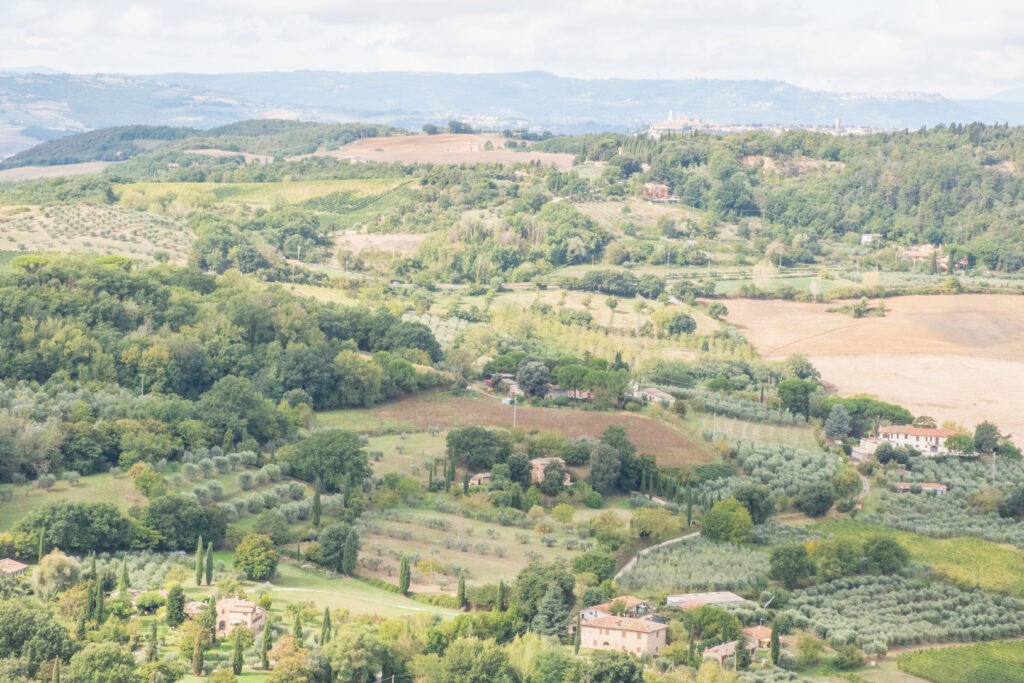
Expert tip: If you love viewing platforms as much as I do, you’re going to love these:
- Vicolo del Leone (behind Piazza Grande)
- Via di Collazzi (near Piazza Grande)
- Via Ricci (near Museo Civico Pinacoteca Crociani)
- Vicolo delle Mura (near Porta delle Farine)
- Via del Poliziano (near the small St Mary church, not to be confused with the Cathedral)
Go Below Ground — Wine Cellars Hidden in Plain Sight
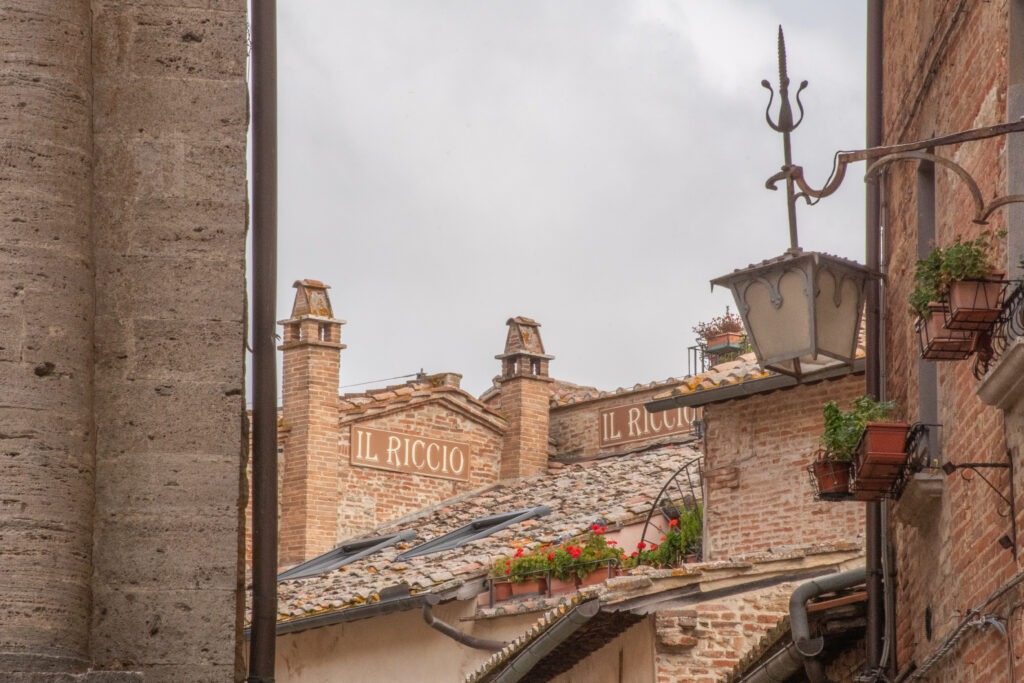
Some of Montepulciano’s most memorable experiences aren’t found at street level. They’re beneath it.
The historic center is layered with ancient wine cellars, carved directly into the tuff rock below Renaissance palazzi. You walk in from the street, descend a staircase, and suddenly you’re standing among brick arches, oak barrels, and cool, dim light that hasn’t changed in centuries.
A few cellar tastings I visited and confidently recommend:
- Cantina Contucci — One of the oldest in town, with vast underground spaces directly beneath Piazza Grande. Historic, atmospheric, and deeply tied to Montepulciano’s identity.
- Cantina De’ Ricci — Elegant and dramatic, with a cathedral-like cellar that feels almost ceremonial.
- Ercolani Winery — A more relaxed, approachable experience, with underground tunnels that stretch far beneath the streets.
Tasting Rooms vs. Estates? I’ve done both. And in Montepulciano, I almost always choose cellar tastings inside the historic center.
Tasting rooms in town are walkable, unhurried, and easy to fit into the natural flow of the day. I don’t need a car. I don’t need a schedule built around driving. I can wander in, taste slowly, and step back out into the pace of the town.
Estates in the countryside are beautiful, but they shift the focus. The experience becomes about logistics instead of place. Inside Montepulciano, the wine feels inseparable from the town itself.
For me, these underground cellars offer something rare. History, atmosphere, and Vino Nobile—without leaving the moment.
Step Inside Churches You’d Otherwise Walk Past
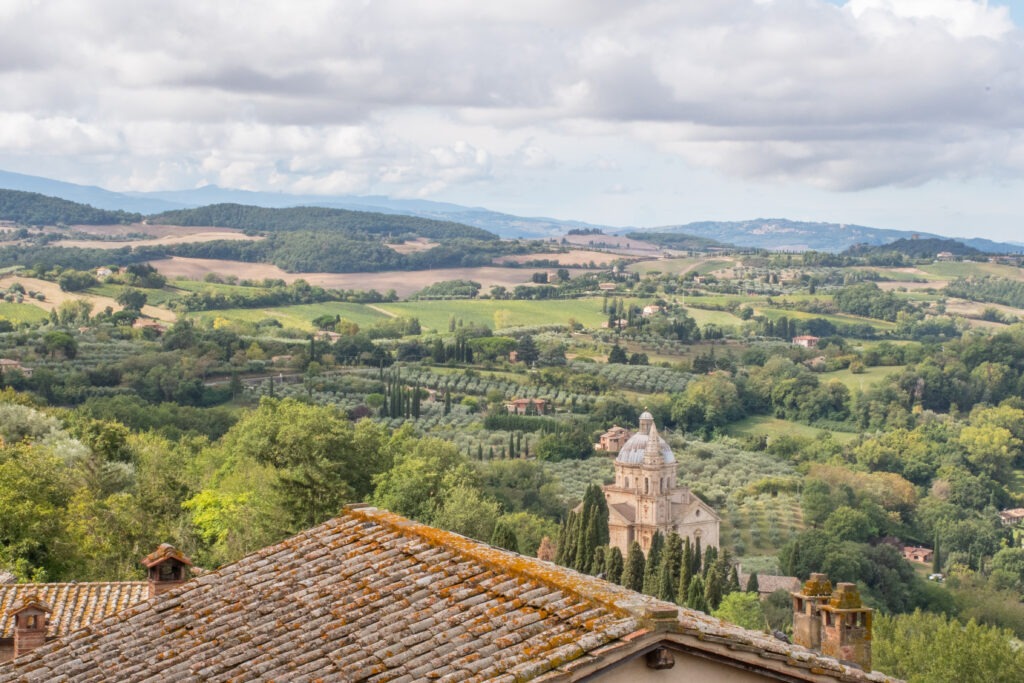
Beyond the Duomo, there are smaller churches scattered through town that rarely make itineraries. Their doors are often open. Their interiors are simple and unassuming. Quiet.
I step inside even when I don’t know the name. Especially then. The shift is immediate. Cool air. Dim light. A pause I didn’t realize I needed.
Just outside the historic center, Tempio di San Biagio is the exception that deserves attention. Set alone in the valley, it feels almost suspended in time. The symmetry. The silence. The setting.
In Montepulciano, the churches you almost skip are often the ones you remember most.
Visit a Renaissance Palazzo (Not Just One)
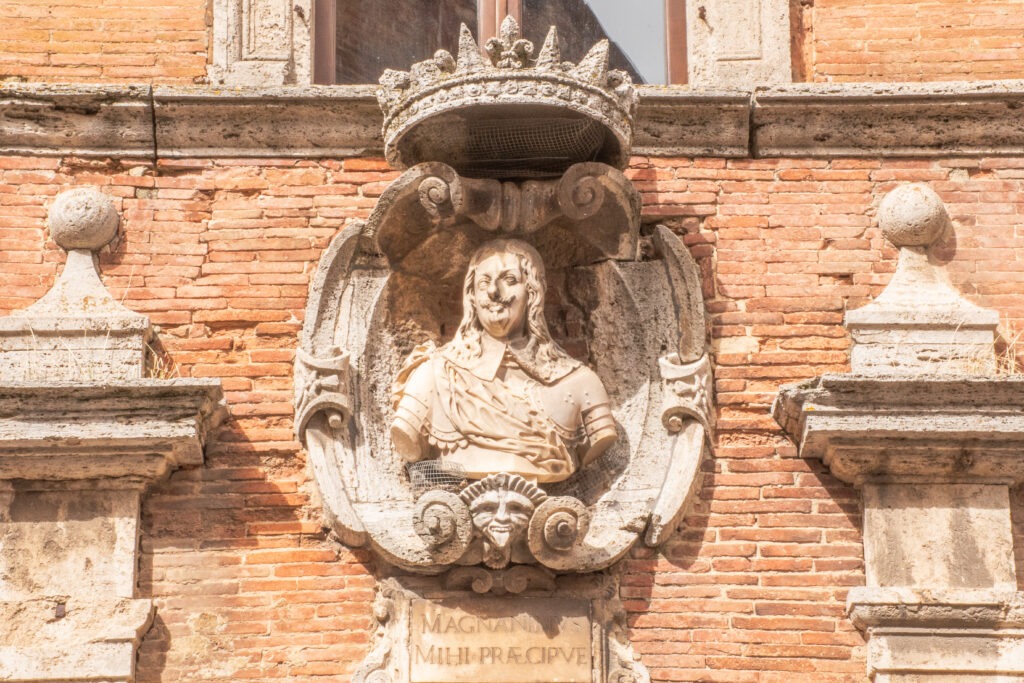
Montepulciano’s beauty isn’t concentrated in a single building. It’s layered. And best understood by stepping inside more than one Renaissance palazzo.
Beyond the Palazzo Comunale on Piazza Grande, there are private palazzi that feel more intimate.
- Palazzo Contucci, still owned by the same family for generations, blends architecture and wine in a way that feels entirely natural here.
- Palazzo Nobili-Tarugi reveals its beauty more subtly—frescoed rooms, quiet corners, and a sense of lived history rather than display.
Seeing just one palazzo gives you architecture. Visiting several gives you context.
Day Trips From Montepulciano (Only If You Have Time)
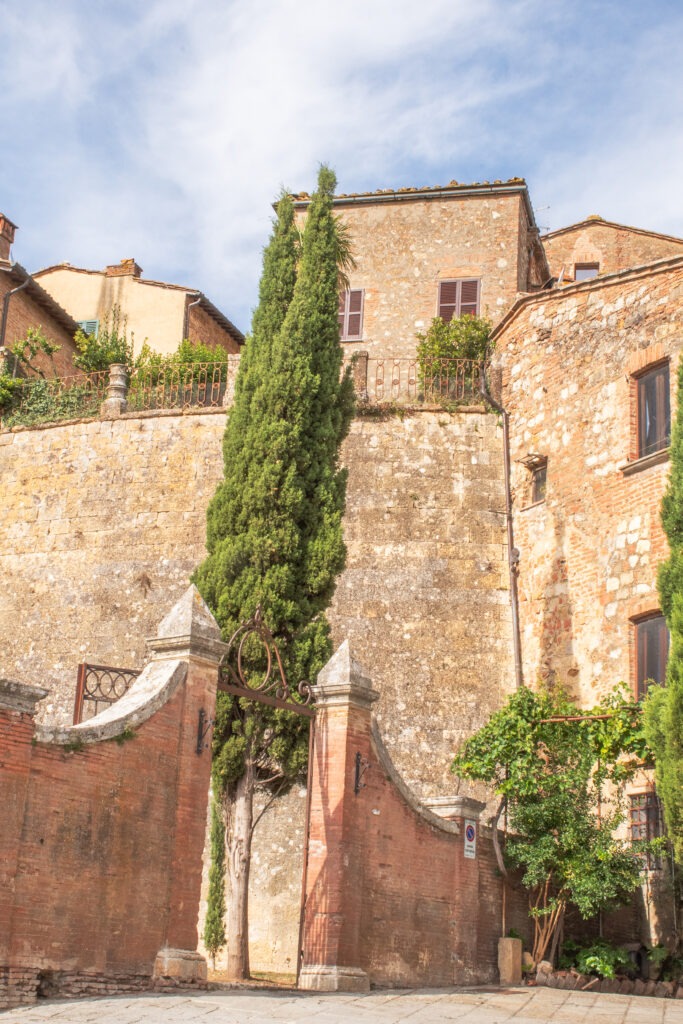
Montepulciano sits at the center of some of Tuscany’s most beautiful places. That doesn’t mean you need to chase them all. I only leave town when I have the time—and the energy—to return without feeling rushed.
- Pienza is the easiest pairing. Refined. Balanced. Small enough to wander in a few unhurried hours. I go for the views and the calm.
- Monticchiello feels quieter. More introspective. A village where silence is part of the experience. I walk slowly here and linger longer than expected.
- Montalcino draws wine lovers. Bold. Confident. Worth it if Brunello matters to you. Less so if you’re already savouring Montepulciano’s rhythm.
The Val d’Orcia countryside doesn’t require a destination. Just a drive. Rolling hills, cypress roads, and wide skies that ask nothing of you but attention.
For longer days, Arezzo, Cortona, and Siena offer depth and history. All rewarding. All are deserving of time. And, only if you are staying in Montepulciano.
My Final Take on What to Do in Montepulciano
Montepulciano isn’t a place to conquer. It’s a place to settle into.
I think less about activities and more about pace. Walk the town from top to bottom. Step inside palazzi and churches you didn’t plan for. Go below ground for wine, not out into the countryside unless you truly have the time.
This is a town that works best when you allow space for wandering. For long lunches. For quiet streets in between sights. It pairs beautifully with a slower approach to Tuscany—one where you choose fewer bases and stay longer, instead of moving every night.
If you’re building a broader Tuscany itinerary, here’s how I structure mine. Montepulciano deserves more than a rushed stop between destinations. Whether you’re deciding how many days to spend in Tuscany or choosing which hill towns fit your travel style, this is a place that rewards intention.
I’ve returned because Montepulciano doesn’t fade after you leave. It stays with you. And that, for me, is the mark of a place worth visiting well.
For readers who prefer depth over checklists, my newsletter offers slow travel insights and practical advice you won’t always find on the blog.