

I first discovered Cortona, Italy, the way many others did—through the film Under the Tuscan Sun. When I finally arrived in person, I understood why this hilltop town calls to travellers seeking more than just another stop on a Tuscan itinerary.
Most people arrive in Cortona for a few hours. They walk the main street, take a photo, and leave. But Cortona isn’t a place you “see.” It’s a place you settle into.
Yes, you’ll want to know the best things to do in Cortona. But unlike some of the busier towns in Tuscany, Cortona feels intimate and a bit more polished. Its stone alleyways, panoramic views, and a certain dolce far niente of daily life invite you to slow down. Here, time stretches out.
I’ll share what I’ve loved most about this town and how to experience it the way it’s meant to be—slowly.
This post may contain affiliate links, meaning I get a commission if you decide to purchase something through the links, at no additional cost to you. Read my Affiliate Disclosure.
Is Cortona Worth Visiting?

Cortona is one of those places that quietly stays with you—but only if you give it the time to.
If you’re looking for a Tuscan town to see, you can visit Cortona in a few hours.
But if you’re looking for a place to feel, this is where it begins to unfold.
| Cortona is for you if… | Cortona may not be for you if… |
|---|---|
| You prefer slow mornings and unhurried days | You’re trying to see multiple towns in one day |
| You’re drawn to atmosphere over attractions | You prefer a checklist of “top sights” |
| You enjoy wandering without a plan | You like structured, fast-paced itineraries |
| You’ve already visited Florence or Siena | This is your first trip to Tuscany and you want the classics |
| You value quiet, lived-in places | You’re looking for lively, bustling piazzas |
| You travel for how a place feels | You travel for how much you can see |
Cortona is not a checklist destination.
If you rush it, Cortona can feel underwhelming.
And that’s usually not the town’s fault—it’s the pace.
Cortona at a Glance
| What matters most | Early morning and evening, when the light softens, and the pace of the town gently shifts |
|---|---|
| Best thing to do | Walk the city walls at sunrise, when the light stretches across the Val di Chiana and the town is still quiet |
| Best view | The Fortezza del Girifalco—worth the climb for the wide, open perspective over Tuscany |
| Best experience | Getting lost in the streets, especially away from Via Nazionale, where Cortona feels most like itself |
| How long to stay | 1–2 nights (not just a day trip) to experience both the quiet morning and the slower evening rhythm |
| Best time of day | Early morning and evening, when the light softens and the pace of the town gently shifts |
Best Things to Do in Cortona
If you’re anything like me, you travel to feel something—not just to tick places off a list. Cortona invites that kind of connection. It’s a place where the best memories come from unhurried walks, awe-inspiring panoramic viewpoints, and soft conversations over wine.
These are a few of my favourite things to do when I want to truly experience a hilltop Tuscan town and not just pass through it.
Start with the Views

The first thing Cortona gives you is perspective—wide, open, and quietly breathtaking.
Walk along the city walls in the early morning, starting near Porta Colonia. This is when the town is still. The light stretches slowly across the Val di Chiana, and for a moment, it feels like you have all of Tuscany to yourself.
From there, make your way up to the Fortezza del Girifalco. It’s a steady climb, but the reward is a view that opens in every direction—vineyards, olive groves, and distant hills that seem to dissolve into the horizon.
And then there’s the Belvedere along Via Santa Margherita. It’s easy to miss if you’re not paying attention. But pause here. This is one of those quiet edges of town where everything softens, and you remember why you came.
Wander the Historic Streets
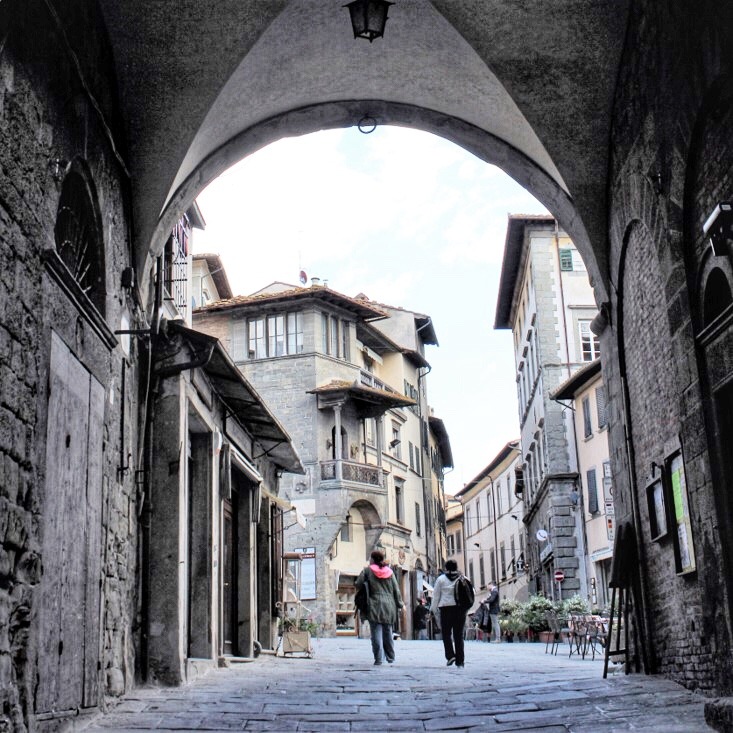
Cortona is best experienced without a plan.
Start on Via Nazionale—the one flat street in a town that seems to move only up and down. Locals call it Ruga Piana, and it gently connects the heart of the town. You’ll pass shops, small cafés, and just enough activity to feel part of something.
But the real Cortona is just off this street.
Turn down Via Guelfa, Via Ghibellina, or the impossibly quiet Via del Gesù or the very pretty Via Iannelli and Via Janelli. These are the places where the town feels most like itself—laundry hanging between buildings, worn stone underfoot, the echo of footsteps in narrow passages.
Cortona’s magic is in the details: window boxes, weathered doorways, and the sound of church bells ringing in the distance.
There’s no checklist here. Just follow what draws you in.
Visit the Cultural Sights

Cortona’s history runs deeper than it first appears—and if you’re curious, it’s worth stepping inside.
The MAEC (Museo dell’Accademia Etrusca) offers a glimpse into the town’s ancient past. It’s not overwhelming, but it adds context to everything you’re walking through—reminding you that Cortona existed long before its quiet streets became what they are today.
The churches here are just as memorable, though for different reasons.
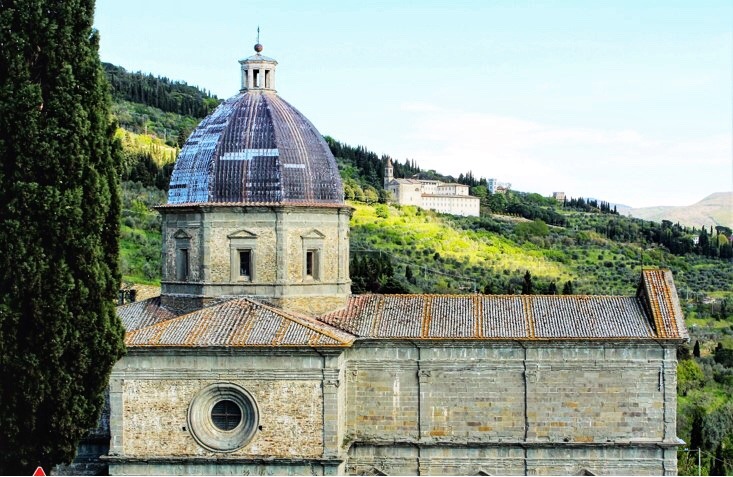
The Church of Santa Margherita sits higher up, close to the fortress, and feels both grounded and expansive at once. And just beyond the walls, Santa Maria delle Grazie al Calcinaio is one of the most perfectly proportioned churches I’ve seen—set gently into the landscape, almost as if it belongs to the hillside itself.
You don’t need to visit everything. Just choose one or two, and give them your time.
How to Experience Cortona Slowly

The difference between passing through and truly experiencing it often comes down to something simple: timing, pace, and where you choose to pause.
Linger Over a Long Lunch (or Dinner)
There’s no need to rush a meal here. Cortona has several restaurants I recommend you try. For a cozy, tucked-away feel, I love La Grotta. If I’m in the mood for something traditional with personality, La Bucaccia – Da Romano always delivers. Ristorante La Loggetta gives you a view with your meal, and Osteria del Teatro is where I go when I want to linger well into the evening.
As a vegetarian, I often order pici cacio e pepe—a simple, peppery pasta that feels like a hug in a bowl. I’ve had versions with truffle or wild herbs, too, but the classic always wins me over. Add a glass of local red, and you have everything you need.
Peruse the Artisan Shops
Have you ever had one of those “I should have bought it” moments? Mine happened in Cortona. It was a biker-style leather jacket—deep red, soft as butter. I didn’t get it, and I still think of it. That’s when I realized: the shopping in Cortona is wonderfully good.
I now make time to browse Plumeria, a linen shop tucked off a side street of Via Nazionale, for handwoven tablecloths, placemats and kitchen towels I actually use. Marfuga is where I pick up olive oil and do an impromptu tasting. And for ceramics, which Cortona is known for, Terrabruga is my favourite among the three shops you’ll find—bright, handcrafted, and distinctly Tuscan.
Supporting local artisans, and there are many in Cortona, is one of the ways I try to travel more thoughtfully. These aren’t just souvenirs—they’re reminders of the people and places that leave a mark on me.
Come for the Saturday Market
Cortona’s Saturday market is one of those experiences that sneaks up on you in the best way. Head to Piazza Signorelli, and a few of the nearby streets and what I found was an atmosphere that felt deeply local.
The smell of grapes brought me right back to Under the Tuscan Sun, and before I knew it, I was buying a paper bag full of them. I took my bunch to the ledge overlooking Piazza della Repubblica, sat down, and listened as the church bells rang out their soft ding, dang, dong. That moment—grapes in hand, bells in the air—felt like my very own scene from the movie.
From personal experience: Don’t touch the produce (a big no-no in Italy)—that’s the vendor’s job. Just point or ask, and they’ll choose the best for you.

Find a Place to Sit (and Stay a While)
Sit for a while in Piazza della Repubblica. Not just for a photo, but long enough to notice the daily life of the square. Children moving in and out of the frame. Conversations you don’t quite understand, but feel part of anyway. My favourite spot to do this at is Caffe Signorelli.
When you are ready to move again. Pick up a gelato from Snoopy and take a slow walk along Via Nazionale. No destination. Just movement. This is the town’s quiet ritual—the passeggiata—and it’s something you slip into without trying.
Go Early. Stay Late.
My favourite moments in Cortona happen at the edges of the day.
Early morning—just as the light begins to spill across the valley—is when the town feels most like itself. The streets are quiet. The air is still. You can walk along the walls or through the centre without interruption.
Then again, in the evening, when the day softens.
Golden hour here is gentle. The stone takes on a pale glow, and the town slows into itself. This is when I find myself lingering the longest.
About Visiting Cortona
How Long to Stay
If you can, stay at least one night.
Most visitors come for a few hours, and while that gives you a glimpse, it rarely gives you the feeling of the place.
An overnight stay allows you to experience both sides of Cortona—the quiet of the morning and the calm of the evening, when the day-trippers have gone, and the town settles again.
Two nights is even better.
It gives you enough time to stop looking for things to do—and start simply being there.
Where to Stay in Cortona
I always recommend staying in town if you can. Waking up inside the historic walls, with everything just steps away, adds something special to your experience. I’ve stayed in both vacation rentals and boutique hotels, and each has its charm. Rentals offer a little more space and the joy of shopping the local market and cooking at home, while hotels often come with that beautiful morning terrace breakfast and helpful local tips.
Where to Park (If You’re Coming for the Day)
If you’re visiting Cortona for just the day, it’s best to park outside the walls and walk in. The historic center isn’t car-friendly (and that’s part of its charm). I usually park at Piazza Mazzini or Parcheggio Santa Margherita, then walk up—yes, it’s a bit of a climb, but the views are lovely to take in along the way.
My Honest Take: Is Cortona Just a Day Trip?
If you’re building an itinerary around Cortona, consider adding a nearby town. Both Arezzo and Montepulciano are less than 30 km away and make perfect pairings for a slow travel day.
- Arezzo is full of Renaissance charm, antique markets, and the movie location of Life is Beautiful, which gives you even more reasons to visit Arezzo.
- Montepulciano is ideal for wine lovers and those who enjoy a good wander through steep streets with scenic payoffs, and these are just two of the many reasons to go to Montepulciano.
But my honest opinion is that most people rush it, and that’s a mistake.
Bramasole and the Frances Mayes Effect
For many of us, the first time we heard the name Cortona was through Frances Mayes’ Under the Tuscan Sun—either the book or the film. And yes, Bramasole, the villa she lovingly restored, is very real.
You can’t visit the home itself, but you can see it from the road just outside town. I remember the first time we drove by. I didn’t expect it to feel emotional, but it did. Something is moving about seeing a place that inspired so many people to dream differently. If you go, do it respectfully. Walk quietly, take in the view, and keep your visit brief. It’s someone’s home, after all.
My Honest Take on Cortona, Italy

There’s a lovely Italian word—passeggiata—that describes the simple joy of strolling through town, often dressed well, simply to see and be seen. And if ever there was a place made for a passeggiata, it’s Cortona.
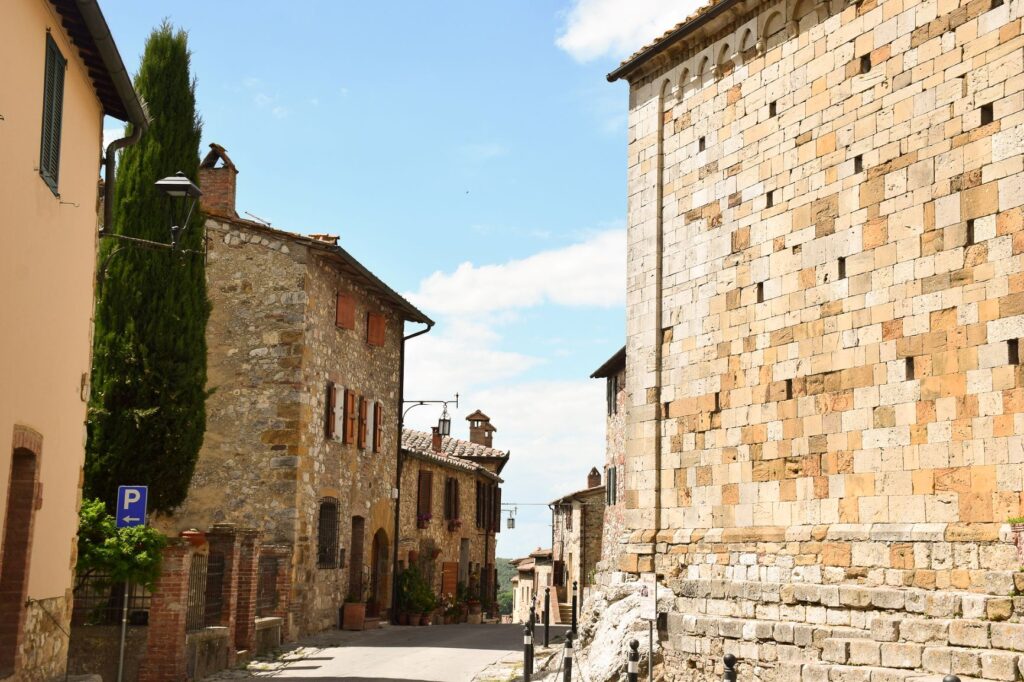
Of all the Tuscan towns I’ve wandered through, Cortona felt just a little different. The stone here has a soft, pale blue-grey hue that catches the afternoon light most gracefully. The alleyways wind in quiet curves, the shop windows are curated with care, and the restaurants have a touch of elegance without ever feeling too polished.
It’s a town that invites you to slow down and savour—whether that’s a plate of handmade pasta, a simple view across the valley, or just the sound of your own footsteps on cobblestones.
If you’re dreaming of Tuscany and want a thoughtful, stress-free way to plan it all, I’d love to help. If you want this kind of thoughtful pacing built into your trip, talk to me about my custom daily itinerary services.


