

What is Turin famous for?
On paper, the answers are easy: royal palaces, historic cafés, chocolate, Fiat, and a serious museum scene. But after spending time here, I’ve learned that Turin is famous for something harder to name—and far more interesting to experience.
Turin is distinctly different than other Italian cities, and I’ve visited my fair share over 3 return trips. It’s a city that feels more like Paris than it does Rome, Florence, or Milan. It’s slower paced. Feels local. And it has a sophisticated air of refined elegance.
I recommend Turin to travellers who enjoy cities with substance—places that reward curiosity rather than checklist sightseeing. If you’re wondering what Turin is famous for and whether those qualities actually make it worth your time, this perspective will help you decide if this quietly elegant city belongs on your itinerary.
This post may contain affiliate links, meaning I get a commission if you decide to purchase something through the links, at no additional cost to you. Read my Affiliate Disclosure.
Turin is Famous for its Royal Legacy — The City That Once Ruled Italy

Turin was shaped by the House of Savoy, the royal family that ruled the Kingdom of Sardinia and later unified Italy. Their influence is still visible in the city’s layout: formal squares, wide boulevards, and a sense of order that feels deliberate.
I loved exiting the train station onto Via Roma, which is a straight, long street that cuts through the heart of Turin, leading you directly to the Royal Palace. Easy navigation for day trippers visiting Turin for the day.
The Savoy Residences of Piedmont—including several palaces in and around Turin—are recognized as a UNESCO World Heritage Site. These residences were designed not just as homes, but as symbols of power and governance, which explains why Turin feels refined, composed and balanced instead of chaotic like other Italian cities.
From 1861 to 1865, Turin served as the first capital of a newly unified Italy. During this brief but important period, the city became the political and administrative center of the country.
This role helped define Turin’s identity as a city of structure, institutions, and long-term thinking. Even after the capital moved to Florence and then Rome, Turin retained a strong civic character that still distinguishes it from other Italian cities today.

My Personal Experience: When I walk through central Turin, it feels confident rather than nostalgic. The city doesn’t rely on ruins or instantly recognizable landmarks. Its history is subtly embedded in how the streets function, how buildings relate to one another, and how public spaces are now used.
That sense of assurance is part of what makes Turin different, and a stand-out city in my opinion.
Turin’s Famous Art Nouveau (Liberty Style) — The City’s Quietly Romantic Side

At the turn of the 20th century, Turin was experiencing a period of optimism and growth. Industrial success—particularly from manufacturing and engineering—created both the financial means and the cultural appetite for architectural experimentation. That’s when the Liberty style, Turin’s version of Art Nouveau, was born.
What sets Turin’s Liberty architecture apart from Art Nouveau in cities like Brussels or Paris is its restraint. Where Brussels leans expressive, and Paris decorative, Turin’s version is more controlled and structured. Floral motifs, ironwork, and curved lines are present, but they are integrated into solid, rational buildings rather than used as visual statements. It feels much more elegant and subtle, just like the city itself.
My Personal Experience: Turin’s Liberty buildings are spread across mainly three residential neighbourhoods rather than concentrated in the historic center. This is part of what makes them rewarding to seek out—and easy to miss if you don’t know where to look.
I recommend exploring Cit Turin, San Donato, and Crocetta, where Liberty-style apartment buildings, like the one I stayed in, blend naturally into everyday streets. Balconies, entry doors, stained glass, and ironwork reveal themselves gradually as you walk.
For travellers interested in seeing these details up close, I’ve mapped out a self-guided walking route through these three neighbourhoods, with specific addresses and an easy-to-follow flow that works well at a slow pace.
Turin’s Famous for its Rituals: Historic Cafés, Vermouth & the Art of Lingering
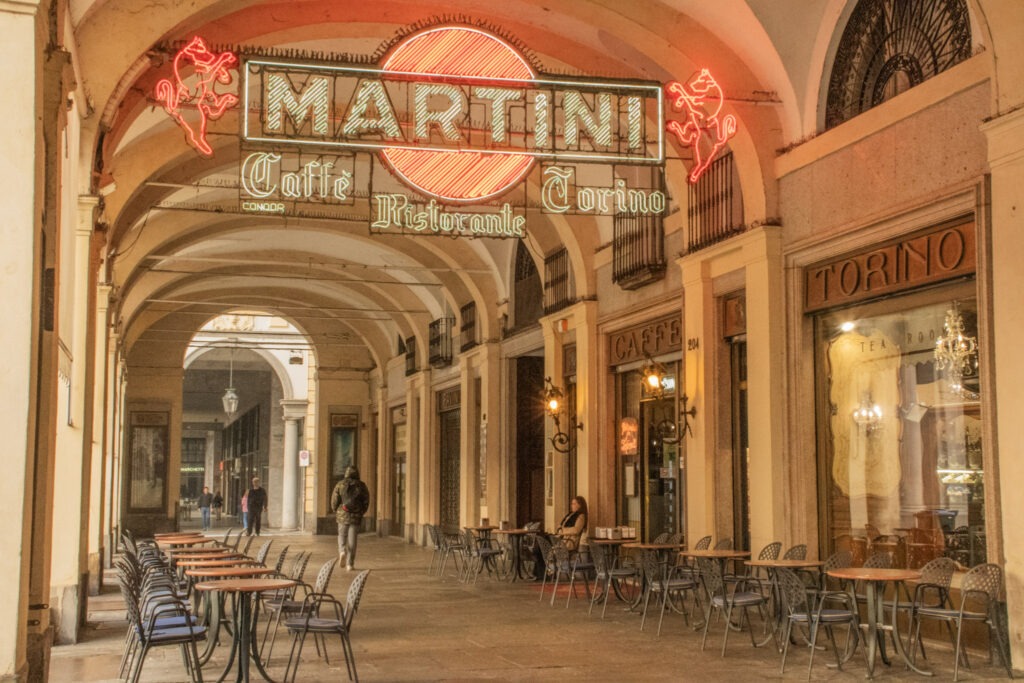
Turin’s historic cafés developed as places for discussion, reading, and debate—more intellectual salons than quick coffee stops. This is one reason they feel noticeably different from cafés in Rome or Milan. The pace is slower, the spaces are elegant, tables are meant to be occupied, and ordering a single coffee does not feel rushed—there is no tradition of sipping an espresso at the counter here.
Turin is also known for its own version of afternoon tea. Instead of scones, the ritual includes tramezzini—soft, crustless sandwiches filled with simple ingredients—served alongside small pastries.
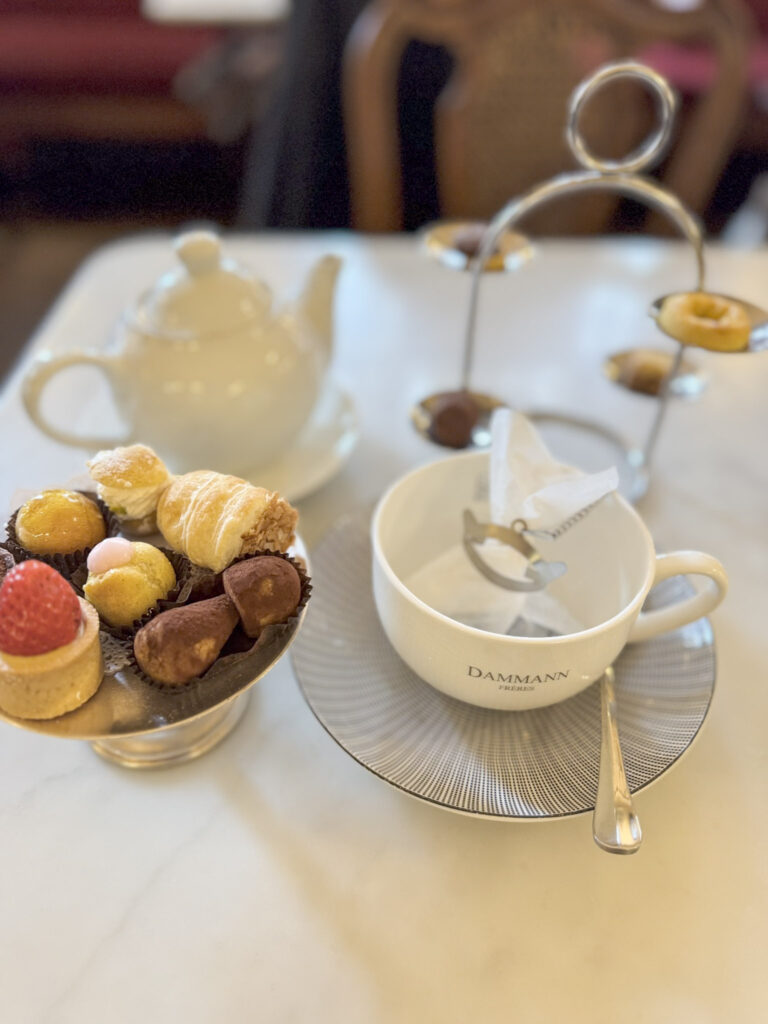
My Personal Experience: I recommend experiencing this at Caffè Mulassano in the Galleria Subalpina or Caffè Platti, both long-standing institutions that preserve this tradition without turning it into a performance.
Turin is the birthplace of vermouth, and it remains part of daily life rather than a revived trend. Here, aperitivo is understated and habitual, not a social event built around excess.
My Personal Experience: A good place to experience this is Piazza Vittorio Veneto, one of the city’s main gathering spaces. I enjoyed a vermouth at Caffè Elena, a historic café with literary ties, though Pastis is another great option when exploring the lively district of Quadrilatero.
Another local specialty worth trying is bicerin, a warm layered drink made with espresso, drinking chocolate, and lightly whipped cream. Not being a coffee drinker, I elected to try just straight-up warm, decadent chocolate and whipped cream, which my waiter happily obliged.
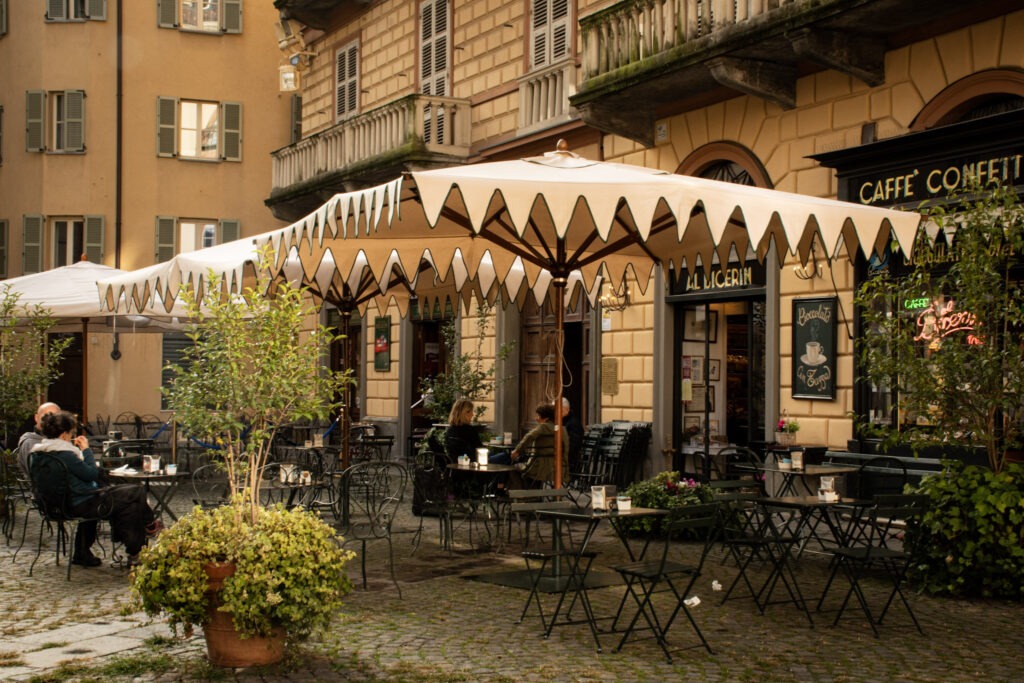
The best place to try it is Caffè Al Bicerin, just across from the Santuario della Consolata, where it has been prepared the same way for generations.
That leads me to chocolate. Turin is considered Italy’s chocolate capital. In the 19th century, cocoa was expensive, while hazelnuts from the Piedmont hills were abundant. Chocolatiers combined the two, creating gianduja—a smooth blend that became a defining local specialty.
You can find this specialty chocolate in many shops, chocolatiers, or at a café alongside their tiny pastries. One piece, devoured slowly, is my advice.
Museums for Thinkers, Not Checklist Travellers

Turin’s Egyptian Museum is one of the largest and most important outside Cairo, making it a key reason the city is famous among scholars and history enthusiasts. It’s here because Turin historically attracted collectors and academics who built a collection of international significance.
The museum is popular for its depth and quality—more than just artifacts, it tells the story of a civilization in a focused, structured way. For slow travellers, this is exactly the kind of museum that rewards time and attention rather than rushing through.
The Mole Antonelliana is Turin’s most recognizable landmark and home to the National Cinema Museum. Its tall, distinctive spire is visible from many parts of the city, acting as a constant visual anchor that helps orient visitors and locals alike.
My Personal Take: When exploring Turin, you can decide how to experience the Mole. Take the elevator to the top for panoramic city and Alpine views, or simply walk through the surrounding streets and watch it appear in unexpected angles. Don’t feel obligated to visit its interior museum.

The Shroud of Turin draws visitors from around the world, intrigued by its history, science, and religious significance. While it is famous, it represents only one layer of Turin’s cultural story, alongside art, industry, and daily life.
Slow travellers often appreciate seeing it in context—visiting with curiosity rather than obligation. It’s a stop that complements, rather than dominates, a city itinerary.
My Personal Take: Turin has many smaller museums that cater to specific passions. For example:
- Centro Italiano per la Fotografia – for photographers
- Museo della Radio e della Televisione Rai – for pop culture enthusiasts
- Lavazza Museum – for coffee lovers
I recommend choosing one or two. Focus on a few museums that align with your interests, rather than trying to see everything. Slow, intentional visits are more rewarding than ticking boxes.
Fiat, Industry & the City That Shaped Modern Italy
Turin’s industrial identity is inseparable from Fiat, one of Italy’s most iconic car manufacturers. The Lingotto factory not only produced cars but also shaped the city itself: neighbourhoods were built for workers with attention to livability.
The city’s industrial heritage is a different side of Turin—less visited than its historic city centre, but for slow travellers with a deep interest in cars, this would be a imporant part of their Turin itinerary.
For anyone curious about the Fiat Historic Museum and Lingotto District Tour, it is a practical way to experience it fully.
The Alps, the Po River & Turin’s Walkable City With the Alps and Po River

Turin sits at the edge of the Alps, giving the city its distinctive light and dramatic seasonal shifts. Snow-capped peaks in winter, green foothills in spring, and clear skies in summer create a ever present backdrop that subtly shapes the city’s atmosphere.
The proximity to the Po River and the surrounding mountains gives Turin a slower, quieter pace compared with Italy’s more frenetic cities, like the nearby Milan. Walking along the riverbanks, through tree-lined avenues, or its famous porticos, you notice a slower pace in everyday life.

Turin has over 18 kilometres of porticos, providing covered walkways that make exploring the city comfortable in any weather, much like what you would find in Bologna. These arcades are more than functional—they add a sense of everyday elegance to streets, connecting cafés, shops, and squares in a continuous, pedestrian-friendly flow.
This design makes Turin exceptionally walkable compared with other Italian cities. For me, this is one of the city’s most distinctive pleasures: Turin reveals itself step by step, rewarding curiosity and quiet observation.
My Final Take: Turin Is Famous for Being Uncrowded — And That’s the Point
Turin attracts fewer tour groups than Italy’s more famous cities, allowing you to explore streets, cafés, and museums without the usual crowds. This quiet atmosphere is part of what makes the city feel like a hidden gem, even for repeat visitors.
Turin is perfect for you if you: enjoy visiting liveable cities, where it’s less about the “things to see” and more about experiencing that dolce vita of Italian life.
If you enjoy discovering cities at a slower pace, I share weekly tips, stories, and curated guides for slow travel in Europe—you can join my free newsletter here and get new insights straight to your inbox.


