

I want to transport you to the stunning German Alps.
Imagine being surrounded by snow-capped mountains, lush green valleys, and cute alpine towns. Now, add to that image driving the German Alpine Road (Deutsche Alpenstrasse), and you’ve got a trip of a lifetime.
The Alpine Road in Germany isn’t a route you “do.”
It’s one you settle into.
I’ve been to Germany seven times and lived there twice, yet this road trip felt different from the start. There was no rush, no pressure to connect dots or chase highlights. I gave it two full weeks on purpose—time to linger by lakes, take wrong turns, and let the Alps reveal themselves gradually rather than all at once.
That’s the mistake many travellers make here. They treat the Alpine Road like a checklist drive, when in reality, it’s a long, unfolding scenic landscape and villages, and the traveller is willing to slow down enough to soak it all up.
This post may contain affiliate links, meaning I get a commission if you decide to purchase something through the links, at no additional cost to you. Read my Affiliate Disclosure.
What Is the Alpine Road in Germany, Really?

The Alpine Road, officially called the Deutsche Alpenstraße, is the country’s oldest scenic route. It stretches roughly 450 kilometres from Lindau on Lake Constance in the west to Berchtesgaden near the Austrian border in the east.
But here’s what matters:
It’s not a single road.
It’s a carefully connected route of regional roads that traces the northern edge of the Bavarian Alps. Think lakes, pastureland, alpine foothills, dramatic mountain backdrops—and authentic towns that still feel rooted in everyday life, rather than tourist spectacles.
The road was created to open up the Alps to travellers, yes—but also to connect Alpine communities. That’s why it feels more lived-in rather than staged for tourism.
Most travellers drive west to east, starting in Lindau and ending in Berchtesgaden. I did the opposite—and I recommend it.
Dramatic and awe-inspiring right from the start. The rugged drama of Berchtesgaden National Park, followed by even sharper peaks, deeper valleys, then gave way to rolling alpine meadows, finally to lake views.
The other, more popular way, the scenery builds slowly. Either option mirrors how the experience should feel: layered, unrushed and gradual.
Why the Alpine Road Is Perfect for Slow Travel

If you try to rush the Alpine Road, it will disappoint you.
Distances look short on a map, but the experience lives between destinations: a pull-off with a view you didn’t expect, a village café that turns into a long lunch, a church tower you notice only because you weren’t hurrying past it.
On this trip, I chose 3 home bases with lots of time in between.
The value isn’t in covering ground. It’s in staying put long enough to notice patterns: cowbells in the distance, the way the light shifts on the mountains by late afternoon, how quiet towns become once day-trippers leave.
This is exactly the kind of journey I design using what I call The Unrushed Itinerary Method — a travel philosophy I’ve developed after decades exploring Europe.
Instead of racing between destinations, the goal is to create a rhythm: fewer bases, deeper exploration, and time for places to reveal themselves naturally.
How Many Days Do You Need for the Alpine Road?

The answer depends on how you want to experience it. Technically, you could drive the full Alpine Road from Lindau to Berchtesgaden in two or three days, but that’s the fast-track version—a checklist approach that leaves little room for exploring. You’ll see the mountains, yes, but you’ll miss the quiet villages and hidden viewpoints that make the route unforgettable.
From my own two-week journey, I learned that the Alpine Road is best enjoyed when you slow down. I spent mornings wandering lakesides, afternoons in mountain villages, and evenings sipping a local beer at roadside inns while watching the Alps glow in sunset light.
Here’s a realistic guide:
- 3–4 days: A brisk overview. You’ll see highlights, but it will feel like a drive rather than a journey.
- 5–7 days: A balanced experience. Enough time to linger in villages, take short hikes, and enjoy scenic pauses without feeling rushed.
- 10–14 days: The slow-travel sweet spot. You can explore thoroughly, linger at off-the-beaten-path spots, and adapt to weather or whimsy along the way.
A Different Experience Than Germany’s Famous Routes

Germany has no shortage of beautiful road trips, but they don’t all offer the same kind of experience—and that distinction matters.
The Romantic Road is town-driven. Medieval facades, market squares, and iconic stops like Rothenburg dominate the itinerary. It’s charming, but often crowded, and the experience tends to revolve around moving from one “must-see” to the next.
The Rhine and Moselle Valley routes are shaped by rivers. Castles rise above vineyard-covered slopes, villages cling to the banks, and the journey unfolds in narrow corridors defined by water. They’re visually stunning, but linear—best experienced by following the river rather than wandering away from it.
The Black Forest High Road (Schwarzwaldhochstraße) delivers drama quickly. Dense forest, sweeping viewpoints, and a sense of elevation make it ideal for a short, scenic drive—but it’s intense and condensed.
The Alpine Road in Germany is different.
Here, the landscape leads and the towns support it—not the other way around. For travellers who crave scenery, nature, outdoor activities, and a pace that allows for reflection, the Alpine Road delivers.
The Most Beautiful Stops Along the German Alpine Road
Starting Point – Berchtesgaden
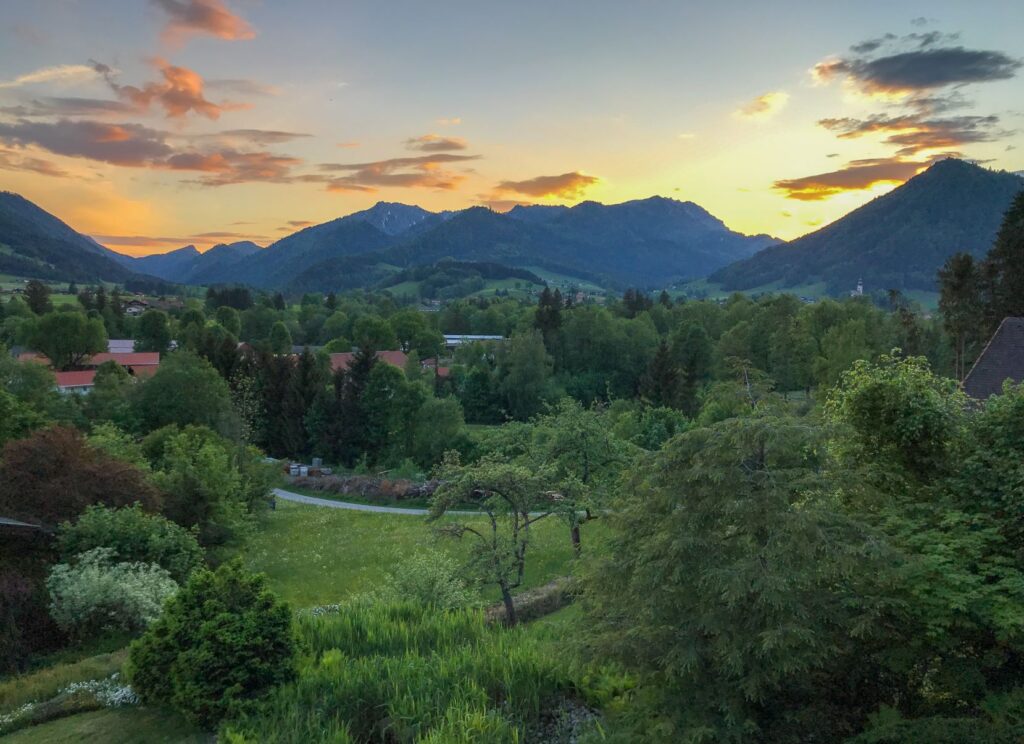
For this journey, I chose to base myself in Ruhpolding, a small village tucked near Berchtesgaden National Park, Lake Chiemsee, and just a short hop to Salzburg, Austria.
Sports fans might recognize the name—Ruhpolding has hosted the World Biathlon Championships four times—but beyond the events, it feels like a place that belongs to the mountains themselves. Nestled in the Bavarian Alps, its beauty is quietly staggering.
Ruhpolding is roughly two hours by car from Munich. The moment you leave the city behind, the landscape shifts. Rolling hills open up, pastures stretch wide, and the mountains gradually dominate the horizon. The air becomes crisper, cooler, and impossibly fresh—a clear signal that the Alpine Road has begun.
I stayed in a traditional alpine chalet, one bedroom, with a private balcony overlooking the mountains (photo above). The hosts made it feel like home: fresh eggs waiting in the morning, chocolates tucked in at night. Simple touches, but exactly the kind of hospitality that stays with you. I wouldn’t hesitate to recommend this spot to anyone travelling the region.
Recommended Places to Visit
- Salzburg, Austria – Just across the border, this romantic city offers baroque architecture, cobbled streets, and the soundtrack of Mozart—perfect for a day trip if you want culture alongside your mountains.
- Berchtesgaden National Park – Alpine peaks, serene lakes, and hiking trails that feel endless. Perfect for a day when you want to immerse yourself in untouched nature.
- Berchtesgaden (Old Town) – Charming streets, local cafés, and a lovely stop after a day in the mountains. I dined at Gasthof Neuhaus near the market square.
- Bad Reichenhall – A spa town known for its saltworks, thermal baths, and the kind of relaxed Bavarian atmosphere you rarely find on the tourist map.
- Inzell – A small village ideal for leisurely walks, cycling, and a taste of authentic Alpine life. I enjoyed lunch at a traditional German tavern.
Midway Stop – Garmisch-Partenkirchen

Heading west from Berchtesgaden toward Garmisch-Partenkirchen is one of the most unforgettable stretches of the Alpine Road. This section of the route moves beyond charming villages and lakes, taking you deep into the dramatic heart of the Bavarian Alps.
This stretch rewards early mornings.
By mid-morning, tour buses begin appearing at popular viewpoints, but at sunrise the roads feel almost empty. Driving through alpine pastures with low fog still lingering in the valleys is one of the most memorable experiences of the entire route.
The journey winds through roads that feel designed for lingering rather than racing. Along the way, you’ll cross three mountain passes, each offering panoramic views that beg for a pause: the rolling pastures of Griessneralm, the quiet alpine charm of Wochenbrunneralm, and the distant, rugged peaks of Kitzbühlerhorn. The air here has a different quality—it’s fresher, cooler, and filled with the scent of pine and wildflowers.
Along this route, small towns like Reit im Winkl and Bad Tölz invite brief explorations. Reit im Winkl feels almost untouched by tourism, while Bad Tölz offers painted façades, cafés, and a peaceful riverside stroll. Both are perfect for stretching your legs and letting the road’s slow rhythm sink in.
As you approach Garmisch-Partenkirchen, the scenery intensifies. Towering peaks, dramatic cliffs, and distant glaciers dominate the horizon, signalling that you’ve entered the high alpine zone.
Garmisch serves as a natural midpoint on the Alpine Road, and for many travellers—including me—it’s the ideal place to set up a second home base. Here, mountains are close enough to touch, yet the town itself retains a quiet, lived-in pace.
The drive from Berchtesgaden to Garmisch covers almost 200 kilometres and takes roughly 2.5 hours, though with so much to see, I recommend you plan for the day.
Recommended Places to Visit
- Garmisch-Partenkirchen – Alpine charm, pedestrian streets, and a gateway to hikes and mountain excursions.
- Zugspitze – Germany’s highest peak, accessible by cable car; the views are otherworldly and worth lingering for late afternoon light while enjoying a beer at the summit.
- Mittenwald – A small village famous for painted houses and violin-making tradition; perfect for a slow wander.
- Oberammergau – Known for its Passion Play and Lüftlmalerei, the town is a painterly pause on the route.
- Innsbruck, Austria – Just across the border, offering alpine culture, architecture, and a different flavour of mountain life for an enjoyable day.
Final Leg – From the Bavarian Alps to Lindau
Neuschwanstein is easily the most famous stop along this stretch of Bavaria. I had visited before, so this time I chose not to join the crowds climbing toward the castle. Instead, I paused briefly at a roadside viewpoint to admire its fairytale silhouette before continuing west.
Sometimes slow travel means knowing when not to stop.
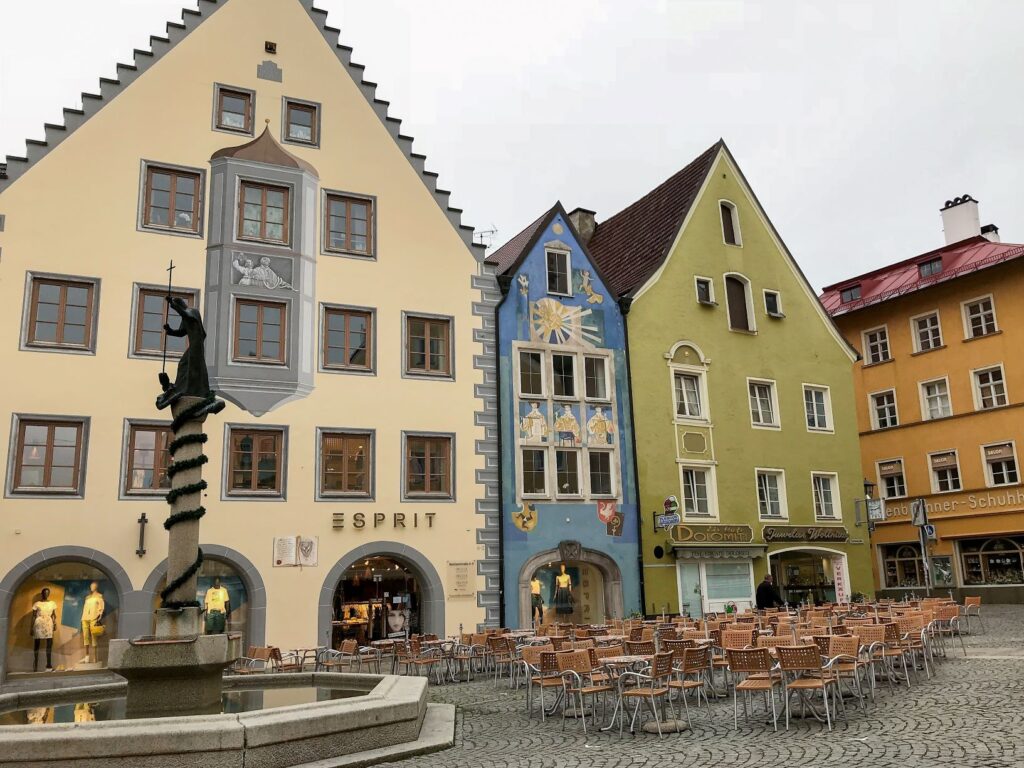
Nearby Füssen, with its cobbled streets, cozy cafés, and old-town charm, invited a brief stop. I wandered just long enough to stretch my legs and soak up the atmosphere, already planning a return visit to linger and explore more fully.
As the Alps receded, the landscape shifted dramatically. Towering peaks gave way to rolling hills, orchards, and patchwork vineyards. The air grew warmer, carrying a faint hint of lake breezes, and the pace of the countryside felt slower, gentler. Driving here, I was struck by how quickly Germany’s alpine drama can dissolve into the tranquil atmosphere of southern Bavaria.
Approaching Lindau, the scenery transformed again. Harbours glowed with colour, and the sunlight seemed brighter, warmer, carrying the relaxed energy of a lakeside retreat.
Finally, I arrived at Lake Constance, the perfect ending point to the Alpine Road.
I stayed in Konstanz (Constance) at the RIVA Boutique Hotel, a waterfront retreat that balances luxury with intimacy. From the rooftop pool to the spa and 5-star dining, it was an indulgent finale to a slow, reflective journey.
FAQ About Germany’s Alpine Road
Is the German Alpine Road worth it if you’ve already visited the Bavarian Alps?
Yes. The Alpine Road connects many landscapes that travellers often see separately—mountain villages, lakes, alpine pastures, and historic towns. Driving the full route reveals how these places fit together geographically and culturally, creating a deeper understanding of Bavaria beyond individual destinations.
What kind of traveller will enjoy the German Alpine Road most?
The Alpine Road is ideal for travellers who enjoy landscapes, outdoor experiences, and small alpine towns rather than busy cities. If you appreciate scenic drives, quiet lakes, mountain views, and wandering villages at a slower pace, this route offers one of the most rewarding journeys in southern Germany.
What surprises travellers most about the German Alpine Road?
Many expect constant dramatic mountain scenery. What surprises them is the variety—wide pastures, turquoise lakes, quiet villages, and sudden alpine peaks appearing around a bend. The changing landscape is what makes the route feel like a journey rather than a single scenic drive.
What is the most scenic part of the German Alpine Road?
Many travellers consider the stretch between Berchtesgaden and Garmisch-Partenkirchen the most dramatic. This section passes through the heart of the Bavarian Alps, with towering peaks, alpine meadows, and winding mountain roads that showcase some of the most striking scenery along the entire route.
Is the German Alpine Road worth it?
Absolutely. The German Alpine Road offers one of the most scenic drives in Europe, combining alpine peaks, turquoise lakes, and traditional Bavarian villages. Travellers who enjoy slow road trips, nature, and mountain landscapes will find it far more memorable than many faster-paced sightseeing routes.
My Final Take: Let the Road Set the Pace
The Alpine Road in Germany isn’t meant to be rushed. Its true magic emerges when you slow down—pause at lakesides, linger in alpine villages, and take in mountain vistas without hurrying. Every curve, every pass, every quiet village unfolds at a deliberate pace.
By letting the road set your pace, you discover the best of Bavaria that most travellers miss. It’s not about crossing milestones—it’s about savouring the journey, and allowing the Alps to reveal themselves in layers, one day at a time.
For travellers who want to plan a thoughtful, unhurried journey along the Alpine Road—or anywhere in Germany—I offer personalized travel planning services that handle the details, suggest hidden gems, and craft a pace that matches your style.


