

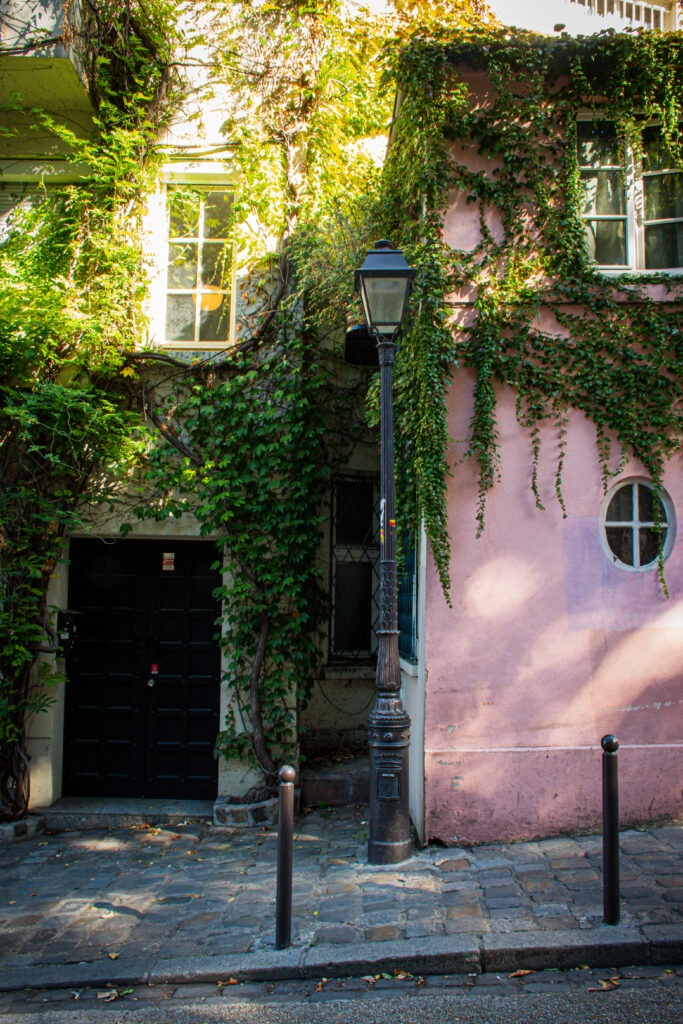
Rue de l’Abreuvoir is often called the most beautiful street in Paris, and after returning to it for more than 15 years, I understand why.
Tucked into the heart of Montmartre, this short cobblestone street is known for its ivy-covered houses, village atmosphere, and the iconic La Maison Rose. Despite becoming one of the most photographed streets in Paris, it still offers a glimpse of the Montmartre that existed before the souvenir shops and crowds.
I first discovered Rue de l’Abreuvoir on my second trip to Paris. I had already visited the Louvre and Eiffel Tower, but I was searching for something that felt less like a landmark and more like a neighbourhood. When I turned onto this quiet street, I found exactly that.
Since then, I have returned to Paris more than a dozen times and almost always make my way back here. Not because it is hidden anymore, but because it captures something increasingly rare in Paris: a reminder that Montmartre was once a village long before it became one of the city’s most visited neighbourhoods.
I’ll show you what makes Rue de l’Abreuvoir special, the best time to visit, what to see nearby, and how to experience it beyond the famous photographs.
This post may contain affiliate links, meaning I get a commission if you decide to purchase something through the links, at no additional cost to you. Read my Affiliate Disclosure.
What Makes Rue de l’Abreuvoir So Special?
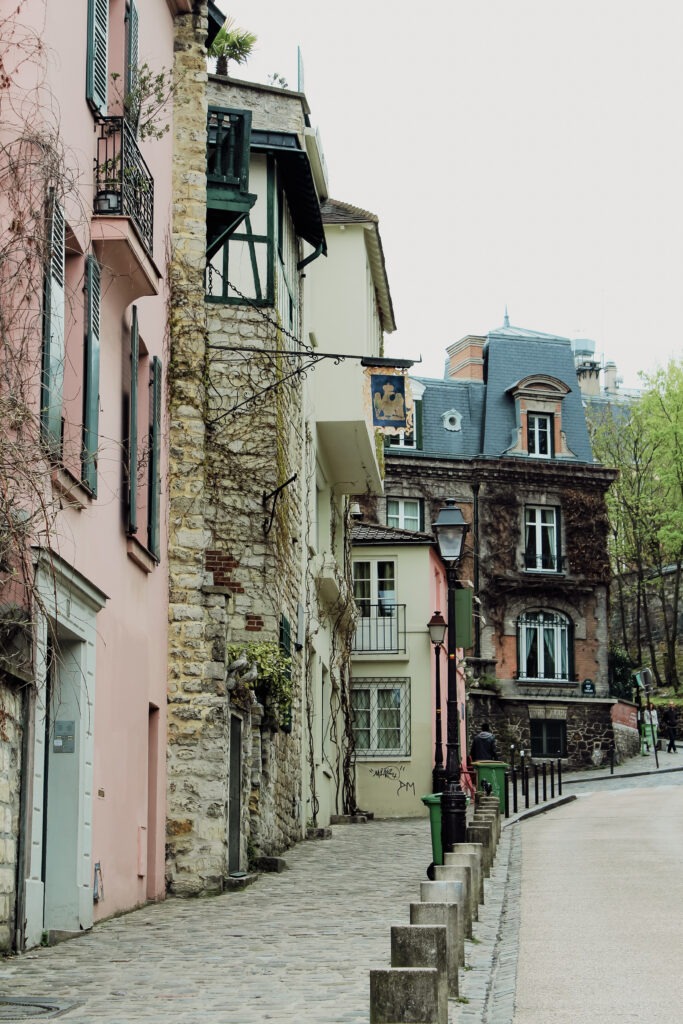
Rue de l’Abreuvoir is often called the prettiest street in Paris. While that’s a big claim, I think it’s one of the few places that actually lives up to the reputation.
That said, it’s important to know what you’re coming here for.
This is not a major attraction. It’s a short residential street in Montmartre. Most visitors spend less than twenty minutes here before continuing their walk through the neighbourhood. If you’re looking for famous landmarks, museums, or a packed sightseeing itinerary, Rue de l’Abreuvoir may not feel worth the detour.
But if you love discovering the character of a place through its streets, this is exactly the kind of spot that stays with you.
When I first discovered Rue de l’Abreuvoir more than 15 years ago, it felt like I had stumbled onto a private corner of Paris. Just a few minutes from Sacré-Cœur, the crowds disappeared. I could hear my own footsteps on the cobblestones as I followed the gentle curve of the street.

What makes Rue de l’Abreuvoir different from many postcard locations in Paris is its scale. The appeal comes from the feeling that, for a moment, you’ve stepped into the Montmartre that existed before it became one of Paris’s most visited neighbourhoods.
The curve of the street is part of its charm. It doesn’t reveal itself all at once. As you walk uphill, ivy-covered façades frame the view, and La Maison Rose slowly appears around the bend at the top. Even after multiple visits, I still find myself slowing down here.
The secret is long out. When I first visited, there were no lines of photographers waiting for the perfect shot. Today, it is one of the most photographed streets in Paris. Yet despite the attention, I still recommend visiting.
My advice is simple: come early in the morning (best before 9 am) and combine it with a walk through Rue Saint-Vincent, Clos Montmartre, and the Musée de Montmartre. Together, they tell a bigger story about the neighbourhood than Sacré-Cœur alone and uncover the village character that makes Montmartre so special.
The History Behind Rue de l’Abreuvoir
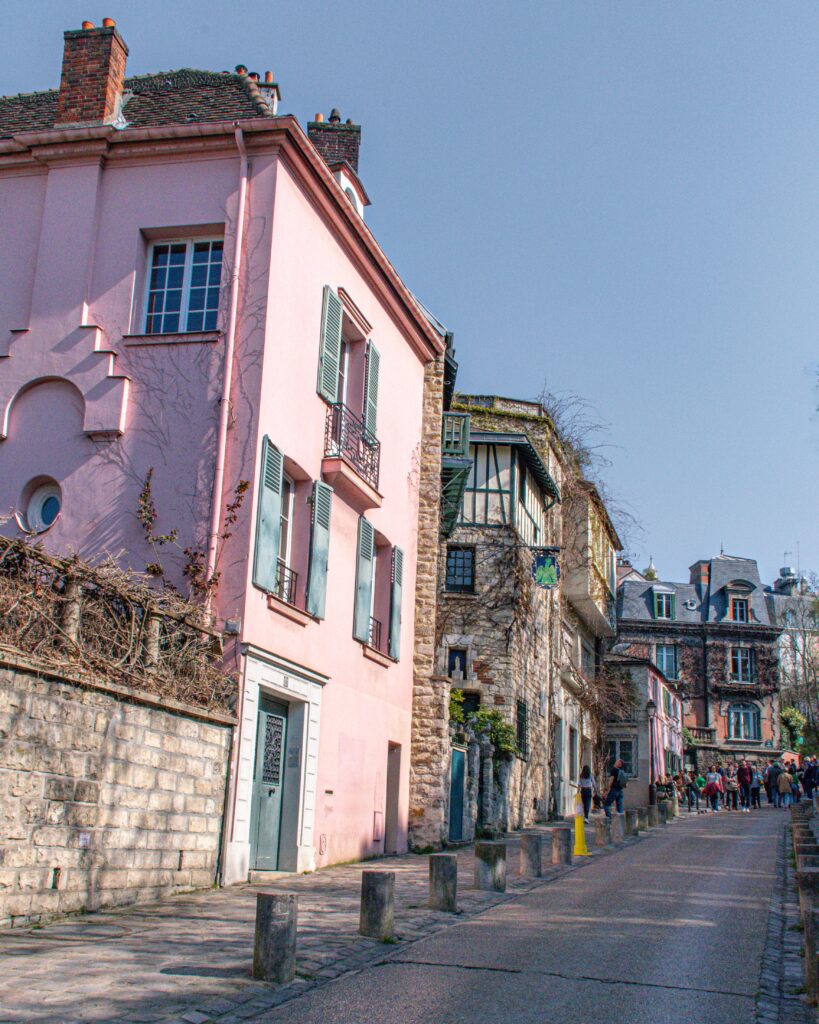
The name Rue de l’Abreuvoir isn’t just pretty on the tongue; it has roots in a much older Montmartre.
Known as one of the oldest streets in Paris, this road was first mentioned on record as early as 1325 when it was called ruelle qui va au, or “road which goes to the end.”
This was when Montmartre stood as a rural village, apart from the city of Paris, dotted with farms and vineyards.
It wasn’t until 1843 that the street took on the name Abreuvoir, meaning “drinking trough.” Horses would come here to drink, as it was home to a watering hole.
Later, as Montmartre transformed, artists arrived in search of cheap rent and bright northern light. Renoir painted nearby, Picasso found inspiration in the neighbourhood’s energy, and countless writers lingered in local cafés.
I love those details.
Knowing this history changes how I see the street. Most visitors experience Montmartre as a tourist district, which it is. But for me, Rue de l’Abreuvoir reminds me that this was once a working hillside village with vineyards, animals, and dirt roads long before artists and visitors arrived. And that is why it’s always worth visiting.
What to See Along Montmartre’s Rue de l’Abreuvoir
La Maison Rose

The iconic La Maison Rose is one of the most popular photo spots in Montmartre. That pink façade with green shutters is an utterly romantic place. Sitting at number 2, this little café once welcomed Picasso himself. He would slip inside, sip his espresso, and watch the quiet world drift by.
Today, La Maison Rose is one of the most photographed spots in Paris. If you can’t snag one of the coveted tables outside, don’t worry. Step inside and you’ll find vintage photographs, soft lighting, and a warmth that feels deeply Parisian.
Buste de Dalida

At the opposite end of the street stands the Buste de Dalida. This bronze sculpture honours Dalida, the beloved Egyptian-born singer and actress. Locals and visitors touch it for luck, or leave flowers in quiet tribute. Even in bronze, she seems to hold a gentle presence over the street.
Maison du Vieux Montmartre
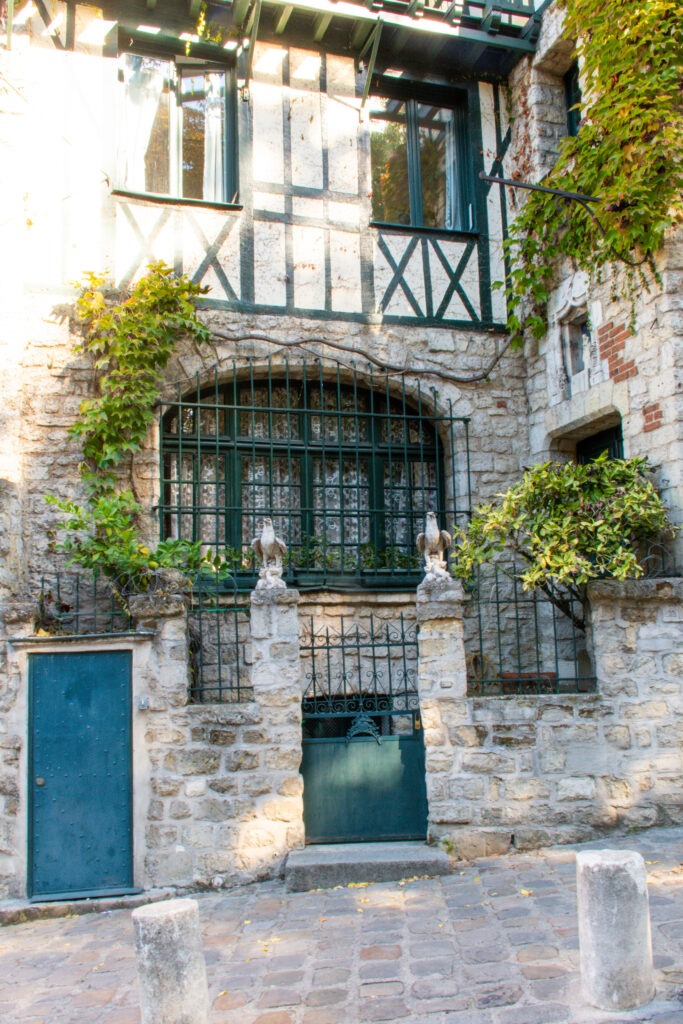
Hidden at number 4 is Maison du Vieux Montmartre, also known as the House of Eagles. Look closely: you’ll see an eagle and a sundial carved into the gray stone, and two eagle statues standing guard at the gate.
This medieval house was once home to Commander Henry Lachouque, a historian devoted to Napoleon and the Grand Armée. It feels like a piece of another century, quietly watching the world change.
Cité Internationale des Arts
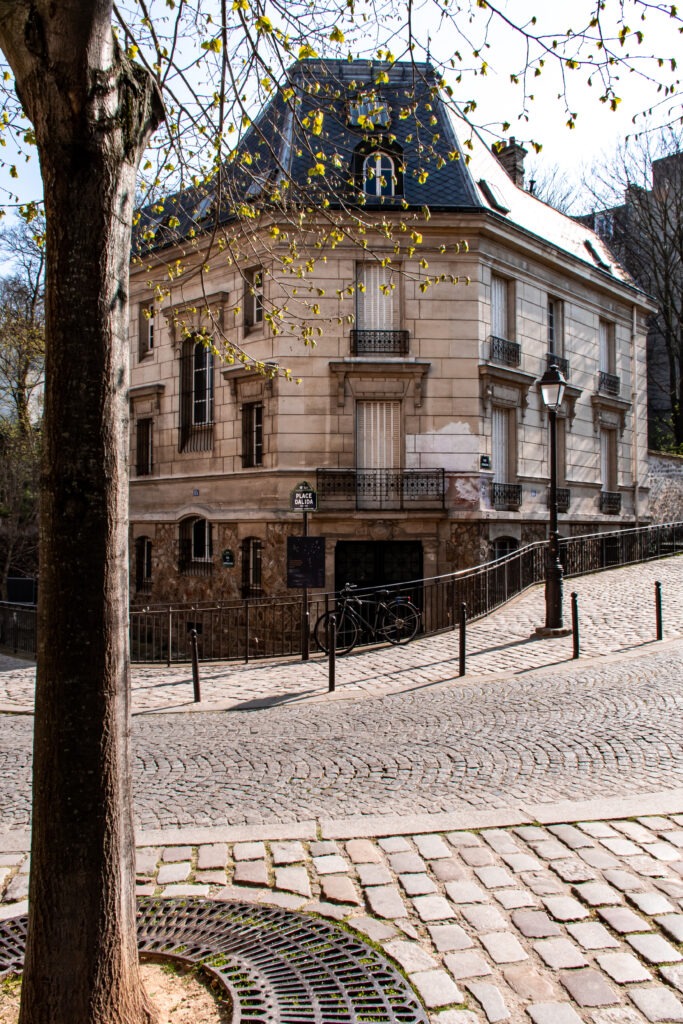
Further down, at number 15, is the Cité Internationale des Arts. A series of studios and living spaces, it offers artists a chance to work, live, and breathe their craft in community.
A few times a year, they open their doors to the public. I love visiting during these shows — you feel the raw pulse of new talent and see Montmartre’s artistic soul continuing in modern form.
More of Paris on Substack: I publish more about Paris on my Substack, which doesn’t always make it into my travel guides.
How to Get to Rue de l’Abreuvoir
Rue de l’Abreuvoir is in Montmartre. It’s about 3km from the Louvre. If you don’t want to walk, the metro is the easiest way to reach it.
Metro:
- Take Line 12 to Lamarck-Caulaincourt station.
- From the exit, walk up Rue Lamarck. Turn right onto Rue Saint-Vincent. Follow it until you reach Rue de l’Abreuvoir.
Alternative Metro Option:
- Take Line 2 to Anvers station.
- From Anvers, walk up Rue de Steinkerque toward the base of the Sacré-Cœur.
On Foot from the 9th arrondissement:
- Start near Pigalle (Metro Line 2 or 12).
- Walk up Rue Houdon, then Rue des Abbesses.
- From Place des Abbesses, continue up Rue Yvonne le Tac toward the base of Sacré-Cœur.
- Here, you have a choice:
- Climb the steep stairs directly up to Sacré-Cœur for a classic Montmartre workout.
- Or take the Montmartre funicular (same ticket as the metro) to save your legs and enjoy the sweeping view as you rise.
From Sacré-Cœur (once at the top):
- Exit to the left of the basilica.
- Walk down Rue du Chevalier de la Barre.
- Turn left onto Rue Saint-Vincent.
- Rue de l’Abreuvoir will appear on your right, with La Maison Rose welcoming you at the end.
How I Would Continue Exploring Montmartre
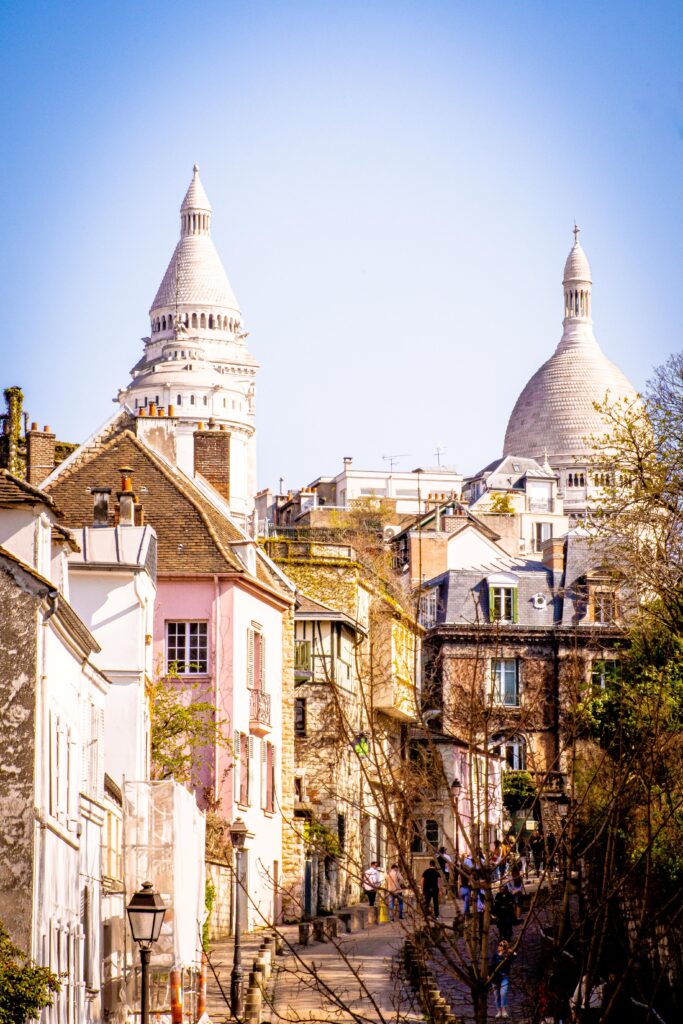
Many visitors arrive at Rue de l’Abreuvoir, take a photograph of La Maison Rose, and leave, or stick around and visit the most touristy side of Montmartre. I think that’s a mistake.
After visiting Rue de l’Abreuvoir, I usually continue along Rue Saint-Vincent. It’s another one of those streets in Montmartre that are worthy of a stroll. As you walk, you’ll pass Clos Montmartre, the neighbourhood’s small vineyard. It surprises many first-time visitors, but it’s also a reminder that Montmartre was once a rural village sitting outside the city of Paris. If you happen to visit in the autumn, you’ll find locals out celebrating the wine harvest just like they’ve done for centuries.
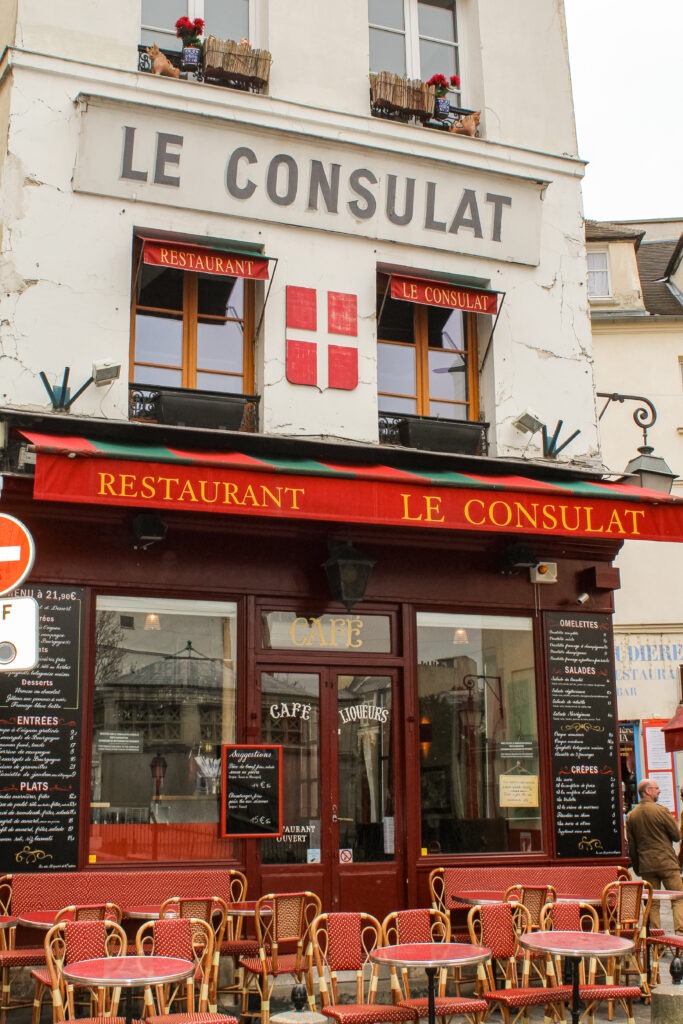
If you enjoy understanding the places you visit rather than simply photographing them, I recommend spending some time at the Musée de Montmartre. Housed in one of the oldest buildings in the neighbourhood, it offers valuable context for everything you’ve just seen. The gardens are worth visiting on their own and are often much quieter than the crowds gathering around Place du Tertre.
Sacré-Cœur is, of course, worth seeing, particularly if it’s your first visit to Montmartre. But if you only have time for one experience beyond the basilica, I would choose wandering the streets instead. The character of Montmartre reveals itself in the small details: a hidden staircase, an old doorway, a quiet square, or a street that bends unexpectedly around the hill.
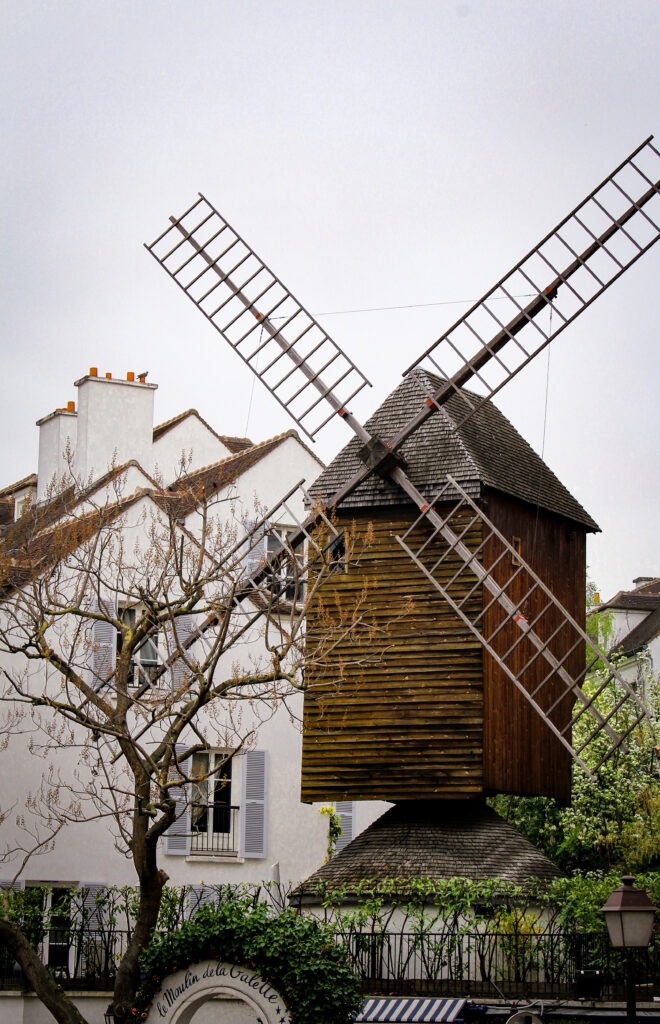
This is one of the few areas in Paris where I encourage people to put away their itinerary and simply walk. Some of my favourite memories of Montmartre come from getting a little lost in the narrow lanes and coming across some unexpected finds, just like finding the last few remaining windmills, reminding you of Montmartre’s rural past.
Get My Montmartre Walking Tour: Explore Montmartre beyond the famous landmarks with my self-guided walking tour featuring hidden streets, local stories, and the quieter corners most visitors miss.
Rue de l’Abreuvoir Is Just the Beginning
Rue de l’Abreuvoir may be one of the most photographed streets in Paris, but what keeps drawing me back isn’t the photograph. It’s the feeling of stepping into a part of the city that still remembers its village roots.
That’s what makes Montmartre different from other Paris neighbourhoods I love. Saint-Germain in the 6th as it feels so chic and intellectual, with elegant boulevards, historic cafés, and a distinctly Left Bank atmosphere. Le Marais in the 3rd and 4th feels energetic and layered, where medieval streets, boutiques, galleries, and hidden courtyards sit side by side. Montmartre, by comparison, feels more like a village that was gradually absorbed by the city but never entirely lost its identity.
If you only visit Rue de l’Abreuvoir, you’ll see one beautiful street. If you spend time wandering the surrounding neighbourhood, you’ll begin to understand why so many artists, writers, and dreamers were drawn here in the first place.
Planning a trip to Paris and not sure which neighbourhoods best match your travel style or where to stay? My custom trip planning services help you build an itinerary around the experiences you’ll enjoy most, so you spend less time rushing between attractions and more time discovering the parts of Paris that feel right for you.


