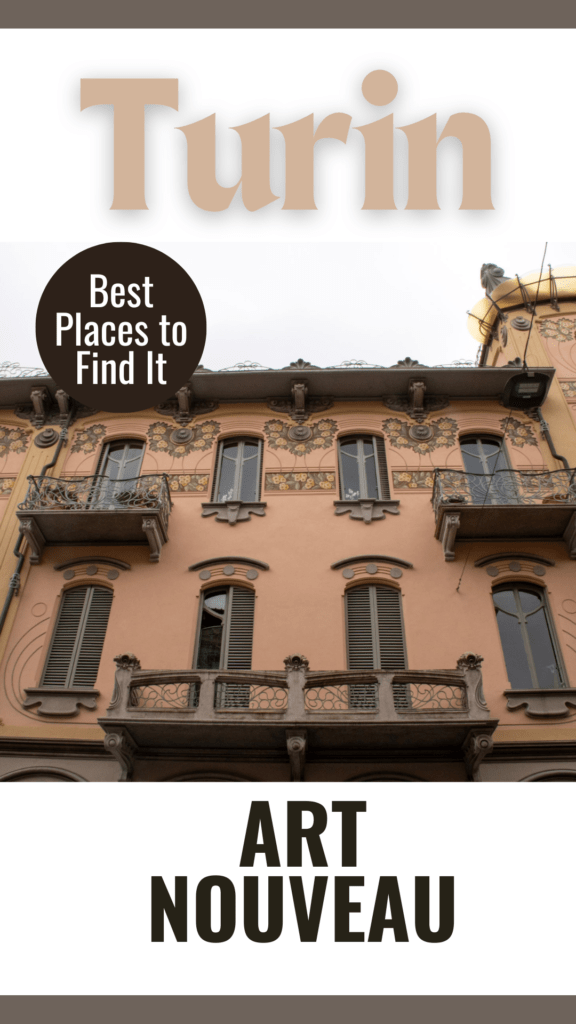
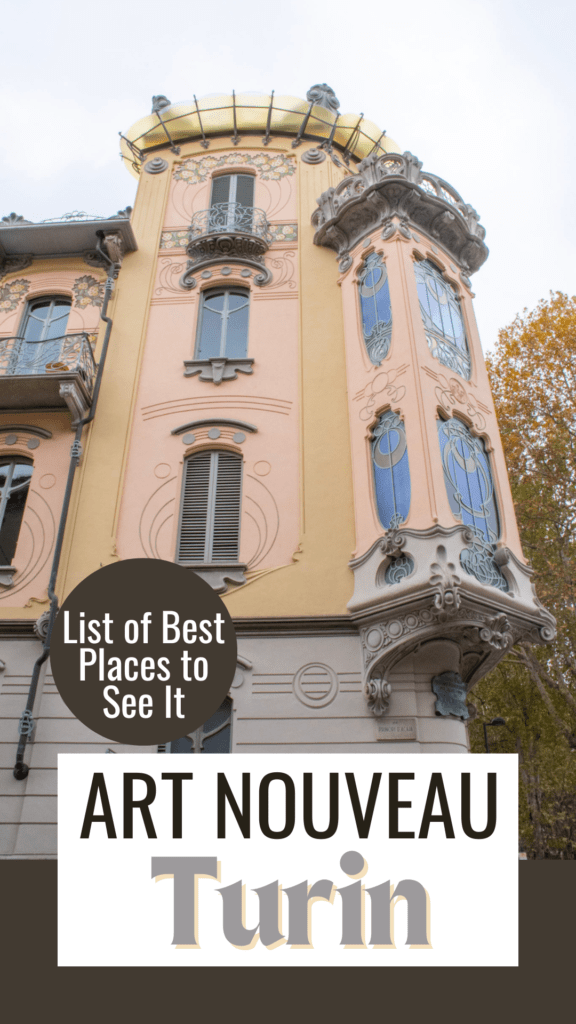
When I booked my stay in Turin, I deliberately chose an Art Nouveau apartment, hoping for a touch of elegance and charm in a neighbourhood away from the historic centre. What I didn’t expect was to stumble across entire neighbourhoods filled with some of the city’s best Liberty-style buildings.
Over a few slow-paced days, I wandered through San Donato, Cit Turin, and Crocetta, letting streets, façades, and delicate details guide me. It’s a quieter, more local side of Turin, where iron balconies curl like vines, tiles bloom in unexpected patterns, and every corner invites you to pause.
If you love architecture, slow travel, and wandering without a strict plan, this will speak to you. I’ll share my favourite spots where I found Art Nouveau in Turin.
This post may contain affiliate links, meaning I get a commission if you decide to purchase something through the links, at no additional cost to you. Read my Affiliate Disclosure.
What Makes the Art Nouveau in Turin Unique

Art Nouveau, known in Italy as Liberty style, emerged at the turn of the 20th century as a reaction against the industrial movement.
The turning point came in 1902 with the Prima Esposizione Internazionale d’Arte Decorativa Moderna, a major exhibition of decorative arts. This event sparked a newfound appreciation for its signature traits—flowing lines, floral and vegetal motifs, delicate ironwork, and intricate details—which were meant to transform everyday architecture into art. Residents of Turin advocated for seeing more of this design throughout their city.
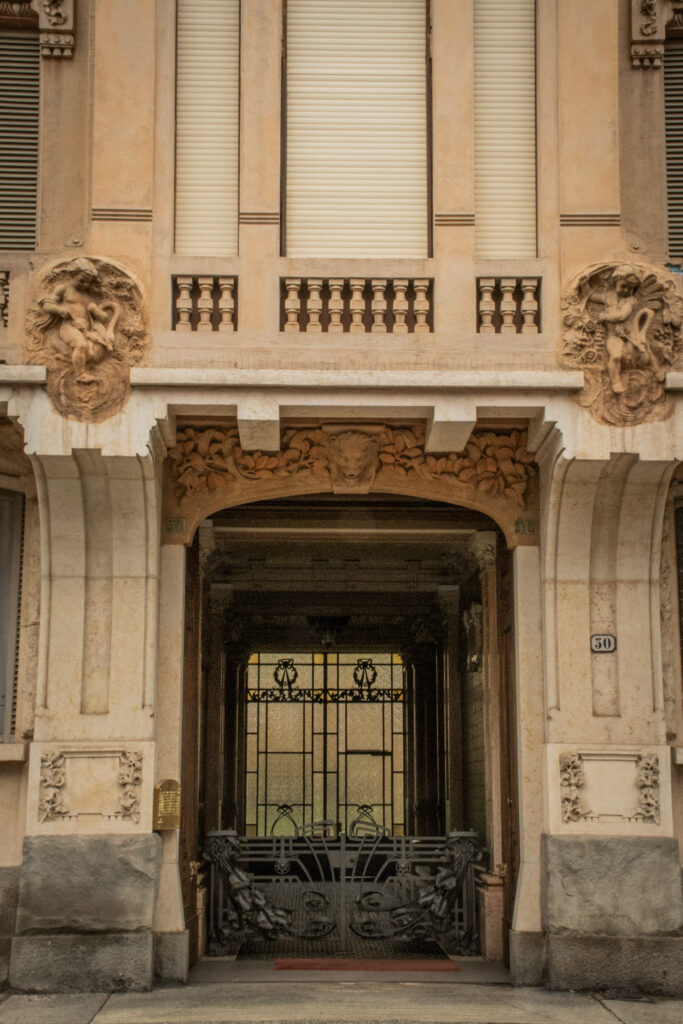
Turin’s movement was shaped by influences from Paris and the birthplace of the Art Nouveau style in Brussels. I instantly recognized the curvilinear style popularized by Hector Guimard and his famous Metro station signs. And, the wrought iron decorative pieces by Gustave Strauven from Brussels.
As Art Nouveau continued to evolve in Turin, it incorporated elements of other styles, like the Gothic and Renaissance Revival. The result is this unique blend of styles that made Turin stand out as one of Italy’s Art Nouveau capitals. And the name, Pietro Fenoglio, was considered the pioneer of the Liberty style in Turin.

An Art Nouveau Walking Route for a Self-Guided Tour
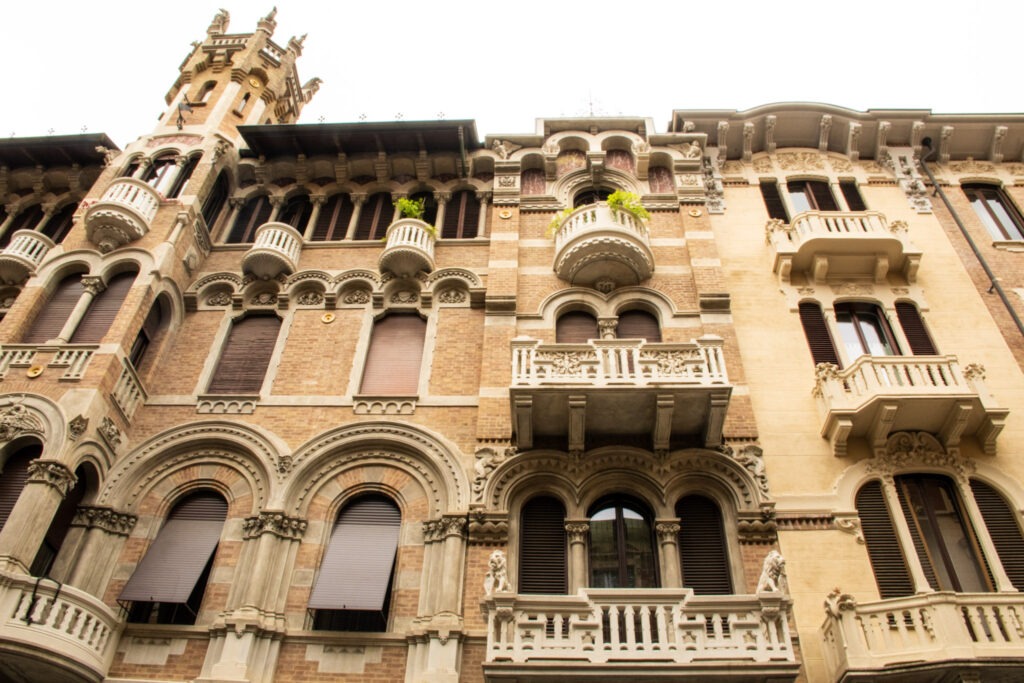
I spent a full day wandering through Turin, seeking out the best examples of Art Nouveau. Now, I’ve put them all together in a self-guided walking tour for you. Just enter these addresses into your map app, start walking, and let the city’s famous Liberty style reveal itself.
To make things easier, I’ve grouped the locations by district so you can choose how to explore them at a comfortable pace and perhaps incorporate them into your itinerary.
San Donato: Liberty in Everyday Life
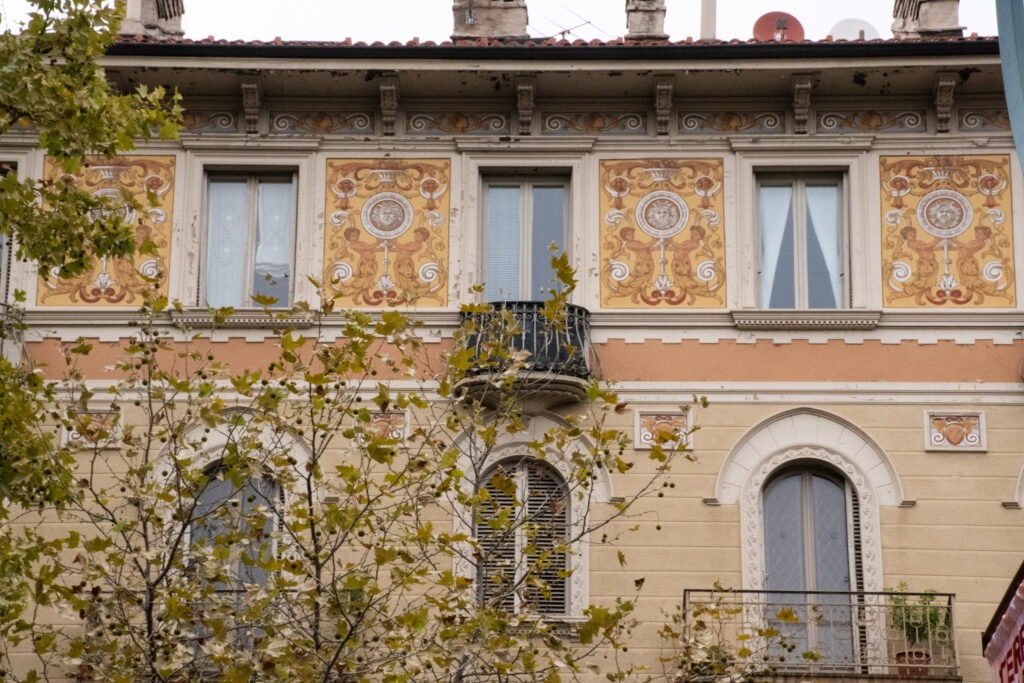
San Donato feels like Turin’s quiet, elegant district, away from the busyness of the historic center. Compared with Cit Turin or Crocetta, San Donato has a relaxed feel. The streets invite wandering.
This is a large district. But there is a high concentration of Art Nouveau buildings in one walkable area, making it easy to visit and add to your Turin itinerary.
| Building Name | Address |
|---|---|
| Casa Padrini (Designed by Pietro Fenoglio) | Via L. Cibrario, 9 |
| Casa Florio (Designed by Bellini Vellati, 1902) | Via L. Cibrario, 15 |
| Casa Tasca (Designed by G. B. Benazzo in 1903) | Via Beaumont, 3 |
| Palazzo Rigat | Via Beaumont, 2 |
| Residential building (Designed by Giovanni Gribodo, 1910) | Via Pietro Piffetti, 10 |
| Casa Gribodo (Designed by Giovanni Gribodo, 1908) | Via Pietro Piffetti, 12 |
| Hotel Principi d’Acaja | Via Principi d’Acaja, 8 |
| Casa Fenoglio-Lafleur (Designed by Pietro Fenoglio in 1902) | Via Principi d’Acaja, 11 |
| Villino Raby (Designed by P. Fenoglio, G. Gussoni, and A. Mazzucotelli in 1901) | Corso Francia, 8 |
| Casa Macciotta (Designed by Pietro Fenoglio in 1904) | Corso Francia, 32 |
My Personal Favourites:

Casa Fenoglio-Lafleur, designed by Pietro Fenoglio as his private residence, is one of the most iconic examples of Liberty style in Italy. If you see only one Art Nouveau building in Turin, make it this one.
Casa Florio stands out in its own way—so different from other Art Nouveau buildings that it feels like a must-see on its own. And, Casa Tasca caught my eye with its intricate details, every element worth a closer look.
Cit Turin: Grand Facades and Hidden Details
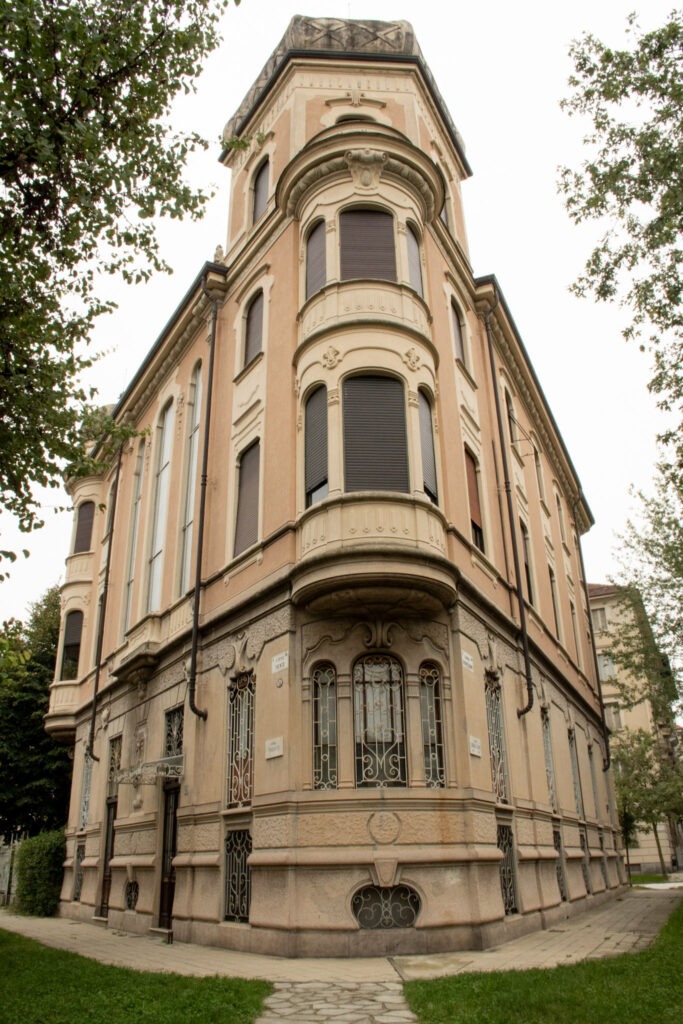
Cit Turin immediately feels more structured and deliberate than San Donato. Its heart is a triangle formed by three streets—Vittorio Emanuele II, Inghilterra, and Corso Francia. Walking here, you notice the scale: buildings are taller, details more pronounced, and the curves and floral motifs of Liberty style seem designed to impress without overwhelming.
Compared with San Donato, Cit Turin feels more polished, yet it still retains a calm, residential charm.
| Building Name | Address |
|---|---|
| Casa Zorio (Designed by A. Vandone di Cortemilia, 1909) | Corso Francia, 19 |
| Casa della Vittoria (Designed by G. Gussoni in 1920) | Corso Francia, 23 |
| Casa Baravalle (Designed by A. Rigotti in 1906) | Via Vassalli Eandi, 18 |
| Casa Ina (Designed by P. Fenoglio in 1906) | Via Principi d’Acaja, 20 |
| Casa del Faro (Erected by Cav. G. B. Carrera in 1912) | Via Palmieri 36 |
| Residential building (Designed by G. Gussoni and A. Vivarelli in 1914) | Via Duchessa Jolanda 17 |
| Residential Building (Designed by A. Vandone di Cortemilia in 1912) | Via Duchessa Jolanda 19-21 |
My Personal Favourites:
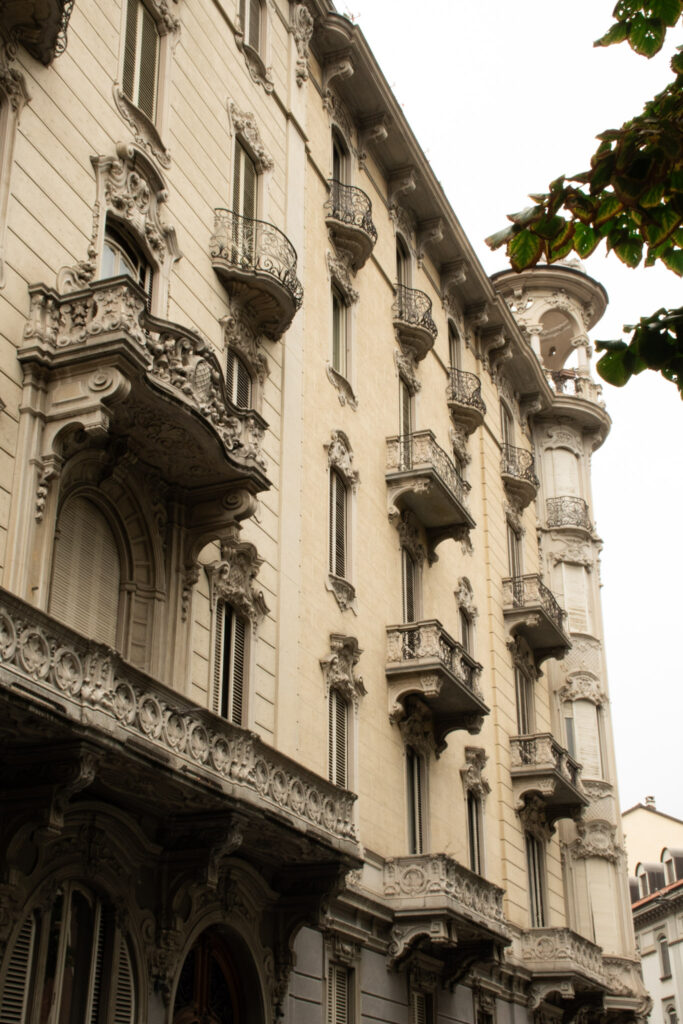
I loved Casa della Vittoria, also known as Casa dei Draghi (House of Dragons), for its incredible winged cement dragons.
There’s so much to admire about this building. From its bevelled corner to the turret, it blends Art Nouveau with a hint of Medieval and French Gothic Revival, making it one of the most unique façades I came across in Turin.
Casa del Faro lives up to its name, “Lighthouse”, for the tall, rounded tower, which gives it a distinct presence that stood out to me.
Crocetta: Residential Gems Off the Beaten Path
Crocetta feels distinctly residential, almost villa-like in spirit. This is where Turin’s Liberty style softens, becoming more private and refined. Wide, tree-lined streets give way to elegant homes set slightly back from the road, many built for the city’s early 20th-century bourgeoisie.
Compared with the high density of Art Nouveau structures in Cit Turin and San Danto, Crocetta feels more subtle and personal—less about architectural statements and more about livability.
If you have limited days in Turin, I recommend skipping Crocetta and focusing on San Donato and Cit Turin. The architecture is grander and is in proximity to each other.
| Building Name | Address |
|---|---|
| Casa Maffei (Designed by Antonio Vandone di Cortemiglia in 1906) | Corso Montevecchio, 50 |
| Palazzo Ceriana Mayneri (Designed by Carlo Ceppi in 1884) | Corso Stati Uniti, 27 |
| Villino Turbiglio | Corso Trento, 11 |
| Casa Lattes | Corso Germano Sommeiller, 21 |
My Personal Favourite
Overall, I appreciated the quieter pace here—strolling along Corso Duca d’Aosta, a long boulevard lined with stately homes and a garden running down the middle, felt like stepping into another era. It reminded me of the off-the-beaten-path neighbourhood in Rome called Quartiere Coppedè. It’s easily one of the most beautiful neighbourhoods in Turin.
Art Nouveau From the Inside Out
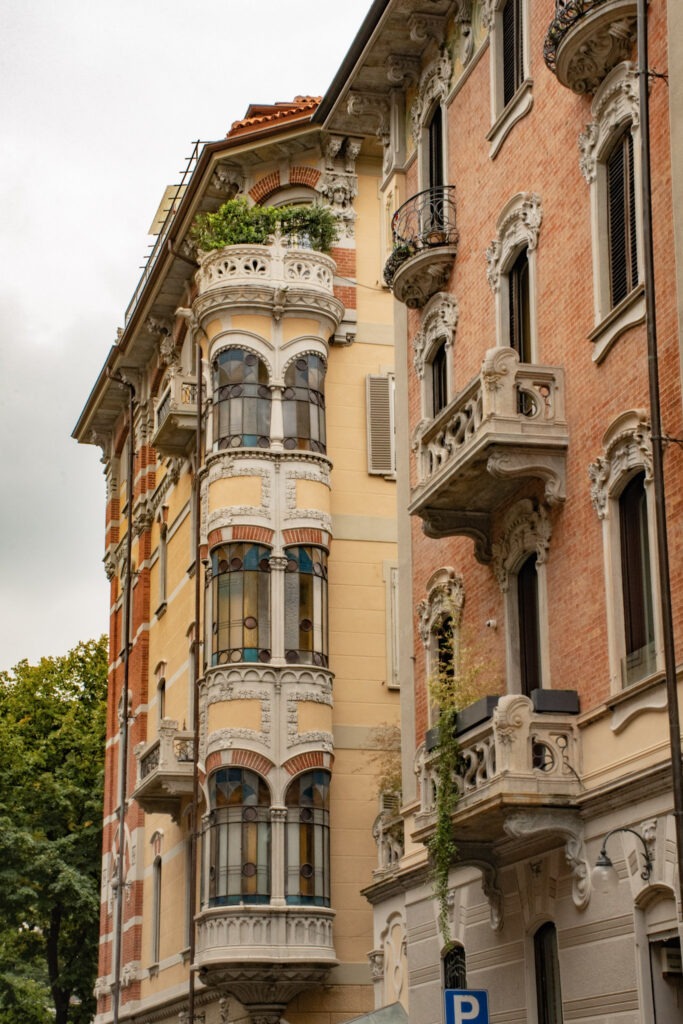
One of the most meaningful choices I made in Turin was booking a stay inside an Art Nouveau building.
Casa Boffa-Costa, designed in 1904 by Pietro Fenoglio, wasn’t just accommodation—it became part of the experience. Living inside a Liberty-style building changes how you see the city. Details you might otherwise get to see from only the exterior: the stairwell curves, the light filtering through tall windows, the iron elevator, and the quiet elegance baked into the structure itself. It slowed me down in the best way.
If you’re drawn to architecture, I highly recommend choosing a historic apartment when possible. It deepens your connection to Turin and places you firmly inside the narrative you’re exploring during the day.
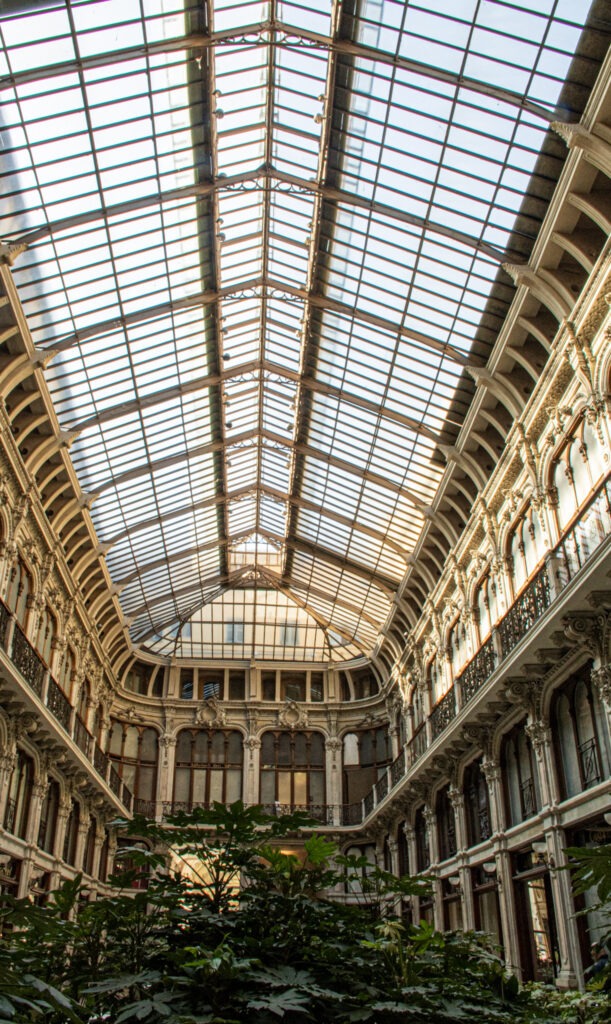
For those with limited time—or who want to complement the neighbourhood walk—there are a few Liberty-style highlights right in the historic center.
Galleria Subalpina blends Art Nouveau glass and ironwork with Turin’s café culture, while Casa Reda offers a quieter but equally rewarding glimpse of Liberty details just beyond the main tourist flow. These central examples don’t replace the neighbourhoods—but they add context, helping you see how Art Nouveau quietly weaves through the city.
My Final Take: Seeing Turin a Little Differently
Exploring Turin through its Art Nouveau neighbourhoods changed the way I experienced the city. Slowing down, looking up, and wandering streets away from the historic center revealed a more intimate side of Turin—one shaped by elegance, restraint, and everyday beauty. These Liberty-style buildings aren’t meant to be rushed. They reward patience, curiosity, and the simple act of paying attention.
If you love architecture, this kind of wandering offers something deeper than a checklist ever could. It’s about noticing how a city once imagined its future—and how those details still shape daily life today. Turin, in particular, feels generous in this way, especially when you’re willing to step slightly off the expected path.
If this way of travelling resonates with you, I share more reflections, slow itineraries, and lived-in discoveries like this in my newsletter community. It’s where I write about Europe at a gentler pace—one neighbourhood, detail, and quiet moment at a time.