

When I first visited Quartiere Coppedè, I wasn’t sure what to make of it. It didn’t feel like Rome as I knew it. No ruins. No cafés spilling into the street. No obvious reason to linger. And yet, it’s one of my favourite discoveries in Rome.
Tucked inside the Trieste district, this small architectural pocket reveals a different side of the city. One shaped not by emperors or popes, but by imagination. Coppedè isn’t ancient, and it isn’t grand in the traditional sense. It’s theatrical. Whimsical. Intimate. Slightly strange.
Even many repeat travellers to Rome haven’t discovered it yet.
This is for travellers who want to understand why this place exists, how to experience it without forcing meaning onto it, and when it fits—beautifully—into a well-paced Rome trip.
This post may contain affiliate links, meaning I get a commission if you decide to purchase something through the links, at no additional cost to you. Read my Affiliate Disclosure.
What Quartiere Coppedè Actually Is (And What It’s Not)

Quartiere Coppedè is not a neighbourhood in the way most people mean it. There’s no one main street. No cafés anchoring daily life. Nothing pulls you from one street to the next. Instead, it’s a small architectural enclave, tucked quietly inside the Trieste district, shaped almost entirely by one vision.
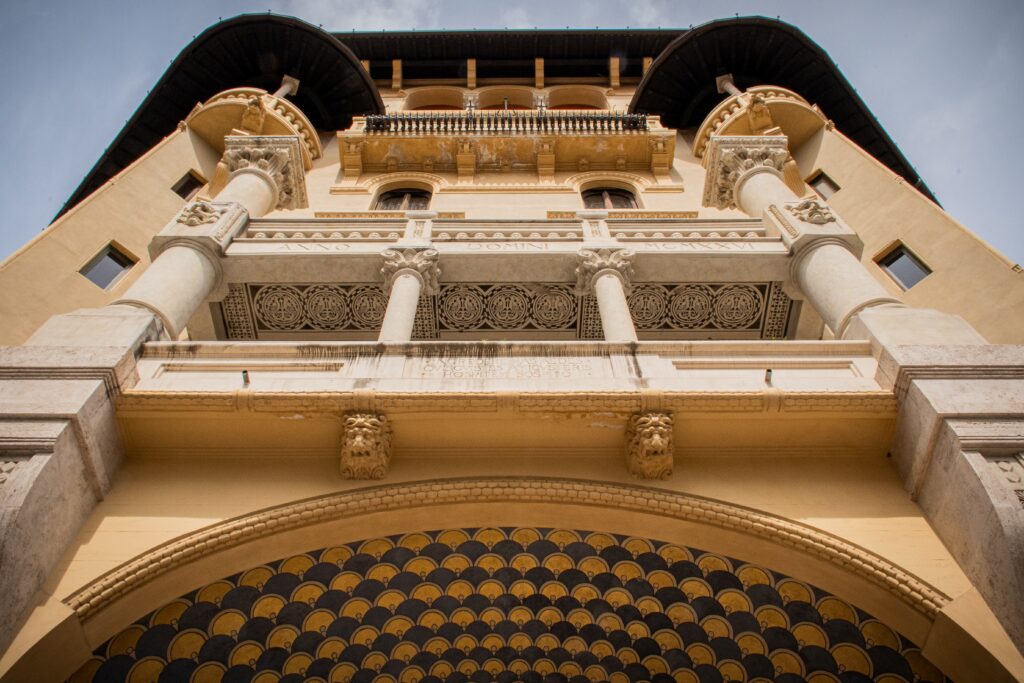
In the early 20th century, architect Gino Coppedè designed this pocket of Rome as a cohesive experiment. A mix of Art Nouveau, Gothic, Baroque, and pure imagination. It was never meant to be large. Or practical. Or universally appealing.
That’s where the confusion sets in.
People arrive expecting a destination. Something to do. Something to fill time. When they realize it’s only a few streets, they feel let down. But its scale is not a flaw. It’s the point.
From My Personal Perspective:
The Coppedè Quarter of Rome rewards travellers who care about architecture, who don’t mind stepping away from the historic center, and who value mood over monuments. It’s not for everyone. And it doesn’t need to be.
I’ve learned not to chase places. I ask a quieter question now: what do I actually want to spend my time noticing?
Why Quartiere Coppedè Feels So Different From the Rest of Rome

There are no ancient ruins here. No stucco buildings in warm ochre, terracotta, or cream lining the streets. No cafés spilling into piazzas. In Rome, that absence alone is disorienting.
Quartiere Coppedè doesn’t continue Rome’s story. It pauses it and creates a new one.
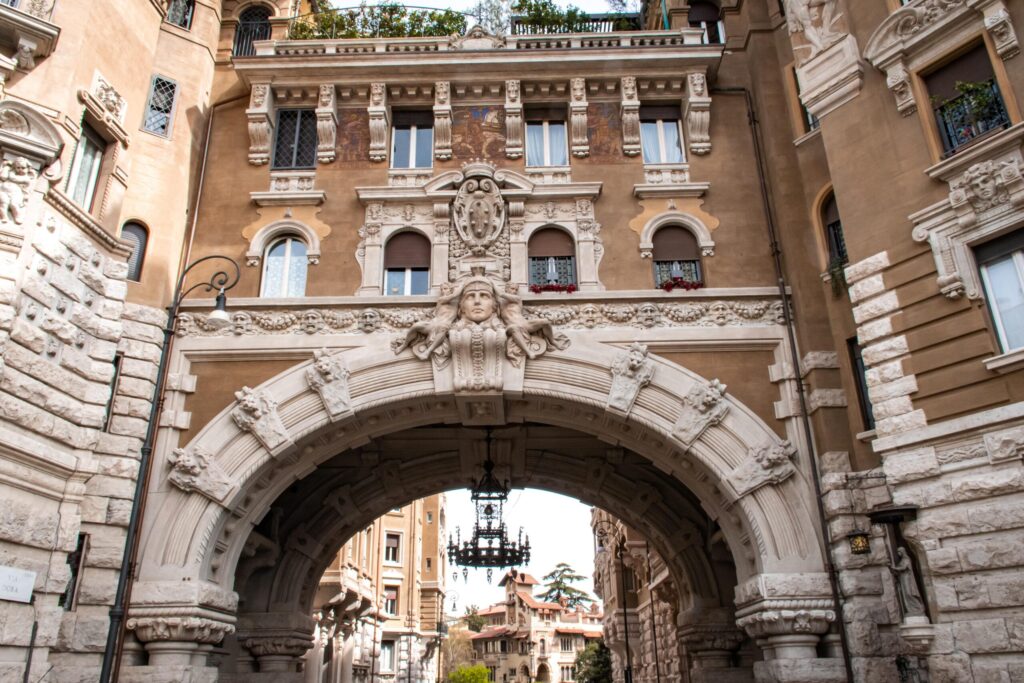
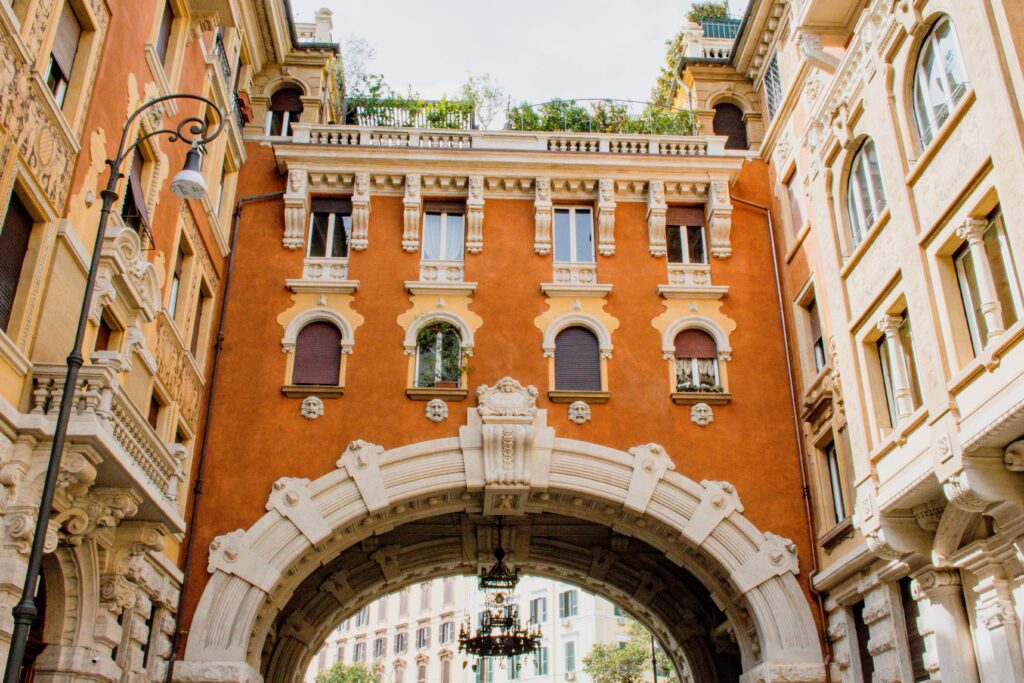
The first time I visited, it felt oddly theatrical. And refreshing. I remember walking under the archway, the massive lantern swaying above, unsure of what I was stepping into.
It felt like stepping through a portal—one moment I was in modern Rome, and the next, I was somewhere completely unfamiliar. The traffic behind me faded, and everything suddenly felt quieter, even though the city hadn’t gone anywhere.
I had already been in Rome for a week on that trip—a return visit—and I was worn down by the crowds, the noise, the grit that can creep into the city.
This place stopped all of that. It was the reset I didn’t know I needed.
I didn’t see another soul. It felt like a pocket carved out just for me. At first, I wondered, is this it? Is this all there is? Then I let that question go and simply wandered.
It is small. It isn’t extensive. But once you’re inside it, you forget you’re in Rome at all.
The Architecture Is the Reason to Visit

Quartiere Coppedè isn’t about one style. It’s about many, layered without apology. Art Nouveau curves sit beside Gothic arches. Baroque flourishes press up against medieval fantasy. Nothing is restrained. Nothing is symmetrical. The buildings feel composed more by instinct than by rules.
Here, symbolism matters more than order. Faces peer out from façades. Animals, masks, and mythological figures appear where you don’t expect them. It’s slightly surreal, like a stage set left behind after the actors have gone home.

The Palazzo del Ragno, or Spider Palace, gets its name from the large spider carved into the façade—an emblem of patience, craft, and quiet power. Nearby, the Villino delle Fate, the Fairies’ Cottage, looks like it belongs in a storybook. Timbered balconies, mosaic fragments, and painted details reference different Italian cities, stitched together into one fantastical home.

What always stops me, even now, is the entrance itself. The Arch of the Palaces of the Ambassadors on Via Dora. I remember walking beneath it for the first time, the massive lantern swaying overhead, cherubs and mask-like faces lining both sides. I lost count of them. And I didn’t want to.

It may be a limited number of buildings, but it will take you hours to notice all the details in just one.
Piazza Mincio as the Emotional Center of Quartiere Coppedè

If Quartiere Coppedè has a heart, it’s Piazza Mincio. Not because it’s grand, but because everything seems to soften once you arrive here. Four streets converge here, and each of the surrounding buildings anchors your view.
This is the real highlight. There’s no reason to move quickly. No one sightline pulling you onward. Each one deserves your attention. You’re meant to stand and absorb, letting the space settle around you.

At the center is the Fountain of Frogs (Fontana delle Rane). At first glance, it’s charmingly odd. A circular basin. Small stone frogs perched along the rim. Water trickles quietly from their mouths. It immediately reminded me of the Turtle Fountain in Rome’s Jewish Quarter—playful. Not like the grand fountains of Rome that everyone wants to visit.
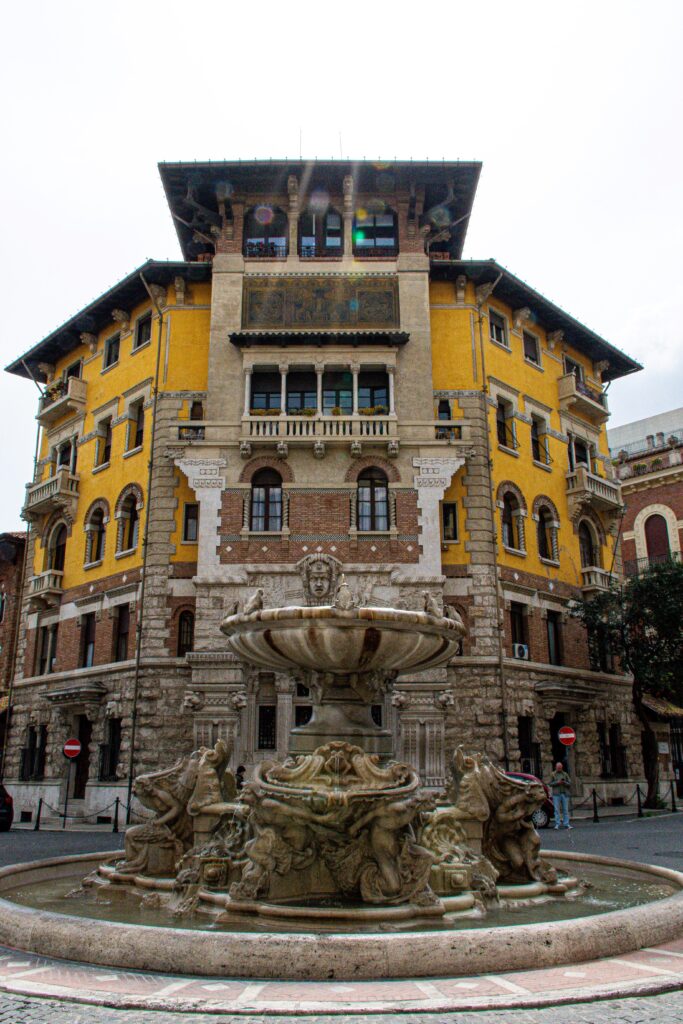
This isn’t a place that rewards photographs alone. It rewards time. The longer you linger, the more the piazza reveals its calm. The sound of water. The details overhead. The feeling that nothing else in Rome is asking anything from you at that moment.
And that, here, is enough.
How to Visit the Coppedè Quarter of Rome

Quartiere Coppedè will not need an itinerary in the traditional sense. Realistically, you could walk through in under an hour—but I spent an entire afternoon here, without ever feeling like I was filling time. That’s the difference.
A local I met the day before insisted I eat at Santi Sebastiano e Valentino, a relaxed café and bakery nearby. Fresh bread baked on-site, welcoming energy, perfect for a slow breakfast or light lunch. I even brought home a bag of their house-roasted coffee beans for my husband—a small souvenir that smelled like a perfect Roman morning.

A visit here works best as a detour, not a destination.
Some options for you. Pairing it with the eastern edge of the gardens in Villa Borghese, about a 20-minute walk away, or folding it into a longer wandering day through Trieste and Parioli. That’s what I did and enjoyed walking on Via Chiana, and Via Tagliamento, two especially pleasant streets lined with elegant buildings and embassies.
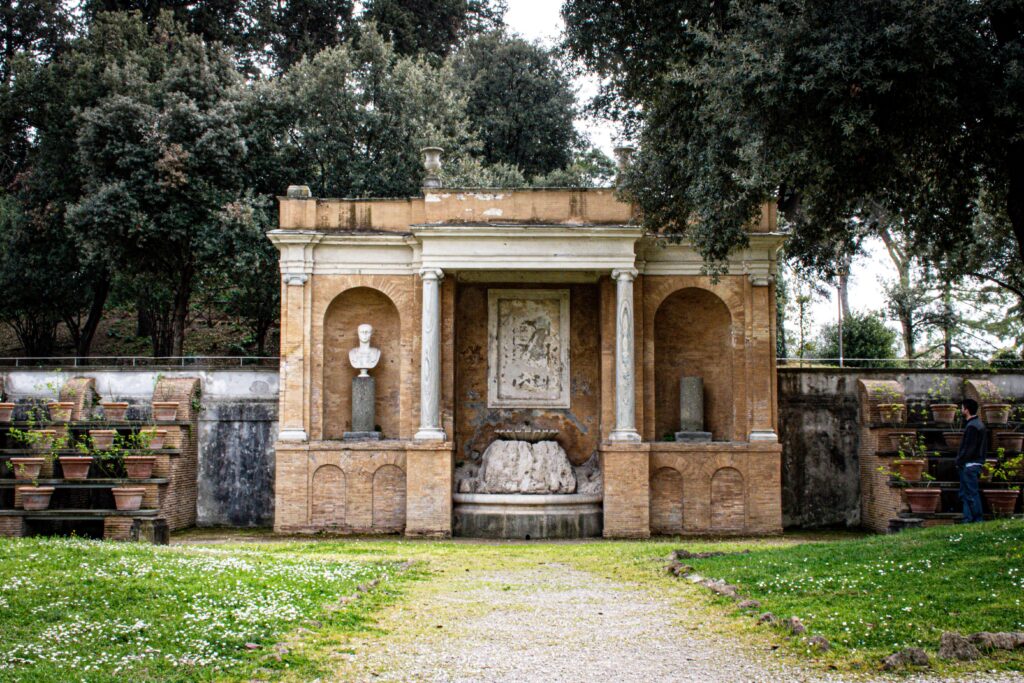
That’s how I stumbled onto Villa Paganini, a small green space with shaded benches and older couples strolling. A bit further on, Villa Torlonia surprised me with its scale and formality. Only to find out it was once Mussolini’s residence. It’s now open to the public and striking in its contrast to Coppedè’s whimsy.

My Final Take: Is Quartiere Coppedè Worth Visiting?
Yes, if… you’ve already experienced classic Rome and are curious about what lies beyond it. If you love architecture, atmosphere, and places that ask you to slow down and notice rather than do. If you’re a return visitor who wants to see how layered Rome really is—how strange, playful, and imaginative it can be when it steps outside its ancient script. If you’re a traveller who seeks out those off-the-beaten-path kind of places. Coppedè resonates most when you have context. Only then does its quiet magic fully land.
No, if… this is your first trip to Rome and you’re still chasing icons. If you need cafés, monuments, or a clear sense of purpose to feel satisfied. Or if you’re drawn to places that reward speed and those “wow” moments. Coppedè doesn’t offer any of that—and it doesn’t try to.
For the right traveller, this tiny pocket of Rome feels unforgettable.
If you travel slowly, return often, and value places that reveal themselves gently, I share more like this in my weekly newsletter—curated insights, thoughtful guidance, and a quieter way to experience Europe.


