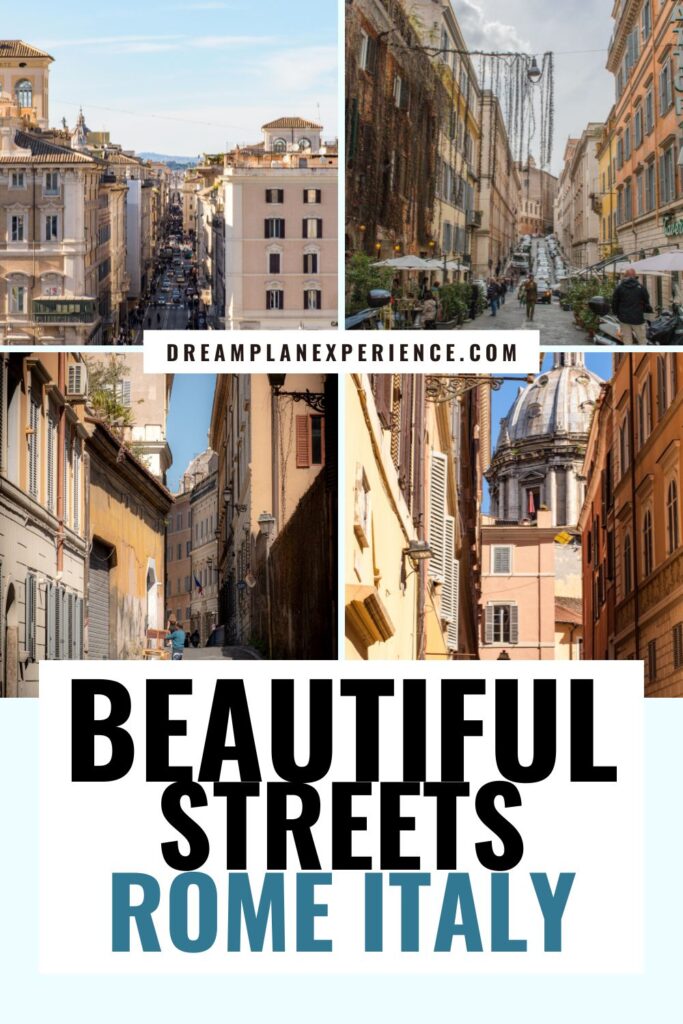
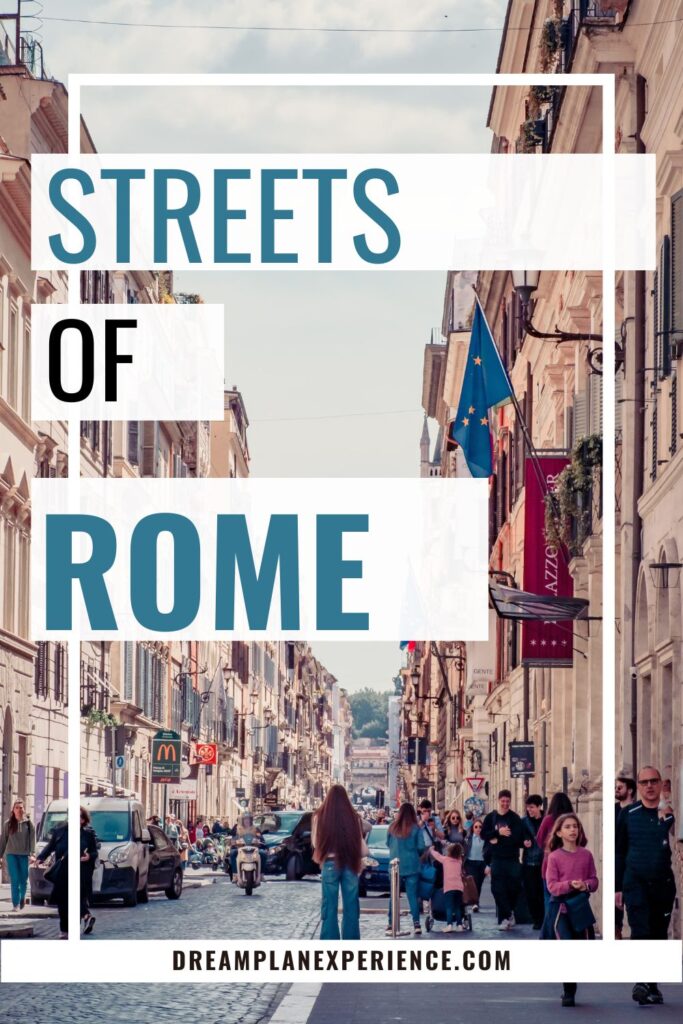
I’ve walked the streets of Rome across a decade of travelling to Italy—early mornings before the city wakes, quiet afternoons drifting without a plan, and evenings when the light softens, and daily life spills outward.
Over time, I’ve learned that it’s not the landmarks that stay in your memory—it’s walking down some of Rome’s most beautiful streets that do.
This article isn’t about checking off the most photographed or famous streets in Rome. It’s about understanding why certain streets feel beautiful, why others stay with you long after you’ve left, and how different streets serve different kinds of travellers. Some are grand and cinematic. Others are lived-in, imperfect, and deeply human.
I’ve stopped chasing “must-sees.” Now I pay attention to scale, sound, rhythm, and how a street makes me slow down—or move on. I’ll help you choose streets intentionally, based on how you want to experience Rome—not how fast you want to see it.
This post may contain affiliate links, meaning I get a commission if you decide to purchase something through the links, at no additional cost to you. Read my Affiliate Disclosure.
What Makes a Street “Beautiful” in Rome (It’s Not What You Think)

Rome doesn’t do polished beauty particularly well. What it does offer is texture — layers of age, use, and daily life stacked on top of each other.
The streets that hang in my memory are rarely the neat ones. They’re the streets where the stone is worn smooth in places, uneven in others. Where buildings don’t line up perfectly, and paint fades instead of peeling cleanly. Where scooters hum past, voices echo, and footsteps sound different depending on the hour.
Light matters. So does sound. The clink of cups being set down in the morning. The scrape of chairs at lunch. Shutters rolling up and down as the day resets itself.
This is also why some famous Italian streets feel oddly flat. They’re impressive, yes — but when the rhythm of daily life disappears, so does the feeling that makes a Roman street truly beautiful.
What I Think is One of the Most Beautiful Streets in Rome

Via dei Coronari is often called beautiful, but that word doesn’t quite land unless you slow down enough to see why.
It isn’t grand. It doesn’t open onto a dramatic view. The street is narrow and gently curved, just enough to block what’s ahead and keep you present. The wall facades worn smooth by centuries of passing hands and weather. Light arrives in fragments here—soft, angled, never flooding the street all at once.
I love to stroll this street with a gelato in hand. Slowly perusing the charming array of antique dealers and boutiques.
Streets That Feel Lived In (Where Daily Rome Still Happens)

Some of the most beautiful streets in Rome aren’t visually dramatic at all. What makes them special is that life is clearly happening there, whether you’re watching or not.
Laundry hangs overhead. Delivery trucks idle in the morning. Café doors stay open longer than planned because conversations do. Bikes and scooters lean against the wall. Potted plants spill over with flowers and herbs. These are streets where people live, not pass through.
They reward repetition. Walk them once, and they feel ordinary. Walk them again at a different hour, and you start to notice patterns — who opens early, who lingers late, which corners gather people naturally.
These streets don’t perform for visitors to Rome, and that’s precisely the point. You’re not meant to photograph them and move on. You’re meant to walk them slowly, maybe more than once, until they begin to feel familiar.
I Recommend These Lived-In Streets
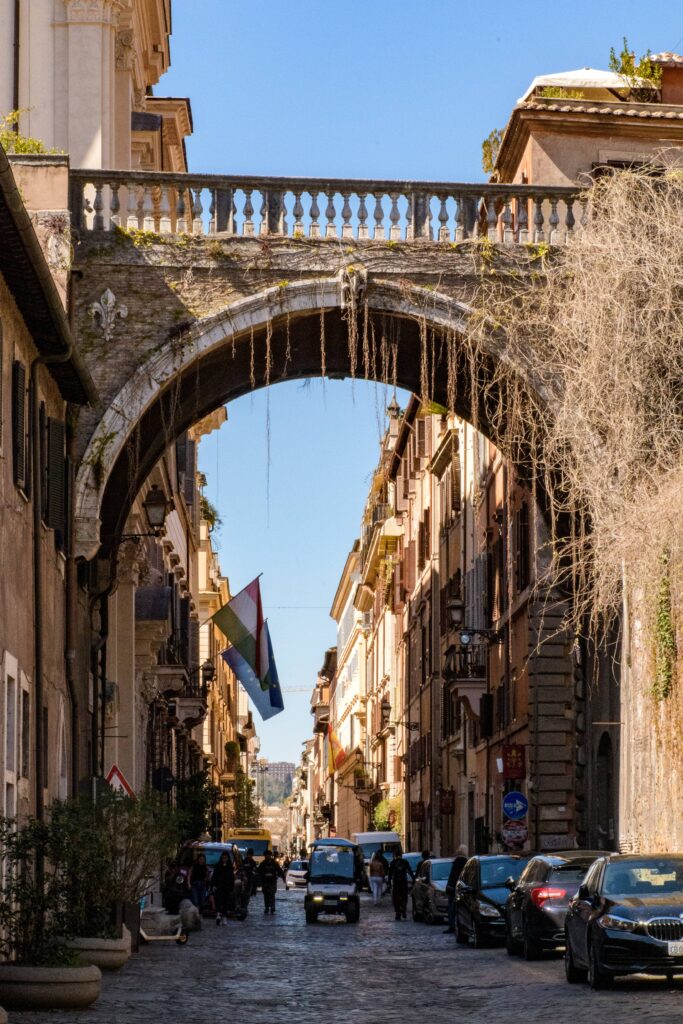
Via Giulia—laid out in the 16th century under Pope Julius II—is a long, elegant stretch anchored by the ivy-draped Arco Farnese, Michelangelo’s unfinished gesture toward a grand connection that never quite happened.
Via del Pellegrino is a pretty cobbled street with the tiniest of details—an ancient fresco, a Madonna with a baby on the corner, a quaint courtyard, and some glass arches above the doorways of shops and galleries.
What I loved most was turning the corner onto Via dei Banchi Vecchi and immediely feel a sense of calm. Just a couple of cafes, a wine bar, and a couple of quaint shops.
Streets Shaped by History (Where Rome Shows Its Age Gracefully)
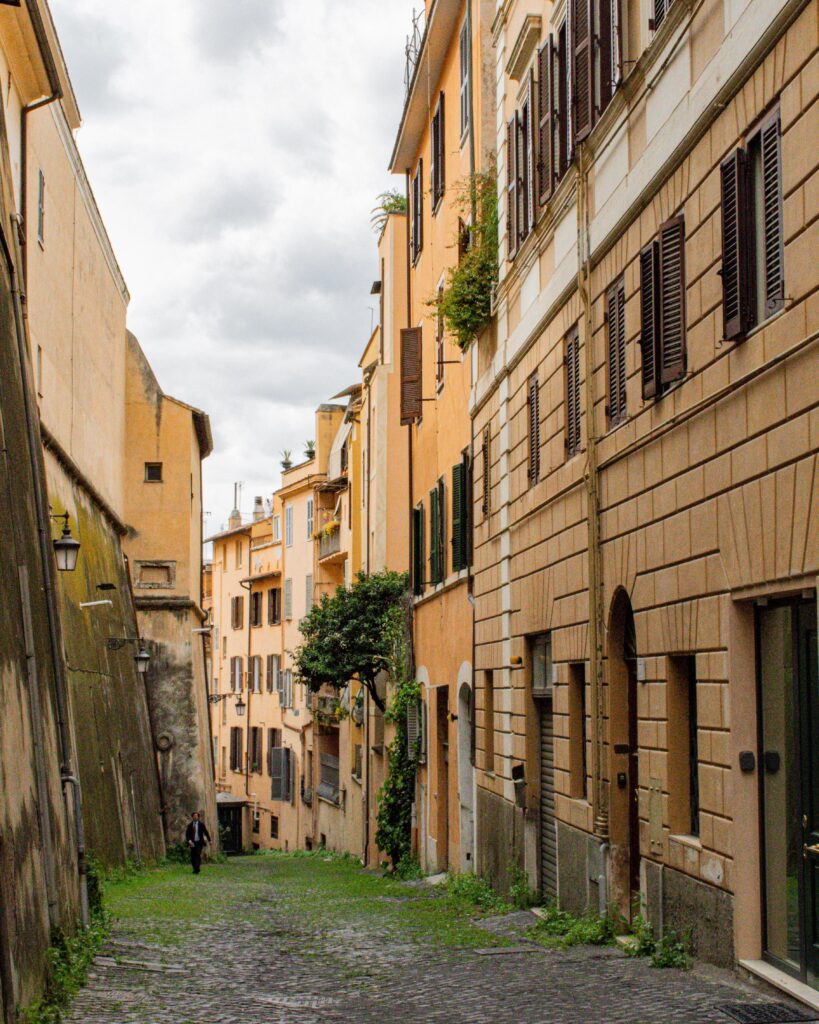
Rome’s history isn’t cordoned off. It spills into the streets, sometimes literally underfoot. Many of the most compelling streets are the ones that don’t try to explain themselves.
You feel it in areas where streets bend instead of running straight, shaped long before modern planning. In medieval corridors that narrow without warning, forcing you to slow down and negotiate space with others.
These streets don’t feel preserved — they feel used. The stones are uneven because they’ve been walked on for centuries. The curves exist because they were never meant to be efficient, only functional for the people who lived there at the time.

Walking here isn’t about absorbing facts. It’s about sensing age through your feet, your pace, and the way the street quietly dictates how fast — or slow — you move.
I Recommend These Historical Streets

The saying “all roads lead to Rome” refers to Via Appia Antica. The ancient basalt stones are the same ones travellers used two thousand years ago. It lies outside the city walls, and I think it’s only worth visiting for repeat travellers and those with a keen sense of history.
Via Sacra has you walking between ruins at the edge of the Forum. You can feel how ceremonial this route once was, history unfolding underfoot rather than behind glass.
Once home to Rome’s old government—Via del Governo Vecchio—is a cobblestone street lined with 15th to 16th-century buildings. Where vintage shops, wine bars, and cafés sit alongside the city’s smallest house at No. 66 and a beautifully restored palace at No. 104.
At the intersection of Via delle Quattro Fontane and Via del Quirinale, you’ll find an everyday Roman street flanked by intersecting fountains, each featuring a different river god from Greek mythology. They are considered to be some of the most important Baroque works in the city.
Famous Streets Worth Seeing—But Only If You Time Them Right
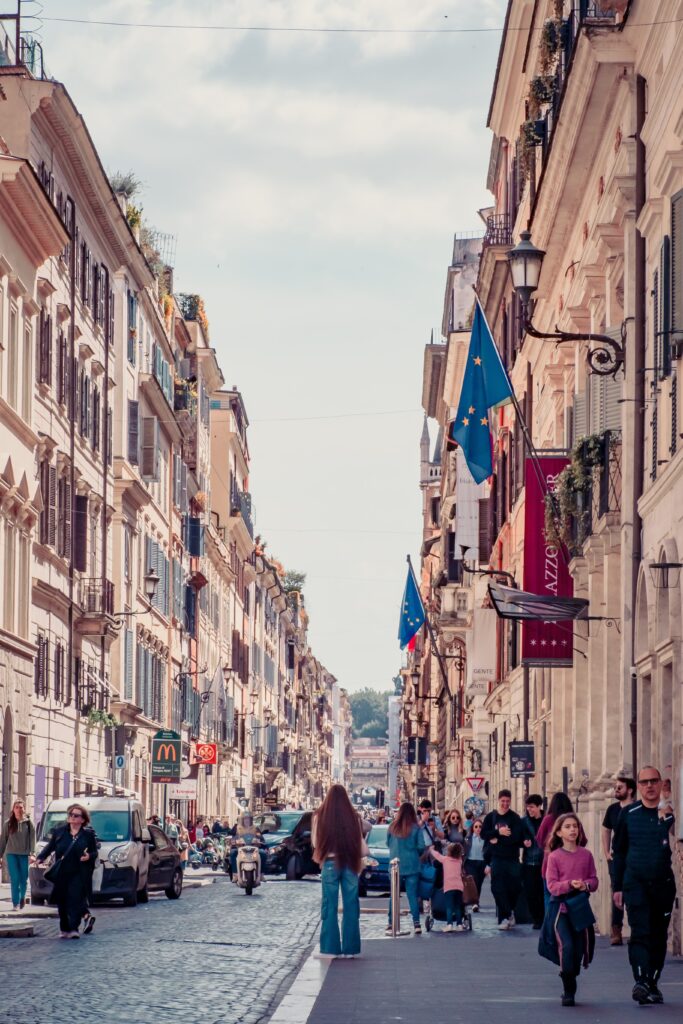
Some streets are famous for a reason. Ignoring them entirely would mean missing part of Rome’s story. Knowing the stories only strengthens their desire to visit them.
Don’t let the crowds flatten the experience. Go in with the expectation that others want to see them as badly as you do. I try to focus on details and let the noise and any distractions fade. I like to know the history, and let that context sink in while I’m there.
Seen this way, famous streets stop being checkmarks and start becoming part of your walking and exploring the city. They’re not destinations to endure, but moments to be reclaimed — briefly, deliberately, and on your own terms.

You didn’t come all the way to Rome to avoid what’s well known. Instead, approach it with intention.
I Recommend These Famous Streets
Via dei Fori Imperiali is a busy, long, straight road that connects Piazza Venezia to the Colosseum, built by Mussolini to celebrate the 20th anniversary of the Fascist March.
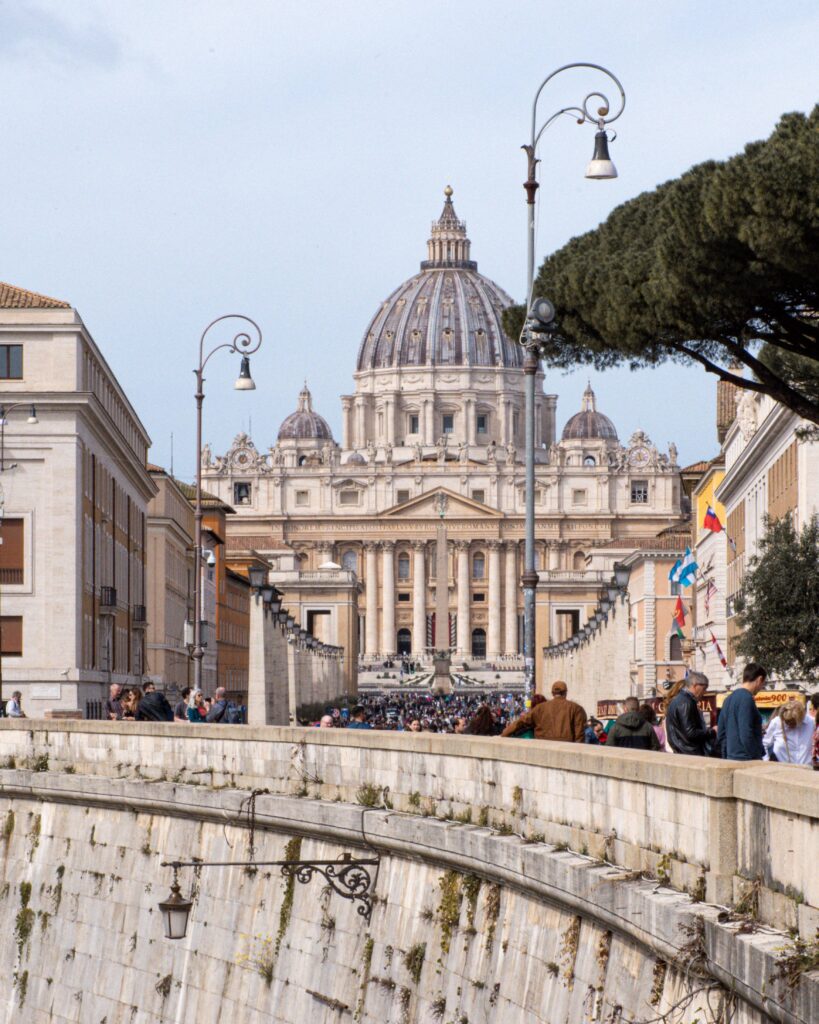
Similarly, Via della Conciliazione is the grand approach to St. Peter’s in Vatican City. The long axis feels almost meditative rather than monumental. If you want to walk this without the crowds, visit in the early morning.
Along the top of Aventine Hill, Via di Santa Sabina famously leads you to the keyhole at Piazza dei Cavalieri di Malta. Peering through, you find the perfectly framed view of St. Peter’s Basilica.
Then there is the famous luxury shopping street, Via Condotti. It is easily one of the most elegant—and busiest—main roads in Rome. And, one with a view, looking back at the Spanish Steps and the Church of Trinità dei Monti, is pretty special.
Via Veneto—immortalized by Fellini’s La Dolce Vita—curves from Villa Borghese down to Piazza Barberini and still carries the quiet elegance of Rome’s golden age, with tree-lined sidewalks and refined architecture that always reminds me of Paris.
How to Walk Rome Without Chasing “Beautiful Streets”

Rome isn’t best experienced by hunting down individual streets. It’s better approached by choosing neighbourhoods and letting beauty emerge naturally.
Rome resists being optimized. The moment you follow the blue dot too closely, you miss what’s happening around you.
Some streets only reveal themselves when you stop navigating and start wandering. When you allow yourself to take a turn because the light looks good, or because voices drift from somewhere just out of sight. When you don’t know exactly where you’re going — and don’t need to.
Getting slightly lost in Rome isn’t a mistake. It’s often when the city feels most generous. You stumble into quieter pockets, unexpected views, or streets that don’t even register as “beautiful” at first glance — until you realize you’ve slowed down without meaning to. That’s when a feeling takes over. You stop intentionally searching, and you are just present.
These are rarely the streets you can plan for. They happen when you give the city room to surprise you.
The most beautiful streets in Rome are rarely the ones you set out to find. They’re the ones that make you slow down without asking.
I Recommend These Neighbourhood Streets
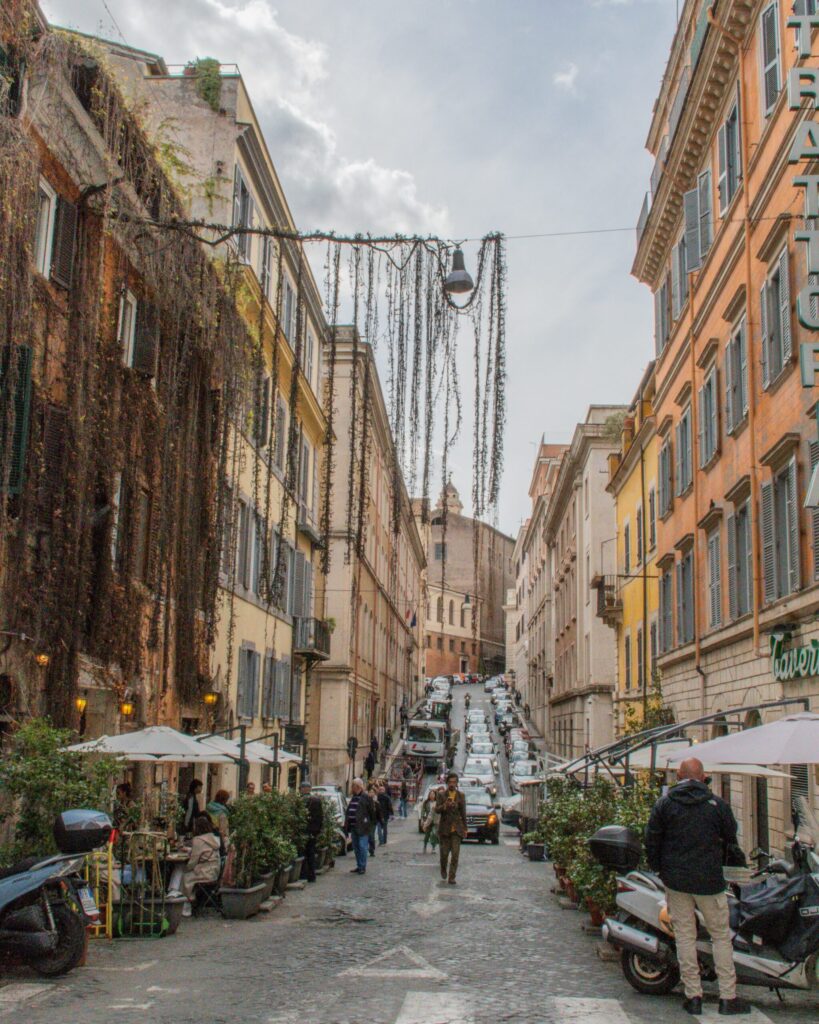
Via dei Cappellari, near Campo de’ Fiori, is narrow, slightly crooked, where its tall buildings cast a dark shadow, almost like you are walking through a back alleyway.
Via della Reginella, in the Jewish Quarter, carries a different weight. It’s a beautiful, old, intimate street connecting you to Piazza Mattei and its main street, Via del Portico di Ottavia.
In Trastevere, Via del Moro and Via della Pelliccia function like parallel threads of daily life—messy, social, imperfect, and deeply human. There are others that I like in this area too, Via del Moro and Via della Pelliccia.
Via Panisperna, in Monti, stretches uphill past ivy-covered buildings, offering bohemian shops, galleries and cafes.
And Via Dora, in the Coppede Quarter, breaks the pattern entirely—ornate, unexpected, whimsical. This off-the-beaten-path corner of the city features a blend of Art Nouveau, Gothic, Baroque, and Medieval styles, giving the street a storybook feel.
Streets That Change Completely by Time of Day

A street in Rome is never just one thing. Time reshapes it as much as architecture does.
Early morning strips the city back to essentials. Streets feel wider, quieter, almost private.
By midday, the same streets pulse with movement — voices overlapping, footsteps quickening, errands stacking on top of each other.
Then there’s the shift in late afternoon, when light softens edges, and everything looks a little more dreamy. The sun-washed colours of Rome become warmer.
Evenings bring intimacy. Tables spill outward onto side streets.
Familiar streets take on a different mood entirely. Some are crowded with people and noise. Others invite a quiet passeggiata, a slow evening stroll.
Experiencing the same street at multiple times of day deepens your understanding of Rome. I love starting to notice how the rhythm changes and adjusting my pace to match it.
I Recommend You Return to This Roman Street
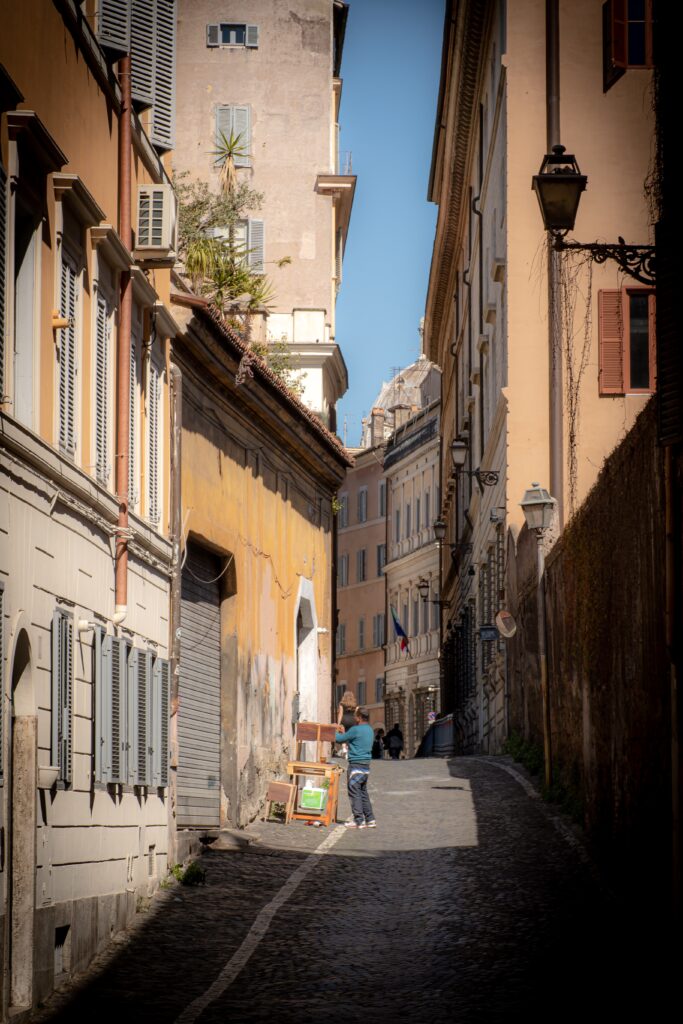
Walking along the Tiber River on Lungotevere, you will see how the energy of the city of Rome changes throughout the day and the day of the week. Weekends, you will see joggers, couples, and families, all moving without urgency.
Via Margutta, the so-called ‘Artist’s Street,’ tucked just behind Piazza di Spagna, once home to stables and workshops, gained fame from Roman Holiday and still exudes its bohemian, creative spirit amid galleries, boutiques, and elegant homes. This is a street that I joyfully return to at different times of the day.
My Final Take
Walking Rome with intention doesn’t mean having an agenda. It means knowing what you value — quiet, texture, daily life — and letting that guide your pace.
By slowing down, returning to favourites, or discovering new ones, you begin to see Rome in a way that feels personal, alive, and unforgettable.
For more curated insights on walking Rome thoughtfully, discovering hidden corners, and embracing slow travel across Europe, join my newsletter for tips, reflections, and inspiration delivered straight to your inbox.