
Is Nuremberg worth visiting? I’ve asked myself that question more than once, having first experienced the city as a teenager on a cultural immersion program, and later returning by train from Frankfurt during a two-and-a-half-week Eurorail trip. Each visit left a different impression, but both reminded me why Nuremberg stands apart.
This is a city where medieval streets meet layers of history, where beauty and reckoning exist side by side. From its castle on the hill to its market square at the heart, Nuremberg invites you to slow down and wander. Some travellers come for a single day, others stay longer, but the question remains the same. The answer, at least for me, is yes. Nuremberg is worth visiting—not just for what you see, but for how it makes you feel.
This post may contain affiliate links, meaning I get a commission if you decide to purchase something through the links, at no additional cost to you. Read my Affiliate Disclosure.
Nuremberg at a Glance
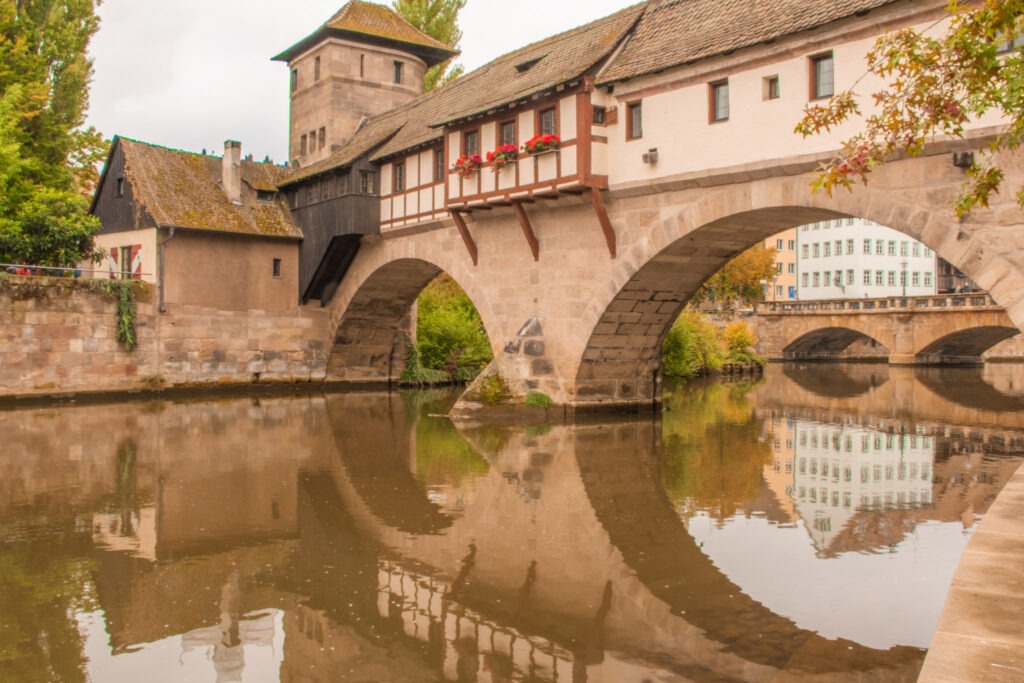
Nuremberg has the kind of medieval charm that feels instantly grounding. The half-timbered houses, cobblestone streets, and fortified walls give the city a storybook quality, yet its history is anything but simple.
This is a place of emperors and artists, but also of trials and judgement.
In the context of German travel, Nuremberg has a different pace. Munich dazzles with beer halls, Berlin pulses with modern edge, and Frankfurt hums with international energy. Nuremberg, by contrast, feels more contained, more intimate. It’s a cultural heartland of Franconia, where history and daily life weave seamlessly together.
While Nuremberg itself is not a UNESCO World Heritage Site, its spirit lives in the same tradition—preserved old town, iconic castle, and enduring markets that embody centuries of Central European heritage. Don’t let the lack of UNESCO status deter you from visiting here.
Is Nuremberg Worth Visiting? The Pros & Cons

| Type of Traveller | Pro | Con |
|---|---|---|
| History Lovers | Rich medieval architecture and layers of history from the Middle Ages to the 20th century. | Heavy historical sites may feel intense for some. Not as deep into WWII history as Berlin. |
| Slow Travellers | Smaller contemporary art scene than in larger German cities. | Smaller contemporary art scene than in larger German cities. |
| Some historic sites may not fully engage very young children. Limited theme-park-style attractions. | Museums like the Toy and the Railway museum, as well as the Imperial Castle. | Some historic sites may not fully engage very young children. |
| Cultural Enthusiasts | Strong arts heritage (Dürer, Gothic churches), vibrant local crafts (Handwerkerhof), seasonal markets, music festivals. | Smaller contemporary art scene than larger German cities. |
Overall, for first-time visitors to Germany, I would recommend visiting other destinations before Nuremberg. But for those who have been to Germany before, I absolutely think it’s worth visiting.
Nuremberg History

For centuries, Nuremberg was a center of power, art, and trade—later, it became a stage for some of the darkest chapters in human memory. To understand Nuremberg is to follow its timeline.
A Timeline of Nuremberg’s History
- 1050 – First mentioned in records. Nuremberg rose quickly due to its strategic location on trade routes linking Italy and Northern Europe.
- 11th–15th centuries – The Imperial Castle (Kaiserburg) became one of the most important fortresses of the Holy Roman Empire. For nearly 500 years, newly elected emperors were required to hold their first Imperial Diet here.
- 15th–16th centuries – A Golden Age. Nuremberg thrived as a center of arts, sciences, and humanism. Albrecht Dürer painted here. Martin Behaim built the world’s oldest surviving globe here in 1492—the same year Columbus set sail.
- 1632 – The Thirty Years’ War brought devastation. Swedish troops besieged the city, marking the end of its prosperity.
- 19th century – Nuremberg entered the Industrial Age and became known for precision engineering and toy-making. The first German railway (1835) ran between Nuremberg and Fürth.
- 1933–1945 – The Nazi era redefined Nuremberg’s identity. Chosen by Hitler as the “City of the Party Rallies,” it became a propaganda stage. After the war, the city was heavily bombed; much of the old town was reduced to ruins.
- 1945–1946 – Nuremberg again became central, this time for justice. The Nuremberg Trials, held in the Palace of Justice, prosecuted leading Nazi officials. The city became a symbol of accountability and international law.
- Today – A city rebuilt, with a mix of medieval restoration with buildings post-war in 1950-1960s architecture.
The Imperial Castle (Kaiserburg)
The Kaiserburg crowns the city. Its red sandstone walls rise above the rooftops, a constant reminder of Nuremberg’s imperial significance. From the 12th century, it served as one of the most important strongholds of the Holy Roman Empire. Kings and emperors stayed here when they travelled through their realms.
The ramparts are the same walls that guarded medieval emperors, and now offer sweeping views across the old town’s half-timbered houses and church spires. Inside, the Romanesque double chapel and the imperial chambers give you glimpses into courtly life.
The Nazi Documentation Centre & Rally Grounds
History here takes a darker turn. On the city’s southern edge lie the remnants of the Nazi Party Rally Grounds, once vast stages for mass propaganda spectacles. The unfinished Congress Hall, inspired by the Colosseum in Rome, is chilling in scale.
Inside the Documentation Centre, the exhibition “Fascination and Terror” traces how ordinary civic spaces were weaponized for ideology. I remember walking through with a quiet heaviness—confronted by films of rallies where hundreds of thousands once stood, arms raised.
The most striking detail for me was that these grounds were deliberately placed in Nuremberg because of its imperial past. The Nazis exploited the city’s association with German unity under the Holy Roman Empire to legitimize their regime.
Visiting this site is not easy, but it is essential, especially if you have a keen interest in WWII.
Reasons to Visit Nuremberg

Nuremberg is not one-dimensional. It’s a city that layers beauty, tradition, and meaning, offering reasons to visit that are as diverse as its history.
Nuremberg’s Altstadt
There are cities where the old town feels like a set piece. Nuremberg’s Altstadt is different. Enclosed by medieval walls, the old town is a mosaic of half-timbered houses, cobblestone lanes, bridges and busy squares.
Walk across the Pegnitz River, and you’ll find photogenic bridges—some arched stone, others half-timbered with flower boxes spilling over the water.
Hauptmarkt anchors the heart of the city, framed by the Gothic Frauenkirche and a swirl of daily life. Smaller squares like Sebalder Platz and Tiergärtnertor are quieter corners. Every turn seems to open onto a new scene—courtyards, fountains, or unexpected glimpses of the Kaiserburg above.
The churches add another layer. St. Lorenz, with its soaring Gothic nave, is the city’s most dramatic. St. Sebaldus feels older, more solemn, with Romanesque bones and a place in the city’s earliest story. Frauenkirche, on the main square, has a charm of its own—commissioned by Charles IV in the 14th century, it hosts the daily “Männleinlaufen” clock performance at noon.
Nuremberg’s Christmas Market
Then there is the Christkindlesmarkt. First mentioned in 1628, it has grown into one of the largest and most famous Advent markets in the country. Perhaps not as famous as Dresden’s Christmas Market, or as large as the ones found in Frankfurt or Berlin.
But if you’ve visited Christmas markets in Germany, you will recognize the tradition of rows of red-and-white striped stalls filling the Hauptmarkt, selling gingerbread, mulled wine, ornaments, and gifts.
Nuremberg’s Museums
Museums round out the reasons to stay a little longer than a day in Nuremberg. The Germanisches Nationalmuseum is unmatched for its breadth of German art and cultural history, from medieval sculpture to modern design. Albrecht Dürer’s House, preserved with period furnishings, offers a rare chance to step into the life of Germany’s most famous Renaissance artist. For something more unusual, the Toy Museum captures another side of Nuremberg’s legacy—as the world capital of toy-making in the 19th and 20th centuries.
It’s a small city with many great attractions.
Bonus Reason: Cities Near Nuremberg for Day Trips

One of the joys of Nuremberg is how well it works as a base. Its central location in Franconia makes day trips easy, and the rail connections are excellent. From here, you can reach some of Germany’s most enchanting towns without the stress of long transfers or complicated routes.
Only about 45 minutes by train from Nuremberg, Bamberg is a city of seven hills crowned by a cathedral. Its old town is a UNESCO World Heritage Site, known for winding medieval streets, baroque facades, and the postcard-perfect “Little Venice” along the Regnitz River.
About one hour from Nuremberg, Würzburg is a city that balances riverfront charm with grandeur. The Würzburg Residence, a UNESCO-listed palace, is often compared to Versailles, while the fortress above town offers views across the Main River valley. Vineyards surround the city, making it an excellent stop for wine lovers.
Reaching Miltenberg from Nuremberg takes a little over two hours by train, but it rewards you with half-timbered beauty straight out of a fairytale. Nestled on the Main River, the town’s Marktplatz—framed by steep-roofed medieval houses—feels timeless. The historic inns, some operating for centuries, give Miltenberg a lived-in warmth.
Around two and a half hours from Nuremberg, Michelstadt is another jewel of half-timbered architecture. Its iconic town hall, built in 1484, is one of the most photographed in Germany. The old town feels smaller and more intimate than Miltenberg, with narrow streets and family-run shops. It’s a delightful town to visit.
Distances from Major Cities
- From Frankfurt, Nuremberg is about 2 hours by train.
- From Munich, it’s about 75 minutes.
- From Berlin, it’s roughly 3 hours on a direct high-speed ICE.
This accessibility is what makes Nuremberg ideal.
Final Thoughts
Nuremberg is a city that lingers. Its medieval streets, soaring churches, and layered history invite exploration at every turn.
If you’re planning a trip to Germany and want a tailored experience that balances history, culture, and slow travel, I can help. My trip planning services create itineraries designed to match your pace and interests, making every visit meaningful. Let’s turn your Nuremberg journey—and your broader European adventure—into something unforgettable.

