

When I go to gardens in Rome, it’s not about ticking off sights. It’s a pause, a quiet reset in the middle of the city. I walk slowly along shaded paths, noticing small details—locals chatting on a bench, children chasing pigeons, the way light falls on a weathered fountain.
Over many visits, I’ve collected my favourites. Returning to some and discovering new ones. These gardens of Rome are where daily life unfolds quietly, where you can step back from the streets and the crowds and simply watch the city exist around you.
I’ll share the gardens I enjoy the best, and how spending time there can give you a different perspective on Rome—one that’s calm, lived-in, and deeply satisfying.
This post may contain affiliate links, meaning I get a commission if you decide to purchase something through the links, at no additional cost to you. Read my Affiliate Disclosure.
What Makes a Roman Garden Different

Roman gardens are quieter than you expect.
Some are private, tucked behind walls and palaces, while others are public but carry a sense of intimacy. Renaissance and Baroque influences appear in fountains, sculpted hedges, and hidden statues, but they never dominate; the city’s energy still filters in through side streets and distant street noise.
Walking here, you notice the difference in scale and pacing.
Sound changes: the rustle of leaves, the occasional chatter, footsteps on gravel. Scent of herbs, roses, or freshly cut grass drifts through the air. Light falls unevenly through tall plane trees, shifting hour by hour.
These sensory details—smell, sound, light, texture—make each Roman garden a subtle, living experience.
Villa Borghese: One of the Famous Gardens in Rome

Villa Borghese is often called Rome’s central park, but it feels nothing like other capitals’ flagship gardens.
Its scale is generous, yet its layout encourages wandering rather than linear promenades. Unlike Paris’s Tuileries, where the symmetry and long sightlines make every angle feel curated for viewing, Villa Borghese feels layered and intimate—hidden corners, shaded groves, and villas tucked among trees invite exploration.
Berlin’s Tiergarten impresses with sheer breadth and structured avenues, but here in Rome, the paths curve and slope, and the city itself peeks in through piazzas, fountains, and distant domes.
Even Madrid’s El Retiro, with its grand lake and formal walkways, emphasizes a much more structured landmark; Villa Borghese is more subtle.
Here, families, students, and locals drift between sculptures, cafés, and bike paths, giving a sense of everyday life unfolding. Unlike the almost museum-like feel of other capitals’ parks, Borghese is living, breathing, and remarkably human.
Gardens as Anchors in a Day of Slow Travel

In slow travel, an anchor is something you return to because it grounds your day—because it matters to you, not because it’s on a checklist.
Rome’s gardens work exactly this way.
Visiting a green space is only satisfying if you value the quiet, the small details, and the chance to watch life unfold around you. If you treat it as just another “thing to see,” the joy disappears.
I often weave gardens into broader days in Rome, pairing them with nearby neighbourhoods for a slower, curated experience.
Villa Sciarra: Add to a Trastevere Itinerary
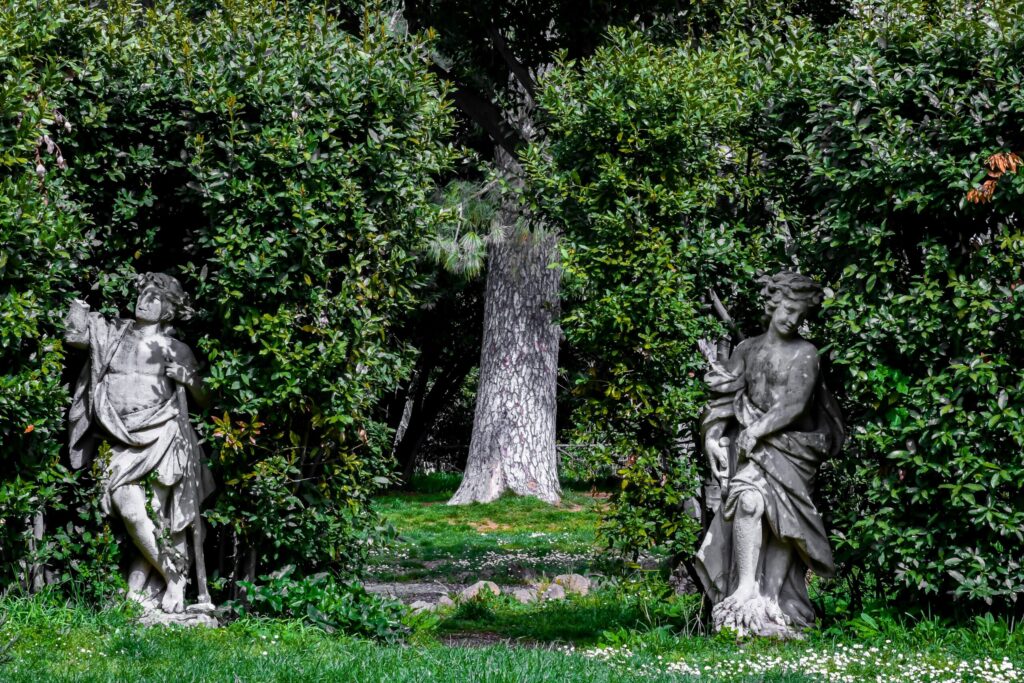
Villa Sciarra offers a different kind of charm. Fountains, statues, and vine-covered paths give it an almost storybook quality. Here, locals read on benches, walk dogs, or chat with friends. I like coming here after I visit the busy, touristy Trastevere neighbourhood. It’s the perfect reset for me.
Gardens with a View: Pausing Above the City
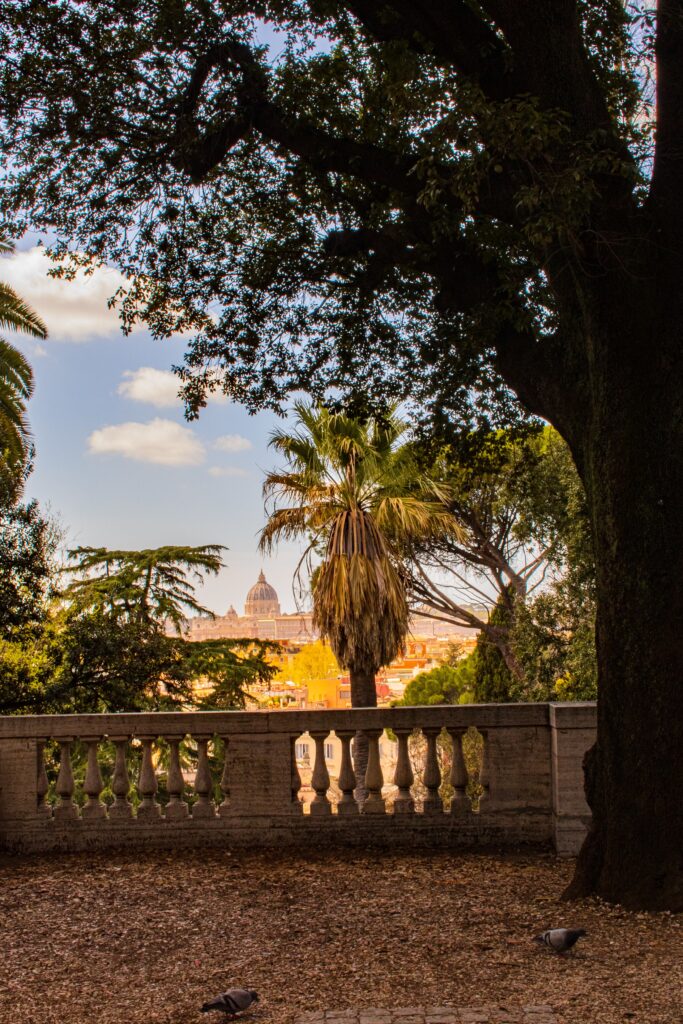
Many travellers are drawn to gardens that offer a view. These spots are more than photo opportunities—they’re places to slow down, take the city in, and gain perspective.
Sunrise or early morning visits let you enjoy the soft light and quiet before crowds arrive. Late afternoons and sunsets transform these spaces with warm, shifting light, perfect for lingering with a gelato and just breathing in the cityscape.
Gardens with vantage points also allow you to anchor your day—pause, recalibrate, and decide where to wander next. They combine the pleasure of greenery with the reward of a sweeping view, giving a sense of Rome’s scale, rooftops, and the Tiber winding through it all.
Iconic Gardens with Views: Giardino degli Aranci & Parco del Colle Oppio

The Giardino degli Aranci (Orange Garden) is perched on the Aventine Hill. This garden is famous for its view of St. Peter’s Basilica framed by the sweet scent of orange trees. Early morning or sunset, it feels almost private, with benches inviting quiet reflection and the city spread below like a painting.
Then there is Parco del Colle Oppio, located near the Colosseum. This park offers surprising green space with sweeping views over the ancient amphitheatre and surrounding rooftops. Fountains, shaded paths, and small open lawns make it a perfect spot to linger mid-afternoon, escape the busier streets, and watch daily Roman life unfold from above.
Gardens Where You Feel Like a Local
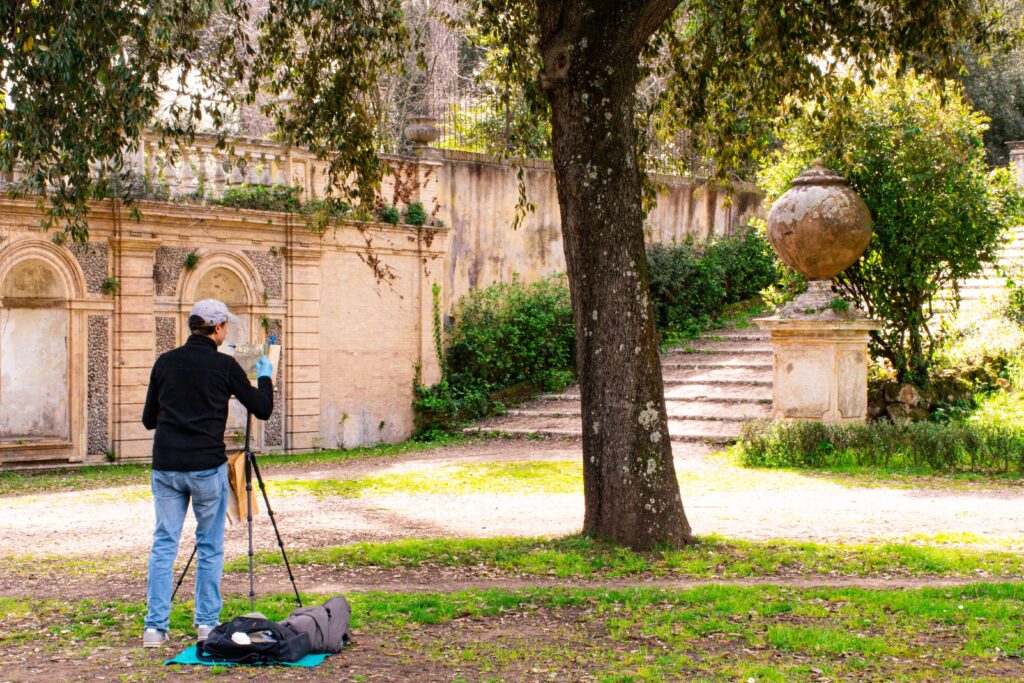
Some of the most memorable garden moments in Rome aren’t the most famous ones. They are the spaces where it feels like a local’s only gathering place, where they linger, and children play.
Sometimes they are tucked into an off-the-beaten-path neighbourhood, while others are near famous landmarks, but are just unseen by most tourists.
They reward visitors who are willing to wander, pause, and notice the small details of daily life unfold in front of them.
Neighbourhood Gardens of Villa Celimontana, Villa Torlonia and Nicola Calipari
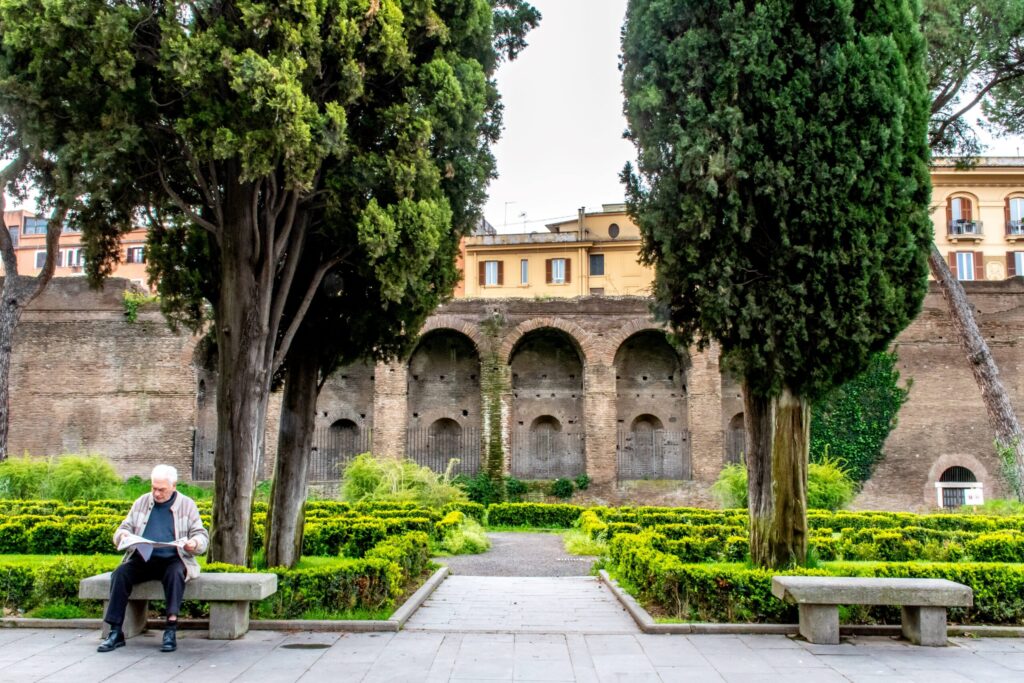
A compact, leafy space on the Celio Hill, Villa Celimontana feels like a pause between the Colosseum and Aventine. Its pathway with shaded benches makes it an ideal break at any time of day. Locals come to read, walk dogs, or meet friends. While most gardens enclose you with trees, limiting your view of the streetscape, this feels more open, giving you lots of glimpses of Rome’s streets and architecture.
Near the whimsical Quartiere Coppedè, Villa Torlonia surprises with its mix of formal gardens, secret paths, and playful architecture. Once Mussolini’s residence, the grounds now belong to the city and invite visitors to wander slowly, exploring the Teatro del Casino, quirky villas, and shaded groves.
Tucked into the gritty, busy Esquilino neighbourhood, the Nicola Calipari garden is small and simple. Children play near remnants of ancient ruins, locals gather on benches, and in the center sits the mysterious Magic Door, a structure that hints at hidden histories. It’s not perfectly manicured, but that’s the charm—it’s real, lived-in, and shows Rome as a city that grows around its people, not just its monuments.
Expansive Gardens of Rome For Escaping and Stretching Out
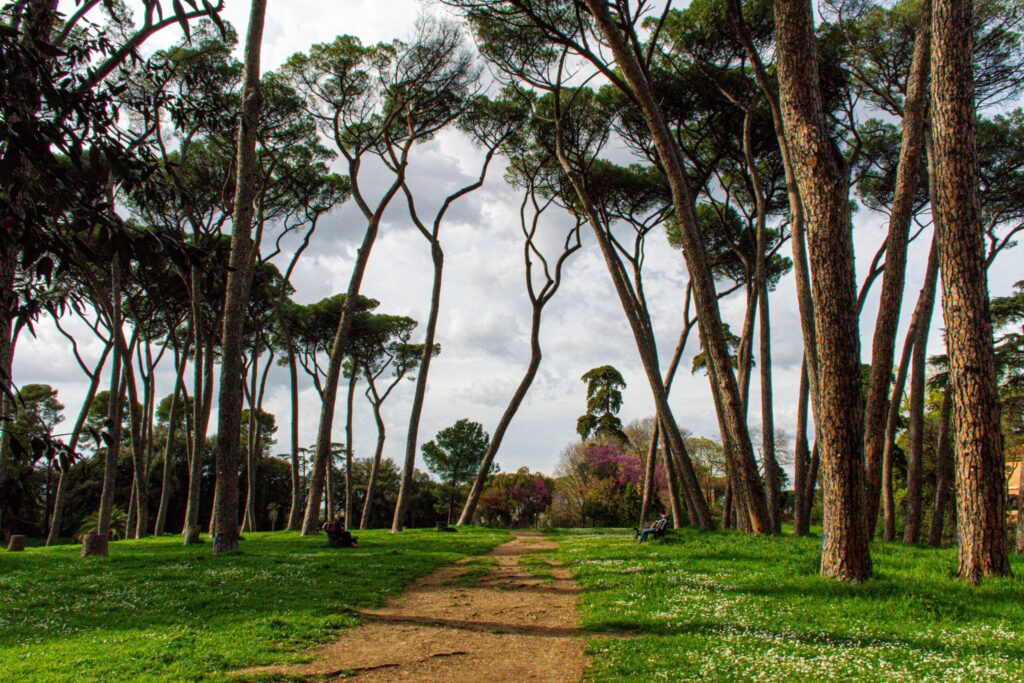
For a true escape from Rome’s plazas, landmarks and museums—sometimes the best way to experience the city is in motion, surrounded by trees and open sky.
For travellers who want space to breathe, to walk, or simply step away from the streets and crowds, these larger parks provide a pause that the smaller city gardens can’t.
They are less curated, more lived-in, and offer a sense of scale that lets you feel Rome stretching beyond the historic centre.
Rome’s Expansive Green Retreats: Villa Doria Pamphilj and Villa Ada

Villa Doria Pamphilj, Rome’s largest villa park, invites wandering under shaded trails, wide lawns, and hidden fountains, offering quiet pockets where locals jog, picnic, and walk dogs. If you were to ask me which one is my favourite, this is right near the top.
Villa Ada, further northeast, feels wilder and almost untamed, among pine forests with meadows, a small lake, and casual activity like tai chi, music, and children playing. If you were to ask me which one is not worth visiting, this would be it.
The Most Beautiful Rome Gardens
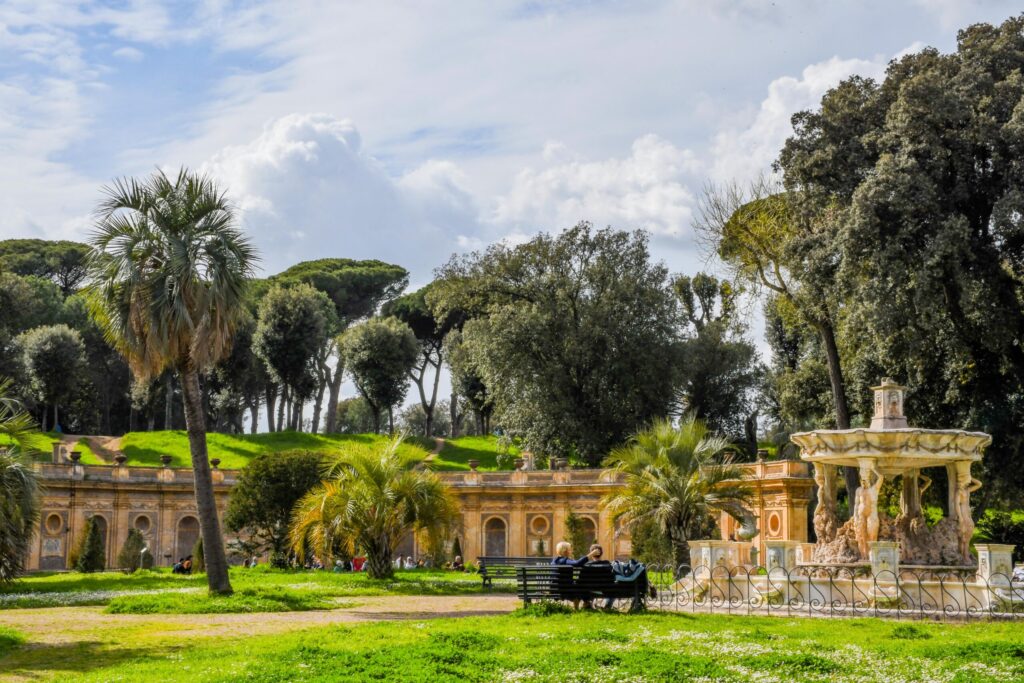
Some gardens in Rome aren’t just green spaces—they’re experiences. They require booking ahead, timed entry, or joining a guided tour, and that extra step is part of what makes them feel different. You are experiencing something that not everyone gets to see.
These gardens are more curated, meticulously maintained, and offer perspectives you won’t find in the public parks. Visiting them asks you to slow down, plan ahead, and commit a little time—but in return, you get intimacy, beauty, and a sense of being somewhere exceptional.
These special-access gardens feel like a reward for travellers who are intentional about how they visit the city.
Exclusive Garden Experiences

The Colonna Garden on the Quirinal Hill: Hidden above the streets near Piazza del Quirinale, this private garden offers formal terraces, geometric parterres, and sweeping views of Rome. Access is limited, so booking ahead is essential. The stillness here makes it feel like a secret slice of the city. (Entry fee applies—check current hours and prices here.)
Villa Medici: Perched above Piazza di Spagna, Villa Medici’s gardens are a mix of Renaissance design and Italian artistry, with fountains, sculptures, and manicured terraces. Guided tours allow visitors to wander pathways usually reserved for artists-in-residence, giving a sense of curated serenity unlike any public garden. (Entry fee applies—check current hours and prices here.)
Orto Botanico di Roma: Near the Trastevere neighbourhood lies this calm botanical garden. Its bamboo grove, Japanese garden, and shaded paths make it feel far from the city, even if you’re only steps from the busy streets. (Entry fee applies—check current hours and prices here.)
The Vatican Gardens: Accessible only via guided tour, these gardens are a city within the city. Manicured lawns, Renaissance fountains, and secluded sculptures make for a quiet start to a day in visiting the Vatican Museums. (Pre-book your tour, check availability and prices here)
My Final Travel Take: How Gardens Can Transform Your Rome Trip

Visiting gardens and parks in Rome is more than a pause between monuments—they are places to slow down, notice the details of daily life, and reconnect with the city on your own terms.
They offer quiet corners, hidden views, and moments of presence that make the rest of Rome feel richer when you return to it. By choosing to wander intentionally, even for just an hour or two, you can experience a side of the city that many visitors miss entirely.
Let them anchor your day, inspire a slower pace, and remind you why Rome isn’t just about ticking off landmarks—it’s about feeling the city.
Join my newsletter for curated slow-travel insights across Europe and discover more ways to see cities differently.


