

You’re here because you want more than another checklist of day trips from Lisbon. You want clarity. Ease. And the reassurance that the places you choose are worth stepping away from the city for.
But the choices feel endless. Sintra, Cascais, Évora, Óbidos… each promising something different, yet none telling you what actually matters: which experiences feel meaningful, which feel rushed, and which align with the slower, deeper way you prefer to travel.
Maybe you’re torn between booking a guided tour or relying on Portugal’s trains and going it alone. Maybe you’re wondering if the effort is worth it at all.
It is—when you choose well.
Because the right day trip doesn’t pull you away from Lisbon. It expands it. It gives you a new perspective, contrast, and experience you didn’t know you needed.
Let’s find those places.
This post may contain affiliate links, meaning I get a commission if you decide to purchase something through the links, at no additional cost to you. Read my Affiliate Disclosure.
Why Consider Day Trips from Lisbon?

Lisbon is endlessly charming—but it’s also energetic, layered, and full. At some point, you crave contrast. A quieter experience. A different landscape. A chance to see Portugal beyond the hills, trams, and tiled facades.
That’s where day trips become essential. Not as an escape, but as an expansion of everything you came here hoping to feel.
When Too Many Options Make the Decision Hard
Portugal offers so many possibilities that choosing can feel overwhelming. Each place looks beautiful. Each promises “the best experience.” And yet you’re left wondering which ones are actually worth the time.
Travellers often ask themselves:
- Will it feel rushed?
- Is it better to go alone or book a tour?
- Will it be crowded?
- Is it worth leaving Lisbon for just one day?
These are the right questions—and they deserve clear answers.
When You Want Authenticity Without Sacrificing Comfort
You want meaningful experiences, but you don’t want to spend your precious vacation hours navigating logistics, deciphering ticket systems, or arriving somewhere only to feel like you’re in a bottleneck of tour buses.
Certain destinations reward independence. Others shine with a thoughtful guide who brings the place alive and removes every ounce of stress from the experience.
Understanding that difference is the key.
We all want to avoid the feeling of “group tours feel rushed or too touristy.”
This is a fair concern. Many tours are built for speed, not depth, and that’s the opposite of how you want to travel. But not all group experiences look like that. When you choose small groups, vetted guides, and curated routes, the day feels more like being shown around by someone who understands the pace you prefer.
When You’re Seeking Something Lisbon Alone Can’t Offer
Each day trip brings a different kind of richness:
- Sintra for romance and imagination
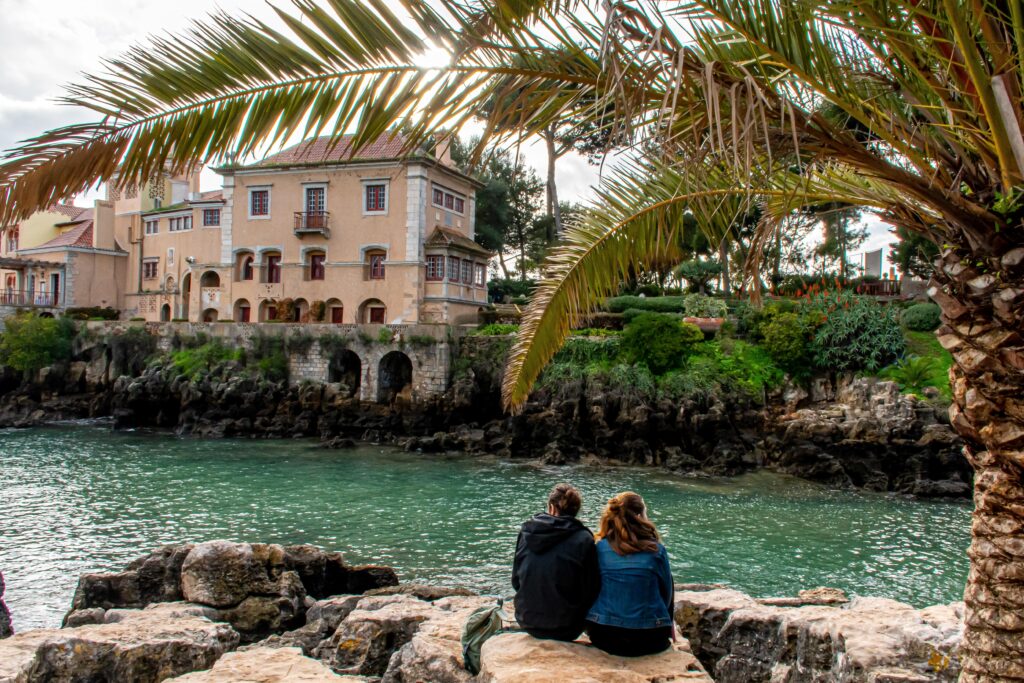
- Cascais for sea air and simplicity
- Évora for history and wine
- Óbidos for quiet, medieval charm
- Setúbal & Arrábida for nature and coastal beauty
The value isn’t just what you see—it’s how each place shifts your pace, your mood, and your connection to Portugal.
The right day trip doesn’t rush you. It steadies you. It gives you the sense of slipping into the country’s deeper rhythms—while keeping Lisbon as your elegant home base.
And when you return to the city in the evening, you carry something with you: a feeling of having truly seen Portugal, not just visited it.
Should You Take a Group Tour or Go by Train?

The Decision Most Travellers Struggle With
For many travellers, the choice isn’t where to go—it’s how to get there. Lisbon’s train network is reliable, but not always intuitive. Group tours promise ease, but they’re not all created equal.
You want the option that protects your time, enriches your experience, and aligns with the slower, more intentional way you prefer to explore.
The right choice depends on the destination—and what you value most.
Group Tour vs. Train: A Clear Comparison
| What Matters Most | Group Tour | Train / DYI |
|---|---|---|
| Ease of logistics | Everything handled for you | You manage timing, tickets, transport |
| Crowd navigation | Guide helps you avoid peak bottlenecks | You navigate on your own, often with less flexibility |
| Cultural depth | Local stories, history + context | You research before or after; nothing on-site |
| Cost | Lower, but time cost can be significant | Lower, but time cost can be significan |
| Flexibility | Structured schedule | You choose your pace |
| Stress level | Minimal | Depends on planning + transit timing |
When a Group Tour Makes More Sense
A well-curated, small-group tour works well when:
- The destination has complex ticketing or timed entry
- You want a deeper historical or cultural context
- Transit is frequent but not convenient
- The experience involves multiple sites in one day
- You prefer not to spend time figuring out logistics
Sintra is the clearest example. The palaces are spread out, queues can be confusing, and entry times matter. A guide removes all of that friction.

When Taking the Train Works Beautifully
The train offers a sense of independence and ease—perfect for destinations that are compact, intuitive, and close to Lisbon.
Places like Cascais benefit from this:
- Seamless coastline ride
- Stations positioned right in town
- Easy walking routes
- Plenty of cafés and viewpoints
- No timed entry or logistics to navigate
You step off the train, and the experience begins immediately.
What Visiting Twice Taught Me About Day Trips
Travelling alone to Cascais was effortless, and it makes sense. The train ride was ease, the walkability made everything easy, and the freedom to linger by the sea felt right. It’s the kind of town you can explore on your own. A guided tour won’t enhance your visit.
Sintra was different.
I visited twice—once for Pena Palace, once for Quinta da Regaleira and Monserrate—and both times I chose to go independently. I don’t regret the places I saw. But I do regret how I did it.
The trains run roughly every 45 minutes. On both visits, I missed one by just a few minutes and ended up waiting almost the full time. The Sintra station has nothing nearby to soften that lost time. Just waiting, and longing to return to Lisbon.
Once in Sintra, everything required a decision: which bus to catch, how long the line would take, which ticket to buy, how to sequence the stops. And without a guide, all of the history I craved had to be researched beforehand—leaving the experience feeling more logistical than immersive.
At the end of the day, I realized something important:
Sintra is extraordinary, but it reveals itself more fully with a guide.
A thoughtful group tour would have removed the stress, managed the timing, and given me the kind of storytelling that turns a beautiful place into a meaningful one.
What This Means for You
- Choose the train for Cascais or closeby, easy destinations.
- Choose a small-group or private tour for Sintra, Évora, Tomar, and anywhere with layered history or complex logistics.
You’ll save time. You’ll gain context. And the experience will feel smoother, richer, and far more aligned with the way you want to travel.
Best Day Trips from Lisbon

Sintra — Palaces, Forests, and Fairytale Architecture
There’s nothing quite like the first glimpse of Sintra’s hills. They feel dreamlike—steep, forested, and filled with palaces that seem almost too whimsical to be real. But beauty alone isn’t what makes Sintra special. It’s the density of history, the complexity of its estates, and the stories woven into every path and viewpoint.
Best for:
- Architecture lovers
- Romantic landscapes
- Travellers who appreciate depth and context
- Include one premium small-group Sintra tour option
Cascais — Seaside Charm & Sophisticated Leisure
Cascais gives you exactly what Lisbon can’t: the simplicity of a seaside day. No decisions. No urgency. Just sunlight, ocean air, and long walks along the coastal path.
Best for:
- A relaxed, no-rush escape
- Beach lovers and walkers
- An easy half or full day
- Train, and going it alone, is ideal for independent travellers
Évora — Wine, History, and UNESCO Heritage
Évora is where Portugal’s history feels most intimate: Roman ruins, medieval lanes, wine estates, and wide Alentejo landscapes. It’s slower, warmer, and unhurried.
Best for:
- History enthusiasts
- Wine travellers
- Évora is best visited with a guided tour—train connections are slower and limited

Óbidos — A Storybook Medieval Village
A walled medieval village wrapped in whitewashed houses and bougainvillea. Óbidos feels preserved—not polished—making it charming without feeling staged.
Best for:
- Photographers
- History and culture lovers
- Travellers wanting something pretty, quiet, and slow
- Small-group tours combining Óbidos + Nazaré for travellers who want a blend of history and coastal scenery
Fátima — Spirituality, Peace, and Pilgrimage Culture
Even if you’re not visiting for religious reasons, Fátima holds a sense of peace that stays with you long after you leave. It’s quiet in a way that feels grounding.
Best for:
- Reflective travellers
- Those curious about Portugal’s spiritual heritage
- Group tour: Recommended for context and to combine with Batalha or Alcobaça
Setúbal & Arrábida — Wine Country & Secret Beaches
This is Portugal’s underrated coastline—turquoise waters, dramatic cliffs, and some of the country’s best wine regions. It feels more local, more authentic.
Best for:
- Wine lovers
- Nature and coastal scenery
- Off-the-beaten-path travellers
- Private or small-group tour: Ideal for wineries and hidden beaches
Tomar
For those who love history that’s both tangible and storied, Tomar is extraordinary. The Convent of Christ is one of Portugal’s most remarkable sites—layers of architecture, Templar heritage, and intricate detail.
Best for:
- History lovers
- Architecture enthusiasts
- Travellers seeking something less obvious
- Small-group tour: Highly recommended, combined as part of a boarder day trip
Final Thoughts
The best Lisbon day trips aren’t about adding more to your itinerary. They’re about adding dimension—quiet towns, sweeping coastlines, layered history, and the kind of contrast that helps you understand Portugal in a fuller way.
If you’re thoughtful with your choices, your time outside Lisbon won’t feel like a detour. It will feel like a deepening.
And if you’d like to keep planning your time in the city, here are a few guides that will help you continue the journey:
Each one will help you experience Lisbon—and Portugal—with the same intention you’re bringing to your day trips.


