

I’ve spent decades travelling through Italy, and I know a town worth lingering in when I see one. A day trip to Orvieto from Rome is exactly that.
Perched on a cliff, it feels quiet and contained, a place that invites slow wandering rather than rushing from sight to sight. I arrived and immediately noticed the way the streets draw you in, the small cafés tucked into quiet corners, and the views across the Umbrian countryside that make you pause.
Even in just a day, this is a town you’ll want to visit. I’ll share the practical details—how to get there, what to see, where to eat—and the small insights I picked up that make a day in Orvieto feel more like a lived experience than a checklist. This is a town to taste, walk, and simply be.
This post may contain affiliate links, meaning I get a commission if you decide to purchase something through the links, at no additional cost to you. Read my Affiliate Disclosure.
Why Choose Orvieto for a Day Trip from Rome
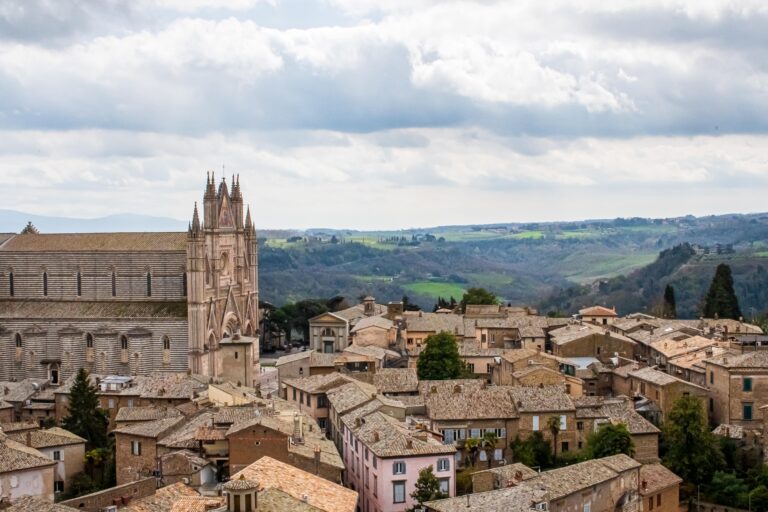
Is Orvieto a good destination for a day trip? Absolutely. And here’s why.
A Peaceful Escape Just One Hour Away
Sometimes you don’t need to go far to feel far away.
That’s exactly what a day trip from Rome to Orvieto offers. Within an hour, the city noise fades. The pace shifts. The light changes. You leave behind the crowds and step into a quieter place.
Orvieto feels suspended—perched high on a volcanic cliff, watching the world pass by. It’s the kind of place where you slow down without trying. You breathe deeper. You walk without purpose. And somehow, that’s the point.
It’s not just a change of scenery. It’s a change of energy. Let’s face it, when we travel, that’s the reboot we sometimes need.
What Orvieto Offers That Rome Can’t
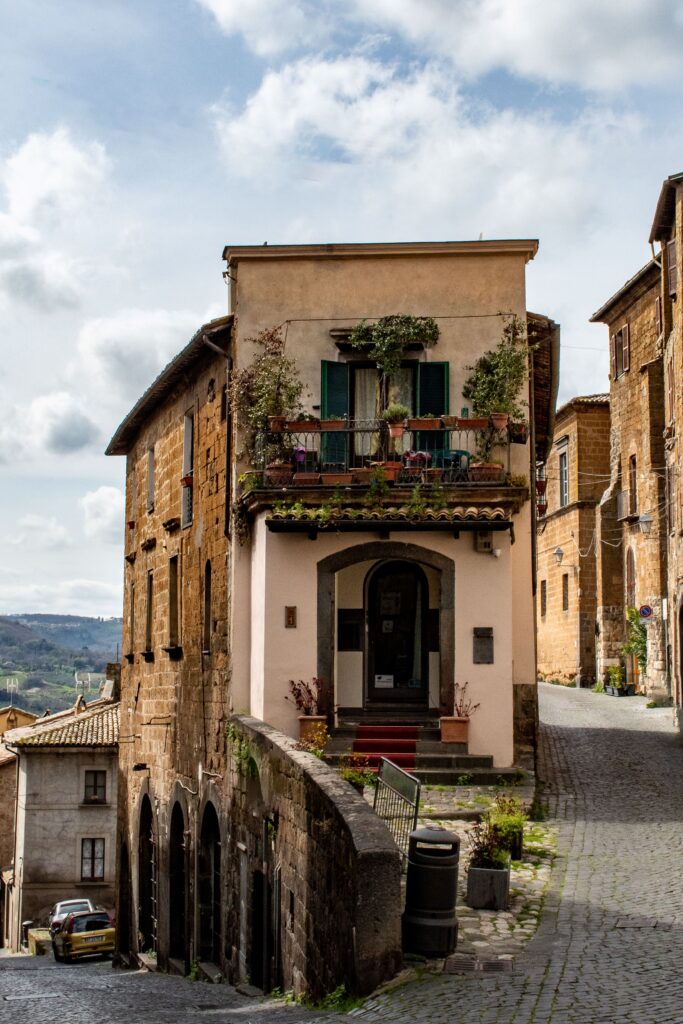
Rome dazzles. But it overwhelms. Crowds. Noise. Monuments and landmarks are everywhere you look.
Orvieto invites.
It’s small. Walkable. Easy to take in, yet layered with history. Etruscan roots, like what you find in the Tuscan town of Cortona, run deep here—older than Rome itself.
The medieval streets twist softly around you. And the Duomo, with its striped façade and golden mosaics, appears like something out of a dream.
You won’t find tour groups shoulder to shoulder. You’ll find locals chatting in the piazza. A wine shop tucked beside a stone arch. A ceramic store where artisans proudly display their talents.
Orvieto offers something else, too—a glimpse into Umbria. Another Italy. One that lives a little slower. Speaks a little softer. A change of scenery and pace.
And just for a day, you get to be part of it.
How to Get There: Rome to Orvieto Transport Options

I recommend going midweek, if you can. Orvieto is quieter. You’ll have more space to wander and find the piazzas calmer.
By Train
I chose an early train from Rome to Orvieto and planned to return late. It gives me a full day without feeling rushed. The train ride itself is about an hour direct, fast and surprisingly scenic if you’re paying attention to the rolling Umbrian hills. I recommend booking tickets in advance—especially in high season—to secure the best times and prices.
Arrive at Rome Termini a little early, as the Orvieto platform is about a 5–10 minute walk from the main entrance. Once you arrive in Orvieto, you’re still at the base of the cliff. A short walk takes you to the funicular, which climbs gently up the hill. From there, it’s an easy walk straight into the heart of the historic center.
Trains are my preferred option. They’re reliable, economical, and allow you to enjoy the day without worrying about traffic or parking.
By Group Tour
I had actually planned to join a small-group tour, but it was fully booked. In the end, exploring Orvieto on my own turned out to be more rewarding. That said, tours can be very convenient if you prefer not to plan every detail. This tour includes:
- visiting two towns, Orvieto and Bagnoregio,
- a local guide, giving you insights into local history you might otherwise miss
- lunch at a Tuscan farmhouse
- wine tasting
The pros are obvious: stress-free planning and insider tips. The cons? Less flexibility, shorter time in Orvieto and a faster pace than I like for slow travel. Sometimes, having someone else handle logistics lets you fully focus on savouring the town and your day.
By Car
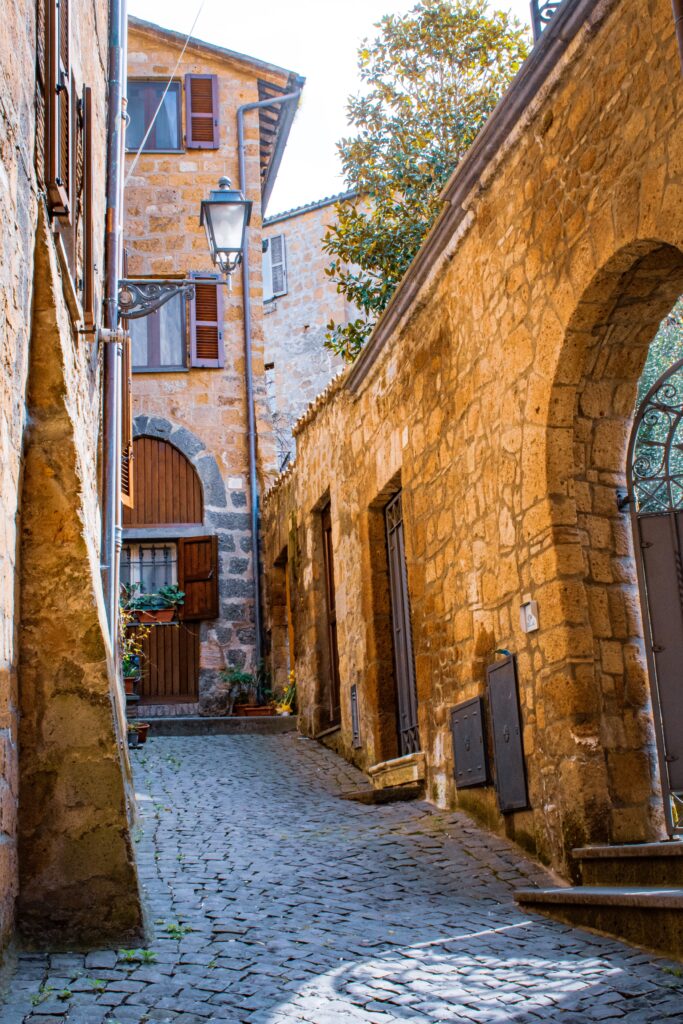
Driving to Orvieto is possible, but I don’t recommend it. The route takes about 1.5 hours each way, and parking in town is limited. Most travellers coming from Rome find the train far easier. Renting a car in the city is often more hassle than it’s worth. For me, leaving the car behind means I can step off the train, ride the funicular, and immediately be immersed in the town—without navigating traffic or hunting for a parking spot.
Experiencing Orvieto at Your Own Pace
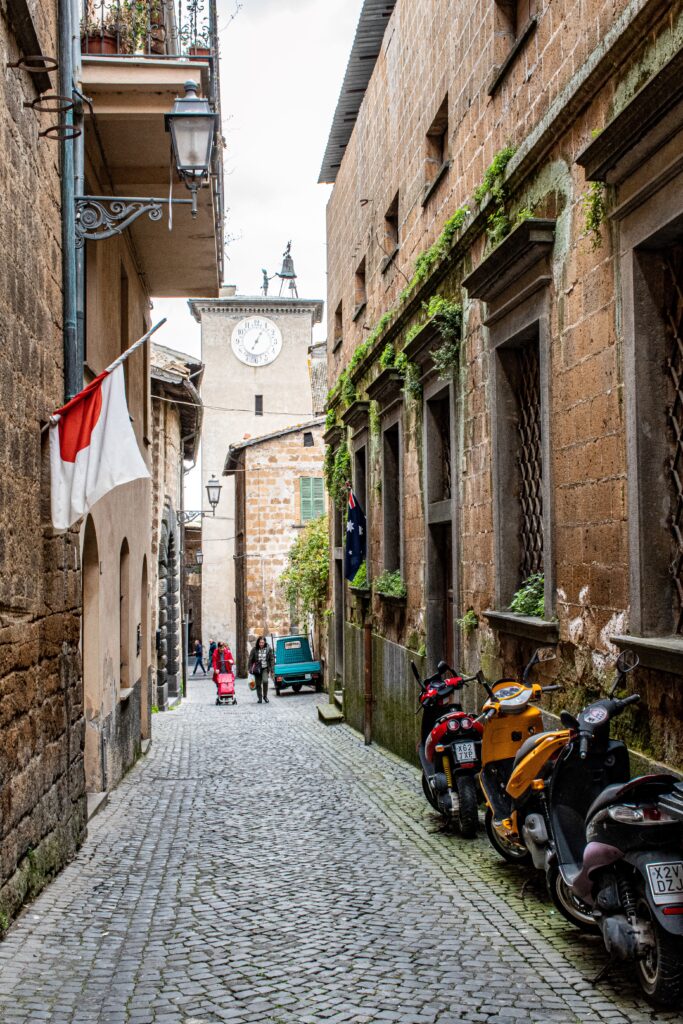
Orvieto isn’t a town to rush through. It’s one you move through slowly, letting streets, views, and piazzas guide you.
On my day trip, I made conscious choices about what to see—and what to skip. That’s the essence of slow travel: spending your time how you want, not checking off every tourist spot.
Hidden Streets and Piazzas
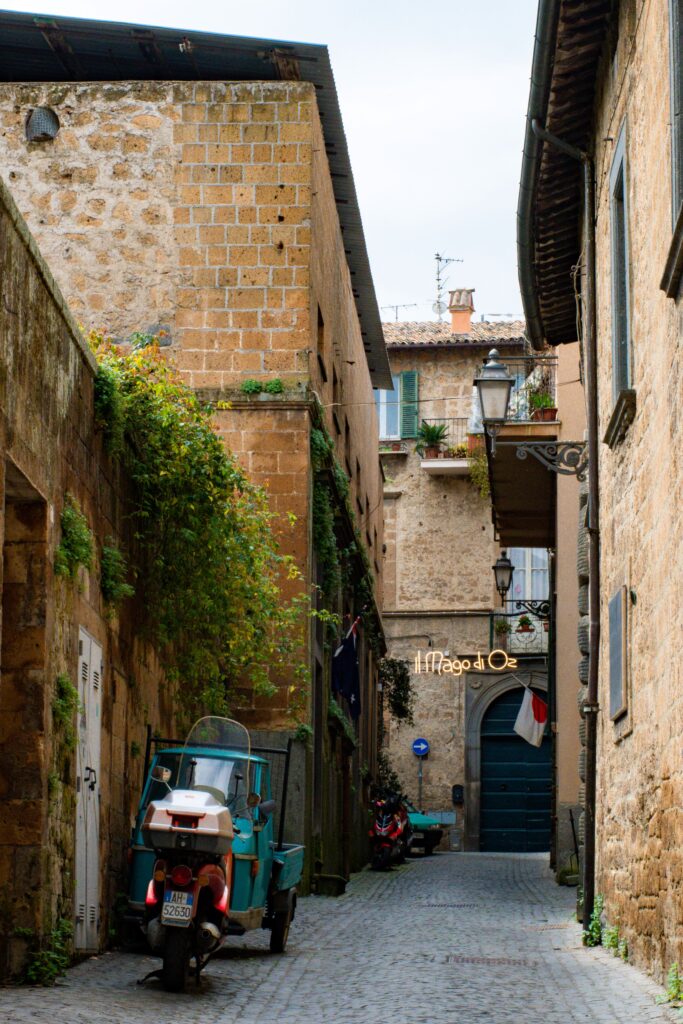
Orvieto’s charm lives in its streets. It’s the kind of town where I am absolutely content to just wander.
While Piazza del Duomo, Piazza della Repubblica, and Corso Cavour are the main piazzas and the central main street, the real magic is in the side streets.
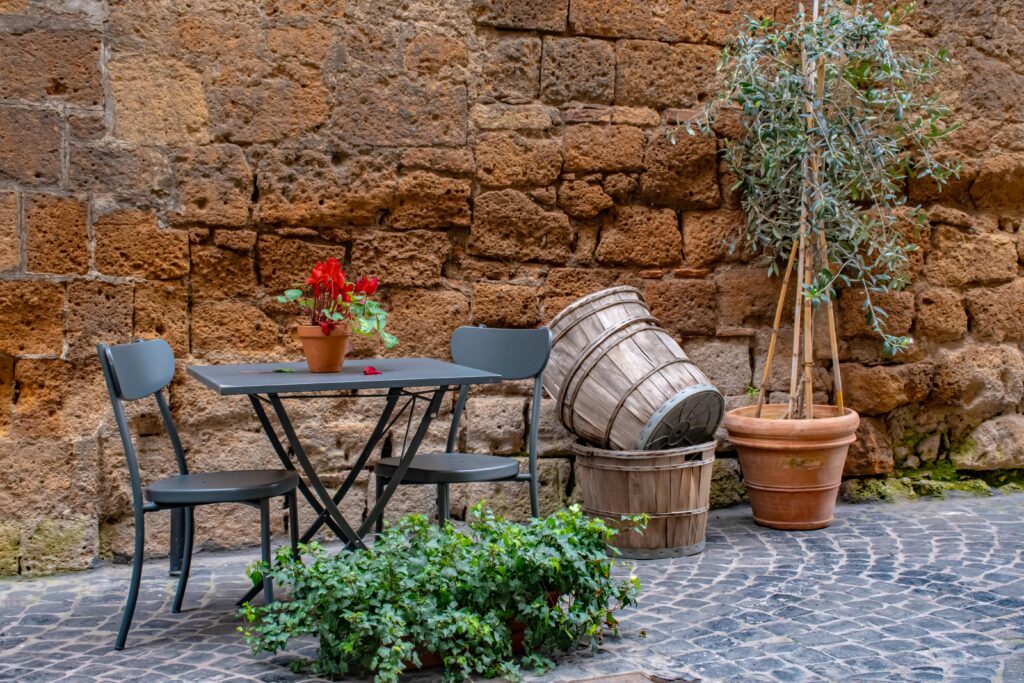
Tiny lanes lead nowhere in particular, yet every corner is picturesque. I wandered without direction, ducking into shops that showcased local ceramic pottery, popping into a church like Saint Juvenal, or following a street that opened onto a view over the city walls.
The town is an absolute delight for those who are curious. Move slowly, let yourself get a little lost, and notice the details that make Orvieto feel lived-in.
Orvieto Cathedral (Duomo di Orvieto)
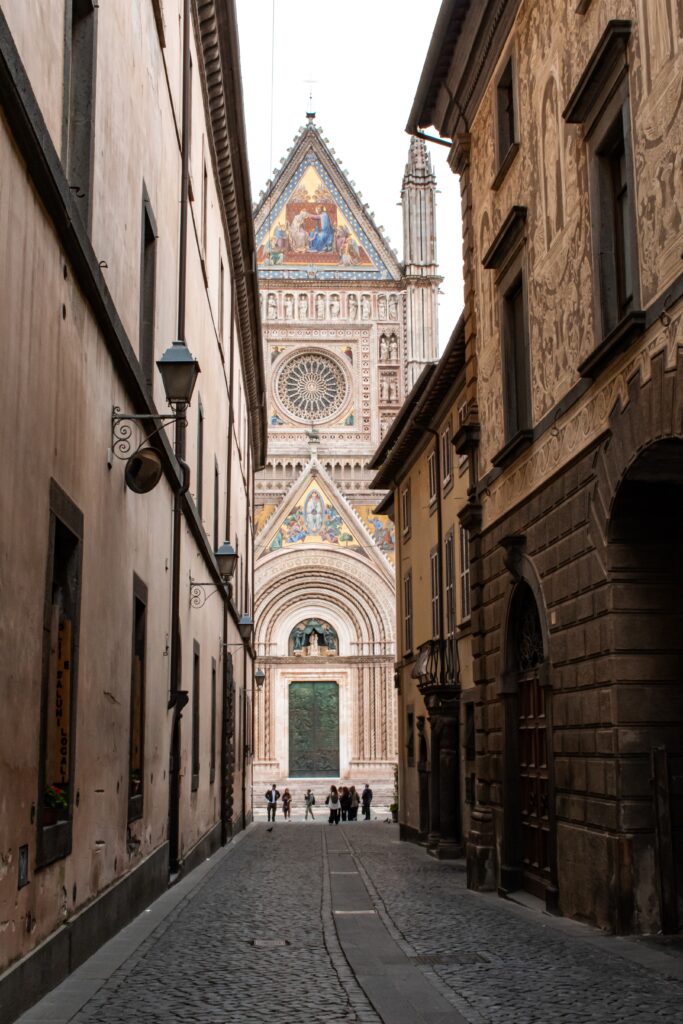
The Duomo is impossible to miss. I think it’s why most tourists come here. Its façade alone is beautiful. I spent time admiring the exterior, lingering in the square, and stepping inside to feel the scale. For me, I didn’t spend a lot of time here. I longed to get lost in those streets again. Once you’ve visited other Duomos in Milan, Florence, Venice and Siena, you lose that awe-struck moment.
Scenic Views in Orvieto
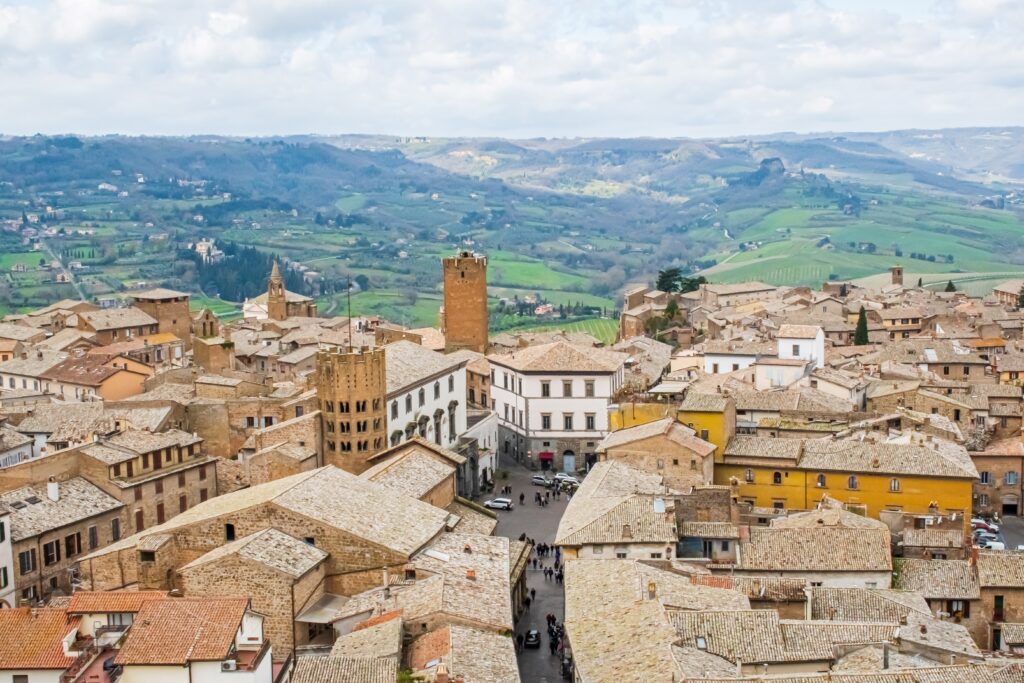
Orvieto is a town of stunning viewpoints. For me, the climb to the Orvieto Tower was unforgettable. Starting at the base, I took the elevator to the second floor, then climbed 250 steps to the top.
The panoramic view of red-tiled roofs, rolling hills, and the Umbrian countryside stretched endlessly. Just before noon, the massive bell rang, echoing across the town—it startled me at first, then made me smile, reminding me I was fully in the moment. But it is deafening, so plan your visit so you are not at the top when the bell rings.
Another scenic spot is Fortezza Albornoz. This is right when you get off the funicular. It has the ruins of former towers and small stretches along the city walls. Slow down. Pause. Let the scenery of the countryside sink in.
Choosing What Not to Do

I didn’t visit St. Patrick’s Well or explore Orvieto Underground. Neither appealed to me, and that’s okay. One of the most important lessons in slow travel is learning to say no. Your day in Orvieto should reflect your interests, not a checklist of sights. Sometimes, the best experiences are the ones you create for yourself by wandering, observing, and simply being present.
Food & Drink: Where to Taste Orvieto Slowly
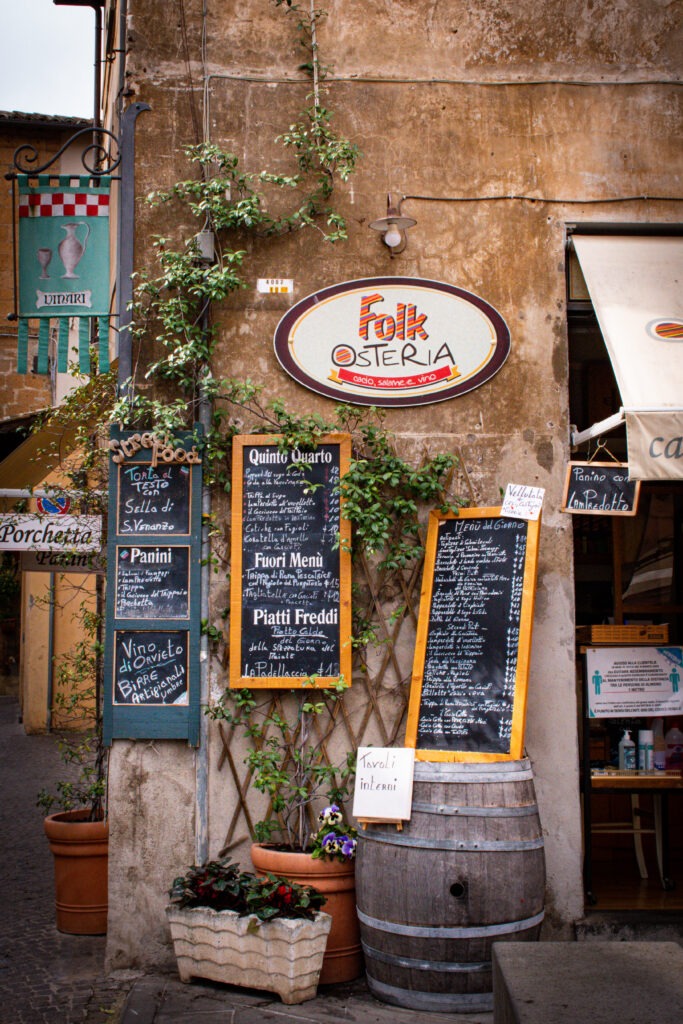
My sweet tooth led me straight to La Nostra Terra – Panificio Biscotteria, one of the few bakeries I came across in town. I had a pastry filled with black cherry and creamy ricotta, topped with sugared almonds. It was simple, delicate, and absolutely delicious—the perfect way to begin my morning in Orvieto. I paused, watching the town slowly wake around me.
I had hoped to lunch at La Palomba, a Michelin-rated trattoria known for wild pigeon and truffle dishes, but they were closed—Wednesdays, as I later learned. Another reason to return.
I also considered Trattoria del Moro Aronne. I passed by during a mid-day photo shoot: two dishes already plated, aromas drifting into the street. They weren’t open for lunch that day, but the rustic menu and homemade pasta looked divine.
Instead, I ended up at Trattoria dell’ Orso. Traditional Italian dishes, a homey, rustic interior, and that easygoing warmth you hope for in a small town. The pasta was exactly what I needed—and so was the quiet.
Wine Tasting in Orvieto
Orvieto is best known for white wines, particularly the crisp, mineral Orvieto Classico made from Grechetto and Trebbiano grapes. I stopped at a small enoteca in town called Bottega Vèra Orvieto Enoteca con Degustazione, where the sommelier poured a glass of this local specialty. It was light, fresh, and perfectly delightful for my late afternoon break.
Other local specialties worth trying include Vin Santo paired with cantucci cookies, and for red wine lovers, Sagrantino di Montefalco from nearby vineyards.
My Final Take: From Rome to Orvieto in a Day
When I think back on Orvieto, what stays with me isn’t one single moment. It’s a collection of moments that all reside in those streets. It’s the feeling of space. Space to walk without urgency. Space to hear my own footsteps on stone streets. Space to sit with a glass of local wine and not look at my phone.
The architecture is impressive, yes. The Duomo alone is reason enough to come. But what makes Orvieto worth visiting is how contained it feels. You can cross the historic center on foot. You can wander without a map. You can follow a narrow lane and trust it will lead you somewhere beautiful.
I didn’t need to see everything to feel satisfied. In fact, choosing not to made the day better.
If you feel like you need to take a break from your Rome itinerary, a day here is enough to make you feel refreshed and ready to return and explore more of Rome.
Let me leave you with a few articles about Rome, just in case you are new to my website.
- Rome’s Jewish Quarter
- Trastevere neighbourhood
- Rome’s most beautiful streets
- Hidden and famous gardens


