

As a slow traveller who’s explored the hidden gems of Europe, I wanted to discover if Milan is more than just a fashion capital.
While many rush through the city, I’ve uncovered the must-see places in Milan, Italy that deserve your time and attention.
From my experience, the key to truly appreciating any busy city is to slow down and soak up the local vibes.
I’ll share not only the iconic, unmissable landmarks like the Duomo di Milano but also some lesser-known spots like Indro Montanelli Gardens, as well as some insider tips on how to experience Milan’s top sights without the usual tourist frenzy.
This post may contain affiliate links, meaning I get a commission if you decide to purchase something through the links, at no additional cost to you. Read my Affiliate Disclosure.
The Must-See Places in Milan to Visit
Duomo di Milano and Piazza del Duomo
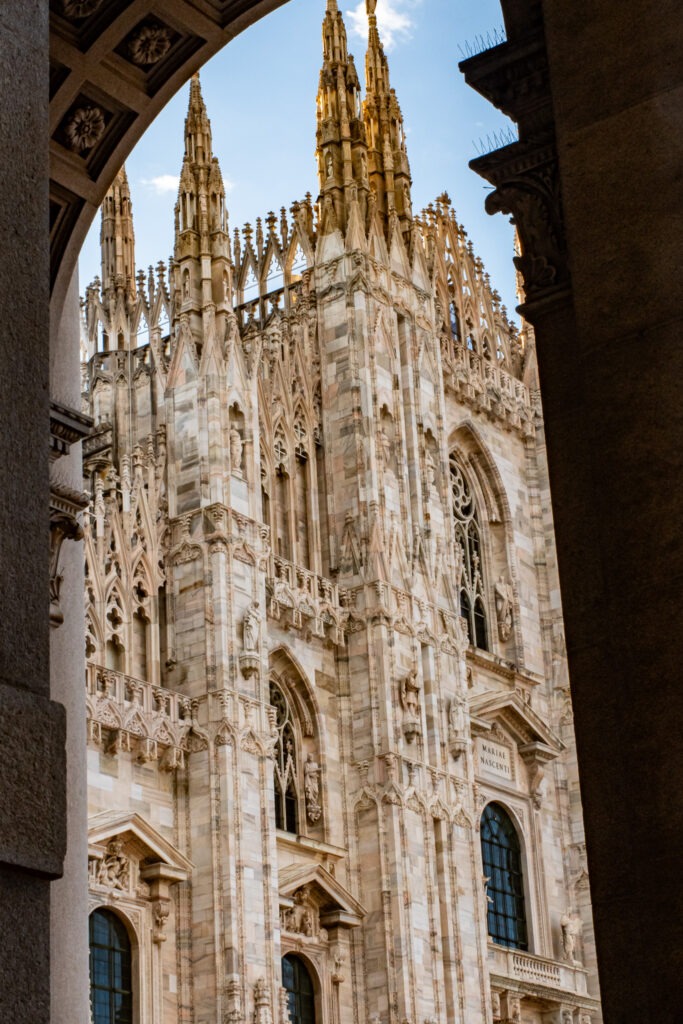
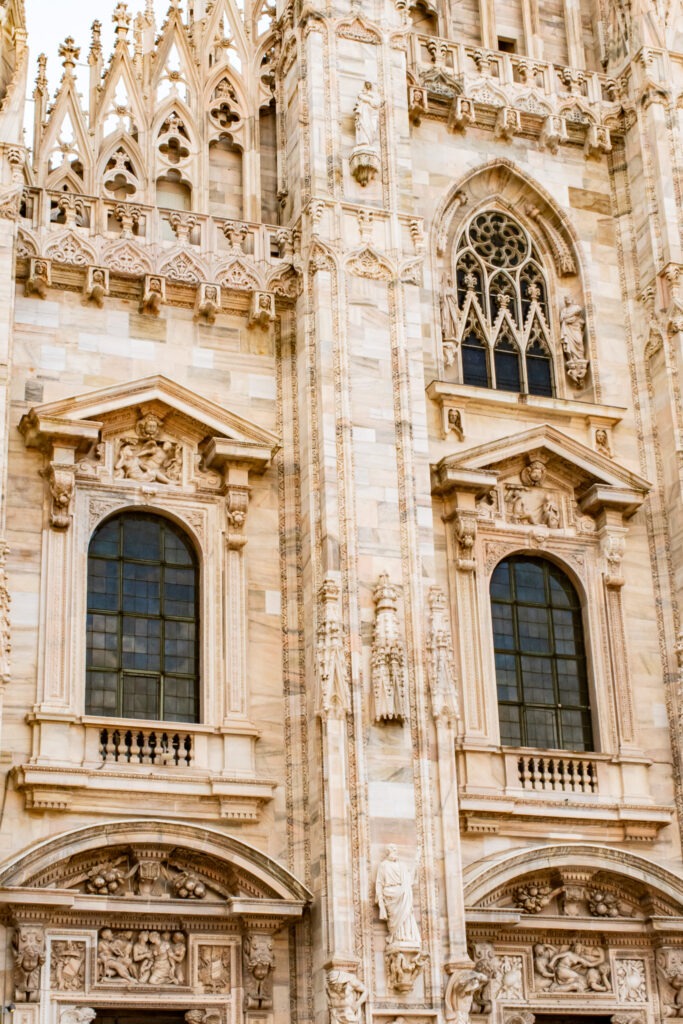
Standing in front of the Duomo di Milano, I couldn’t help but feel a little dwarfed by its sheer size and detail. This Gothic cathedral will no doubt take your breath away. It’s amazing to think that it took nearly six centuries to complete.
Most visit here just for the rooftop. Trust me, the idea of walking among the spires was not lost on me. But I was a bit disappointed with the panoramic view of Milan it offered.
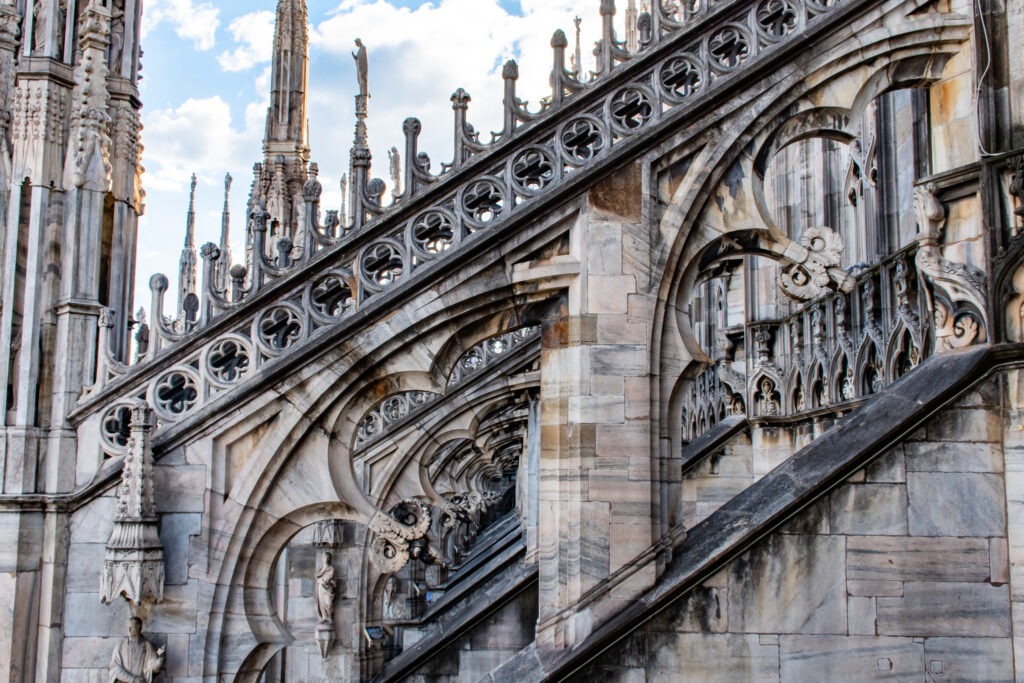
Travel tip: This is on everyone’s one-day itinerary, which means crowds. Seeing this is one of the must-see things in Milan, visit early in the morning or late in the afternoon to avoid crowds and enjoy softer lighting for photos too. Above all, to avoid waiting in the inevitable lines at any time of day, prebook your skip-the-line access entrance ticket.
The Piazza del Duomo itself is a hub of activity, perfect for people-watching. Grab a coffee at a nearby cafe and let Milan’s energy wash over you.
Galleria Vittorio Emanuele II


Another must-see in Milan is only a short walk from the Duomo, the Galleria Vittorio Emanuele II, a glamorous 19th-century shopping arcade.
I have to admit it’s one of the most impressive ones I’ve seen in Europe. The soaring iron-and-glass ceiling is beautiful, and I found myself gazing up almost as much as I browsed the high-end designer shops.
If you’re not into shopping, stop by Camparino for an authentic Milanese aperitivo or grab a gelato and enjoy it under the stunning glass dome. I visited in the early morning and enjoyed my tea and pastry at Marchesi 1824.
Look out for the mosaic bull on the floor; spinning on its heel is said to bring good luck—something I couldn’t bring myself to try, but had fun watching others do it.
Teatro alla Scala
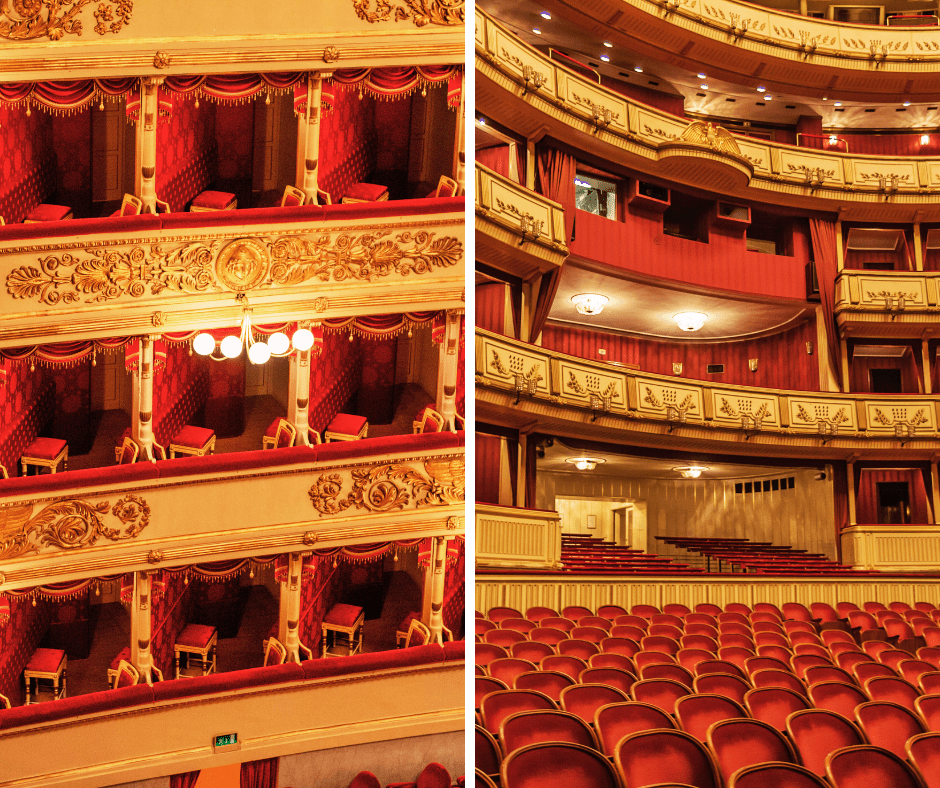
Even if opera isn’t your thing, Teatro alla Scala deserves a spot on your itinerary. This legendary opera house has been a cultural gem since 1778, hosting some of the world’s greatest composers and performers.
If you don’t have tickets for a show, the museum is a fantastic alternative. It allows you to peek inside the theatre itself and really is one of those must-visit places in Milan.
Santa Maria delle Grazie & The Last Supper
No visit to Milan is complete without seeing Leonardo da Vinci’s The Last Supper, housed in the refectory of Santa Maria delle Grazie, which is an Italian UNESCO World Heritage site.
Travel tip: Tickets to see The Last Supper are limited and sell out weeks in advance, so book early (I unfortunately couldn’t get tickets myself). Guided tours are often the easiest way to secure access.
The Must-Visit Places in Milan for Slow Travellers
Navigli District


If you’re in search of Milan’s laid-back charm, look no further than the Navigli district. Centred around its historic canals, this area has a vibe that’s distinctly different from the city’s polished center.
My rented apartment overlooked the canal, and I loved strolling along the water, especially in the late afternoon when the light softened, reflecting off the colourful facades of the buildings. Find out more details on where to stay in Milan.
The Navigli is packed with cozy cafes and eclectic shops. Duck down the side streets and check out the tiny artisan shops —they’re full of unique finds. And don’t miss the secondhand bookstores and galleries that add to the area’s boho vibes.
If you happen to be visiting Milan on the last weekend of the month, the Navigli district is a local’s favourite spot to visit on Sunday for its vintage antique market.
Indro Montanelli Gardens
For a moment of tranquillity in Milan’s busy cityscape, the Indro Montanelli Gardens are a perfect retreat. As one of the oldest public parks in the city, this park offers a mix of open spaces and tree-lined paths. I loved sitting on a bench under the shade of century-old trees, watching locals go about their day and kids playing near the fountains.
The gardens are also home to the Natural History Museum and the Planetarium, so there are lots of families that visit here, especially on the weekends.
While you’re in the area, take a short walk to Casa Galimberti and Casa Guazzoni, two stunning examples of Milan’s Art Nouveau architecture. Another spot for architectural lovers is Villa Nechhi Campiglio, a 1930s Art Deco villa where you can tour the interior.
Or if you are keen to see even more gardens, visit the nearby Brera Botanical Garden. What makes this spot special is that you won’t find crowds here. Instead, you’ll discover a quiet space to pause, breathe, and take in the details; this is the perfect spot to recharge.
Parco Sempione

Located behind the imposing Castello Sforzesco, Parco Sempione is Milan’s largest park and is in the heart of Milan’s city centre.
What makes this an interesting place to visit is that you’ll encounter several landmarks, including:
- Arco della Pace, a neoclassical arch built to celebrate peace
- Arena Civica, a historic open-air amphitheatre
- Ponte delle Sirenette, Milan’s first iron bridge, flanked by elegant mermaid sculptures
- La Triennale di Milano, an art and design museum
- Torre Branca, a steel observation tower in the park (this is a popular spot, especially at sunset)
My Final Take on Things to See and Do in Milan
Milan is at its best over a weekend when you don’t try to see everything. The city rewards balance. Yes, you should stand in awe of the Duomo, linger inside Santa Maria delle Grazie, and appreciate Milan’s role as Italy’s design and fashion capital. These places matter. They give context.
But what makes a Milan even more memorable is what you pair them with.
Slow aperitivo evenings in Brera.
A quiet morning wandering Navigli before the crowds arrive.
A long lunch in a neighbourhood trattoria where menus aren’t translated and no one is rushing you out the door.
Milan isn’t about checking boxes. It’s about contrast—grand and understated, polished and lived-in. When you mix the must-see sights with places where everyday life unfolds, the city feels less intimidating and far more human.
That’s when Milan clicks.
If you enjoy this kind of thoughtful, unrushed approach to city travel, I share more insights, itineraries, and reflections like this in my newsletter.
Subscribe to receive it straight to your inbox.


