I made Frankfurt am Main my home base for 2.5 weeks—a city I first visited as a teenager, and then again a couple of years ago for the Christmas Markets.
Frankfurt is often seen as a city of skyscrapers and finance, or simply a place to pass through on the way to somewhere else. But it’s more than that. Beneath the glass towers lies a city rich in culture, history, and small everyday beauty.
I’ll share the top attractions in Frankfurt, grouped by interest, so you can plan your visit with intention. You’ll find both the well-known Frankfurt tourist attractions and a few quieter spots that reveal a more local side of the city.
This post may contain affiliate links, meaning I get a commission if you decide to purchase something through the links, at no additional cost to you. Read my Affiliate Disclosure.
Römerberg and the Old Town — The Historic Heart of Frankfurt Attractions
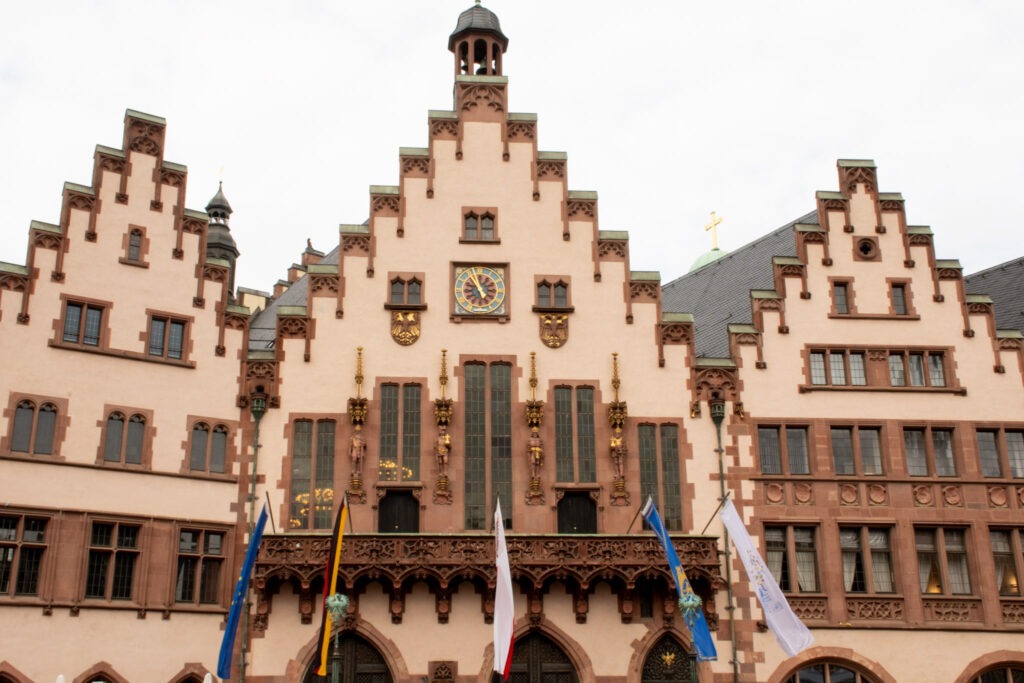
If there’s one place that captures the spirit of Frankfurt, it’s Römerberg in the Old Town (Altstadt). Set along the Main River, this square is one of my favourites in Germany.
It has witnessed nearly every chapter of the city’s history—from medieval markets and royal coronations to postwar reconstruction. The cobblestones beneath your feet lead you through centuries of resilience and renewal.
Lining the square are picture-perfect half-timbered houses, their gabled roofs and pastel façades standing proudly once again after being carefully rebuilt following World War II.
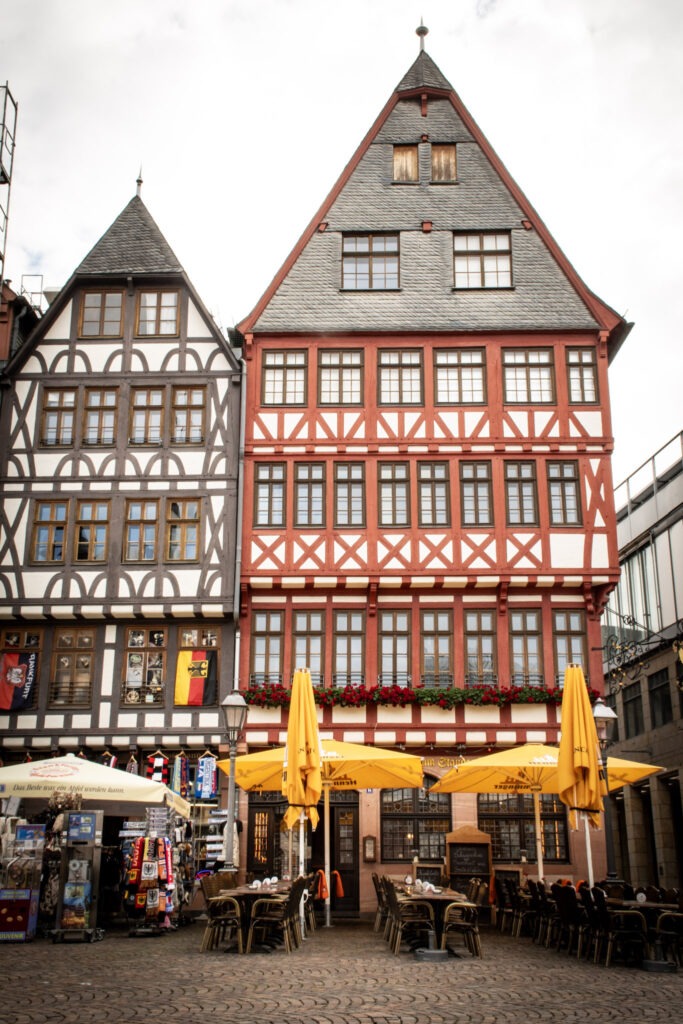
At its center stands the Fountain of Justice, a reminder of the city’s enduring values, while the Old St. Nicholas Church and the Römer City Hall—Frankfurt’s seat of power since the 15th century—anchor the square.
Tucked into the corner of Römerberg stands the Alte Nikolaikirche (Old St. Nicholas Church), a graceful Gothic landmark with its slender spire and red sandstone trim. Built in the 13th century, it once served as the city’s council church and later as a place of worship for merchants and sailors along the Main.
Römerberg is where festivals unfold like the annual Christmas Market, laughter echoes, and travellers linger over coffee or a local beer.
Traveller Tip: For a quiet experience, I recommend you visit early in the morning, preferably on a weekday, especially if you want to take photos without the swarm of people.
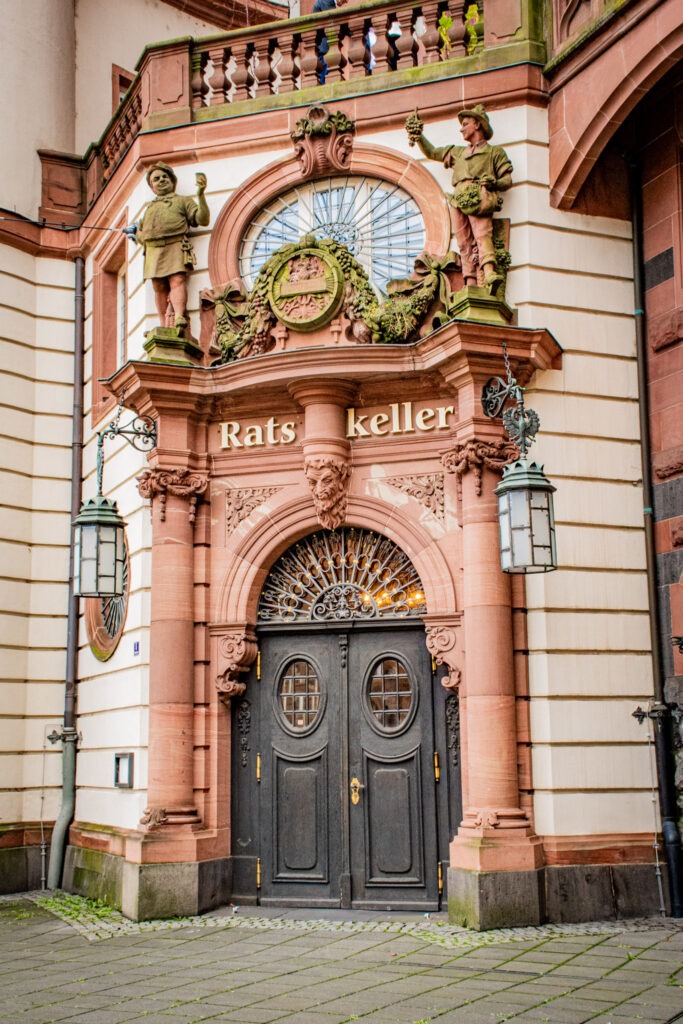
Wandering through the Altstadt, I loved exploring the area around the Altes Rathaus with its Gothic façade. Here, you’ll find the Ratskeller, where historic dining traditions continue. The Local Court (archway over the main street) and the Herkulesbrunnen are found tucked away inside. The stone carvings, arched windows, and sculpted details reflect Frankfurt’s medieval past.
Iconic Tourist Attractions in Frankfurt, Germany
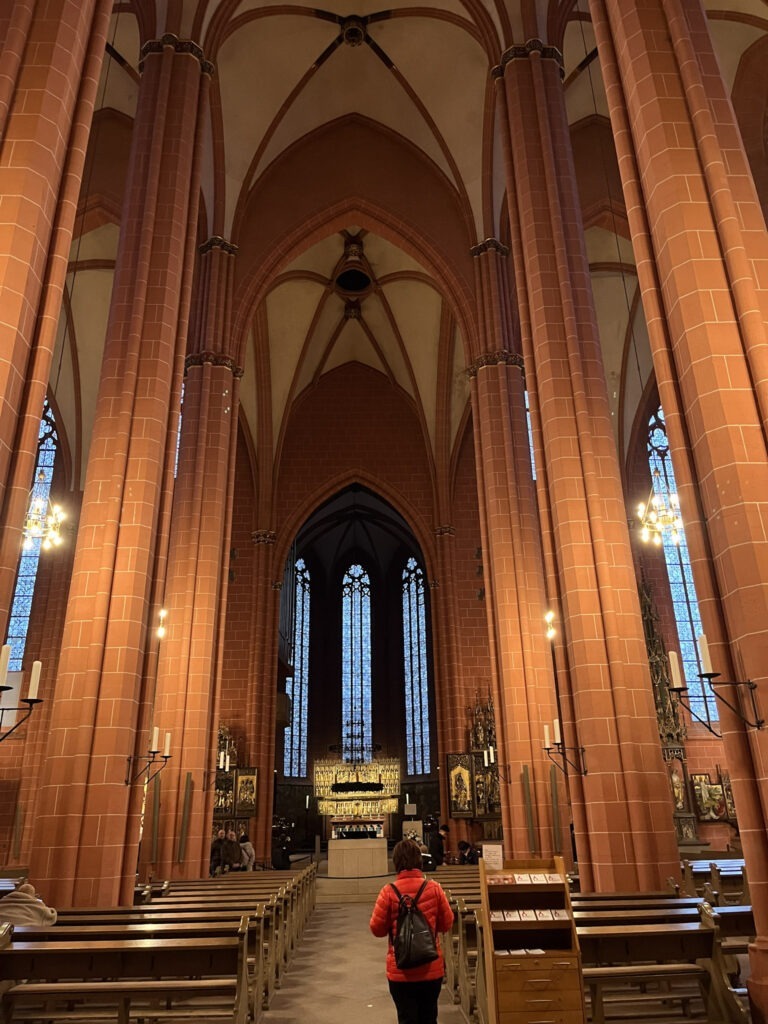
Frankfurt Cathedral (Dom St. Bartholomäus)
Just a short walk from Römerberg, in the Dom-Römer-Quartier, stands the Frankfurt Cathedral (Dom St. Bartholomäus) — a powerful symbol of the city’s endurance and faith. Its red sandstone tower rises above the skyline, visible from nearly every corner of the Old Town.
Though often mistaken for a traditional cathedral, it’s technically a collegiate church — yet it holds imperial significance. Between the 14th and 18th centuries, Holy Roman Emperors were elected and crowned here, sealing Frankfurt’s role in European history.
Inside, it feels quiet, intimate and small, interrupted only by the deep, resonant sound of the church bells echoing across the Altstadt. Entry is free, and it’s worth stepping inside to admire the vaulted ceilings and stained glass that survived both time and war.
For those willing to climb the 328 steps to the top (stairs only, €3), the reward is one of the best panoramic views of Frankfurt — a contrast of medieval rooftops and modern towers.
The Main River

Just beyond the cathedral, the Main River flows through the heart of Frankfurt, defining both its geography and character. I loved walking its banks — early mornings with joggers, afternoons with cyclists, and evenings when the skyline glows against the water.
A string of bridges crosses the river, each with its own unique personality. The Eiserner Steg, a 19th-century iron footbridge covered in love locks, connects the Old Town with Sachsenhausen and offers one of the city’s most photogenic views.
The Alte Brücke, Frankfurt’s oldest bridge, dates back to the 13th century and was once the only crossing for centuries. Further west, the Holbeinsteg adds a modern touch — sleek, red, and popular among locals who commute on foot or bike.
River cruises offer an effortless way to see Frankfurt’s skyline from the water.
Traveller tip: I recommend you purchase your ticket for the river cruise onsite at the kiosk near the Eiserner Steg bridge. You will save money by not using third-party booking sites like TripAdvisor and Get Your Guide.
During my 2.5-week stay, I purposely stayed in multiple accommodations to help future travellers like you. On my stays, I checked into a small boutique hotel in the middle of the river on Karpfenweg called Main Suites. It almost felt like I was on a riverboat, with my window opening up right on the Main River.
Every morning, I walked along the promenade before the city woke up, heading to the nearby train station to whisk me away to a new destination.
Frankfurt Tourist Attractions For Museum Lovers — Frankfurt’s Cultural Mile
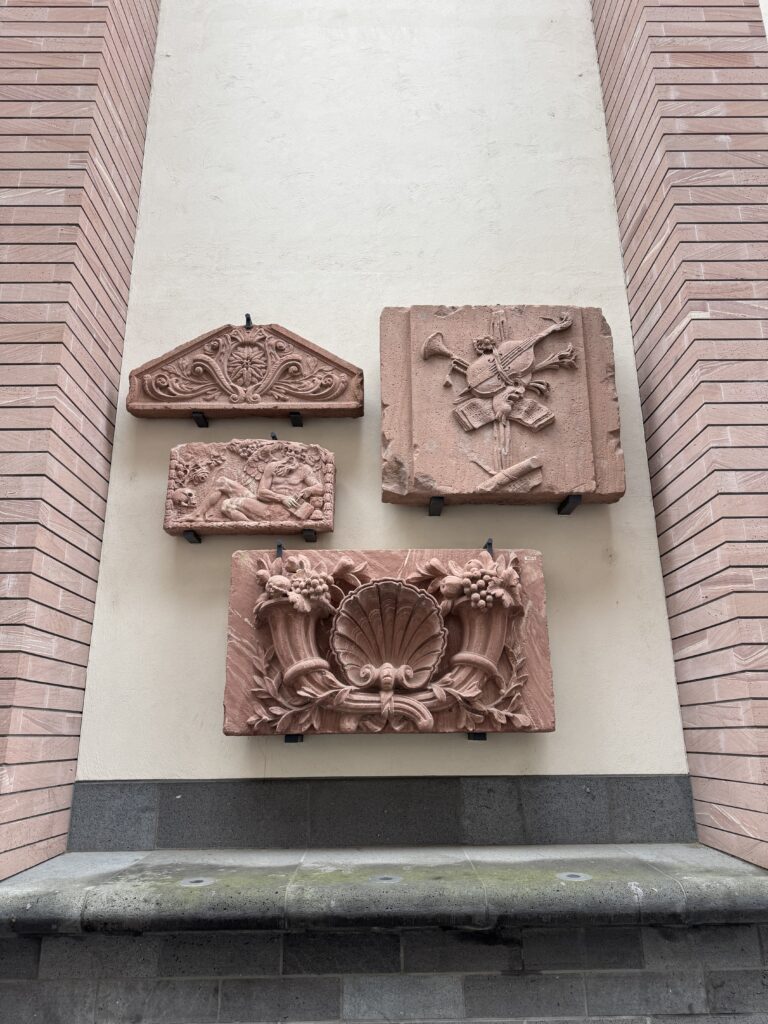
Few cities in Germany balance tradition and modernity as well as Frankfurt, and nowhere is that more evident than along the Museumsufer, or Museum Embankment.
Stretching along both sides of the Main River, this cultural corridor is home to more than a dozen world-class museums. From classical art and film to communication and natural history, each one offers a window into a different side of the city’s character.
The concept is reminiscent of Berlin’s Museum Island, albeit on a less grand scale.
Tip: Buy the Museumsufer Ticket for access to multiple museums over two consecutive days — a convenient and cost-effective way to explore at your own pace.
I have to admit: I was disappointed to discover that there are no free museums in Frankfurt for adult visitors — this is one area where the city falls short as a major European destination. By contrast, in Berlin you’ll find dozens of museums with free entry or regularly free-entry days, making culture far more accessible to budget-conscious travellers.
Other Notable Museums
- Städel Museum — One of Germany’s most important art museums, featuring masterpieces by Rembrandt, Vermeer, Monet, and Picasso. Its mix of Old Masters and contemporary works creates a stunning dialogue between centuries.
- German Film Museum (Deutsches Filmmuseum) — A dynamic space tracing the evolution of cinema through interactive exhibits and rare film memorabilia. Perfect for both movie lovers and the simply curious.
- Museum of Communication (Museum für Kommunikation) — Tells the story of human connection — from handwritten letters to digital networks — through beautifully designed displays and vintage artifacts.
- Senckenberg Nature Museum — A must for science enthusiasts and popular with families. Home to life-sized dinosaur skeletons, fossils, and exhibits that bring Earth’s natural history vividly to life.
- Jewish Museum Frankfurt — Thoughtful and deeply moving, it explores Jewish life, culture, and resilience throughout the city’s long and complex history.
- Deutsches Romantik-Museum — Dedicated to German Romanticism, this newer museum blends literature, art, and philosophy, giving insight into a period that shaped modern emotion and imagination.
- Goethe House — The restored birthplace of Johann Wolfgang von Goethe, offering an intimate glimpse into the life of Germany’s literary icon.
- Frankfurt Cathedral Museum (Dommuseum Frankfurt) — Located beside the cathedral, this small but fascinating museum showcases religious art and artifacts that tell the story of Frankfurt’s spiritual and political past.
Top Attractions in The Modern City
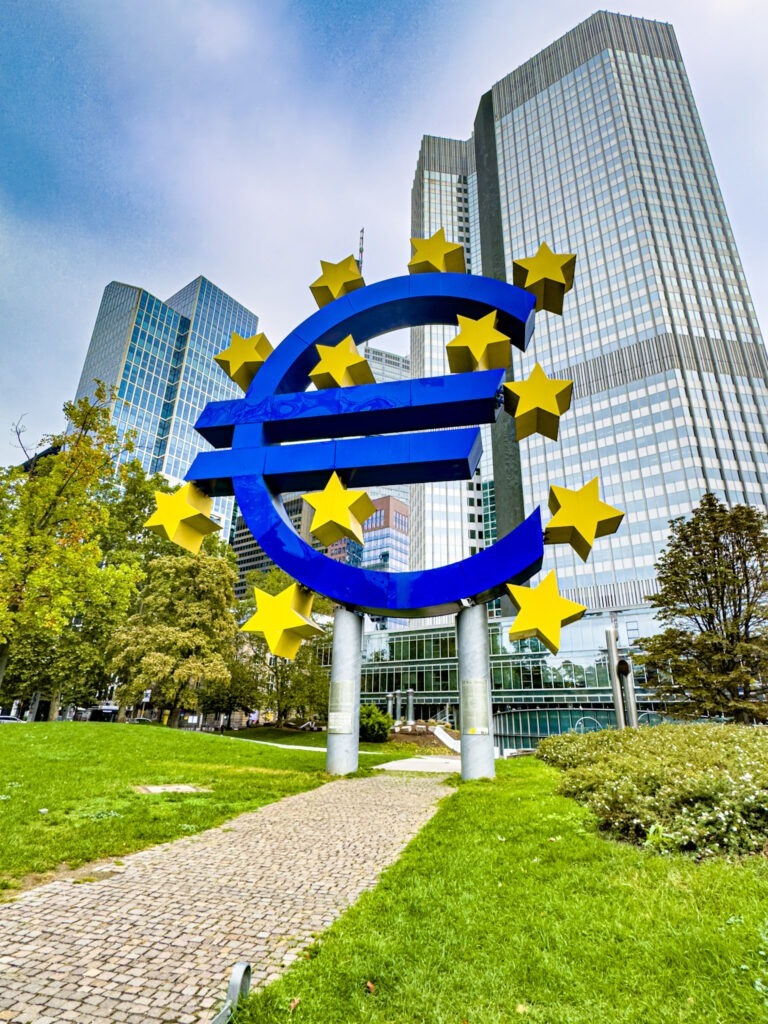
The Financial District (Bankenviertel)
Modern Frankfurt rises skyward in the Bankenviertel, the city’s gleaming financial district and the symbolic center of Germany’s economic power. Here, glass and steel towers define the skyline — the Commerzbank Tower, once Europe’s tallest building, and the Eurotower, former home of the European Central Bank, are unmistakable landmarks.
In the middle of Willy-Brandt-Platz stands the Euro sculpture, a bright blue and yellow icon that has become one of the city’s most photographed spots. This area is not far from Frankfurt am Main Hauptbahnhof, the main train station.
Just a short walk away, the Main Tower offers one of the best panoramic views in Frankfurt. The observation deck sits 200 meters above the city, with sweeping vistas over the Main River and the clustered rooftops of the Old Town. Tickets cost around €9, and note that access is by elevator, but the final few meters are reached by stairs.
Zeil Shopping Street and MyZeil Mall
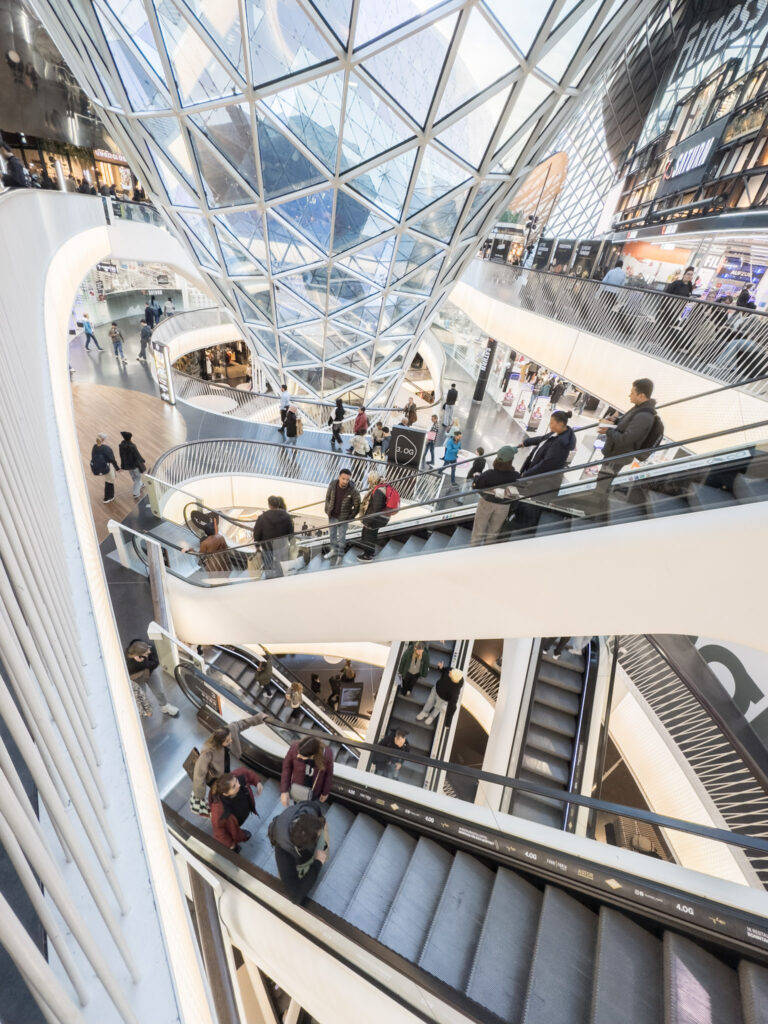
If the Bankenviertel showcases Frankfurt’s business vibe, the Zeil captures its everyday life. This busy pedestrian street is the city’s retail heart — a seamless mix of designer labels, department stores, and international brands all within a few blocks.
The highlight is MyZeil Mall, a surprising architectural space with a vast glass roof that curves like a wave, flooding the interior with natural light and soft curves. Even if shopping isn’t your priority, it’s worth stepping inside to admire the design and the view from the upper floors.
This was mere steps from another place I stayed called The Doorman.
For those seeking a slower pace, wander down nearby side streets like Berliner Straße or Kaiserstraße, where you’ll find smaller boutiques, independent shops, and cozy cafés that locals love.
A word of advice: Saturdays are the busiest — the Zeil fills with shoppers from morning until night, and protests often pass through the area at unpredictable times. If you prefer a quieter visit, go on a weekday morning.
Off the Beaten Path — Lesser-Known Frankfurt Attractions
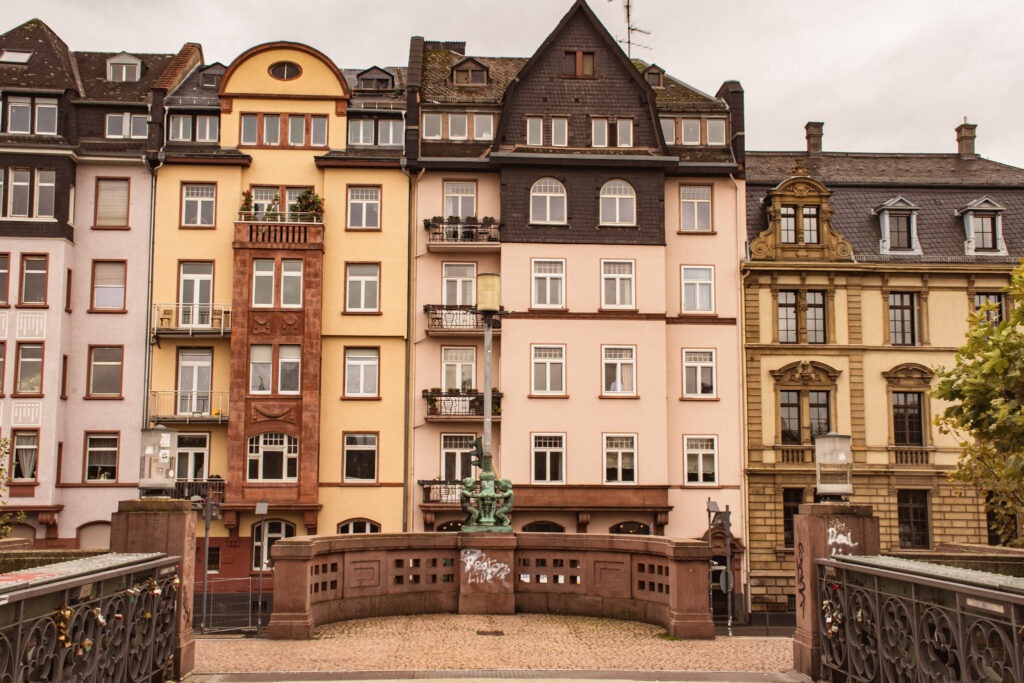
Kleinmarkthalle
If you want to taste the real Frankfurt, skip the restaurant menus and head straight to the Kleinmarkthalle. This lively indoor market, just a few minutes’ walk from Zeil, is where locals shop for fresh produce, meats, cheeses, and baked goods. The air is filled with the scent of spices, roasted coffee, cheese, sausages and flowers.
Try a plate of “Handkäse mit Musik”, a pungent regional cheese marinated in vinegar and onions, or grab a quick lunch from one of the small counters serving traditional German fare. Bring cash — many stalls still prefer it.
The market is busiest in the mornings, especially on Saturdays, so arrive early for the best selection and space to wander. It is also busy with the after-work crowd, many meeting up with a friend at Rollanderhof Galerie, a terraced winebar specializing in local wine.
Sachsenhausen Neighbourhood
Across the Main River lies Sachsenhausen, one of Frankfurt’s oldest and most character-filled neighbourhoods. It’s best known for its Apfelwein (apple wine) taverns — rustic, wood-panelled spots where locals gather for hearty food and good times that spill into the cobblestone streets.
The most famous stretch, Schweizer Straße, can feel touristy, but venture a few blocks deeper into the residential lanes and you’ll find more authentic pubs where time moves more slowly and the glasses are filled generously.
Travellers, I recommend Apfelweinwirtschaft Atschel, a beloved tavern that’s been serving locals since 1849. The atmosphere is exactly what you hope for in an old Frankfurt pub — wooden tables, laughter echoing through the room, and the unmistakable clink of Apfelwein glasses. If you order the apple wine, do as the locals do: ask for a bottle of mineral water to mix with it. Pure Apfelwein can be surprisingly tart or sweet, but when diluted, it’s crisp, refreshing, and perfectly balanced.
Beyond its taverns, Sachsenhausen rewards wanderers. You’ll find local bakeries, small art galleries, and leafy courtyards hidden behind old façades. On weekends, the flea market along the Mainufer is a wonderful mix of antiques, books, and everyday treasures — reminding me of Berlin’s weekend markets that I loved visiting when I lived there.
Höchst District
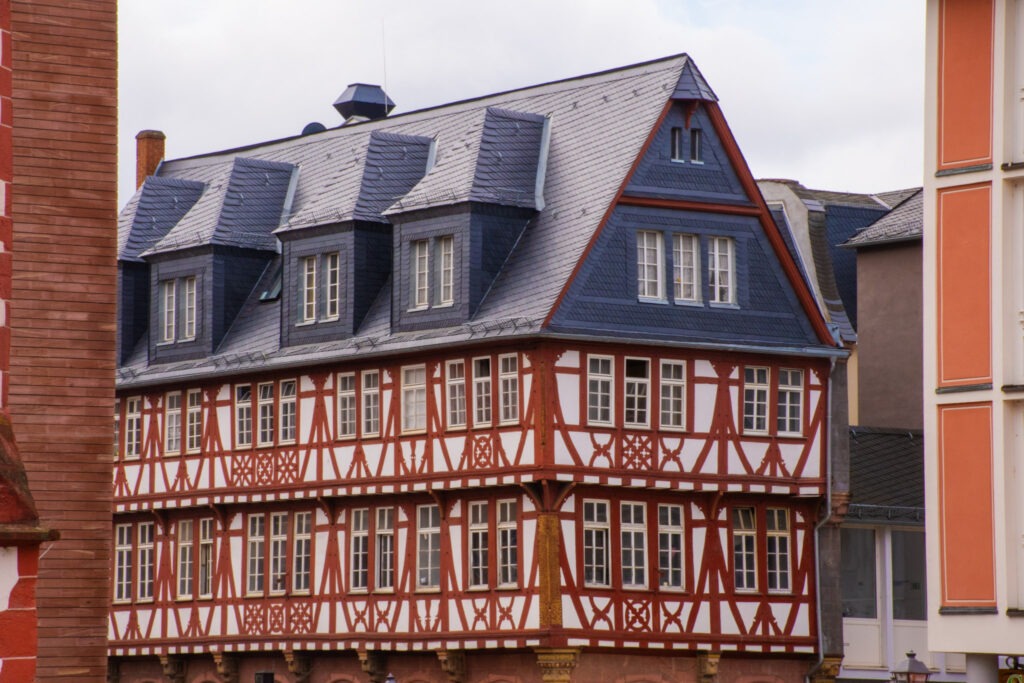
A world away from the city’s skyline, Höchst feels like stepping into a storybook village. Located about 20 minutes from central Frankfurt by S-Bahn, this historic district still preserves its medieval charm with half-timbered houses, a quiet castle (Schloss Höchst), and narrow lanes that seem untouched by time.
The Bolongaropalast, an 18th-century baroque palace, adds an elegant touch, while the riverside promenade invites peaceful walks with views of passing boats and willow trees dipping into the water. Few tourists make it this far, which is precisely why it’s worth the journey — a reminder that Frankfurt’s character stretches well beyond its modern core.
Dear Traveller, I only recommend visiting here if you have extra time in Frankfurt. It won’t take you long to stroll around, but you need to factor in the train time there and back.
Green Spaces in the City
Even in the heart of a busy city like Frankfurt, there is plenty of room to breathe. These parks and gardens are local favourites for slowing down, walking their dog and reconnecting with nature. If you are looking for a quiet reprieve, then seek these out if you have the time.
- Palmengarten — A botanical garden with exotic plants, greenhouses, and small lakes.
- Grüneburgpark — Expansive lawns near the university district, popular with students, dog walkers, and picnickers.
- Nizza Gardens (Der Nizza) — A Mediterranean-style park along the Main River with palm trees and a warm, coastal feel.
- Bethmannpark — Tucked away behind a wall, this smaller park features a serene Chinese Garden — a true hidden gem.
- Stadtwald (City Forest) — One of Europe’s largest urban forests, with walking trails, ponds, and small playgrounds for kids.
Attractions Near Frankfurt — Frankfurt as a Base for Day Trips
One of the best things about staying in Frankfurt is its strategic location. From here, you can reach some of Germany’s most charming towns and cities in under an hour by train.
Mainz, with its Roman heritage and vibrant market squares; Wiesbaden, a spa town known for its elegance and thermal baths; Rüdesheim, tucked into the scenic Rhine Valley and perfect for wine tasting; and Heidelberg, with its romantic castle and riverside charm, are all easily accessible for a day trip.
For slow travellers, Frankfurt works beautifully as a home base. Spend a few days exploring the city’s cultural and historic highlights, then take relaxed excursions to surrounding towns without the stress of constant packing and moving.
Staying longer allows you to absorb the pace of the city, wander hidden streets, sip coffee along the Main, and return each evening to the comfort of one central place.
Final Thoughts
Frankfurt surprised me. It’s a city of layers, far more than its first impression of skyscrapers and airport terminals suggests. From the absolute charm of Altstadt to the cultural richness of the Museumsufer, the modern energy of the Bankenviertel, and the scenic walks along the Main, there’s depth everywhere — if you take the time to look.
I encourage you to slow down, wander, and notice the details. Frankfurt’s compact layout, walking-friendly streets, and excellent public transport make it easy to explore at your own pace. Take the time to linger in cafés, stroll across bridges, and let the city reveal itself beyond the obvious tourist spots.
If you want to uncover Frankfurt — or any European city — in a meaningful way, my bespoke travel planning services craft personalized itineraries that let you experience the real rhythm and character of each destination.