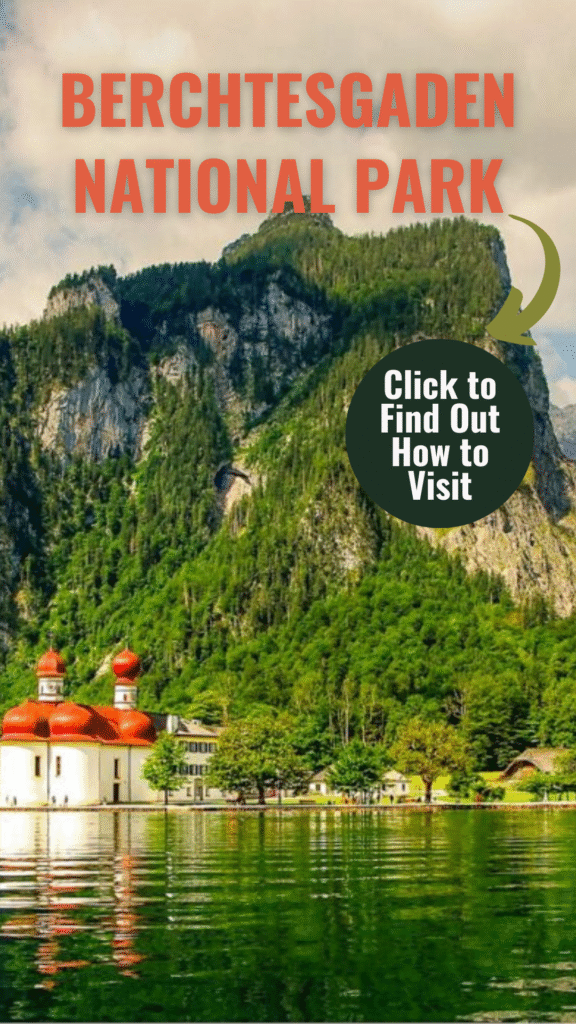

If you’re wondering whether Berchtesgaden National Park is worth visiting on a day trip, the short answer is yes—especially if you love dramatic alpine scenery, peaceful lakes, and nature that still feels untouched.
I first visited Berchtesgaden while driving the German Alpine Road during a two-week journey through the Bavarian Alps. Even after nearly four decades of travelling throughout Europe—and many returns to Germany—this corner of Bavaria stood out to me for its quiet beauty and sense of calm.
In a single day, you can glide across the emerald waters of Königssee, ride the Jennerbahn cable car for sweeping mountain views, and wander peaceful trails surrounded by towering peaks.
But what makes Berchtesgaden special isn’t just the scenery. It’s the feeling of stepping into a landscape that invites you to slow down.
I’ll share how to plan a memorable Berchtesgaden National Park itinerary, along with the experiences that make it worth the journey.
This post may contain affiliate links, meaning I get a commission if you decide to purchase something through the links, at no additional cost to you. Read my Affiliate Disclosure.
Why Berchtesgaden National Park Is Worth the Day Trip
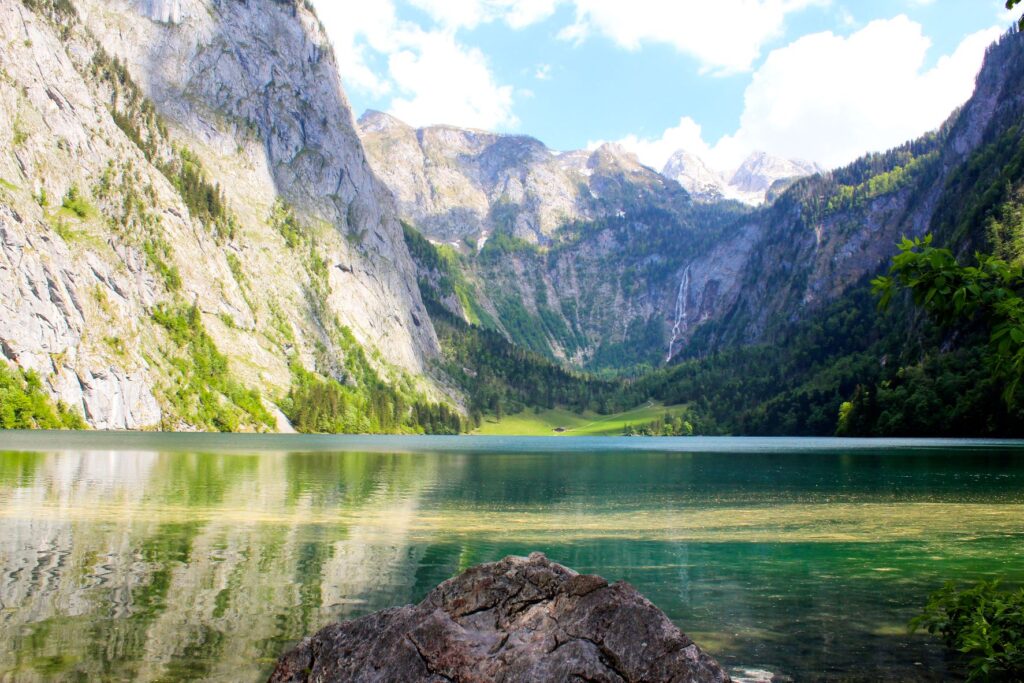
Over the years I’ve spent travelling across Europe—returning to Germany again and again—certain landscapes stay with you long after the trip ends. Berchtesgaden National Park is one of them.
Tucked into the Bavarian Alps near the Austrian border, the park feels dramatically alpine yet surprisingly peaceful. Jagged peaks rise above deep valleys, forests stretch quietly between mountain walls, and lakes appear in shades of green that almost don’t seem real.
The heart of the experience for many visitors is Königssee, a long, narrow lake framed by sheer cliffs. Crossing it by electric boat is one of those moments that slows everything down. The water is still, the mountains close in around you, and the usual noise of travel disappears.
What struck me most when I visited wasn’t just the scenery, but the atmosphere. Even with its growing popularity, Berchtesgaden still feels calmer than many famous Alpine destinations like the Dolomites in Italy or the French Alps. There’s space to pause, to walk quietly along forest paths, or simply sit beside the water and take in the landscape.
For travellers who love mountains but prefer beauty without the crowds, a day in Berchtesgaden National Park can feel like discovering a quieter side of the Alps.
Below are the experiences I recommend most for a day visit to Berchtesgaden National Park.
How to Plan a Berchtesgaden National Park Day Trip

When I visited Berchtesgaden National Park, I quickly realized that the key to enjoying it isn’t trying to see everything—it’s choosing a couple of experiences and allowing the landscape to set the pace.
The simplest approach is to build the day around one anchor experience.
In this park, the anchor is almost always the Königssee boat ride.
When I visited while driving the German Alpine Road, I quickly realized that Königssee shapes the entire pace of the day. Boats depart regularly from the dock at Schönau, carrying visitors deep into the heart of the national park, surrounded by towering alpine cliffs. It’s the experience most people come for—and for good reason.
From a planning perspective, I like to think about the day using what I call The Unrushed Itinerary Method: choose one defining experience, then leave space around it rather than trying to fill every hour.
In Berchtesgaden, that usually means starting the morning at Königssee and then adding one or two additional experiences depending on your interests, time and energy.
Approaching the day this way keeps the pace relaxed and allows you to actually enjoy the landscape rather than rushing from place to place.
Start With The Königssee Boat Ride
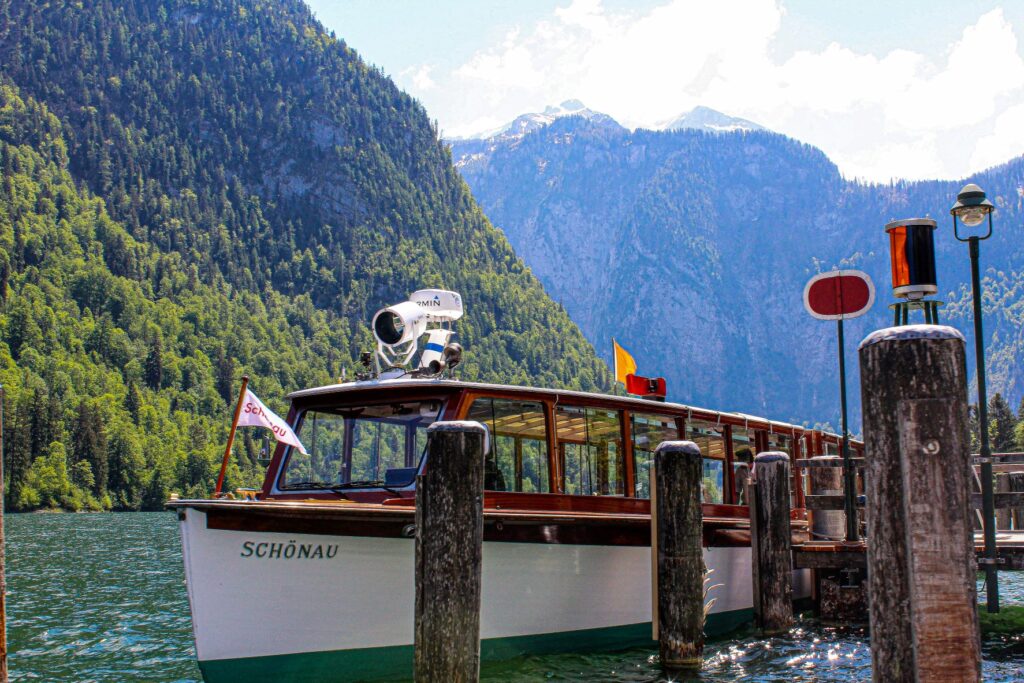
For most visitors, the highlight of Berchtesgaden National Park is the boat journey across Königssee.
Unlike many alpine lakes, motorboats are not allowed here. Instead, quiet electric boats glide across the water, preserving the stillness of the surrounding mountains. The lake itself is long and narrow, framed by steep rock walls that rise dramatically from the shoreline.
One of the most memorable moments happens midway across the lake. As the boat passes through a narrow section of cliffs, the captain slows down, and a crew member lifts a trumpet. A short melody is played toward the rock face, and a moment later, the notes echo back across the water from the surrounding Alps. Hearing the sound bounce through the mountains is unforgettable.
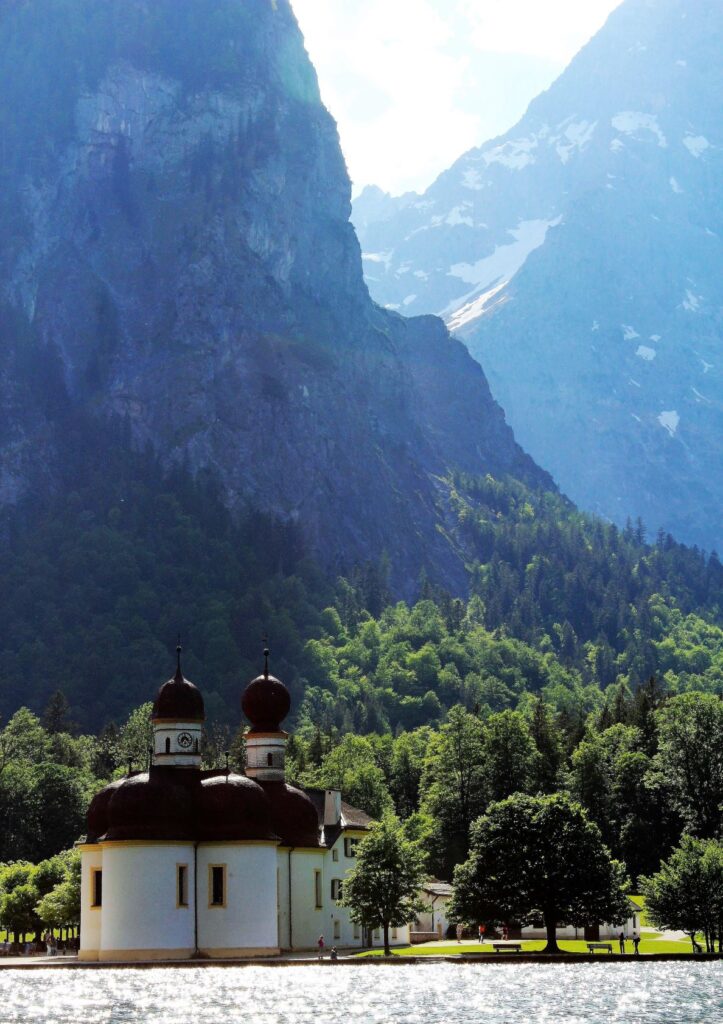
The first stop is St. Bartholomä, famous for its red-domed pilgrimage church sitting along the edge of the lake. I spent some time walking the easy footpaths along the shoreline before continuing further down the lake.
The final stop is Salet, where a short walk leads to Obersee. This was actually my favourite part of the visit. There’s very little development here—just a small wooden boathouse extending into the lake, towering rock faces reflected in the still water, and an atmosphere of complete quiet.
From Obersee, experienced hikers can continue toward Röthbach Falls, the highest waterfall in Germany, although reaching it requires about three to four hours of hiking.
If possible, I recommend catching one of the earliest boats of the day, when the lake still feels calm and uncrowded.
| Detail | Information |
|---|---|
| Departure Point | Seelände dock in Schönau am Königssee |
| Boat Type | Electric boats (motorboats are not permitted on the lake) |
| Departure Frequency | Approximately every 30 minutes |
| First Boats | Around 9:00 AM, depending on the season |
| Main Stops | St. Bartholomä and Salet |
| Travel Time | ~35 minutes to St. Bartholomä, ~55 minutes to Salet |
| Ticket Price | About €22–€28, depending on distance travelled |
| Best Strategy | Take one of the first boats of the day to avoid crowds |
Additional Things to Do in Berchtesgaden National Park

After returning from Königssee, you still have time to explore another side of the region. The best approach is to choose one or two experiences that match your interests, rather than trying to see everything in a single day.
Hiking and Quiet Trails in the Park
For travellers who prefer experiencing the mountains at a slower pace, Berchtesgaden National Park offers more than 200 kilometres of hiking trails.
Not all of them require a full day of hiking. Many gentle paths wind through forested valleys or open alpine meadows, offering beautiful scenery without demanding climbs.
What I appreciated most about walking here was the sense of quiet. Even in a well-known national park, there are still stretches of trail where the only sounds are birds overhead, distant cowbells, and your own footsteps on the path.
Is Eagle’s Nest Worth Visiting?
Another well-known attraction near Berchtesgaden is the Eagle’s Nest (Kehlsteinhaus), a historic building perched high above the valley.
Originally constructed as a mountain retreat during the Nazi era, the site is now visited mainly for its sweeping views of the surrounding Alps.
If you’re interested in the historical context, it can be a meaningful stop. However, if your main goal is simply to enjoy mountain scenery, I personally think the Jennerbahn cable car provides a similar alpine perspective in a more relaxed setting.
For a single day in the region, I would usually recommend choosing either Jennerbahn or Eagle’s Nest, rather than trying to fit both into the same itinerary.

Jennerbahn Cable Car for Panoramic Views
One of the most impressive viewpoints in the area comes from the Jennerbahn cable car, which climbs high above the valley for sweeping views across the Bavarian Alps.
As the gondola rises toward the summit of Mount Jenner, the landscape opens wider with every section of the ascent. From the top, you can look down across Königssee and see the dramatic scale of the national park.
Even if you’re not planning a long hike, it’s worth spending some time walking along the short summit paths. The trails are easy and scenic, and there’s also a small summit café where you can pause for a drink while taking in the view.
Hintersee and Ramsau (A Beautiful Detour)
If you have a little extra time in the afternoon, it’s worth driving to Hintersee and the nearby village of Ramsau bei Berchtesgaden.
Hintersee is a smaller alpine lake surrounded by forest and mountains, known for its mirror-like reflections on calm days. A peaceful walking path circles the shoreline, making it an easy place to slow down for a while.
Just a few minutes away, Ramsau is home to one of Bavaria’s most photographed scenes: the small parish church of St. Sebastian, set beside a wooden bridge crossing the Ramsauer Ache river with the mountains rising behind it.
Compared with the busy dock area at Königssee, this part of the region feels noticeably quieter.
Planning Tips for Visiting Berchtesgaden National Park
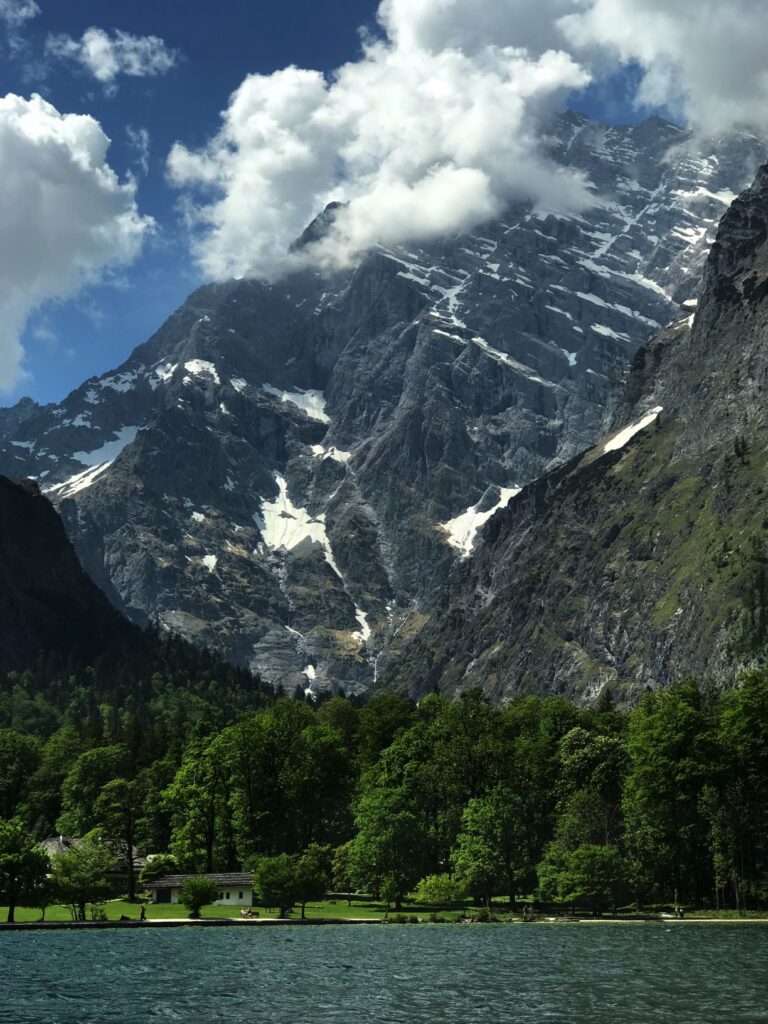
A little planning goes a long way when visiting Berchtesgaden National Park, especially if you’re coming for the day. The area is easy to navigate, but understanding how the main experiences fit together will help you enjoy the landscape without feeling rushed.
| Planning Detail | What to Know |
|---|---|
| Location | Berchtesgaden National Park is located in southeastern Bavaria near the Austrian border. |
| Distance from Berchtesgaden | The main access point for visiting the park and Königssee is about 10 minutes from the town of Berchtesgaden. |
| Distance from Salzburg | About 30 minutes by car, making it one of the easiest alpine day trips from the city. |
| Distance from Munich | Roughly 2 hours by car, depending on traffic and route. |
| Main Access Point | Most visitors begin at Schönau am Königssee, where the electric boats depart across the lake. |
| Best Time to Visit | May through October offers the most reliable weather and full access to trails, cable cars, and boat services. |
| Arrival Strategy | Arriving early helps avoid crowds and allows you to experience Königssee at its most peaceful. |
| Parking | Large parking areas are located at Schönau am Königssee, followed by a short walk through the pedestrian area to the boat dock. |
When I visited while driving the German Alpine Road, I stayed in the nearby town of Ruhpolding for several days. It served as a good base for making the short day trip south into the park. Having a car made it easy to explore the surrounding alpine landscapes and villages, as well as visit Salzburg for the day.
FAQ About Visiting Berchtesgaden National Park
Is Berchtesgaden National Park worth visiting?
Yes. Berchtesgaden National Park is one of the most beautiful landscapes in Germany, with dramatic alpine peaks, emerald lakes, and quiet forest trails. Even on a day trip, experiences like the Königssee boat ride and the views from Mount Jenner make it a memorable way to experience the Bavarian Alps.
What makes Berchtesgaden National Park unique?
Berchtesgaden is Germany’s only Alpine national park. Its landscape combines dramatic limestone peaks, deep valleys, and glacier-carved lakes like Königssee, creating some of the most striking mountain scenery in the country.
What is the most beautiful place in Berchtesgaden National Park?
Königssee is widely considered the most beautiful place in the park. Surrounded by steep alpine cliffs, the emerald-green lake is known for its peaceful atmosphere and the famous boat journey that carries visitors deep into the mountains.
Is Berchtesgaden National Park good for a slow travel experience?
Yes. Despite its popularity, much of the park remains peaceful. Quiet lakes, forest trails, and sweeping mountain views create the kind of setting where it’s easy to slow down and simply enjoy the landscape.
Is Berchtesgaden National Park a good day trip destination?
Yes. Because the park’s highlights are concentrated around Königssee and nearby viewpoints, it’s easy to experience the landscape in a single day. Many travellers visit from Salzburg or while exploring the Bavarian Alps, focusing on the Königssee boat ride and one or two additional scenic stops.
Experiencing the Bavarian Alps at a Slower Pace
Some landscapes invite you to slow down the moment you arrive. Berchtesgaden National Park is one of those places.
The mountains feel close here. The lakes are still. And even on a simple day trip, there are quiet moments when the scenery seems to ask you to pause rather than rush on to the next stop.
For me, it was standing beside Obersee with the water perfectly calm, the mountains reflected in the lake, and almost no sound except the occasional ripple on the surface. Those are the moments that stay with you long after the trip ends.
If you’re planning a journey through Bavaria or the Austrian border region, Berchtesgaden National Park is a beautiful place to experience the Alps in a more thoughtful, unhurried way.
And if you enjoy discovering Europe this way, you’re always welcome to join my newsletter, where I share travel insights, inspiration, and practical ideas for exploring more deeply. If you’d like help planning a trip, I also offer personalized trip planning designed around my Unrushed Itinerary Method.