

There are a hundred ways to spend 24 hours in Florence.
Most of them will leave you exhausted.
They stack museums, rush you past the Duomo, and turn a Renaissance city into a checklist. By the end of the day, you’ve seen Florence — but you haven’t actually felt it.
I’ve been returning to Italy for decades, long enough to know that Florence doesn’t reveal itself on a schedule. It reveals itself in the early morning quiet, in the pause between sights, in the streets just beyond where most people stop.
So if you only have one day in Florence, the goal isn’t to do more.
It’s to choose better.
This post may contain affiliate links, meaning I get a commission if you decide to purchase something through the links, at no additional cost to you. Read my Affiliate Disclosure.
What Most 1-Day Florence Itineraries Get Wrong

Most itineraries will try to fit Florence into a single day, the way you would approach a larger city — stacking major sights, squeezing in multiple museums, and moving quickly from one landmark to the next.
But Florence doesn’t work like that.
The historic centre is compact, yes. But the experience of the city is not.
Here’s the difference:
| What Most Itineraries Do | What Actually Works in Florence |
|---|---|
| Stack multiple museums in one day | Choose one museum max — and give it your full attention |
| Visit the Duomo mid-morning or midday | Go early morning when the city is still quiet, or late afternoon works too |
| Move quickly between “top sights” | Build in space to wander and pause |
| Stay only in the historic centre | Cross into Oltrarno for a slower, more local feel |
| Focus on seeing everything | Focus on experiencing a few things well |
If you only have one day in Florence, the goal isn’t to do more. It’s to remove what doesn’t matter — and give the right things space.
This is why I created the Unrushed Itinerary Method. A practical tool that walks you through how to identify what actually matters to you so that you can build your days around that. The exercises in the workbook help you remove what doesn’t fit and to overcome those roadblocks when you’re faced with a heavy itinerary.
My Time Strategy for Spending One Day in Florence

When I plan a one-day itinerary — whether for myself or for clients — I don’t start with a list of sights.
I start with time.
More specifically: how Florence feels at different times of day.
Because this city shifts its pace more than most. And if you align your day with that rhythm, everything becomes easier, calmer, and far more memorable.
This is the same approach I use when designing custom itineraries: we don’t try to fit more in — we place the right experiences at the right time.
Here’s how I think about it:
Early Morning (before 9:00 AM)
This is when Florence feels like itself. Quiet streets. Soft light. Space to actually look at the Duomo without navigating crowds.
→ This is when I always place the Duomo area and first walk through the historic centre.
Late Morning to Midday (10:00 AM – 1:30 PM)
This is when crowds build and lines peak. Instead of fighting it, I work with it.
→ This is the window for one museum only (usually the Uffizi or Accademia), or a slower, seated lunch.
Afternoon (2:00 PM – 5:00 PM)
Energy dips. The city feels heavier. This is where most itineraries fall apart.
→ I shift across the river into Oltrarno, where Florence feels more local, more spacious, and noticeably calmer.
Early Evening (5:30 PM – 8:00 PM)
The light softens. The pace changes again.
→ This is when Florence becomes beautiful in a different way — ideal for a walk, an aperitivo, or a quieter viewpoint.
Night
Florence quietens.
→ Dinner, a final stroll, and letting the city settle around you instead of rushing through one last stop.
If you plan your 24 hours this way, something subtle happens. You’re no longer moving against the city. You’re moving with it.
Morning in Florence: Start Before the Crowds

If you take only one piece of advice from this guide, let it be this:
Start early.
When I map out a daily Florence itinerary — for myself or for clients — I always begin the day before the city fully wakes up.
Because this is when Florence feels entirely different.
The streets are quieter. The light is softer. And the space around the Duomo, which later becomes one of the most crowded areas in the city, feels almost calm.
Start in Piazza del Duomo.
Not to rush inside everything — but to take it in properly.
Stand back and look at the scale of the Cathedral of Santa Maria del Fiore. Notice the detail in the marble. Walk slowly around the Baptistery before the tour groups arrive. This is one of the few moments in the day when you can experience this part of Florence without pressure.
If climbing the Duomo is on your list, this is the time to do it. Earlier entries mean fewer people, better lighting for photos and a much more enjoyable experience. If not, staying at ground level is just as rewarding when the square is still quiet.
You do have a choice. Whether you admire from the exterior, or you get an advanced booking for timed entry.
From here, walk — don’t rush — toward Piazza della Signoria.
This stretch is short, but it’s one of the most important transitions of the day. Florence reveals itself in these in-between moments: side streets, shopfronts opening, the city slowly coming to life.
By the time you reach the square, you’ll see Palazzo Vecchio and the open-air sculptures without the midday density. Pause here. You don’t need long — just enough to take it in without weaving through crowds. It’s much easier to notice the details in architecture when there are fewer distractions.
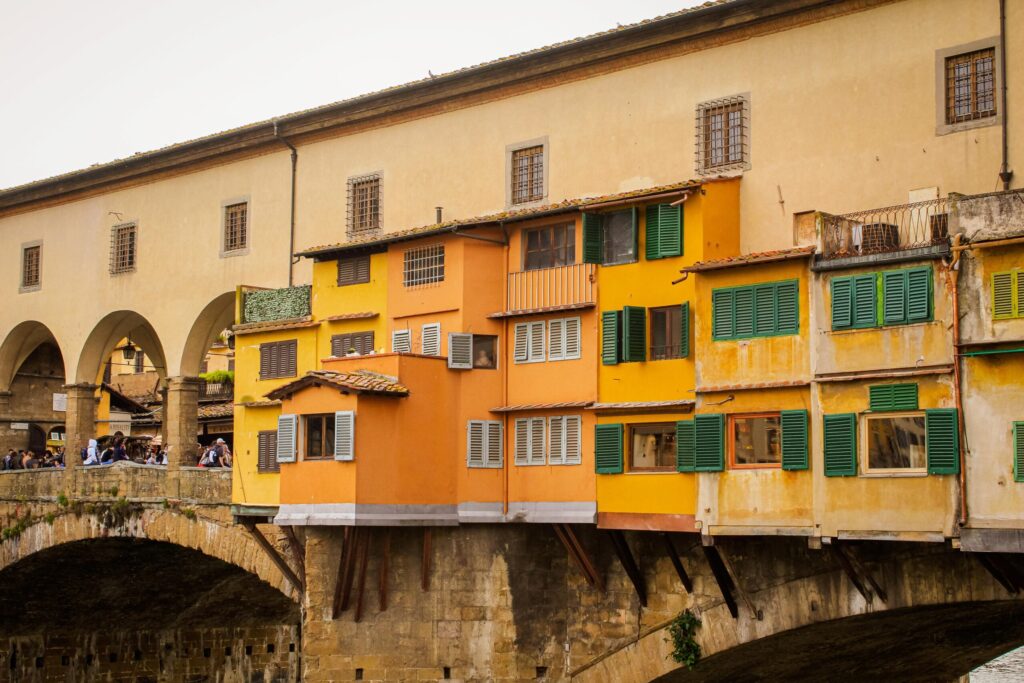
Then continue toward Ponte Vecchio, ideally before late morning.
Yes, it’s one of the most visited spots in Florence. But earlier in the day, it still holds some of its character. You can look out over the Arno, notice the details, and move through it without feeling rushed. Once those wooden awnings open up for business, the crowds swell. Try to beat that rush.
Midday: Choose One Museum (Not Three)

By late morning, Florence changes.
The streets fill. Lines build. The energy shifts from calm to crowded — especially around the major sights.
This is where most Florence itineraries go wrong. They try to fit in too much.
The Uffizi. The Accademia. Maybe even another church or gallery in between. What’s the harm in adding one more site?
In reality, it turns the middle of your day into a race.
I make one rule clear for my clients going to Florence for the day:
Choose one museum. Not two. Not three. One.
Because Florence isn’t just about what you see. It’s about how you experience it.

If you try to do both the Uffizi Gallery and the Accademia Gallery in the same day, your attention gets divided, your energy drops, and everything starts to blur together.
Instead, choose based on what interests you most:
- If you want a broader sense of Renaissance art, go to the Uffizi Gallery
- If seeing Michelangelo’s David is important to you, choose the Accademia Gallery
Either one is enough. More than that is too much for a single day. And an absolute must is to pre-book your tickets; otherwise, you will be wasting precious time in lines.
And if museums aren’t your priority? Skip them entirely.
This is often what I recommend to clients who want to experience Florence beyond its most crowded interiors. Instead, take a longer lunch, sit down somewhere local, and let the middle of your day slow down. Places like Dalla Lola or Trattoria La Casalinga are exactly this kind of experience.
Because midday in Florence isn’t the time to push harder. It’s the time to ease off.
Afternoon: Cross the River (This Changes Everything)
By mid-afternoon, Florence can feel… full.
The streets are busier. The heat settles in. And the energy that felt so calm in the morning starts to feel heavier.
This is the point in the day where most itineraries begin to unravel.
So instead of pushing through it, I do something simple.
I leave. In Florence, the best way to do that is to cross the river into Oltrarno. And it changes everything.
Cross over Ponte Santa Trinita if you can. It’s quieter than Ponte Vecchio, and the view back toward the bridge is one of the most beautiful in the city.
Almost immediately, the pace softens. This is often the moment my clients tell me the day starts to feel easier.
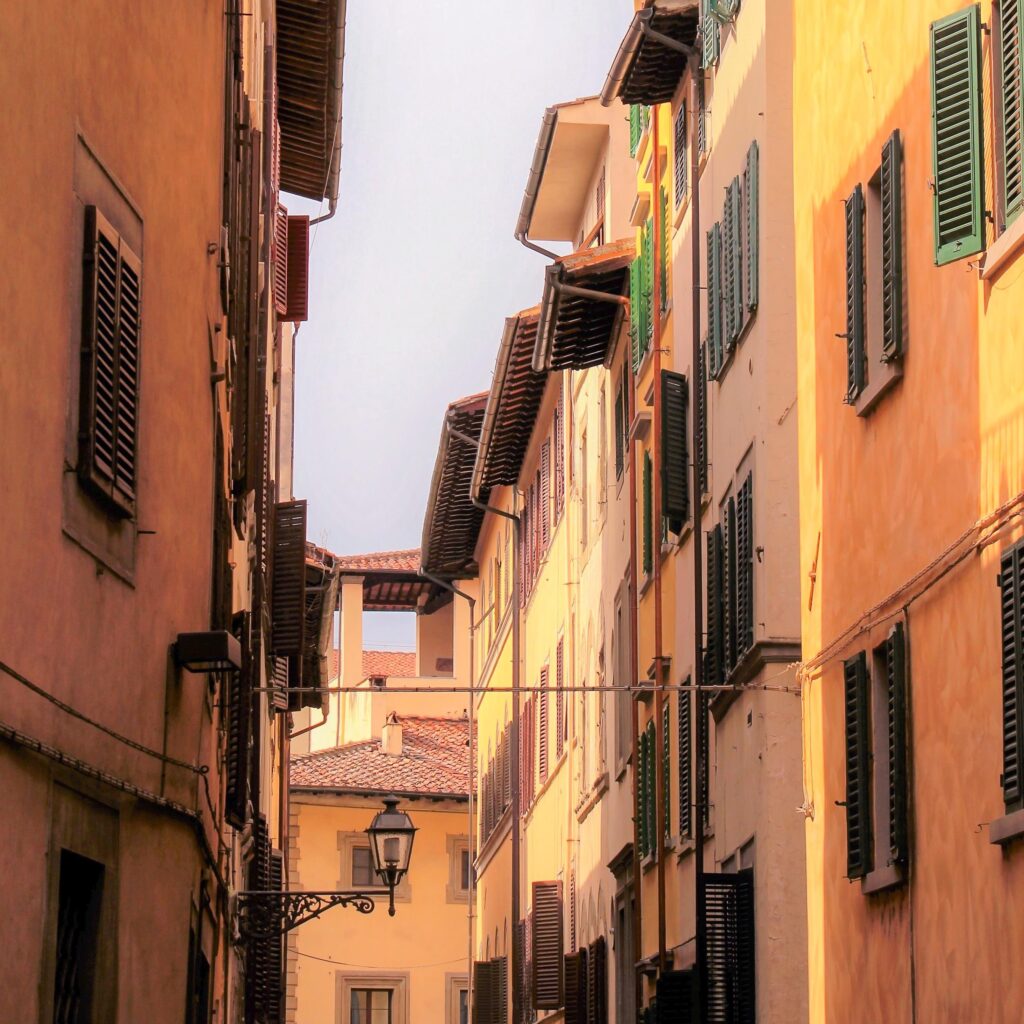
The streets feel more lived-in. You’ll notice small artisan workshops and local cafés. Start with Via Santo Spirito and wander away from the river. This is the Florence that many people miss. Or cross, and leave without truly exploring.
Continue towards Palazzo Pitti and, if you have the energy, step into the Boboli Gardens or the quieter Bardini Gardens for a different perspective over the city.
Evening: Florence at Golden Hour
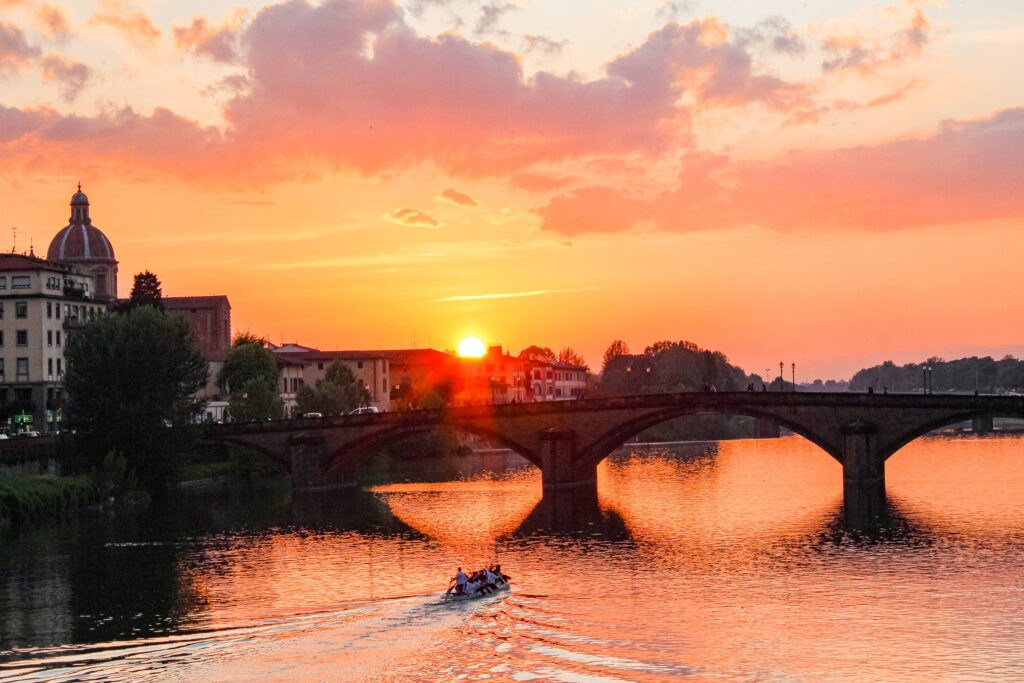
By early evening, Florence shifts again. The intensity of the day softens. The light warms. And the city begins to feel… slower.
This is my favourite time of day in Florence — and the one I’m most intentional about when planning.
First, start to unwind your day with Italy’s traditional dolce vita ritual – the aperitivo. I enjoyed mine at the Florence Rowing Club restaurant called Canottieri Firenze for its riverbank location.
If you want a classic view, you can make your way to Ponte Santa Trinita to watch the sunset. This is the part of the day most people remember. Followed by dinner, choose somewhere you can sit and take your time. I’ve returned more than once to Angiolino or Ristorante del Fagioli for exactly this reason — simple, traditional, and unhurried.
If You Only Do 3 Things in Florence

If you only have a day in Florence, I wouldn’t try to see everything.
I would do this instead:
1. Wander without a plan
Put your map away, at least for a while. Let yourself move through Florence slowly — down side streets, past small shops, into quiet corners that aren’t marked as “must-sees.” This is where the city begins to feel personal, not just visited.
2. Sit down for a long, unhurried meal — far from the main sights
Walk at least a few streets away from the Duomo or any major square and choose a small trattoria where the pace is slower, and the menus are only in Italian.
Take your time. Stay longer than you normally would.
In a city like Florence, this is not a break from the experience — it is the experience.
3. See the Duomo for the first time
The moment when you turn a corner, and it suddenly appears — far larger than expected, detailed in a way that doesn’t quite register at first. That is a special memory.
Everyone remembers that moment. And in many ways, it defines their entire impression of Florence.
And if you have time for more, you can layer in Florence’s major sights around these moments.
Is One Day in Florence Enough?

Short answer: yes — but it depends on what you expect from it.
If your goal is to see Florence’s most recognizable sights, then one day in Florence is enough to do that. The city is compact, walkable, and relatively easy to navigate.
But if your goal is to experience Florence — to feel its rhythm, notice its details, and move through it without rushing — then one day will feel limited.
This is something I often talk through with clients when planning their itineraries.
Not everyone needs more time. But most people benefit from approaching the day differently.
Even with a day, you can have a day that feels calm, intentional, and genuinely memorable — if you resist the urge to do too much.
You won’t see everything. You’re not meant to. So yes — one day in Florence is enough. Just not for everything.
My Final Take
I’ve never found Florence to be a city you “complete.”
Even after decades of returning, it still feels like there’s more just beneath the surface — another street, another small moment, another reason to slow down. That’s part of its pull.
If you only have 24 hours in Florence, let it be enough for now. Not because you’ve seen everything, but because you’ve experienced it in a way that feels unhurried and intentional.
That’s what stays with you.
And often, it’s what brings you back.
If this is how you want to travel — slower, more thoughtfully, with space to actually experience a place — I share more of that perspective (and practical guidance) in my newsletter.
It’s where I go deeper into how to plan trips that feel like this.
You can join me there.


