I’ve always loved architecture, but Art Nouveau holds a different pull for me. Its curves. Its confidence. Its quiet devotion to beauty. Whenever I travel in Europe, I find myself seeking it out, street by street.
Brussels is where that fascination first began. I stayed in a neighbourhood lined with ironwork balconies and soft, fluid façades. Each morning, I walked past details I hadn’t noticed the day before. That’s the gift of this city.
Art Nouveau in Brussels is one of the best places in Europe to understand it. It’s the birthplace of the movement.
Keep reading as I’ll share what Art Nouveau is, why it matters here, and the architects who shaped it. And because seeing it is part of the joy, I’ve created a self-guided walking tour with a curated Google Map that leads you to the most beautiful façades in the city.
Slow, simple, and made for wandering.
This post may contain affiliate links, meaning I get a commission if you decide to purchase something through the links, at no additional cost to you. Read my Affiliate Disclosure.
What Art Nouveau Is (Explained Simply)
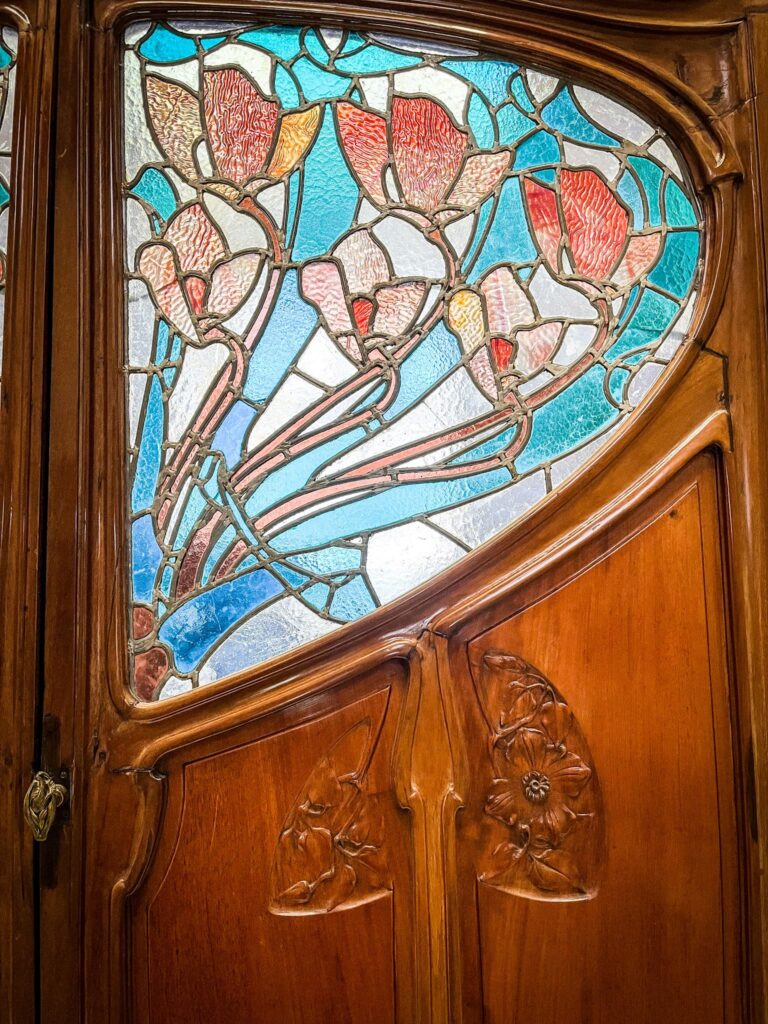
When I think of Art Nouveau, I see movement. Lines that bend. Light that softens. A calm shift away from rigid forms toward something more human. The style draws from nature—vines, flowers, stems—and weaves those shapes into iron, glass, wood, and stone. Nothing feels accidental. Everything feels connected.
Art Nouveau emerged in the late 19th century, at a moment when cities were modernizing and artists wanted a new language—one that celebrated craftsmanship and beauty in everyday life. In Brussels, that language took root. Architects here embraced fluid lines, open floor plans, sunlight, and the idea that a home could feel like a living organism.
Although Brussels is the birthplace, you’ll find Art Nouveau across Europe, each city giving it a different name and character. In Paris, it’s Style Guimard. In Barcelona, it became Modernisme, shaped by Gaudí and Domènech i Montaner. In Vienna, it’s the Secession movement. In Turin, it’s Stile Liberty, full of elegance and Italian flourish.
Different names. Different interpretations. But always the same intention: beauty made visible through line, form, and detail.
A Short History of Art Nouveau in Brussels

Art Nouveau took hold in Brussels at a time when the city was expanding and modern life was accelerating. Wealthy families were ready to invest in homes that felt new, expressive, and personal. Architects were looking for a way to break free from historical styles. The two met at the perfect moment.
The movement truly began in 1893, when Victor Horta designed Hôtel Tassel. Many consider it the first pure Art Nouveau building in the world. Its open plan, ironwork inspired by nature, and flowing staircase changed everything. From there, the style spread across Brussels—particularly in Saint-Gilles, Ixelles, and Etterbeek—where townhouses, artists’ homes, and elegant façades reshaped entire neighbourhoods.
Art Nouveau thrived for about two decades before tastes shifted toward the cleaner, more geometric lines of Art Deco. Some buildings were lost, but many survived. Today, Brussels protects these masterpieces, restoring them with care so we can stand on those same streets and see the city much as it looked over a century ago.
The Architects Who Defined Art Nouveau Brussels
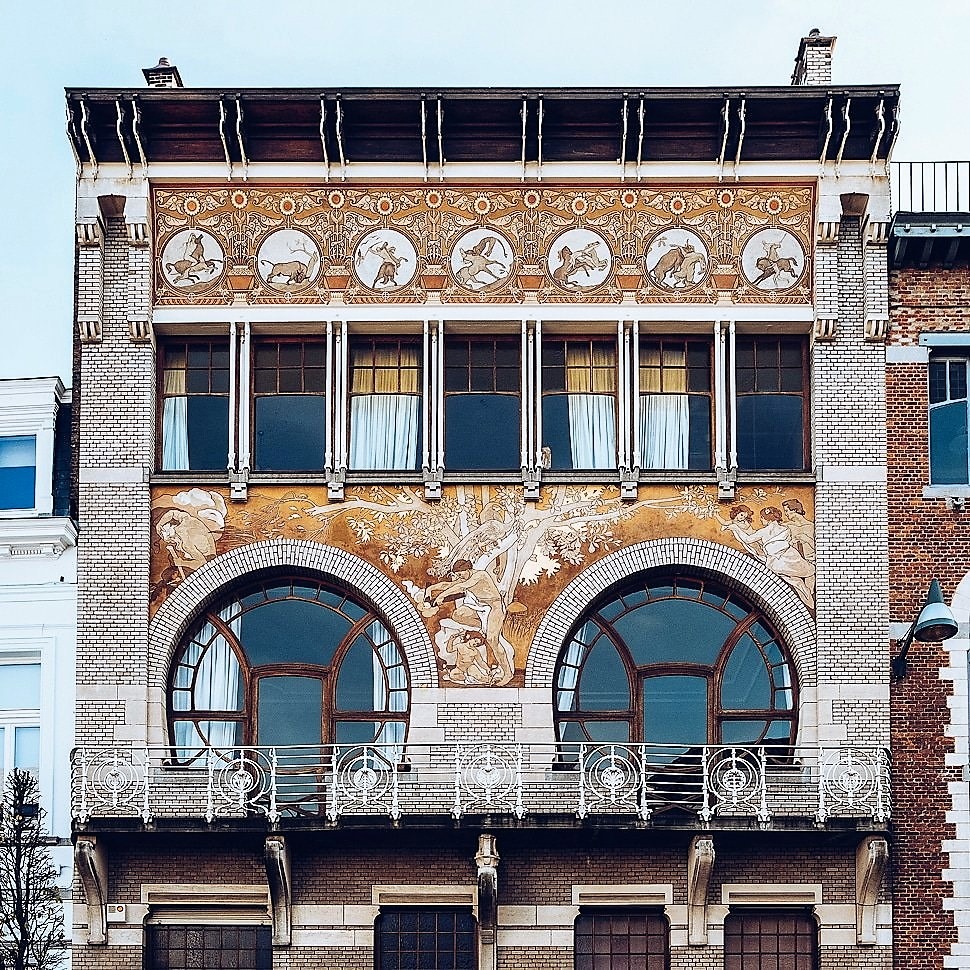
Victor Horta
For me, Horta is the architect who changed the way I see Brussels. His work feels alive—light-filled staircases, iron railings that mimic vines, and interiors that move with a natural rhythm. Buildings like Hôtel Tassel, Hôtel Solvay, Hôtel van Eetvelde, and the Horta House set the standard for the entire movement.
Paul Hankar
Hankar worked in parallel to Horta, shaping a more geometric interpretation of Art Nouveau. His own home, Maison Hankar, became a model for others. Walk through Saint-Gilles and you’ll see his influence everywhere in façades that balance floral motifs with strong, structured lines.
Gustave Strauven
Strauven brought boldness—sometimes eccentric, always unforgettable. His Maison Saint-Cyr is one of the most photographed façades in Brussels, with its extravagant ironwork and slender vertical design. It’s a building that stops you mid-step.
Ernest Blérot
Blérot designed more than a thousand buildings in Brussels, many of them residential. His façades are expressive, colourful, and full of charm. You’ll often spot his hand in the playful curves, stained glass, and distinctive doors tucked into side streets.
Together, these architects shaped a city where Art Nouveau isn’t a museum piece—it’s part of the streetscape, still lived in, still loved, and still quietly astonishing.
My Self-Guided Art Nouveau Brussels Walking Tour
I’ve created a curated Google Maps with all three loops, so you can follow them effortlessly on your phone while exploring Brussels. It includes the addresses—perfect for slow walking.
Loop One: Avenue Louise → Saint-Gilles
This loop brings you through one of Brussels’ richest pockets of Art Nouveau. Each stop is close, walkable, and easy to follow on mobile as you move through Avenue Louise, Ixelles, and Saint-Gilles.

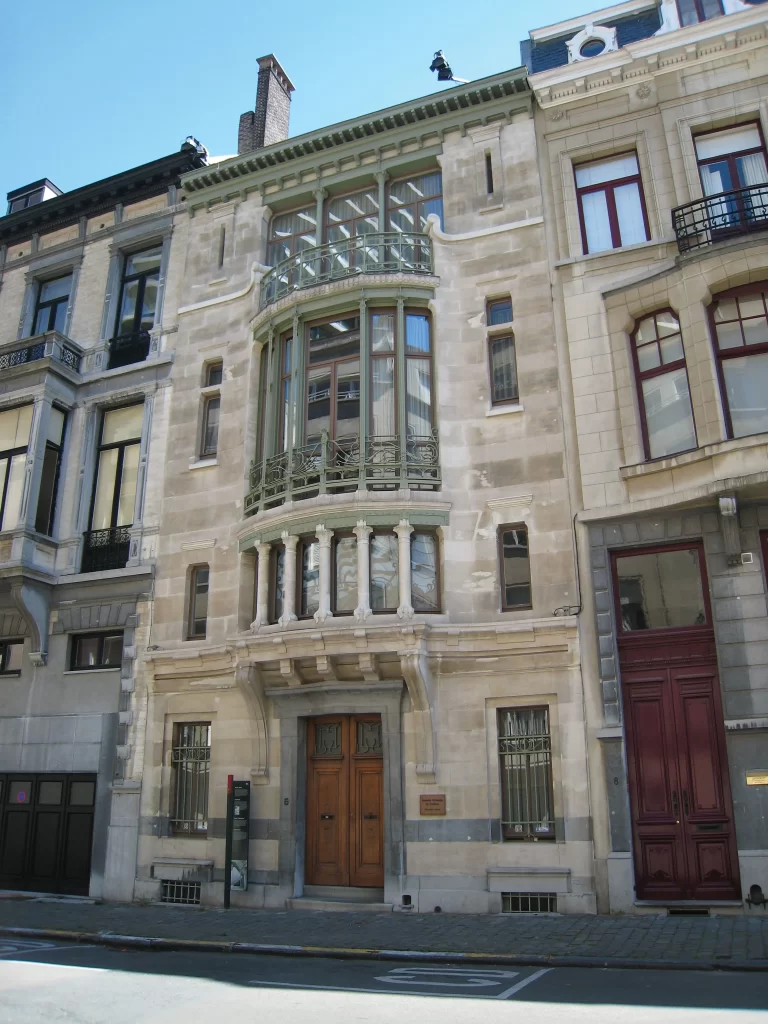
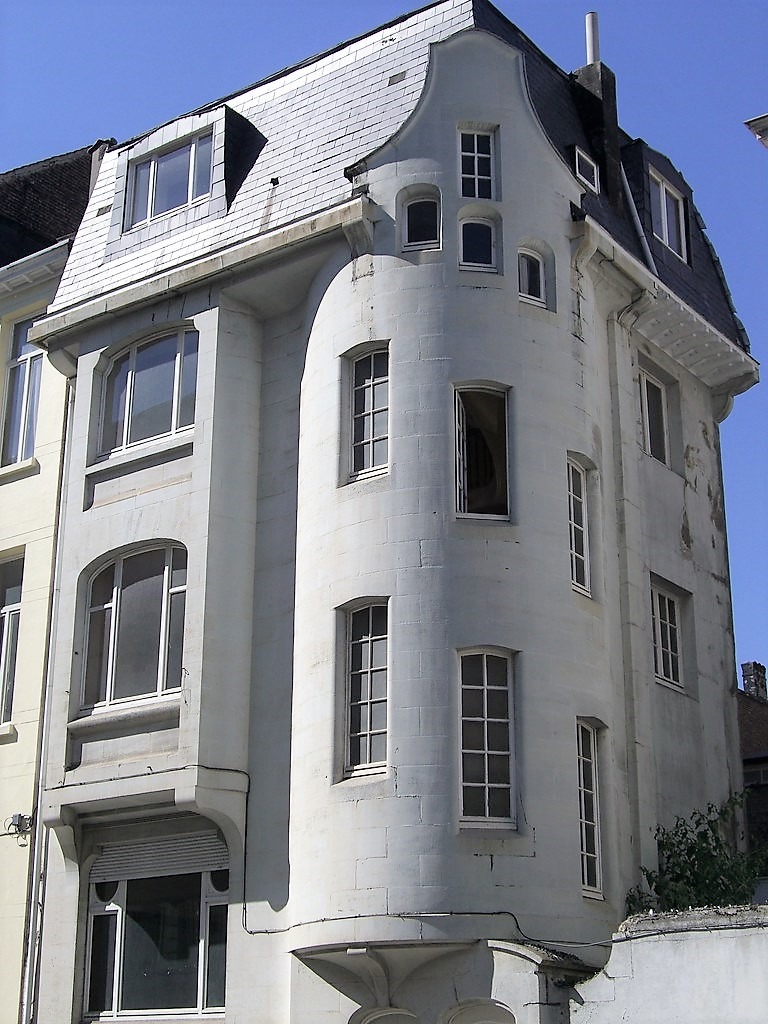
1. Hôtel Solvay — 224 Avenue Louise | Architect: Victor Horta
One of Horta’s masterpieces and a UNESCO World Heritage Site. Even from the outside, you feel the precision—ironwork that bends like stems, windows that draw in light, and a façade that hints at the extraordinary interior. It’s one of the purest expressions of Brussels Art Nouveau.
2. Hôtel Tassel — 6 Rue Paul Émile Janson | Architect: Victor Horta
Often considered the first true Art Nouveau building in the world. This townhouse changed architectural history. The façade is understated, but its soft curves and ironwork signal the revolution happening inside—open space, fluid lines, and natural light guiding every step.
3. Octave van Rysselberghe House — 83 Rue de Livourne | Architect: Octave van Rysselberghe
A more restrained interpretation of the movement. Van Rysselberghe blends structure and softness, creating a façade where each element feels intentional. Look for the repeating geometric shapes, softened by subtle Art Nouveau details.
4. Ciamberlani House — 48 Rue Defacqz | Architect: Paul Hankar
One of Hankar’s most expressive works. The façade stands out immediately—large sgraffito panels, sculptural lines, and a bold mix of colour and form. It shows how this movement wasn’t only about curves; it was also about artistic freedom.
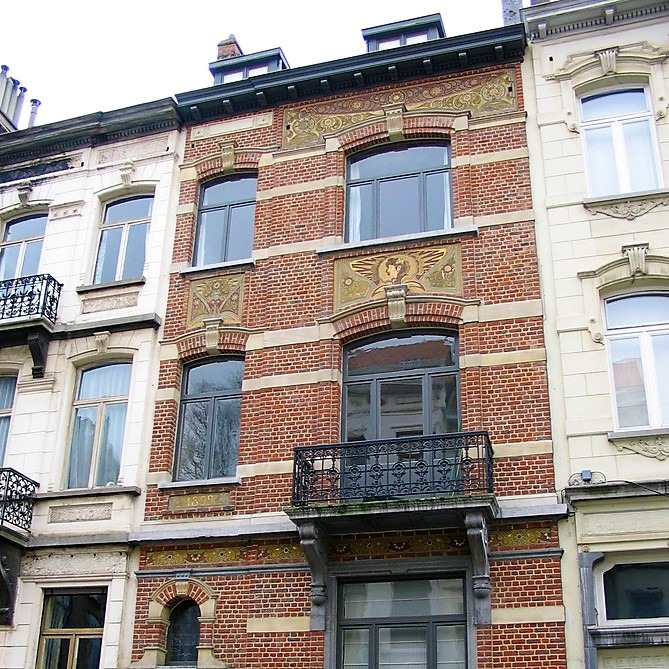


5. Hankar House — 71 Rue Faider | Architect: Paul Hankar
Hankar’s personal residence, and you see how he blended geometry with natural inspiration, creating a façade that feels modern yet warm. A pivotal address in understanding Brussels’ architectural evolution.
6. 83 Rue Faider | Architect: Unknown (Art Nouveau residential)
A lovely example of the everyday Art Nouveau that fills this neighbourhood. Decorative ironwork, slim forms, and soft asymmetry make it a charming companion to Hankar’s home just a few steps away.
7. 92 Rue Africaine | Architect: Unknown (Art Nouveau residential)
Another residential gem with expressive lines and a strong vertical rhythm. These unlisted homes remind me that Art Nouveau wasn’t only for grand commissions—it shaped ordinary streets, too.
8. Horta House — 25 Rue Américaine | Architect: Victor Horta
Horta’s own home and studio, now the Horta Museum. The façade is subtle, but every detail reflects his philosophy—movement, light, and harmony. Inside is one of the most intimate experiences of Art Nouveau anywhere in Europe.
Loop Two: Squares Marie-Louise → Ambiorix → Palmerston
This loop winds through the peaceful neighbourhood where I stayed for the week—broad boulevards, quiet parks, and façades that reward anyone who slows down long enough to notice them. Every stop is close, walkable, and easy to follow on mobile.
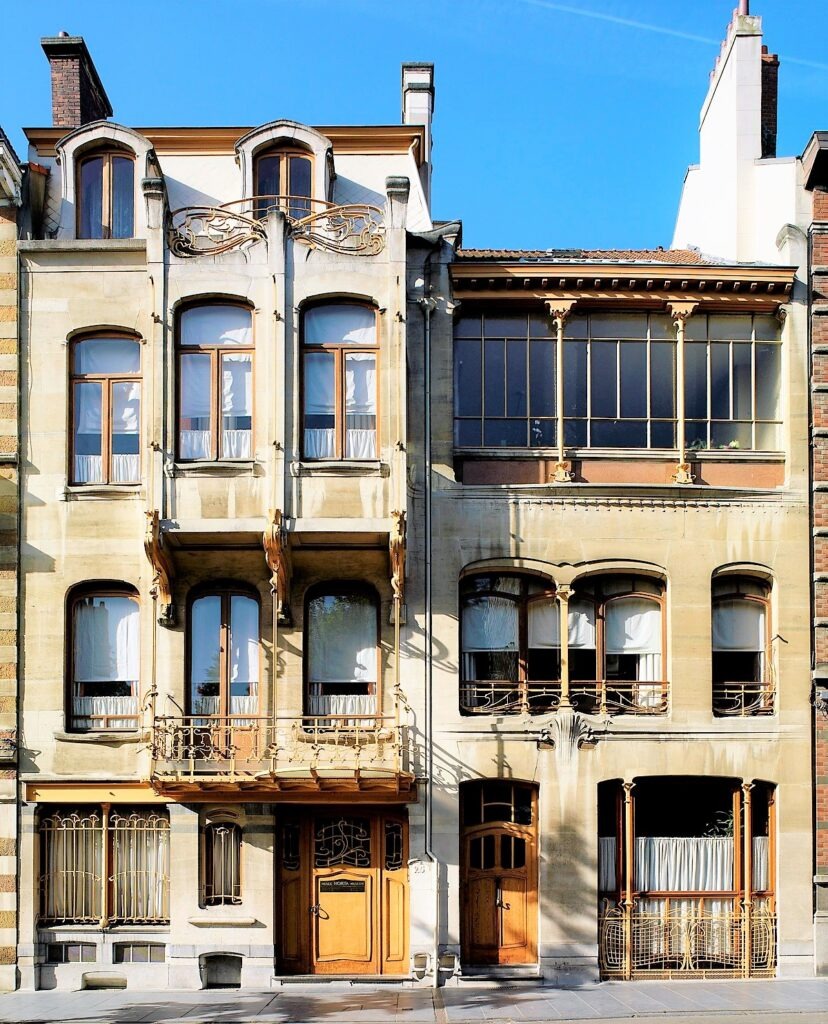
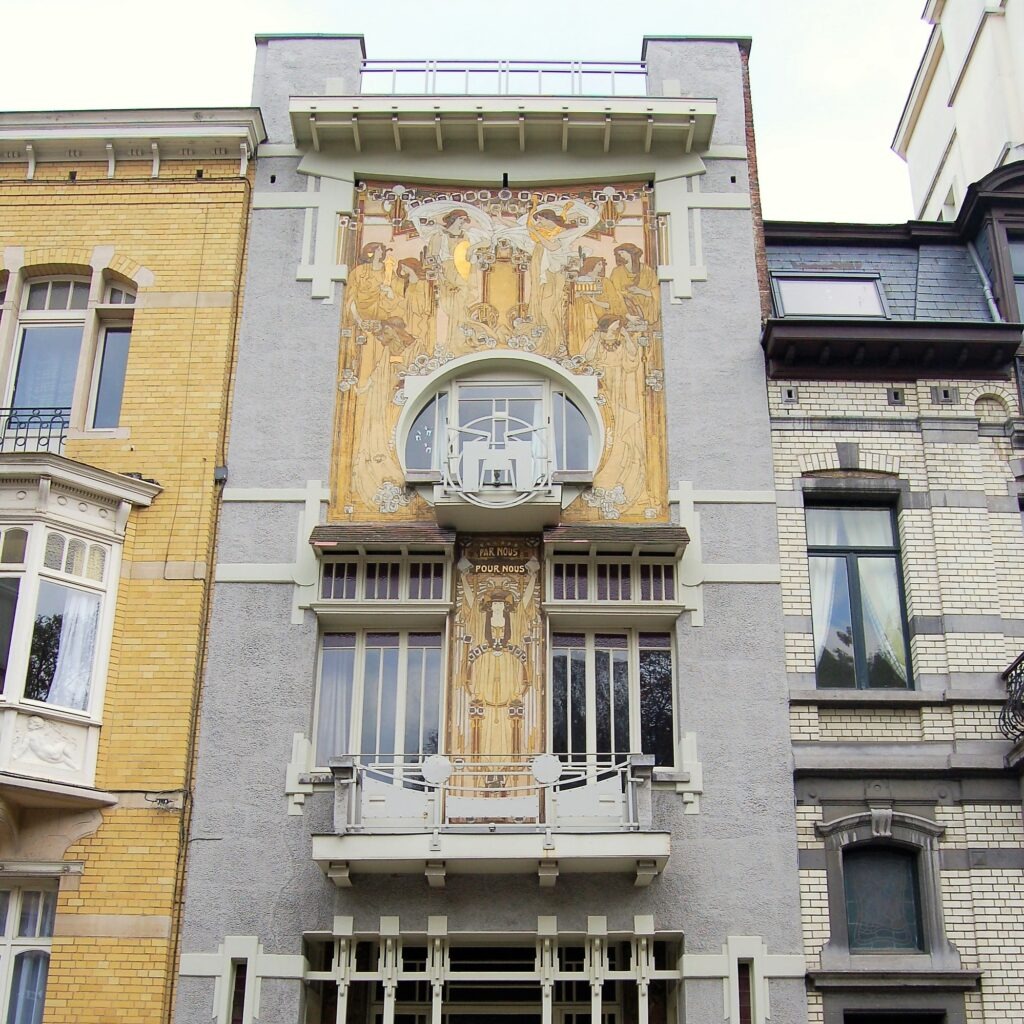
1. Cauchie House — 5 Rue des Francs | Architects: Paul Cauchie & Lina Cauchie
A striking showcase of sgraffito—the decorative plaster technique that made this home famous. The façade feels like a canvas. Crisp lines. Fine illustrations. Strong symmetry. One of the most distinctive Art Nouveau buildings in Brussels, created by two artists who lived and worked here.
2. Saint-Cyr House — 11 Square Ambiorix | Architect: Gustave Strauven
A narrow, flamboyant jewel. Strauven pushed Art Nouveau to its energetic extreme—ironwork twisting in every direction, bright colours, and a façade barely wider than a doorway. It’s impossible to walk past without stopping. A masterpiece of controlled exuberance.
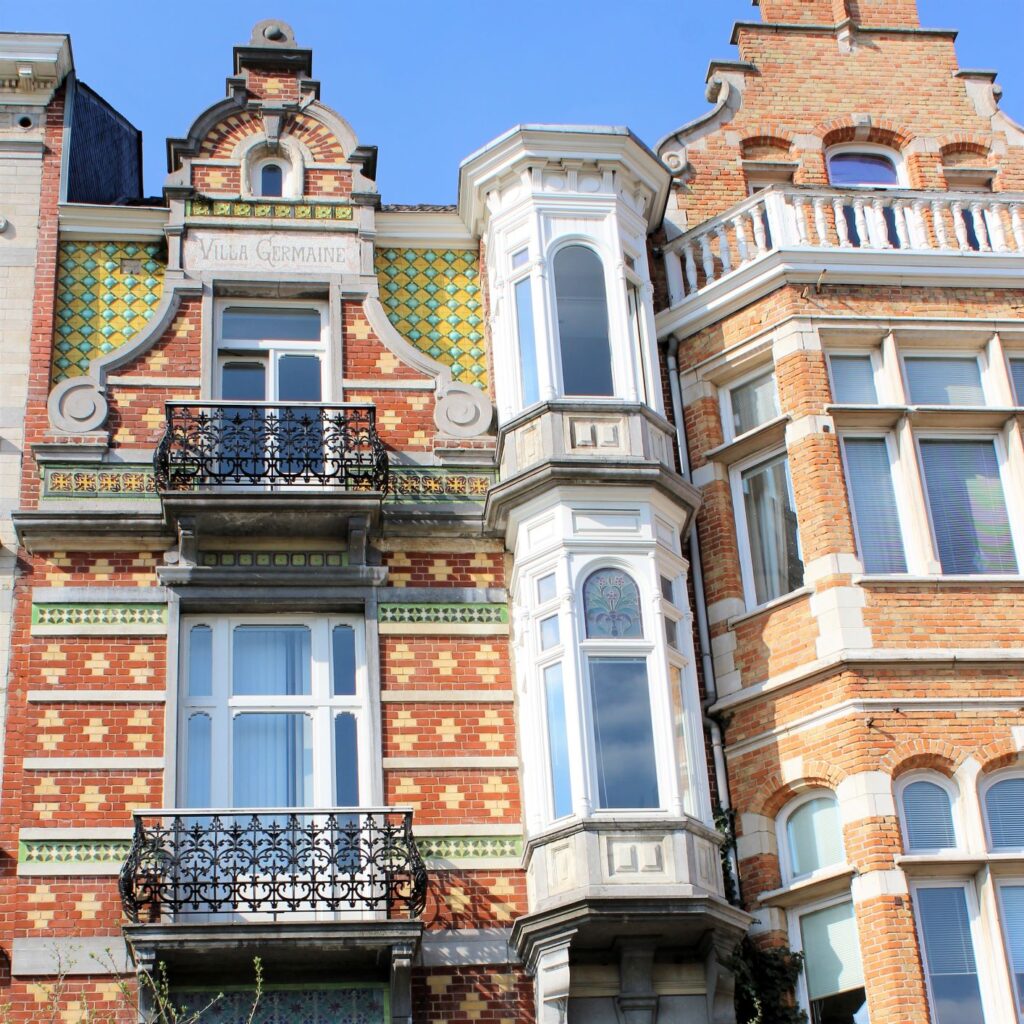
3. Villa Germaine — 24 Avenue Palmerston | Architect: Léon Sneyers
A calmer, refined interpretation of the style. Villa Germaine blends clean geometry with gentle curves, showing the quieter side of Brussels Art Nouveau. The details are subtle—slender lines, elegant windows, and an overall sense of balance.
4. Hôtel van Eetvelde — 4 Avenue Palmerston | Architect: Victor Horta
One of Horta’s greatest works and part of Brussels’ UNESCO-listed Art Nouveau ensemble. Even from the outside, you feel the fluidity of his design—ironwork that echoes plant forms, sweeping windows, and a façade that seems to breathe. The interior, if you’re able to visit, is extraordinary.

5. Squares Gutenberg & Marie-Louise | Architectural Context: Unlisted
These two connected squares form the heart of this neighbourhood. Calm streets. A small lake. Benches tucked under trees. The surrounding façades show everyday Brussels Art Nouveau—less dramatic than the icons, but deeply charming. This is where I began and ended most days, noticing new lines and details each time.
Loop Three: Avenue Louis Bertrand → Schaerbeek
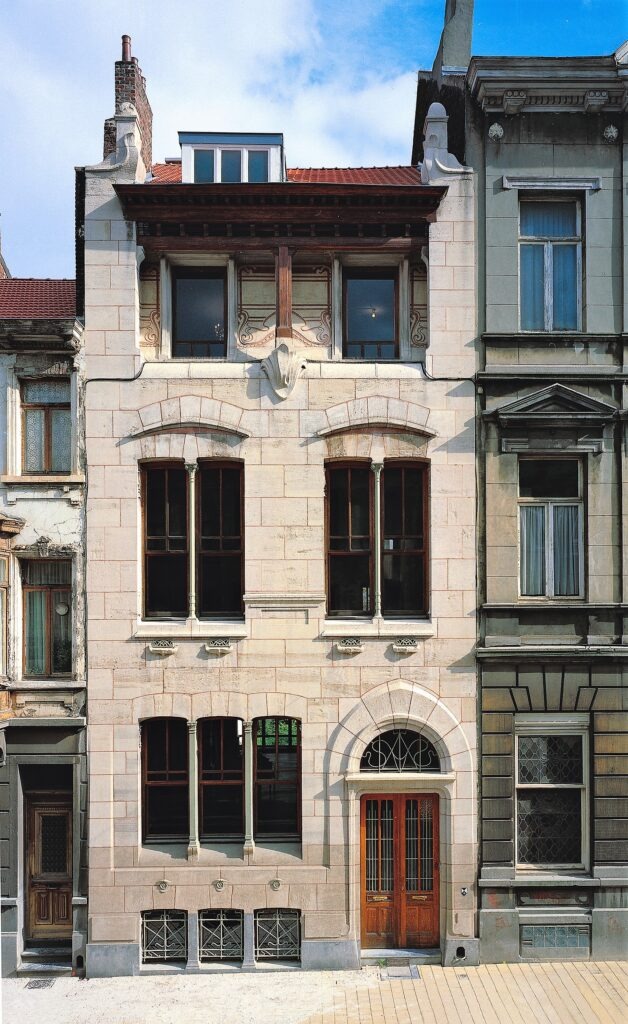
This final loop takes you into Schaerbeek, a neighbourhood with quiet streets, generous light, and façades that feel almost untouched by time. It’s a short loop, centred around one avenue and one important early work by Victor Horta. Easy to follow. Perfect for a slow afternoon walk.
1. Avenue Louis Bertrand — 43 Avenue Louis Bertrand | Architect: Gustave Strauven
A lively, expressive façade that shows Strauven’s signature style—ornamental ironwork, bold curves, and a sense of movement that draws your eye upward. This avenue is one of the most beautiful stretches of residential Art Nouveau.
Additional Façades — 34 & 36 Avenue Louis Bertrand | Architects: Unlisted
Just steps away, these two façades extend the story of the street. Softer lines. Slim balconies. Decorative details that echo the larger trend of the era. This cluster shows what everyday Art Nouveau looked like—lived-in, graceful, and part of the neighbourhood’s streetscape.
2. Autrique House — 266 Chaussée de Haecht | Architect: Victor Horta
One of Horta’s earliest townhouses and a turning point in his career. You can feel him leaning toward the ideas that would soon define Art Nouveau—light, structure, flow—while still working within the traditional façade rules of the time. It’s quiet, elegant, and historically important. If you can visit the interior, the layout reveals how Horta was beginning to rethink domestic space.
Final Thoughts
Walking through Brussels’ Art Nouveau streets is an experience that unfolds slowly. Spending time in these neighbourhoods lets you see this movement in context—lived-in homes, quiet streets, and unique façades.
If you can, plan your visit around the Brussels Art Nouveau & Art Deco Festival (BANAD), which usually takes place for three consecutive weekends in March. During the festival, many private homes and museums open their doors, and guided tours are offered. It’s the perfect way to experience both the iconic landmarks and hidden gems.
Art Nouveau in Brussels isn’t just architecture. It’s history, craft, and daily life. Take your time. Notice the details. Let the city reveal itself to you.
Want more curated guides like this one? Join my weekly newsletter for insider tips, slow travel inspiration, and exclusive guides to Europe’s most beautiful streets.