

Three days in Rome is not about conquering the city. It’s about experiencing it well.
If you’re searching for what to do in Rome for three days, you’re likely asking two questions at once: Is it enough? and How do I make it count?
After returning to Rome for more than a decade — sometimes for weeks at a time or sometimes for just a few days — I can tell you this: three days is a turning point. It’s enough time to see all the highlights that most travellers come to Rome for— the Colosseum, the fountains, and the Vatican museums. But it lets you move beyond the checklist if you structure it wisely.
Most itineraries will push you to see more. I won’t.
Rome works when you balance awe with pause, landmarks with long lunches, and one unforgettable morning with an unplanned afternoon. I will show you how to do exactly that — without turning your time in Rome into a race.
This post may contain affiliate links, meaning I get a commission if you decide to purchase something through the links, at no additional cost to you. Read my Affiliate Disclosure.
Is Three Days in Rome Enough?
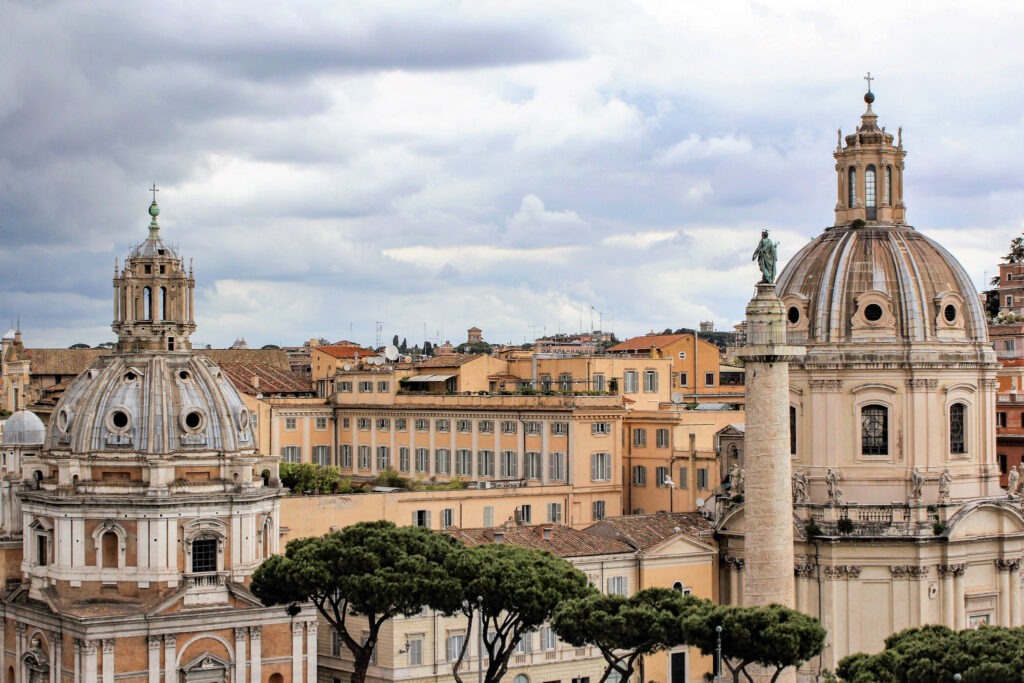
Yes — if you define “enough.”
No — if your goal is completion.
If you have three full days in Rome (which really means four nights), you have enough time to experience the city in a meaningful way. What you don’t have is enough time to finish it. And that distinction matters.
First, let’s set the parameters. Your arrival day from North America does not count. You’ll lose hours to logistics (transportation into the city, hotel check-in) and the fog of jet lag. If you only have three nights total, that’s closer to my two days in Rome pace. Three full days require four nights on the ground.
Now, what 3-day itinerary in Rome realistically allows for?
Rome has one major advantage: it is remarkably walkable. The historic center is compact. Ancient Rome, the Vatican, the Pantheon, Piazza Navona — they’re closer together than most first-time visitors realize. If you stay in or near the historic city centre, you can move between major sights on foot in a matter of 15 minutes. That proximity alone makes three days powerful.
In three full days, you can:
- Experience Ancient Rome properly (not rushed).
- Visit the Vatican with intention, if that is your desire.
- Wander the historic streets in Rome’s centro storico.
- Cross into the charming Trastevere neighbourhood.
- Sit down for real lunches and dinners.
- Walk at night when the monuments are lit, and the crowds are thin.

What 3 days in Rome does not allow:
- A day trip to a medieval town in Umbria, like Orvieto, or Pompeii, or Florence, without sacrificing depth.
- Visiting every neighbourhood (Testaccio, Monti, Prati, Trionfale — you’ll have to choose).
- Deep dives into multiple museums.
- Lingering afternoons in parks like Villa Borghese and exploring lesser-known sites.
- A full culinary exploration of Rome’s dining scene.
You will miss things. Entire layers of the city will remain untouched.
And that’s okay.
The mistake isn’t that three days is too short. The mistake is trying to “do Rome” in that time. When you treat the city like a list — Colosseum, Vatican, Trevi, Spanish Steps, next — you leave with photos, not a memory.
You want to leave Rome with a feeling of awe. You want to leave feeling envious of their slow living lifestyle. To do that, you need to let go and embrace the mindset that you came to experience Rome, not to simply see it.
How to Structure Your 3-Day Itinerary in Rome (Without Burning Out)

I don’t structure my itineraries like a checklist. I structure it by energy and geography.
Each day has a focus. Each neighbourhood flows into the next. And just as important — there is space between the landmarks.
This is not about cramming. It’s about pacing.
Day 1: Ancient Rome + Awe

Begin in the historic centre. Start at the Spanish Steps, walk to the Trevi Fountain, continue to the Pantheon, then Piazza Navona. Do this early, before 9:00 am if possible. Rome rewards early risers.
Stop for a long lunch — not a rushed panino eaten while standing. I like Da Francesco, Il Bacaro, or Armando al Pantheon in this area Sit. Reset. Refuel. This day gets big.
Your Colosseum entry should be pre-booked and timed for mid-afternoon. This ticket includes the Roman Forum and Palatine Hill. Spend the afternoon here, don’t rush it. Ancient Rome is expansive.
Afterward, walk toward the Giardino degli Aranci in Aventine Hill. On the way, you’ll pass Circus Maximus (the former chariot racetrack). If you need a quick bite to keep going, I like Fratelli Trecca for Roman street food right on the corner.
The climb up Aventine Hill is one of Rome’s seven hills — steep, but worth it. Come here for the early sunset. The terrace offers one of the most beautiful panoramic views in the city. In this pocket of Rome is the famous keyhole of the Knights of Malta, framing St. Peter’s dome perfectly.
When you’re ready for dinner, cross Ponte Palatino. Keep an eye out for the Mouth of Truth — legend says it bites the hand of liars.
Dine across the river in one of Trastevere’s stellar restaurants. I’ve got three to recommend that are close to the bridge that I enjoy:
- Trattoria Da Teo
- Trattoria Da Enzo
- Le Mani in Pasta
My Travel Take for the Day:
Never underestimate the importance of the walk between sights. Rome reveals itself in the in-between surprises.
Day 2: Vatican + Vatican City

Book the Vatican Museums for the earliest possible entry. Pre-booking is a must, and well in advance of your travel date.
After the museums, have lunch in Borgo — the neighbourhood between the Vatican and the Tiber. Then return to Vatican City and enter St. Peter’s Basilica. Give yourself time. This is not a place to rush.
This experience will be a better part of the day.
From here, drift back into the historic centre. I particularly love Via dei Banchi Vecchi and Via dei Coronari, and the smaller streets around Piazza Navona. This is aperitivo territory. Choose a small alleyway and relax with a drink.
Walk along the Tiber around Castel Sant’Angelo. Cross Ponte Umberto I or Ponte Sant’Angelo for beautiful views back toward the Vatican. The sun sets in that direction, casting golden light over the dome.
For dinner nearby, I recommend dining in the Prati neighbourhood just behind Castel Sant’Angelo. I’ve got three places I’ve really enjoyed:
My Travel Take for the Day:
Rome feels different once you’ve seen the Vatican — let yourself move slowly afterward. A wandering afternoon is the perfect option for that.
Day 3: Trastevere + Neighbourhood Rome

Start in Campo de’ Fiori for the morning market. It’s a great taste of Rome’s food culture. Then walk to the nearby Jewish Ghetto. This is one of Rome’s most historic quarters. It’s small, intimate and won’t take you long to explore all its streets and piazzas.
Stay here for lunch, they are known for their artichokes. Dine anywhere along the main street called Via del Portico d’Ottavia. Two of my favourite restaurants here are: Nonna Betta and Su Ghetto.
After lunch, cross the bridge into Trastevere. Wander without an agenda. Visit Santa Maria in Trastevere. Get lost in the side streets. This neighbourhood is about all atmosphere, not monuments.
Stay in Trastevere for dinner. Choose a new restaurant from my recommended list on the first night.
My Travel Take for the Day:
On the evening of your third day, return to something you’ve already seen. Go back to the Pantheon, or revisit Trevi or walk through Piazza Navona to see how the energy is at night.
My Final Travel Take
Spending three days is enough to fall in love with Rome.
It’s enough to stand inside the historic centre and feel history press in around you.
But it is not enough to be done.
What ruins your trip to Rome isn’t the lack of time. It’s poor pacing.
Overplanning every hour.
Failing to reserve major sites in advance.
Eating at restaurants within sight of the monument you just visited.
Refusing to build in rest — a long lunch, a pause, a slow walk at dusk.
If you love this style of international travel — fewer checklists, more connection — join my newsletter. I share curated stories, thoughtful itineraries, and grounded advice for slow travellers to Europe who want their time abroad to feel meaningful, not rushed.
Because the best trips aren’t the ones where you saw everything. They’re the ones that quietly pull you back.


