
I remember arriving in Tavira without expectations. No dramatic cliffs. No resort buzz. Just a soft light over the Gilão River, church bells in the distance, and locals going about their day. It made me pause—and that’s not something the Algarve often asks of you.
So, is Tavira worth visiting?
The honest answer is: it depends on how you like to travel.
Tavira sits in Portugal’s eastern Algarve, far from the party towns and polished resorts. It’s slower, quieter, and deeply traditional. A place for wandering rather than ticking off sights. For long lunches, ferry rides to island beaches, and evenings that end early.
Some travellers find Tavira underwhelming. Others, like me, find it charming.
If you’re wondering whether Tavira deserves a place in your Portugal itinerary, I will help you decide.
This post may contain affiliate links, meaning I get a commission if you decide to purchase something through the links, at no additional cost to you. Read my Affiliate Disclosure.
Where Is Tavira, and Why Its Location Matters
Tavira is located in Portugal’s eastern Algarve, close to the Spanish border and within the Ria Formosa Natural Park. This alone explains much of its character.
Unlike central Algarve towns such as Albufeira or Lagos, Tavira developed without large-scale resort tourism. Its beaches sit offshore on barrier islands, reached by ferry rather than foot. The town itself remains inland, centred around the Gilão River, churches, and everyday Portuguese life.
This separation—between town and beach, visitor and resort culture—creates a slower pace.
Tavira is a place where you stay in the town, not beside it. And that distinction changes the entire experience.
I stayed at Casa Modesta for almost a week, which is located in the countryside east of Olhão and about 20 minutes from Tavira. So close that I made multiple trips to Tavira throughout that week, especially to try the restaurants in the evenings.
A Brief History of Tavira (And Why It Shapes the Experience Today)
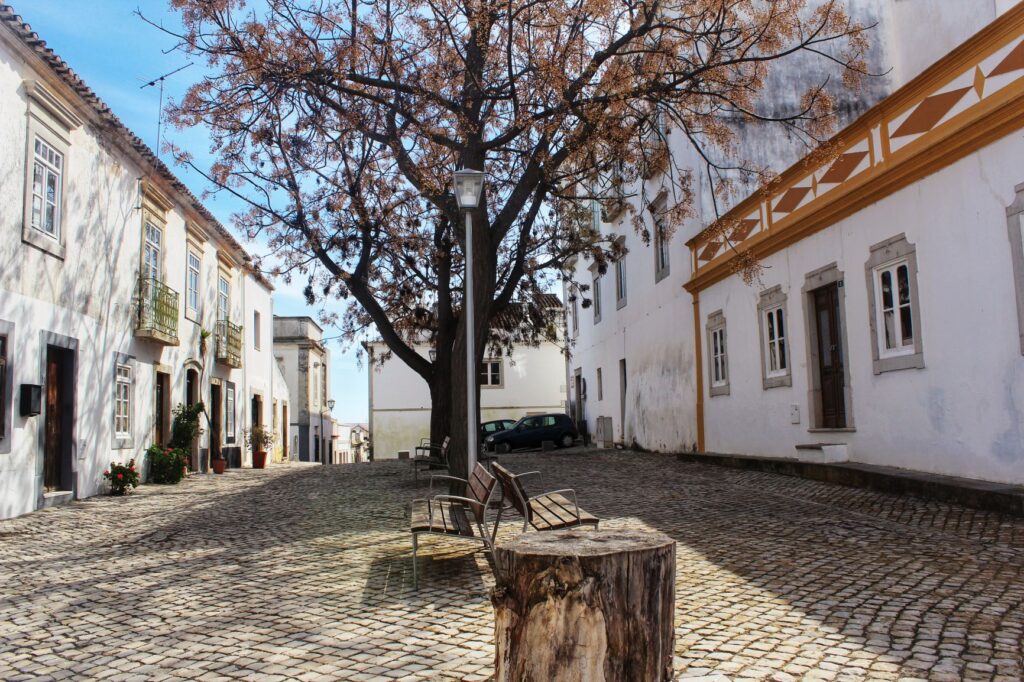
Tavira’s story stretches back to Roman times, with strong Moorish influence shaping its layout, architecture, and name. You see it in the tiled façades, the narrow streets, and the quiet symmetry of the old town.
The turning point came in 1755, when a powerful earthquake devastated much of the Algarve. Tavira was badly affected—and never fully rebuilt in the modern sense. While other towns later embraced large developments, Tavira remained modest, traditional, and largely residential.
That pause in time is still palpable. Tavira feels preserved and authentic. You’re not walking through a recreated historic center—you’re moving through a town that simply never rushed to become anything else.
What Tavira Is Known For
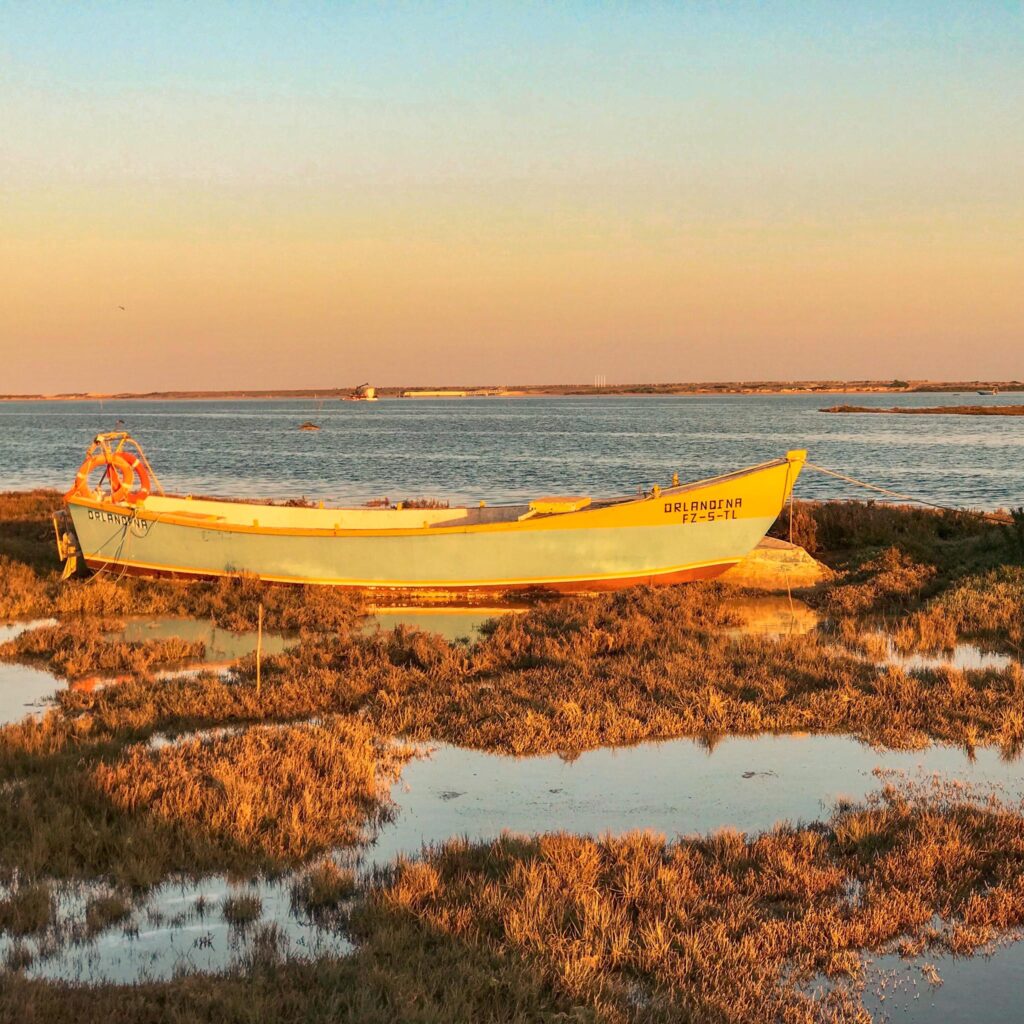
Tavira is known for its unhurried beauty. For wandering without a plan. For small bridges, shaded plazas, and more churches than you’ll ever need to enter.
It’s also known for Ilha de Tavira, a long, natural barrier island with wide sandy beaches and none of the cliffside drama the Algarve is famous for. Getting there requires intention—a ferry ride that reinforces Tavira’s slower pace.
Food here is simple and local. Grilled fish, octopus, seafood rice. Restaurants cater to residents, not crowds. Evenings are quiet. Mornings belong to walkers and café regulars.
Tavira doesn’t offer a splash for its visitors. What it offers is space—to notice, to slow down, and to feel briefly woven into daily Portuguese life.
What There Is to See in Tavira (And Why It’s More About Atmosphere Than Attractions)
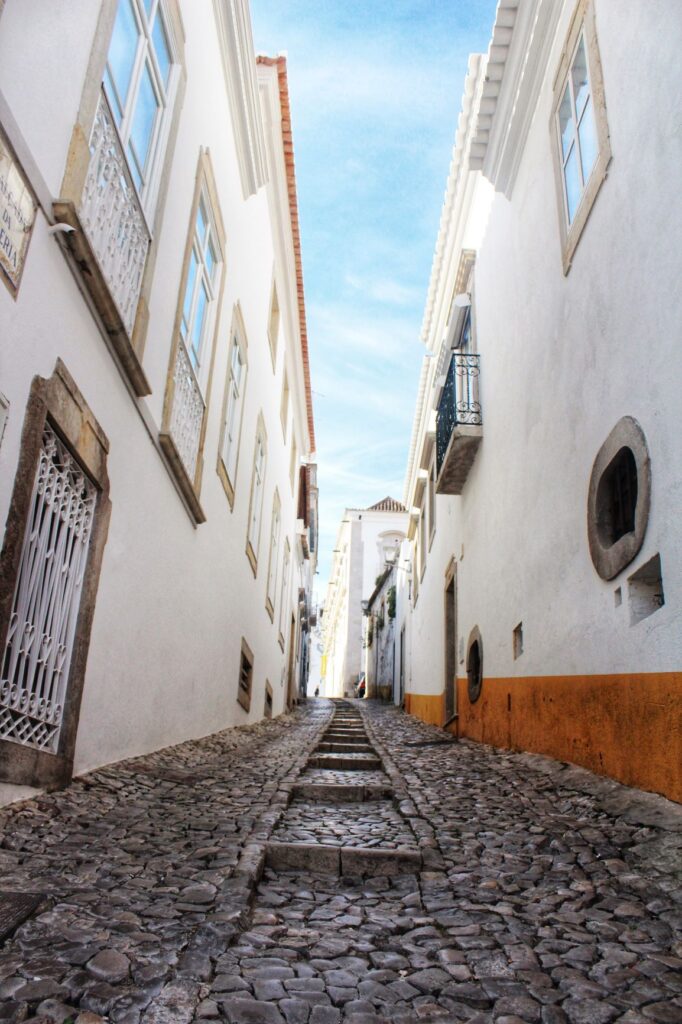
Tavira doesn’t overwhelm you with sights.
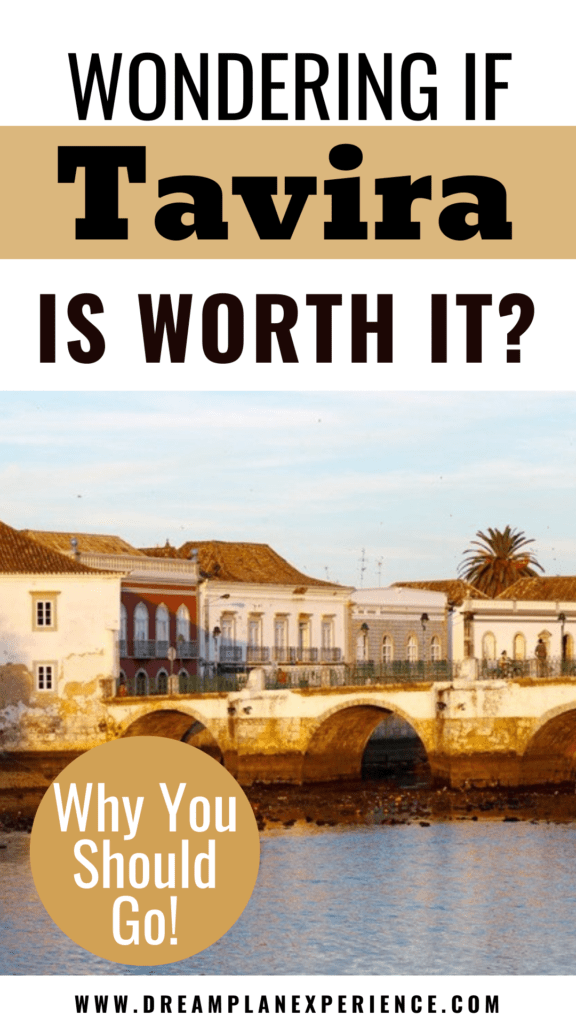
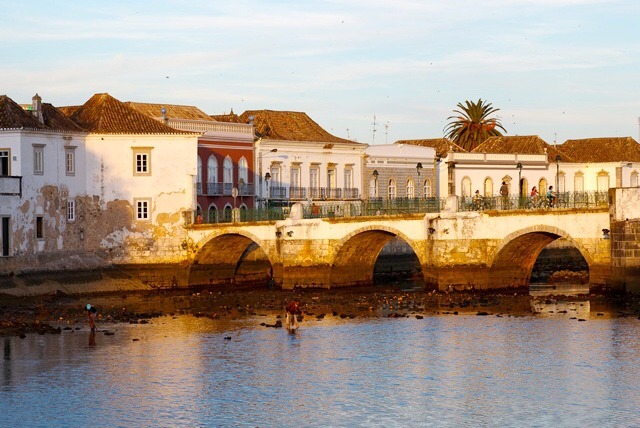
The town’s focal point is the Roman Bridge, spanning the Gilão River. Despite its name, what you see today is largely medieval, but that almost adds to its charm. Locals cross it daily. Visitors pause. It’s less a monument and more a moment—one that quietly anchors the town.
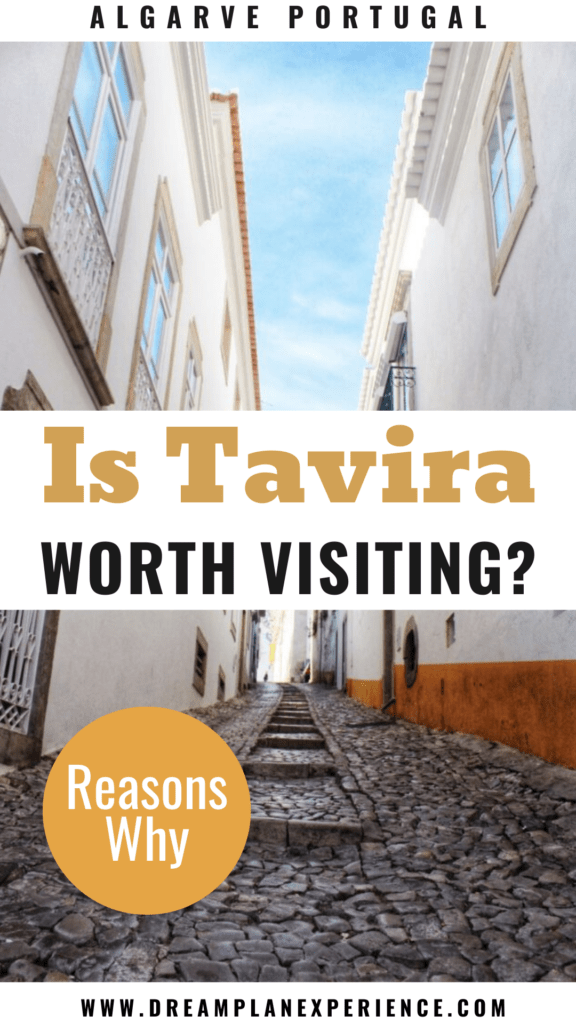
Just beyond it, Tavira’s Old Town unfolds in whitewashed buildings, tiled façades, and narrow streets that invite wandering. There’s no defined route. That’s the point. You drift from small squares to unexpected viewpoints, often alone.
Above it all sits the ruins of Tavira Castle. The climb is short, the reward understated but meaningful: terracotta rooftops, the river below, and the surrounding countryside stretching toward the sea.
Add to this the town’s many churches, small museums, and the ferry journey to Ilha de Tavira, and you begin to see Tavira’s appeal. Not as a collection of must-see sights—but as a place best experienced between them.
The Vibe: Who Tavira Is (and Is Not) For

Tavira is not a destination you “do.” It’s one you settle into. And whether it’s worth visiting depends almost entirely on what you’re hoping to feel while you’re there.
Tavira Is Worth Visiting If You:
You enjoy travel that unfolds slowly. If morning walks matter more than nightlife, Tavira will feel right. This is a town for people who like sitting at the same café two days in a row, recognizing faces, and letting the day take shape without a plan.
It suits travellers who value atmosphere over attractions. Who are content with gentle beauty rather than dramatic scenery. Tavira rewards those who notice small details—light on white walls, the chime of church bells, conversations drifting from open windows.
Tavira May Not Be Worth Visiting If You:
If you’re looking for energy, Tavira may feel too quiet. There are no beach clubs, very little nightlife, and no sense of buzz after dinner. If dramatic cliffs, boat tours, and headline beaches are your priority, towns like Lagos or Sagres will suit you better.
Tavira also isn’t ideal if you’re short on time and want to see the Algarve’s greatest hits in one stop. Its appeal is subtle. And subtlety requires time.
Tavira vs Other Algarve Destinations

One of the most important things travellers overlook when planning the Algarve is that it’s not one experience—it’s two. And the divide runs quietly through the middle.
The Western and Central Algarve—places like Lagos, Albufeira, and Portimão—are defined by dramatic cliffs, golden rock formations, and easy-access beaches. They’re beautiful, energetic, and heavily visited. Tourism here is visible, structured, and often the main event. New, modern hotels and resorts dominate the coastline.
The Eastern Algarve, where Tavira sits, tells a different story. The landscape flattens. Barrier islands replace cliffs. Marshlands, salt pans, and fishing towns shape the rhythm of daily life. Crowds thin out. English disappears from menus. And what remains feels less designed for visitors—and more authentically Portuguese. I found some of the most beautiful villages in this part of the region.
Tavira vs Lagos
Lagos is cinematic. Tavira is contemplative. In Lagos, the coastline steals the show with jaw-dropping cliffs and sea caves. Tavira trades spectacle for subtlety. You won’t find postcard drama, but you’ll find a town that feels lived in year-round.
Lagos suits travellers chasing highlights and social energy. Tavira suits those who want to slow down, walk without purpose, and feel part of a place rather than entertained by it.
Tavira vs Albufeira
Albufeira is built around tourism. Resorts, nightlife, and large hotels dominate the experience. Tavira isn’t competing in that space at all.
In Tavira, tourism exists—but it doesn’t lead. Locals still outnumber visitors. Restaurants close when they’re done serving lunch. The town moves to its own beat, whether you’re there or not.
Tavira vs Faro
Faro is often underestimated. It’s a working city with a beautiful old quarter and excellent transport links. But it has big city vibes. Tavira, by contrast, feels more intimate and romantic.
If Faro is practical and transitional, Tavira is where you linger.
How Much Time to Spend in Tavira — and When to Visit
If you’re moving quickly through the Algarve, one full day is enough to walk the old town, cross the Roman Bridge, climb to the castle ruins, and take the ferry to Ilha de Tavira. You’ll see the highlights.
For most travellers, two to three nights is ideal. That’s when Tavira’s daily life reveals itself: slow mornings, unplanned afternoons, familiar cafés. Longer stays suit those using Tavira as a base for the Eastern Algarve or anyone craving stillness.
As for timing, spring and early fall are Tavira at its best—warm, walkable, and uncrowded. Summer brings heat and Portuguese holiday crowds, especially in August, while winter is quiet and authentic, though noticeably subdued. I visited at the end of February and felt like I had the Algarve all to myself.
So, Is Tavira Worth Visiting? My Final Take
Yes—if you’re the kind of traveller who values how a place feels more than how it photographs.
Tavira charms you the more time you spend here.
For travellers drawn to dramatic coastlines, nightlife, and constant stimulation, Tavira may feel too restrained. But if you’re seeking authenticity, fewer crowds, and a town that still belongs to the people who live there, Tavira quietly delivers.
And if you’re unsure whether Tavira—or another part of Portugal—fits your travel style, I’ve created a simple way to find out.
Take the Where to Travel in Europe Quiz.
When you select Portugal, it helps match the region to your travel personality—so you can choose with confidence, not guesswork.