

Vatican City has a way of making even experienced travellers feel rushed. The crowds. The lines. The quiet pressure to see everything in one go, as if this tiny sovereign state is something to conquer rather than experience.
I’ve visited Vatican City more than once, and on my most recent stay, I based myself in Borgo—just steps from the Vatican walls. Being that close changed everything. I wasn’t arriving breathless from across the city or trying to force meaning into a tightly packed Vatican City itinerary.
I could come and go slowly, observe the rhythms of the day, and notice how dramatically the experience shifts when you’re not racing the clock.
I wanted to share my experience with you. It’s about the best way to visit Vatican City—one that respects its scale, its weight, and your energy as a traveller.
This post may contain affiliate links, meaning I get a commission if you decide to purchase something through the links, at no additional cost to you. Read my Affiliate Disclosure.
Is There Really a “Best Way” to Visit Vatican City?
Most Vatican City itineraries fail for the same reason: they’re built to compress, not to consider. Too many assume you should see everything—the Vatican Museums and St. Peter’s Basilica—back-to-back, in a single push, with no space to absorb what you’re actually experiencing.
The result isn’t awe. It’s fatigue.
Vatican City isn’t difficult because it’s large. It’s demanding because of what it holds.
This is a place that rewards pacing and patience. And it’s also worth remembering that Vatican City is more than just the museums and the basilica. It’s gardens. St. Peter’s Square. The quiet of Borgo streets nearby.
Before you plan logistics, pause and ask yourself why you want to go. Is it social pressure? A sense of obligation? Or does this genuinely align with your interests? This is a real investment of time and money.
I recommend you mentally prepare yourself for the crowds. Because they’re real. Even with an early start and timed entry, you’ll find yourself shoulder-to-shoulder in certain areas, especially in the lead-up to the Sistine Chapel. It can be frustrating. The sheer volume of people, the noise, and the pace can all chip away at the experience if you let it.

I tried to focus on the moments in between—the quiet gaze of a statue, the flicker of gold in a painting’s corner, the cool stone underfoot. These are some of the grounding moments you will need to take while visiting.
The best way to visit starts with that honesty.
The Classic Vatican City Itinerary — And Where It Goes Wrong

Most people follow the same well-worn path through Vatican City.
You start with the Vatican Museums—often late morning—then roll straight into St. Peter’s Basilica, usually on the same day, back-to-back, with no real pause in between.
On paper, it sounds efficient. In practice, it’s exhausting.
The Vatican Museums aren’t just one museum. They’re a vast network of galleries, corridors, and chapels stretching over 7 kilometres, with more than 70,000 works of art (only a fraction on display). The route is long, visually dense, and mentally demanding. And by the time you reach the Sistine Chapel—often hours in—you’re already depleted.
Then comes the mistake: pushing on to St. Peter’s Basilica without rest, reflection, or recovery time.

Other common missteps compound the problem:
- Entering at midday, when crowds and noise peak
- Treating it as a single, compressed block
- Choosing the wrong day without realizing the impact
- Trying to see everything by rushing through it all, versus spending time in the sections that genuinely interest you

If you can, avoid Wednesdays (papal audiences) and Sundays (Mass), unless those are experiences you intentionally want. Early morning or late afternoon tends to feel calmer. Skip the last Sunday of the month—free entry sounds appealing, but the crowds are overwhelming. Mondays are also busy, as many of Rome’s museums are closed and visitors funnel into the Vatican instead.
This approach turns Vatican City into a checklist rather than an experience. And that’s exactly why I don’t recommend you visit it this way.
Here’s how I do it differently now.
An Ideal Way of Visiting Vatican City (My Slow, Strategic Approach)

This might sound counterintuitive, but the perfect way to visit Vatican City isn’t always to see everything. It’s to choose one anchor experience and give it your full attention.
Early entry matters. If that’s not realistic, accept it—and adjust your expectations. The mistake is trying to compensate by cramming more in.
If the Vatican Museums are your focus, these are the sections I find most rewarding when visited slowly:
- The Gallery of Maps
A long, luminous corridor of 16th-century maps charting Italy in astonishing detail. Walk it slowly—the ceiling alone deserves your time. - The Raphael Rooms
These frescoed rooms are rich with movement and story. The School of Athens is the centrepiece, and it’s worth lingering close enough to notice the expressions and gestures. - The Gallery of Tapestries
Dimmer, quieter, and surprisingly intimate. The tapestries shift visually as you move past them, which makes this space extra interesting. - The Pio-Clementine Museum
A haven for classical sculpture lovers, home to the Laocoön Group and Apollo Belvedere. It’s visually grounding after the sensory overload elsewhere. - Egyptian and Etruscan Museums
Often overlooked, and that’s part of the appeal. Mummies, hieroglyphics, and ancient artifacts offer a mental reset from the grandness of the Renaissance. - The Sistine Chapel
Yes, it’s crowded. But standing beneath Michelangelo’s ceiling—even briefly—still carries weight. I focus on one section, then let the rest go.

If early entry appeals to you but crowds don’t, there is another way to begin.
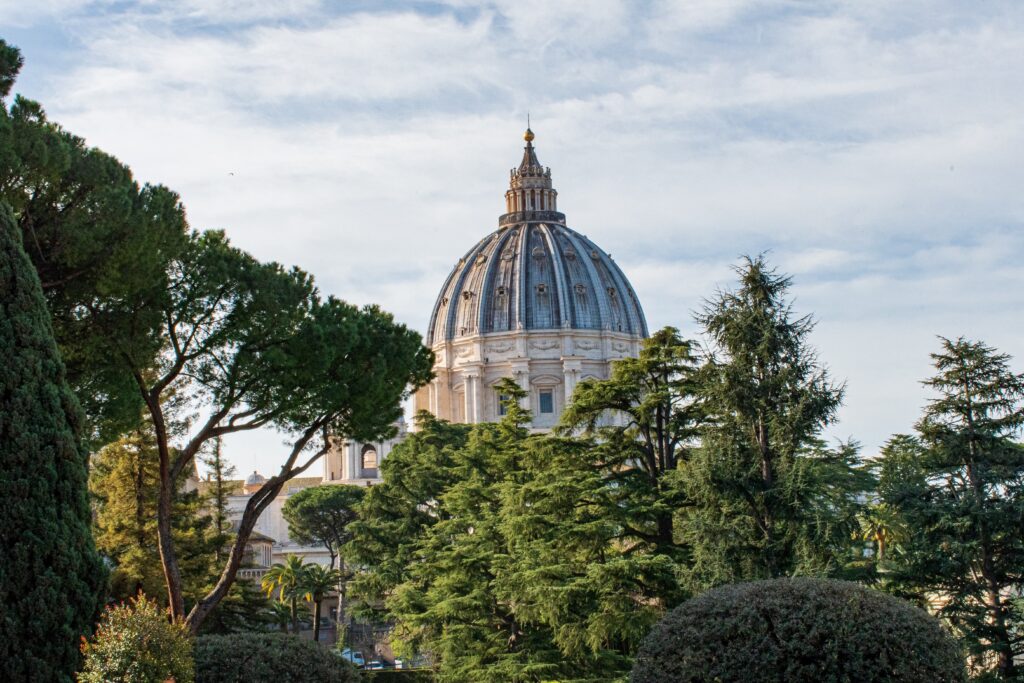
On my last visit, I started with a Vatican Gardens tour—one of the few experiences that still feels genuinely calm. Access is limited, and visits are guided, moving slowly through the gardens in a small open-top minivan. Passing manicured lawns, fountains, and hidden sculptures while the morning light was still soft gave me a quieter introduction to Vatican City—almost private.
Separate the Vatican Museums From St. Peter’s Basilica

Doing both in one stretch is where most visits unravel.
Splitting them—either across different days or with a long midday pause—changes everything. Your body gets relief. Your mind stays open. What you’ve seen has time to settle.
If you don’t want to fully separate the days, step away at midday. I recommend you head into Borgo for lunch and return later, refreshed.

Borgo’s cobblestone streets, faded shutters, and narrow lanes couldn’t be any more different than the Vatican. Historically, this was the route pilgrims took toward St. Peter’s, and you can still feel that quiet sense of passage along Via Plauto, Via degli Ombrellari, and Borgo Vittorio.
For a pause:
- Gran Caffè Borgo was my morning stop while staying nearby.
- Around lunch (or dinner), I’ve enjoyed Borgosteria, Borghiciana Pastificio Artigianale and Rione XIV Bistrot.
If you decide to include a visit to St. Peter’s Basilica, give it a different kind of attention.

The scale is overwhelming at first—vaulted ceilings, gold details, space that seems to stretch endlessly—but the impact isn’t in rushing through it. I found it in the pauses. Stepping aside. Letting the crowd move on. Standing quietly beneath the dome. Michelangelo’s Pietà, tucked near the entrance behind glass, invites that same stillness.
This isn’t just a monument—it’s a working church and a place layered with meaning. Sit in a pew. Wander into a side chapel. Light a candle if you’re inclined. You don’t need to be religious to feel the weight of what has unfolded here over centuries. Time matters here more than a checklist.
A Realistic One-Day Itinerary for the Vatican

This is not the only way — just one that I, as a slow traveller, experienced and recommend.
- Vatican Museums (be selective)
- Take a break on the exterior viewing platform
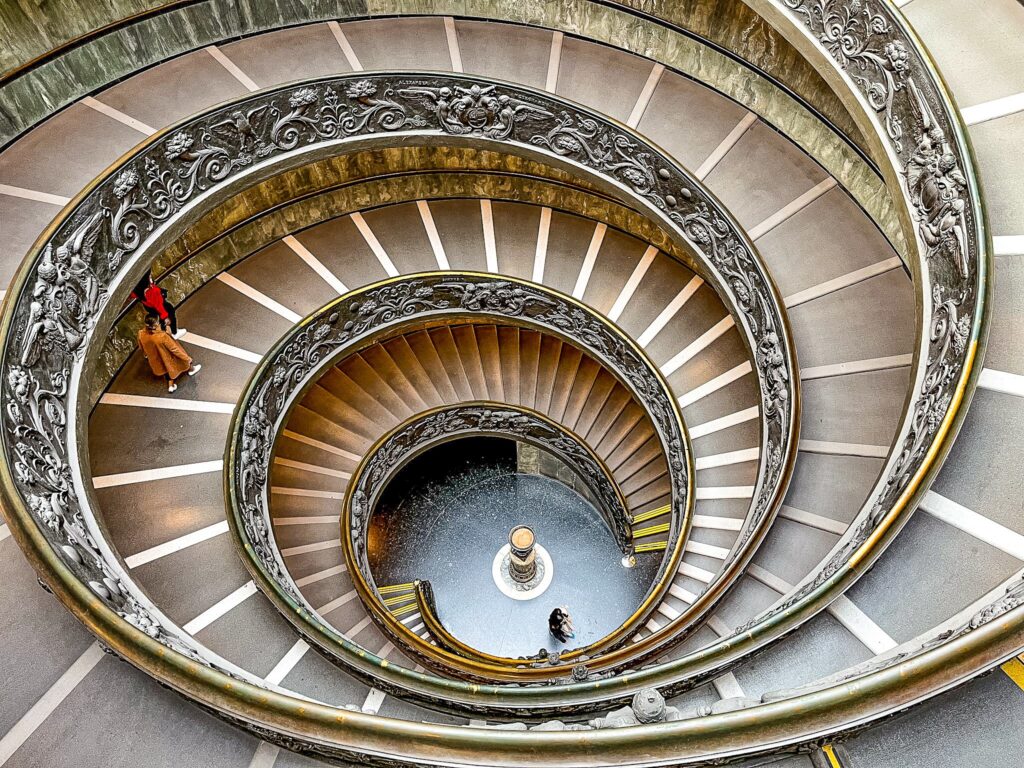
- Exit the famous spiral staircase
- Walk to the Borgo neighbourhood, stroll the streets, and go for lunch
- Optional, return to visit St Peter’s Basilica
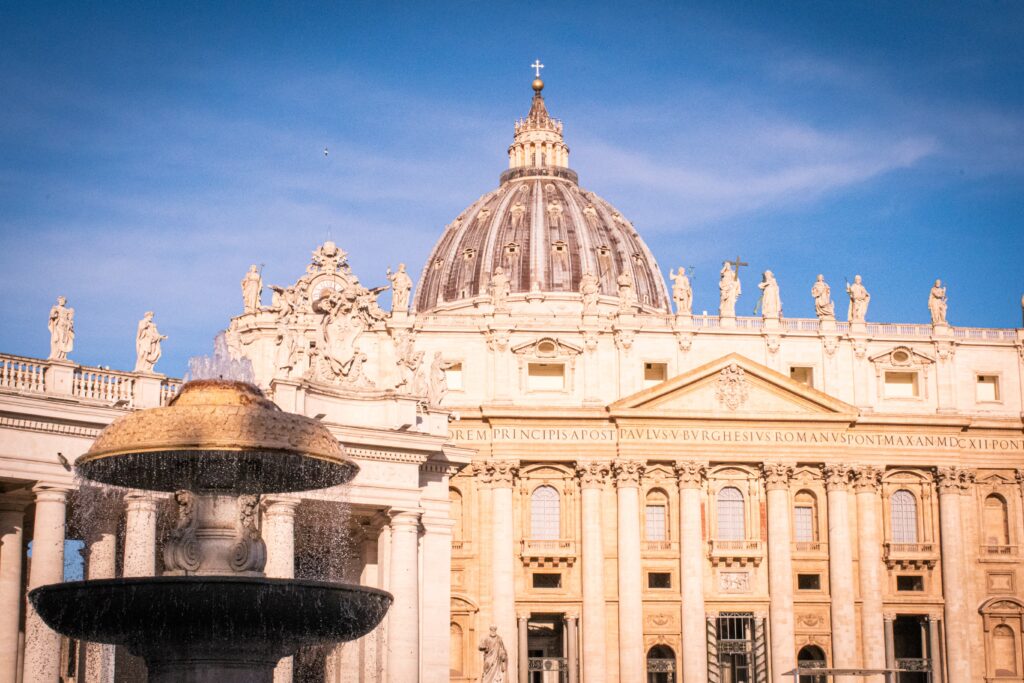
- Walk St Peter’s Square
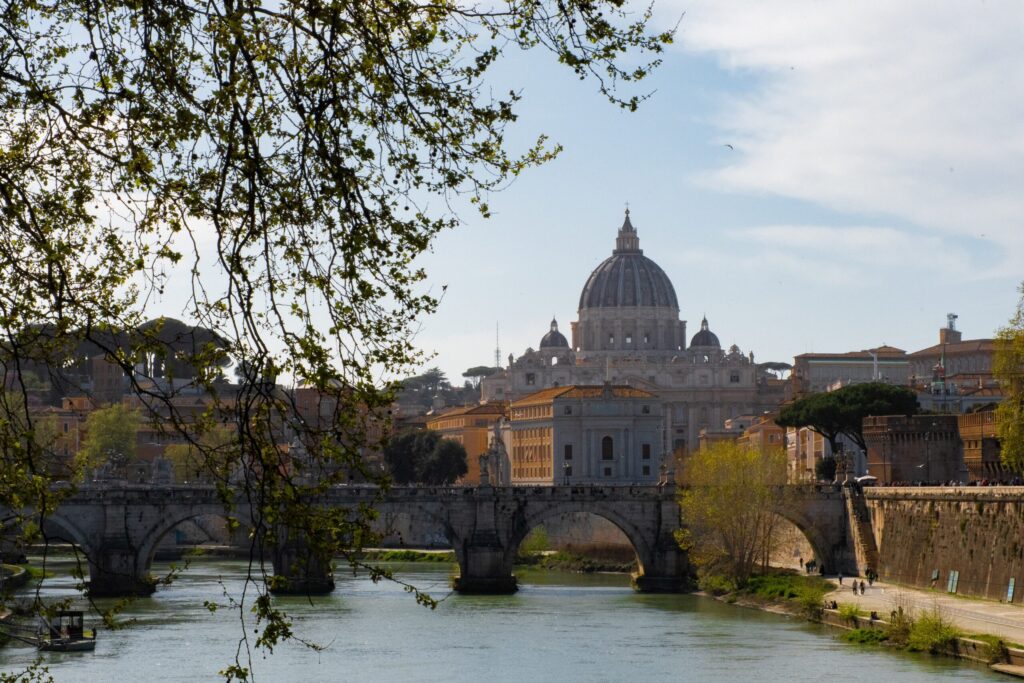
- Walk towards the Tiber River in the direction of Sant’Angelo Castle
- Pause on St Angelo Bridge with a view of Vatican City
Tickets, Timing, and Logistics
Book your tickets well in advance, especially during peak travel seasons, as they sell out quickly.
Skip-the-line access is essential. Even pre-booked tickets through the official Vatican website can still leave you waiting in queues stretching up to one or two kilometres, so consider third-party providers for a smoother entry.
This is the practical information every traveller needs to know.
- Avoid the last Sunday of the month: While the Vatican Museums offer free entry from 9 a.m. to 2 p.m. on the last Sunday of each month, the crowds are overwhelming.
- Best days to visit: Try for a Tuesday, Thursday, or Friday for the smallest crowds.
- Busiest days to avoid: Mondays are crowded because most museums in Rome are closed, and visitors flock to the Vatican instead. Wednesdays are popular due to the Papal Audience, and of course, weekends are always packed.
- No photos in the Sistine Chapel: This is strictly enforced. The guards are watching, and you will be reminded frequently.
- Dress appropriately: The Vatican has a strict dress code. Shoulders and knees must be covered. Avoid wearing shorts, skirts above the knee, or sleeveless tops, or you may be turned away.
My Final Take: How You Visit Matters

Experiencing Vatican City isn’t about seeing everything or racing from gallery to gallery. This slower, intentional approach works best for thoughtful travellers, repeat visitors, and anyone who doesn’t want to feel herded through one of the world’s busiest destinations.
It’s for those who want to notice the quiet corners, pause beneath Michelangelo’s ceilings, and let the scale of the place settle in—on their own terms.
If this is your first visit, a once-in-a-lifetime trip, or you’re on a tight schedule—like a cruise stop or a guided tour—then a traditional Vatican City itinerary is likely the right fit: fast, efficient, and focused on checking the must-sees.
For those ready to slow down, I invite you to join my slow travel newsletter community for tips, insights, and inspiration that help you experience Europe—and Rome—more deeply, thoughtfully, and joyfully.


