

On my first trip to Lisbon, I did what most travellers do—I visited Sintra and spent the day exploring Pena Palace. But it wasn’t until my second visit that I finally figured out how to get to Quinta da Regaleira and give it the time it truly deserves.
If you’re planning a return to Sintra or looking to slow things down a little while in Lisbon, this guide is for you. I’ll share exactly how to get there from Lisbon, what to expect when visiting, and a few helpful tips I picked up along the way—because getting there should be part of the experience, not a hassle.
This post may contain affiliate links, meaning I get a commission if you decide to purchase something through the links, at no additional cost to you. Read my Affiliate Disclosure.
Where is Quinta da Regaleira?

Quinta da Regaleira is tucked into the heart of Sintra, just a short walk from the historic town center. It’s not far from the more well-known Pena Palace and Moorish Castle, but it feels like a world of its own.
While those hilltop landmarks tend to steal the spotlight, Quinta da Regaleira sits lower down, closer to town, surrounded by thick vegetation and winding stone paths.
It’s one of Sintra’s main attractions, but its location is often a bit confusing to first-time visitors. The good news? Once you arrive in Sintra, getting there is straightforward—and the walk itself is part of the experience.
How to Get to Quinta da Regaleira from Lisbon

There are a few easy ways to reach Quinta da Regaleira from Lisbon, depending on how you like to travel and how much time you have.
Option 1: Train + Walk
The most straightforward and budget-friendly option is to take the regional train from Lisbon’s Rossio Station in the Baixa neighbourhood to Sintra. Trains leave frequently—usually every 20–30 minutes—and the trip takes around 40 minutes.
Once you arrive at Sintra Station, you can walk to Quinta da Regaleira in about 15–20 minutes. The path is mostly uphill but manageable, and it winds through the town center with signs pointing the way.
Option 2: Train + Bus or Tuk-Tuk
If you’d rather not walk, local bus 435 runs a loop that includes Quinta da Regaleira. You can catch it just outside the station.
Alternatively, tuk-tuks are everywhere in Sintra, especially near the station. They’re a bit pricier, but they’ll take you right to the gate and offer a fun ride through the hills.
Option 3: Guided Day Tour
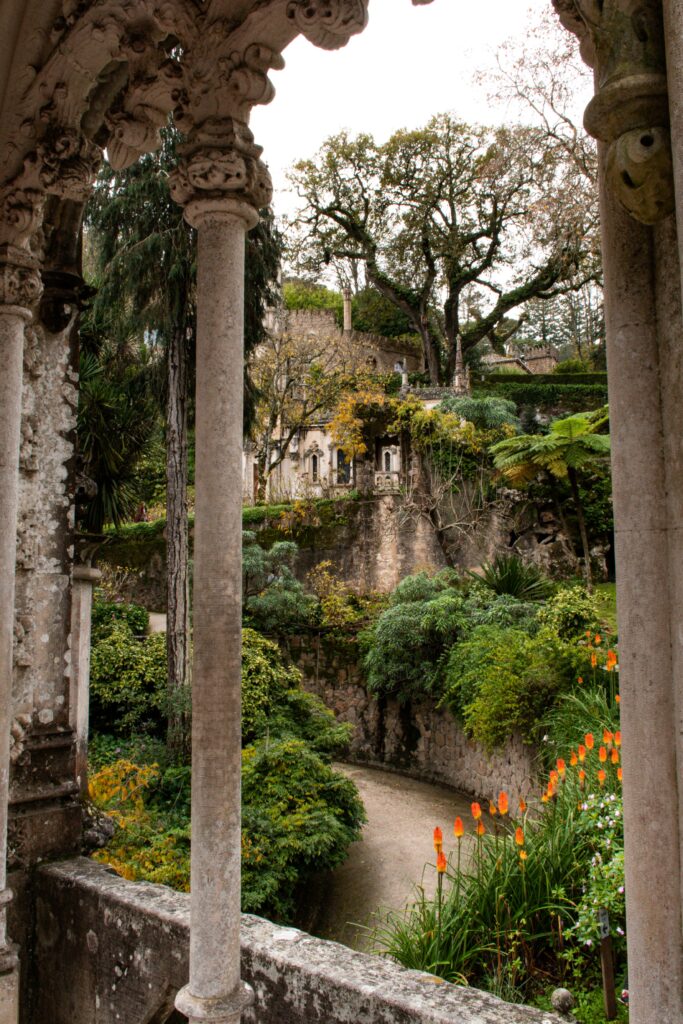
Several Lisbon-based tour companies offer guided day trips to Sintra that include Quinta da Regaleira.
These are good if you want transportation handled for you and prefer a more structured visit without the logistics hassle. It allows you to hear more of the history, culture and insider tips from a local guide. Group tours will include other sites, like the coastal town of Cascais, maximizing what you see in a day. The drawback is that your day may feel a bit rushed, and it lacks the flexibility of how long to spend at each place.
This is the group tour I recommend you take: Pena Palace, Quinta da Regaleira and Cascais
How I Got There
On my second trip to Lisbon, I made it a priority to visit Quinta da Regaleira. I took the same approach I had on my first visit to Sintra: catching the train from Rossio Station in central Lisbon. Trains run frequently, and there’s no need to book in advance—just show up, grab a ticket, and hop on.
Once I arrived in Sintra, I skipped the buses and tuk-tuks and decided to walk. I did this because I wanted to explore the charming town of Sintra before going to Quinta da Regaleira, which is about 15 minutes from the station, depending on your pace. The walk is mostly uphill without being too steep. It gives you a good opportunity to take in those views, although for most of it, you are surrounded by lush green gardens.
If you’re comfortable walking, I highly recommend it.
What to See at Quinta da Regaleira
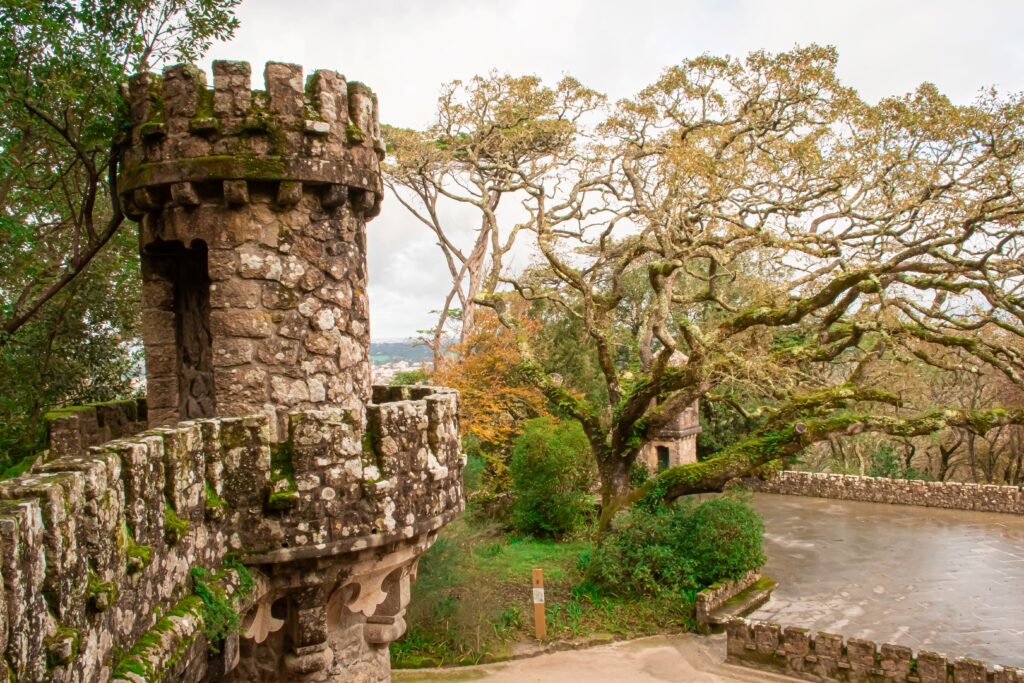
Quinta da Regaleira is more than just a palace—it’s a layered experience filled with symbolism, mystery, and curious design. The brochure describes Quinta as an “imaginary universe of symbolism and metaphor,” and I agree!
The entire estate was designed in the early 1900s by Italian architect Luigi Manini for the wealthy Portuguese owner António Augusto Carvalho Monteiro, who was fascinated by alchemy, Masonry, and ancient mythologies.
As I wandered through its many corners, I quickly realized this place wasn’t built just to be beautiful—it was meant to be explored, interpreted, and even a little puzzled over. I have to admit it can be a bit overwhelming when you first arrive, as there is a lot to take in. I recommend you hit these key sites, and by doing that, you’ll be able to see most without spending an entire day here.
Regaleira Palace

The palace itself is a mix of Gothic, Renaissance, and Manueline architectural styles. From the outside, it’s all spires, carved stonework, and dramatic detailing—like something out of a storybook. Inside, the rooms are more understated but full of character.
Wooden ceilings, carved fireplaces, and decorative tilework show the level of craftsmanship. It’s not a massive interior, but it gives a glimpse into the private world of its eccentric owner.
The Gardens
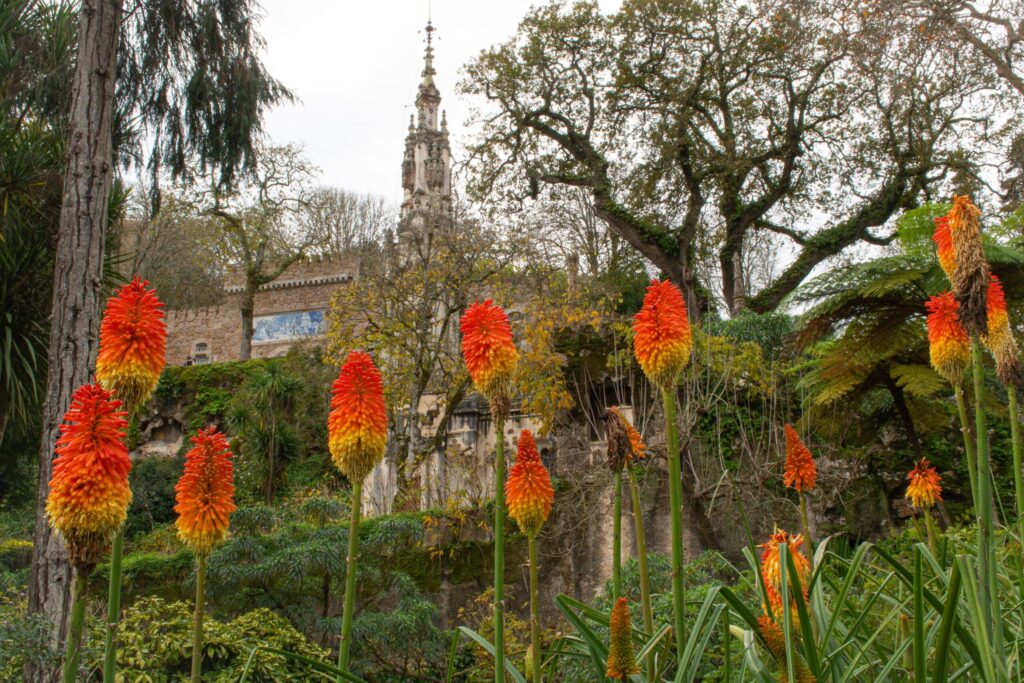
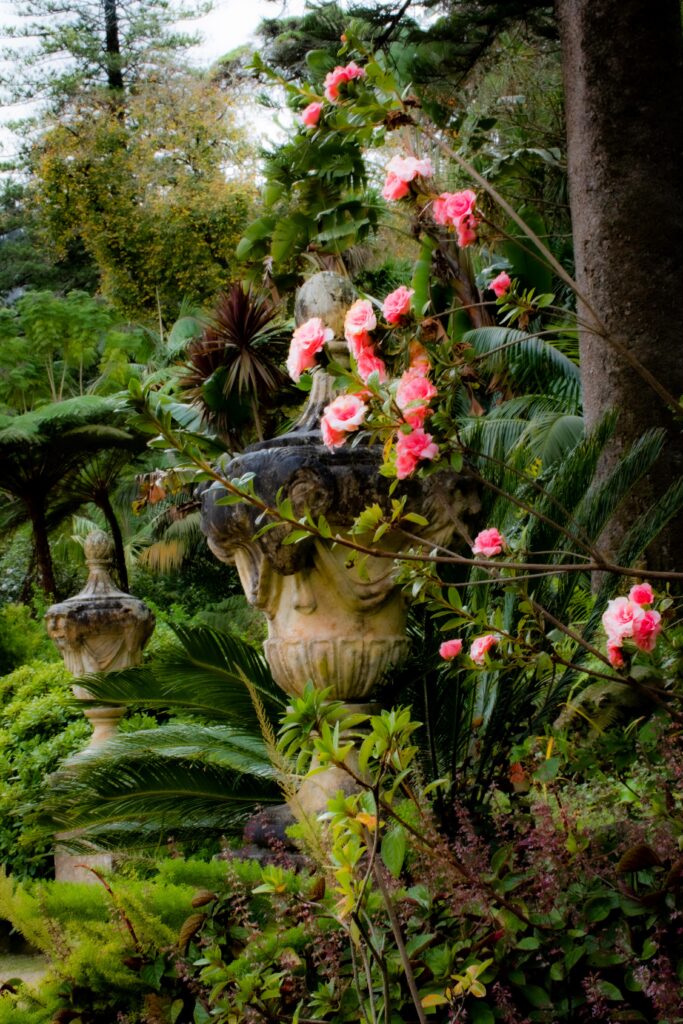
The real magic of Quinta da Regaleira lies in its gardens. These aren’t formal or manicured in the way you might expect. Instead, they’re wild, winding, and deliberately mysterious. Hidden pathways snake through dense greenery, leading to towers, grottoes, benches, and strange structures that seem to appear out of nowhere.
The entire layout is symbolic, designed to reflect a journey of spiritual discovery—though you don’t need to decode its meaning to enjoy getting delightfully lost in it.
Initiation Well
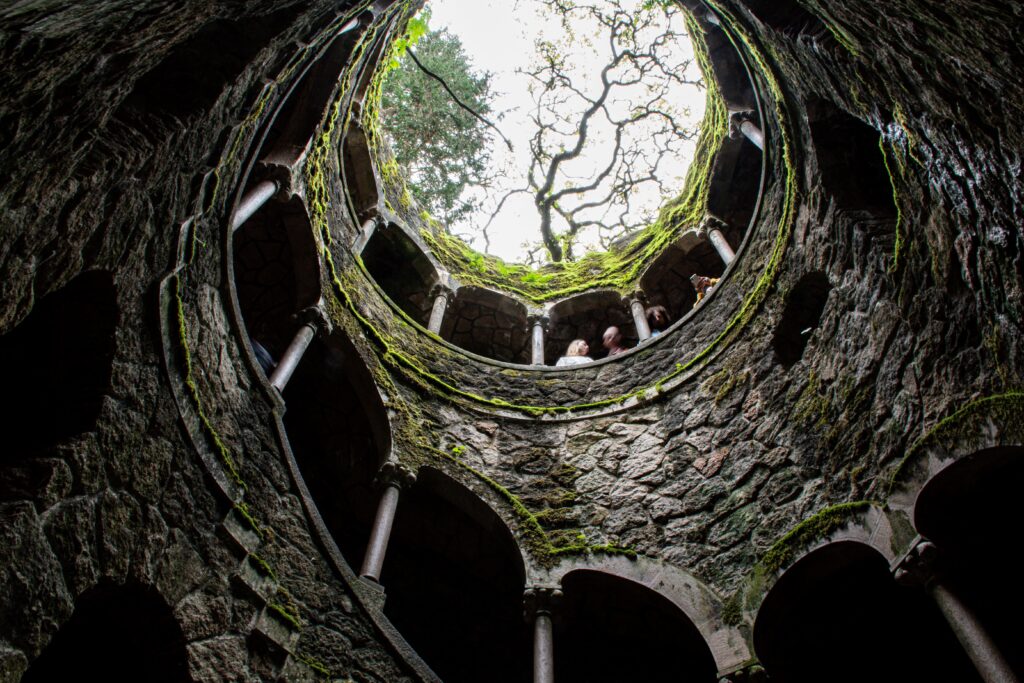
This is why most people come here. And, yes, it’s cool, but it wasn’t the highlight of the visit in my opinion. The Initiation Well is a spiral staircase carved into the earth, descending nine levels or 139 steps down like a reverse tower. It’s not a well in the traditional sense, but rather a ceremonial structure, believed to be used for Masonic or other esoteric rites.
I eavesdrop on a local guide who explains the Well has 9 platforms, resembling Dante’s Divine Comedy with the nine circles of Hell, Purgatory sections, and Paradise skies. He also shares another tale that links the steps’ digits, 1 + 3 + 9 = 13, symbolizing death and rebirth.
As you walk down the stone staircase, light filters in through the top, and there’s a strange hush that makes it feel almost sacred. At the bottom, a narrow tunnel leads off into the dark—yes, you can walk through it.
Underground Tunnels
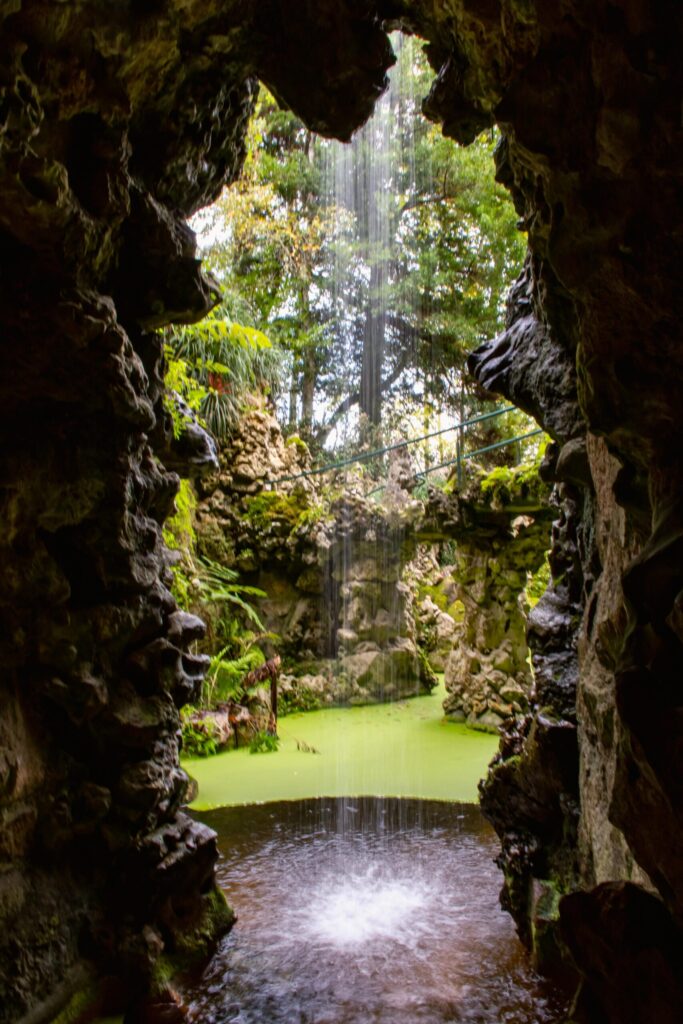
The tunnels at Quinta da Regaleira connect various parts of the estate and add an unexpected element of adventure. Some are lit, others dim and damp, and they lead to places like the Initiation Well, the chapel, and artificial lakes. I found myself doubling back more than once, not quite sure where I’d end up—which is part of the fun.
In some parts, I did have to use my phone’s flashlight, as I was in complete darkness. The other factor, I was visiting in early December when there were virtually zero tourists.
Follies
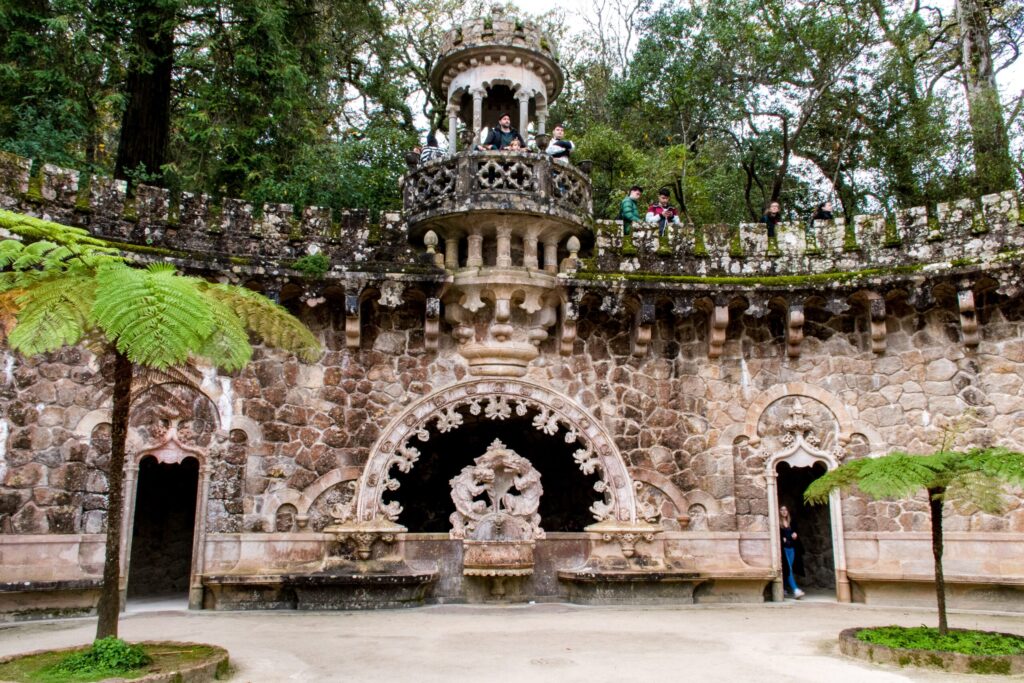
Scattered throughout the grounds are various “follies”—decorative structures that serve no real function other than to surprise and charm. There are miniature towers you can climb, stone benches hidden behind hedges, and bridges crossing over nothing in particular.
These whimsical additions make wandering through the estate feel like a treasure hunt, and I would imagine would be fun for children to visit compared to Pena Palace.
Chapel
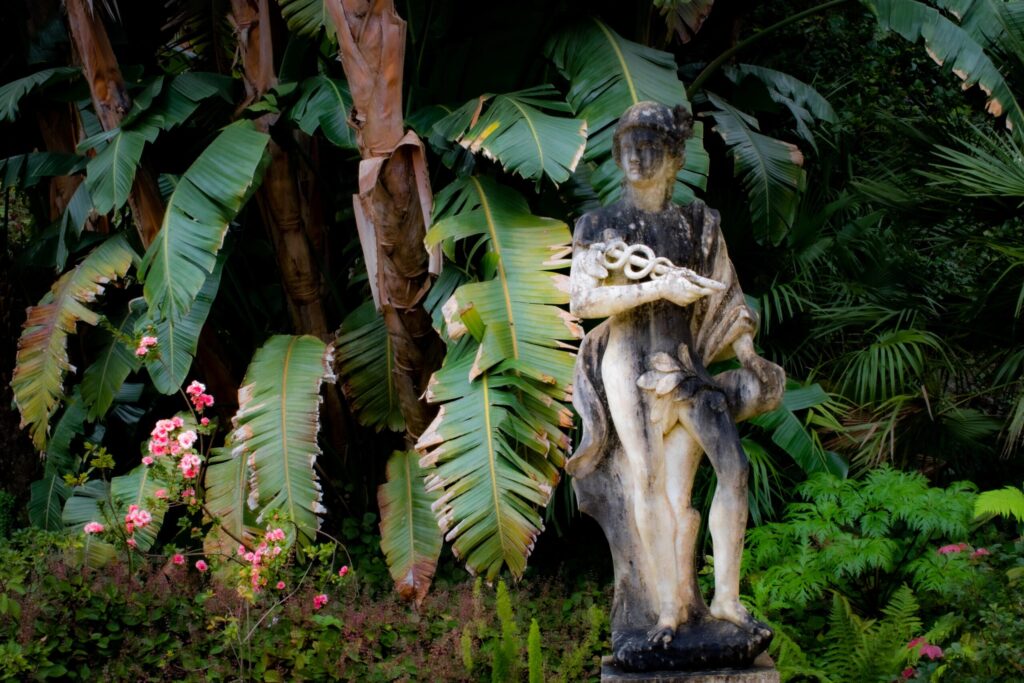
Near the main palace is a small Gothic chapel, intricately decorated with religious symbols—but like much of the estate, it’s layered with hidden meaning. Inside, you’ll find beautiful stained glass and richly painted ceilings. A spiral staircase leads to the crypt below, which also connects to—you guessed it—another tunnel.
Tickets and Practical Information

Planning your visit to Quinta da Regaleira is simple once you know the basics. Here’s what to keep in mind:
- Opening Hours
- Daily: 9:30 AM – 8:00 PM (last entry at 7:30 PM) April to September
- Daily: 9:30 AM – 6:00 PM (last entry at 5:30 PM) October to March
- Closed: January 1st, December 24th, 25th, and 31st
- Ticket Prices (as of my visit)
- Adults: €11
- Seniors (65+): €6
- Youth (6–17): €6
- Children under 5: Free
- Family ticket (2 adults + 2 youth): €26
- Where to Buy Tickets
- On-site: You can purchase tickets at the entrance, though lines can get long midday and during peak and shoulder travel seasons.
- Online: Recommended during peak season to skip the wait. To get a skip-the-line entrance ticket, you have to use a third party like Get Your Guide.
- Guided Tours
- The park offers guided tours available Tuesday to Saturday for an additional €15 and can be arranged at the Ticket Office
- How Much Time to Spend
- I’d suggest allowing 2 to 3 hours to explore at a comfortable pace. The gardens and tunnels alone are worth lingering in.
- Best Time to Visit
- I recommend visiting early Morning or late afternoon to avoid the busiest crowds and enjoy quieter paths through the gardens and tunnels.
- Sintra is a popular day trip from Lisbon, especially on weekends—visiting on a weekday makes for a much more relaxed experience.
- Accessibility
- The palace interior is partially accessible, but much of the garden terrain is uneven with steps, gravel paths, and tunnels that may be challenging for those with mobility concerns.
- Facilities
- Restrooms are available near the entrance.
- There’s a small café inside the grounds, plus picnic areas if you want to bring snacks.
- Souvenir shop with books, art, and small gifts related to the estate’s history and symbolism.
- Photography
- Allowed throughout the estate (non-commercial use). A camera or smartphone is a must—you’ll want to remember this one.
Final Thoughts
Visiting Quinta da Regaleira was a highlight of my second trip to Sintra—equal parts fascinating, unexpected, and unforgettable.
For more travel stories, tips, and hidden gems across Europe, join my weekly newsletter—it’s like a postcard from me to your inbox.


