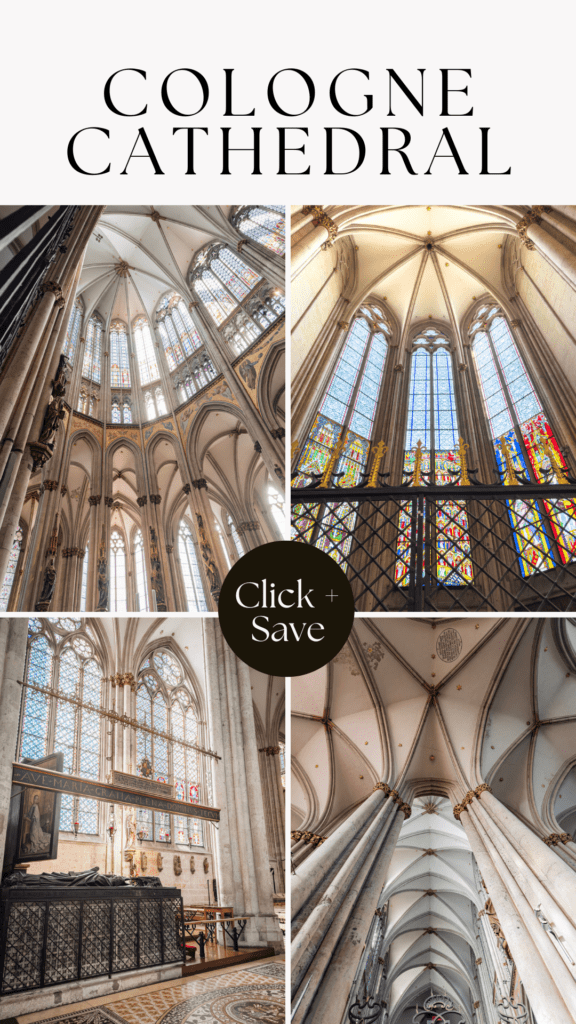
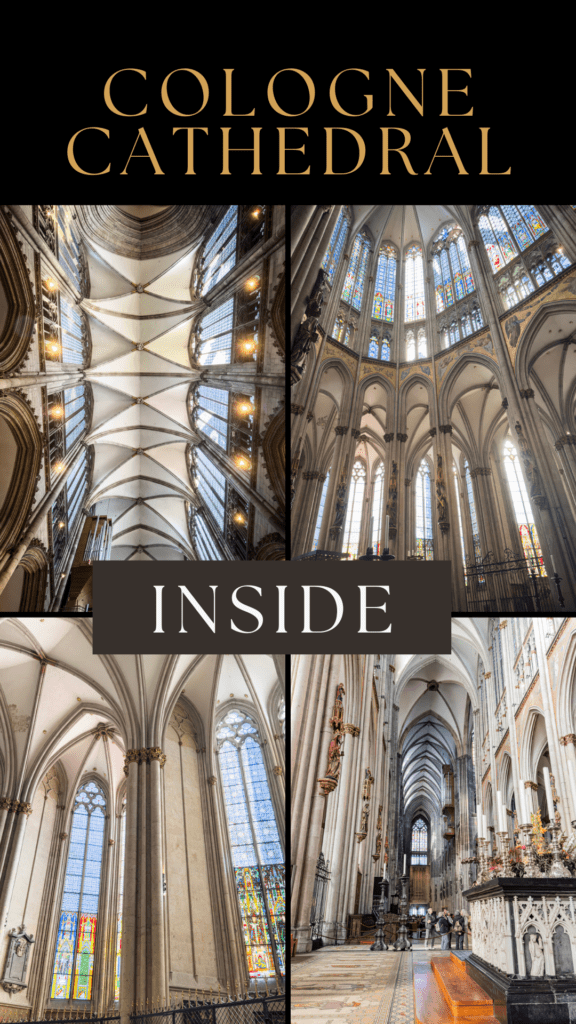
The Cologne Cathedral, known in German as Kölner Dom, is one of Germany’s most visited landmarks — and one of its most complex.
Built over more than 600 years, it reflects shifting political power, religious ambition, and architectural persistence rather than a single moment in time.
Located directly beside Cologne’s main train station, the cathedral is easy to visit, even on a short day trip. But understanding what you’re seeing, why it matters, and how to experience it well makes a significant difference.
I’ll explain why Cologne Cathedral is worth visiting, highlight what to focus on inside and out, and share practical visiting tips I’ve learned over multiple visits, so you can approach it informed, prepared, and unhurried.
This post may contain affiliate links, meaning I get a commission if you decide to purchase something through the links, at no additional cost to you. Read my Affiliate Disclosure.
Start Here: Seeing the Cologne Cathedral From the Outside
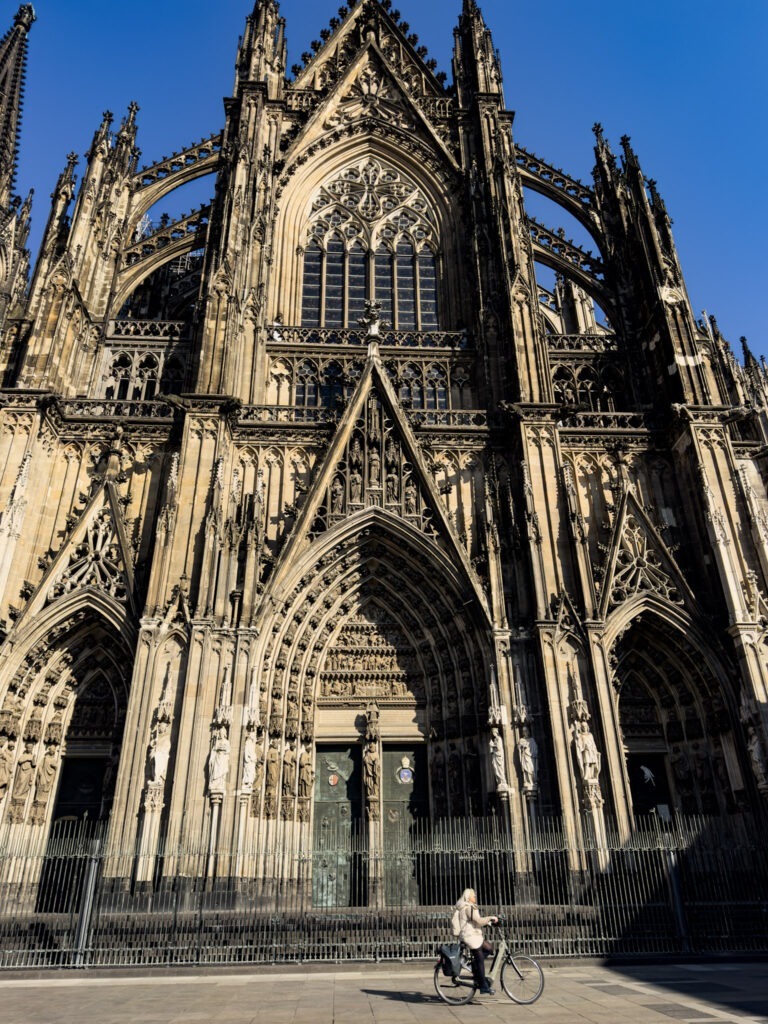
Before entering Cologne Cathedral, I always spend time outside.
The cathedral’s official name, Hohe Domkirche St. Peter, was never meant to be a local church. It was designed as a statement of power, faith, and status within medieval Europe.
Construction began in 1248, inspired by the great Gothic cathedrals of France, particularly Amiens. Cologne wanted to compete. The city was wealthy, influential, and strategically positioned along the Rhine. The cathedral was meant to reflect that.
What you see today is visually consistent, but historically layered. Most of the structure was completed in the 19th century, not the Middle Ages, using original medieval plans rediscovered centuries later. This is why the cathedral feels unified rather than piecemeal.
Look closely at the exterior stone. The darker sections are older. The lighter stone marks restoration and reconstruction, much of it following damage from World War II. Cologne Cathedral was hit multiple times but never collapsed, largely because its twin towers were used as a navigation landmark by pilots.
Before going inside, walk the full perimeter. Notice the flying buttresses, the vertical pull of the design, and how the scale becomes more imposing the longer you stand with it. This building was designed to make people feel small — intentionally.
Only once you understand that should you step through the doors.
What to Look for the Moment You Enter the Cologne Cathedral
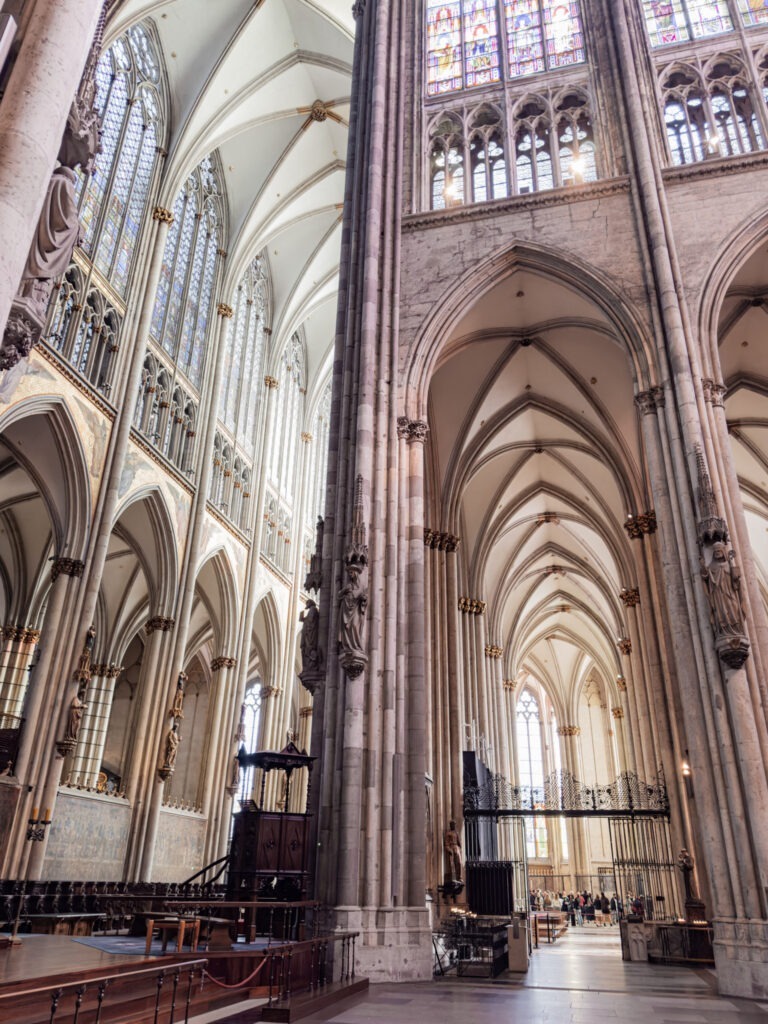
The first mistake most visitors make inside Cologne Cathedral is looking up immediately. I don’t do that anymore.
Instead, I pause just inside the entrance and let my eyes adjust. The interior is deliberately dark. That isn’t accidental. Medieval Gothic cathedrals were designed to pull the eye upward slowly, not all at once.
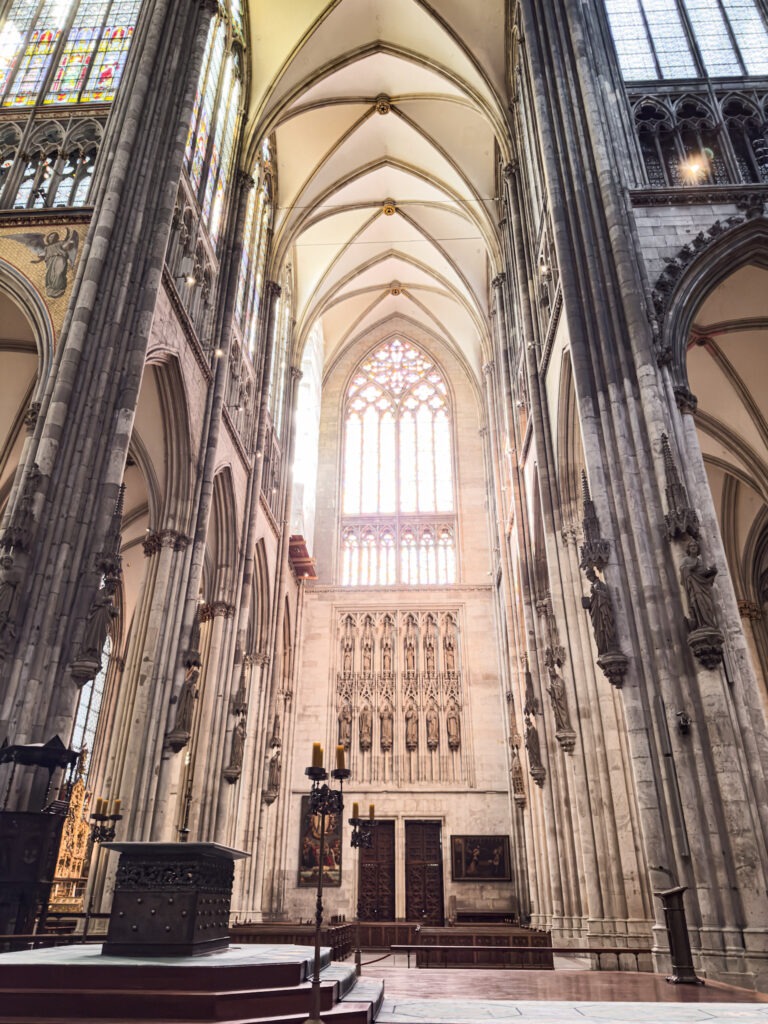
Once your eyes settle, notice the height before the details. The nave rises to nearly 43 meters (141 feet), making it one of the tallest Gothic interiors in Europe. The vertical lines — columns, ribs, and arches — work together to draw your gaze upward in stages.
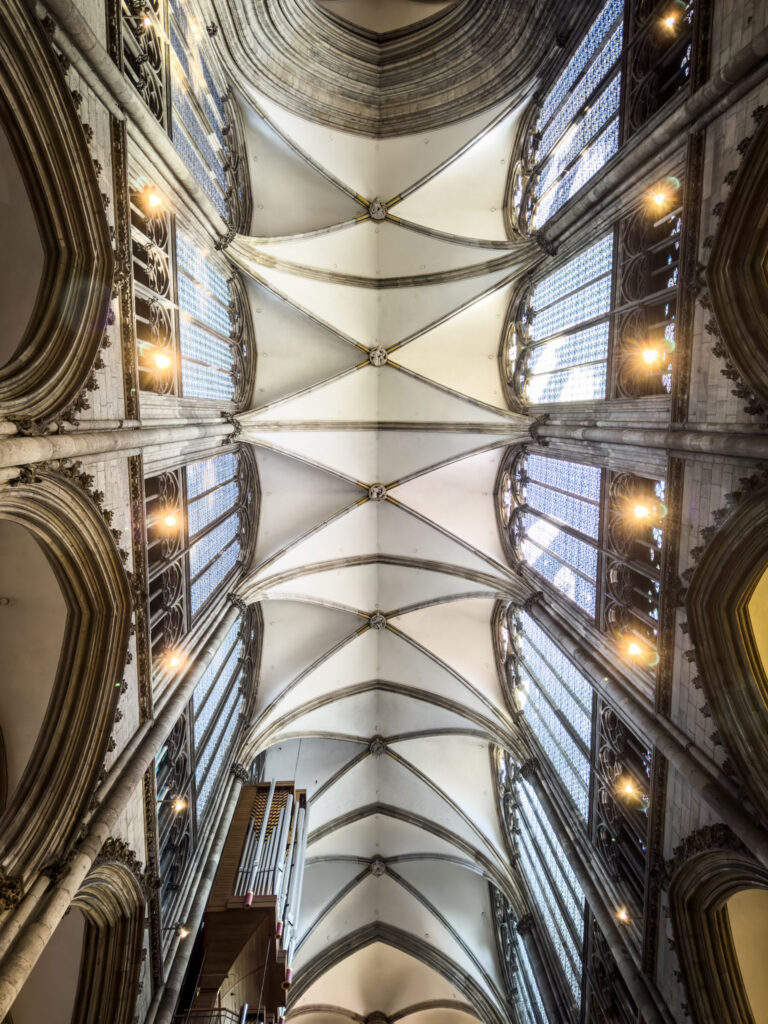
Now look at the light. Unlike brighter cathedrals in southern Europe, Cologne Cathedral absorbs light rather than reflecting it. This creates a subdued atmosphere that emphasizes gravity over beauty. It’s meant to quiet the space.
Stand still for a moment and listen. Even when crowded, sound behaves differently here. The scale softens noise, reinforcing the cathedral’s original function as a place of authority and reverence.
Only after noticing these elements do I begin looking at specific objects. Without this pause, much of the cathedral’s impact is lost.
The Shrine of the Three Kings: Why Cologne Cathedral Exists at All
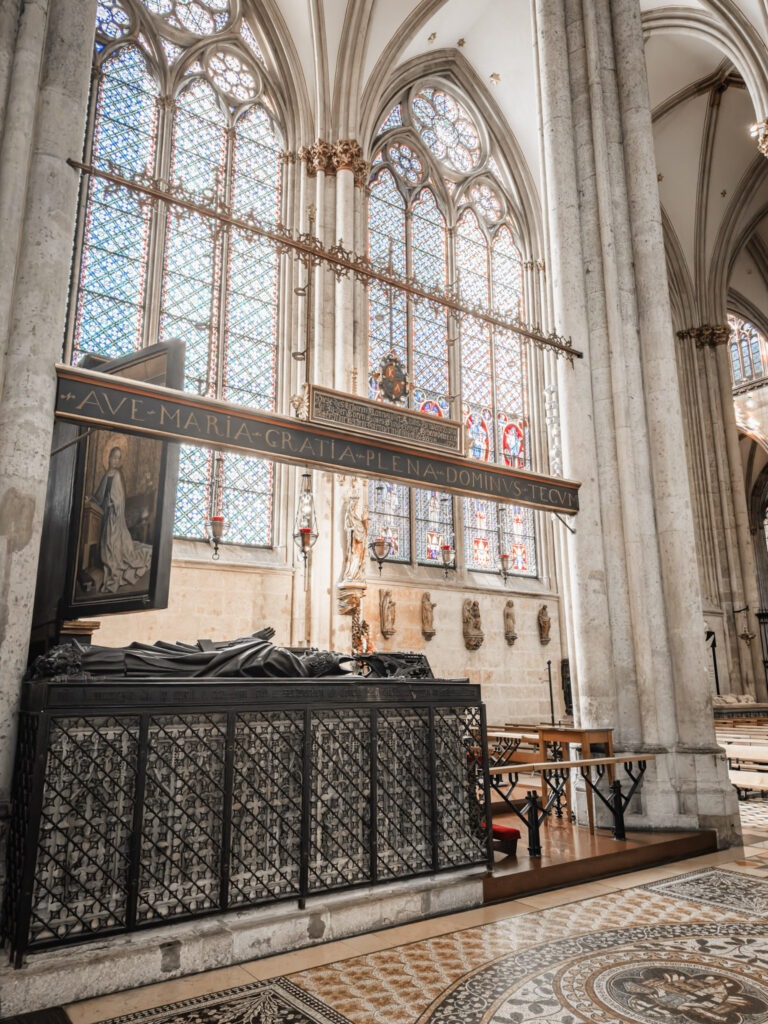
Cologne Cathedral was built for one purpose above all others: to house the Shrine of the Three Kings.
This gilded reliquary sits behind the high altar and is said to contain the remains of the Biblical Magi. Whether one views this as faith, tradition, or legend, its historical impact is undeniable. In the Middle Ages, relics meant pilgrims. Pilgrims meant power, wealth, and influence.
The relics arrived in Cologne in 1164, brought from Milan by Archbishop Rainald of Dassel. At the time, Cologne was already an important city. Possessing the remains of the Three Kings elevated it to one of Europe’s major pilgrimage destinations.
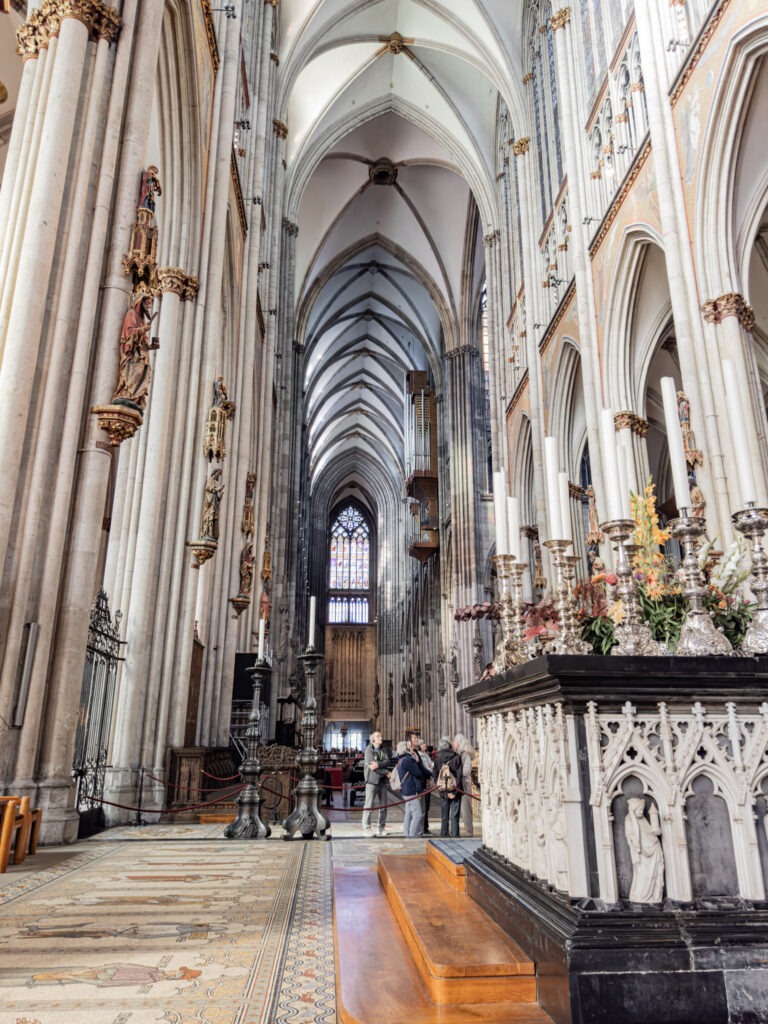
The shrine itself dates to the late 12th century and is the largest medieval reliquary in Europe. It is decorated with gold, enamel, and more than a thousand precious stones and cameos. Many of these elements were reused from earlier Roman and medieval objects.
When you view the shrine, don’t rush forward. Stand slightly back. This allows you to take in its scale and detail as one composition rather than a collection of ornaments. This was designed to impress from a distance — and it still does.
From here, the next logical stop is understanding how the cathedral was built around this shrine, not the other way around.
Understanding the Architecture
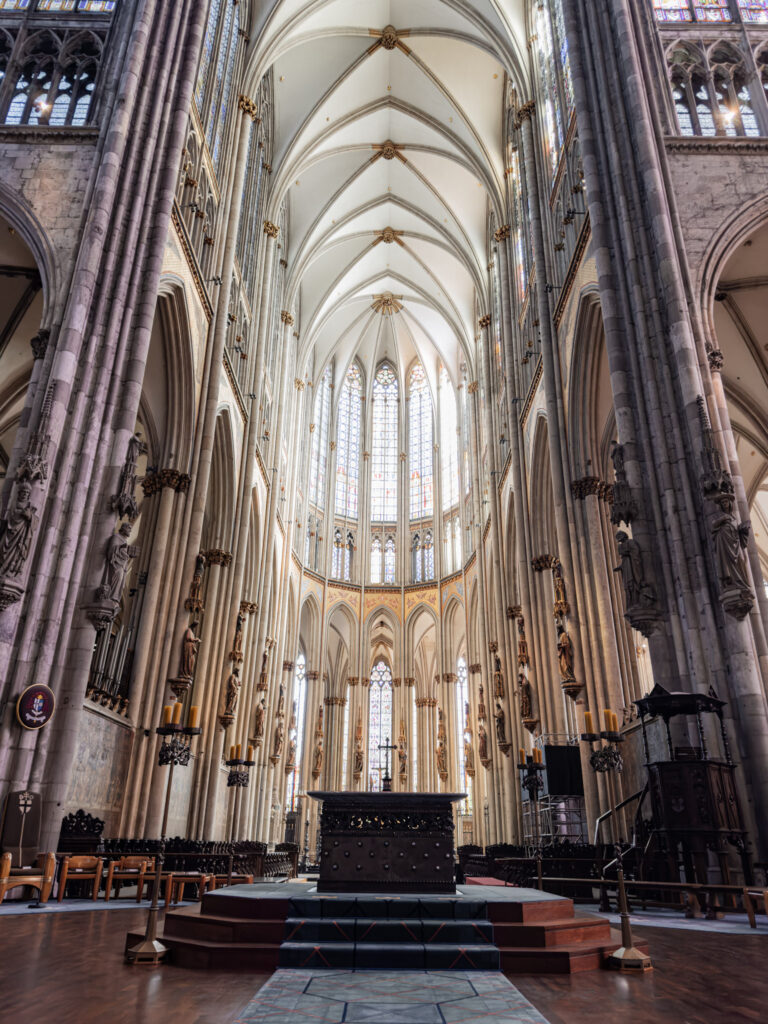
The Cologne Cathedral was not designed first and filled later. It was designed around the Shrine of the Three Kings.
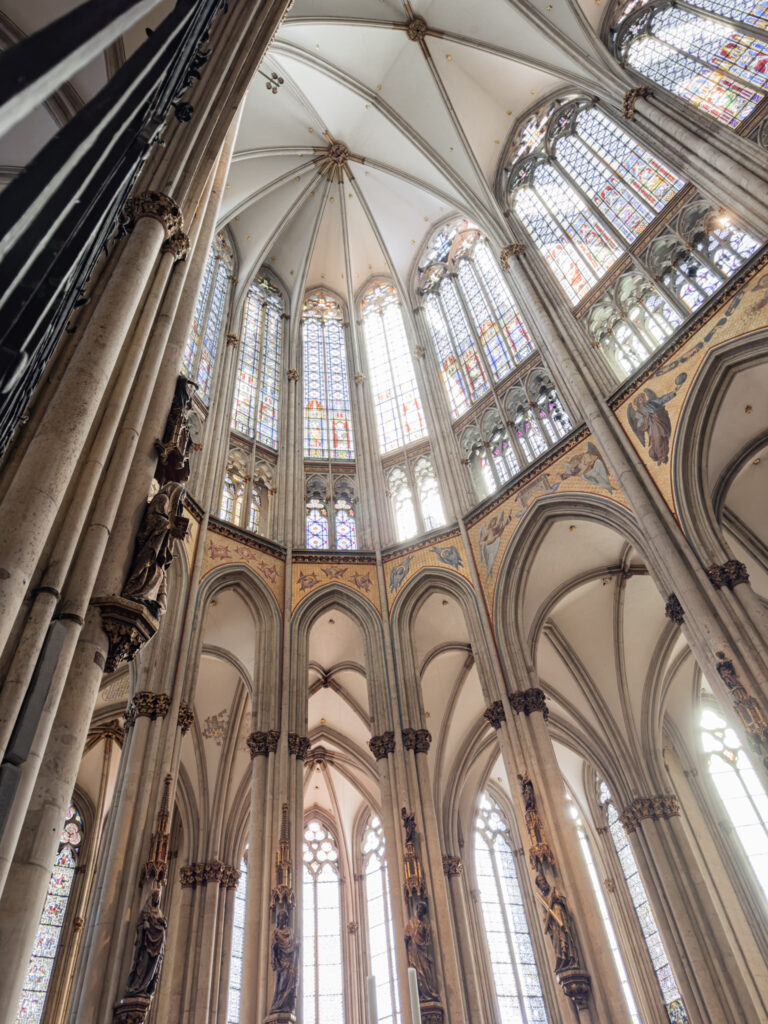
This is why the choir, completed in the 13th century, feels so deliberate and refined compared to other parts of the building. It was the priority. The long construction timeline meant the most sacred space was finished first, ensuring pilgrims could visit even while the rest of the cathedral remained incomplete.
The layout follows the classic French High Gothic model, a long nave leading toward an elevated choir, surrounded by an ambulatory. This allowed pilgrims to move through the space, view the shrine, and exit without disrupting services — an early form of crowd control.
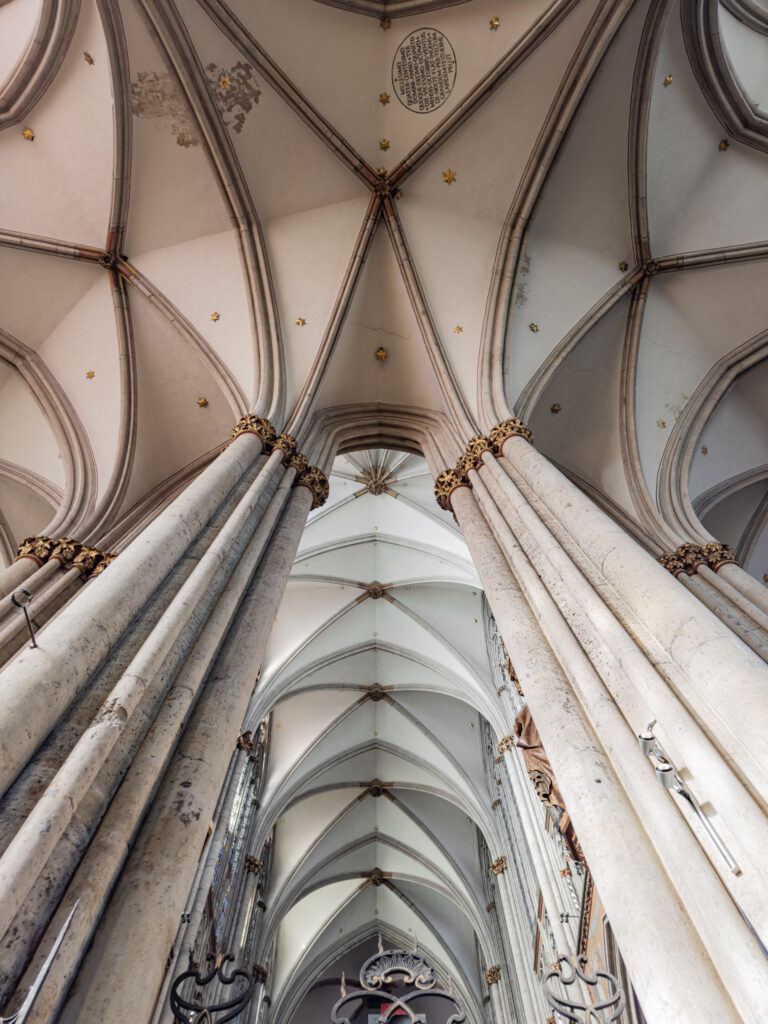
Look up again. The ribbed vaults distribute weight outward, supported by flying buttresses on the exterior. This engineering allowed for taller walls and larger windows, which were revolutionary at the time. This is a similar design to the Notre Dame in Paris.
Despite its medieval origins, much of what you see in the nave was completed in the 19th century, during a period of renewed German nationalism. Builders followed original medieval plans almost exactly, which is why the cathedral feels stylistically unified rather than layered.
This combination — medieval vision and modern execution — makes Cologne Cathedral unusual. It is both authentically Gothic and historically interrupted.
The Details Not To Be Missed
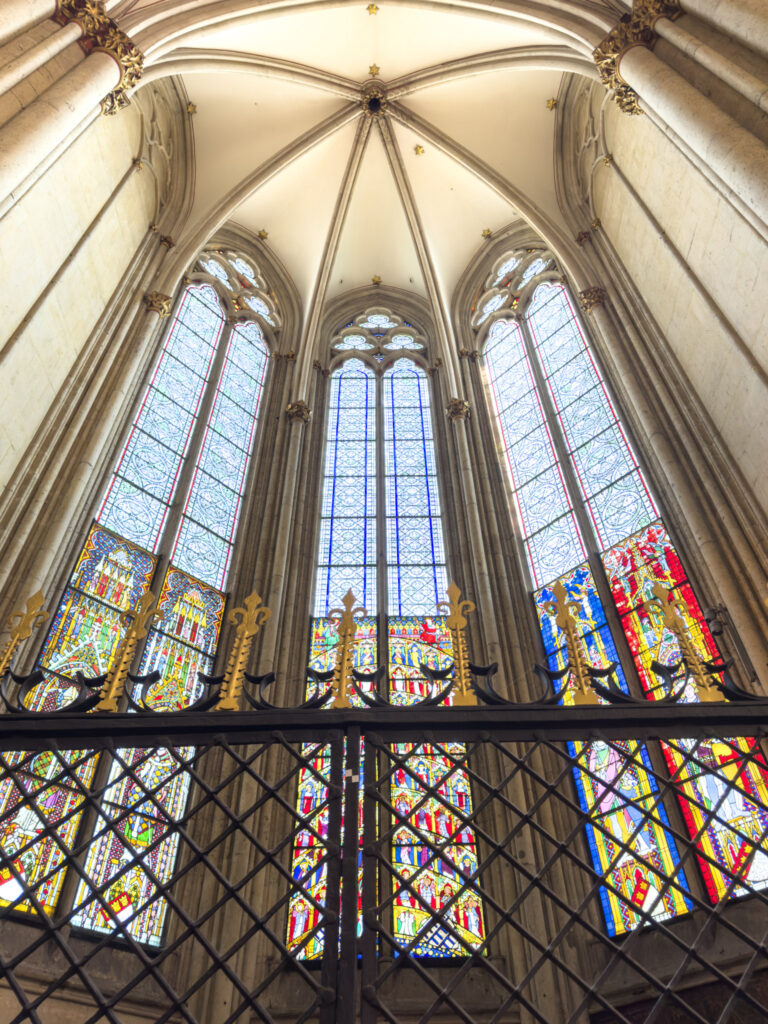
When visiting the Cologne Cathedral, I make a point of looking down and up.
The stone floor beneath your feet is not decorative in a modern sense. Many slabs mark burial sites of bishops, archbishops, and notable figures connected to the cathedral.
Along the sides of the nave, you’ll find side chapels that are easy to overlook. Each served a specific devotional purpose, often funded by guilds or wealthy families. Look for differences in style and ornamentation. These shifts reflect changes in taste, wealth, and theology over time.
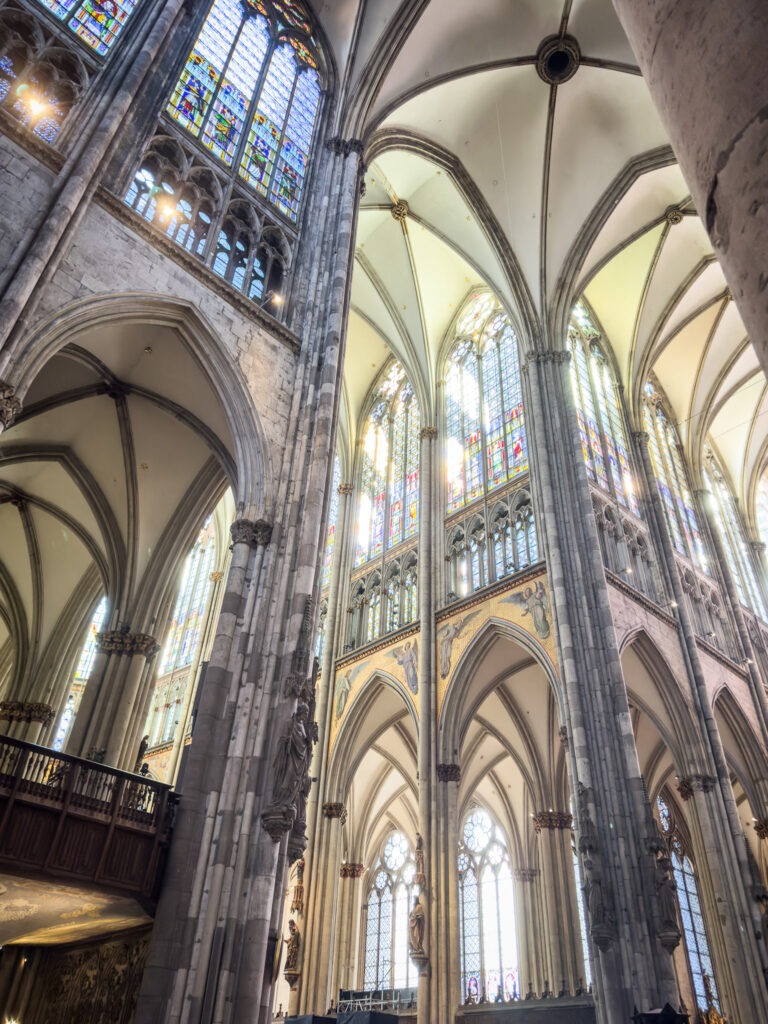
Pay attention to small symbolic carvings: foliage, animals, and figures tucked into capitals and corners. Gothic builders believed nature reflected divine order.
One of the most overlooked elements is the Gero Cross, a 10th-century wooden crucifix. It predates the cathedral itself and is one of the earliest monumental crucifixes in Europe.
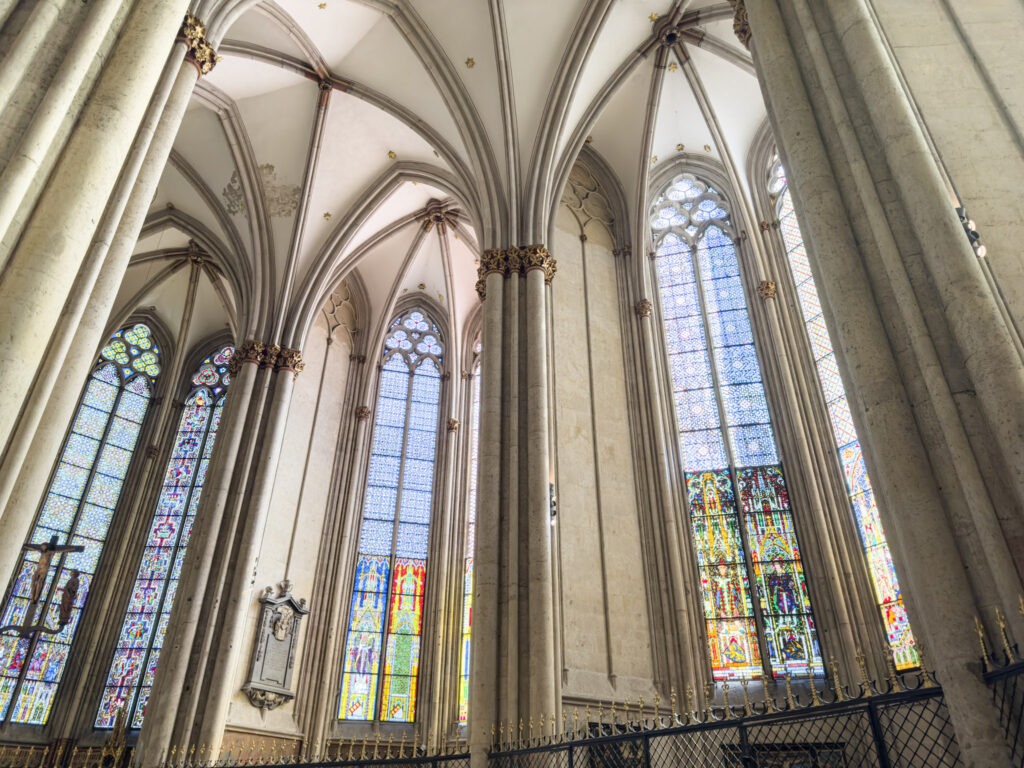
Lastly, the 13th-century windows in the choir, among the oldest intact stained-glass windows in Europe. These tall lancet windows depict rows of saints and biblical figures, arranged vertically to emphasize height rather than narrative. The colours are deep and saturated, designed to filter light gently rather than flood the space. This supports the cathedral’s darker interior and reinforces its solemn tone.
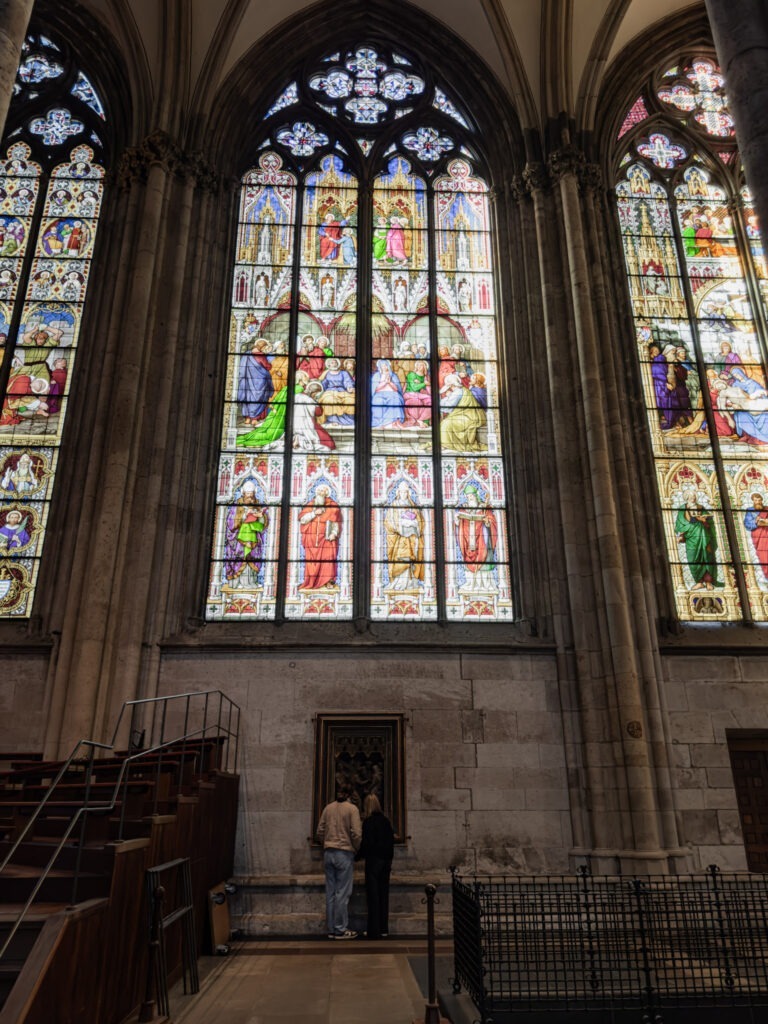
Now contrast those with the modern windows, especially the Gerhard Richter window installed in 2007 on the south transept. Instead of figures, it consists of more than 11,000 colored glass squares arranged in a seemingly random pattern.
These details are bound to be missed if you don’t know what you’re looking for or are rushing past.
Should You Visit the Treasury?
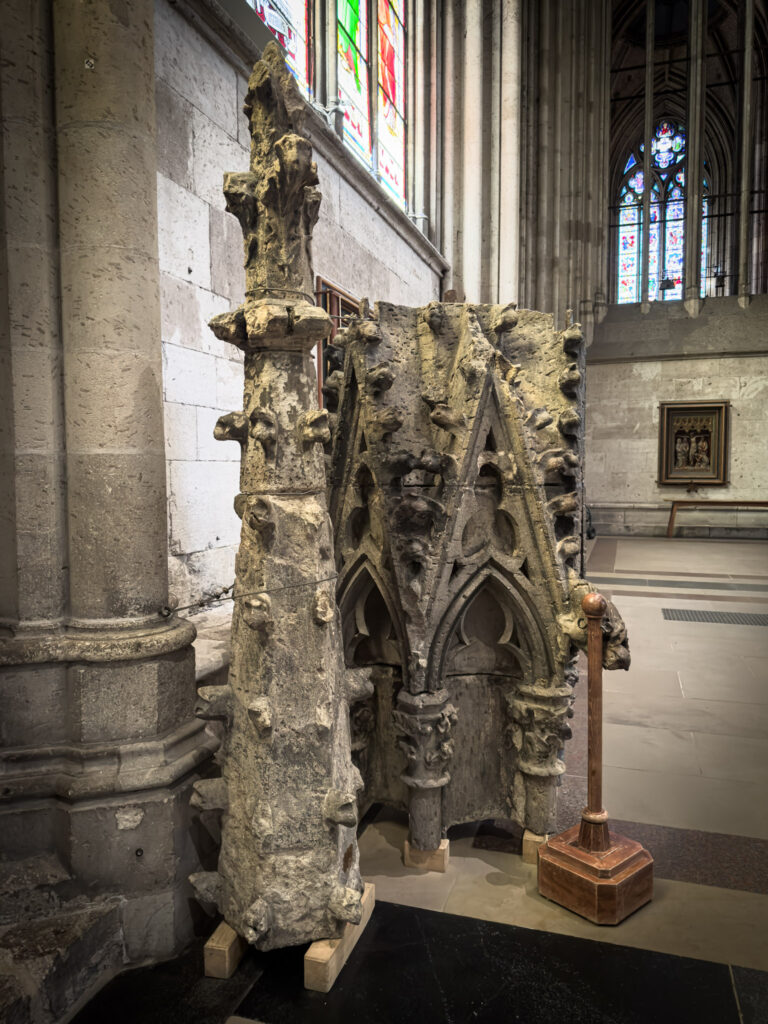
Not everyone who comes to Cologne Cathedral should visit the treasury, but for some, it’s essential. I recommend you approach it selectively, based on time and interest.
The treasury is located on the northwest side of the cathedral and contains reliquaries, medieval vestments, liturgical objects, and manuscripts. Many pieces date from the 10th to 15th centuries. The most notable items include intricately gilded reliquaries, crosses, and a few small, personal devotional objects used by Cologne’s archbishops.
I find the treasury adds value if you want historical context for what you see in the cathedral — for example, understanding why the shrine of the Three Kings was so important, or how wealth and faith were expressed materially in the Middle Ages. It also reveals the skill of medieval artisans, which isn’t always obvious from the cathedral interior alone.
It doesn’t add value if you are short on time or visiting mainly to experience the architecture, stained glass, or the shrine itself. The treasury is quieter, smaller, and less visually dramatic. A quick walkthrough can suffice, or it can be skipped entirely if you want to prioritize the cathedral proper.
How to Visit Cologne Cathedral: Key Information + Fun Facts
| Topic | Details / Tips |
|---|---|
| Opening Hours | Cathedral: 6:00–20:00 (varies seasonally) |
| Best Time to Visit | Early morning or late afternoon on weekdays for fewer crowds |
| Entry Fee | Free for the cathedral; donations encouraged |
| Tower Climb | €8; 533 steps, entrance is south side of the cathedral, clearly signposted near the tower base |
| Treasury | €10; optional, adds historical context (see guided tour) |
| Suggested Visit Duration | 1–2.5 hours, depending on whether you climb the tower or visit the treasury |
| Guided Tour | €10; purchased at the DOMFORUM (15 minutes before the preferred time) |
| Self-Guided Audio Tour | Audio tour available only through the Tourific self-guided tours app. Book here. (I did this, and highly recommend it) |
| Mass Services | Mon-Sat Mass: 6.30 a.m., 7.15 a.m., 8.00 a.m., 9.00 a.m., and 6.30 p.m. Sun Mass: 7.00 a.m., 8.30 a.m., 10.00 a.m., 12 midday, 6.30 p.m. Get more info here. |
Key Facts
Some of these interesting facts, along with the history, I learned through the self-guided audio tour.
- UNESCO World Heritage Site – Cologne Cathedral was designated a UNESCO World Heritage Site in 1996 for its exceptional Gothic architecture and its historical role in European religious life.
- Briefly Listed as “World Heritage in Danger” – From 2004 to 2006, UNESCO placed the cathedral on its endangered list due to nearby high-rise development.
- Tallest Twin Church Spires in the World – Its twin towers rise to 157 meters (515 feet), making them the tallest twin spires of any church worldwide.
- Largest Gothic Cathedral in Northern Europe – In scale and ambition, Cologne Cathedral surpasses other northern European Gothic churches.
- Built Over 600 Years – Construction began in 1248 and was only completed in 1880, following original medieval plans rediscovered centuries later.
- Under Constant Restoration – The cathedral is never considered finished; a permanent team of stonemasons works year-round on repairs and preservation.
- Still an Active Place of Worship – Beyond tourism, Cologne Cathedral remains a functioning Roman Catholic church and pilgrimage site today.
What to See Near Cologne Cathedral
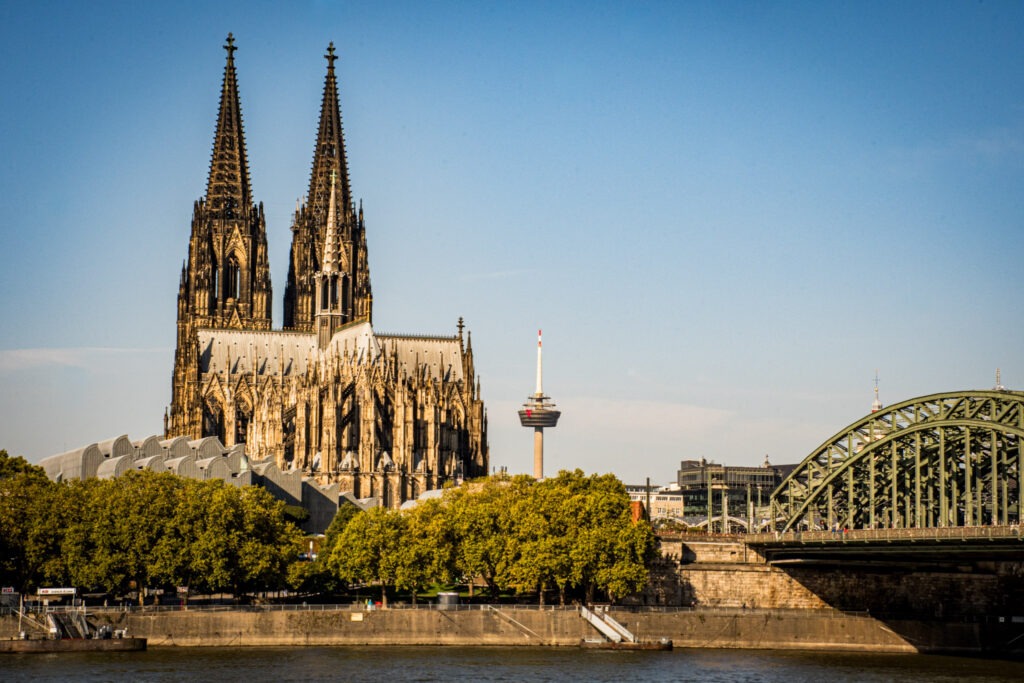
Once you’ve explored the cathedral itself, these nearby attractions are all within easy walking distance and perfect for rounding out a day in Cologne.
- Cologne Old Town (Altstadt) – Wander narrow streets lined with historic buildings and traditional breweries. A 2–5 minute walk from the cathedral.
- Hohenzollern Bridge (Hohenzollernbrücke) – Famous for love locks and Rhine views. Great for photos, 5–10 minutes away.
- Rhine Promenade (Rheinufer) – Scenic riverside walk with benches and cafes; a relaxing spot after your cathedral visit.
- Museum Ludwig – Modern and contemporary art, including Picasso. Just 5 minutes from the cathedral.
- Romano-Germanic Museum (Römisch-Germanisches Museum) – Roman artifacts and mosaics, located next door to the cathedral.
- Heumarkt / Alter Markt Squares – Cafes, restaurants, and seasonal markets, 8–10 minutes away.
- Kölner Philharmonie – Concert hall with events and exhibitions, about a 10-minute walk.
Final Thoughts
As you can tell, the Cologne Cathedral is not a place to rush. I’ve visited three times over my lifetime, and each visit, I still learn new details.
Who will love it: Travellers who appreciate history, architecture, and the depth of a place shaped over centuries. Those who slow down, read the details, and let the building’s scale, light, and relics speak for themselves. Pilgrims of culture and curiosity, not checklist travellers, will find the cathedral most rewarding.
If you want help planning a meaningful visit to Cologne or across Germany, I share detailed itineraries, insider tips, and slow-travel guidance through my newsletter.
✨Sign up to get personalized advice and curated travel insights.