With so many interesting Nuremberg attractions to choose from, this city is a perfect stop on any itinerary in Germany.
Whether you’re drawn to medieval castles, Gothic churches, or a scenic Altstadt, Nuremberg has something for every traveller.
I’ll share the top Nuremberg tourist attractions I explored during my visit, grouped by category so you can easily pick and choose what interests you most. From iconic landmarks like Nuremberg Castle to hidden corners tucked away in quiet courtyards.
I will provide a complete picture of what to see. If you’re wondering whether you can see it all in a day—or want a slower, more immersive visit—this list will help you plan your perfect trip.
This post may contain affiliate links, meaning I get a commission if you decide to purchase something through the links, at no additional cost to you. Read my Affiliate Disclosure.
Top Tourist Attractions in Nuremberg: Historic Landmarks and Monuments

Nuremberg Castle – A Medieval Icon
Nuremberg Castle dominates the old town skyline. Its origins date back to the 11th century, and it served as an imperial residence for centuries. Walking its ramparts, I could see why it was a symbol of power for the Holy Roman Empire.
The castle complex includes the Imperial Castle Museum, deep cellars, and fortified towers, offering sweeping views over the city’s red rooftops. It’s a must-see for anyone wanting a tangible connection to Nuremberg’s medieval past.
Traveller tip: even if you have no interest in visiting the interior of the castle, I recommend walking up the very steep hill to the castle walls and courtyard for incredible views of the city.
Albrecht Dürer’s House
This 15th-century house was the home of Germany’s most famous Renaissance artist, Albrecht Dürer. Inside, you’ll find his life’s work, including prints, engravings, and reproductions of his original tools.
The house itself retains historic features, giving a sense of everyday life in Nuremberg during the late 1400s and early 1500s.
You’ll also find “Der Hase,” the bronze rabbit sculpture inspired by Dürer’s famous drawing, sitting playfully in the square right in front of his home.
Documentation Center Nazi Party Rally Grounds
The Documentation Center provides a sobering look at Nuremberg’s role during the Nazi era. Located at the former rally grounds, the museum uses multimedia exhibits, photographs, and documents to explain propaganda, rallies, and the city’s historical context.
Planning tip: this is located on the edge of the city limits. If interested in visiting, I recommend taking public transport to get there.
Nuremberg Top Attractions: Churches
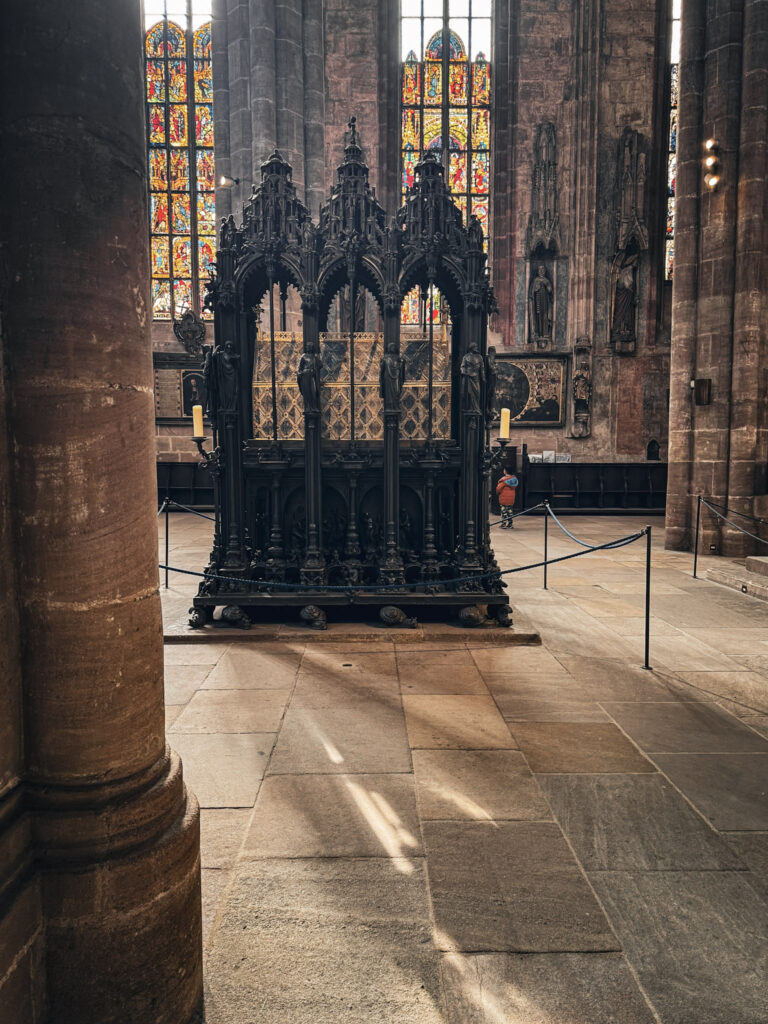
The St. Lorenz is a masterpiece of Gothic architecture. I admired the towering spires, intricate stonework, and detailed stained glass windows that filter light most beautifully. Inside, the church houses remarkable works of art, including the Angelic Salutation by Veit Stoss.
St. Sebaldus Church exudes quiet reverence. Its rich interior showcases one of the oldest altarpieces in Nuremberg, along with detailed sculptures and carvings that capture religious history.
Lastly, the Frauenkirche stands prominently on the Hauptmarkt, built in the 14th century. I was drawn to its ornate façade and the mechanical clock, the Männleinlaufen, which performs daily at noon. Inside, the church feels light and airy, a peaceful contrast to the busy square outside.
Nuremberg Tourist Attractions: Medieval Landmarks
Altes Rathaus (Old Town Hall)
The Altes Rathaus stands at the heart of Nuremberg’s old town. Its Gothic façade and towering structure reveal the city’s medieval civic pride.
Hauptmarkt and Schöner Brunnen
The Hauptmarkt is the city’s beating heart. I stood in the middle of the square, surrounded by market stalls and historic façades. At its center is the Schöner Brunnen, the “Beautiful Fountain,” a 14th-century fountain with intricate Gothic carvings and the golden ring embedded in its railing, said to bring luck when turned.
Kreuzigungshof
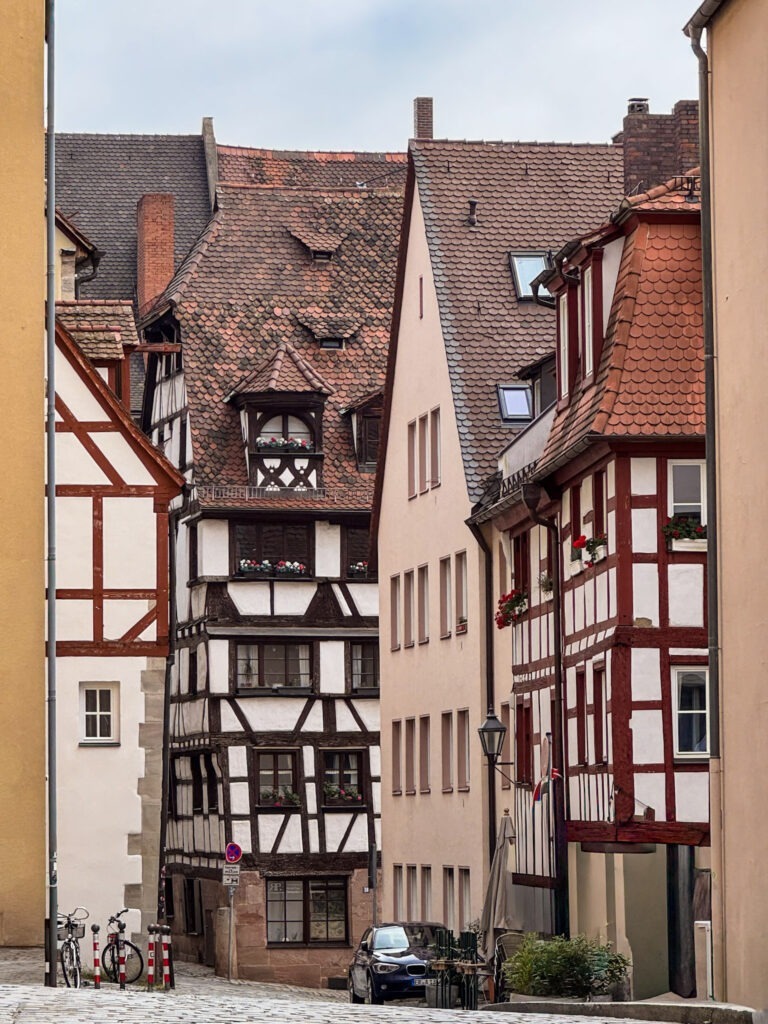
Kreuzigungshof is a quiet, medieval courtyard tucked behind the city streets. I found its stone walls and archways indicative of everyday life in Nuremberg centuries ago.
Nassauer Haus
The Nassauer Haus is one of the oldest residential towers in Nuremberg, dating back to the 13th century. Walking past it, I admire its narrow windows and fortified stone walls.
City Walls and Towers
Nuremberg’s medieval walls still embrace much of the old town. I followed sections of the ramparts and found the Sinwellturm, a round defensive tower within the castle complex, the most impressive part.
Nuremberg Bridges
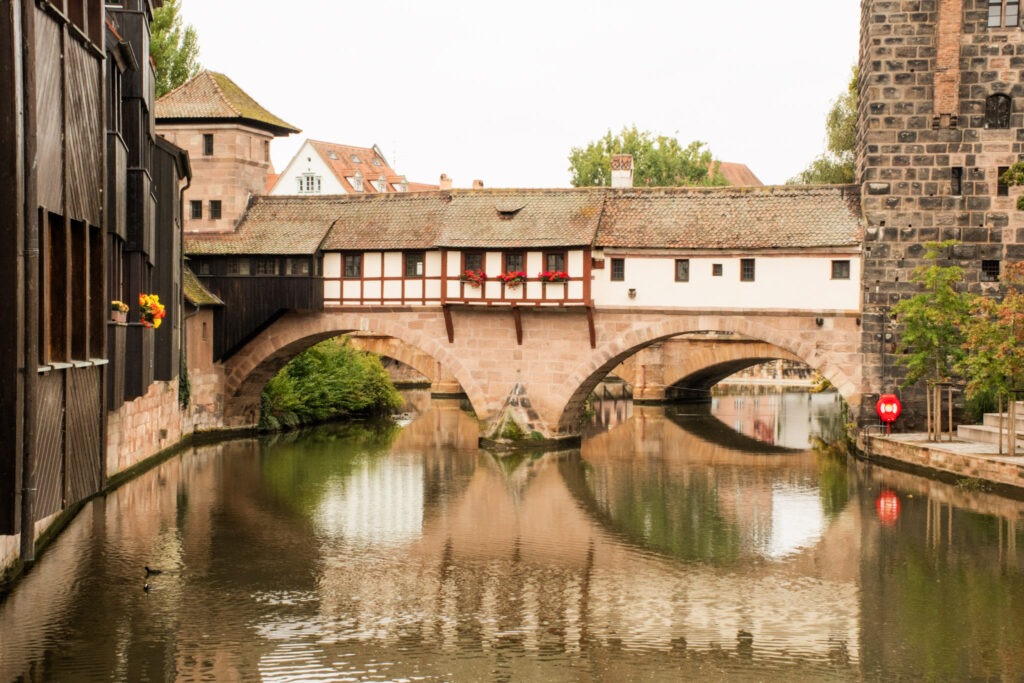
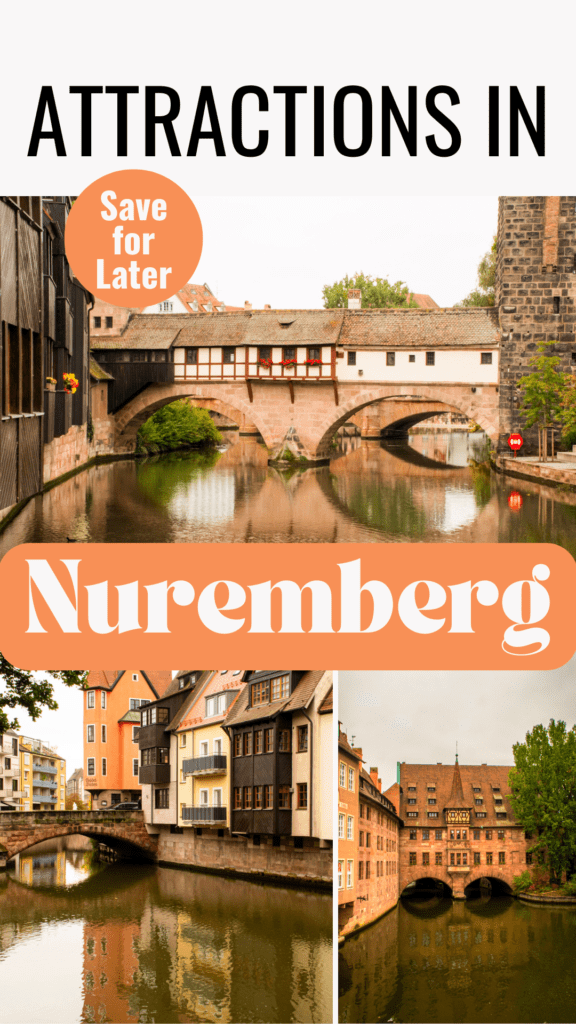
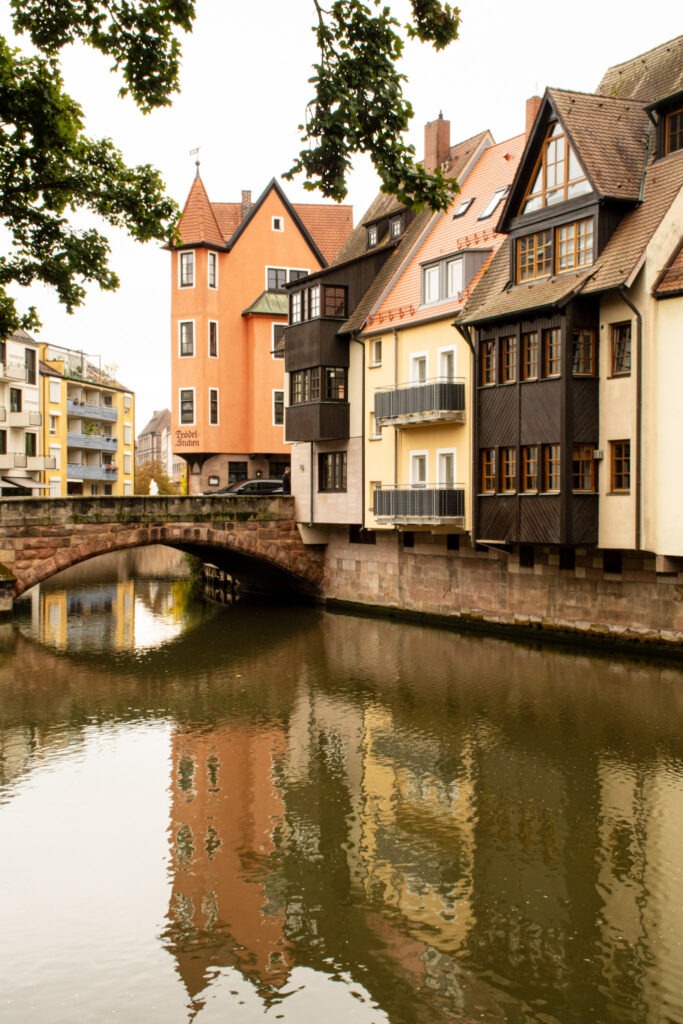
Walking along the Pegnitz River was one of my favourite ways to slow down in Nuremberg. The paths curve gently through the old town, crossing small bridges and offering scenic views of timbered houses reflected in the water. It’s a quiet escape right in the middle of the city.
Museumsbrücke connects key parts of the old town and offers charming views of riverside buildings. I enjoyed pausing here to watch the reflection of timbered houses on the water.
I enjoyed strolling across the Fleischbrücke, a reconstructed medieval bridge with stone arches. The Ochsenportal is a medieval gateway once part of the city’s fortifications, stands at one end of this bridge. Its carved stone and arched entrance hint at a time when Nuremberg’s streets were lined with merchants and livestock, guarding the flow of trade through the city.
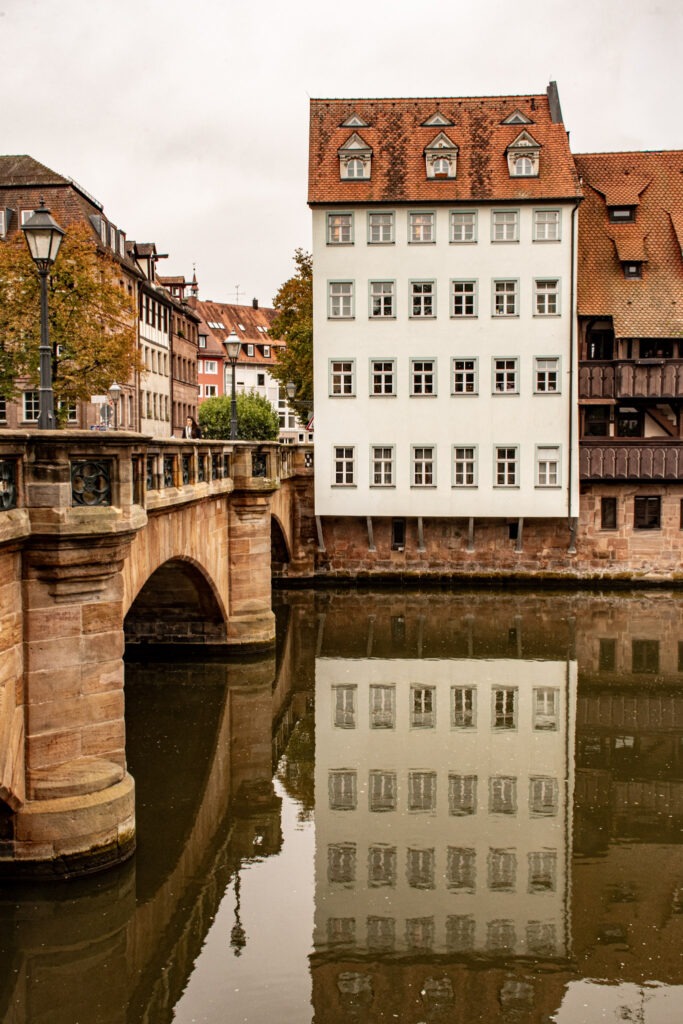
The Henkersteg, a narrower footbridge, led me to quiet riverside views and a glimpse of the city’s old executioner’s house nearby.
The Schleifensteg-Brücke is a peaceful pedestrian bridge where I lingered, watching the river ripple beneath.
The Karlsbrücke and Kettensteg each have their own charm: Karlsbrücke feels solid and historic, while Kettensteg, the oldest suspension bridge in Germany, impressed me with its delicate iron chains and engineering ingenuity dating back to the early 19th century.
Museums and Cultural Highlights
Nuremberg’s museums reflect the city’s deep history, and if you enjoy cultural sights, you may find yourself wanting to stay longer than a day in Nuremberg.
- Germanisches Nationalmuseum: Explore one of Germany’s largest museums of cultural history, featuring art, medieval artifacts, and treasures spanning centuries.
- Toy Museum (Spielzeugmuseum): A playful stop traces the evolution of toys from wooden dolls to model trains, evoking childhood memories.
- Nürnberger Bratwurstmuseum: A small but deliciously quirky museum dedicated to the city’s most famous sausage, with exhibits on tradition and preparation.
- Deutsches Museum Nürnberg: Exhibitions on science, innovation, and technology that spark imagination.
- Stadtmuseum im Fembo-Haus: Inside a Renaissance merchant’s house, walk through Nuremberg’s history from the Middle Ages to modern times.
- Bernstein-Museum Nürnberg: A niche museum showcasing amber in all its natural beauty, from raw stones to intricate jewellery.
- New Museum – Nuremberg State Museum of Art and Design: A striking modern building near the train station, where I admired contemporary art, photography, and design.
- German Railway Museum Nuremberg: Perfect for train lovers, this museum traces 200 years of railway history, complete with historic locomotives.
Planning Your Visit – Tips for Seeing the Nuremberg Attractions
One day in Nuremberg? I recommend being selective. Focus on the castle, spend time in the main square, and wander through the old town. It’s enough to feel the city’s medieval spirit without rushing.
Have two days in Nuremberg? Go deeper. Add a museum or two, visit the Documentation Center, and give yourself time to explore hidden corners.
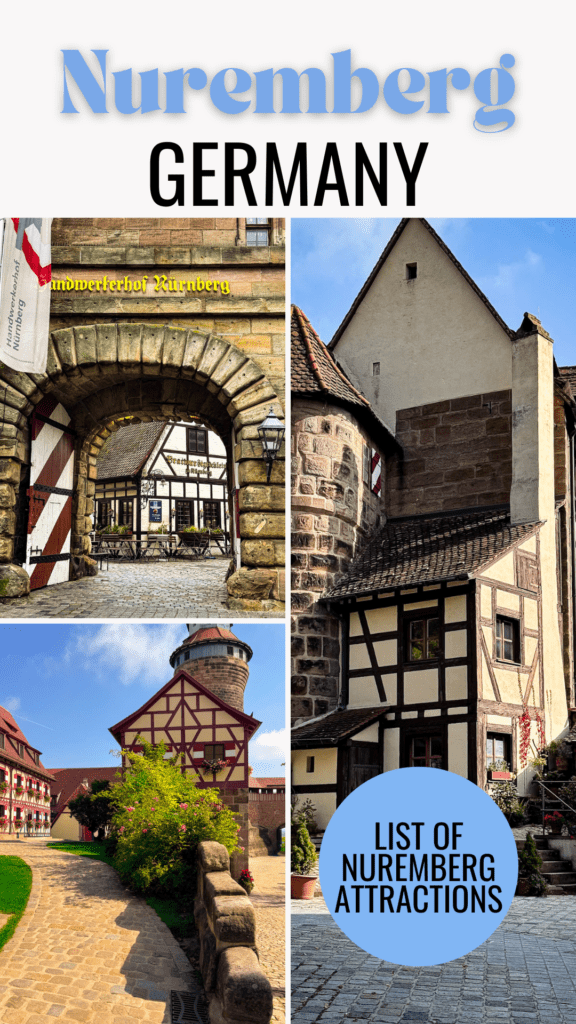
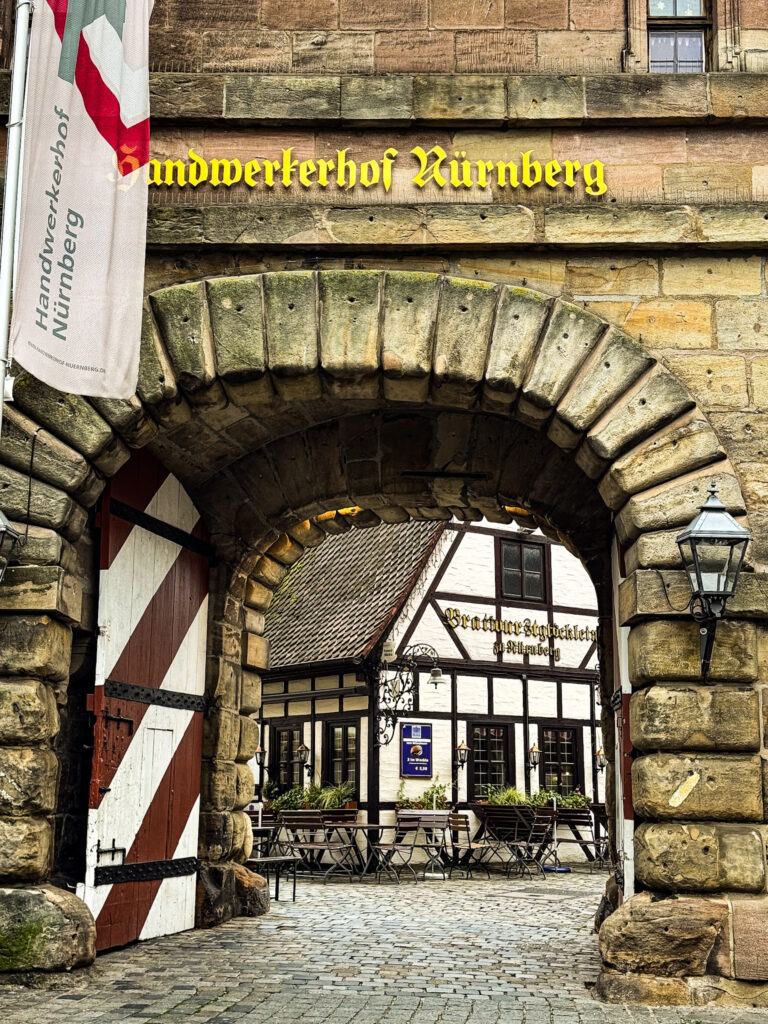
I loved stepping into the Handwerkerhof, a tiny craftsman’s village within the city walls, and discovering lesser-known courtyards tucked behind the main streets.
Getting there is simple. I took the Eurorail from Frankfurt, and the journey was just over two hours. Arriving at Nuremberg’s central station put me right at the edge of the old town, and an easy walk to the main attractions.
Final Thoughts
Nuremberg stayed with me long after I left. Its medieval walls, quiet courtyards, and river views create an atmosphere that invites you to slow down and look closer.
If you want more stories, guides, and inspiration for your next European trip, I’d love to share them with you. Join my weekly subscriber list and travel Europe with me, one thoughtful journey at a time.