
I spent 1 day in Nuremberg during my month-long stay in Germany, when I took the train up from Frankfurt for the day.
Nuremberg is renowned for its history, spanning from its medieval castles to its pivotal role in the darker chapters of the 20th century. Yet beyond the history books, it’s a city many don’t know what to expect from.
Half-timbered houses stand near lively squares, and centuries-old churches look out over streets filled with cafés and shops, and ancient bridges span the Pegnitz River, casting sublime reflections. It felt both timeless and lived-in.
For a day trip, Nuremberg offers a lot more than sights—it is a city that holds so much history, and that’s what makes it a worthwhile trip.
This post may contain affiliate links, meaning I get a commission if you decide to purchase something through the links, at no additional cost to you. Read my Affiliate Disclosure.
Why Spend a Day in Nuremberg?
Nuremberg is a city shaped by history. It was here, after World War II, that the Nuremberg Trials were held—historic military tribunals where leading Nazi officials were prosecuted for crimes against humanity. Courtroom 600 in the Palace of Justice is still preserved, and visitors can step inside the very room where these landmark proceedings unfolded.
I remember visiting this site when I was a teenager living in Germany on a student visa. As students, we had a very in-depth tour and even decades later, I can close my eyes and picture it well.
But Nuremberg’s story is older still. Once a free imperial city, it flourished in the Middle Ages as a center of trade, craftsmanship, and culture. Its historic Old Town, with the Kaiserburg castle rising above, is protected as part of a UNESCO World Heritage Site.
What I loved most, though, was the balance. Cobblestone streets and half-timbered houses sit alongside modern cafés and shops. The Pegnitz River cuts through the city, its bridges offering some of the most scenic views. If you’re lucky enough to catch the reflections of the medieval buildings in the water, it feels like stepping into a painting.
Is 1 Day in Nuremberg Enough?
My honest take: yes. For a first encounter, 1 day is enough—if you’re selective. You have to make decisions, choosing two or three places to focus your time. For me, that meant walking the Old Town, stopping at the Hauptmarkt, and taking in the bridges and river views.
It’s exactly how I wanted to spend my day without feeling rushed.
But 2 days in Nuremberg opens up much more. With the extra time, you could:
- Visit the Documentation Center at the Nazi Rally Grounds, which offers one of the most detailed and sobering exhibitions on National Socialism.
- Tour the vast Zeppelinfeld, where Hitler once staged mass rallies.
- Spend longer inside the Kaiserburg Castle, exploring its chapels, towers, and museum collections.
- Wander into smaller museums, like the Toy Museum, which highlights Nuremberg’s centuries-old toy-making tradition.
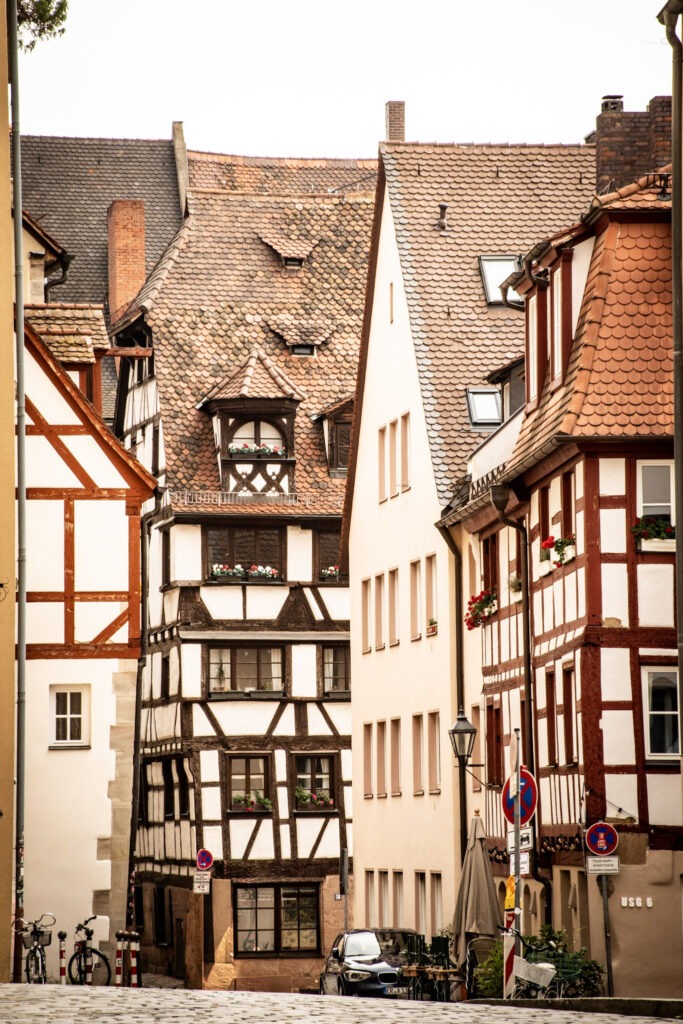
- Linger in cafés or explore more of the half-timbered streets near Unschlittplatz at a slower pace.
Determining the number of days depends on how you want to experience the city. In one day, you get a vivid introduction. In two, you gain depth and context. Both are worthwhile, but it depends on the journey you want to have.
Things to Do in Nuremberg in One Day
Start in the Old Town (Altstadt)
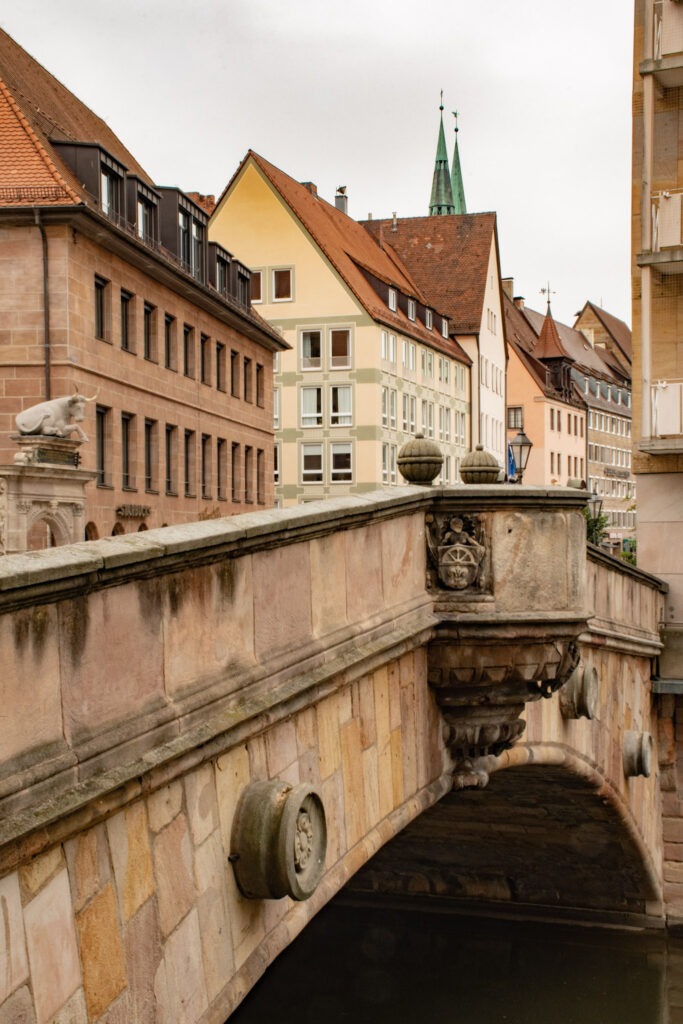
I began my visit by stepping through the Frauentor, one of the old city gates just outside the train station. From here, Königstraße leads directly into the heart of the Altstadt. The street is lined with shops, bakeries, and cafés, and it sets the tone right away—this is a city where medieval walls and towers still frame daily life.
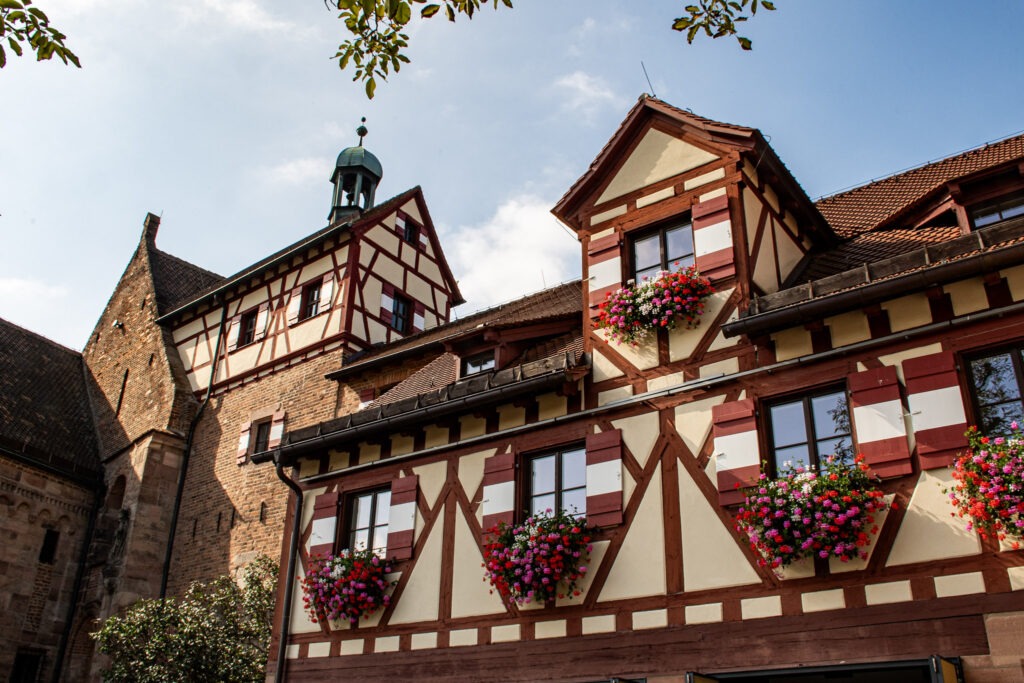
As you wander further, the half-timbered streets open up like pages from a storybook. Look for Weißgerbergasse, one of the most beautiful lanes in the Old Town, where colourful timber houses from the Middle Ages stand shoulder to shoulder. It’s a street that feels untouched by time.
Hauptmarkt and Frauenkirche
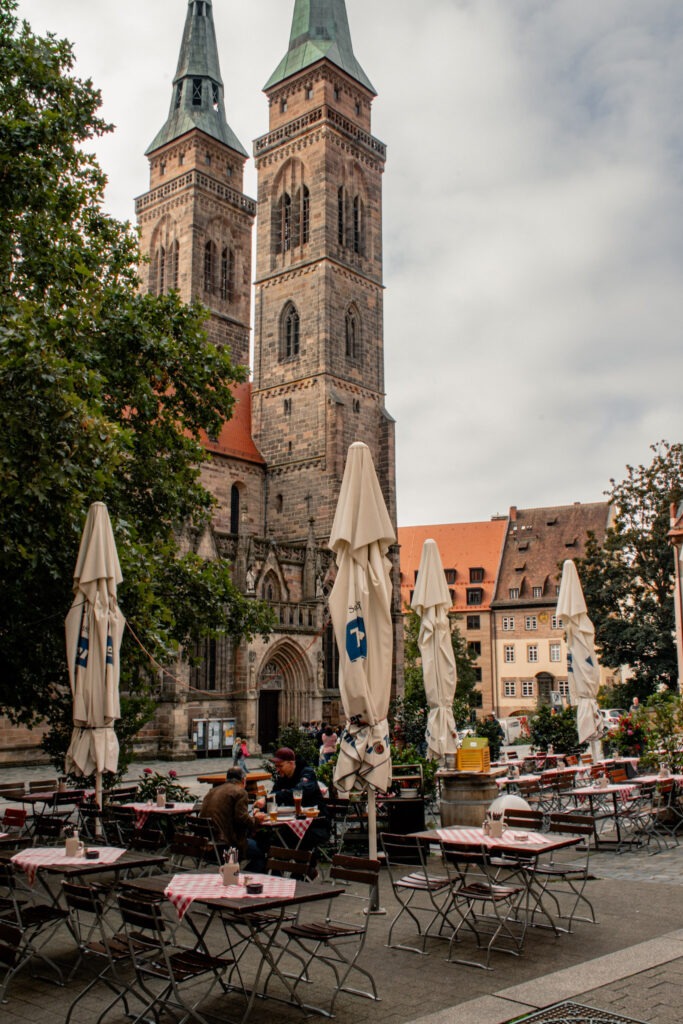
The Hauptmarkt is Nuremberg’s main square and the lively center of the Old Town. This is where the city gathers, whether for daily markets, festivals, or the world-famous Christkindlesmarkt in December.
When I visited on a Sunday, market stalls filled the square with flowers, produce, and local specialties. Families strolled together, children running up ahead, while locals lingered over food stalls. It made the Altstadt feel less like a preserved relic and more like a lived-in neighbourhood—busy, warm, and unmistakably Nuremberg.
Several buildings frame the square and deserve attention. The Frauenkirche (Church of Our Lady), commissioned by Emperor Charles IV in the 14th century, dominates the eastern side. Its Gothic façade, delicate tracery, and ornate clock—the Männleinlaufen, where small figures march each day at noon—make it one of the most striking landmarks in Nuremberg.
On the opposite side, you’ll see the Old Town Hall and, nearby, the ornate Schöner Brunnen (Beautiful Fountain), a gilded 14th-century fountain shaped like a Gothic spire.
My Recommendation on Where to Eat in Nuremberg. For a classic taste of Nuremberg, go to Oberkrainer am Hauptmarkt. Another recommendation is Bratwursthäusle. Here, the iconic grilled Nuremberg sausages are served under a tree canopy right next to St. Sebald Nürnberg church.
The Nuremberg Castle (Kaiserburg)
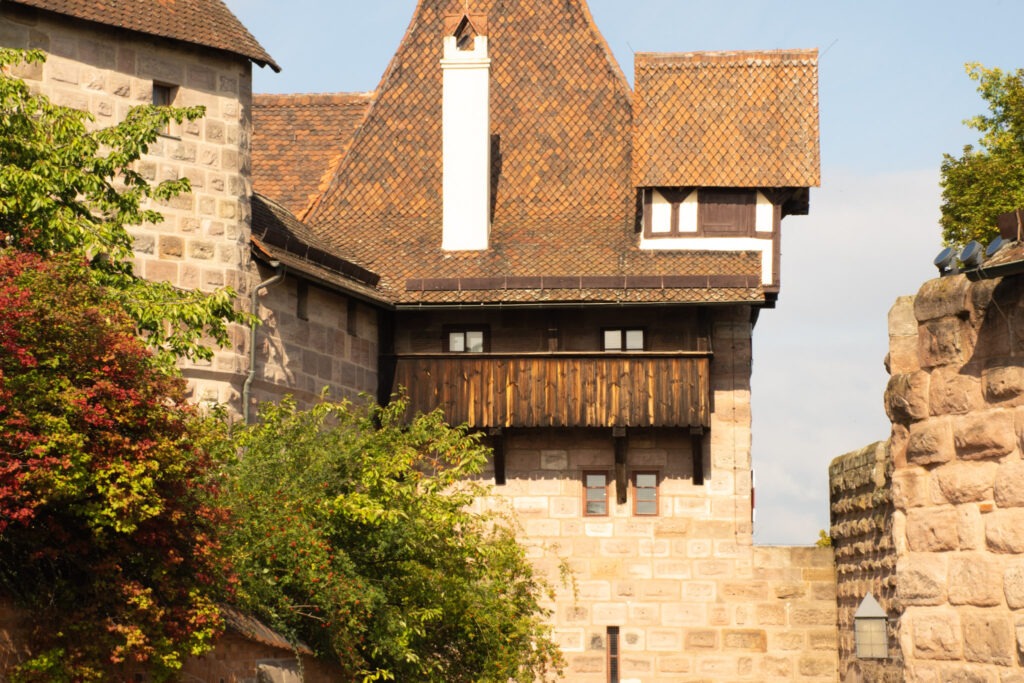
Rising above the Old Town, the Kaiserburg is Nuremberg’s defining landmark. This medieval fortress was one of the most important imperial castles of the Holy Roman Empire. From the 11th century onward, emperors stayed here during their reign, holding court and governing affairs of the empire. The castle complex includes the Imperial Chapel, the Deep Well (said to be over 50 meters deep), and the Sinwell Tower, which offers sweeping views across the city’s red rooftops.
Climbing to the top is one of the best ways to take in Nuremberg’s layout, with the Pegnitz River winding below and church spires punctuating the skyline. It’s a reminder of how strategically important the city once was.
On this trip, I gave the castle a pass. I had visited Nuremberg as a teenager and toured it then, so this time I chose to spend more hours wandering the Old Town. It didn’t stop me from climbing to the top and looking around its courtyard and viewpoints. If it’s your first time, I’d recommend making the climb—it’s a chance to stand where emperors once stood and to see the city from above.
Bridges of Nuremberg
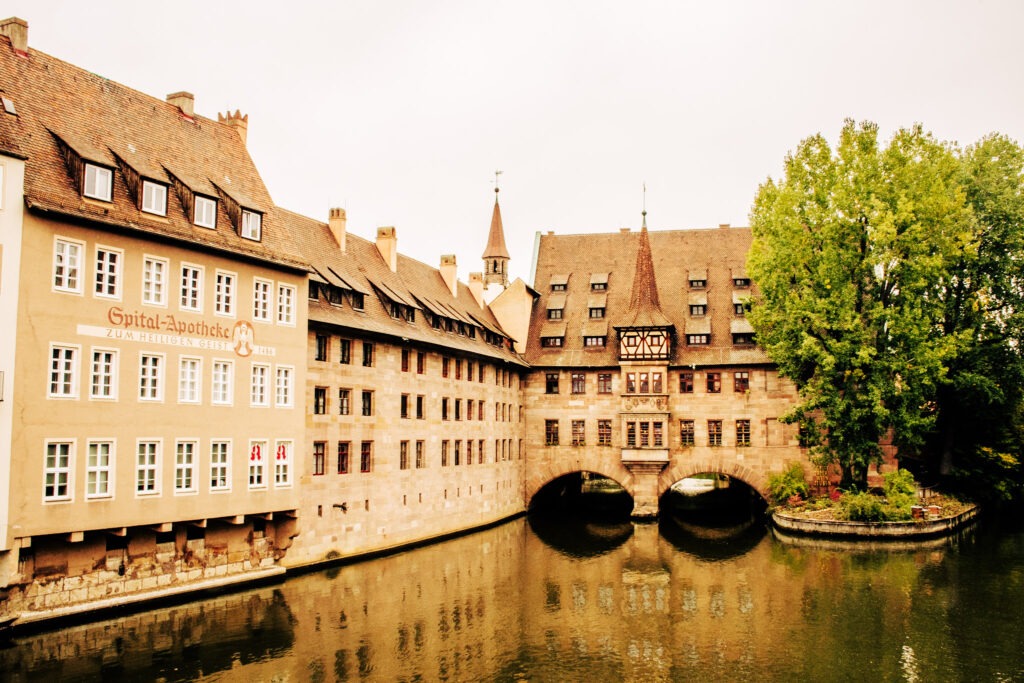
The Pegnitz River splits the Old Town in two, and some of Nuremberg’s most scenic moments come when you pause on its bridges. Each one offers a different perspective of the city, from medieval half-timbered houses leaning over the water to reflections that shimmer like a painting.
The most photographed is the Henkersteg (Hangman’s Bridge), a covered wooden bridge first built in the 15th century. It once connected the hangman’s house to the city, and today it’s one of the most atmospheric walks in Nuremberg. Nearby, the Kettensteg deserves a stop—it’s Europe’s oldest surviving iron suspension bridge, built in 1824. Crossing it feels both historic and surprisingly modern.
Other favourites include the Museumsbrücke, which delivers postcard-perfect views of the Heilig-Geist-Spital, and the Maxbrücke, Nuremberg’s oldest stone bridge, where you can see the Pegnitz curve gracefully through the city.
For me, lingering on these bridges was one of the best parts of my day—small pauses where Nuremberg’s beauty revealed itself quietly, in the play of light and water.
Albrecht Dürer House
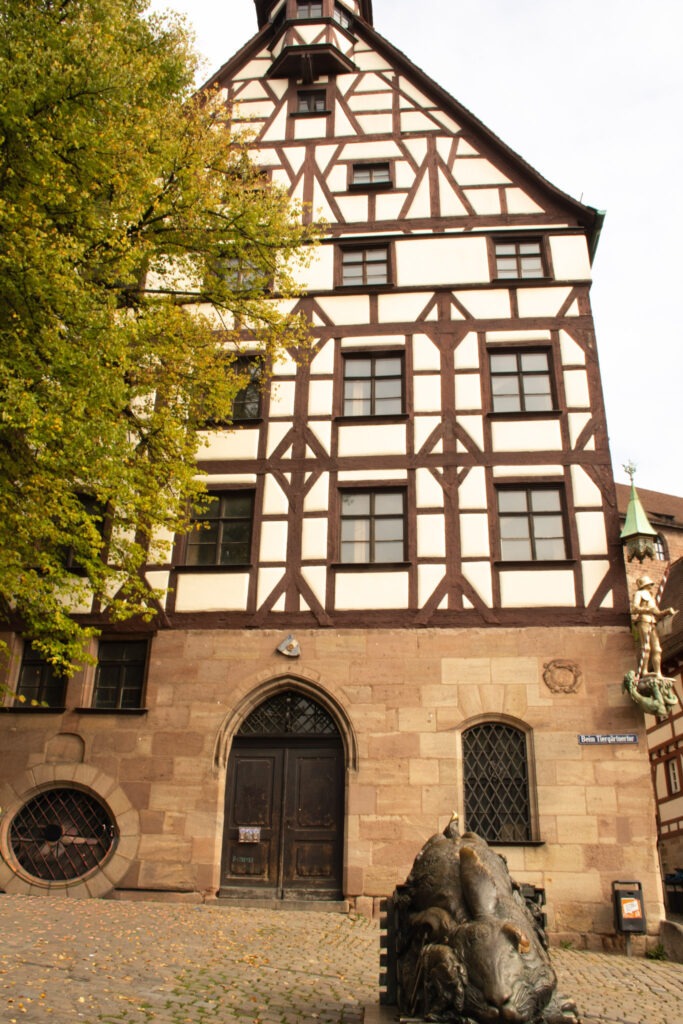
For art and history lovers, the Albrecht Dürer House is one of Nuremberg’s most rewarding stops. Dürer, Germany’s most famous Renaissance painter and printmaker, lived and worked here from 1509 until he died in 1528. The half-timbered house, standing at the foot of the Kaiserburg, is the only surviving 15th-century artist’s home in Northern Europe that is still intact.
Inside, you can see exhibitions of his woodcuts, engravings, and paintings, along with demonstrations of traditional printmaking techniques. One of the most fascinating details is that Dürer’s widow, Agnes, preserved the house after his death, making it a site of remembrance long before modern museums existed.
What makes Dürer so important to Nuremberg is not only his art but also how he brought international recognition to the city. His works travelled across Europe, yet his identity remained rooted here.
Do expect crowds. His house sits on a lively square, a bit touristy, but don’t pass up visiting here. It’s also unavoidable if you are en route to the castle.
Getting to Nuremberg from Frankfurt
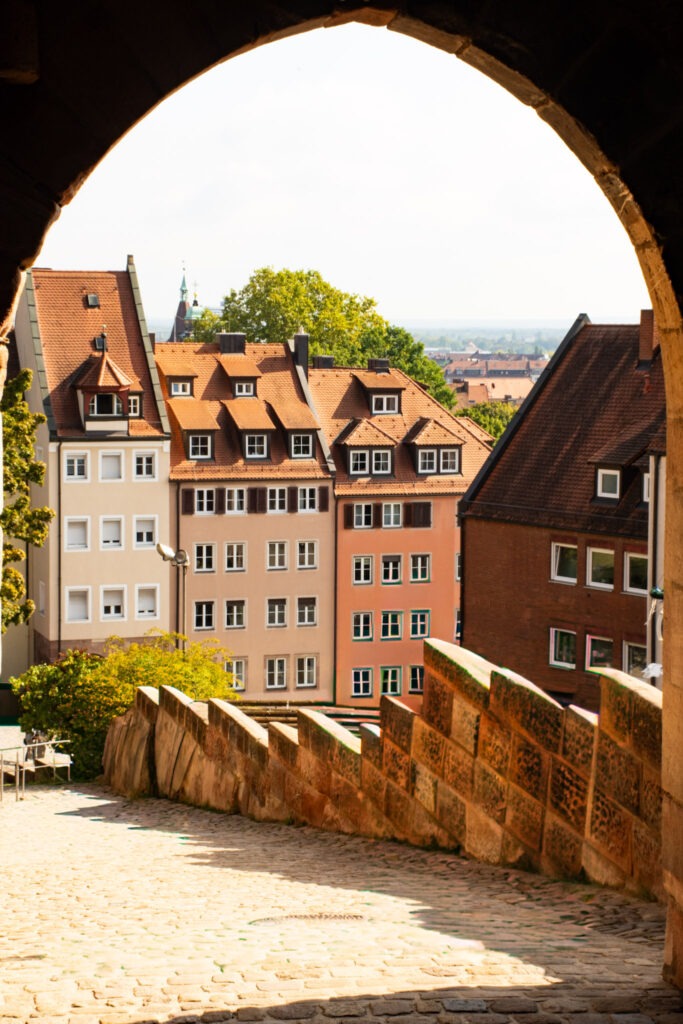
I reached Nuremberg on a day trip from Frankfurt using my German Rail Pass, which made hopping between cities easy. The ICE high-speed trains connect Frankfurt and Nuremberg in about 2 to 2.5 hours, with departures running about every hour throughout the day.
For reference, travel times from other major cities are:
- Munich – Nuremberg: 1 hour by ICE
- Berlin – Nuremberg: 3 hours by ICE
Stepping off the train in Nuremberg, you arrive just outside the Old Town walls. I recommend walking straight down Königstraße, a lively street lined with shops. In about 15 minutes, you reach the Museumsbrücke, with its first views of the Pegnitz River and the Altstadt beyond—a perfect start to exploring the city.
Final Thoughts
Nuremberg stayed with me long after I left, and as I day tripped to other gorgeous towns in Germany, like Wiesbaden.
It’s a city that reveals itself in layers—medieval streets, river reflections, and thoughtful memorials. Even in one day, you feel its depth. You will experience its charm in the simplest moments. I promise you.
If you’re planning your own trip and want help shaping an itinerary that feels unrushed and meaningful, I offer personal trip planning services designed for slow, immersive travel through Europe. I’d be happy to help you create your entire trip to Germany.