

When I started exploring the UNESCO Netherlands sites, I was surprised at how few destinations in this small country were designated as UNESCO World Heritage sites.
History sits beside modern design. Innovation rises from ancient engineering. And each site tells a story that shaped the Netherlands into the place I know today.
In this guide, I break down what UNESCO really means, how many sites you can find here, and highlight a few special places.
This post may contain affiliate links, meaning I get a commission if you decide to purchase something through the links, at no additional cost to you. Read my Affiliate Disclosure.
What UNESCO Means and Why It Matters
UNESCO stands for the United Nations Educational, Scientific and Cultural Organization. Its mission is simple, but powerful. It protects the cultural and natural treasures that shaped who we are.
I like to think of UNESCO as a global guardian. It identifies places that hold exceptional value—places that teach us something about human creativity, resilience, or the natural world. When a site earns UNESCO status, it becomes part of a collective promise to preserve it for future generations.
What It Means When a Site Is UNESCO-Listed
A UNESCO designation follows strict criteria. A site must be unique, authentic, and connected to human history in a meaningful way. Listing brings protection, funding, and global recognition. It ensures the site won’t quietly disappear under pressure from development, neglect, or environmental change.
As a slow traveller, I seek depth over speed. UNESCO sites help me understand a place from the inside out. They anchor me in their past. They reveal the values, challenges, and triumphs that shaped local identity. Instead of chasing checklists, I follow stories—and UNESCO often points me to the ones worth hearing.
Complete List of UNESCO World Heritage Sites in the Netherlands
- Schokland and Surroundings – A former island that reveals the Dutch story of resilience against rising water.
- Defence Line of Amsterdam – A 135-km ring of forts engineered to protect the capital using controlled flooding.
- Mill Network at Kinderdijk-Elshout – Eighteenth-century windmills that show how the Dutch mastered water management.
- Historic Area of Willemstad, Curaçao – A vibrant Caribbean port city defined by its pastel buildings and Dutch-colonial history.
- Beemster Polder – A reclaimed landscape showcasing early Dutch land-reclamation innovation.
- Woudagemaal (D.F. Wouda Steam Pumping Station) – The world’s largest steam-powered pumping station is still in operation.
- Rietveld Schröder House – A groundbreaking De Stijl architectural masterpiece created in 1924.
- Wadden Sea – A vast coastal wetland rich in biodiversity and migratory bird life.
- Dutch Water Defence Lines – A fortified system combining landscape, water, and engineering to protect the country.
- Colonies of Benevolence – A 19th-century social experiment designed to reduce poverty through planned communities.
- Eise Eisinga Planetarium – The world’s oldest functioning planetarium, built in a Frisian living room.
Highlighting 5 UNESCO Netherlands Sites
1. UNESCO Amsterdam: the Canal Ring
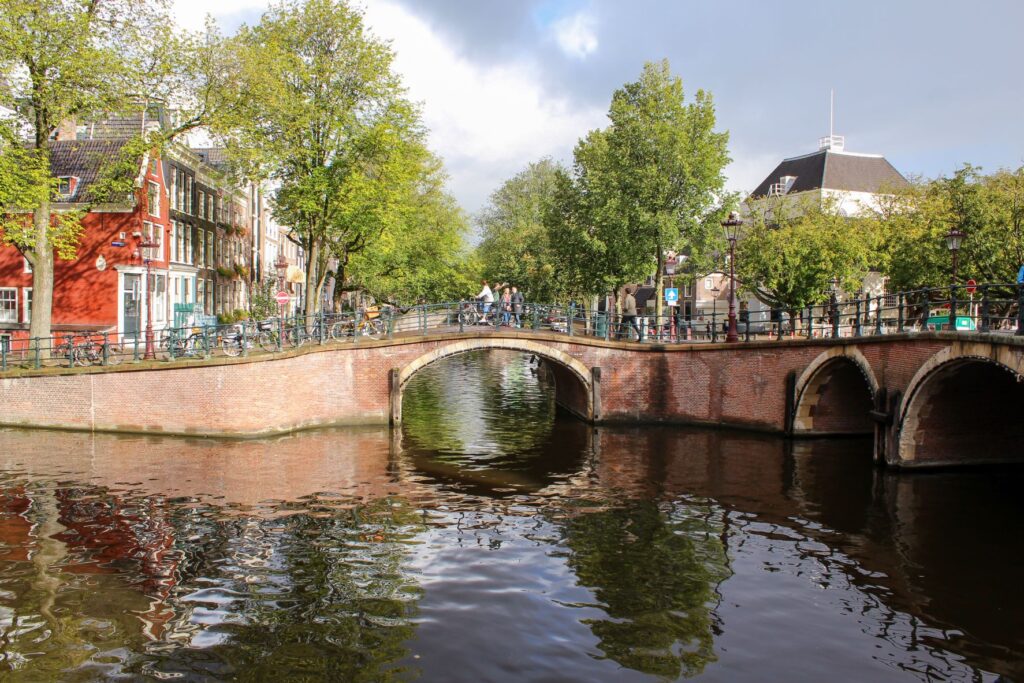
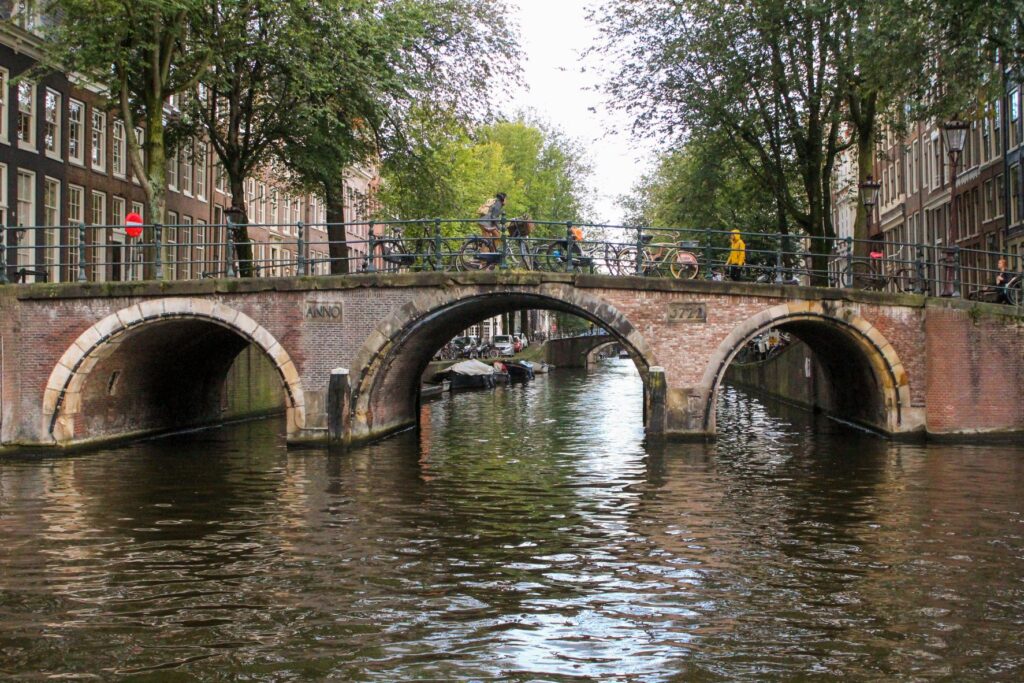
Arguably, the most iconic UNESCO World Heritage Site in the Netherlands is the Amsterdam canal ring. I never tire of wandering along these quiet waterways. They wrap around the city like a gentle embrace and give Amsterdam its unmistakable character. Of all the historic sites in the Netherlands, this is the one I always tell people to see.
The canal ring has been on the Amsterdam UNESCO sites list since 2010. It earned its place for the way it reflects the city’s remarkable urban vision during the 17th century—a period when Amsterdam grew into a centre of trade, art, and innovation.
Today, one of my favourite ways to experience the canals is from the water. A simple boat tour lets me slow down and appreciate the ingenuity behind this elegant design. More than 1,500 bridges cross the canals, many lined with flowers and bikes. I love taking an unhurried stroll along the banks, letting the scenery unfold one curve at a time.
Tip: Day trips I recommend from Amsterdam are:
- The delightful Dutch town of Haarlem
- The picturesque canals of Utrecht
- The countryside outside of Amsterdam
2. Dutch Water Defence Lines

The Dutch are known as experts in water, and that isn’t a recent phenomenon. The Water Defence Line in the Netherlands is a UNESCO site comprising a series of fortifications, dikes, and other water systems meant to help defend the Netherlands, but not against flooding, as you’d expect.
It was to defend it from military attacks. It’s a truly unique system, which is why it qualifies as a UNESCO World Heritage Site.
While the Water Defence Line was officially established in the 19th century, it incorporates older elements, part of an earlier water defence line. An example is Muiderslot, a medieval castle incorporated into the defence of Muiden outside Amsterdam.
The idea of the Water Defence Line, essentially, is that when an army is approaching, low-lying fields, normally kept dry using things like pumps, dikes and sluices, can be flooded on command, stopping the army’s approach and forcing the fighting to a few easily-defensible spots. It was a very clever way to defend a large area of land with few soldiers.
3. Mill Network at Kinderdijk-Elshout
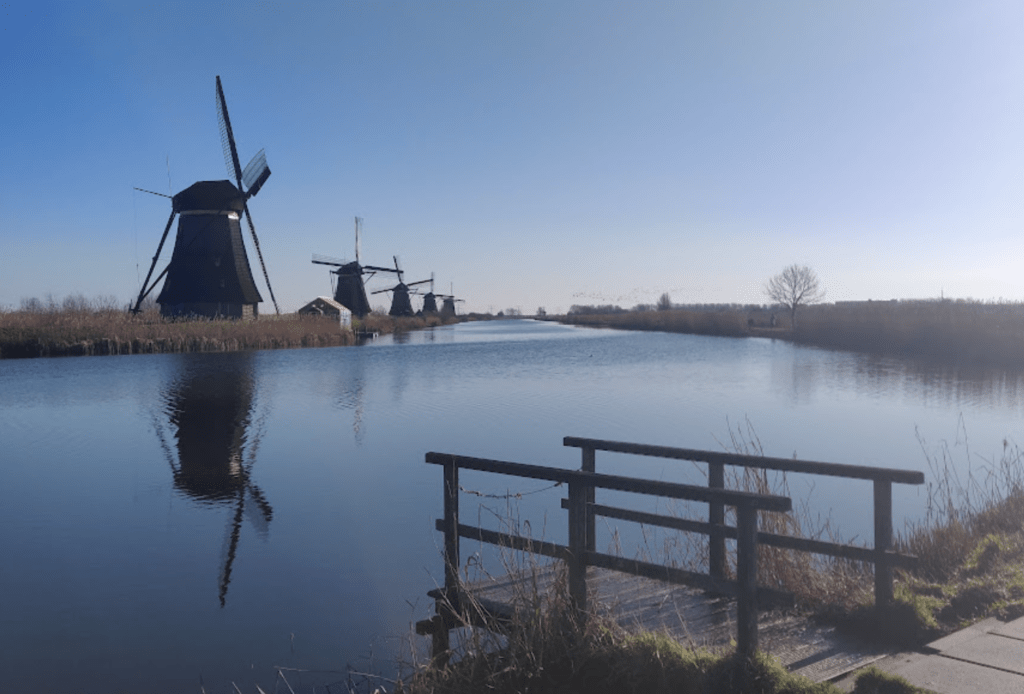
If you are looking for a beautiful UNESCO site situated in the southern Netherlands, Kinderdijk is the place to visit and learn. This beautiful location of 19 windmills has been situated here since 1740, but was officially acknowledged as a World Heritage site by UNESCO in 1997.
It was designated as a UNESCO site due to its importance and historical matter of significance for the Netherlands.
As much of the Netherlands is below sea level even to this day, it was important for locals to make sure they could manage their land through draining and hydraulic technology, as well as protect themselves from future water surges in the region.
One can visit here all year round, making it a beautiful destination in all seasons. Plus, it’s well worth your time to take a local tour by one of the 200 volunteers at Kinderdijk. This way, you can truly learn the history while seeing Kinderdijk in person.
4. Rietveld Schröder House
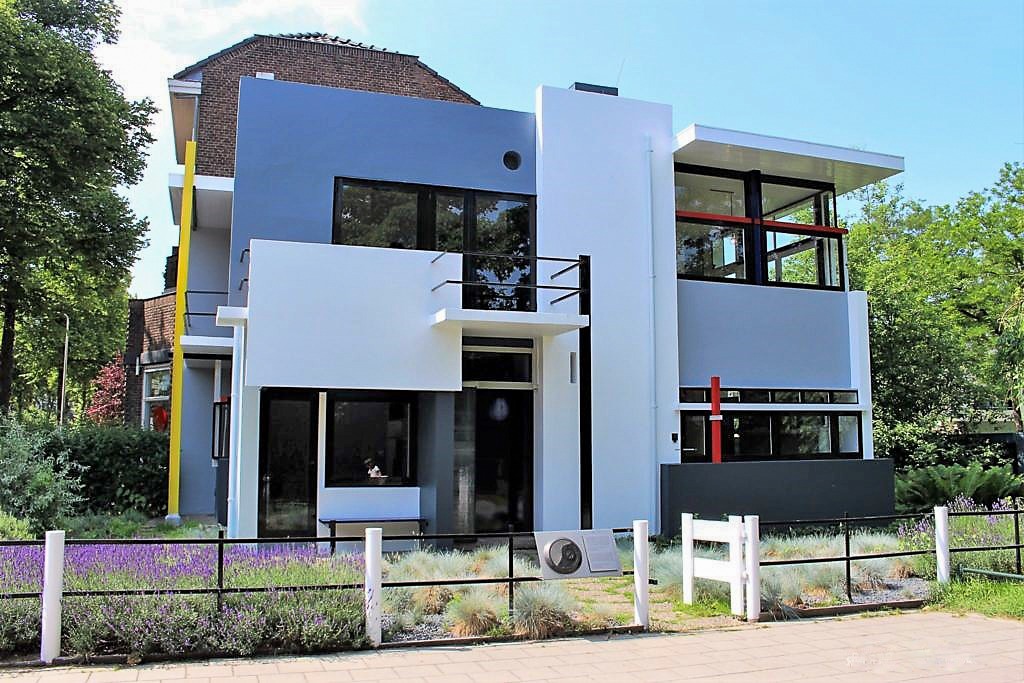
The Rietveld Schröder House in Utrecht is considered one of the icons of the Modern Movement in architecture. Architect Gerrit Thomas Rietveld was commissioned by Ms. Schröder-Schräder to build a small family home based on the 1920s De Stijl movement.
This architectural style is well known for its use of seamless transitions from the outside to the inside. In addition to the use of primary colours, such as red, yellow, white, gray, black, and blue.
Built in 1924, the house is a mix of horizontal and vertical straight lines accented by colour. The upper floor introduced a revolutionary system of sliding walls, which can transform the space into a divided area of bedrooms or an open space, depending on what is needed.
Today, the Rietveld Schröderhuis is a museum. Perfect for fans of design and architecture, the house was carefully restored and is now in excellent condition and under the regular care of the Centraal Museum of Utrecht.
5. Willemstad, Curaçao
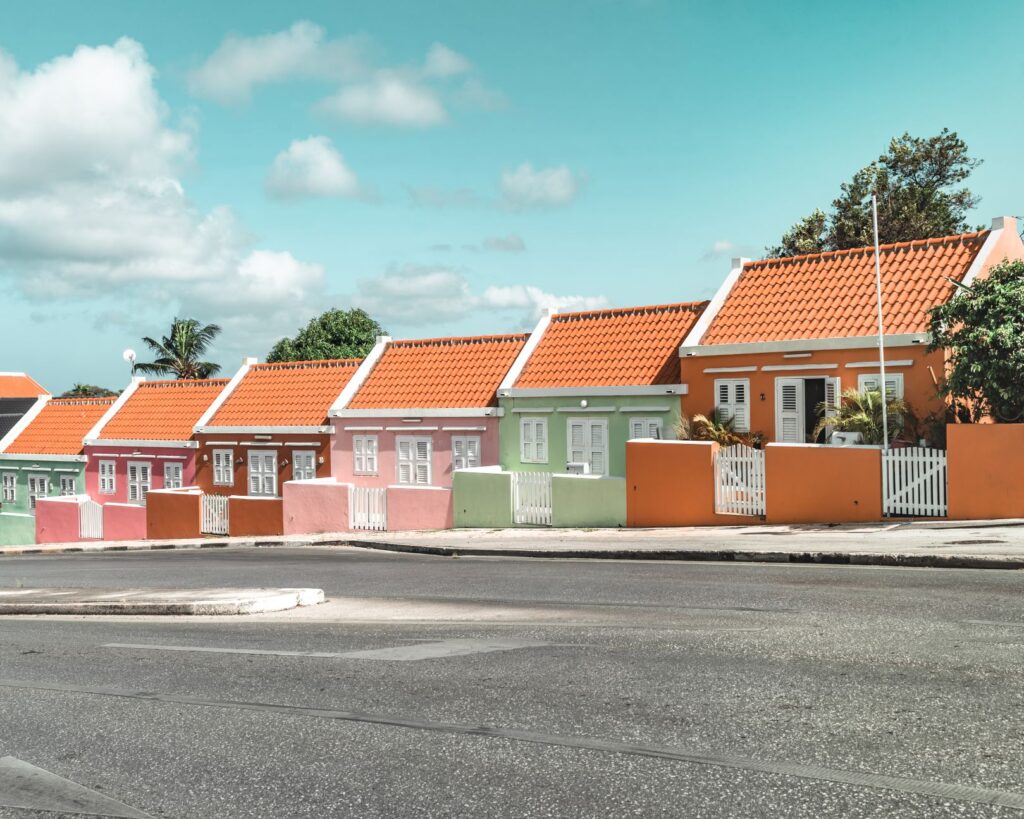
The colourful capital city of Curacao, Willemstad, was granted status as a UNESCO World Heritage site due to its historical significance, harbour entranceway, and interesting architecture.
This historic port city was originally established as an important trading center back in 1634, along with the construction of Fort Amsterdam.
The Punda neighbourhood, in particular, is the oldest in Willemstad. It dates back to the 17th century and previously included defensive ramparts and walls. In addition, Willemstad is also home to the oldest standing synagogue in the Americas.
One of the most remarkable attributes of Willemstad is its vibrant architecture, which conveys Dutch influence, as well as influence from Africa and the Americas.
Today, it’s easy to see why a visit to Willemstad is one of the most popular Curacao activities, as travellers can’t resist the charms of this fascinating Dutch Caribbean city.
Some of the most highly frequented and heavily photographed spots include the iconic Queen Emma Bridge, the Penha Building, and the Scharloo neighbourhood.
Beyond UNESCO Netherlands: Other UNESCO Sites in Europe
Beyond the UNESCO sites in the Netherlands, here are other countries you might be interested in.
- UNESCO sites in Austria
- Best of Belgium UNESCO sites
- Visit the Czech Republic UNESCO sites
- UNESCO Heritage sites in France
- List of UNESCO World Heritage sites in Germany
- Italy tops the list of the most UNESCO sites in the world
Final Thoughts
Most people travel to the Netherlands and visit only Amsterdam. Don’t. Explore beyond it. And, let this list of designated UNESCO sites Netherlands be your inspiration.


