

When I first heard about Quartiere Coppedè, I couldn’t believe such a place existed in Rome—tucked away from the usual tourist routes and unlike anywhere else in the city. I had to see it for myself.
So on my second trip to Rome, on a quiet afternoon, I wandered into this small neighbourhood and felt like I’d stepped onto a movie set. It’s a feast for the eyes, stunning Art Nouveau buildings fixed with mosaics, frescoes, and sculptures.
I’ll share what it was like to explore the Coppedè Quarter, from the moment I passed under the archway to the quiet minutes I spent simply looking up.
This post may contain affiliate links, meaning I get a commission if you decide to purchase something through the links, at no additional cost to you. Read my Affiliate Disclosure.
Where Is Quartiere Coppedè Roma?
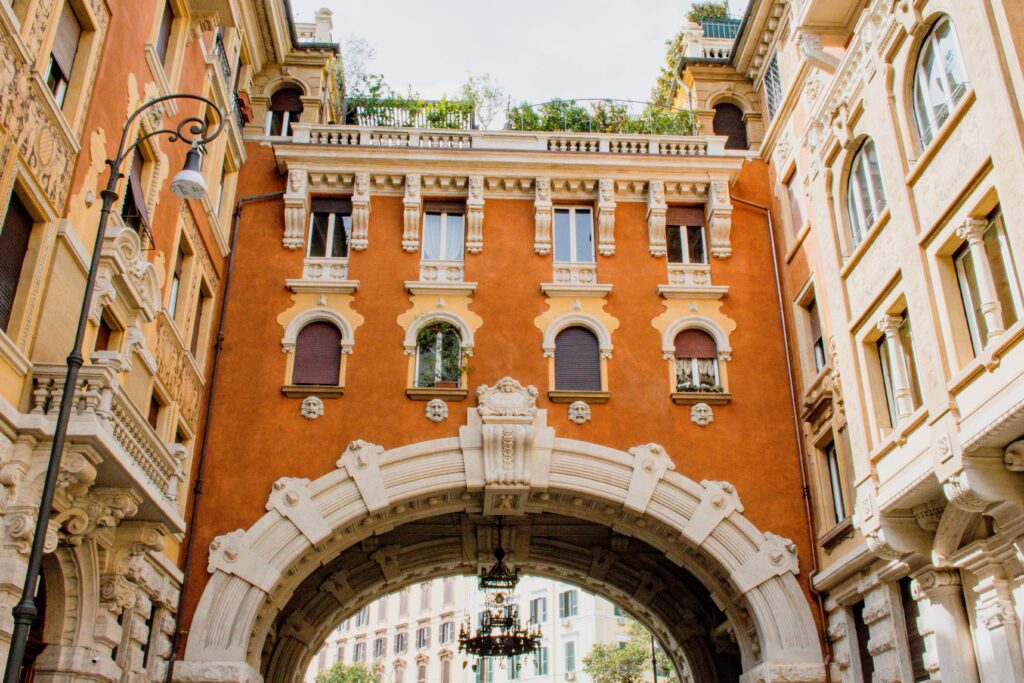
This isn’t the kind of place you stumble upon unless you’re looking for it. It’s tucked away in the Trieste district, a residential area just northeast of the city center.
It’s not far from Villa Borghese—maybe a 20-minute walk if you’re in no rush, which I rarely am when I travel.
I took the metro to the nearby Bologna or Policlinico stop and wandered from there, following quiet streets until the usual Roman scenery gave way to something completely different.
There were no crowds, no signs, no noise—just a neighbourhood waiting to be noticed.
Other ways to get here:
- Trams 3 or 19
- Buses 63, 86, 92, or 630 to Piazza Buenos Aires
My First Impressions Walking Through the Arch
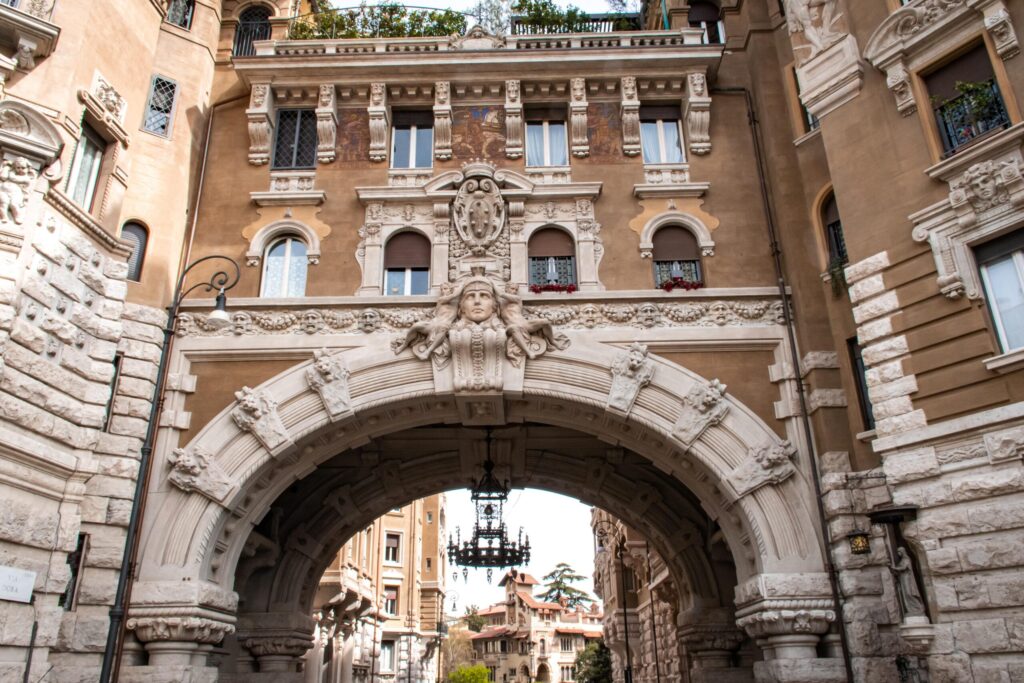
I knew I had arrived when I passed under the ornate archway (called Arch of the Palaces of the Ambassadors) connecting two buildings on Via Dora. A massive, ornate lantern swung above as I lost count of the number of cherubs with Greek mythology mask-like faces adorning the arch on both sides.
It felt like stepping through a portal—one moment I was in modern Rome, and the next, I was somewhere completely unfamiliar. The traffic behind me faded, and everything suddenly felt quieter, even though the city hadn’t gone anywhere.
What struck me first was the mix of styles. I couldn’t put a label on it—there were Gothic details next to Art Nouveau curves, and something that looked like a medieval turret sitting right above a balcony covered in vines. I slowed down, not just to take it in, but because it almost demanded that I do.
There was no agenda. Just me, walking slowly, looking up.
The Story Behind Rome’s Quartiere Coppedè
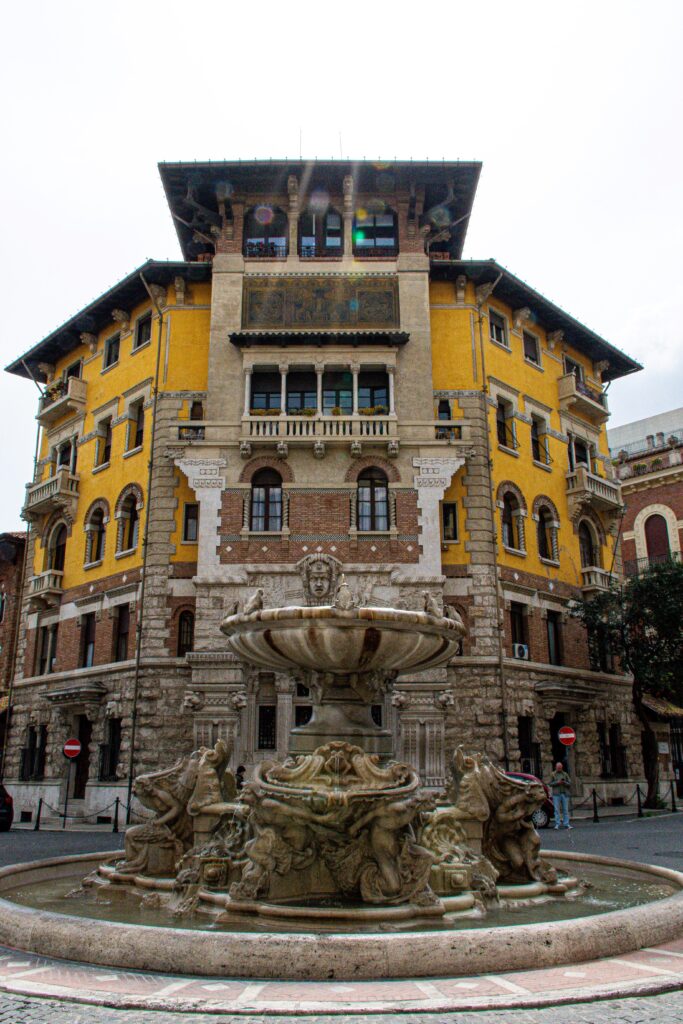
After walking through the arch, curiosity got the best of me—who had dreamed up this place? I later learned that Quartiere Coppedè was designed by the architect Gino Coppedè, who gave the neighbourhood its name. He began work on the quarter in 1915, and although it remained unfinished at the time of his death in 1927, what stands today is a fascinating patchwork of styles that feels almost surreal.
It isn’t just travellers who are drawn here. The neighbourhood has made its way onto the big screen too—“House of Gucci” and “Inferno” (based on Dan Brown’s novel) were both filmed in these streets. And some even say that the Coppedè District may have inspired Diagon Alley in the Harry Potter series. Whether that’s true or just a delightful rumour, I could see why people believe it—the twisting ironwork, lanterns, and quirky facades definitely have a storybook feel.
Knowing this added a new layer to my visit. It wasn’t just a corner of Rome—it was a place born from one man’s imagination, layered with history, film, and a touch of mystery.
A Stroll Through Architectural Curiosities

Wandering deeper into this Rome Quarter, I reached Piazza Mincio, the heart of the neighbourhood. It’s not a grand piazza by Roman standards, but it has a quiet presence.
Right in the center is the Fountain of Frogs—Fontana delle Rane. At first glance, it’s charmingly odd, very similar to the one I admired in Rome’s Jewish Quarter: a circular fountain with little stone frogs perched around the edges, water trickling softly from their mouths. I later learned the Beatles once jumped in after a night out in Rome. That made me smile.
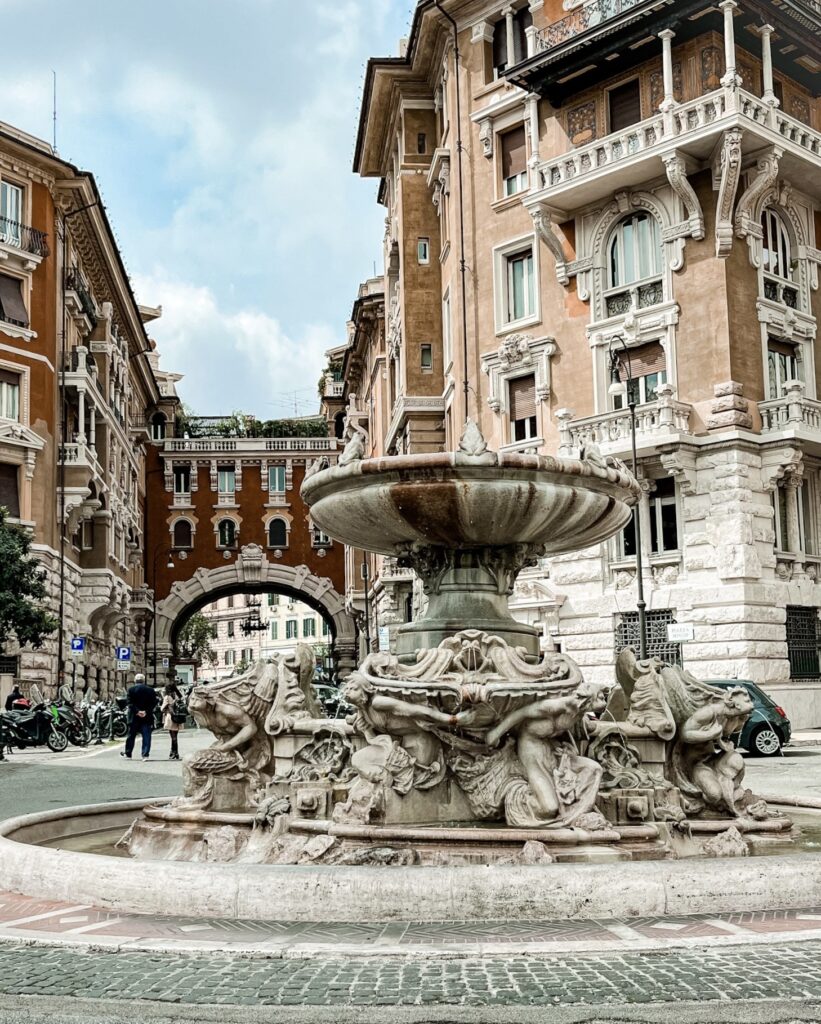
Around the piazza, the buildings look like they were dreamt up by someone who couldn’t choose just one architectural style.
I paused in front of Palazzo del Ragno—“The Spider Palace”—named for the intricate spider motif above the doorway. Its burnt orange façade, heavy archways, and decorative tiles gave it an almost theatrical feel.

Then there’s Villino delle Fate—“The Fairies’ Cottage”—which, despite the whimsical name, is a striking mix of medieval and Renaissance elements. No two sides are alike. I circled it slowly, admiring the asymmetry, the mosaic details, and even the carved stone phrases in Italian that seemed almost like poetry hidden in plain sight.

I didn’t rush. I let my feet lead me wherever looked interesting. I especially enjoyed strolling on these streets, Via Chiana and Via Tagliamento.
That’s how I ended up near Villa Paganini, a peaceful green space just a short walk away. It felt like a local retreat—shady benches, older couples strolling, and hardly a tourist in sight. A bit further on, Villa Torlonia surprised me with its grand appearance. Once Mussolini’s residence, the grounds are open to the public, and I wandered through them quietly, struck by the contrast between the neighbourhood’s whimsical flair and the villa’s more formal layout.
It was the kind of day where the details stayed with me long after—the tile work, the playful balconies, the stillness of the side streets.
Quartiere Coppedè isn’t big, but if you slow down, it rewards you with layers of beauty that most people walk right past.
Why Quartiere Coppedè Felt Like a Hidden Pause in Rome

Walking through this neighbourhood felt like hitting pause on the usual busyness of Rome for a couple of hours.
There were no crowds pressing in, no lines to stand in, no major landmarks to check off—just the quiet presence of buildings.
That’s part of what I loved about it. It simply was—a small residential corner with a personality all its own. I saw a few locals coming and going, a cat lounging on a windowsill, and a couple of fellow wanderers like me, taking their time.
What you won’t find here are museums, guided tours, or flashy restaurants. This isn’t a place packed with attractions—it’s all about architecture and atmosphere. And honestly, that’s exactly what makes it so worth visiting. It gave me space to breathe, to observe, and to just be—something I often forget to do when I’m caught up in the excitement of a new city.

One of the locals I chatted with pointed me toward Santi Sebastiano e Valentino, a cozy café and bakery just a short walk from the neighbourhood. It’s the kind of place that feels instantly welcoming, with the scent of fresh bread drifting out to the street. They bake everything on-site, and trust me—you’ll want to try anything that features their homemade bread. It’s perfect for a slow breakfast or a light lunch. I couldn’t resist picking up a bag of their house-roasted coffee beans to bring home to my husband—a small souvenir that smelled like the perfect Roman morning.
If you’re the kind of traveler who likes to slow down and explore with no agenda, Quartiere Coppedè offers the perfect escape.
Final Thoughts
No matter how many days you have in Rome, I recommend you make time for quiet corners like Quartiere Coppedè—places that remind you to slow down and simply look around.
If you’re planning a trip to Rome and want help crafting a slower, more meaningful itinerary, I’d love to help you. Start here.


