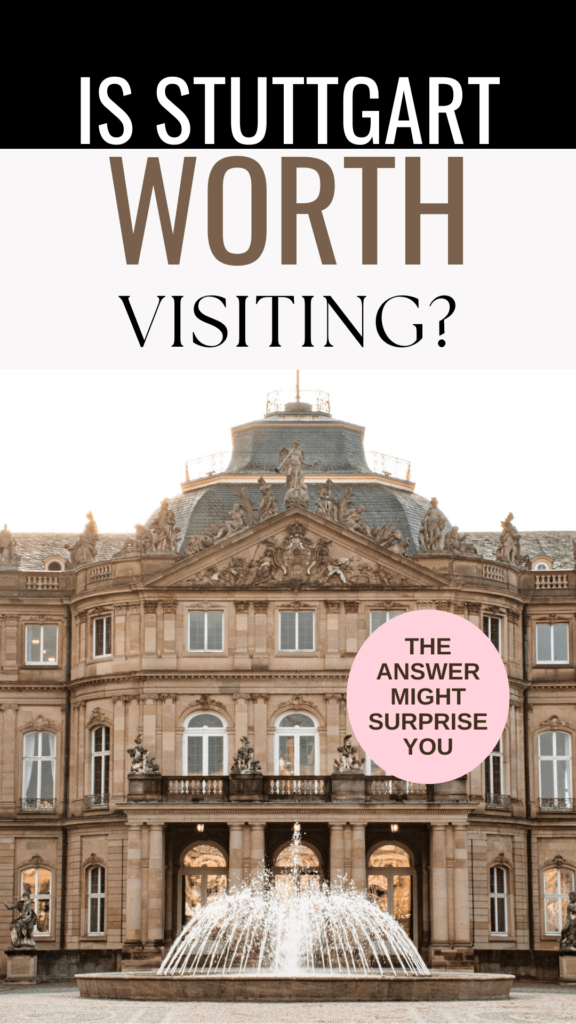
Is Stuttgart worth visiting? I asked myself this question the moment I stepped off the train.
I had high expectations—after all, Stuttgart is the capital of Baden-Württemberg, home to Mercedes-Benz and Porsche, and a major hub in southern Germany.
But as I wandered through the city center, the streets felt wide, functional, and surprisingly modern, lacking the charm I had imagined.
The squares were clean but uninspiring, the architecture practical rather than picturesque. It was one big shopping city, with stores that I could find in any city in Germany.
Within an hour or two, I realized my heart wasn’t in it. I made a decision: I would leave Stuttgart behind and jump on the next train to the nearby town of Tübingen, a place that promised cobblestone streets, timber-framed houses, and a river that invited slow wandering.
This post may contain affiliate links, meaning I get a commission if you decide to purchase something through the links, at no additional cost to you. Read my Affiliate Disclosure.
Why People Ask “Is Stuttgart Worth Visiting?”
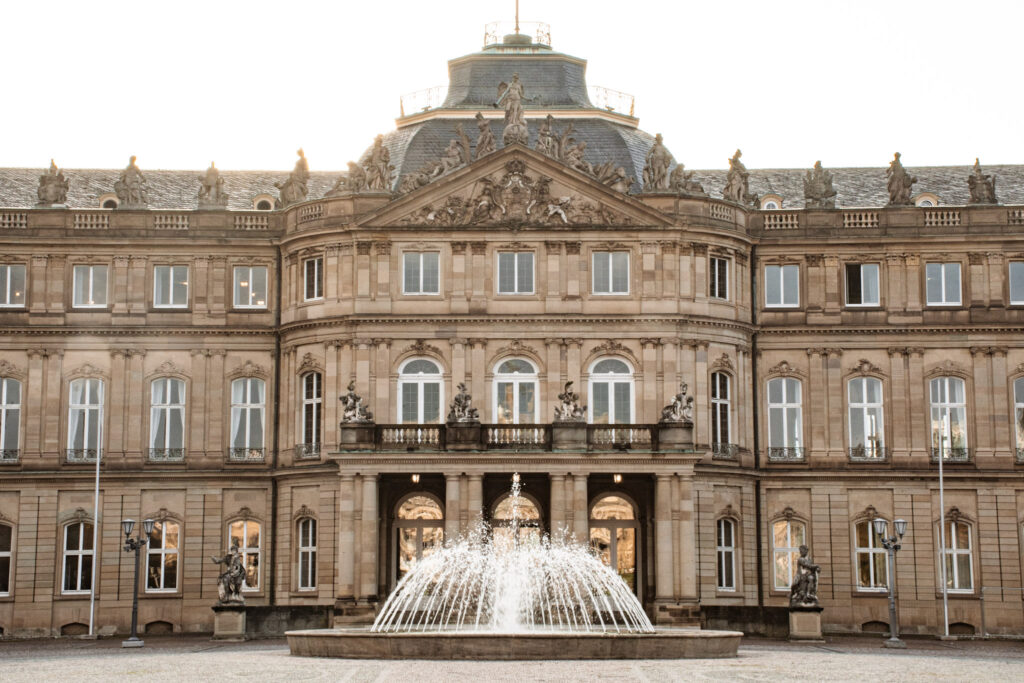
It’s a fair question. Stuttgart is the sixth-largest city in Germany and the capital of Baden-Württemberg, set in a valley surrounded by vineyards and rolling hills. On a map, it is situated in the southwest, close to the Black Forest and not far from the borders of France and Switzerland. With its reputation as a major business hub, Stuttgart often makes it onto itineraries simply because it’s a name people recognize.
Most travellers know it as the home of Mercedes-Benz and Porsche. For car enthusiasts, that fact alone can make Stuttgart feel like a must-visit city. Adding to its role as a center for German engineering, wine production, and cultural institutions, the city seems like it should be worth a stop.
But search intent tells a deeper story. Travellers are really asking: Is Stuttgart worth my limited time in Germany?
Unlike cities with UNESCO status or fairy-tale charm, Stuttgart is better known for its modern industry, big city vibes, shopping and green spaces than historic old-world atmosphere.
One aspect that I liked about Stuttgart was that it is one of the only cities in Germany where vineyards grow directly within the city limits.
The choice is yours. If you’re a car lover or someone drawn to modern German cities with big green spaces, Stuttgart may well deserve a spot on your itinerary. If you are looking for a good shopping day, this also might be the city for you.
For me, it was not. I was longing to wander through fairy-tale German towns with cobblestone lanes and medieval timbered houses—not a city rebuilt after World War II in a deliberate, modern style.
First Impressions of Stuttgart were Positive
As I approached Stuttgart by train from Frankfurt, vineyards suddenly came into view, climbing the hillsides in steep rows. It felt like a novelty—something I hadn’t yet seen on my month-long trip through Germany. Stepping off the train, the vineyards framed the city in a way that caught me by surprise.
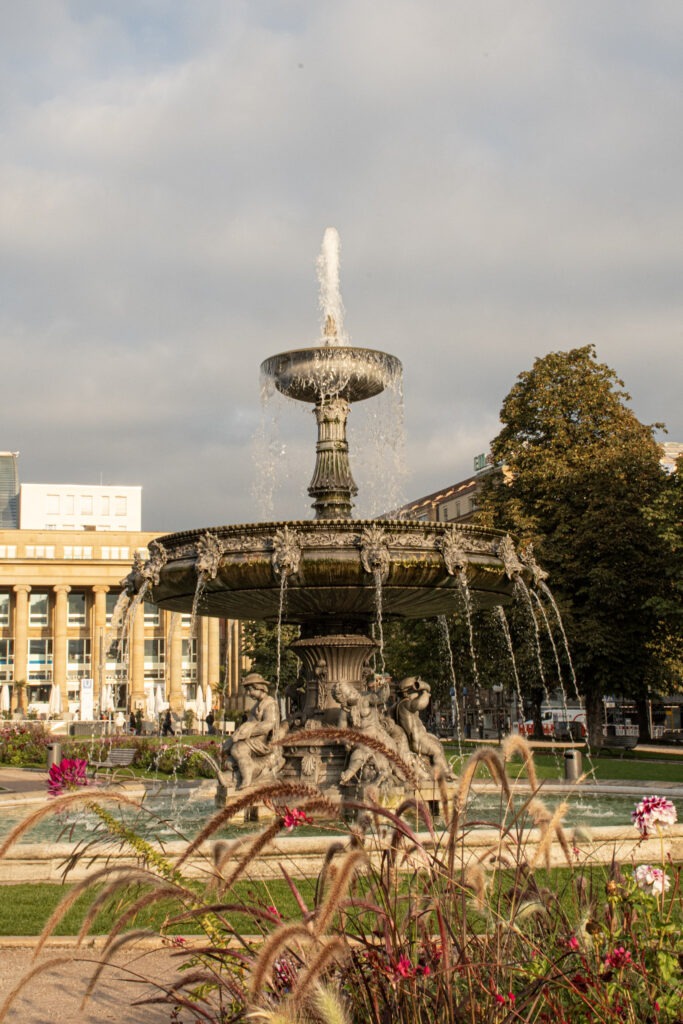
From the station, I walked through the parks toward the center. That alone was a pleasant change. In cities like Frankfurt, Nuremberg or Wiesbaden, I didn’t always find such a green and inviting path into the heart of town. Stuttgart offered that, and I enjoyed the quiet stretch of the Schlossgarten before arriving at my first landmarks. Neues Schloss Stuttgart stood grand, the Staatstheater nearby, and the Oberer Schlossgarten opened wide. I stopped, took photos, and felt a spark of excitement.
But the feeling shifted once I went looking for the Altstadt.
What I found was modern, commercial, and shaped by post-war reconstruction. Wide shopping streets filled with designer boutiques and mainstream chain stores dominated the core.
Compared to Nuremberg’s medieval walls, I visited the day before. Or Wiesbaden’s elegant 19th-century facades from an earlier visit, Stuttgart lacked the historic atmosphere I had been drawn to elsewhere. The sense of charm, the storybook character, wasn’t there for me, leaving me disappointed.
Who Will Enjoy Stuttgart
Not every city is for everyone. But Stuttgart has its audience. If you fit into one of these groups, you may find the city rewarding.
The Car Enthusiast
For anyone who loves cars, Stuttgart is a destination in itself. The Mercedes-Benz Museum is one of the most impressive automotive collections in the world. The building alone is something to see, with its spiral design leading you through 130 years of automotive history (however, it is outside the city centre).
The Porsche Museum offers a different energy—sleek, bold, and modern, with an ever-changing display of classic and racing models. Together, these museums are bucket-list stops for automotive enthusiasts, engineers, and anyone curious about German design.
The Urban Explorer
Stuttgart also appeals to travellers who thrive in modern cities.
The architecture is bold and functional, with a skyline that reflects post-war rebuilding. The shopping is wide-ranging, from luxury boutiques to global chains, offering an easy day of browsing.
Dining is equally cosmopolitan, with everything from refined restaurants to global cuisines that reflect the city’s diverse community. Then there’s wine. Stuttgart is one of the few cities in Germany where vineyards rise inside its boundaries. Local varietals like Trollinger and Riesling are celebrated at seasonal wine festivals and found on the menu of every restaurant.
The Culture-Seeker
For lovers of the arts, Stuttgart is a great city to visit. The Staatsgalerie Stuttgart houses an exceptional collection that spans from Old Masters to modern works, all displayed in a striking mix of classical and contemporary architecture.
The city is also home to the world-renowned Stuttgart Ballet and a respected opera company, making it a serious cultural hub. And when you want a pause between performances and exhibitions, Stuttgart’s green spaces offer balance.
The Schlossgarten stretches from the train station into the heart of the city, perfect for strolling or simply sitting under the trees. The Killesberg Park, with its gardens and tower views, adds another beautiful green space to visit.
Who Might Want to Skip Stuttgart
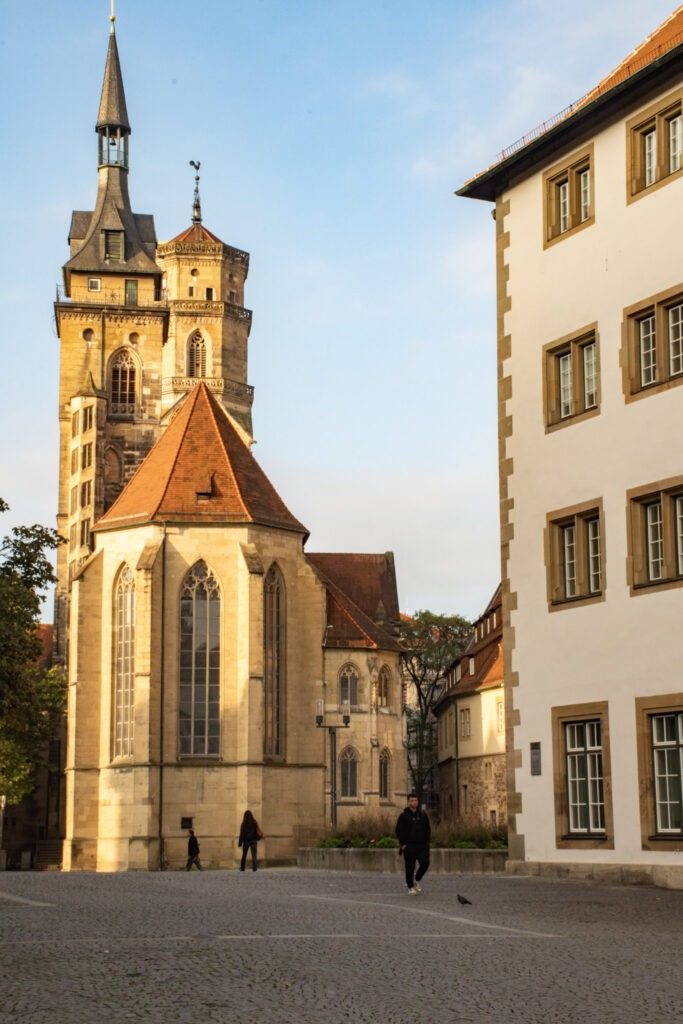
Not every stop needs to make it onto your itinerary. For some travellers, Stuttgart simply won’t match what they’re looking for.
The Romantic Traveller
If your heart is set on cobblestone streets, half-timbered houses, and market squares that feel pulled from a fairy tale, Stuttgart will disappoint. The city center is modern, its buildings rebuilt after the war, its charm rooted in function more than nostalgia.
The First-Time Visitor to Germany
When time is limited, every stop matters. If this is your first trip, I would steer you toward Heidelberg with its castle, Würzburg with its Residenz, or Tübingen with its riverside lanes. Each of these towns delivers a strong sense of Germany’s history and culture in a way Stuttgart does not.
The Slow Traveller (like me)
I lean toward smaller places where the pace feels unhurried, and the streets are full of their history. Stuttgart felt too modern, too businesslike for me. I missed the atmosphere—the quiet corners, the timbered houses, the sense of stepping back in time. If you travel slowly to soak in character and charm, you may feel the same.
After only a short couple of hours in Stuttgart, I knew it wasn’t for me. So I did exactly what felt right—I hopped back on the train and headed to Tübingen. The contrast was instant. Timber-framed houses leaned over cobbled lanes, the Neckar river shimmered with punts, and the energy of a university town gave it a lively, youthful spirit. It was the fairy-tale charm I had been longing for.
Alternatives Near Stuttgart
If you want something different near Stuttgart, you’re in luck. Esslingen is just minutes away, with a perfectly preserved medieval old town and a reputation for wine. Heidelberg charms with its castle and riverside setting, while Baden-Baden offers thermal spas and a dash of elegance at the edge of the Black Forest.
Final Thoughts
For me, the answer is no. Stuttgart didn’t capture my heart the way other German towns did. However, for car lovers, culture enthusiasts, or travellers who enjoy large, energetic cities, Stuttgart can be the right fit.
Getting there is simple. Stuttgart is a major Eurorail hub, only about 90 minutes from Frankfurt. It works well as a convenient base, especially if you’re combining it with day trips to nearby towns. But as a destination on its own, I would pass.
Travel is personal. Not every city has to resonate with you. It’s okay to choose places that match your style and skip the ones that don’t. That’s what makes an itinerary feel like yours.
If you’d like help building a trip through Europe that reflects your own pace and preferences, I offer personalized itinerary planning services. Together, we can create a journey that feels exactly right for you.